
A Complete Guide to Growing Potatoes in Your Own Garden
Published: February 12, 2026 at 6:41:13 AM UTC
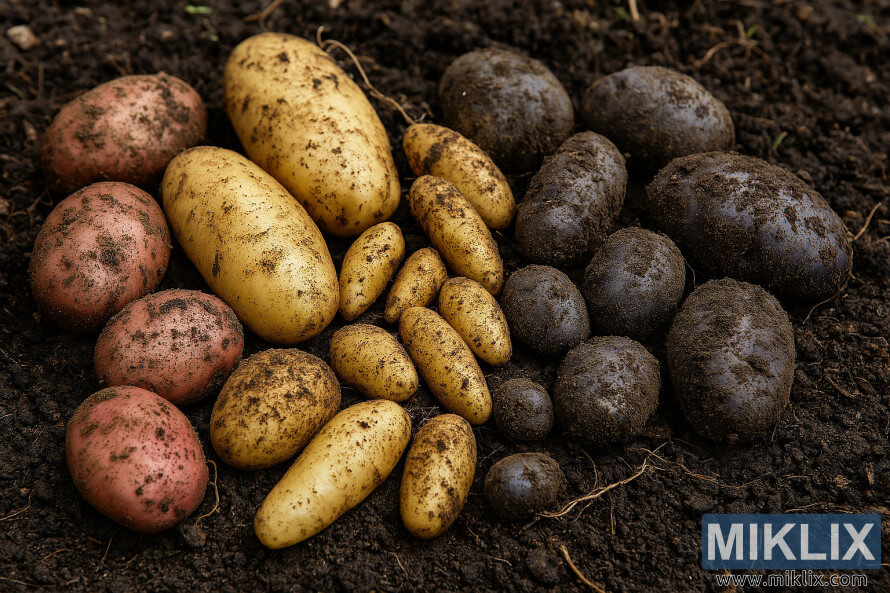
Growing potatoes in your own garden is one of the most rewarding experiences for home gardeners. There's something magical about planting those humble seed potatoes and later digging up a treasure of fresh tubers.
Click or tap the image for more information and higher resolutions.
Whether you're a beginner or experienced gardener, this guide will walk you through every step of the potato growing journey – from selecting the right varieties to properly storing your harvest.
Choosing Your Potatoes
The first step to a successful potato harvest begins with selecting the right potatoes to plant. This isn't as simple as planting potatoes from the grocery store, as most commercial potatoes are treated with sprout inhibitors that prevent proper growth.
Seed Potatoes vs. Grocery Store Potatoes
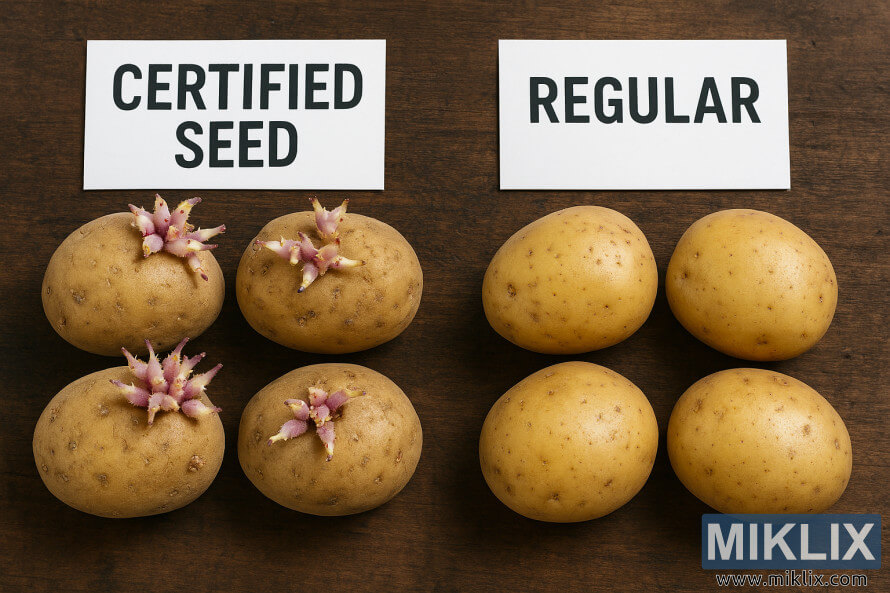
Always start with certified seed potatoes from a garden center or online supplier. These are specifically grown to be disease-free and ready for planting. While grocery store potatoes might sprout and grow, they often carry diseases that can infect your soil for years and produce a disappointing harvest.
Click or tap the image for more information and higher resolutions.
Potato Varieties and Their Characteristics
Potatoes are classified into three main groups based on their harvest time:
| Type | Days to Maturity | Characteristics | Best Uses |
| Early Season (First Earlies) | 60-80 days | Smaller yields, tender skin, doesn't store long | New potatoes, boiling, potato salads |
| Mid-Season (Second Earlies) | 80-100 days | Medium yield, versatile, stores up to a month | All-purpose cooking, roasting, mashing |
| Late Season (Main Crop) | 100-130 days | Highest yield, thicker skin, excellent storage | Baking, frying, long-term storage |
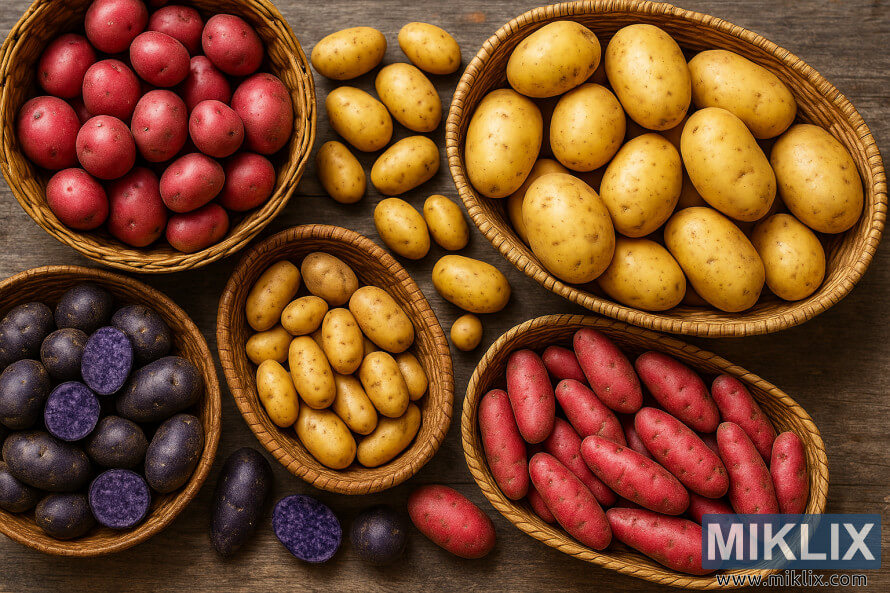
Popular varieties include 'Yukon Gold' (mid-season, all-purpose), 'Red Norland' (early, great for potato salads), 'Russet' (late, perfect for baking), and 'Fingerling' (mid to late, excellent roasted). Consider planting a mix of varieties to extend your harvest season.
Planning and Preparation
Proper planning and soil preparation are crucial for a successful potato crop. Potatoes thrive in specific conditions, and taking the time to prepare properly will reward you with a bountiful harvest.
When to Plant Potatoes
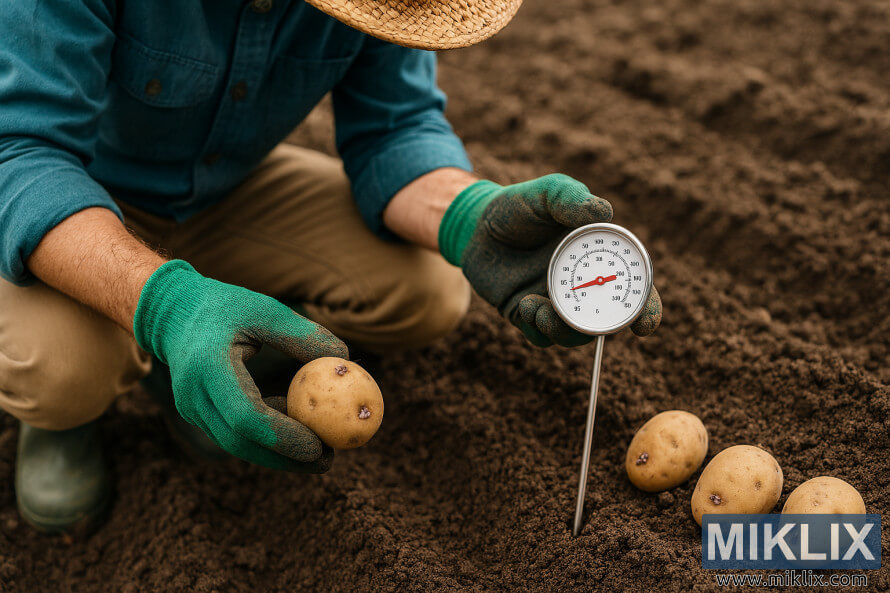
Timing is everything when it comes to planting potatoes. As cool-season crops, potatoes should be planted 2-4 weeks before your last frost date, when soil temperatures reach at least 45°F (7°C). In most regions of the United States, this means planting in early to mid-spring.
Click or tap the image for more information and higher resolutions.
Sunlight and Location Requirements
Select a garden location that receives at least 6 hours of direct sunlight daily. Potatoes grown in partial shade will produce, but yields will be significantly reduced. Avoid planting potatoes in the same spot where you've grown potatoes, tomatoes, peppers, or eggplants in the past three years to prevent disease buildup in the soil.
Soil Preparation
Potatoes thrive in loose, well-draining, slightly acidic soil with a pH between 5.8 and 6.5. Heavy, compacted soil leads to misshapen tubers, so proper preparation is essential:
- Loosen soil to a depth of 12 inches using a garden fork or tiller
- Mix in 2-3 inches of compost or well-rotted manure
- For clay soils, add additional organic matter to improve drainage
- Consider adding sulfur if your soil pH is above 6.5
- Remove rocks, sticks, and other debris that could impede tuber growth
Planting Process
With your seed potatoes selected and soil prepared, it's time to get planting. Following the proper techniques will give your potato plants the best start possible.
Preparing Seed Potatoes
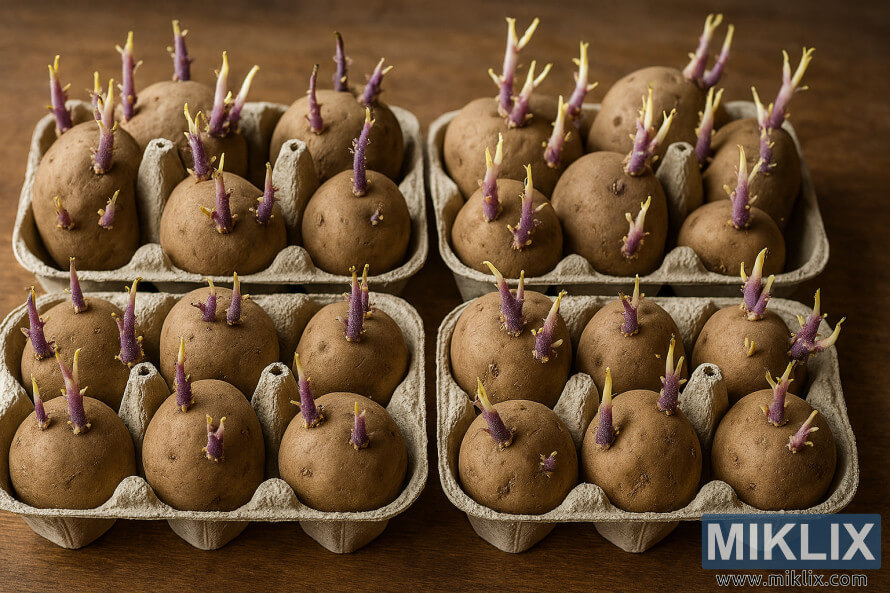
Before planting, you'll need to prepare your seed potatoes through a process called "chitting" or pre-sprouting:
- Place seed potatoes in a single layer in egg cartons or trays with the "eye" end facing up
- Keep them in a bright, cool location (50-60°F) but away from direct sunlight
- Allow them to sprout for 1-2 weeks until sprouts are 1/4 to 1/2 inch long
- For larger seed potatoes (bigger than a golf ball), cut them into pieces with at least 2-3 eyes per piece
- Allow cut pieces to heal by leaving them in a cool, dry place for 2-3 days before planting
Click or tap the image for more information and higher resolutions.
Planting Methods
There are several effective methods for planting potatoes. Choose the one that works best for your garden space:
Trench Method
The traditional and most common approach:
- Dig trenches 6-8 inches deep and 12 inches wide
- Space trenches 2-3 feet apart
- Place seed potatoes cut side down, 12 inches apart
- Cover with 3-4 inches of soil, leaving the rest of the trench for hilling later
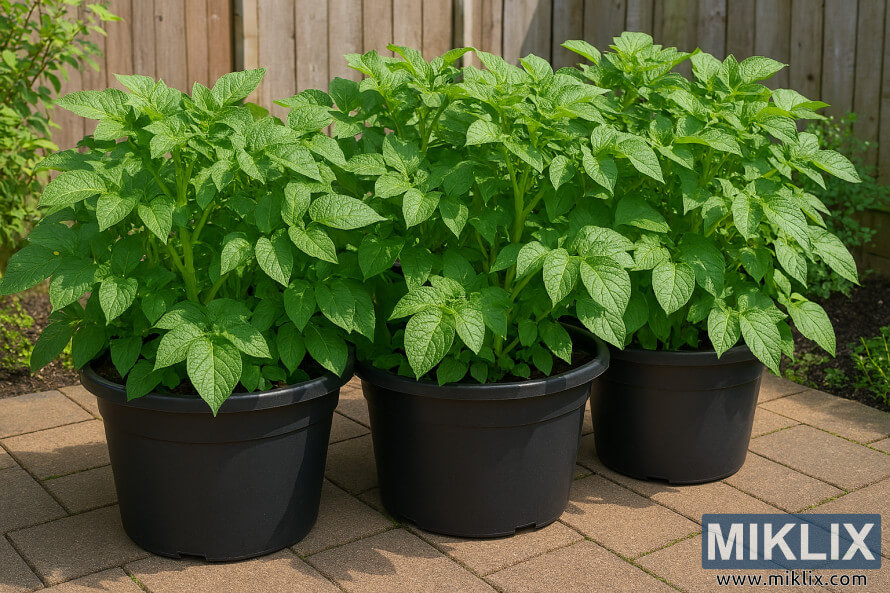
Container Method
Perfect for small spaces or patios:
- Select containers at least 15 gallons in size with drainage holes
- Fill the bottom 4-6 inches with potting mix
- Place 3-4 seed potatoes on the soil surface
- Cover with 3 inches of soil, adding more as plants grow
Click or tap the image for more information and higher resolutions.
Straw Method
A no-dig approach that makes harvesting easier:
- Loosen the top few inches of soil
- Place seed potatoes directly on soil surface, 12 inches apart
- Cover with 4-6 inches of clean straw
- Add more straw as plants grow taller
Whichever method you choose, water thoroughly after planting to settle the soil around the seed potatoes.
Care During Growth
Proper care during the growing season ensures healthy plants and maximum tuber production. Potatoes have specific needs that change as they develop.
Watering Requirements
Consistent moisture is crucial for potato development, especially during the flowering stage when tubers are forming. Aim for 1-2 inches of water per week, adjusting for rainfall:
- Water deeply but infrequently to encourage deep root growth
- Maintain even soil moisture – avoid letting soil dry out completely
- Reduce watering when plants begin to yellow and die back (indicating approaching harvest time)
- Use drip irrigation or soaker hoses to keep foliage dry and reduce disease risk
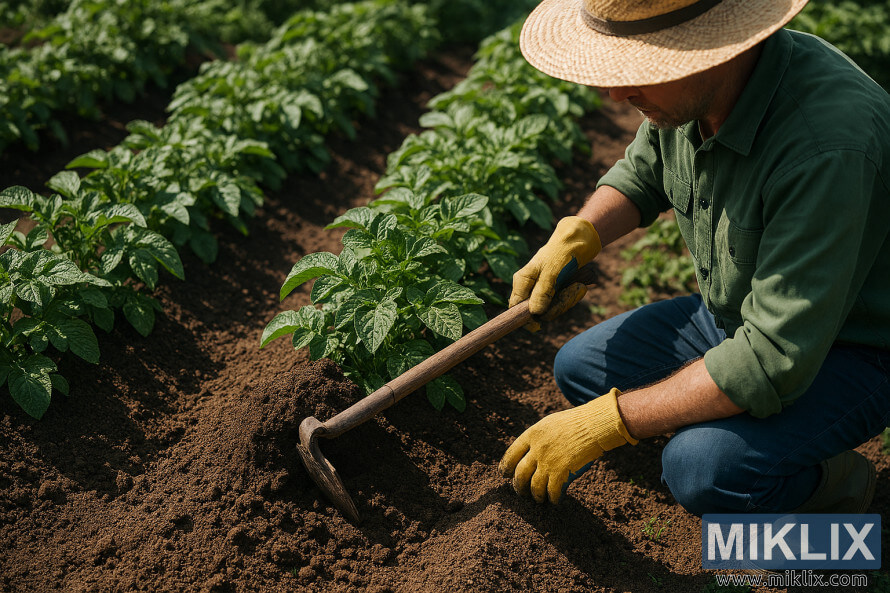
Hilling Potatoes
Hilling is the process of mounding soil around the growing potato plants. This essential practice prevents tubers from being exposed to sunlight (which causes them to turn green and toxic) and increases your yield:
- Begin hilling when plants reach 6-8 inches tall
- Carefully mound soil around the stems, leaving the top few inches of foliage exposed
- Repeat the process every 2-3 weeks as plants grow
- Stop hilling once plants begin to flower
Click or tap the image for more information and higher resolutions.
Fertilizing
Potatoes are moderate feeders that benefit from balanced nutrition:
- Apply a balanced, organic fertilizer (like 10-10-10) at planting time
- Side-dress with compost when plants are 6 inches tall
- Avoid high-nitrogen fertilizers, which promote foliage at the expense of tubers
- Consider a fertilizer higher in phosphorus and potassium when plants begin to flower
Common Pests and Diseases
Potatoes can be affected by several pests and diseases. Early identification and intervention are key to protecting your crop:
Common Pests
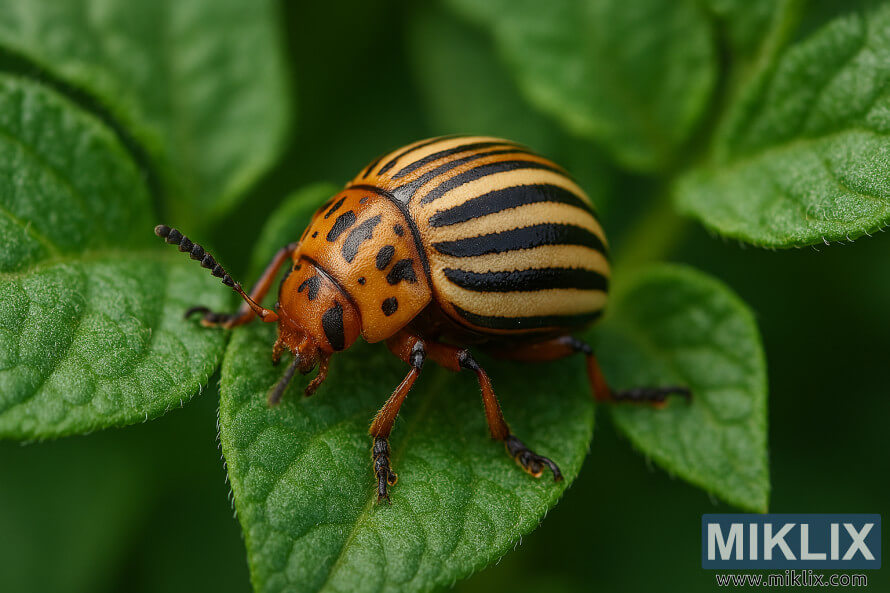
- Colorado Potato Beetle: Yellow-orange beetles with black stripes that devour foliage
- Aphids: Tiny insects that suck plant sap and can spread disease
- Wireworms: Slender, hard-bodied larvae that tunnel into tubers
- Flea Beetles: Small beetles that create small holes in leaves
Click or tap the image for more information and higher resolutions.
Common Diseases
- Early Blight: Fungal disease causing dark, concentric spots on lower leaves
- Late Blight: Devastating fungal disease that caused the Irish Potato Famine
- Scab: Bacterial disease causing corky lesions on tubers
- Verticillium Wilt: Fungal disease causing yellowing and wilting
Practice crop rotation, maintain good airflow between plants, and consider resistant varieties to minimize disease problems. For organic pest control, handpick beetles, use row covers, or apply neem oil or insecticidal soap for severe infestations.
Harvesting Your Potatoes
After months of care and anticipation, harvesting your homegrown potatoes is a rewarding experience. Knowing when and how to harvest ensures you'll get the best quality and quantity from your crop.
When to Harvest
The harvest timing depends on whether you want new potatoes or storage potatoes:
New Potatoes
- Harvest 2-3 weeks after plants flower
- Gently reach into soil and remove a few tubers, leaving plant intact
- Perfect for immediate consumption
- Thin, delicate skin that doesn't store well
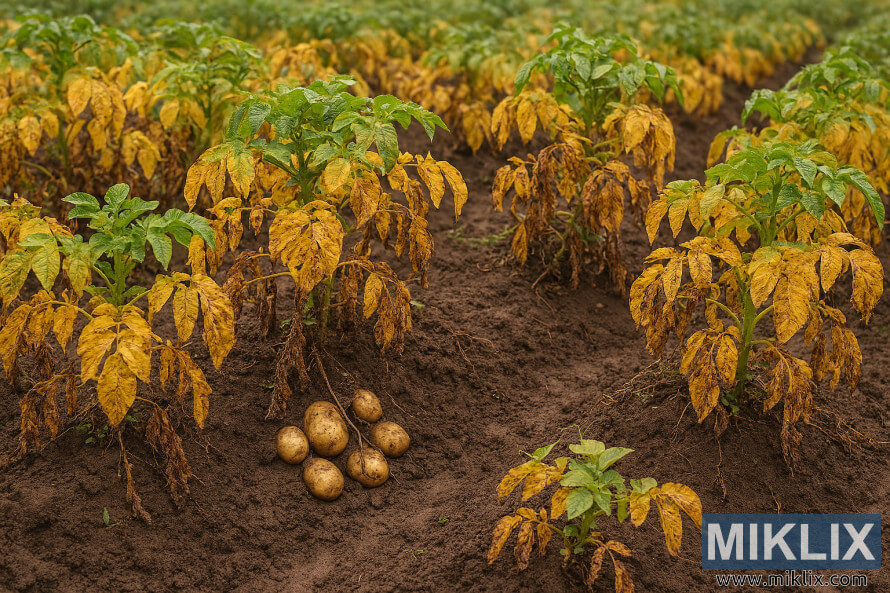
Storage Potatoes
- Harvest 2-3 weeks after foliage dies back naturally
- Skin should be firm and not easily rubbed off
- Complete plant death indicates mature tubers
- Best for long-term storage
Click or tap the image for more information and higher resolutions.
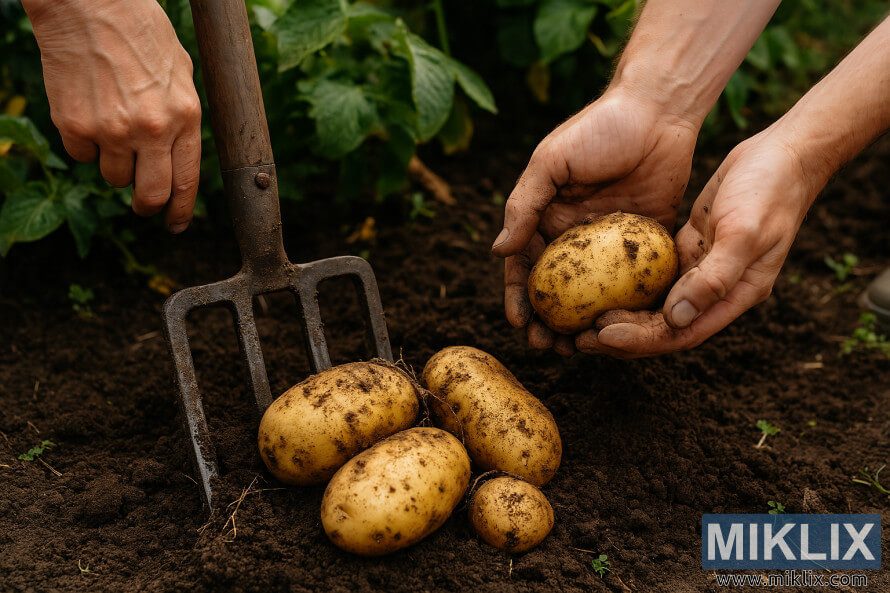
How to Harvest Potatoes
Proper harvesting technique prevents damage to your precious tubers:
- Choose a dry day when soil isn't soggy
- Use a garden fork or spade, inserting it about 12 inches away from the plant stem
- Gently lift and loosen the soil, being careful not to pierce any tubers
- Remove the loosened potatoes by hand, checking thoroughly for any left behind
- Brush off excess soil (don't wash potatoes intended for storage)
- Sort potatoes by size and check for any damage
For container-grown potatoes, simply tip the container on its side and gently sort through the soil to collect your harvest. With the straw method, simply pull back the straw to reveal your potatoes – no digging required!
Click or tap the image for more information and higher resolutions.
Curing and Storage
Proper curing and storage extends the life of your potato harvest, allowing you to enjoy your homegrown potatoes for months after harvest.
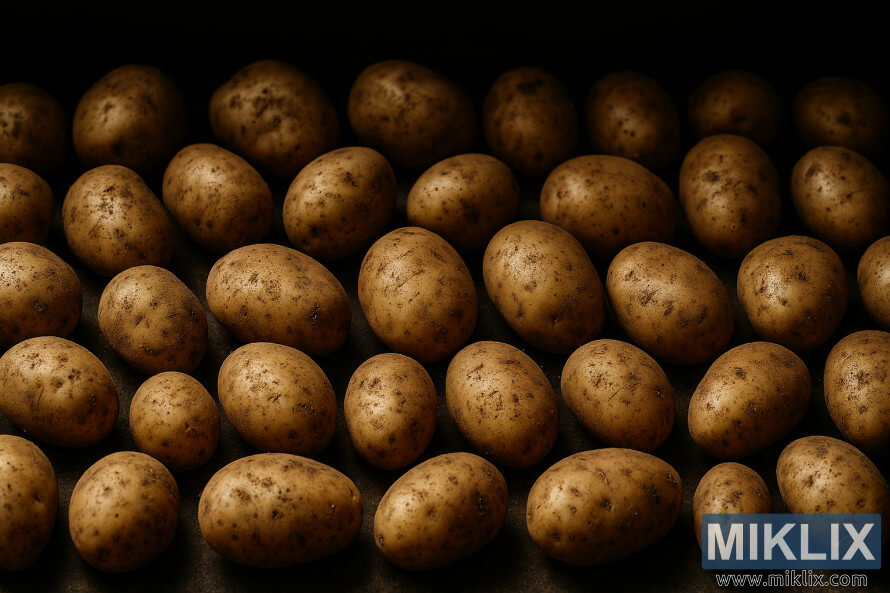
Curing Process
Curing allows potato skins to toughen and minor wounds to heal, significantly extending storage life:
- Lay unwashed potatoes in a single layer in a dark, humid location
- Maintain temperature between 50-60°F (10-15°C)
- Allow potatoes to cure for 1-2 weeks
- Remove any potatoes that show signs of damage or disease
- Brush off any remaining soil after curing (still do not wash)
Click or tap the image for more information and higher resolutions.
Long-Term Storage
With proper storage conditions, potatoes can last 2-6 months depending on the variety:
- Store in a cool (38-40°F), dark, and moderately humid location
- Use breathable containers like paper bags, cardboard boxes, or baskets
- Never store in airtight containers, which trap moisture and speed spoilage
- Keep away from onions, apples, and other produce that release ethylene gas
- Check regularly and remove any potatoes that show signs of sprouting or decay
- Late-season varieties typically store longer than early varieties
Important: Never eat green potatoes! When potatoes are exposed to light, they produce solanine, a toxic compound that causes the green coloration. Small green spots can be cut away, but discard potatoes with significant greening.
Conclusion
Growing potatoes in your own garden connects you to a tradition that spans thousands of years and countless cultures. From the ancient Incas who first cultivated them to your own backyard, potatoes remain one of the most versatile and rewarding crops for home gardeners.
By following the steps in this guide – from selecting the right varieties and preparing your soil to proper harvesting and storage techniques – you're well on your way to enjoying a bountiful potato harvest. Remember that each growing season brings new lessons, and even experienced gardeners continue to refine their potato-growing skills year after year.
So get your hands dirty, enjoy the process, and look forward to the unmatched satisfaction of serving homegrown potatoes at your table. Your garden-to-table journey starts with a simple seed potato and ends with a delicious harvest that you've nurtured every step of the way.
Click or tap the image for more information and higher resolutions.
Further Reading
If you enjoyed this post, you may also like these suggestions:
- A Complete Guide to Growing Radicchio in Your Own Garden
- A Complete Guide to Growing Grapes in Your Home Garden
- A Complete Guide to Growing Oranges at Home