
A Complete Guide to Growing Pumpkins in Your Home Garden
Published: February 12, 2026 at 5:37:28 PM UTC
Whether you dream of carving spooky jack-o'-lanterns or baking delicious homemade pies, growing pumpkins in your garden can be a rewarding experience.
Click or tap the image for more information and higher resolutions.
Pumpkins have been cultivated in North America for nearly 5,000 years, and with good reason – they're versatile, nutritious, and bring a special kind of joy to autumn festivities. This comprehensive guide will walk you through every stage of growing pumpkins, from selecting the right variety to harvesting and storing your homegrown treasures.
Planning and Preparation
Choosing the Right Pumpkin Variety
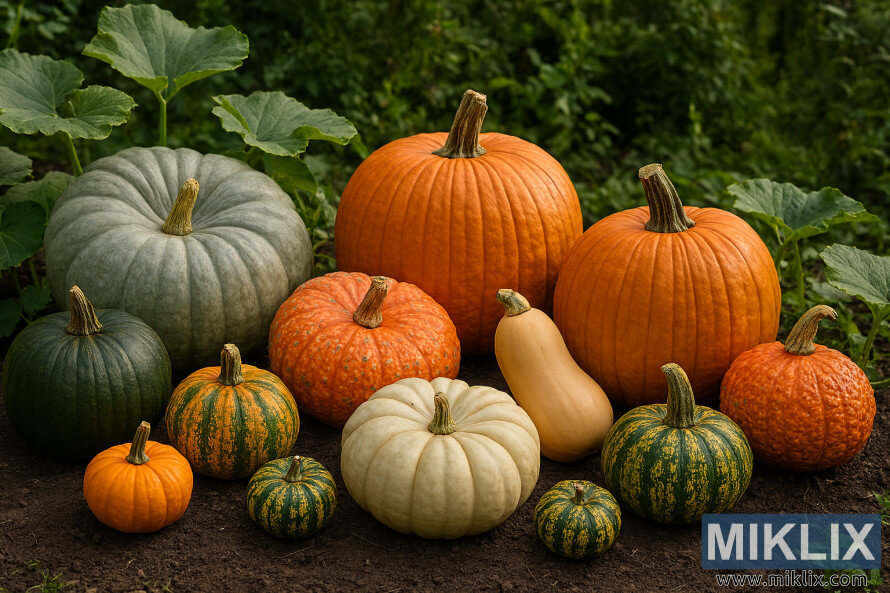
Pumpkins come in an impressive range of sizes, shapes, and colors. Before planting, consider what you want to use your pumpkins for:
| Type | Size | Best Use | Popular Varieties |
| Mini Pumpkins | Less than 1 lb | Decoration | Jack-Be-Little, Munchkin, Sweetie Pie |
| Pie Pumpkins | 4-8 lbs | Cooking, baking | Sugar Treat, Small Sugar, Triple Treat |
| Carving Pumpkins | 10-20 lbs | Jack-o'-lanterns | Autumn Gold, Jack-O-Lantern, Spirit |
| Giant Pumpkins | 50+ lbs | Competitions, displays | Dill's Atlantic Giant, Big Max, Prize Winner |
Understanding Space Requirements
Pumpkin vines need plenty of room to spread. Traditional vining varieties can extend 10-20 feet in all directions, while semi-bush varieties require less space. Consider these space guidelines:
- Mini varieties: 15-36 square feet per plant
- Standard varieties: 50-100 square feet per plant
- Giant varieties: Up to 1,000 square feet per plant
If space is limited, consider growing pumpkins vertically on a sturdy trellis (for smaller varieties only) or select semi-bush varieties that produce shorter vines.
Sunlight and Location
Pumpkins are sun-lovers that require at least 6 hours of direct sunlight daily, with 8-10 hours being ideal. When selecting a location in your garden:
- Choose a spot with full sun exposure
- Ensure good air circulation to reduce disease risk
- Consider planting near the edge of your garden so vines can spread outward
- Avoid areas where water pools after rain
Soil Preparation and Planting
Soil Requirements
Pumpkins are heavy feeders that thrive in rich, well-draining soil. The ideal growing medium for pumpkins has:
- pH level between 6.0 and 6.8
- High organic matter content
- Good drainage to prevent root rot
- Warm soil temperature (at least 70°F for germination)
Preparing Your Soil
Start preparing your soil 2-3 weeks before planting:
- Test your soil to determine pH and nutrient levels
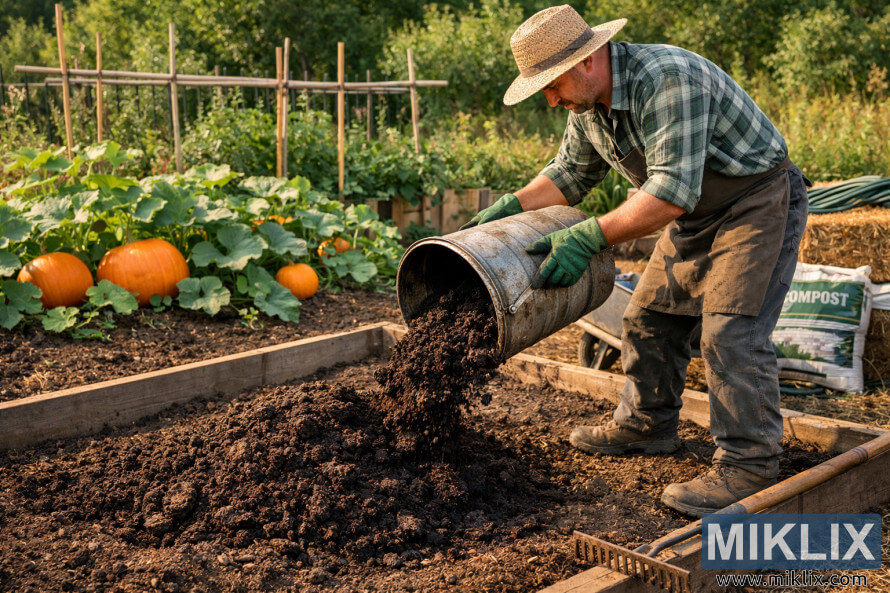
- Add aged manure or compost (4-6 inches) and work it into the top 12 inches of soil
- For heavy clay soils, add additional organic matter to improve drainage
- Consider building mounds or hills 8-12 inches high and 12-15 inches in diameter
- In cooler climates, warm the soil by covering it with black plastic for a week before planting
Click or tap the image for more information and higher resolutions.
When to Plant
Timing is crucial when planting pumpkins:
- Plant after all danger of frost has passed and soil has warmed to at least 70°F
- In most regions, this means late May to early June
- For Halloween pumpkins, count backward from mid-October (about 100-120 days depending on variety)
- In warmer southern climates, plant in early July for fall harvest
Click or tap the image for more information and higher resolutions.
Planting Methods
You can start pumpkins either by direct seeding or by transplanting seedlings:
Direct Seeding
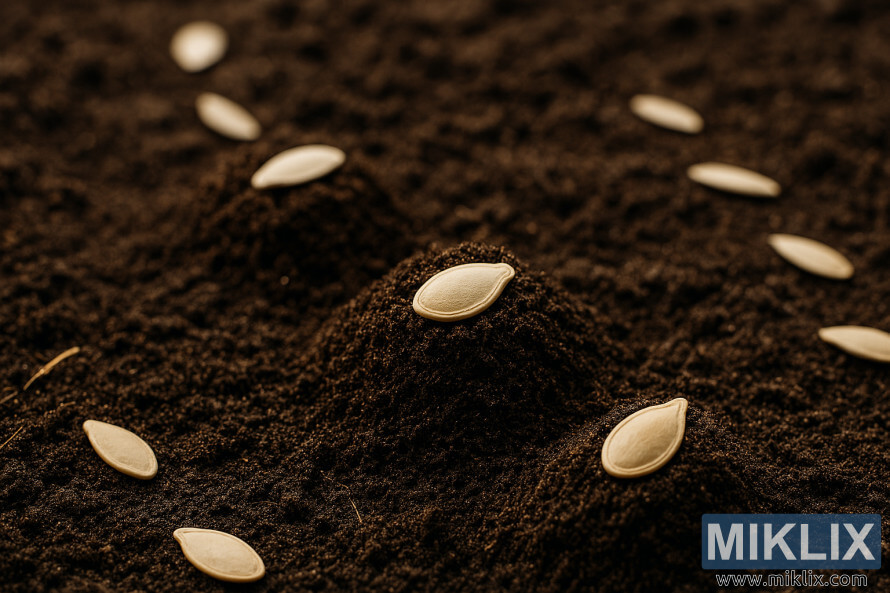
- Plant seeds 1 inch deep in hills or rows
- Place 4-5 seeds per hill, then thin to 2-3 strongest seedlings
- Space hills 4-8 feet apart, depending on variety
- For rows, sow seeds 6-12 inches apart, then thin to one plant every 18-36 inches
Transplanting
- Start seeds indoors 2-4 weeks before last frost
- Use peat pots to minimize root disturbance when transplanting
- Harden off seedlings for a week before planting outdoors
- Transplant when seedlings have 2-3 true leaves
Care and Maintenance
Watering
Proper watering is critical for pumpkin development:
- Provide 1-2 inches of water per week, depending on weather conditions
- Water deeply at the base of plants, avoiding the foliage
- Use drip irrigation or soaker hoses to minimize disease risk
- Water in the morning to allow foliage to dry before evening
- Increase watering during fruit set and development
- Reduce watering as fruits mature and approach harvest time
Fertilizing
Pumpkins are heavy feeders that benefit from regular fertilization:
- Apply a balanced fertilizer (10-10-10) when vines begin to run
- Side-dress with compost or aged manure when flowers begin to form
- Consider switching to a fertilizer higher in phosphorus and potassium (like 5-10-10) when fruits begin to set
- Avoid excessive nitrogen, which promotes leaf growth at the expense of fruit
- Stop fertilizing about a month before harvest
Click or tap the image for more information and higher resolutions.
Pollination
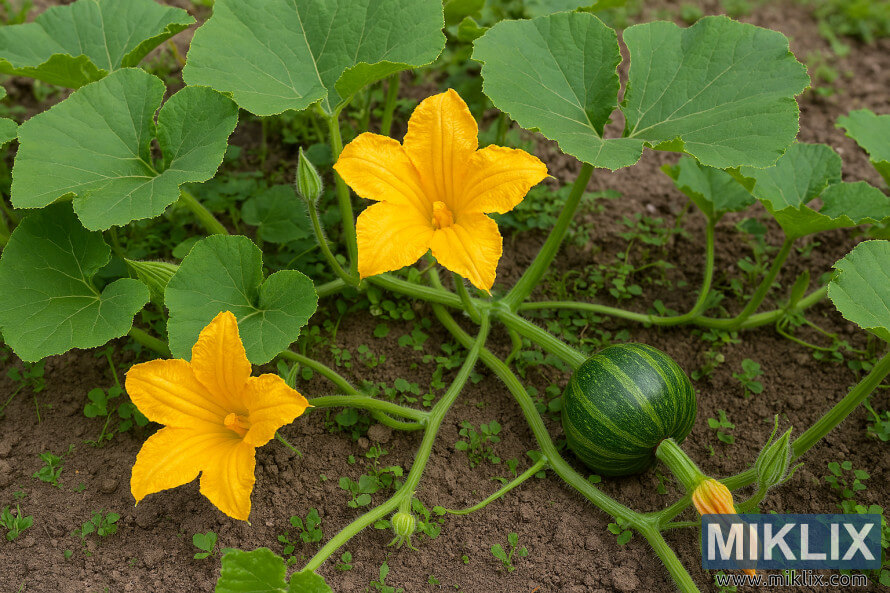
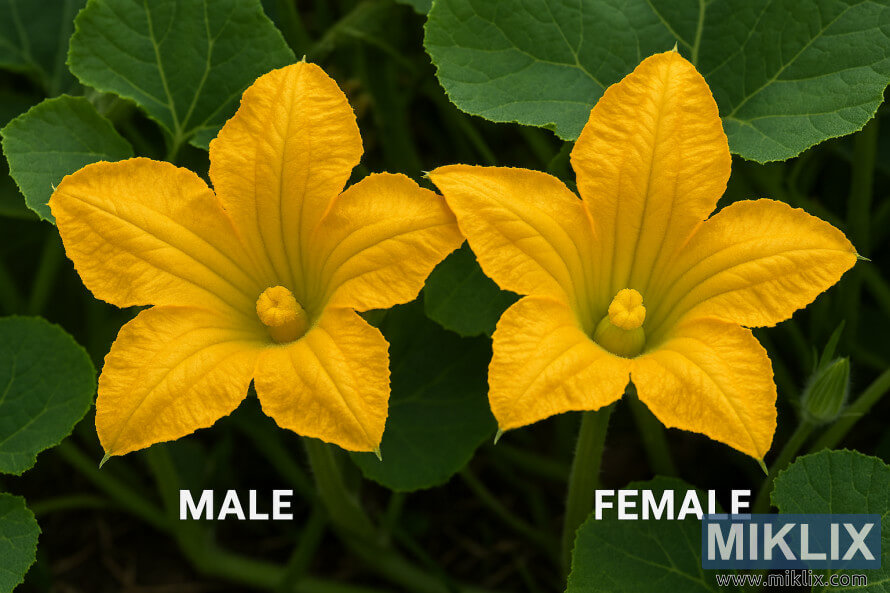
Pumpkins produce separate male and female flowers on the same plant. Understanding pollination helps ensure a good harvest:
Female flowers (right) have a small fruit at the base, while male flowers (left) have straight stems
- Male flowers appear first, followed by female flowers
- Female flowers have a small swelling (future pumpkin) at the base
- Bees are the primary pollinators
- If bee activity is low, you can hand-pollinate by transferring pollen from male to female flowers using a small brush
- Avoid using insecticides during flowering to protect pollinators
Click or tap the image for more information and higher resolutions.
Pest and Disease Management
Pumpkins can face several challenges from pests and diseases:
Common Pests
- Squash bugs - Use row covers until flowering; handpick adults and eggs
- Cucumber beetles - Apply organic insecticides; use yellow sticky traps
- Squash vine borers - Wrap stems with foil; inject Bt into affected stems
- Aphids - Spray with insecticidal soap or neem oil
Common Diseases
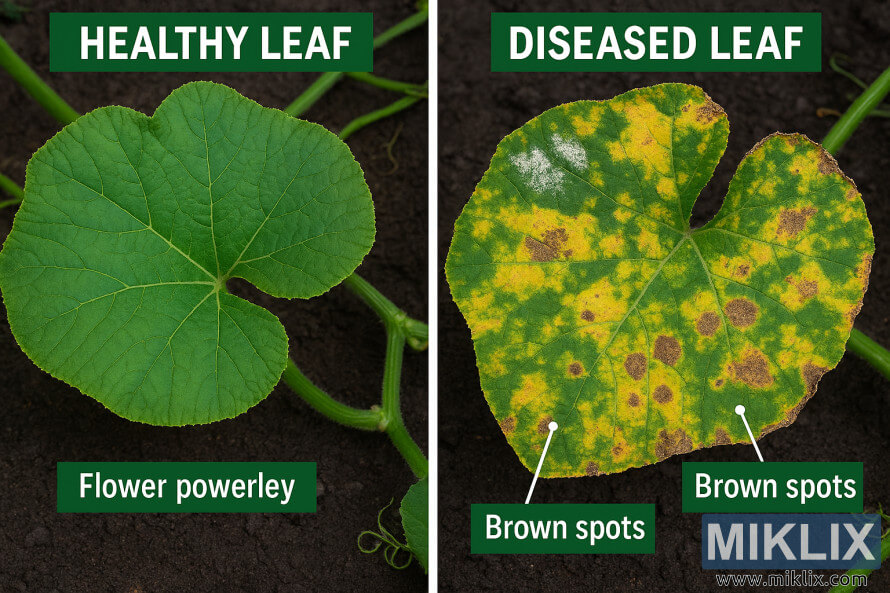
- Powdery mildew - Ensure good air circulation; apply fungicides early
- Downy mildew - Avoid overhead watering; use resistant varieties
- Bacterial wilt - Control cucumber beetles; remove infected plants
- Blossom end rot - Maintain consistent soil moisture; add calcium
Vine and Fruit Care
As your pumpkins grow, these practices will help produce better quality fruit:
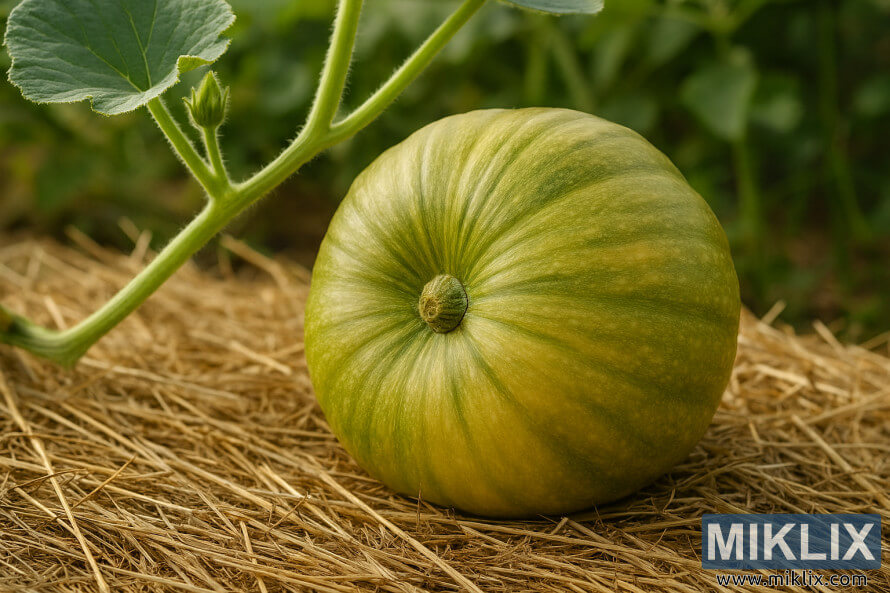
- Place a piece of cardboard or straw under developing fruits to prevent rot
- Gently turn large pumpkins occasionally to encourage even development (but avoid breaking the stem)
- Prune secondary vines if growing space is limited
- For prize pumpkins, remove all but one or two fruits per plant
- Protect vines from being damaged by foot traffic or equipment
Click or tap the image for more information and higher resolutions.
Harvesting and Storage
When to Harvest
Knowing when pumpkins are ready to harvest ensures the best quality and longest storage life:
- Harvest when pumpkins have reached full color for their variety
- The rind should be hard and resist puncture from your thumbnail
- The stem begins to dry and becomes woody
- Vines start to die back
- Harvest before the first hard frost, which can damage fruits
- Most varieties mature 90-120 days after planting
How to Harvest
Proper harvesting technique helps pumpkins last longer:
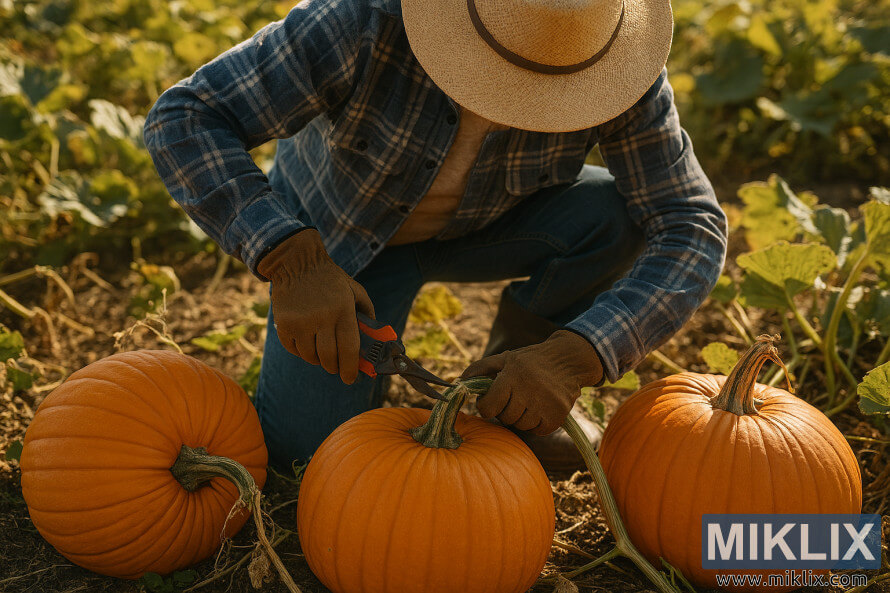
- Use sharp pruning shears or a knife to cut the stem
- Leave 3-4 inches of stem attached to the pumpkin
- Never lift pumpkins by the stem – support from underneath
- Handle carefully to avoid cuts or bruises that lead to rot
- Harvest on a dry, sunny day when possible
Click or tap the image for more information and higher resolutions.
Curing Pumpkins
Curing helps harden the skin and improve storage life:
- Place harvested pumpkins in a warm (80-85°F), dry location with good air circulation
- Keep them out of direct sunlight
- Cure for 10-14 days
- Wipe down with a mild bleach solution (1 tablespoon bleach to 1 gallon water) to prevent mold
Click or tap the image for more information and higher resolutions.
Storage Tips
With proper storage, pumpkins can last for months:
- Store in a cool, dry place with temperatures between 50-55°F
- Maintain humidity between 50-70%
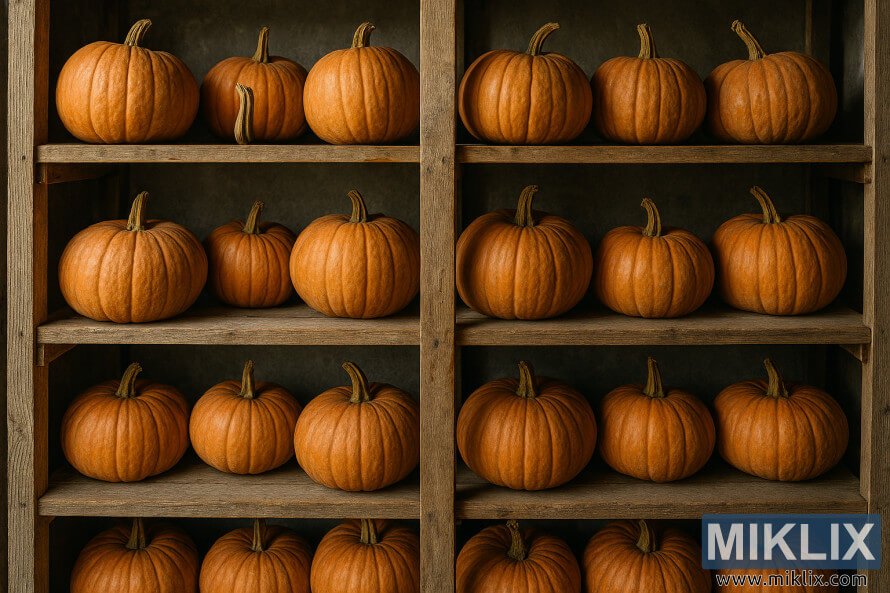
- Arrange pumpkins in a single layer, not touching each other
- Place on cardboard, wood, or straw to improve air circulation
- Check regularly and remove any that show signs of decay
- Properly stored pumpkins can last 2-3 months or longer
Troubleshooting Common Problems
Recognizing symptoms early helps address problems before they affect your harvest
Plant Problems
| Problem | Symptoms | Cause | Solution |
| Yellowing Leaves | Leaves turning yellow, starting with older leaves | Nitrogen deficiency, overwatering, or disease | Check soil drainage; apply balanced fertilizer; inspect for disease |
| Wilting Plants | Plants wilting despite adequate moisture | Squash vine borers or bacterial wilt | Look for entry holes in stems; inject Bt; remove infected plants |
| Flowers Drop | Flowers fall off without setting fruit | Poor pollination, extreme temperatures, or stress | Hand-pollinate; provide shade during extreme heat; ensure consistent watering |
| Stunted Growth | Plants remain small with limited vine development | Poor soil, cool temperatures, or root damage | Improve soil with compost; ensure warm growing conditions; avoid disturbing roots |
Click or tap the image for more information and higher resolutions.
Fruit Problems
| Problem | Symptoms | Cause | Solution |
| Blossom End Rot | Dark, sunken area on bottom of fruit | Calcium deficiency, inconsistent watering | Maintain even soil moisture; add calcium to soil |
| Misshapen Fruit | Irregular growth, lopsided pumpkins | Poor pollination or growing on uneven surface | Hand-pollinate; place developing fruit on level surface |
| Fruit Rot | Soft spots, mold, or decay on fruit | Contact with soil, excess moisture, or fungal disease | Place cardboard or straw under fruit; improve air circulation |
| Small Pumpkins | Fruit smaller than expected for variety | Too many fruits per vine, poor nutrition, or stress | Thin to fewer fruits per vine; improve soil fertility; reduce plant stress |
Companion Planting for Pumpkins
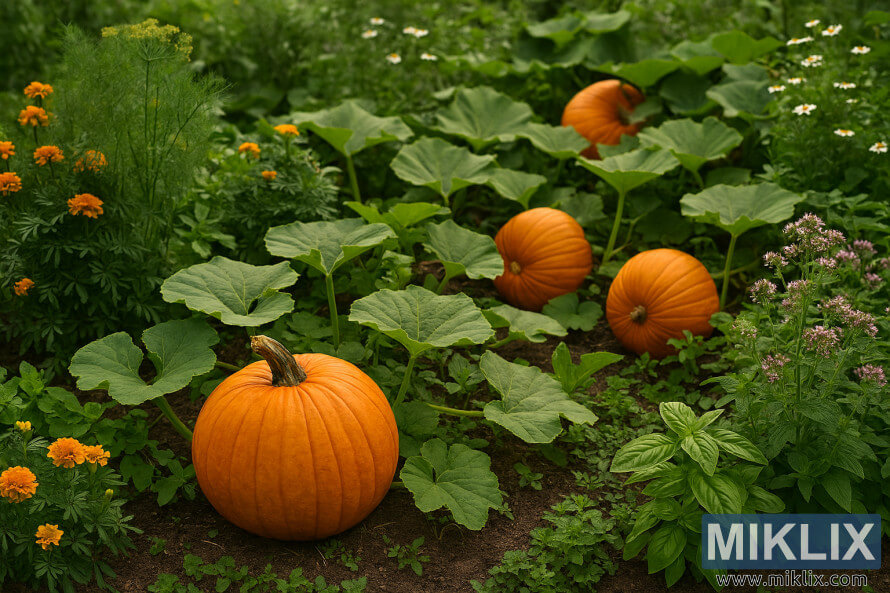
The traditional "Three Sisters" planting combines corn, beans, and pumpkins for mutual benefits
Strategic companion planting can help deter pests, attract beneficial insects, and maximize garden space. Consider these companions for your pumpkin patch:
Good Companions
- Corn - Provides natural trellising and shade
- Beans - Fix nitrogen in soil that pumpkins need
- Nasturtiums - Repel squash bugs and cucumber beetles
- Marigolds - Deter nematodes and other soil pests
- Radishes - Deter cucumber beetles
- Mint - Repels many garden pests (best in containers to prevent spreading)
Plants to Avoid
- Potatoes - Compete for nutrients and can increase disease risk
- Other squash varieties - Share pests and diseases
- Brassicas (cabbage, broccoli) - Compete for nutrients
- Fennel - Inhibits growth of many garden plants
Click or tap the image for more information and higher resolutions.
The Three Sisters Method
This traditional Native American planting technique combines corn, beans, and pumpkins (or squash) in a mutually beneficial arrangement:
- Plant corn in a circle or square, spacing plants 12 inches apart
- When corn reaches 6 inches tall, plant pole beans around each stalk
- A week later, plant pumpkin seeds around the perimeter
- The corn provides support for beans, beans fix nitrogen, and pumpkin vines act as living mulch
Using Your Homegrown Pumpkins
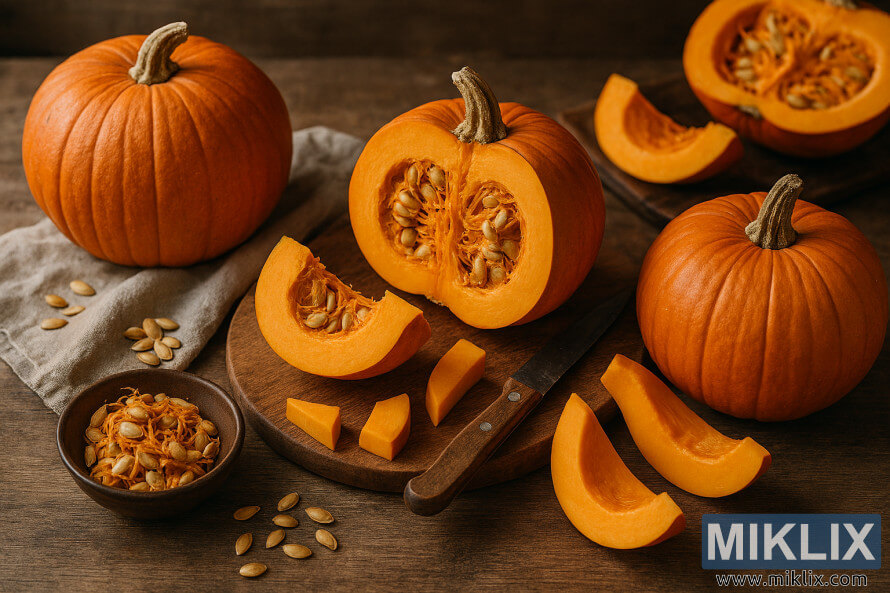
Homegrown pumpkins can be used for cooking, decoration, and even seed saving
Culinary Uses
Pie pumpkins and many other varieties make excellent ingredients for various dishes:
- Pies, breads, and other baked goods
- Soups and stews
- Roasted pumpkin as a side dish
- Pumpkin puree for recipes (can be frozen for later use)
- Roasted pumpkin seeds for snacking
Decorative Uses
Beyond cooking, pumpkins make wonderful decorations:
- Traditional carved jack-o'-lanterns
- Painted pumpkins (a safer alternative to carving for children)
- Centerpieces and table decorations
- Outdoor autumn displays
Click or tap the image for more information and higher resolutions.
Saving Seeds
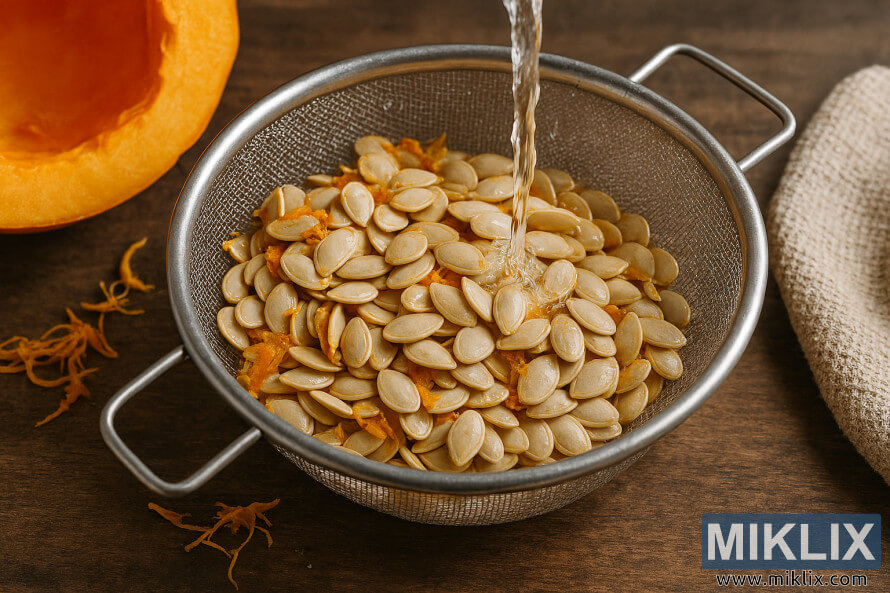
Save seeds from your best pumpkins for next year's garden:
- Choose fully mature pumpkins from healthy plants
- Scoop out seeds and rinse to remove pulp
- Dry seeds completely on paper towels for 1-2 weeks
- Store in a cool, dry place in labeled paper envelopes
- Note: Seeds from hybrid varieties won't grow true to type
Click or tap the image for more information and higher resolutions.
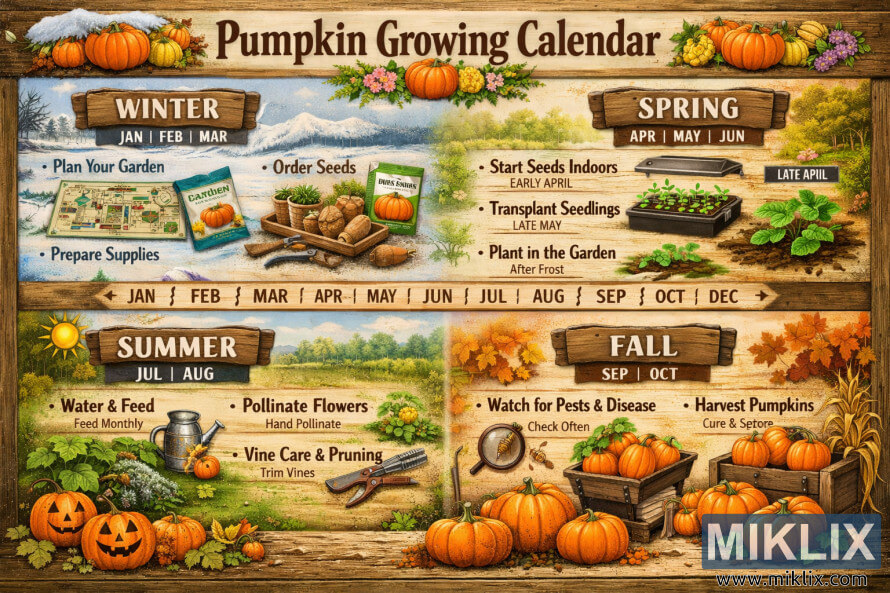
Pumpkin Growing Calendar
This general timeline will help you plan your pumpkin growing activities. Adjust dates based on your local climate and frost schedule:
| Timeframe | Activities |
| 2-3 weeks before planting | Test and amend soil; build hills or rows; add compost and fertilizer |
| 2-4 weeks before last frost | Start seeds indoors (if transplanting); warm soil with black plastic |
| After last frost (soil 70°F+) | Direct sow seeds or transplant seedlings; install supports if growing vertically |
| When vines begin to run | Apply fertilizer; thin plants if needed; install row covers for pest protection |
| When flowers appear | Remove row covers to allow pollination; hand-pollinate if needed |
| When fruits set | Place cardboard or straw under developing fruits; thin to desired number per vine |
| 30 days before harvest | Reduce watering; remove leaves shading fruits; stop fertilizing |
| When fruits reach full color | Harvest before first frost; cure for 10-14 days; prepare for storage |
Click or tap the image for more information and higher resolutions.
Conclusion
With proper care and attention, your pumpkin patch can yield a bountiful and beautiful harvest
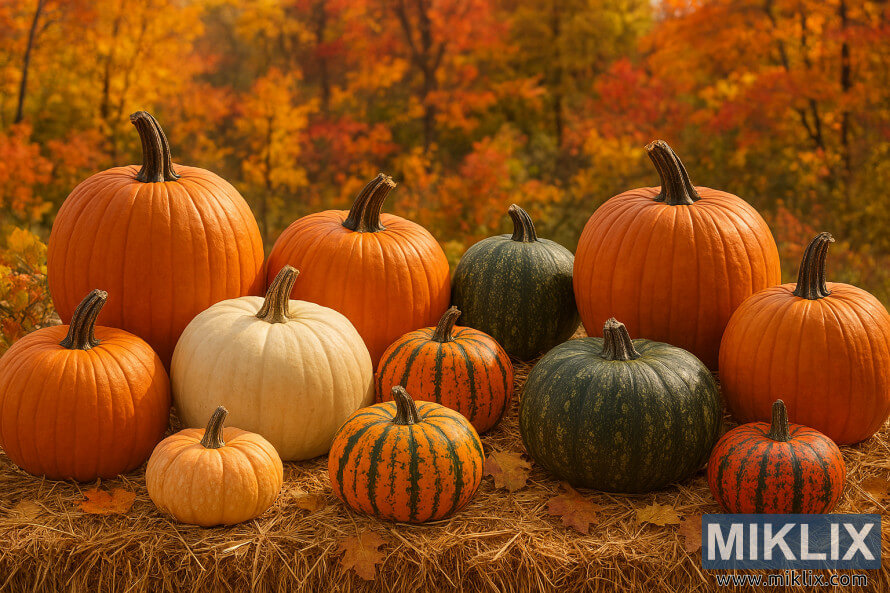
Growing pumpkins requires patience and attention, but the rewards are well worth the effort. From the excitement of seeing the first seedlings emerge to the satisfaction of harvesting your own homegrown pumpkins, the journey is filled with learning opportunities and simple joys. Whether you're growing tiny decorative varieties or attempting to raise a giant prizewinner, the basic principles remain the same: provide rich soil, plenty of sun, consistent water, and regular care.
Remember that each growing season brings new lessons, and even experienced gardeners face challenges. Don't be discouraged by setbacks – use them as opportunities to learn and improve your techniques for next year. With the knowledge you've gained from this guide and your own growing experience, you'll be well-equipped to enjoy the timeless tradition of pumpkin growing for years to come.
Click or tap the image for more information and higher resolutions.
Further Reading
If you enjoyed this post, you may also like these suggestions:
- How to Grow Turnips: Your Complete Growing Guide
- The Best Tomato Varieties to Grow in Your Garden
- A Guide to Growing Spinach in Your Home Garden