
A Guide to Growing Cantaloupes in Your Own Garden
Published: January 26, 2026 at 10:34:26 PM UTC
Nothing compares to the sweet, juicy flavor of a homegrown cantaloupe picked at the peak of ripeness. That first bite of orange flesh, with juice dribbling down your chin, makes all your gardening efforts worthwhile.
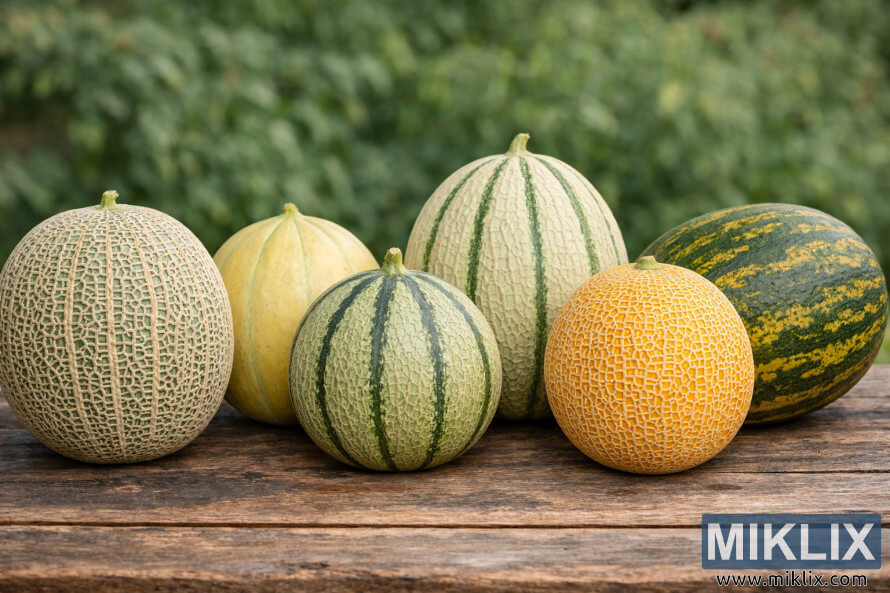
Click or tap the image for more information and higher resolutions.
Beyond the incomparable taste, growing your own cantaloupes provides nutritional benefits packed with vitamins A and C, potassium, and fiber. In this comprehensive guide, we'll walk you through everything you need to know to successfully grow these delicious summer melons in your own backyard.
Choosing the Right Cantaloupe Variety
Selecting the right cantaloupe variety for your garden is crucial for success. Different varieties offer varying flavors, sizes, disease resistance, and days to maturity. Here are some reliable options perfect for home gardens:
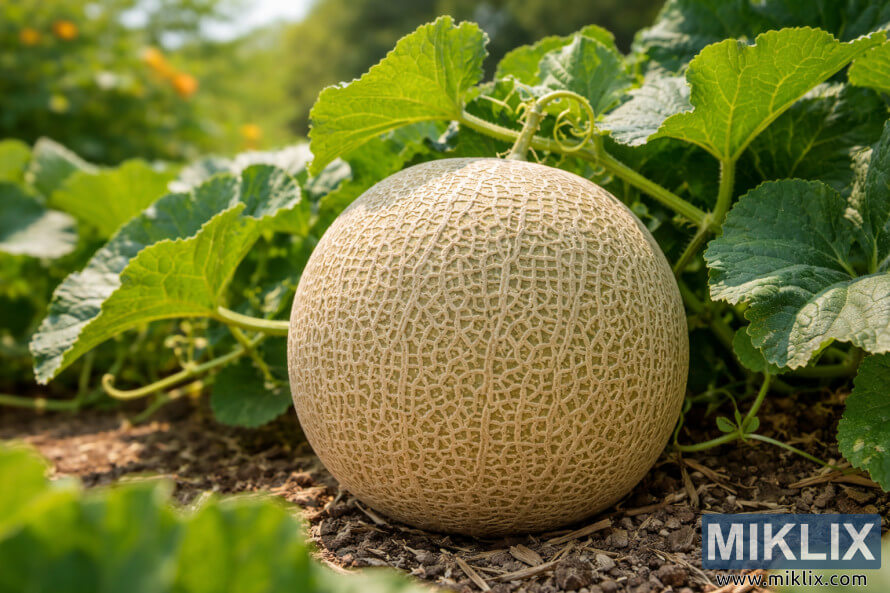
Hale's Best Jumbo
This classic variety produces oval fruits weighing 3-5 pounds with thick, sweet orange flesh. The rinds feature distinctive netting over a yellow-green background. With 85-90 days to maturity, Hale's Best is known for its excellent flavor and good disease resistance, making it perfect for beginners.
Click or tap the image for more information and higher resolutions.
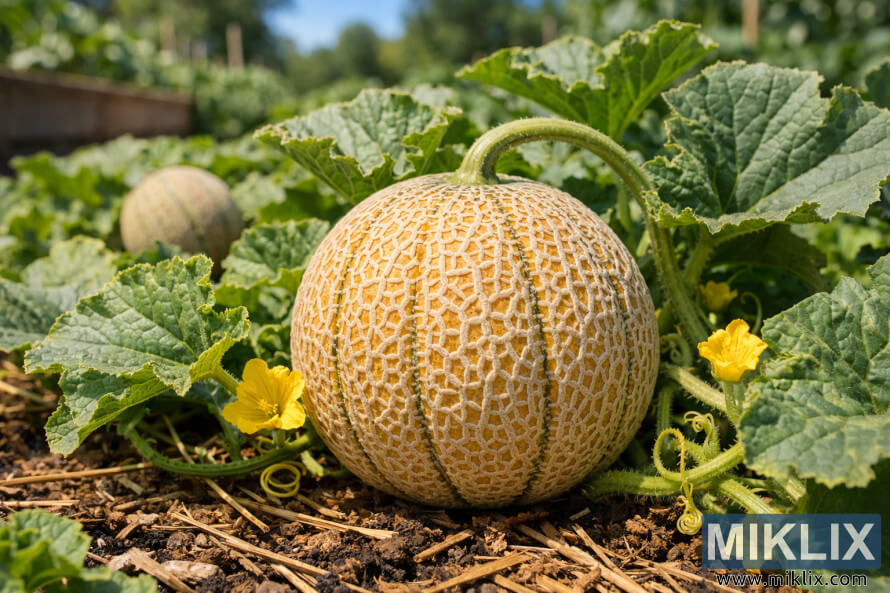
Minnesota Midget
Ideal for gardeners with limited space, this compact variety produces small, 4-inch melons weighing about 1 pound. The vines grow only 3-4 feet long, making them perfect for containers or small gardens. With a quick 70-75 days to maturity, Minnesota Midget offers sweet, deep orange flesh and performs well even in cooler climates.
Click or tap the image for more information and higher resolutions.
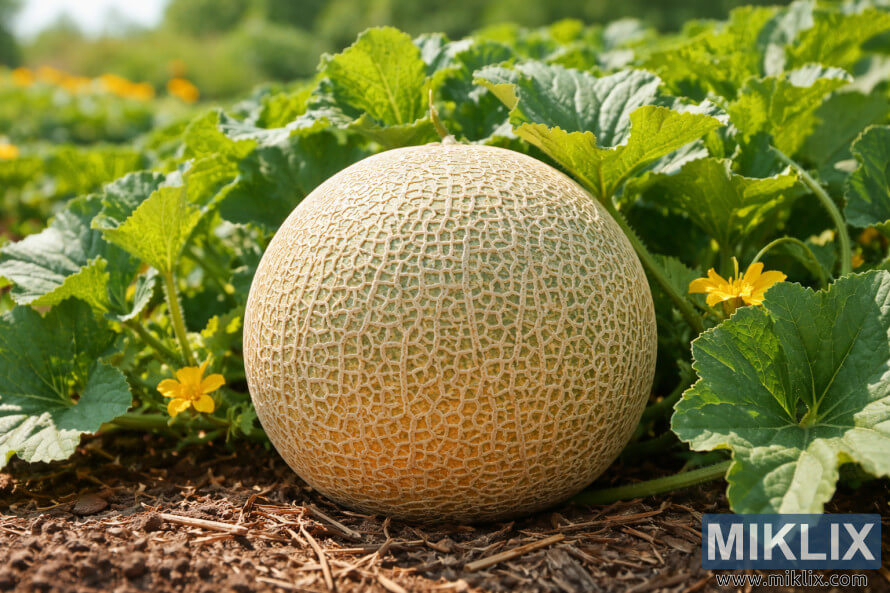
Ambrosia
This hybrid variety is prized for its exceptional sweetness and aroma. The fruits weigh 4-5 pounds with juicy, salmon-colored flesh. Ambrosia matures in about 85 days and offers good resistance to powdery mildew, a common cantaloupe disease. Its netted rind and consistent quality make it a favorite among experienced gardeners.
Click or tap the image for more information and higher resolutions.
Climate and Site Requirements
Cantaloupes are warm-season crops that thrive in specific growing conditions. Understanding their needs will set you up for success from the start.
Sunlight Requirements
Cantaloupes need full sun to develop their sweet flavor – at least 6-8 hours of direct sunlight daily is essential. Choose the sunniest spot in your garden for these heat-loving plants.
Soil Conditions
These melons prefer well-draining, fertile soil with a pH between 6.0 and 6.8 (slightly acidic to neutral). Heavy clay soils should be amended with compost and sand to improve drainage, as waterlogged roots can lead to disease and poor growth.
Temperature Needs
Soil temperature is critical for successful cantaloupe growing. Seeds won't germinate properly until soil temperatures reach at least 70°F (21°C). Plants grow best when daytime temperatures are between 75-85°F (24-29°C) and nighttime temperatures stay above 60°F (15°C).
Click or tap the image for more information and higher resolutions.
Planting Instructions
Proper planting techniques are crucial for establishing healthy cantaloupe plants that will produce sweet, juicy fruits. You can either start seeds indoors for an early start or direct sow them once weather conditions are favorable.
Starting Seeds Indoors
For gardeners in cooler climates or those wanting an early harvest, starting seeds indoors is advantageous:
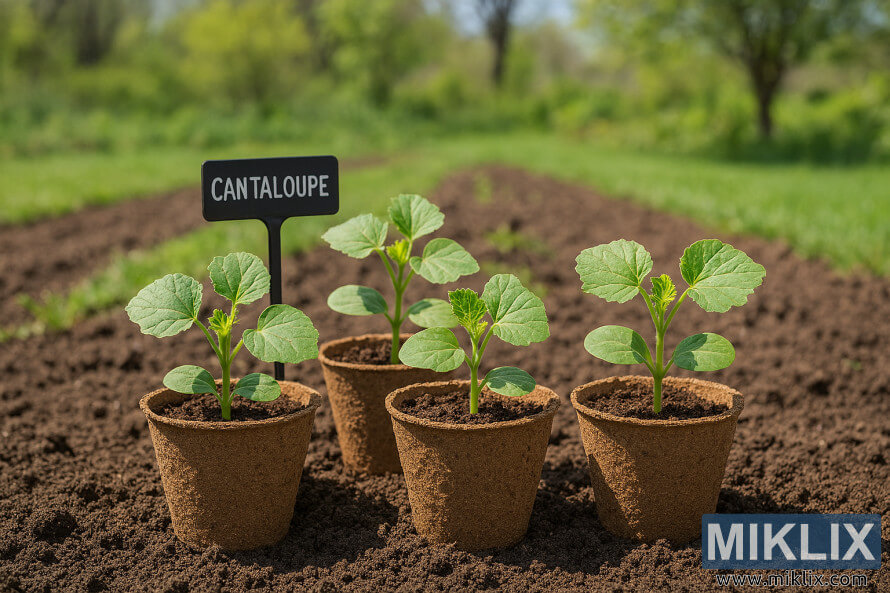
Cantaloupe seedlings in biodegradable pots reduce transplant shock
- Start seeds 4-6 weeks before your last expected frost date
- Use biodegradable pots to minimize root disturbance during transplanting
- Plant seeds ½ inch deep in seed-starting mix
- Maintain soil temperature between 75-85°F (24-29°C) for optimal germination
- Provide 14-16 hours of light once seedlings emerge
- Harden off seedlings by gradually exposing them to outdoor conditions over 7-10 days
- Transplant outdoors 2-3 weeks after your last frost date when soil temperatures reach 70°F (21°C)
Click or tap the image for more information and higher resolutions.
Direct Sowing
Direct sowing is often preferred for cantaloupe as they don't always transplant well:
- Wait until all danger of frost has passed and soil temperatures reach at least 70°F (21°C)
- Prepare soil by incorporating 2-3 inches of compost
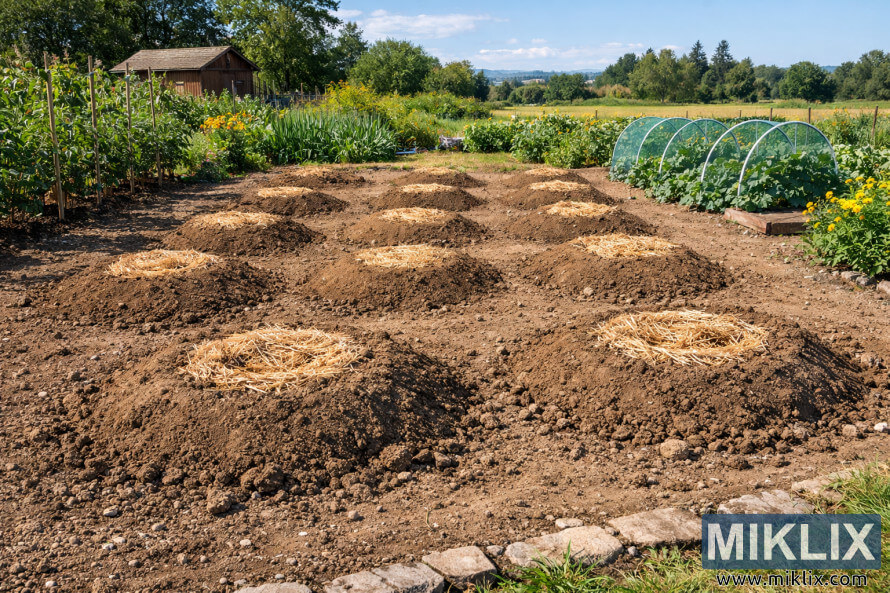
- Create small mounds or hills 4-6 inches high and 12-24 inches wide
- Plant 4-6 seeds per hill, 1 inch deep
- Space hills 4-6 feet apart in rows 6 feet apart
- After seedlings develop 2-3 true leaves, thin to the strongest 2-3 plants per hill
Spacing Requirements
Proper spacing is essential for cantaloupe plants to receive adequate sunlight, air circulation, and room for vines to spread:
Traditional Row Planting
- Space plants 18-24 inches apart
- Allow 4-6 feet between rows
- Each plant needs approximately 12-16 square feet of space
Vertical Growing
- Space plants 12-18 inches apart
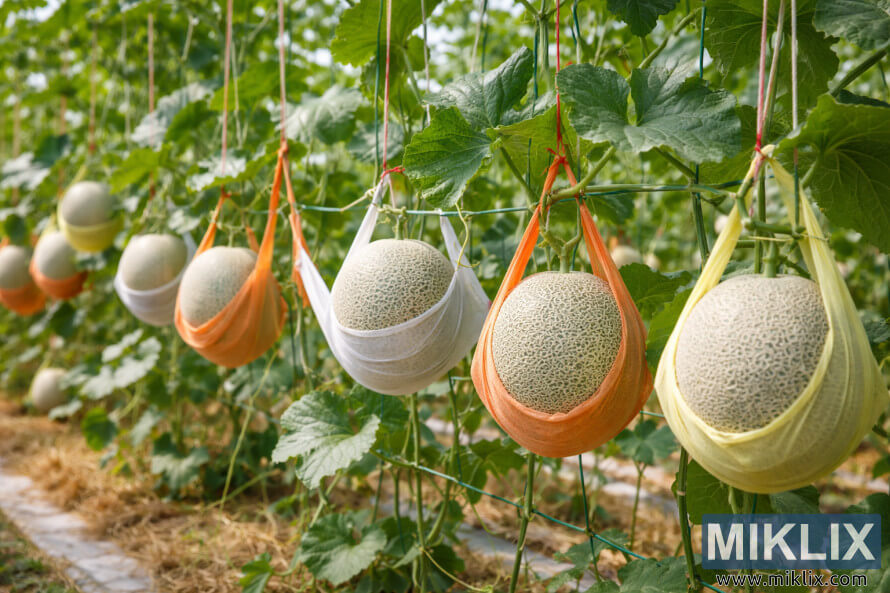
- Train vines up sturdy trellises or supports
- Support developing fruits with slings made from old pantyhose or cloth
Click or tap the image for more information and higher resolutions.
Care Throughout the Season
Proper care during the growing season is essential for developing sweet, flavorful cantaloupes. From watering to pest management, here's everything you need to know to nurture your plants from seedling to harvest.
Watering
Consistent moisture is crucial for cantaloupe development, but the timing and amount vary throughout the growing season:
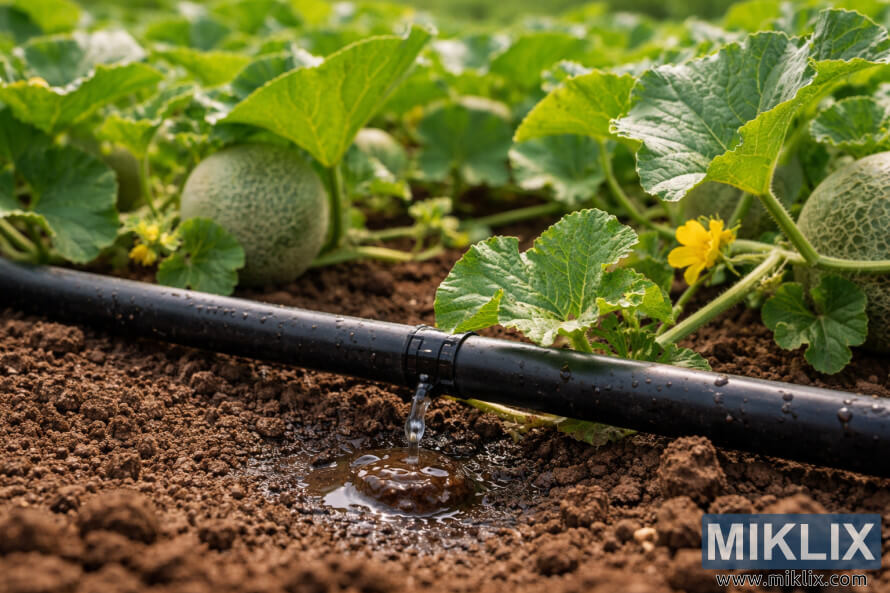
Drip irrigation provides consistent moisture while keeping foliage dry
- Early growth stage: Provide 1-2 inches of water weekly, keeping soil consistently moist but not waterlogged
- Flowering and fruit set: Maintain regular watering to prevent blossom drop
- Fruit development: Continue consistent watering for proper fruit sizing
- Ripening stage (1-2 weeks before harvest): Reduce watering to concentrate sugars and enhance flavor
Pro Tip: Water at the base of plants using drip irrigation or soaker hoses to keep foliage dry and reduce disease risk. Morning watering allows leaves to dry quickly if they do get wet.
Click or tap the image for more information and higher resolutions.
Fertilizing
Cantaloupes are moderate feeders that benefit from balanced nutrition:
- Before planting: Incorporate 2-3 inches of compost or aged manure into the soil
- At planting: Apply a balanced fertilizer (10-10-10) according to package directions
- When vines begin to run: Side-dress with compost or a balanced fertilizer
- During fruit development: Avoid high-nitrogen fertilizers, which promote foliage at the expense of fruit
Weeding and Mulching
Proper weed control and mulching are essential for cantaloupe success:
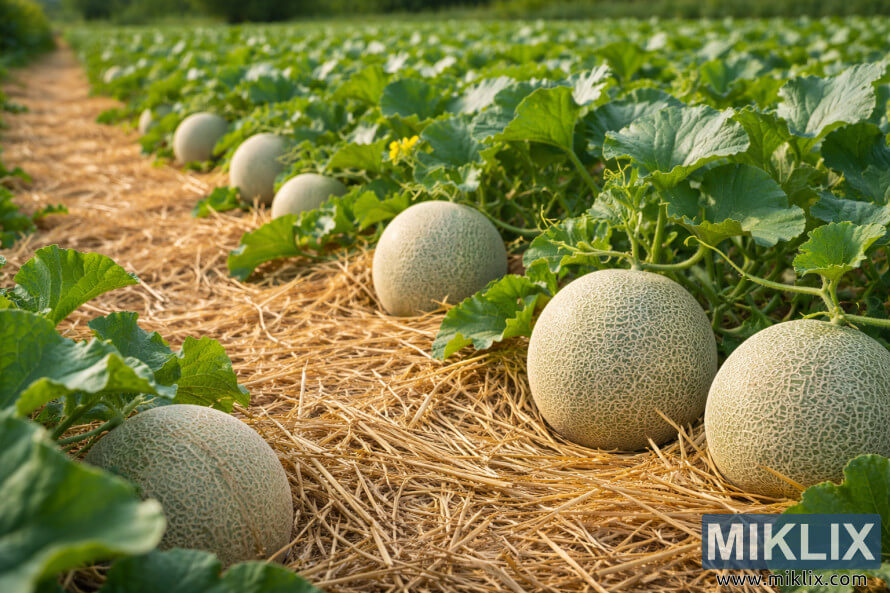
Straw mulch helps suppress weeds and keeps developing fruits clean
- Control weeds early before vines begin to spread
- Apply 2-3 inches of organic mulch (straw, shredded leaves) to suppress weeds
- Mulch helps retain soil moisture and keeps developing fruits clean
- For warmer soil in cooler regions, consider black plastic mulch
Click or tap the image for more information and higher resolutions.
Pollination
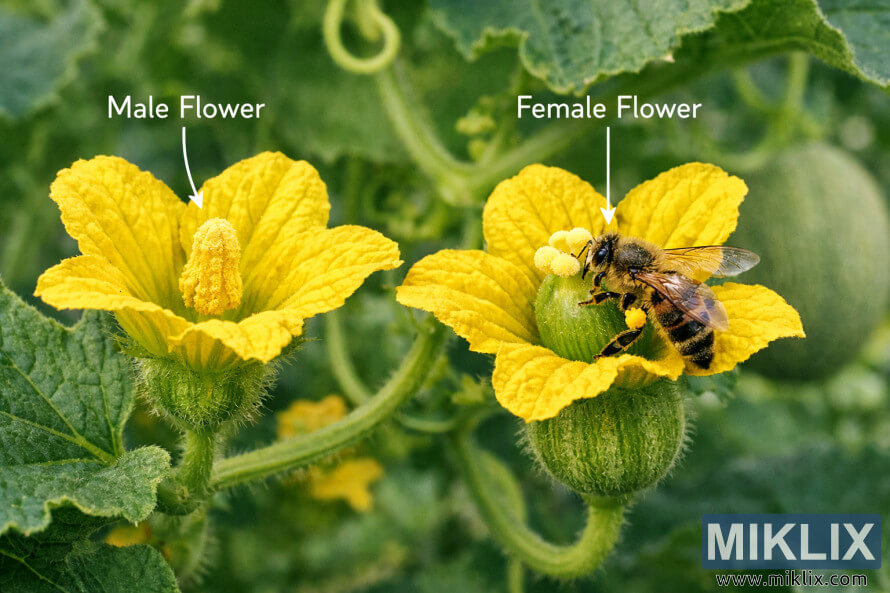
Cantaloupe plants produce separate male and female flowers on the same plant and rely on pollinators for fruit production:
Bees are essential pollinators for cantaloupe flowers
- Male flowers appear first, followed by female flowers about a week later
- Female flowers have a small swelling (immature fruit) at the base of the bloom
- Bees are the primary pollinators for cantaloupe
- Avoid using insecticides during flowering to protect pollinators
- If pollinator activity is low, hand-pollinate by transferring pollen from male to female flowers using a small brush
Click or tap the image for more information and higher resolutions.
Pests and Diseases
Being prepared for common cantaloupe problems will help you address issues quickly and effectively. Here are the most common challenges you might face and how to handle them organically:
| Problem | Symptoms | Prevention | Organic Control |
| Cucumber Beetles | Yellow and black striped or spotted beetles; chewed leaves; scarred fruits; can transmit bacterial wilt | Row covers until flowering; plant trap crops; maintain garden cleanliness | Handpick beetles; apply neem oil; use insecticidal soap; introduce beneficial insects |
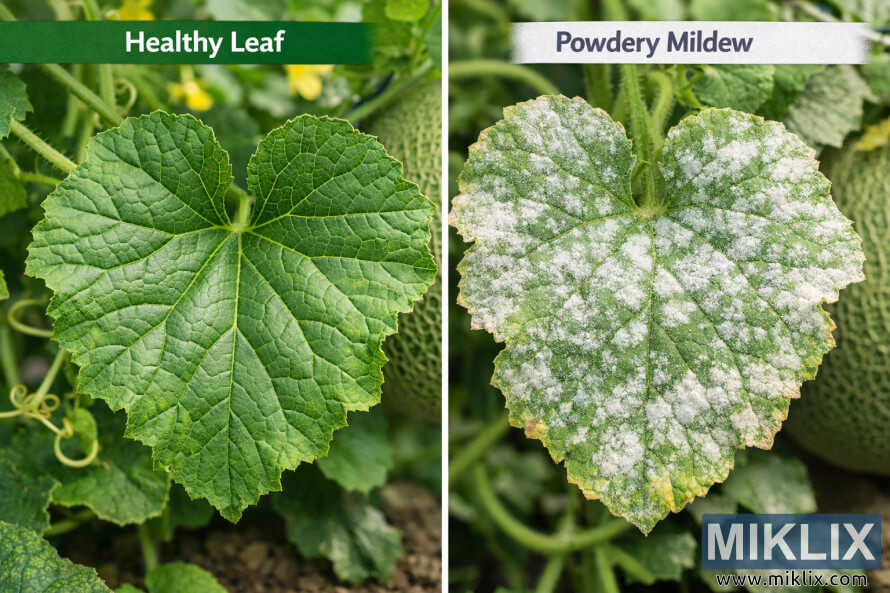
| Powdery Mildew | White powdery spots on leaves that spread to cover entire surfaces; leaves may yellow and die | Provide good air circulation; avoid overhead watering; plant resistant varieties | Spray with milk solution (1:9 milk to water); apply potassium bicarbonate; remove severely affected leaves |
| Squash Vine Borers | Wilting vines despite adequate water; sawdust-like frass at base of stems; holes in vines | Wrap stems with aluminum foil; rotate crops; use floating row covers until flowering | Surgically remove borers from stems; apply beneficial nematodes to soil; inject Bt into stems |
Crop Rotation Tip: Avoid planting cantaloupe in the same location where other cucurbits (cucumbers, squash, pumpkins) grew in the past 2-3 years to reduce disease pressure.
Click or tap the image for more information and higher resolutions.
Harvesting – How to Tell When It's Ripe
Knowing exactly when to harvest your cantaloupe is crucial for enjoying the best flavor. Unlike many fruits, cantaloupes don't continue to ripen significantly after being picked, so timing is everything.
Signs of Ripeness
Look for these reliable indicators that your cantaloupe is ready to harvest:
Visual Cues
- Rind color changes from green to tan or yellow under the netting
- Netting pattern becomes more pronounced and raised
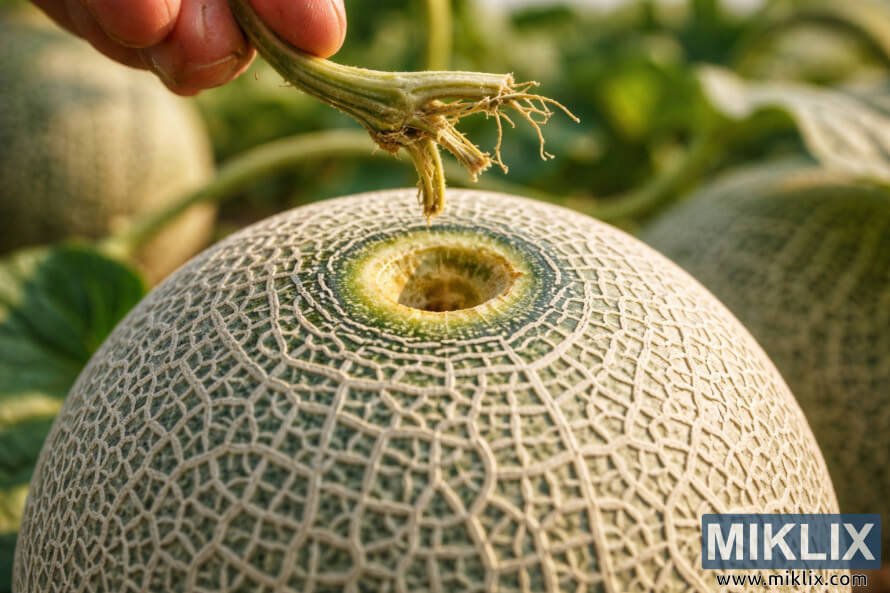
- A crack forms around the stem (called the "slip stage")
- Blossom end (opposite the stem) yields slightly to gentle pressure
Sensory Indicators
- Strong, sweet aroma at the blossom end
- Stem separates easily from the fruit with slight pressure (full slip)
- Fruit feels heavy for its size
- Makes a hollow sound when tapped
Warning: Harvesting too early results in bland, underripe fruit, while waiting too long leads to mushy, overripe melons. Check your plants daily once they near maturity.
Click or tap the image for more information and higher resolutions.
Harvesting Technique
Proper harvesting ensures you don't damage the fruit or the vine:
- Check for full slip – when ripe, the stem should separate easily from the fruit with gentle pressure
- If the fruit doesn't detach easily, it's not fully ripe – wait a few more days
- Harvest in the morning when temperatures are cooler
- Handle fruits gently to avoid bruising
- Leave a small portion of stem attached if you don't plan to consume immediately
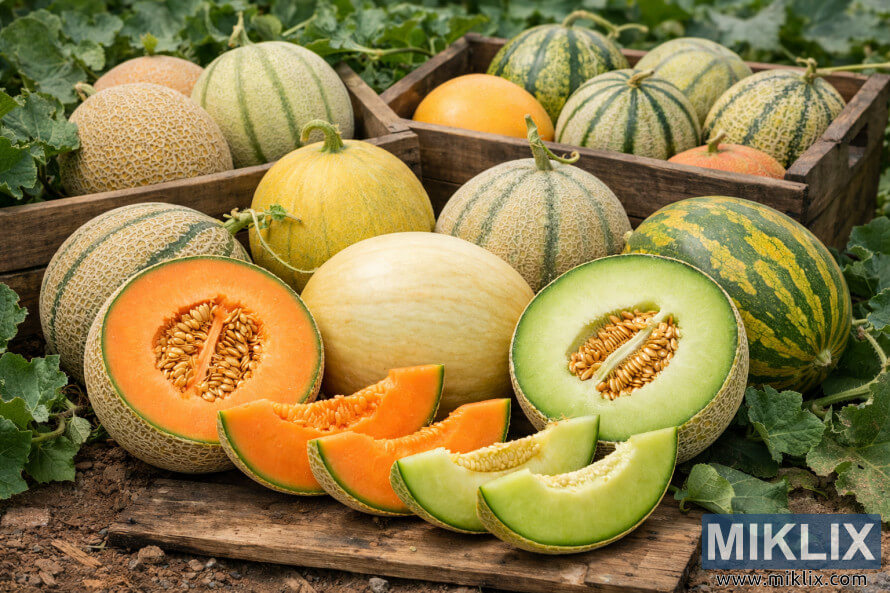
Click or tap the image for more information and higher resolutions.
Storing and Enjoying Your Harvest
After all your hard work, it's time to enjoy the fruits of your labor. Proper storage and creative serving ideas will help you make the most of your cantaloupe harvest.
Storage Tips
- Uncut, ripe cantaloupes can be stored at room temperature for 2-3 days
- For longer storage, refrigerate whole melons for up to 5 days
- Cut cantaloupe should be stored in airtight containers in the refrigerator and consumed within 3 days
- Freeze cubed cantaloupe for smoothies by spreading pieces on a baking sheet, freezing until solid, then transferring to freezer bags
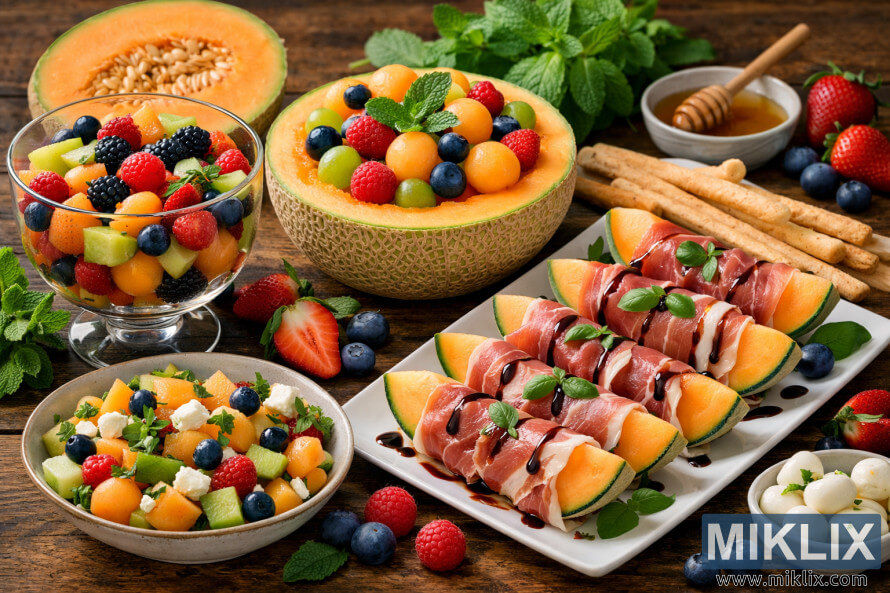
Click or tap the image for more information and higher resolutions.
Delicious Ways to Enjoy Cantaloupe
Fresh Eating
- Sliced or cubed as a refreshing snack
- Wrapped with prosciutto for a sweet-savory treat
- Added to fruit salads with berries and mint
Beverages
- Blended into smoothies with yogurt
- Puréed for refreshing summer agua fresca
- Frozen into ice cubes for flavored water
Culinary Uses
- Grilled slices as a side dish
- Added to salsas with jalapeño and lime
- Puréed into chilled summer soup
The true test of a perfectly ripe cantaloupe is when the sweet aroma fills the room before you even cut into it. That's when you know you've grown something special.
Conclusion
Growing cantaloupe in your home garden offers tremendous rewards – from the satisfaction of nurturing plants from seed to harvest, to the incomparable flavor of perfectly ripened fruit. While cantaloupe requires some specific conditions to thrive, the basic needs are straightforward: plenty of sun, consistent water, and warm temperatures.
Don't be discouraged if your first attempt isn't perfect. Like any gardening endeavor, growing cantaloupe is a learning process that improves with experience. Each season brings new knowledge and better results. The moment you slice into that first homegrown melon, with its intoxicating aroma and sweet, juicy flesh, you'll know that every effort was worthwhile.
So prepare your garden space, select your favorite variety, and get ready to enjoy the sweet taste of summer success. Your cantaloupe adventure awaits!
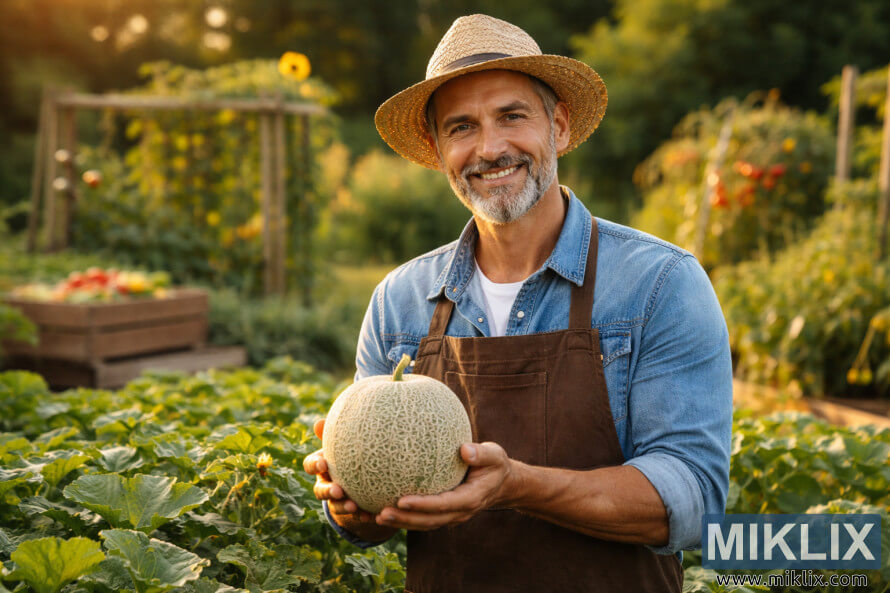
Click or tap the image for more information and higher resolutions.
Frequently Asked Questions
How long does it take for cantaloupe to grow from seed to harvest?
Most cantaloupe varieties take between 70-90 days from seed to harvest, depending on the specific variety and growing conditions. Early varieties like Minnesota Midget can be ready in as little as 70 days, while larger varieties may take up to 90 days to fully mature.
Can I grow cantaloupe in containers?
Yes, you can grow cantaloupe in containers, but you'll need to select compact varieties like Minnesota Midget. Use a container at least 18 inches deep and 24 inches wide with good drainage. Provide a trellis for support and be vigilant about watering, as containers dry out faster than garden soil.
Why are my cantaloupe plants flowering but not producing fruit?
This could be due to several factors: insufficient pollination (try hand-pollinating), extreme temperatures (above 90°F or below 60°F can affect fruit set), inadequate water (especially during flowering), or too much nitrogen fertilizer (which promotes leaf growth at the expense of fruit). Ensure adequate pollinator activity and maintain consistent watering during flowering.
Further Reading
If you enjoyed this post, you may also like these suggestions:
- A Guide to the Best Varieties of Serviceberry Trees to Plant in Your Garden
- Growing Onions: A Complete Guide for Home Gardeners
- From Seed to Harvest: The Complete Guide to Growing Zucchini