
A Complete Guide to Growing Avocados at Home
Published: December 20, 2025 at 11:02:01 PM UTC
There's something deeply satisfying about growing your own avocados. Imagine stepping into your garden to harvest creamy, nutritious fruit that you've nurtured from seed to tree. While growing avocados requires patience, the reward of watching a tiny seed transform into a beautiful tree bearing delicious fruit makes the journey worthwhile.
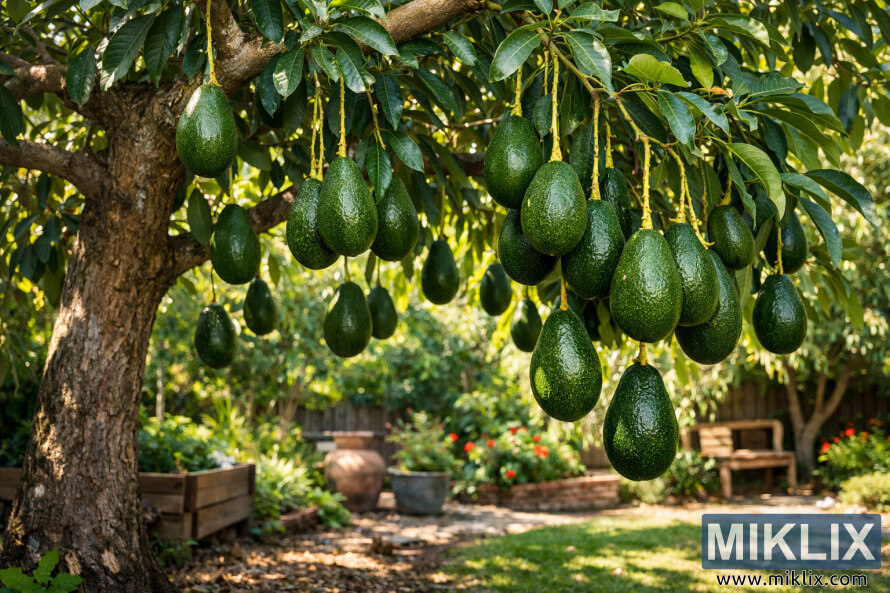
Click or tap the image for more information and higher resolutions.
Why Grow Your Own Avocados?
Growing avocados at home offers numerous benefits beyond the obvious joy of harvesting your own fruit. Avocado trees are evergreen with beautiful, glossy foliage that adds ornamental value to any garden. They can be grown outdoors in suitable climates or as potted plants in cooler regions. Home-grown avocados are fresher, often tastier, and free from commercial pesticides. Plus, there's the satisfaction of nurturing a plant from seed to fruit-bearing tree – a rewarding experience that connects you to the natural growing cycle.
"The best time to plant an avocado tree was 10 years ago. The second best time is today." – Gardening wisdom adapted for the patient avocado grower
Preparing Your Avocado Seed
While purchasing a grafted tree from a nursery will yield fruit faster (3-4 years versus 5-13 years for seed-grown trees), starting from seed is an enjoyable and educational process. Here's how to prepare an avocado seed for germination:
The Toothpick Method
- Extract the seed - Carefully remove the seed from a ripe avocado without cutting or damaging it.
- Clean thoroughly - Wash the seed under warm water to remove all fruit flesh, which can cause mold.
- Identify top and bottom - The bottom (slightly flatter with a round marking) will grow roots, while the top (more pointed) will sprout the stem.
- Insert toothpicks - Stick 3-4 toothpicks around the middle of the seed, angling slightly downward.
- Suspend in water - Place the seed over a glass of water with the bottom submerged about 1 inch. The toothpicks should rest on the rim of the glass.
- Place in warm location - Set the glass in a warm spot with indirect sunlight. Change the water weekly to prevent mold.
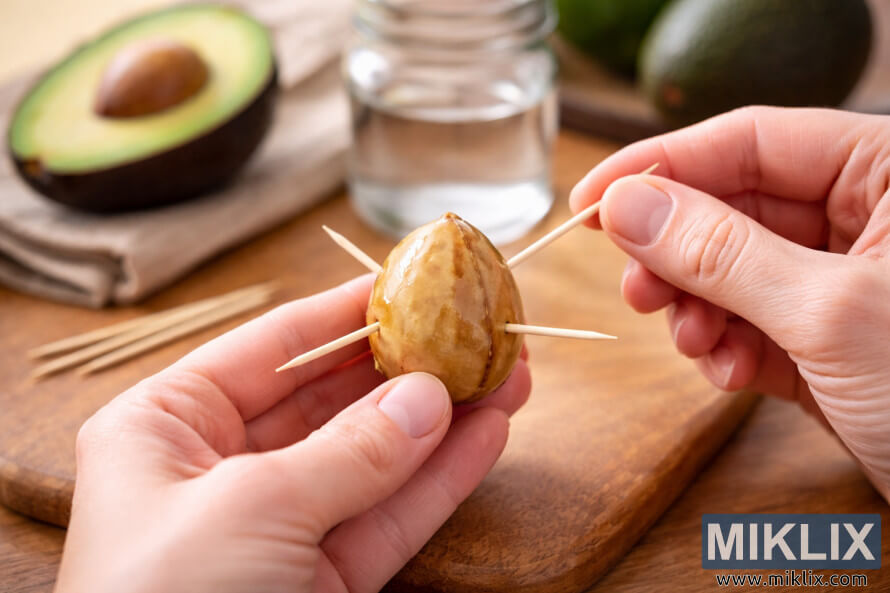
Click or tap the image for more information and higher resolutions.
The Paper Towel Method
An alternative approach that many gardeners find more reliable:
Clean the seed as described above.
Wrap the seed in a damp (not soaking) paper towel or cloth.
Place in an unsealed plastic bag and store in a warm, dark place.
Check every 4-5 days to ensure the paper towel remains moist.
After 2-6 weeks, the seed should crack and begin to sprout roots.
Patience is key! Avocado seeds typically take 2-6 weeks to sprout, depending on temperature and conditions. Don't give up if you don't see immediate results.
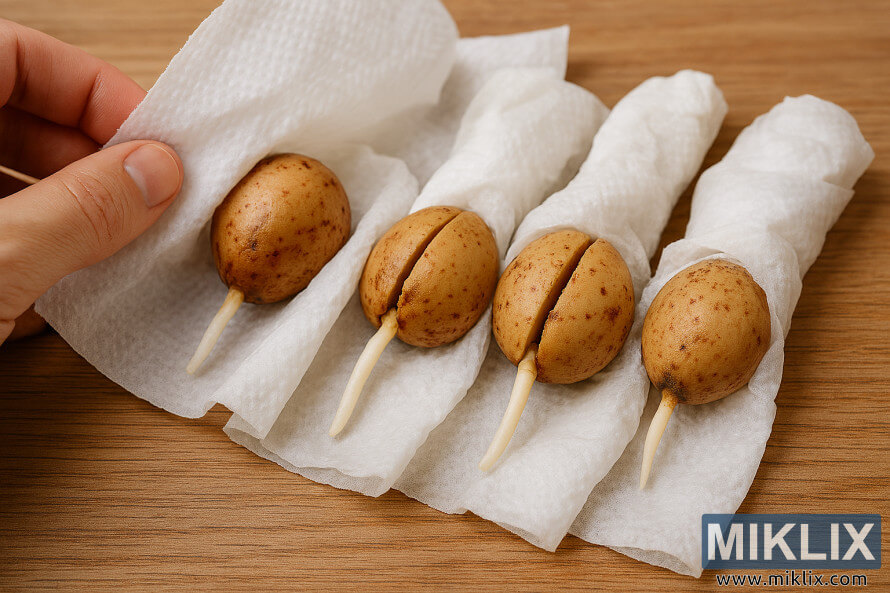
Click or tap the image for more information and higher resolutions.
Planting Your Sprouted Avocado Seed
Once your avocado seed has sprouted and developed roots about 2-3 inches long, it's time to transfer it to soil. This crucial step sets the foundation for your future tree's health and growth.
Soil Requirements
Avocados thrive in well-draining, slightly acidic soil with a pH between 6 and 6.5. The ideal soil composition is:
Sandy loam - Provides excellent drainage while retaining some moisture
Rich in organic matter - Adds nutrients and improves soil structure
Well-aerated - Allows oxygen to reach the roots
You can create a suitable potting mix by combining:
- 2 parts quality potting soil
- 1 part perlite or coarse sand (for drainage)
- 1 part compost or well-rotted organic matter
Choosing the Right Container
Select a pot that is:
8-10 inches in diameter - Provides adequate space for initial growth
Deep rather than wide - Accommodates the avocado's taproot
Has drainage holes - Essential to prevent root rot
Planting Process
Fill your pot halfway with the prepared soil mix.
Place the sprouted seed in the center with the roots pointing downward.
Add more soil around the seed, leaving the top half exposed above the soil line.
Water thoroughly until water drains from the bottom holes.
Place in a warm location with bright, indirect sunlight.
Common mistake: Burying the entire seed. Always leave the top half of the seed exposed to prevent rotting and allow proper stem development.
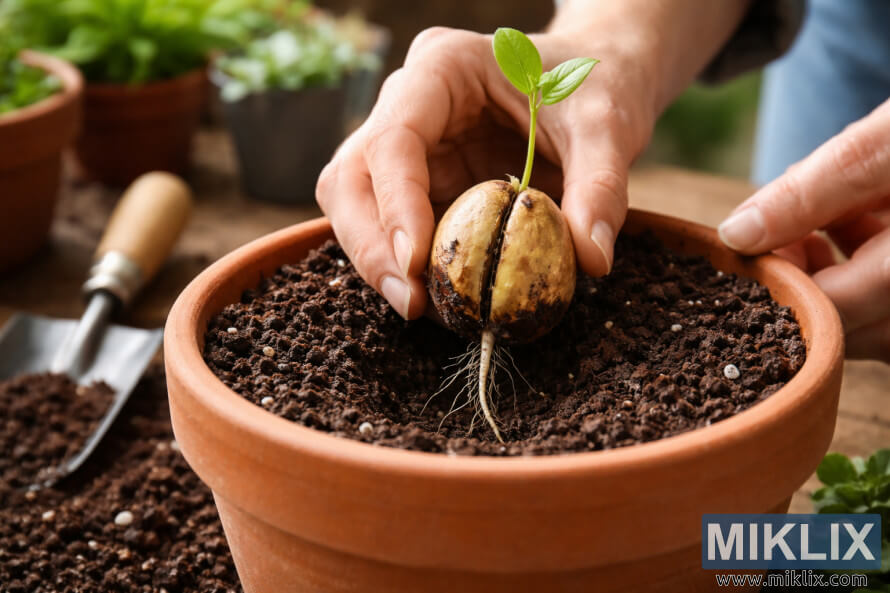
Click or tap the image for more information and higher resolutions.
Essential Supplies for Growing Avocados
For Germination
- Fresh, ripe avocados
- Toothpicks
- Clear glass or jar
- Paper towels
- Plastic food bag
For Planting
- Quality potting soil
- Perlite or coarse sand
- 8-10 inch pot with drainage
- Organic compost
- pH testing kit
For Ongoing Care
- Balanced fertilizer (NPK 10-10-10)
- Pruning shears
- Mulch
- Watering can
- Frost cloth (for cold climates)
Caring for Your Avocado Plant
Proper care is essential for your avocado plant's health and eventual fruit production. Follow these guidelines to help your tree thrive.
Sunlight Requirements
Avocados are sun-loving plants that require:
6-8 hours of direct sunlight daily - Essential for healthy growth and eventual fruit production
Protection from intense afternoon sun - Especially important for young plants in hot climates
Gradual sun exposure - Acclimate indoor-started plants slowly to outdoor conditions
Watering Schedule
Avocados need consistent moisture but are susceptible to root rot if overwatered:
Young plants (1st year) - Water when the top inch of soil feels dry (typically 2-3 times per week)
Established plants - Deep watering once weekly, allowing soil to dry slightly between waterings
Signs of overwatering - Yellowing leaves, wilting despite moist soil
Signs of underwatering - Brown, crispy leaf edges, slow growth
Temperature Requirements
Avocados are tropical plants with specific temperature needs:
Ideal temperature range - 60-85°F (15-29°C)
Cold tolerance - Most varieties suffer damage below 32°F (0°C)
Heat tolerance - Can withstand heat but may stress above 90°F (32°C)
Cold protection tip: If growing outdoors in marginal climates, protect young trees during frost by covering with frost cloth or bringing potted plants indoors.
Fertilization
Proper nutrition supports healthy growth and eventual fruiting:
First year - No fertilizer needed for the first 2-3 months after planting
Young trees - Apply balanced fertilizer (10-10-10) quarterly at half strength
Mature trees - Fertilize 3 times yearly with a specialized avocado or citrus fertilizer
Zinc supplementation - Avocados often benefit from additional zinc; look for fertilizers containing this micronutrient
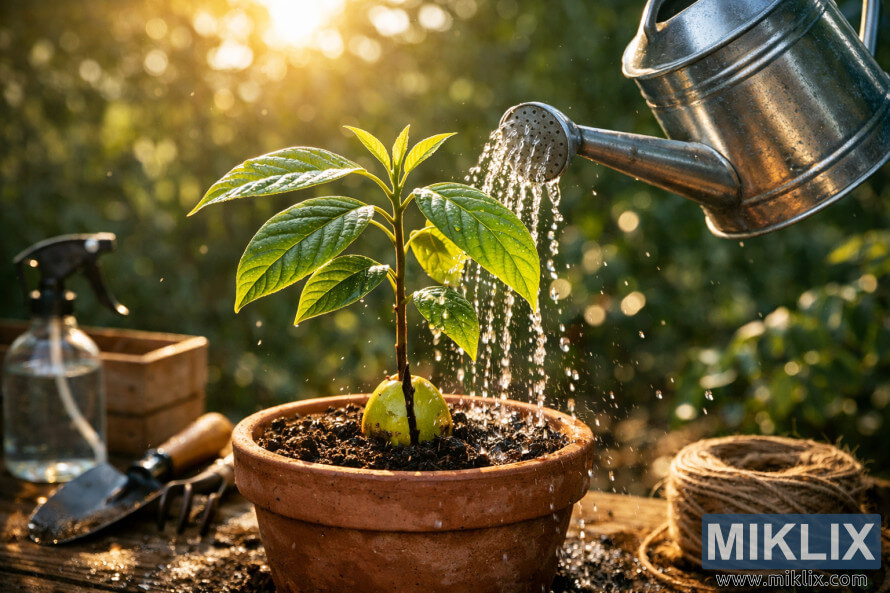
Click or tap the image for more information and higher resolutions.
Pruning and Training Your Avocado Tree
Strategic pruning helps develop a stronger, more productive avocado tree with a better structure for fruit production.
When to Prune
First pruning - When the seedling reaches 12 inches tall, pinch or cut the top set of leaves
Subsequent pruning - Each time the plant grows another 6 inches
Seasonal timing - Best done in spring or early summer
Pruning Techniques
Pinch back new growth - Use your fingers to remove the newest leaves at the top
Remove damaged branches - Cut away any dead, diseased, or crossing branches
Thin interior growth - Improve air circulation by selectively removing some inner branches
Height control - Trim the top to maintain a manageable size, especially for indoor plants
Important: Always use clean, sharp tools when pruning to prevent disease transmission and ensure clean cuts that heal quickly.
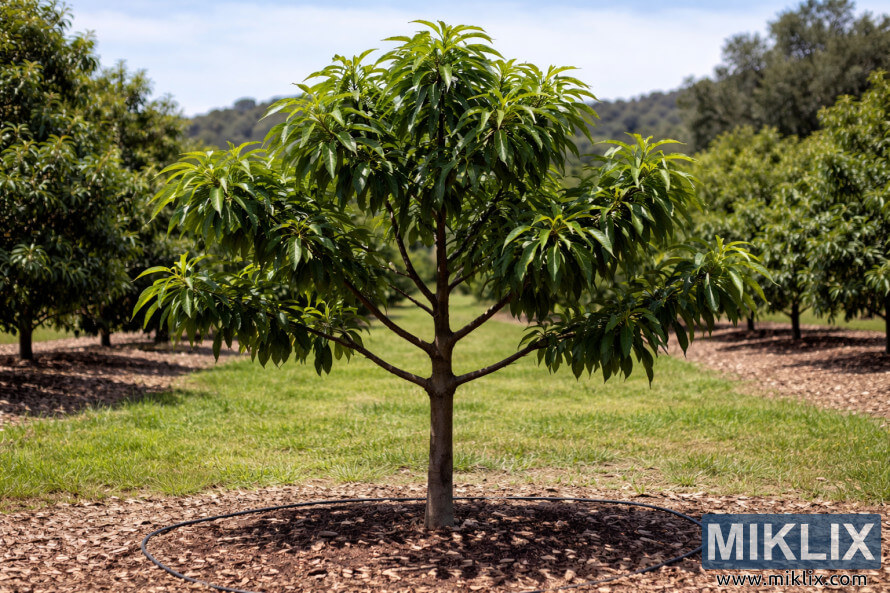
Click or tap the image for more information and higher resolutions.
Troubleshooting Common Problems
Even with proper care, avocado plants can encounter issues. Here's how to identify and address common problems:
Recognizing leaf symptoms helps identify and address plant problems early
Yellow Leaves
Possible causes: Overwatering, poor drainage, nutrient deficiency
Solution: Check soil moisture and reduce watering if soil feels soggy. Ensure pot has adequate drainage holes. If soil is well-balanced, apply a balanced fertilizer with micronutrients.
Brown Leaf Tips
Possible causes: Underwatering, low humidity, salt buildup from fertilizer
Solution: Water more consistently, increase humidity by misting leaves or using a humidifier. Flush soil thoroughly to remove salt buildup.
Root Rot
Possible causes: Overwatering, poor drainage, compacted soil
Solution: Reduce watering frequency, repot in fresh well-draining soil if necessary. In severe cases, you may need to remove the plant, trim affected roots, and repot in fresh soil.
Pests
Common pests: Spider mites, scale insects, thrips
Solution: Spray leaves with insecticidal soap or neem oil. For severe infestations, isolate the plant and treat weekly until resolved. Introducing beneficial insects like ladybugs can help control pest populations naturally.
Slow Growth
Possible causes: Insufficient light, improper temperature, root-bound container
Solution: Move to a sunnier location, maintain temperatures between 60-85°F, and repot into a larger container if roots are circling the pot.
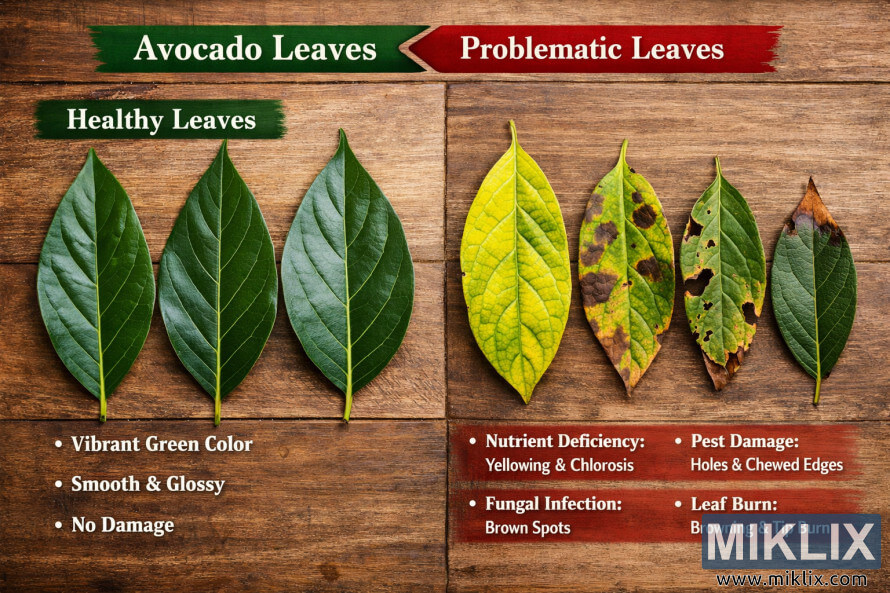
Click or tap the image for more information and higher resolutions.
Timeline: From Seed to Fruit
Understanding the growth timeline helps set realistic expectations for your avocado growing journey.
| Germination | 2-6 weeks | Seed cracks, roots emerge, followed by stem | Consistent moisture, warm temperature |
| Early Seedling | 2-3 months | First true leaves form, stem strengthens | Bright indirect light, regular watering |
| Young Plant | 6-12 months | Multiple sets of leaves, increasing height | Introduce fertilizer, begin pruning |
| Juvenile Tree | 1-3 years | Significant height gain, thickening trunk | Repotting, structural pruning |
| Mature Tree | 3-5 years | Full canopy, possible flowering (grafted trees) | Regular fertilization, pest monitoring |
| Fruit Production | 5-13 years (seed-grown) | 3-4 years (grafted) | Flowering followed by fruit set |
Note: Timeline varies significantly based on growing conditions, variety, and whether the tree was started from seed or purchased as a grafted plant. Seed-grown trees take considerably longer to fruit than nursery-bought grafted trees.
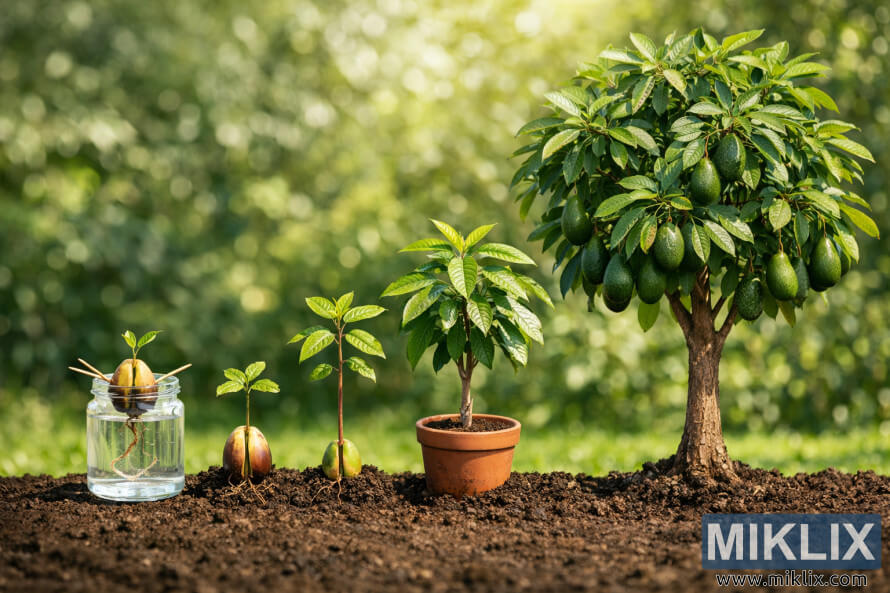
Click or tap the image for more information and higher resolutions.
Harvesting Your Avocados
After years of patience and care, harvesting your home-grown avocados is incredibly rewarding. Unlike many fruits, avocados don't ripen on the tree – they mature on the tree but ripen after picking.
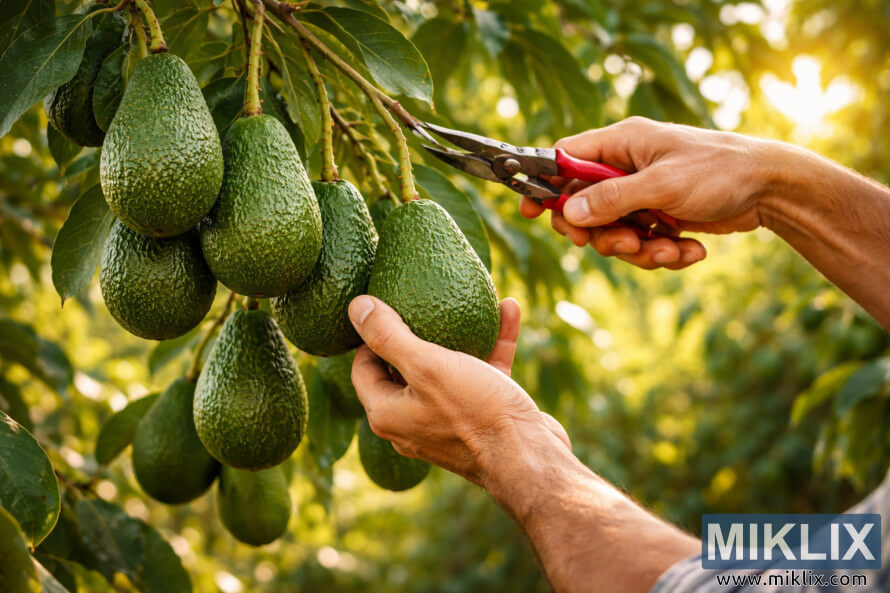
Harvest avocados by cutting the stem rather than pulling the fruit
When to Harvest
- Size indicator - Fruit has reached mature size for the variety
- Color changes - Some varieties lighten or darken when mature
- Test picking - Harvest one fruit and allow it to ripen as a test
- Seasonal timing - Most varieties have specific harvest seasons
How to Harvest
- Use pruning shears or scissors to cut the stem about 1/2 inch above the fruit.
- Never pull avocados from the tree as this can damage both fruit and branches.
- Handle harvested fruit carefully to avoid bruising.
- Place at room temperature to ripen (typically 3-7 days).
- Test ripeness by gently pressing – ripe avocados yield slightly to pressure.
Ripening tip: To speed up ripening, place avocados in a paper bag with a banana or apple. These fruits release ethylene gas that accelerates the ripening process.
Click or tap the image for more information and higher resolutions.
Want Faster Results? Consider Grafted Trees
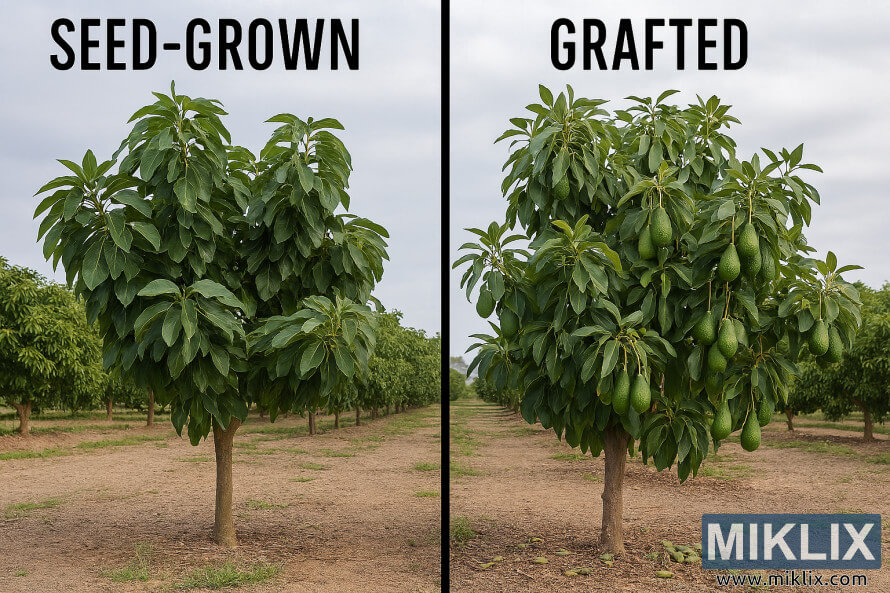
If waiting 5-13 years for fruit seems too long, consider starting with a grafted avocado tree from a nursery.
Grafted trees (right) produce fruit much sooner than seed-grown trees (left)
Benefits of Grafted Trees
Advantages
- Fruit production in 3-4 years versus 5-13 years
- Known fruit quality and characteristics
- Selected for disease resistance
- Varieties chosen for your climate
- More compact growth habit
Considerations
- Higher initial cost ($25-100+)
- Miss the experience of growing from seed
- Limited variety selection at local nurseries
- May require special care during establishment
- Still requires patience for fruit production
Click or tap the image for more information and higher resolutions.
Popular Avocado Varieties for Home Growers
Hass
The most popular commercial variety with rich, creamy flesh and excellent flavor. Medium-sized tree, cold-hardy to about 30°F.
Type A
Fuerte
Smooth, green skin with buttery flesh. More cold-tolerant than Hass (down to 26°F) with a slightly larger growth habit.
Type B
Little Cado (Wurtz)
The only true dwarf variety, growing 8-10 feet tall. Perfect for containers and small spaces. Self-pollinating with good production.
Types A & B
Pollination tip: For best fruit production, plant both Type A and Type B avocado varieties within 25-30 feet of each other to improve cross-pollination.
Growing Avocados in Containers
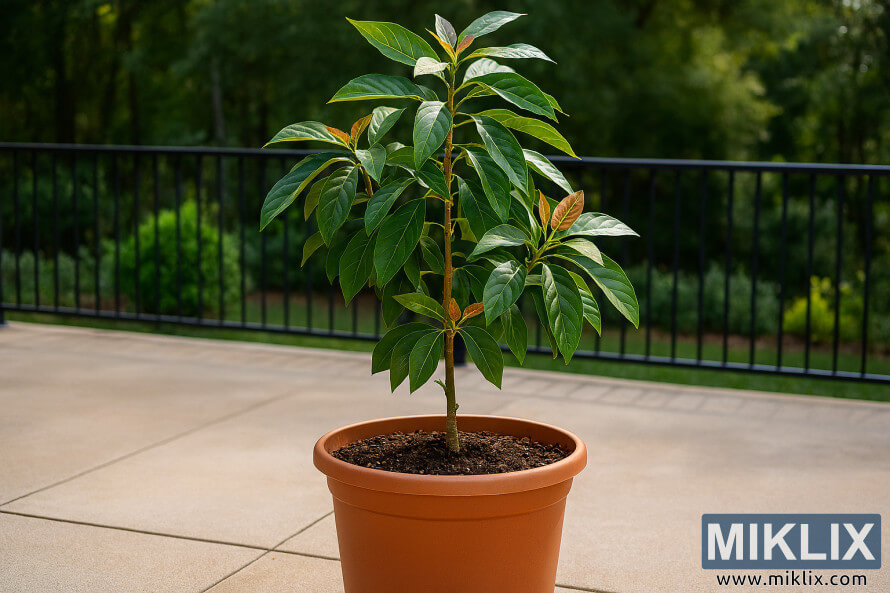
Limited space? You can still grow avocados in containers, making them suitable for patios, balconies, or even indoor growing in colder climates.
Container-grown avocados are perfect for small spaces and colder climates
Container Growing Tips
Choose the right variety - Dwarf varieties like 'Little Cado' are ideal for containers
Select a large container - Start with at least a 15-gallon pot and upgrade as the tree grows
Ensure excellent drainage - Multiple drainage holes are essential
Use quality potting mix - Commercial cactus/citrus mixes work well
Monitor water carefully - Container plants dry out faster than in-ground trees
Fertilize regularly - Container plants need more frequent feeding
Provide winter protection - Move containers to protected areas during cold weather
Important: Container-grown avocados will need to be repotted every 2-3 years as they outgrow their containers. Watch for roots circling at the bottom of the pot as a sign it's time to repot.
Click or tap the image for more information and higher resolutions.
Conclusion: Your Avocado Growing Journey
Growing avocados at home is a rewarding experience that connects you to the natural cycle of food production. While it requires patience – especially if starting from seed – the satisfaction of nurturing a plant from its earliest stages to eventually harvesting your own fruit is incomparable.
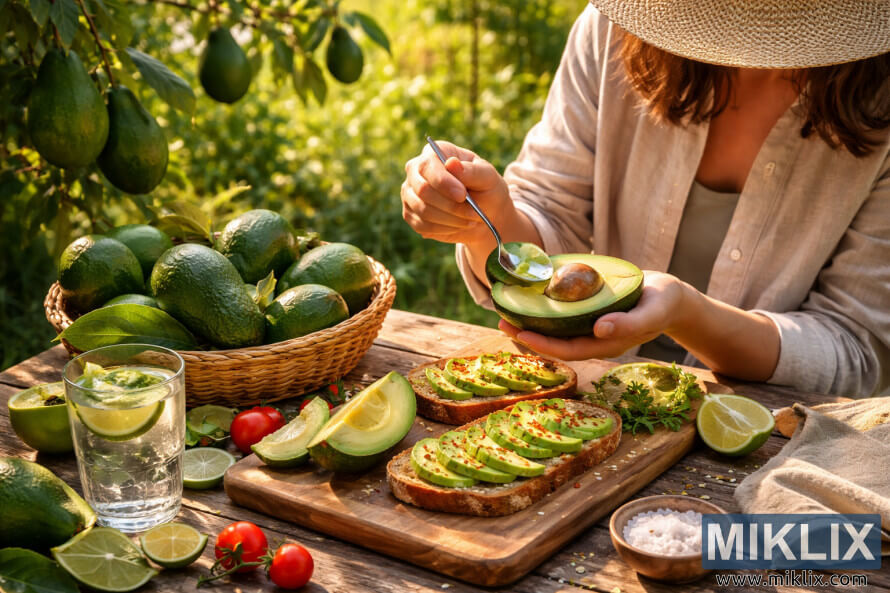
The ultimate reward: enjoying your own homegrown avocados
Whether you choose to start from seed for the full experience or opt for a grafted tree for faster results, the journey of growing avocados offers ongoing learning and connection to your food source. Remember that even if your tree doesn't produce fruit for many years, you'll still enjoy the beauty of its glossy evergreen foliage and the satisfaction of nurturing a living thing.
Start your avocado growing adventure today – your future self will thank you when you're enjoying fresh, homegrown avocados straight from your garden!
Click or tap the image for more information and higher resolutions.
Further Reading
If you enjoyed this post, you may also like these suggestions:
- A Complete Guide to Growing Radicchio in Your Own Garden
- A Guide to the Best Tomato Varieties to Grow Yourself
- A Guide to Growing the Best Kale in Your Garden