
Image: Common Goji Berry Plant Problems and Their Visual Symptoms
Published: December 1, 2025 at 8:54:29 PM UTC
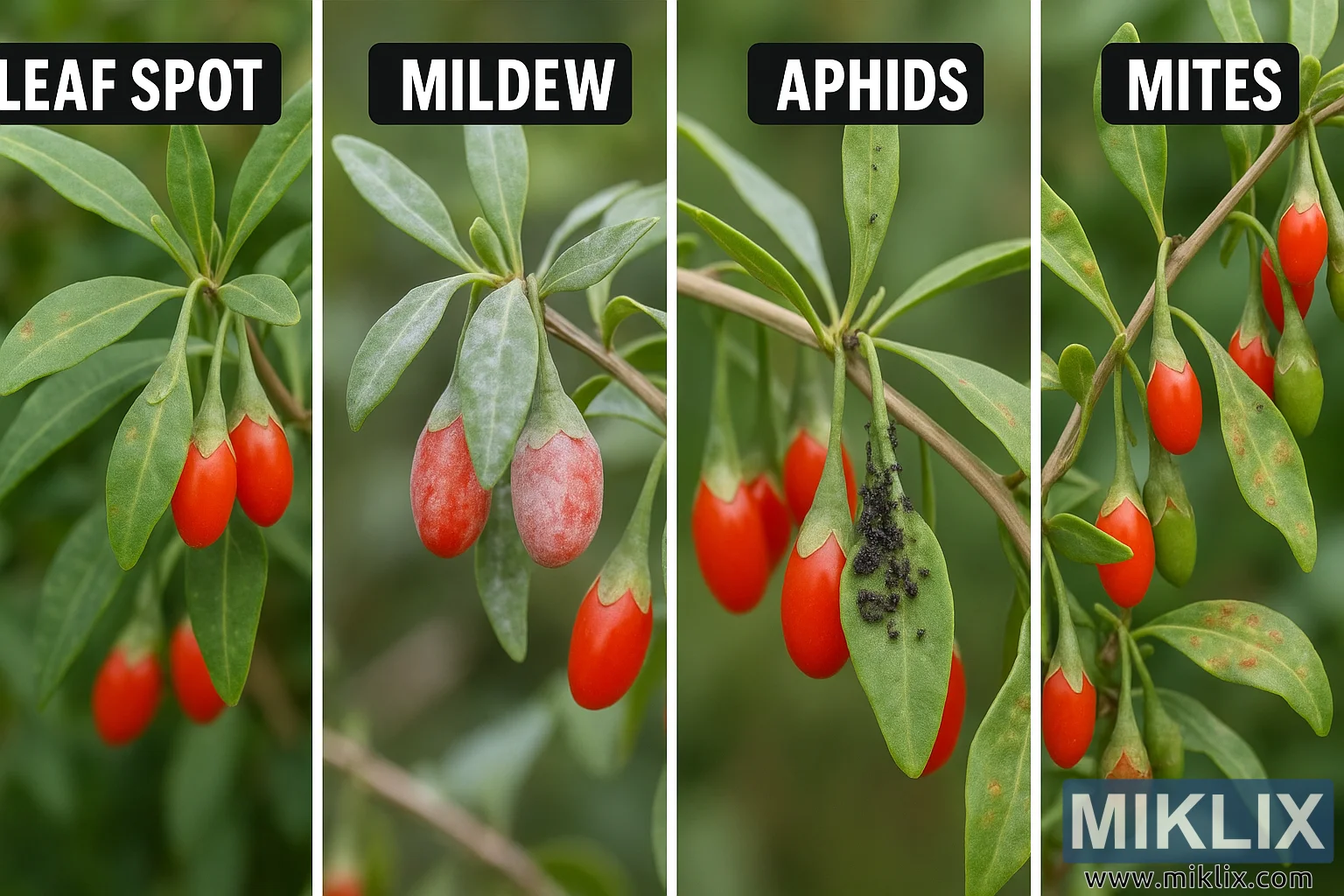
High-resolution photo collage illustrating common goji berry plant problems — leaf spot, powdery mildew, aphid infestation, and mite damage — with vivid, labeled close-ups of leaves and berries.

Available versions of this image
The image files available for download below are less compressed and higher resolution - and as a result of that, higher quality - than the images embedded in articles and pages on this website, which are more optimized for file size in order to reduce bandwidth consumption.
Regular size (1,536 x 1,024)


Large size (3,072 x 2,048)
Very large size (4,608 x 3,072)
Extra large size (6,144 x 4,096)
Comically large size (1,048,576 x 699,051)
- Still uploading... ;-)
Image description
This high-resolution, landscape-oriented composite image presents a visual guide to four of the most common problems that affect goji berry (Lycium barbarum) plants. The image is divided into four evenly sized vertical panels, each highlighting a distinct issue: leaf spot, mildew, aphids, and mites. Above each section, a bold black banner with white capitalized text clearly identifies the problem. The visual composition is sharp, evenly lit, and professionally styled to serve as an educational reference for gardeners, horticulturists, and agricultural professionals seeking to diagnose goji plant health issues through visual cues.
In the first panel, labeled “LEAF SPOT,” the goji plant shows leaves speckled with irregular brown and yellow lesions, typical of fungal or bacterial leaf spot diseases. The berries remain red and plump, but the leaves exhibit distinct damage, with small, circular spots of necrosis scattered across the surface. This section demonstrates early-stage infection symptoms that can spread under humid conditions.
The second panel, labeled “MILDEW,” depicts powdery mildew infection on goji berry leaves and fruit. A thin, white, powder-like coating covers the upper surfaces of the leaves and partially extends onto the berries. The texture of the mildew contrasts sharply with the smooth red berries, creating a visual emphasis on the diseased areas. The leaves appear slightly curled and duller in color, reflecting the fungal stress affecting the plant’s photosynthetic surfaces.
The third panel, labeled “APHIDS,” captures a cluster of small, black aphids infesting the underside of a leaf and the stem near the fruit. The insects are clearly visible and densely grouped, feeding on plant sap and potentially transmitting viral diseases. The affected leaves show mild curling, and the overall appearance conveys the sticky, weakened texture typical of aphid damage. The berries in this panel remain bright and intact, but their proximity to the infestation indicates the potential spread of pest activity.
The fourth and final panel, labeled “MITES,” illustrates early mite damage on goji leaves. Small, rust-colored specks and stippled patches are visible across the foliage, suggesting the feeding activity of spider mites or related species. The leaves exhibit slight discoloration and fine webbing patterns may be faintly suggested. The red and green berries hanging from the stem contrast vividly against the subtly damaged foliage, making the pest impact both recognizable and realistic.
Overall, the image combines visual clarity, scientific accuracy, and strong compositional design to communicate key diagnostic signs of goji berry plant health problems. The four sections together form a cohesive educational resource suitable for horticultural publications, plant pathology training, or digital agricultural guides. The consistent natural lighting, vibrant color contrast, and balanced framing make the image both visually appealing and highly informative, offering a detailed yet accessible look into common stress symptoms affecting goji plants.
The image is related to: A Guide to Growing Goji Berries in Your Home Garden