
Image: Lettuce Infestation and Wildlife Damage
Published: February 5, 2026 at 5:32:47 PM UTC
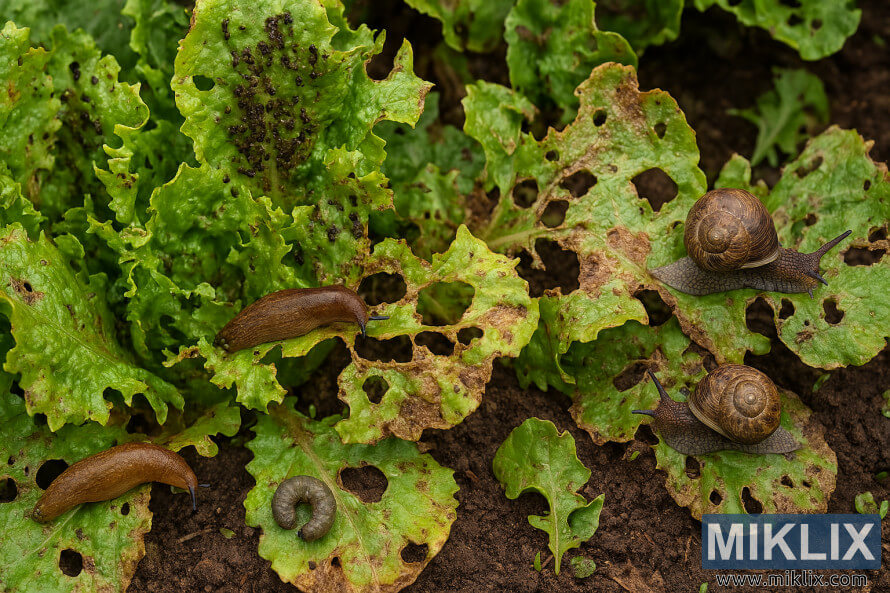
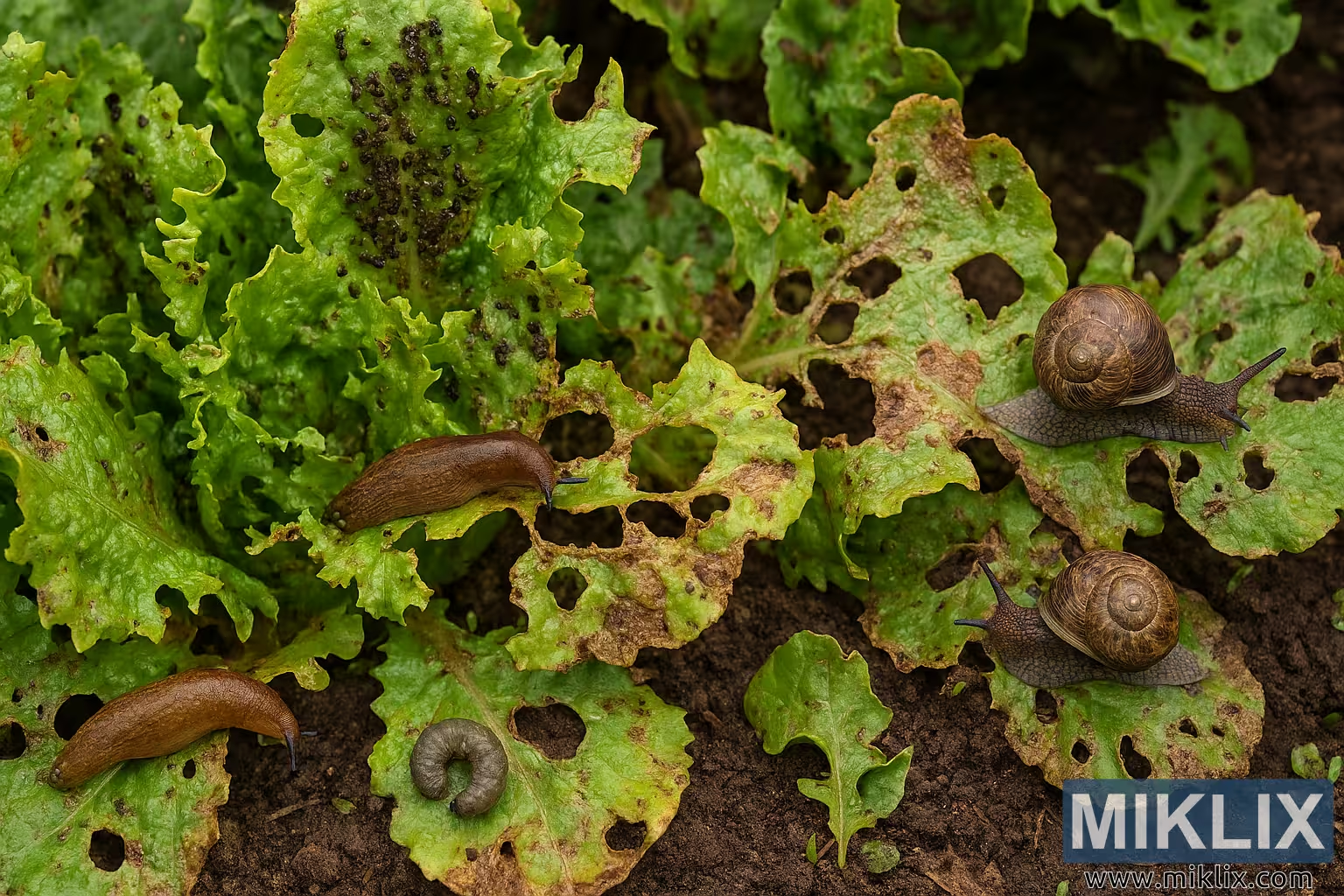
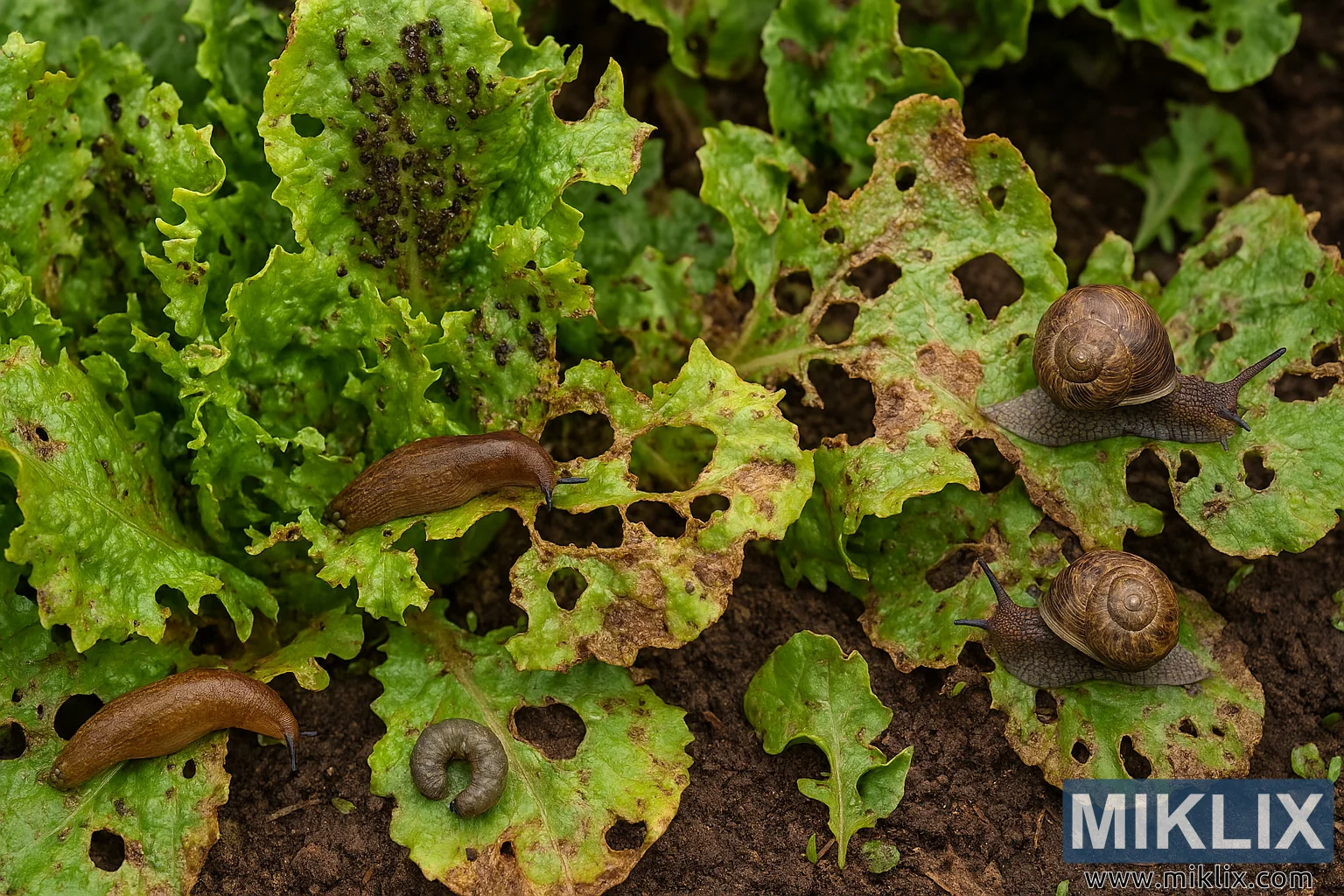
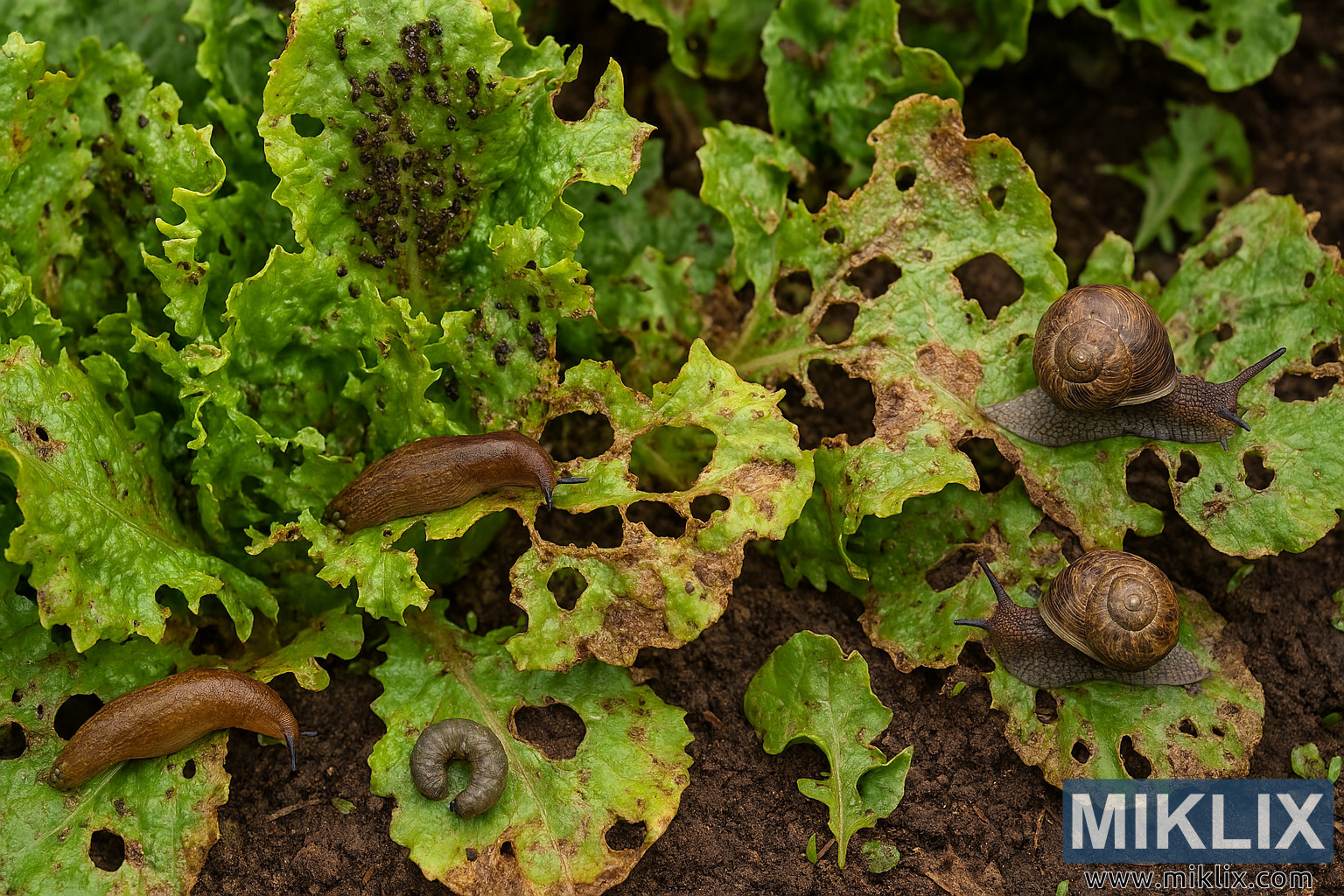
High-resolution image showing lettuce plants infested by aphids, slugs, snails, and cutworms, with visible bite damage from rabbits and deer.
Available versions of this image
The image files available for download below are less compressed and higher resolution - and as a result of that, higher quality - than the images embedded in articles and pages on this website, which are more optimized for file size in order to reduce bandwidth consumption.
Regular size (1,536 x 1,024)
Large size (3,072 x 2,048)
Very large size (4,608 x 3,072)
Extra large size (6,144 x 4,096)
Comically large size (1,048,576 x 699,051)
- Still uploading... ;-)
Image description
This high-resolution landscape image captures a close-up view of lettuce plants suffering from a severe infestation and wildlife damage. The lettuce leaves, once vibrant green, now display a mottled palette of yellowing, browning, and decay. Their surfaces are riddled with irregular holes, jagged edges, and torn sections, revealing the extent of feeding damage caused by multiple pests and herbivores.
Clusters of aphids dominate the central veins and undersides of the leaves. These tiny, black-bodied insects form dense colonies, some interspersed with pale cast skins. Their presence is most concentrated in the crevices and folds of the leaves, contributing to a sticky, unhealthy sheen.
Two brown slugs are visible on the damaged foliage. One slug, centrally positioned, glides across a leaf with its moist, elongated body, leaving behind a glistening mucus trail. The other slug, located on the lower left, stretches forward, its head pointed toward a fresh bite mark. Both slugs exhibit a textured, slimy appearance, emphasizing their destructive role in the garden ecosystem.
Two snails with spiraled brown shells appear on the right side of the image. Their tentacles are extended as they navigate the ravaged lettuce. One snail is perched on a leaf edge, while the other moves toward the center, both contributing to the slow but steady degradation of the crop.
Near the bottom center, a cutworm is curled into a tight C-shape on a partially eaten leaf. Its grayish-brown segmented body is plump and slightly raised, indicating recent activity. The cutworm’s presence suggests nocturnal feeding, often severing young stems and causing further plant collapse.
The soil beneath the lettuce is dark, moist, and speckled with organic debris. It contrasts sharply with the damaged foliage above, hinting at a once-thriving garden now under siege. The background features more lettuce plants in similar condition, slightly blurred to maintain focus on the foreground pests and damage.
The image also implies larger herbivore activity. The torn and shredded leaf edges, some with wide bite marks and uneven tears, suggest feeding by rabbits and deer. These marks differ from insect damage by their size and shape, often removing entire sections of leaves and leaving behind ragged stubs.
Overall, the image presents a vivid and unsettling portrait of pest pressure and wildlife interference in a vegetable garden. It serves as a powerful visual reference for agricultural diagnostics, pest management education, and ecological awareness.
The image is related to: A Guide to Growing Lettuce in Your Own Garden