
Image: Common Elderberry Pests and Diseases: Visual Identification Guide
Published: November 11, 2025 at 9:12:17 PM UTC
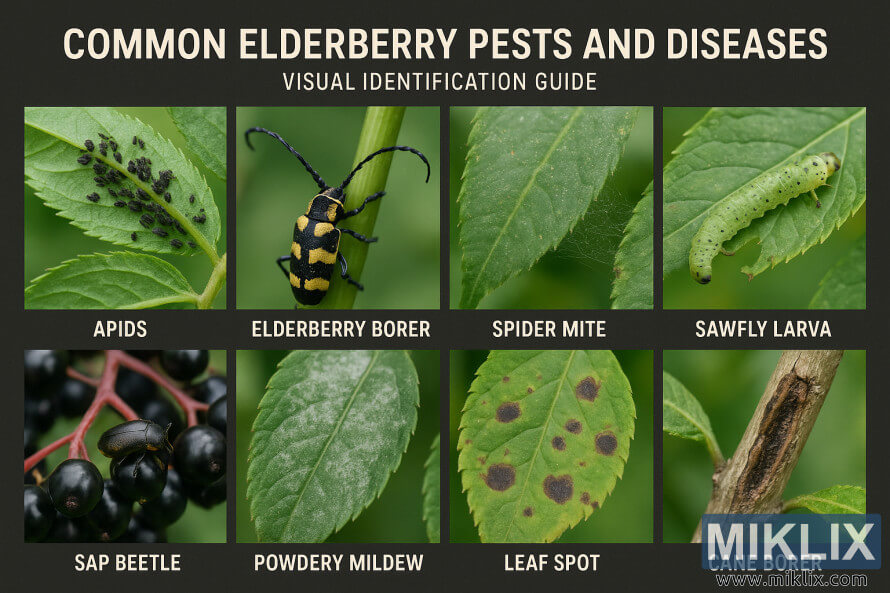
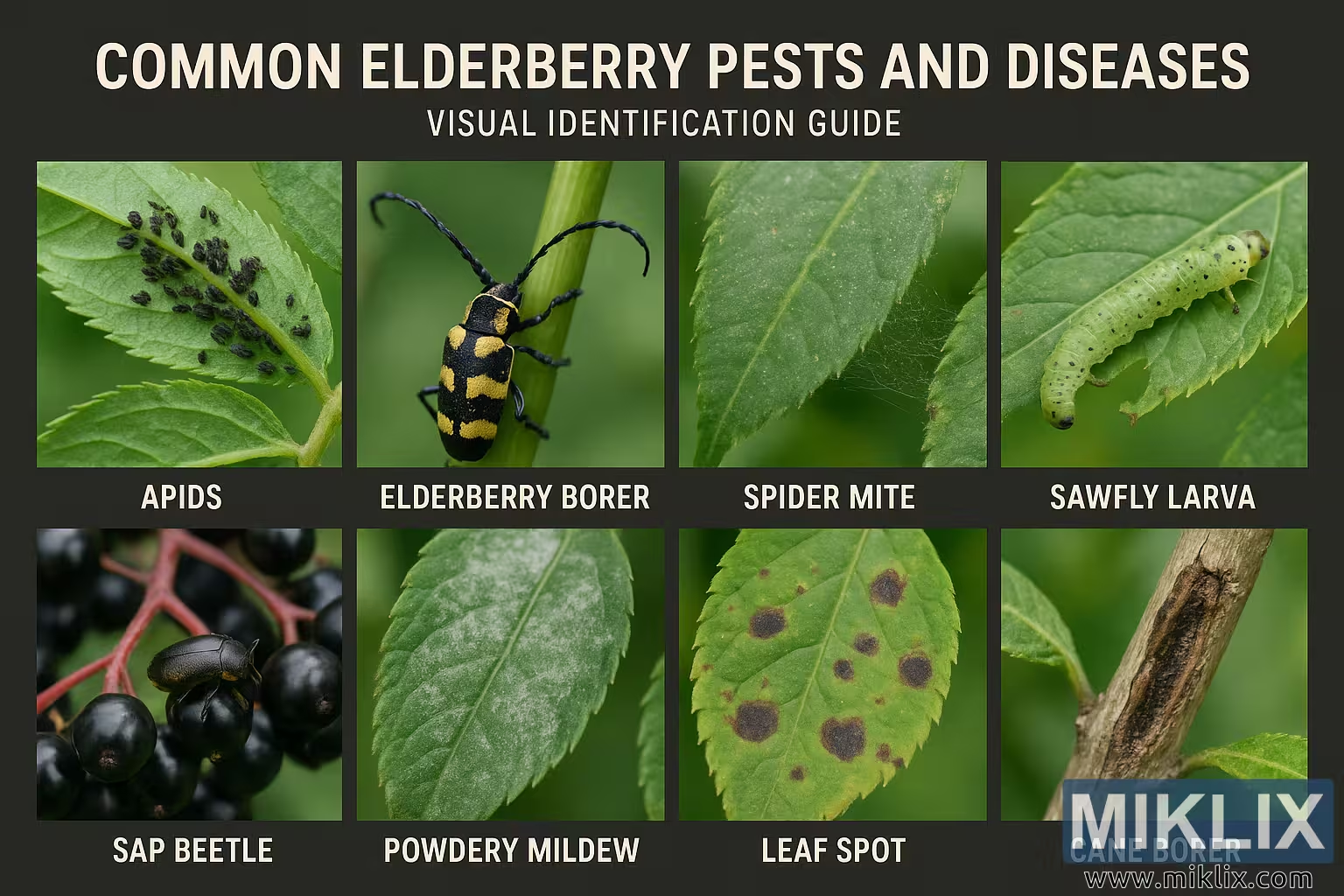
A high-resolution visual guide to common elderberry pests and diseases, featuring clear images and labels for easy identification of aphids, borers, mites, larvae, beetles, and fungal issues affecting elderberries.
Available versions of this image
The image files available for download below are less compressed and higher resolution - and as a result of that, higher quality - than the images embedded in articles and pages on this website, which are more optimized for file size in order to reduce bandwidth consumption.
Regular size (1,536 x 1,024)
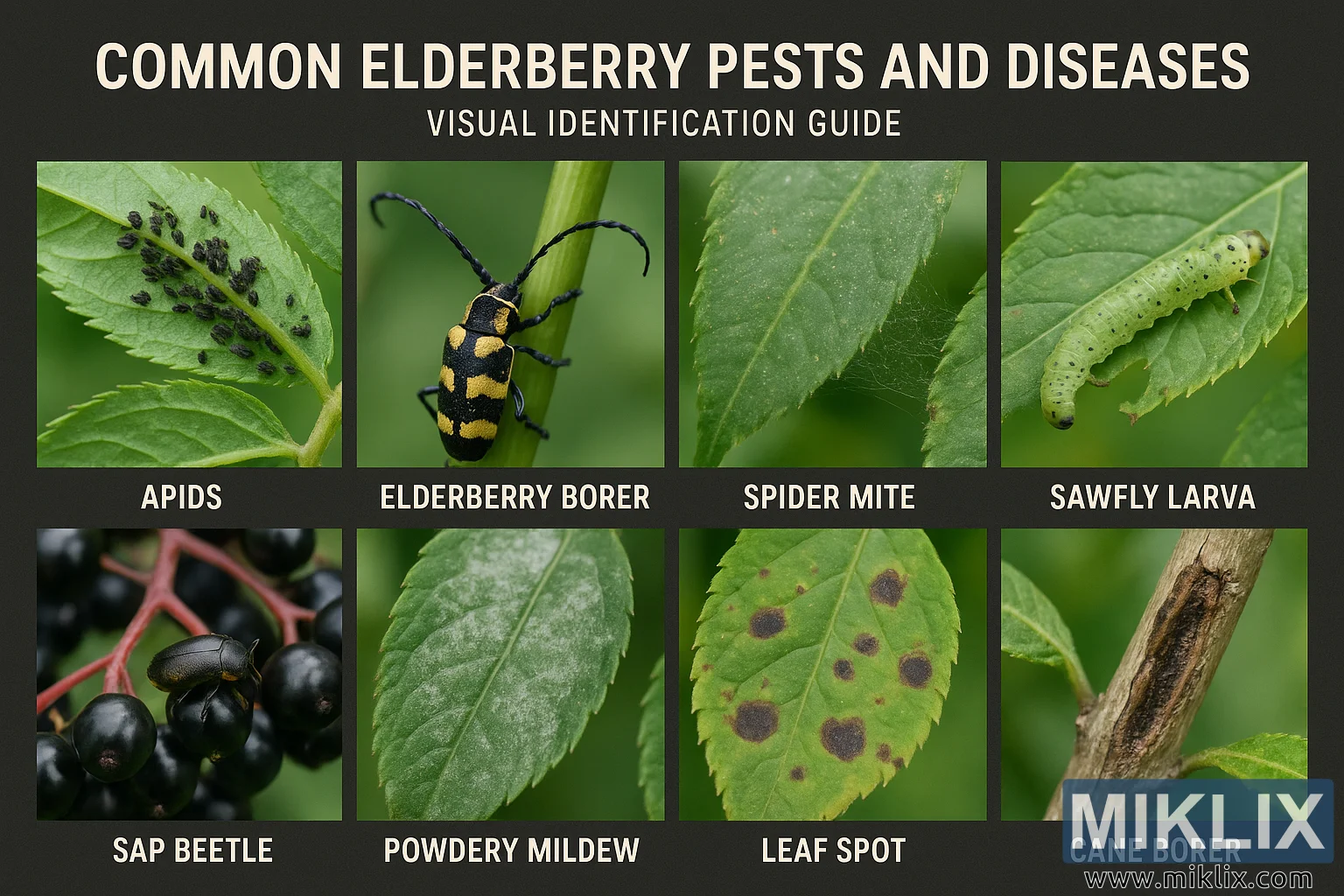
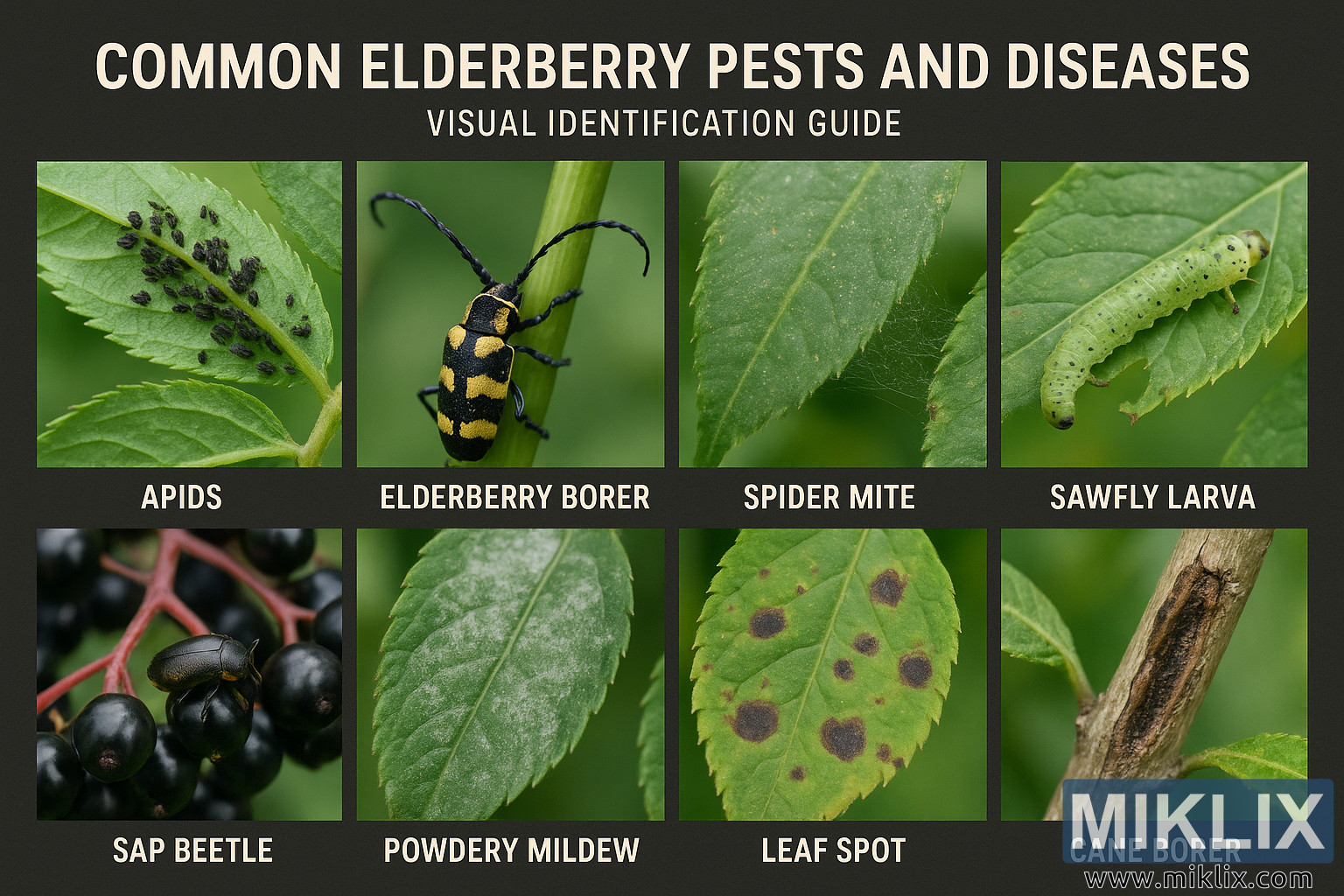
Large size (3,072 x 2,048)
Very large size (4,608 x 3,072)
Extra large size (6,144 x 4,096)
Comically large size (1,048,576 x 699,051)
- Still uploading... ;-)
Image description
The image is a landscape-oriented, high-resolution photographic guide titled “Common Elderberry Pests and Diseases: Visual Identification Guide.” It is designed as an educational resource to help gardeners, horticulturists, and agricultural professionals recognize common insect pests and fungal infections that affect elderberry (Sambucus) plants. The layout is clean and structured, featuring eight individual close-up photographs of specific pests and diseases, each labeled with bold, white text beneath the image for easy reference. The background of the guide is dark gray or charcoal, creating a strong contrast that helps the images and text stand out clearly.
In the top row, from left to right, the four images show: (1) Aphids clustered on the underside of an elderberry leaf, appearing as small black or dark green soft-bodied insects sucking sap and causing leaf curling and discoloration; (2) an Elderberry Borer, a striking longhorn beetle with a yellow-and-black banded body clinging to a green stem, which tunnels into canes and weakens plant structure; (3) a Spider Mite infestation, visible as tiny pale specks and fine webbing on a green elderberry leaf, causing stippling damage and leaf bronzing; and (4) a Sawfly Larva, a pale green, segmented caterpillar-like larva with a dark head, feeding along the edge of a leaf and creating scalloped chewing damage.
The bottom row continues with: (5) a Sap Beetle, a small, dark, shiny beetle resting on ripe elderberries, often attracted to damaged fruit and capable of spreading rot; (6) Powdery Mildew, shown as a white or grayish powdery fungal coating on the surface of an elderberry leaf, which can inhibit photosynthesis and cause leaf distortion; (7) Leaf Spot, characterized by round brown lesions with darker margins on a green leaf, indicating a common fungal infection that causes premature leaf drop; and (8) Cane Borer damage, depicted as a woody stem with darkened, sunken areas and internal tunneling, showing where larvae have bored into the cane, leading to wilting and dieback.
Each image captures vivid detail, natural color, and realistic lighting, providing visual cues for identification in the field. The composition emphasizes educational clarity over artistic abstraction, making it an effective reference tool for diagnosing elderberry health issues. The guide balances aesthetic quality with botanical accuracy, showing both the pests themselves and the resulting symptoms on the plants. The overall tone of the image is professional and informative, combining macro photography and visual labeling to create a practical, easy-to-use diagnostic chart for anyone managing elderberry plants.
The image is related to: A Guide to Growing the Best Elderberries in Your Garden