
Image: Common Blackberry Diseases and Their Symptoms
Published: November 30, 2025 at 9:55:42 PM UTC
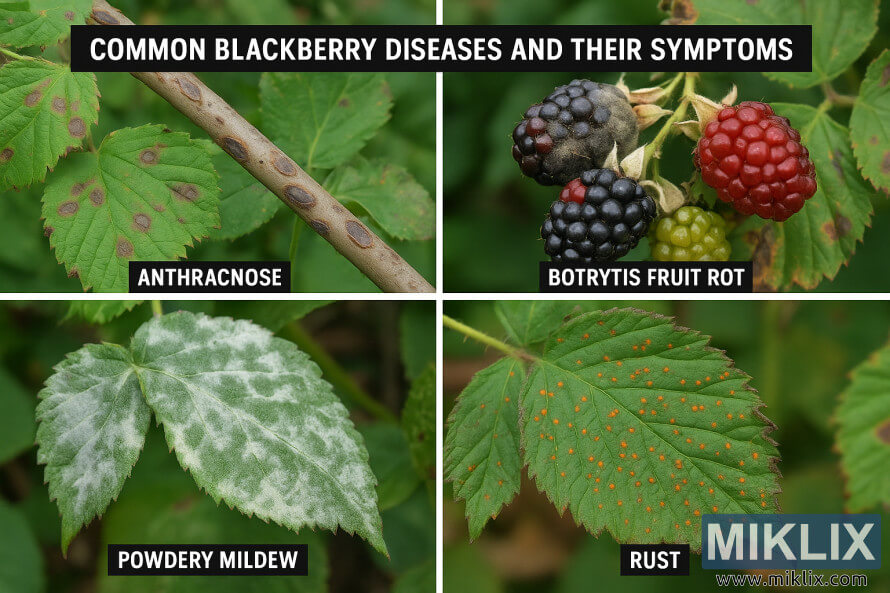
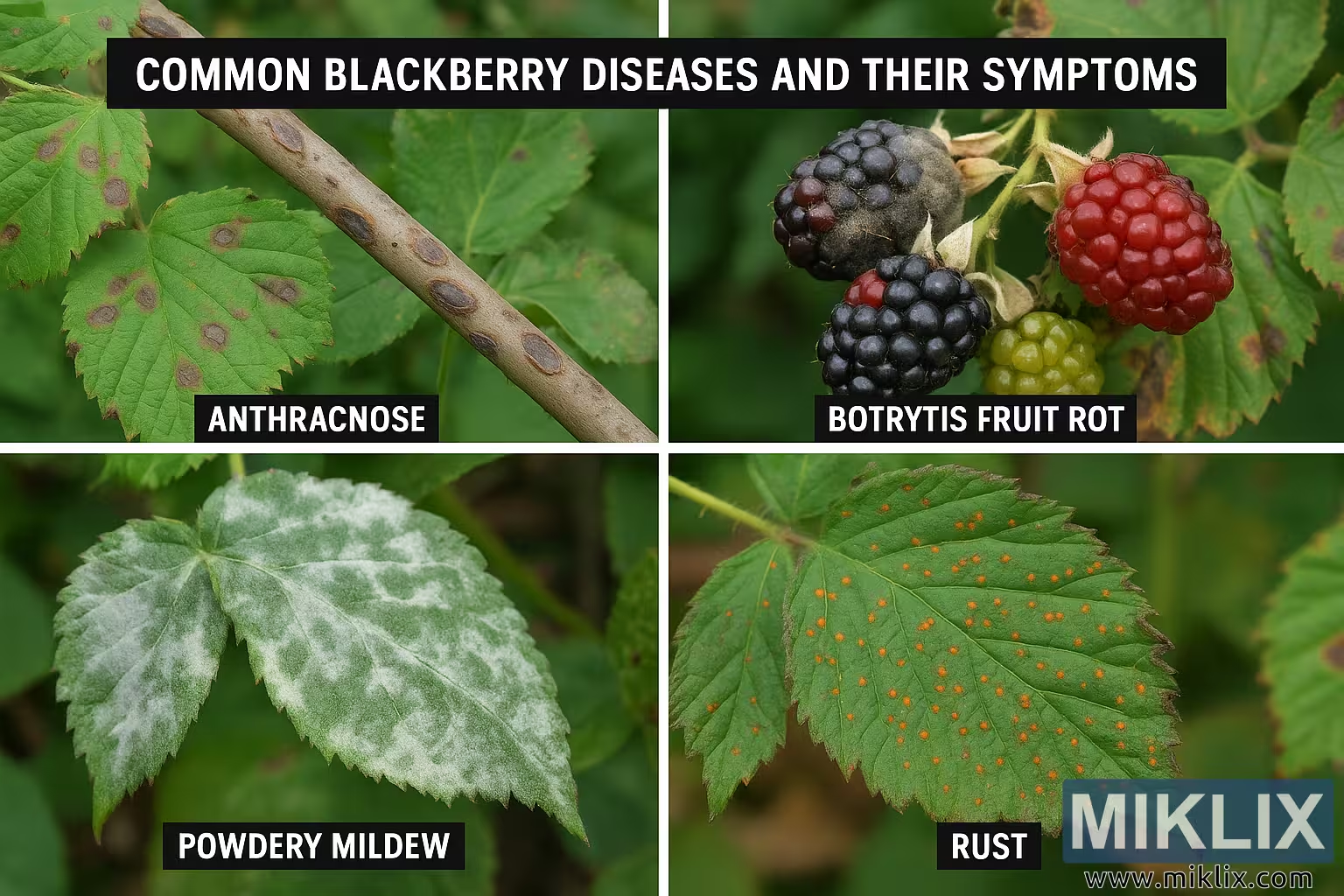
High-resolution educational photo illustrating common blackberry diseases—anthracnose, botrytis fruit rot, powdery mildew, and rust—showing clear visual symptoms on affected plant parts.
Available versions of this image
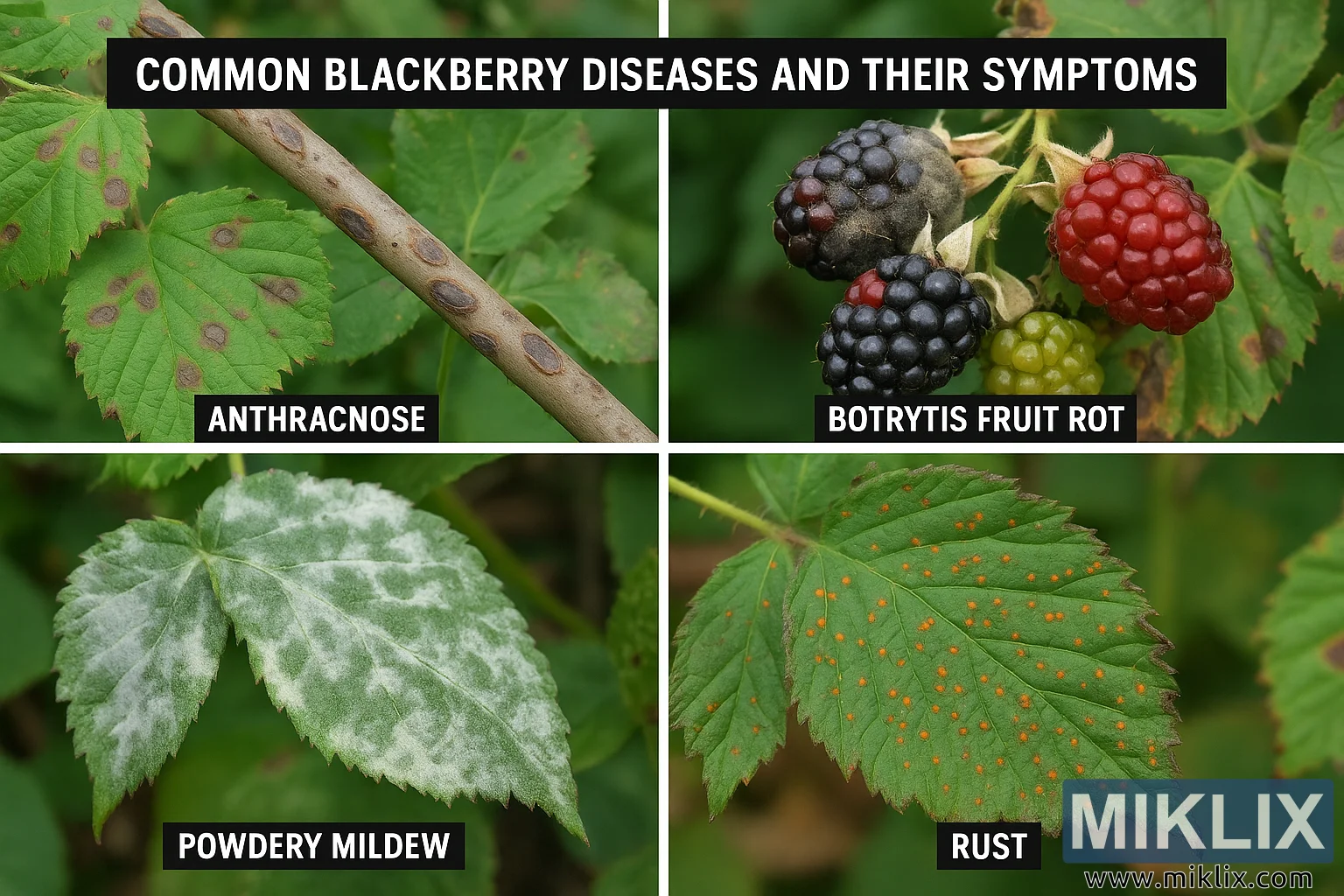
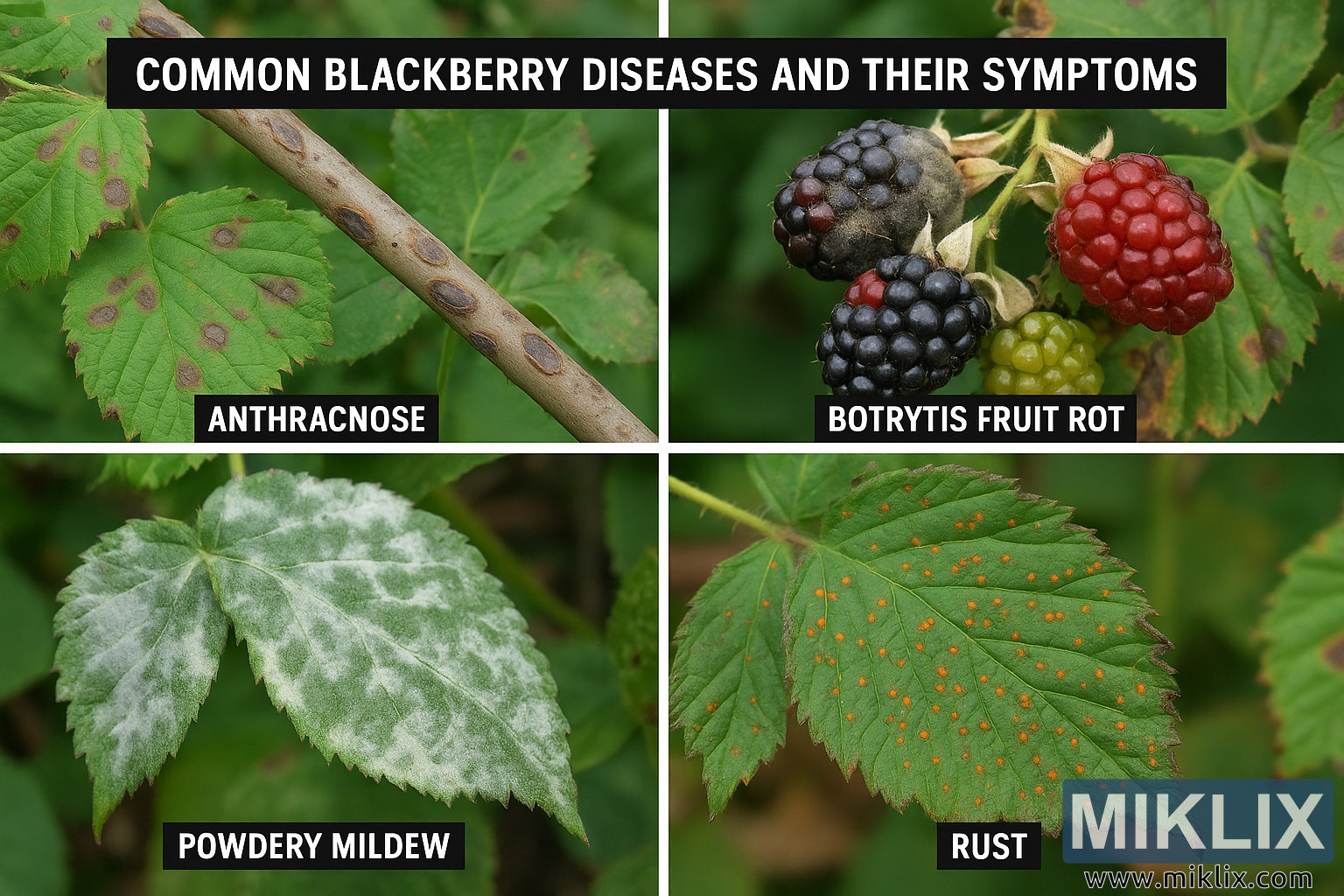
The image files available for download below are less compressed and higher resolution - and as a result of that, higher quality - than the images embedded in articles and pages on this website, which are more optimized for file size in order to reduce bandwidth consumption.
Regular size (1,536 x 1,024)
Large size (3,072 x 2,048)
Very large size (4,608 x 3,072)
Extra large size (6,144 x 4,096)
Comically large size (1,048,576 x 699,051)
- Still uploading... ;-)
Image description
This high-resolution, landscape-oriented educational image titled “COMMON BLACKBERRY DISEASES AND THEIR SYMPTOMS” presents a visually organized four-panel layout showcasing the most prevalent diseases that affect blackberry plants. Each of the four sections features a detailed, close-up photograph of a different disease, accompanied by a bold white label on a black rectangular background that identifies the specific disease name. The composition is arranged in a clean two-by-two grid, ensuring clarity and visual balance, with natural green backgrounds highlighting the contrast between healthy and diseased plant tissue.
In the top-left quadrant, the image labeled 'ANTHRACNOSE' depicts blackberry leaves and stems with distinctive round, purplish-gray lesions featuring dark brown margins. These lesions are scattered across the leaf surfaces and elongated along the cane, a hallmark of anthracnose infection caused by *Elsinoë veneta*. The lighting reveals the subtle textural differences between the healthy and necrotic tissues, emphasizing how the disease disrupts the smooth surface of the stem and foliage.
The top-right quadrant, labeled 'BOTRYTIS FRUIT ROT', displays a cluster of blackberries at different stages of ripeness—green, red, and black—with visible grayish mold and soft, sunken areas on the mature black fruits. The infected berries show the characteristic symptoms of gray mold caused by *Botrytis cinerea*, which thrives in moist conditions. The photo captures the contrast between firm, healthy berries and those beginning to collapse from fungal decay, illustrating the infection’s impact on fruit quality and yield.
The bottom-left quadrant, labeled 'POWDERY MILDEW', shows a close-up of a blackberry leaf covered in a white, powder-like fungal growth. The powdery layer, composed of fungal spores and hyphae from *Podosphaera aphanis*, blankets the leaf surface while the underlying tissue remains green. This soft, velvety coating is sharply in focus, showing the fine texture and the extent of coverage typical of severe powdery mildew infections. The surrounding foliage appears healthy, emphasizing the stark contrast.
The bottom-right quadrant, labeled 'RUST', depicts a blackberry leaf exhibiting numerous bright orange pustules—clusters of spores—on the underside of the leaf. The circular rust spots, caused by *Kuehneola uredinis*, are raised and evenly distributed, forming a pattern that stands out vividly against the green tissue. The high-resolution clarity allows individual pustules to be distinguished, showcasing the distinctive appearance of rust infections.
Overall, this image serves as an educational visual reference for identifying and differentiating key blackberry diseases in the field or classroom. The lighting is balanced and natural, the colors are true to life, and the focus ensures that both the diseased and healthy portions of the plant are rendered in sharp detail. The graphic layout, with clear labeling and visual separation between each disease, makes it an effective tool for growers, horticulturists, and students studying plant pathology or fruit crop management.
The image is related to: Growing Blackberries: A Guide for Home Gardeners