
Growing Watermelons: Your Complete Guide to Juicy, Homegrown Success
Published: March 27, 2026 at 5:51:32 PM UTC
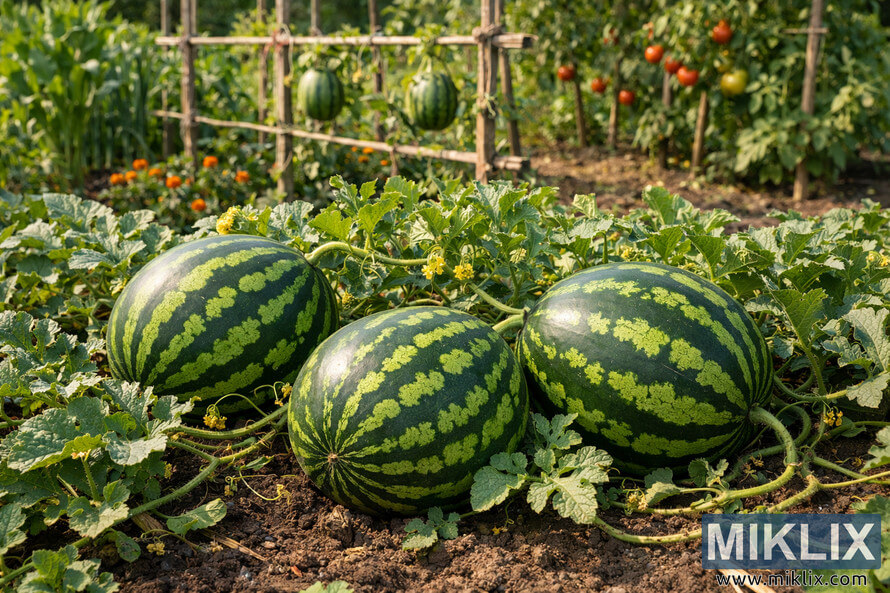
Picture biting into a sun-warmed watermelon slice grown in your own backyard. The sweet juice runs down your chin while the crisp flesh melts in your mouth. This isn't just a summer fantasy. Growing watermelons at home is surprisingly achievable, even for beginner gardeners.
Click or tap the image for more information and higher resolutions.
Many people believe watermelons need vast commercial fields and specialized knowledge. That's simply not true. With proper planning and basic care, you can cultivate these refreshing fruits in spaces ranging from traditional garden beds to compact urban lots. This comprehensive guide walks you through every step of the watermelon growing journey.
Whether you're working with abundant acreage or a modest backyard plot, you'll discover practical techniques for producing sweet, juicy melons. We'll cover variety selection, soil preparation, watering strategies, pest management, and the satisfying moment when you harvest your first homegrown fruit.
Understanding Watermelon Basics Before You Plant
Watermelons belong to the Cucurbitaceae family, which includes cucumbers, squash, and pumpkins. These warm-season crops originated in Africa and thrive in hot, sunny conditions. Understanding their basic needs sets you up for success from the start.
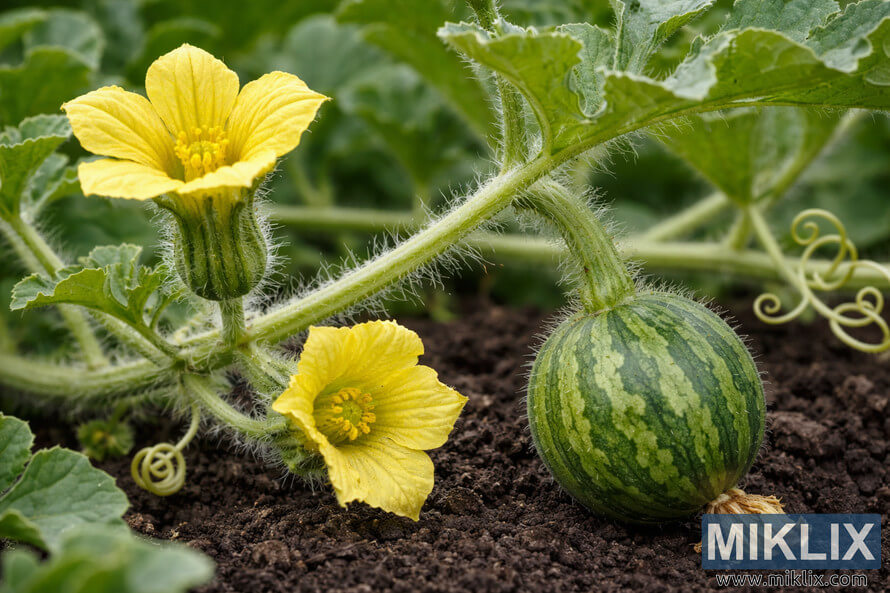
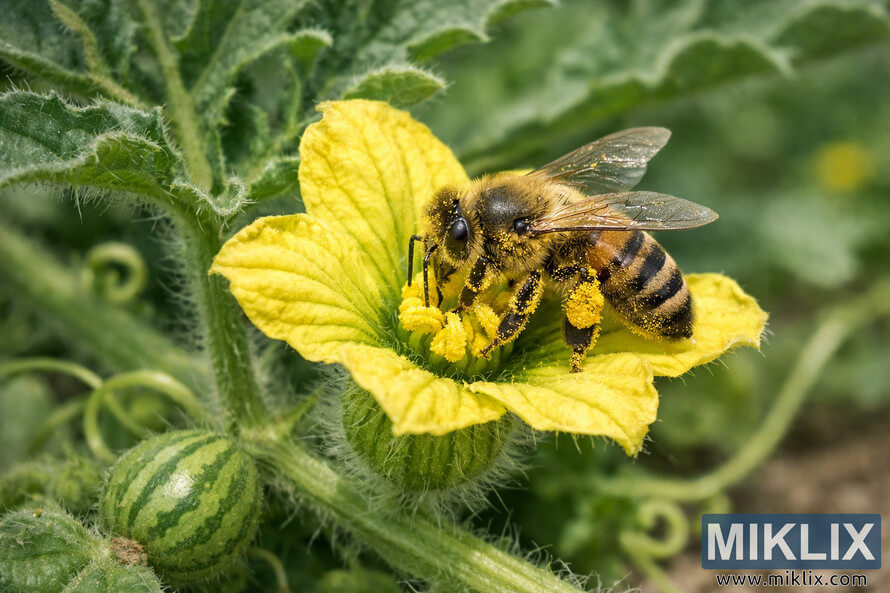
The watermelon plant develops long vines that spread across the ground or climb supports. Each vine produces both male and female flowers. Bees and other pollinators transfer pollen between these flowers, resulting in fruit development. A single healthy plant can produce multiple melons throughout the growing season.
Most watermelon varieties need between 70 and 100 days from planting to harvest. The exact time depends on your chosen variety and local climate conditions. Watermelons require consistent warmth throughout this period. Cold snaps or extended cool weather can stunt growth or damage plants entirely.
These plants are heavy feeders with extensive root systems. Their roots spread both deep and wide, searching for water and nutrients. This characteristic explains why watermelons respond so well to rich, well-prepared soil. The plant channels significant energy into producing large fruits, making proper nutrition essential.
Click or tap the image for more information and higher resolutions.
Choosing the Right Watermelon Variety for Your Garden
Selecting the appropriate watermelon variety makes a tremendous difference in your growing success. Different varieties suit different climates, space constraints, and taste preferences. Let's explore the main categories and how to choose wisely.
Standard Watermelon Varieties
Traditional watermelon varieties produce large fruits weighing 15 to 40 pounds. These melons need substantial space, with vines spreading 10 to 15 feet in all directions. Classic varieties like 'Crimson Sweet' and 'Jubilee' deliver the iconic watermelon experience with deep red flesh and impressive size.
Standard varieties typically require 85 to 100 days to reach maturity. They're ideal if you have plenty of garden space and a long, hot growing season. The large fruits make excellent choices for family gatherings and summer celebrations. However, their size demands careful planning in smaller gardens.
Compact and Icebox Varieties
Icebox watermelons earned their name because they fit in a refrigerator. These smaller melons weigh 5 to 15 pounds and work perfectly for limited spaces. Varieties like 'Sugar Baby' and 'Sweet Beauty' produce full-flavored fruits on more manageable vines.
These compact varieties often mature faster, taking 70 to 85 days. The shorter growing time makes them suitable for regions with shorter summers. The vines spread 6 to 8 feet, requiring less ground space than standard types. Many icebox varieties also perform well when grown vertically on trellises.
Seedless and Specialty Types
Seedless watermelons have gained massive popularity in recent years. These varieties produce fruits with tiny, soft white seed coats instead of hard black seeds. Growing seedless types requires planting them alongside a seeded pollinator variety. The pollinator provides pollen for the seedless plants to set fruit.
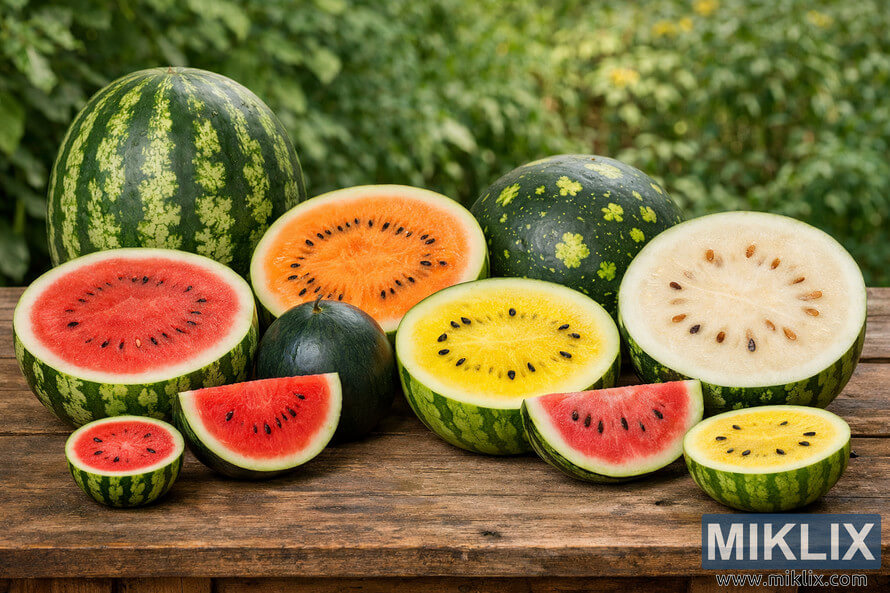
Specialty watermelons include yellow and orange-fleshed varieties. These colorful melons offer unique flavors and visual appeal. Square watermelons, grown in molds, are novelties but require special equipment and attention. Most home gardeners find standard round or oval shapes more practical.
Click or tap the image for more information and higher resolutions.
Climate Considerations
Match your variety choice to your local climate. Northern gardeners should select varieties with shorter maturity times. Look for cultivars rated at 70 to 80 days. These varieties tolerate cooler conditions better and produce before fall frost arrives.
Southern gardeners can choose from the full range of varieties. Longer growing seasons support even the most extended maturity types. In extremely hot regions, look for heat-tolerant varieties bred specifically for sustained high temperatures. Some melons handle intense sun better than others.
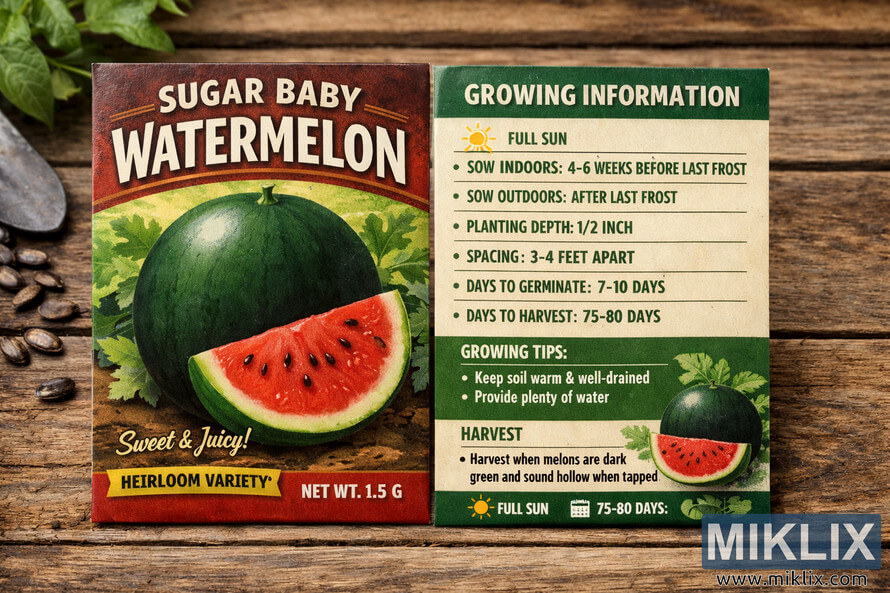
Sugar Baby Watermelon Seeds
Perfect icebox variety for small gardens and containers. Produces 8-10 lb melons with deep red flesh in just 75 days. Compact vines ideal for limited space.
- Compact vine growth pattern
- Early maturity at 75 days
- Sweet, crisp red flesh
- Excellent for beginners
Click or tap the image for more information and higher resolutions.
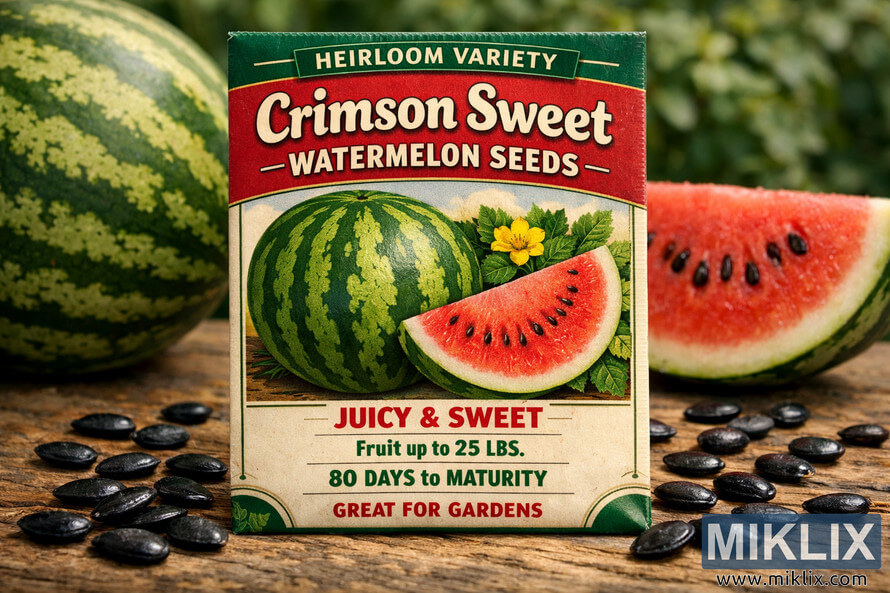
Crimson Sweet Seeds
Classic large variety producing 20-25 lb striped melons. Known for exceptional sweetness and disease resistance. Perfect for traditional gardens with space to spread.
- Large fruit production
- Superior disease resistance
- Traditional striped appearance
- Reliable heavy yields
Click or tap the image for more information and higher resolutions.
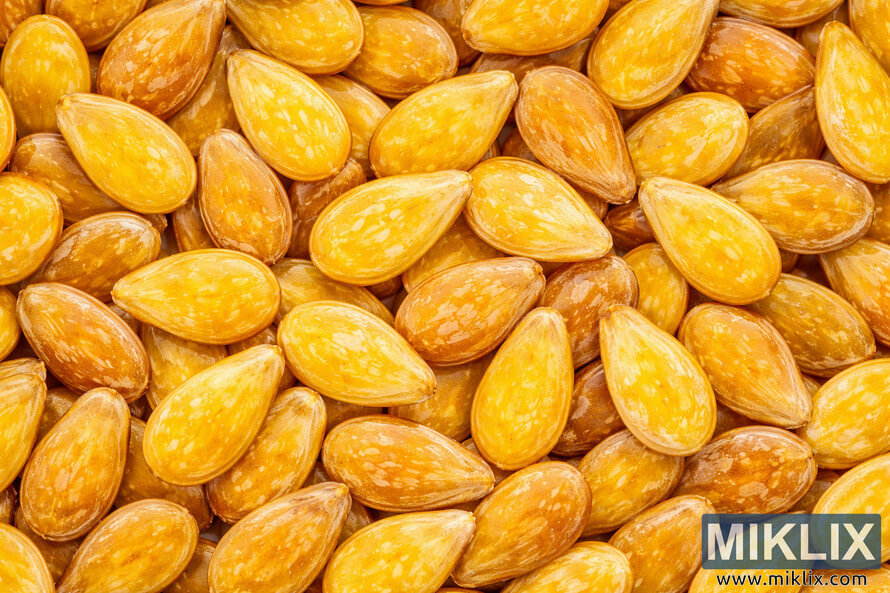
Yellow Doll Hybrid Seeds
Unique yellow-fleshed variety offering honey-sweet flavor. Produces 5-8 lb fruits in 80 days. Grows well in various climates with consistent moisture.
- Distinctive yellow flesh
- Honey-sweet unique flavor
- Medium-sized fruits
- Vigorous vine growth
Click or tap the image for more information and higher resolutions.
Preparing Perfect Soil for Watermelon Plants
Soil preparation ranks among the most critical steps for growing watermelons successfully. These plants demand nutrient-rich, well-draining soil with proper pH levels. Investing time in soil preparation pays dividends throughout the growing season.
Testing and Amending Soil pH
Watermelons prefer slightly acidic to neutral soil with a pH between 6.0 and 7.0. Testing your soil reveals its current pH level and nutrient content. Home test kits provide quick results, while laboratory testing offers more comprehensive analysis. Most university extension offices provide affordable soil testing services.
If your soil pH falls outside the ideal range, amendments can correct it. Add lime to raise pH in acidic soil. Sulfur or aluminum sulfate lowers pH in alkaline conditions. Apply amendments several weeks before planting to allow time for soil chemistry to stabilize. Retest after amendment application to confirm proper pH levels.
Improving Soil Structure and Drainage
Watermelon roots need loose, well-aerated soil to spread easily. Heavy clay soil compacts tightly and holds excess moisture. Sandy soil drains too quickly and doesn't retain nutrients. Most gardens benefit from organic matter additions to improve structure.
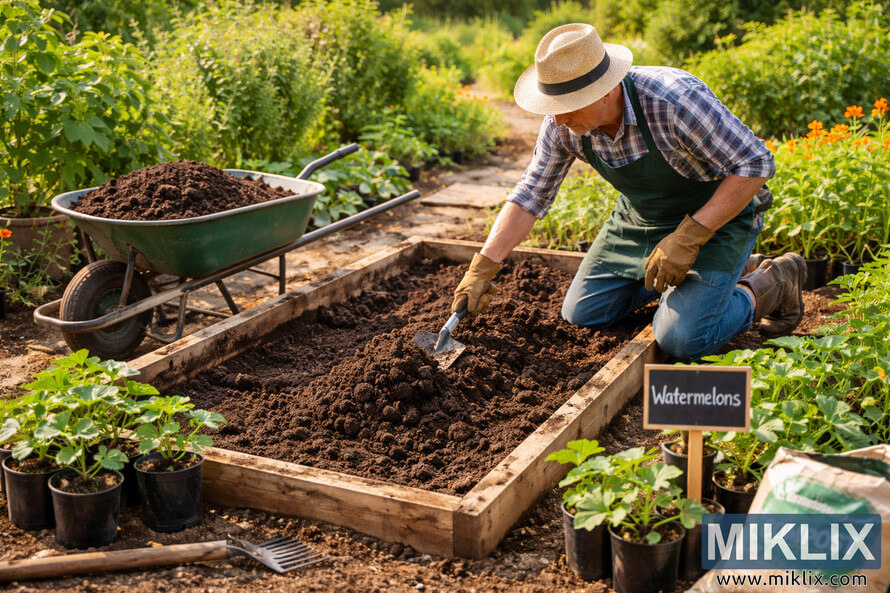
Incorporate 2 to 4 inches of compost or well-rotted manure into the planting area. Work organic matter into the top 8 to 12 inches of soil. This depth supports the extensive root systems watermelon plants develop. The organic matter improves drainage in clay soil while helping sandy soil retain moisture and nutrients.
Click or tap the image for more information and higher resolutions.
Building Nutrient Reserves
Watermelons are heavy feeders requiring abundant nutrients. Beyond organic matter, consider adding balanced fertilizer before planting. A 10-10-10 or similar ratio works well for initial soil preparation. Apply according to package directions based on your soil test results.
Phosphorus supports strong root development and fruit production. Ensure adequate phosphorus levels, as watermelons use significant amounts. Potassium improves fruit quality and disease resistance. Nitrogen promotes healthy vine growth but avoid excess amounts. Too much nitrogen produces lush foliage at the expense of fruit development.
Creating Raised Beds or Hills
Many successful growers plant watermelons in raised beds or hills. These elevated planting areas improve drainage and warm faster in spring. Mound soil into hills 8 to 12 inches high and 2 to 3 feet wide. Space hills 4 to 6 feet apart for vine spread.
In raised beds, create rows with slight elevation in the center. This promotes water drainage away from plant crowns. Good drainage prevents root rot and other moisture-related diseases. The elevated soil also warms more quickly, giving plants a head start in cooler regions.
Essential Soil Amendments for Watermelon Success
Quality soil amendments make the difference between average and exceptional watermelon crops. We've found these products consistently deliver excellent results for soil preparation.
Planting Watermelon Seeds and Seedlings
Timing and technique determine planting success with watermelons. These warm-season crops cannot tolerate frost and need soil temperatures above 70°F for reliable germination. Understanding when and how to plant ensures strong establishment and healthy growth.
Timing Your Planting
Wait until all danger of frost has passed before planting watermelons outdoors. Soil temperature matters more than calendar dates. Use a soil thermometer to check temperature at 4-inch depth. Plant when readings consistently reach 70°F or higher.
In most regions, this timing falls 2 to 3 weeks after the last expected spring frost date. Northern gardeners often plant in late May or early June. Southern gardeners may plant as early as March or April. Count backwards from your first expected fall frost to ensure adequate time for crop maturity.
Direct Seeding in the Garden
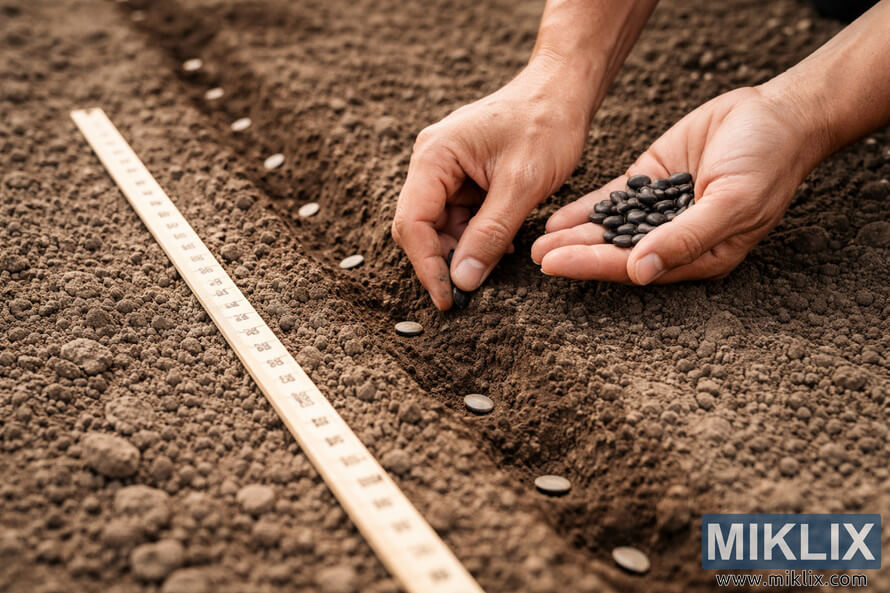
Direct seeding means planting seeds straight into garden soil. This method works well for watermelons, which dislike root disturbance. Create small depressions in your prepared hills or beds. Plant 4 to 6 seeds per hill, spacing them 2 to 3 inches apart.
Plant seeds 1 inch deep in heavy soil or 1.5 inches deep in sandy soil. Cover seeds with soil and water gently. Keep the seeded area consistently moist until seedlings emerge, typically within 7 to 10 days. Once seedlings develop true leaves, thin to the strongest 2 or 3 plants per hill.
Click or tap the image for more information and higher resolutions.
Starting Seeds Indoors
Indoor seed starting gives northern gardeners a head start on the growing season. Start seeds 3 to 4 weeks before your last frost date. Use individual pots rather than cell packs. Watermelons develop extensive root systems quickly and dislike being cramped.
Fill 4-inch pots with quality seed starting mix. Plant 2 seeds per pot at the same depth as outdoor planting. Maintain soil temperature between 75°F and 85°F for fastest germination. Once seedlings emerge, provide strong light and keep soil evenly moist. Thin to one seedling per pot after true leaves appear.
Transplanting Seedlings
Transplant indoor-started seedlings carefully to minimize root disturbance. Harden off seedlings by gradually exposing them to outdoor conditions over 7 to 10 days. Start with a few hours in a protected spot and gradually increase exposure time and sun intensity.
Transplant on a cloudy day or in evening to reduce stress. Dig holes slightly larger than root balls. Remove seedlings from pots gently, keeping root balls intact. Plant at the same depth seedlings grew in pots. Water thoroughly after transplanting and provide shade for the first day or two.
Spacing Considerations
Proper spacing prevents overcrowding and promotes good air circulation. Standard varieties need 5 to 6 feet between plants and 8 to 10 feet between rows. Compact varieties can grow closer, with 3 to 4 feet between plants and 6 to 8 feet between rows.
In small gardens, consider vertical growing on trellises. This method saves ground space and works well with smaller fruit varieties. Space plants 2 to 3 feet apart along the trellis base. Provide sturdy support structures capable of holding mature fruit weight.
Watering and Irrigation Requirements
Water management proves crucial for growing watermelons. These plants need consistent moisture throughout the growing season, especially during fruit development. Too little water produces small, poorly flavored melons. Too much water promotes disease and dilutes fruit sweetness.
Establishing Proper Watering Schedules
Young watermelon plants need frequent, light watering to establish root systems. Water daily or every other day during the first two weeks after planting. Keep soil consistently moist but not waterlogged. Once plants establish, reduce watering frequency while increasing water volume per application.
Mature plants typically need 1 to 2 inches of water per week. This amount includes rainfall. During hot, dry weather, plants may require more frequent watering. Monitor soil moisture by checking 4 to 6 inches deep. Water when soil feels dry at this depth.
Irrigation Methods
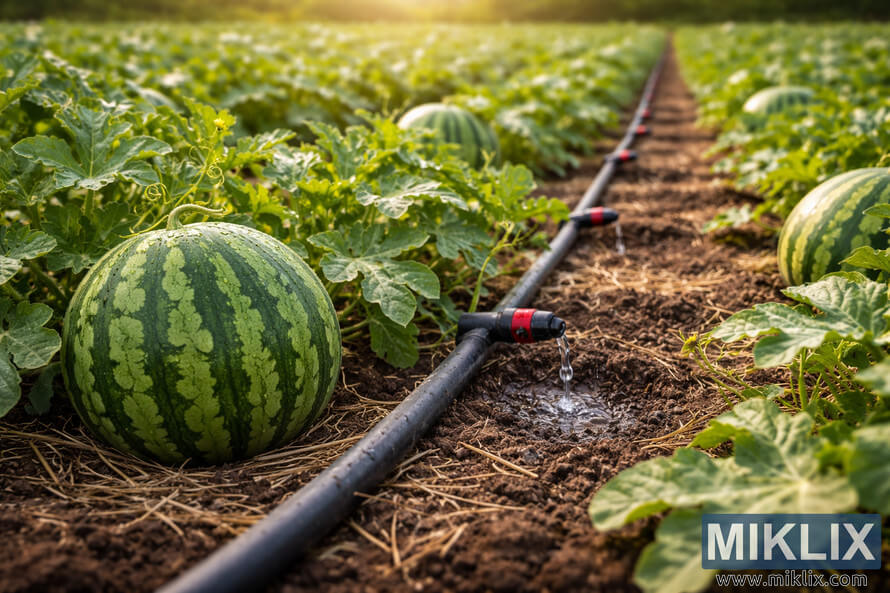
Drip irrigation systems deliver water directly to plant roots with minimal waste. These systems maintain consistent soil moisture while keeping foliage dry. Dry leaves reduce disease risk significantly. Use drip lines or soaker hoses laid along planting rows or around hills.
Overhead watering with sprinklers works but increases disease susceptibility. If using sprinklers, water early in the morning. This timing allows foliage to dry before evening. Avoid evening watering, which keeps leaves damp overnight and encourages fungal growth.
Click or tap the image for more information and higher resolutions.
Water Needs During Fruiting
Watermelons need the most water during flowering and fruit development. Maintain consistent moisture during this critical period. Uneven watering causes fruit cracking and splitting. Irregular moisture also produces fruits with hollow hearts or poor texture.
As fruits approach maturity, reduce watering slightly. This practice concentrates sugars and improves flavor. Stop watering completely 1 to 2 weeks before expected harvest. This final dry period enhances sweetness and reduces the risk of splitting from excess moisture.
Mulching for Moisture Retention
Mulch plays multiple beneficial roles in watermelon cultivation. Apply 2 to 3 inches of organic mulch around plants after soil warms. Straw, shredded leaves, or grass clippings work well. Mulch conserves soil moisture, reduces watering frequency, and moderates soil temperature.
Mulch also suppresses weed growth and keeps developing fruits clean. Some growers use black plastic mulch instead of organic materials. Plastic warms soil, controls weeds effectively, and reduces fruit contact with damp ground. However, plastic requires drip irrigation since water can't penetrate to soil beneath.
Drip Irrigation System
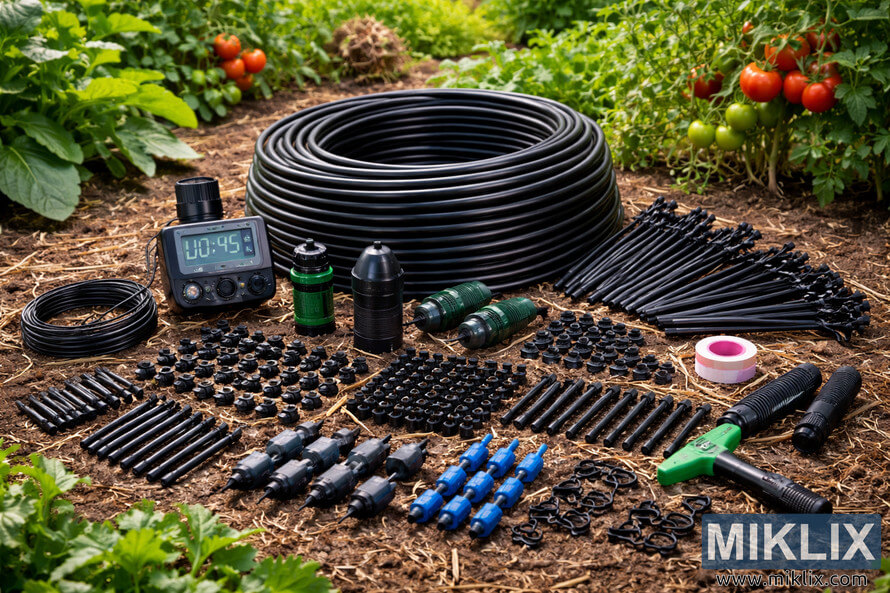
Many successful watermelon growers find drip irrigation systems reduce time investment while improving results. These systems deliver consistent moisture directly to root zones.
A quality starter kit includes everything needed for a typical garden. Look for adjustable emitters that allow customization based on plant needs. Timer additions automate watering schedules.
- Reduces water waste significantly
- Keeps foliage dry preventing disease
- Maintains consistent soil moisture
- Automates watering with timer add-ons
- Adapts to various garden sizes
Click or tap the image for more information and higher resolutions.
Sunlight and Temperature Needs
Watermelons thrive in hot, sunny conditions. These plants evolved in tropical and subtropical regions where long, warm days provide ideal growing conditions. Understanding their light and temperature requirements helps you choose optimal planting locations and timing.
Sunlight Requirements
Watermelon plants need full sun, meaning at least 8 hours of direct sunlight daily. More sun generally produces better results. Choose the sunniest spot in your garden for planting. Inadequate sunlight reduces vine growth, limits fruit production, and diminishes sweetness.
In extremely hot climates with intense afternoon sun, afternoon shade may help. However, this applies only to regions where daytime temperatures regularly exceed 100°F. Most gardens provide best results with all-day sun exposure. Orient rows north to south when possible to maximize light exposure to all parts of the plant.
Temperature Ranges
Watermelons grow best when daytime temperatures range between 75°F and 95°F. Nighttime temperatures should remain above 60°F for optimal growth. Temperatures below 50°F slow growth dramatically and may cause permanent damage to plants and developing fruit.
Extended periods above 100°F can stress plants despite their heat tolerance. During extreme heat waves, temporary shade cloth provides relief. Consistent watering becomes even more critical during hot weather. Monitor plants closely for wilting or heat stress symptoms.
Extending the Season
Northern gardeners can extend their growing season using season extension techniques. Black plastic mulch warms soil 5 to 10 degrees, allowing earlier planting. Row covers or cloches protect young plants from late spring cold snaps. Remove covers once temperatures stabilize and flowering begins.
In fall, protect maturing fruits from early frost with blankets or tarps. Even a light frost can damage watermelons significantly. Monitor weather forecasts as harvest approaches. Pick fruits before frost threatens, even if slightly underripe, rather than risk frost damage.
Fertilization Schedules and Techniques
Strategic fertilization supports vigorous vine growth and abundant fruit production. Watermelons consume large amounts of nutrients throughout their growth cycle. Proper feeding ensures plants have resources needed for maximum yield and quality.
Initial Fertilization
If you haven't already enriched soil during preparation, apply fertilizer at planting time. Use a balanced fertilizer like 10-10-10, applying according to package directions. Work fertilizer into soil around planting hills or along rows. Avoid direct seed contact with fertilizer to prevent burn.
Side-dress plants when vines reach 12 to 18 inches long. Apply nitrogen-rich fertilizer in a circle 6 inches from plant stems. Use about 1 tablespoon per plant of a high-nitrogen formula. Water thoroughly after application to move nutrients into the root zone.
Feeding During Fruit Development
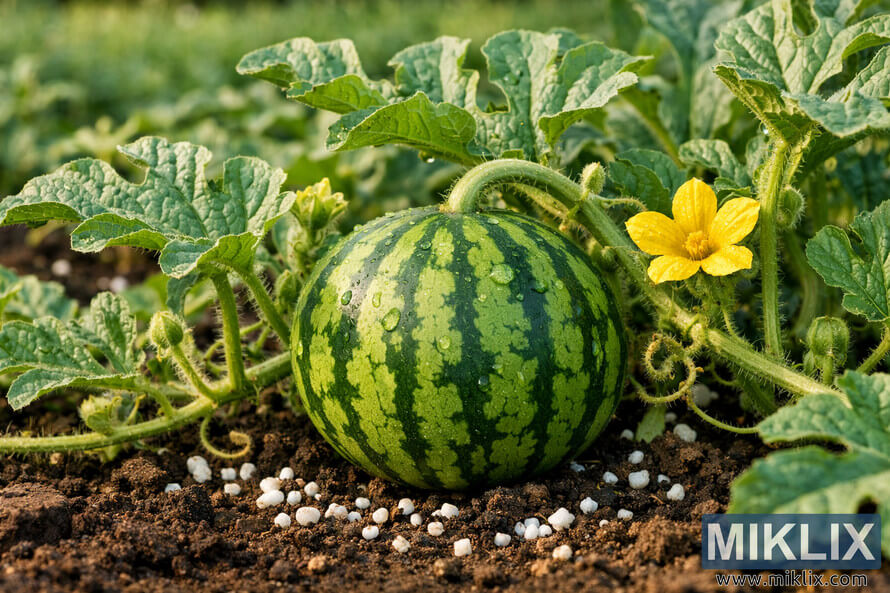
Switch to a lower-nitrogen formula once flowering begins. Excess nitrogen at this stage promotes vine growth over fruit production. Choose a fertilizer with higher phosphorus and potassium, such as 5-10-10. These nutrients support fruit development and quality.
Apply this fruiting formula every 2 to 3 weeks until melons reach full size. Stop fertilizing about 2 weeks before expected harvest. This break allows plants to focus energy on fruit ripening rather than continued growth. Late-season fertilization can delay ripening and reduce sweetness.
Click or tap the image for more information and higher resolutions.
Organic Fertilization Options
Organic growers have numerous excellent fertilizer options. Compost provides slow-release nutrients throughout the season. Apply 1 to 2 inches as side-dressing when vines begin running. Compost tea offers liquid nutrition that plants absorb quickly.
Fish emulsion supplies readily available nitrogen for vine growth. Bone meal provides phosphorus for root and fruit development. Kelp meal offers trace minerals and growth hormones. Wood ash adds potassium but use sparingly to avoid raising soil pH too much.
Recognizing Nutrient Deficiencies
Yellowing leaves often indicate nitrogen deficiency. Apply nitrogen fertilizer to correct this condition. Purple-tinged leaves may signal phosphorus deficiency, especially in cool soil. Leaf edges turning brown or yellow suggest potassium shortage.
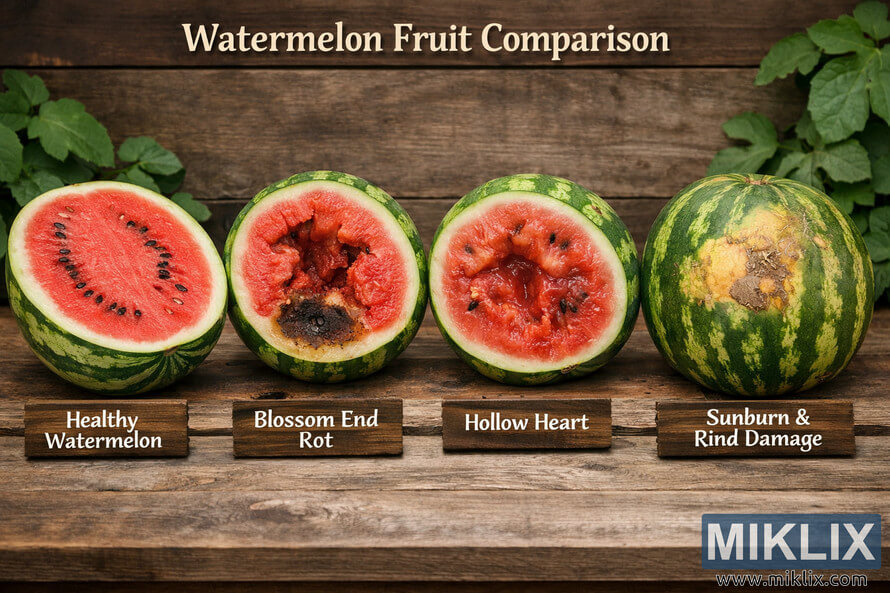
Blossom end rot, showing as dark, sunken spots on fruit ends, indicates calcium deficiency or irregular watering. Maintain consistent moisture and consider calcium supplements. Pale, slow-growing plants may suffer from multiple nutrient deficiencies, suggesting soil test needs.
Training Vines and Providing Support
While watermelons naturally spread along the ground, training vines offers several advantages. Vertical growing saves space, improves air circulation, and keeps fruits cleaner. Proper vine management also facilitates easier maintenance and harvesting.
Ground Growing Method
Traditional ground growing allows vines to spread naturally. This low-maintenance approach works well when space isn't limited. Guide vines in desired directions to prevent pathway blocking. Pinching vine tips once plants produce several fruits directs energy toward fruit development rather than continued vine growth.
Place boards, straw, or plastic under developing melons to keep them off damp soil. This practice prevents rot and keeps fruits clean. Rotate fruits occasionally to promote even ripening and coloring on all sides. Handle developing melons gently to avoid stem separation.
Vertical Growing Systems
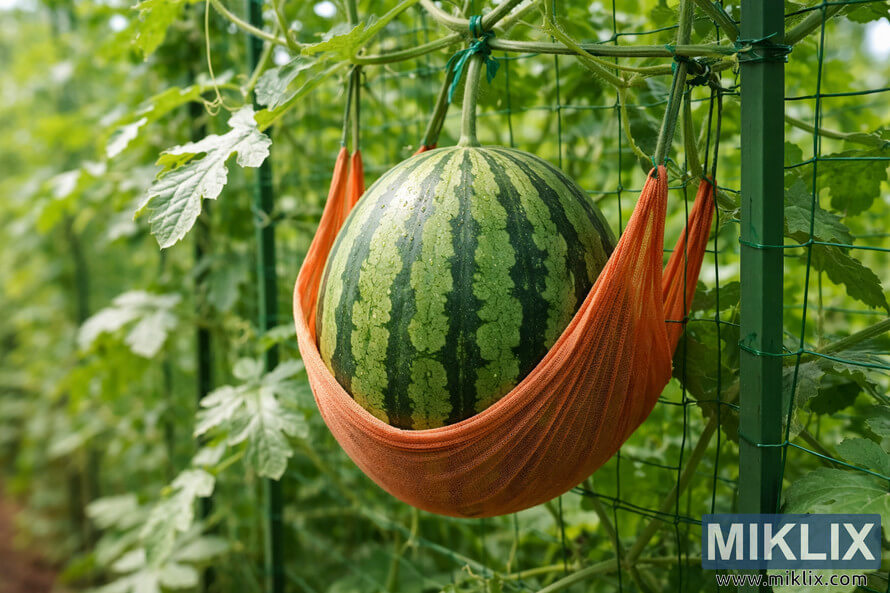
Trellises support vertical watermelon growing, ideal for small gardens. Use sturdy structures capable of supporting mature fruit weight. Install trellises before planting to avoid root damage. Cattle panels, welded wire fencing, or purpose-built trellises work well.
Train main vines onto supports as they grow. Secure vines loosely with soft ties, allowing room for stem expansion. Remove lateral shoots to focus growth on main vines. This pruning increases air circulation and concentrates plant energy.
Click or tap the image for more information and higher resolutions.
Supporting Heavy Fruits
Developing melons need support when grown vertically. Create slings from breathable fabric, old t-shirts, or mesh bags. Attach slings to the trellis structure, positioning them under melons once fruits reach grapefruit size. Check and adjust supports regularly as fruits grow.
Avoid using materials that don't breathe or hold moisture against fruit skin. Proper support prevents premature fruit drop and stem damage. Even small varieties benefit from support on vertical structures. The weight of mature fruit can easily break unsupported stems.
Understanding Pollination Requirements
Successful pollination determines fruit production in watermelons. These plants produce separate male and female flowers. Pollen must transfer from male flowers to female flowers for fruit development. Understanding this process helps troubleshoot production problems.
Identifying Flower Types
Male flowers appear first, usually 10 to 14 days before female flowers emerge. Male flowers have thin stems and produce pollen. Female flowers develop small fruits at their base, visible as tiny melons behind the flower. Both flower types open only one day.
Each plant produces many more male flowers than female flowers. This ratio ensures adequate pollen availability when female flowers bloom. Don't worry if early flowers don't produce fruit. This normal pattern continues throughout the growing season.
Natural Pollination
Bees and other insects handle pollination naturally in most gardens. These pollinators visit flowers in morning hours when pollen is most viable. Encourage pollinators by avoiding pesticide use during flowering. Plant pollinator-friendly flowers nearby to attract more beneficial insects.
If pollinator activity seems low, consider hand pollination. This technique guarantees fruit set even with limited insect activity. Hand pollination also proves useful in greenhouse growing or during cool, wet weather when bee activity decreases.
Click or tap the image for more information and higher resolutions.
Hand Pollination Technique
Hand pollinate in the morning when flowers are fully open. Pick a male flower and remove petals to expose the pollen-covered center. Gently brush the male flower center against the female flower center. Use one male flower for each female flower, or collect pollen with a small brush.
Successful pollination causes the tiny fruit behind the female flower to begin enlarging within days. Failed pollination results in yellowing and dropping of the small fruit. Multiple pollination attempts increase success rates during challenging weather conditions.
Pest and Disease Management Strategies
Watermelons face various pest and disease challenges throughout the growing season. Proactive monitoring and early intervention prevent minor issues from becoming crop disasters. Integrated pest management combines cultural practices, physical barriers, and targeted treatments.
Common Insect Pests
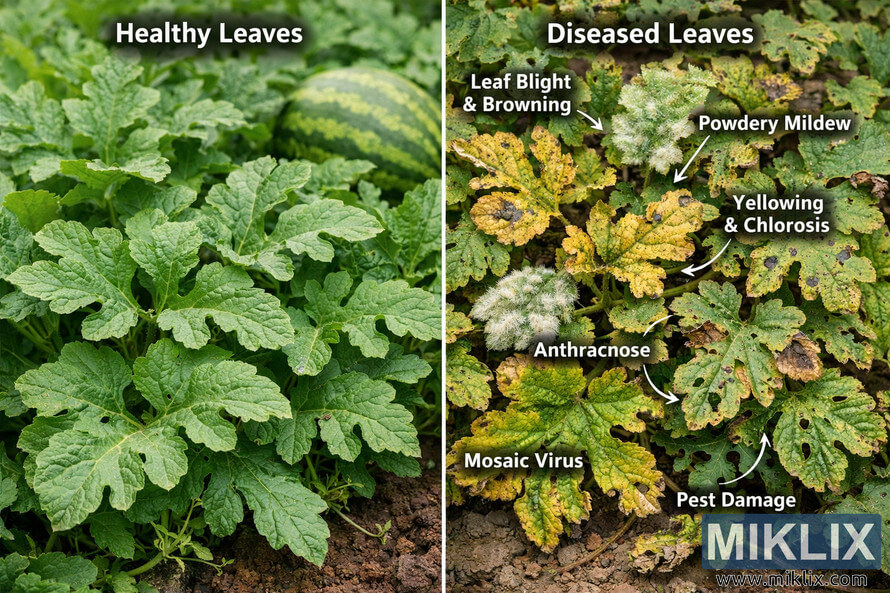
Cucumber beetles rank among the most damaging watermelon pests. These yellow and black striped or spotted insects feed on leaves, flowers, and fruits. More importantly, they spread bacterial wilt disease. Control beetles with row covers on young plants, removing covers when flowering begins.
Aphids cluster on new growth, sucking plant sap and spreading diseases. Strong water sprays dislodge light infestations. Insecticidal soap controls heavier populations. Encourage beneficial insects like ladybugs and lacewings, which eat aphids naturally.
Squash bugs and squash vine borers attack watermelons like their squash relatives. Hand-pick egg clusters and adults when spotted. Check vine bases for borer entry holes indicated by sawdust-like frass. Slit affected stems, remove borers, and mound soil over damaged areas to encourage root development.
Disease Prevention and Treatment
Powdery mildew appears as white, powdery patches on leaves. This fungal disease thrives in humid conditions with poor air circulation. Improve spacing, prune excess foliage, and avoid overhead watering. Apply fungicides at first sign of infection to prevent spread.
Downy mildew causes yellow patches on leaf upper surfaces with fuzzy growth underneath. This disease spreads rapidly in cool, wet conditions. Remove infected leaves promptly. Apply appropriate fungicides preventively in regions where downy mildew commonly occurs.
Fusarium wilt causes sudden wilting of entire vines despite adequate water. This soil-borne disease has no cure once plants are infected. Plant resistant varieties in areas with fusarium history. Practice crop rotation, avoiding cucurbit family crops in the same location for 3 to 4 years.
Click or tap the image for more information and higher resolutions.
Cultural Disease Prevention
Proper cultural practices prevent many disease problems. Space plants adequately for good air circulation. Water at soil level rather than wetting foliage. Remove and destroy diseased plant material rather than composting it.
Rotate watermelon plantings to different garden areas each year. This practice prevents soil-borne disease buildup. Avoid planting where cucumbers, squash, or other cucurbits grew the previous season. These related crops share many pests and diseases.
Organic Pest Control Options
Organic growers have effective pest management tools. Neem oil controls many insects and some fungal diseases. Diatomaceous earth creates physical barriers against crawling insects. Bacillus thuringiensis (Bt) targets caterpillar pests specifically without harming beneficial insects.
Companion planting deters some pests naturally. Marigolds and nasturtiums repel certain insects. Radishes planted nearby may trap cucumber beetles. However, don't rely solely on companion planting. Combine it with other control methods for best results.
Knowing When and How to Harvest Watermelons
Determining watermelon ripeness challenges even experienced growers. Unlike some fruits, watermelons don't continue ripening after picking. Harvest at the perfect moment ensures optimal sweetness and texture. Learn to read multiple ripeness indicators for best results.
Visual Ripeness Indicators
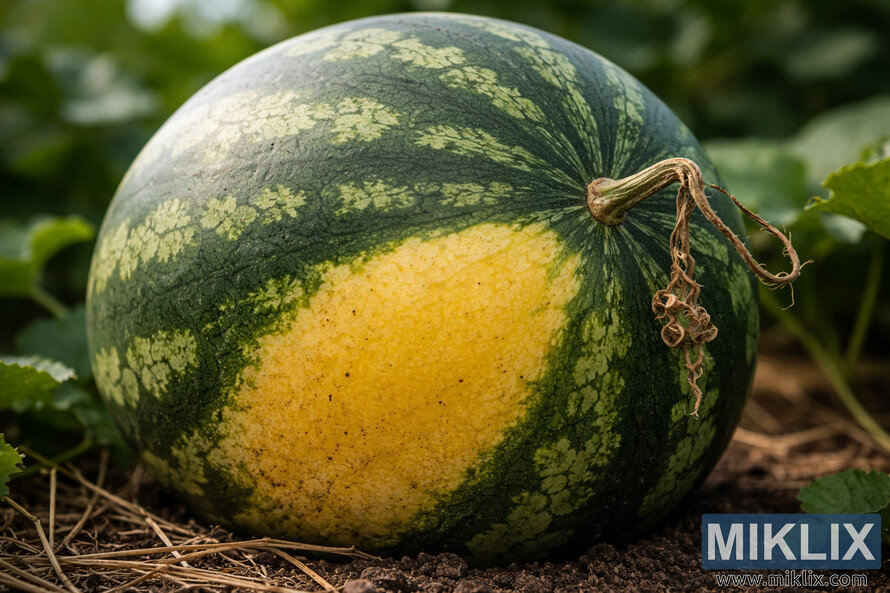
The ground spot changes color as melons ripen. This spot, where the melon rests on the ground, transitions from white to creamy yellow when fruit reaches maturity. A white or pale green ground spot indicates underripe fruit. This indicator works reliably across most varieties.
Examine the tendril nearest to the fruit stem. This curly vine growth browns and dries when the melon ripens. A green tendril suggests the fruit needs more time. Some growers wait until this tendril completely dries before harvesting.
The rind surface becomes dull rather than shiny as fruit matures. Rub your hand across the surface. Mature melons feel slightly rough. The distinctive green stripes may also become less contrasted. These subtle changes develop gradually during the final ripening days.
Click or tap the image for more information and higher resolutions.
Physical Testing Methods
The thump test involves tapping the melon and listening to the sound. Ripe melons produce a deep, hollow sound. Underripe fruits sound more metallic or high-pitched. This method requires practice and works better on larger varieties than small ones.
Pressing the melon lightly tests rind firmness. Ripe watermelons yield slightly to pressure while maintaining overall firmness. Too much give indicates overripeness. However, avoid excessive pressing, which can damage fruit internal structure.
Timing by Days to Maturity
Track planting dates and count days to expected maturity. Seed packets list maturity times, typically 70 to 100 days. Weather conditions affect actual timing, but this gives a reasonable harvest window. Begin checking other ripeness indicators as the maturity date approaches.
Note that maturity days count from seed planting for direct-seeded crops. For transplants, add the number of days seedlings grew indoors. Unusually cool or cloudy weather extends maturity time. Very hot weather may accelerate ripening slightly.
Proper Harvesting Technique
Cut melons from vines with sharp pruning shears or a knife. Leave 2 to 3 inches of stem attached to the fruit. Clean cuts reduce decay risk during storage. Pulling or twisting melons can damage vines and potentially injure the fruit stem attachment point.
Handle harvested melons carefully to avoid bruising. Even small bruises reduce storage life and may allow decay to start. Transport melons in cushioned containers rather than rolling them across the ground. Watermelon rind seems tough but can damage surprisingly easily.
Post-Harvest Storage
Store uncut watermelons at room temperature for up to 2 weeks. Refrigeration before cutting isn't necessary and may actually reduce flavor. Once cut, refrigerate remaining portions in airtight containers. Consume cut watermelon within 3 to 4 days for best quality.
Don't wash melons until ready to cut them. Washing removes the natural protective coating on the rind. This coating helps prevent decay organisms from entering the fruit. Store melons in a cool, dry location away from direct sunlight.
Troubleshooting Common Growing Problems
Even experienced gardeners encounter challenges when growing watermelons. Understanding common problems and their solutions prevents frustration and crop loss. Most issues have straightforward fixes when caught early.
Poor Fruit Set
If flowers bloom but fruits don't develop, pollination problems are likely. Lack of pollinators, weather too hot or cold, or inadequate male flowers cause poor fruit set. Encourage pollinators with nearby flowers. Try hand pollination if natural pollination seems insufficient.
Excessive nitrogen fertilization produces lush vines but few fruits. Switch to lower-nitrogen fertilizer formulas once flowering begins. Stress from inconsistent watering also reduces fruit set. Maintain even soil moisture throughout the growing season.
Fruit Cracking and Splitting
Melons crack when growth rate suddenly accelerates. This typically happens after rain or heavy watering following dry periods. Maintain consistent soil moisture to prevent this problem. Reduce watering as fruits approach maturity to minimize splitting risk.
Some varieties resist cracking better than others. If cracking occurs repeatedly in your garden, try different varieties. Harvest fruits promptly when ripe, as overripe melons crack more easily. Mulching helps maintain more consistent soil moisture levels.
Misshapen or Hollow Fruits
Irregular fruit shapes result from incomplete pollination or early-season cold damage. Ensure adequate pollinator presence during flowering. Protect plants from late spring temperature drops. Once misshapen fruits are identified, remove them so plants focus energy on properly formed melons.
Hollow heart, an internal cavity in the fruit center, results from poor pollination or rapid growth rate changes. This defect doesn't affect flavor but does reduce the edible portion. Maintain consistent watering and ensure good pollination to minimize occurrence.
Click or tap the image for more information and higher resolutions.
Slow Growth and Yellowing
Nutrient deficiencies cause slow growth and leaf discoloration. Apply appropriate fertilizer based on specific symptoms. Cold soil temperatures also slow growth dramatically. Wait for soil to warm adequately before planting. Use black plastic mulch to warm soil faster in cool regions.
Overwatering suffocates roots and causes yellowing leaves. Improve drainage in heavy clay soils with organic matter additions. Ensure proper drainage in raised beds and containers. Water less frequently but more deeply rather than frequent light watering.
Vine Decline Before Harvest
Vines naturally decline as fruits approach maturity. This normal process shouldn't cause alarm. However, sudden wilting or rapid vine death indicates disease problems. Check for insect damage at vine bases. Look for signs of fusarium wilt or bacterial wilt.
If vine decline seems premature, check roots for damage from root-knot nematodes or root rot. Unfortunately, little can be done mid-season for root problems. Focus on prevention in future seasons through crop rotation and soil improvement.
Advanced Tips for Superior Results
Once you master basic watermelon growing, advanced techniques can improve yields and quality further. These methods require more attention but deliver impressive results. Experiment with different approaches to find what works best in your specific garden.
Fruit Thinning for Larger Melons
Limit the number of fruits per vine to increase individual melon size. Allow 2 to 3 melons per plant for large varieties or 4 to 5 for smaller types. Remove excess fruits when they reach softball size. This practice concentrates plant energy into fewer, larger melons.
Choose the healthiest, best-positioned fruits to keep. Remove misshapen fruits first. Keep fruits evenly distributed along the vine rather than clustered. Some growers thin more aggressively, maintaining just one or two melons per plant for competition-sized fruits.
Enhancing Sweetness
Reducing watering as harvest approaches concentrates sugars in fruits. Stop watering 1 to 2 weeks before expected harvest. This stress technique works best with consistent previous watering. Too much stress too early can reduce overall fruit size and quality.
Adequate potassium throughout the growing season improves sweetness. Use fertilizers higher in potassium during fruit development. Full sun exposure also increases sugar content. Ensure vines don't shade developing fruits excessively.
Succession Planting
Extend your watermelon harvest by planting at two-week intervals. This approach works best in regions with long growing seasons. Start with quick-maturing varieties, then plant longer-season types. You'll harvest melons over several weeks rather than all at once.
Consider planting different varieties with varying maturity dates. Combine 70-day, 80-day, and 90-day varieties in a single planting. This natural succession provides fresh melons throughout summer without additional planting effort.
Grafting for Disease Resistance
Advanced growers sometimes graft watermelon scions onto disease-resistant rootstocks. This technique combines desirable fruit characteristics with superior root disease resistance. Grafting requires specific skills and materials but offers significant advantages in problem soils.
Rootstocks resistant to fusarium wilt, verticillium wilt, and nematodes are available. The grafted plant produces the same fruits as the scion variety. Grafting proves especially valuable in intensive production situations where soil pathogen pressure is high.
Advantages of Watermelon Growing
- Fresh, homegrown fruit superior to store-bought
- Variety selection far exceeds commercial options
- Cost-effective for producing large quantities
- Satisfying and educational gardening project
- No pesticide residues with organic growing
- Adapts to various spaces and growing methods
Challenges to Consider
- Requires substantial garden space for traditional varieties
- Long growing season limits northern cultivation
- Water needs increase during hot weather
- Susceptible to various pests and diseases
- Determining perfect ripeness takes practice
- Heavy fruits need support on vertical systems
Container Growing and Small Space Solutions
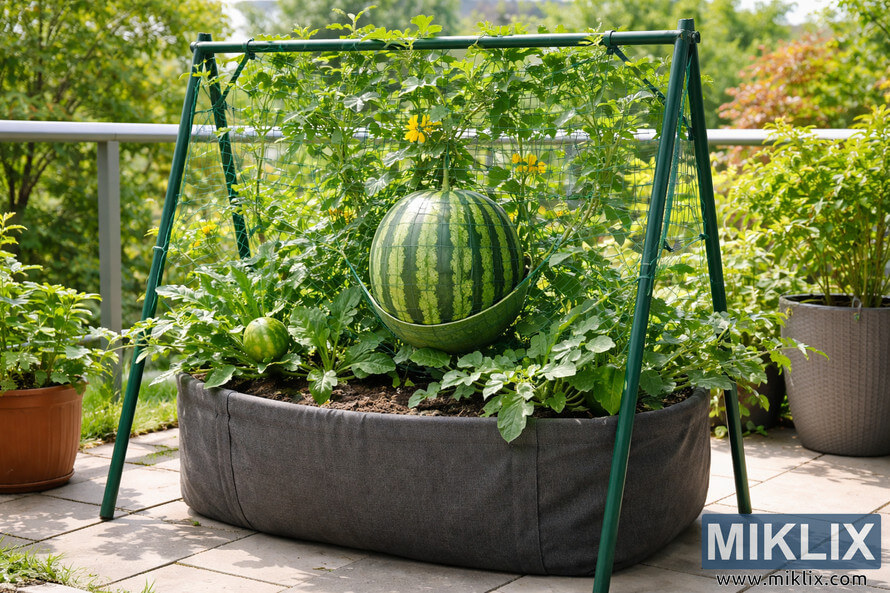
Limited space shouldn't prevent watermelon growing. Container cultivation and vertical systems make watermelons accessible even in small gardens, patios, or balconies. Success requires selecting appropriate varieties and providing adequate resources within confined spaces.
Choosing Containers
Select containers at least 24 inches deep and wide for watermelon growing. Five-gallon buckets work as minimum size, but larger containers produce better results. Ensure containers have adequate drainage holes. Fabric grow bags provide excellent drainage and air pruning of roots.
Choose compact or dwarf watermelon varieties for containers. Bush varieties work best, producing shorter vines more suited to confined spaces. Icebox types with smaller fruits also adapt well to container growing. Avoid standard large-fruited varieties in containers.
Soil Mix and Fertilization
Use quality potting mix rather than garden soil in containers. Garden soil compacts in pots and drains poorly. Good potting mix contains peat moss or coconut coir, perlite, and compost. Mix in slow-release fertilizer at planting time following package directions.
Container plants need more frequent fertilization than garden plants. Nutrients wash out through drainage holes with regular watering. Feed container watermelons every 2 weeks with liquid fertilizer. Use half-strength solutions to avoid salt buildup in the confined root space.
Watering Container Plants
Containers dry out much faster than garden soil. Check moisture daily during hot weather. Water when the top inch of soil feels dry. Container plants may need twice-daily watering during peak summer heat. Self-watering containers reduce watering frequency and maintain more consistent moisture.
Mulch the soil surface in containers to reduce evaporation. Use an inch of compost or shredded bark. This practice conserves moisture and moderates soil temperature. Position containers where they receive full sun but remain accessible for regular watering.
Click or tap the image for more information and higher resolutions.
Vertical Growing in Small Spaces
Train watermelon vines on trellises, arbors, or fences to maximize small spaces. This approach works in narrow garden strips or along property boundaries. Choose smaller-fruited varieties that weigh less when mature. Provide sturdy support structures and use slings for developing fruits.
Vertical growing improves air circulation around plants, reducing disease problems. Fruits stay cleaner hanging above ground. The three-dimensional growing space accommodates more plants in limited square footage. Maintenance and harvesting become easier with fruits at eye level.
Frequently Asked Questions About Growing Watermelons
How long does it take for a watermelon to grow from seed to harvest?
Most watermelon varieties require 70 to 100 days from seed planting to harvest. Quick-maturing varieties need 70 to 80 days, while standard varieties take 80 to 90 days. Large heirloom types may require 90 to 100 days. These timeframes assume ideal growing conditions with consistent warmth and adequate water. Cool weather extends maturity time, while very hot conditions may accelerate ripening slightly.
Can watermelons grow in partial shade?
Watermelons need full sun for best results. They require at least 8 hours of direct sunlight daily. Partial shade significantly reduces vine growth, fruit production, and sweetness. In regions with extremely hot summers exceeding 100°F regularly, light afternoon shade may prevent stress. However, in most climates, maximum sun exposure produces the best watermelons. Choose the sunniest location in your garden for planting.
Why are my watermelon flowers falling off without producing fruit?
Flower drop without fruit set usually indicates pollination problems. Male flowers naturally drop after releasing pollen. Female flowers drop if pollination doesn't occur. Lack of pollinators, extreme temperatures, or insufficient male flowers cause this issue. Try hand pollination if natural pollination seems inadequate. Excessive nitrogen fertilizer also reduces fruiting. High temperatures above 90°F or low temperatures below 60°F at night can interfere with pollination.
How much space does a watermelon plant need?
Standard watermelon varieties need 5 to 6 feet between plants and 8 to 10 feet between rows. Their vines spread 10 to 15 feet in all directions. Compact varieties require less space, with 3 to 4 feet between plants and 6 to 8 feet between rows. Bush varieties or those grown vertically need even less ground space. Plan for adequate room to avoid overcrowding, which increases disease risk and reduces yields.
Should I prune watermelon vines?
Pruning isn't necessary for ground-grown watermelons but can benefit vertical growing. For vertical systems, remove lateral shoots to focus growth on main vines. This improves air circulation and directs plant energy. Some growers pinch vine tips once several fruits set to concentrate resources on developing melons. Remove damaged or diseased foliage anytime throughout the season. Excessive pruning reduces leaf area needed for fruit development, so prune moderately.
How can I tell if my watermelon is ripe?
Check multiple ripeness indicators for accuracy. The ground spot changes from white to creamy yellow. The tendril nearest the fruit stem dries and browns. The rind becomes dull rather than shiny. Tapping produces a deep, hollow sound. The fruit yields slightly to pressure while remaining firm. Count days from planting and compare to variety maturity time. Use several indicators together rather than relying on just one method.
Can I grow watermelons in containers?
Yes, watermelons grow successfully in containers with proper variety selection and care. Choose compact or bush varieties with smaller fruits. Use containers at least 24 inches deep and wide, though larger is better. Provide quality potting mix, regular fertilization, and consistent watering. Container plants need more frequent watering and feeding than garden plants. Support vines on trellises to maximize space. Select varieties specifically bred for container growing for best results.
What's the best soil pH for growing watermelons?
Watermelons prefer soil pH between 6.0 and 7.0. Slightly acidic to neutral soil promotes optimal nutrient availability and healthy growth. Test your soil before planting to determine current pH. Amend with lime to raise pH in acidic soil or sulfur to lower pH in alkaline conditions. Apply amendments several weeks before planting. Proper pH ensures plants can access nutrients effectively, supporting vigorous growth and fruit production.
Starting Your Watermelon Growing Journey
Growing watermelons successfully combines art and science. The technical aspects of soil preparation, fertilization, and pest management are important. Equally valuable is developing an intuitive feel for your plants' needs through regular observation and experience.
Start small if you're new to watermelon cultivation. Plant just a few vines your first season. Choose an easy variety known for reliability in your region. Focus on mastering the basics before attempting advanced techniques. Success with your first crop builds confidence and knowledge for future seasons.
Don't let challenges discourage you. Every gardener faces setbacks, from pest problems to weather extremes. Each growing season teaches valuable lessons. Keep notes about what works and what doesn't in your specific conditions. This record becomes increasingly valuable over time.
The reward for your efforts arrives with that first perfectly ripe watermelon. The satisfaction of producing your own food connects you to fundamental natural cycles. Sharing homegrown melons with family and friends multiplies this satisfaction. Few gardening projects match the impressive visual and taste impact of watermelon growing.
Your specific climate, soil type, and garden space shape your approach to watermelon cultivation. Adapt general guidelines to your unique situation. Don't hesitate to experiment with different varieties and techniques. The best learning happens through direct experience in your own garden.
As seasons pass, your skills will grow alongside your plants. You'll develop efficient routines for maintenance tasks. Pattern recognition improves your ability to spot problems early. Most importantly, you'll gain the confidence to tackle increasingly ambitious growing projects.
The simple act of planting watermelon seeds connects you to agricultural traditions spanning thousands of years. Modern gardeners benefit from centuries of accumulated knowledge while enjoying improved varieties and techniques. Yet the basic satisfaction remains timeless.
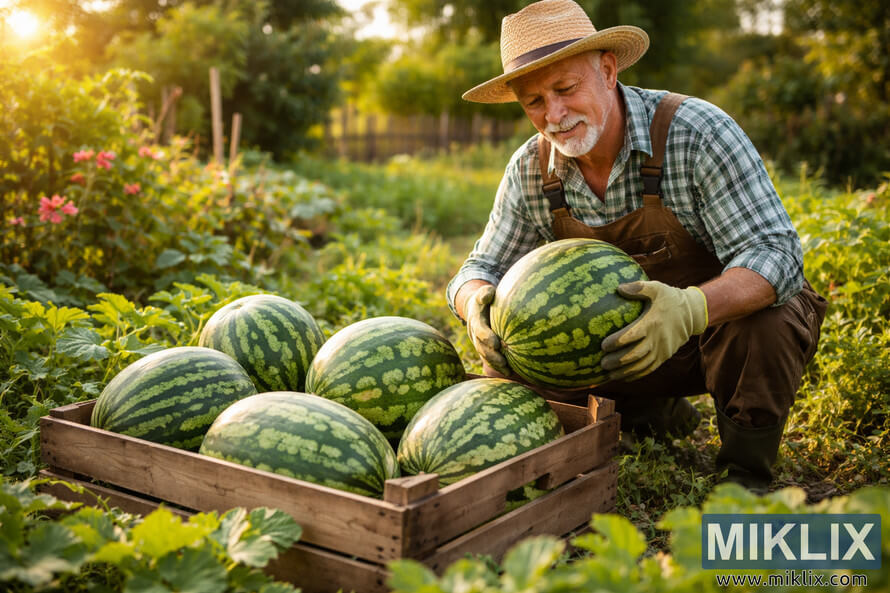
Nothing quite compares to experiencing the full lifecycle of food production. You'll witness tiny seeds transform into sprawling vines covering large areas. The first flowers herald coming abundance. Small fruits swell daily as harvest approaches. Finally, that moment when you bite into sun-warmed watermelon flesh you've nurtured from seed justifies every bit of effort invested.
Begin planning your watermelon growing project today. Select varieties suited to your space and climate. Prepare your soil with care and attention. Plant when conditions are right and tend your crop with consistent effort. Before you know it, you'll be harvesting sweet, juicy watermelons from your own garden.
Click or tap the image for more information and higher resolutions.
Further Reading
If you enjoyed this post, you may also like these suggestions:
- A Complete Guide to Growing Potatoes in Your Own Garden
- A Guide to Growing Lettuce in Your Own Garden
- How to Grow Swiss Chard: A Complete Beginner's Guide