
A Complete Guide to Growing Parsley in Your Home Garden
Published: February 10, 2026 at 6:09:42 PM UTC
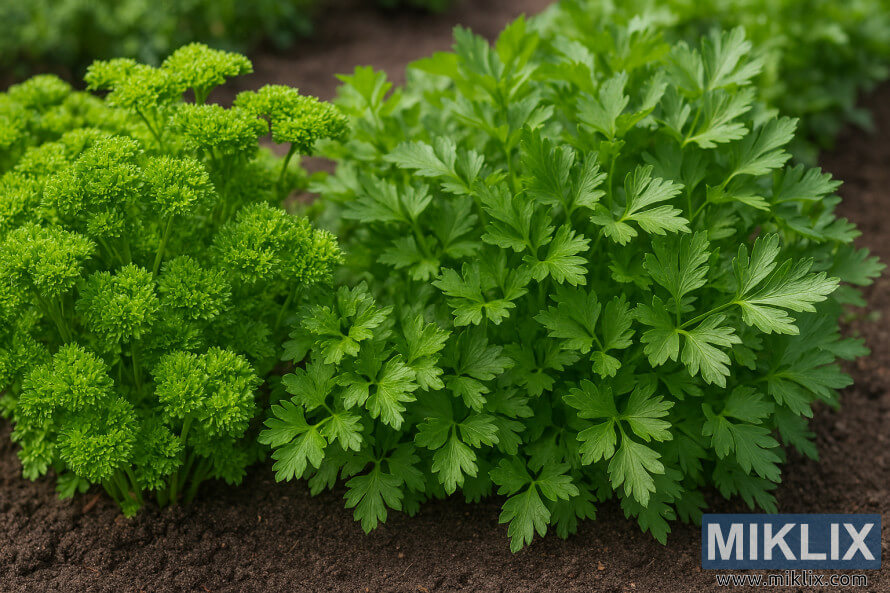
Parsley is one of the most versatile and rewarding herbs you can grow in your garden. This bright green, leafy herb not only adds a fresh flavor and beautiful garnish to countless dishes but is also packed with nutrients and surprisingly easy to grow.
Click or tap the image for more information and higher resolutions.
Whether you're a beginner gardener or looking to expand your herb collection, this guide will walk you through everything you need to know about growing parsley successfully in your own garden.
Choosing Your Parsley
Before you start growing parsley, it's important to understand the two main varieties available and which might be best for your needs:
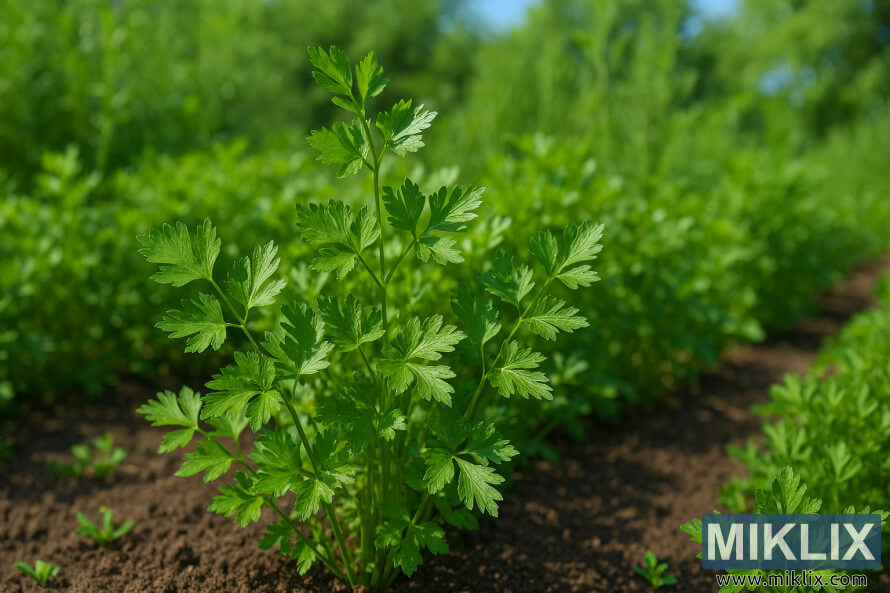
Flat-Leaf (Italian) Parsley
Flat-leaf parsley, also known as Italian parsley, is prized for its robust flavor profile. The leaves are flat, dark green, and have a stronger, more pronounced taste compared to curly varieties. This makes it the preferred choice for cooking, especially in Italian, Mediterranean, and Middle Eastern cuisines.
- More intense, aromatic flavor
- Easier to chop and work with in the kitchen
- Stands up better to heat in cooking
- Slightly easier to grow and more tolerant of heat
Click or tap the image for more information and higher resolutions.
Curly-Leaf Parsley
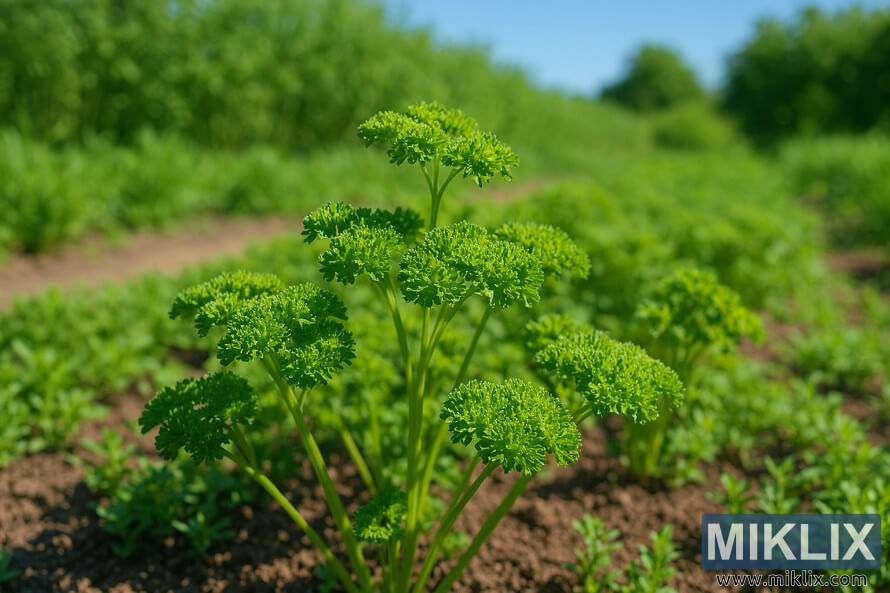
Curly-leaf parsley is instantly recognizable by its ruffled, tightly curled leaves. While traditionally used as a garnish, it has a milder flavor that's still delicious and useful in many dishes. It also makes an attractive ornamental addition to garden beds or containers.
- Milder, slightly peppery flavor
- Decorative appearance makes it excellent for garnishing
- Creates an attractive border in garden beds
- Holds its shape well when used fresh
Both varieties are biennial plants (completing their lifecycle over two years), though they're typically grown as annuals in home gardens. In the first year, they produce the flavorful leaves we harvest; if left to grow a second year, they'll flower, produce seeds, and then die back.
Click or tap the image for more information and higher resolutions.
Planning & Planting
When to Plant Parsley
Timing is important when planting parsley to ensure successful germination and growth:
Optimal planting times for parsley across different growing zones
- Spring planting: Sow seeds outdoors 3-4 weeks before the last spring frost date. Parsley can tolerate light frost once established.
- Fall planting: In zones 7 and warmer, you can also plant parsley in early fall for winter harvests.
- Indoor starting: For an earlier harvest, start seeds indoors 6-8 weeks before your last frost date.
Parsley seeds are notoriously slow to germinate, often taking 2-3 weeks or even longer. Don't give up on them too quickly!
Site Selection
Choosing the right location for your parsley plants is crucial for their success:
Sunlight Requirements
Parsley grows best in full sun (6+ hours of direct sunlight) in cooler climates. In hot regions, partial shade during the afternoon will help prevent the plants from bolting (going to seed) too quickly. The ideal balance is morning sun with afternoon shade in warmer areas.
Soil Preferences
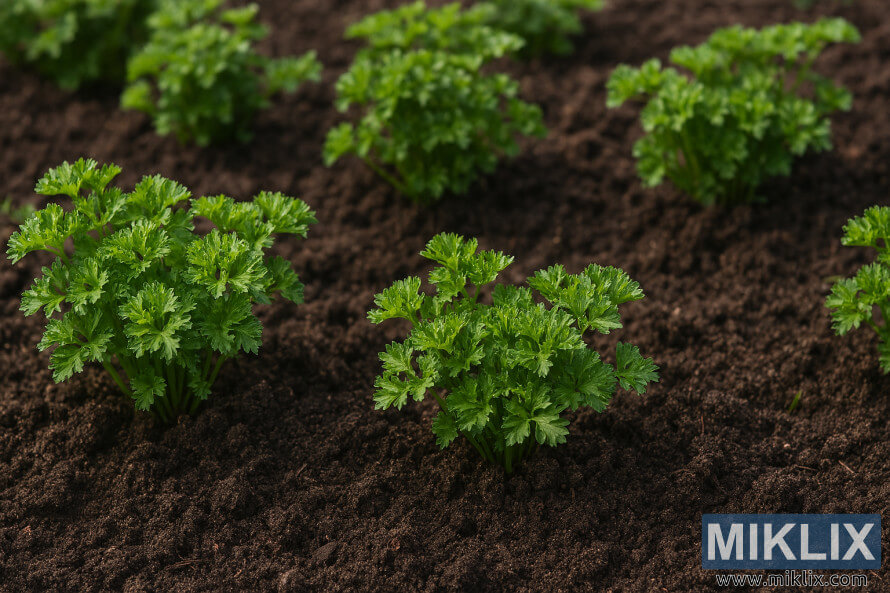
Parsley thrives in well-draining, fertile soil rich in organic matter. Unlike some herbs that prefer poor soil, parsley is a bit of a heavy feeder. The soil pH should be slightly acidic to neutral (6.0-7.0). Before planting, work in compost or aged manure to improve soil structure and fertility.
Click or tap the image for more information and higher resolutions.
Starting Methods
You can grow parsley either by direct sowing seeds or by transplanting seedlings. Here's how to succeed with both methods:
Direct Sowing Seeds
- Prepare the soil by removing weeds and rocks, then rake to a fine texture.
- Soak seeds overnight in warm water to improve germination rates.
- Sow seeds 1/4 inch deep and about 6-8 inches apart.
- Keep the soil consistently moist until germination occurs.
- Thin seedlings to 8-10 inches apart once they reach 2-3 inches tall.
Pro Tip: Plant radish seeds alongside your parsley seeds. Radishes germinate quickly and will mark the rows where the slower-germinating parsley will eventually appear. You can harvest the radishes before the parsley needs the space.
Transplanting Seedlings
- Start seeds indoors in biodegradable pots to minimize root disturbance.
- Use a quality seed-starting mix and keep it consistently moist.
- Provide bright light once seedlings emerge.
- Harden off seedlings by gradually exposing them to outdoor conditions over 7-10 days.
- Transplant carefully, keeping the soil around the roots intact.
Parsley develops a taproot, which makes it somewhat challenging to transplant successfully. Handle seedlings with care and try to disturb the roots as little as possible during the process.
Care and Maintenance
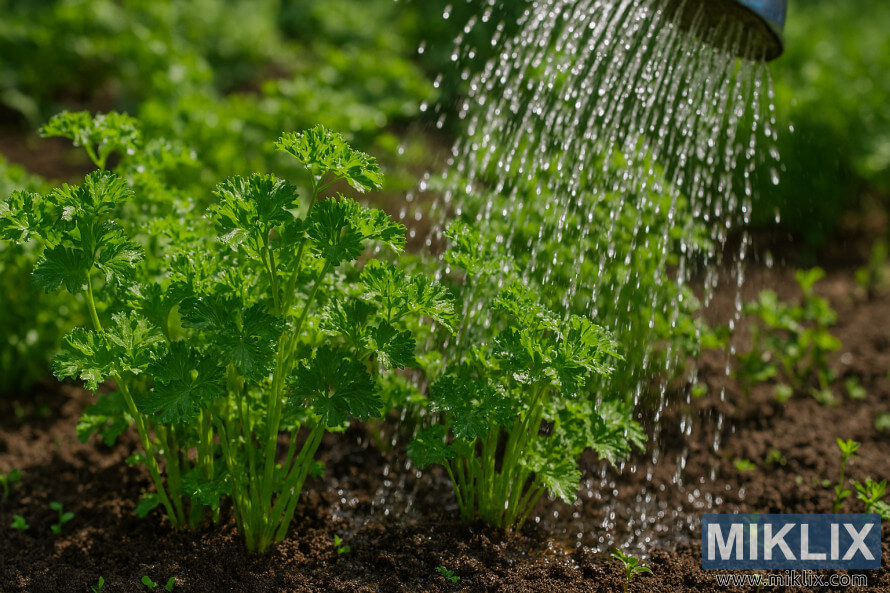
Watering
Proper watering is crucial for growing healthy parsley plants:
- Keep soil consistently moist but not waterlogged.
- Water deeply when the top inch of soil feels dry to the touch.
- Apply water at the base of plants to keep foliage dry and prevent disease.
- Increase watering frequency during hot, dry periods.
- Apply a light layer of mulch around plants (not touching stems) to help retain moisture.
Click or tap the image for more information and higher resolutions.
Feeding
Unlike some herbs that prefer lean soil, parsley benefits from regular, light feeding:
- Apply a balanced, organic fertilizer when planting.
- Feed established plants with compost tea or a diluted liquid fertilizer every 4-6 weeks during the growing season.
- Avoid high-nitrogen fertilizers, which can reduce flavor intensity.
- For container-grown parsley, feed more frequently (every 3-4 weeks) as nutrients leach out with watering.
Click or tap the image for more information and higher resolutions.
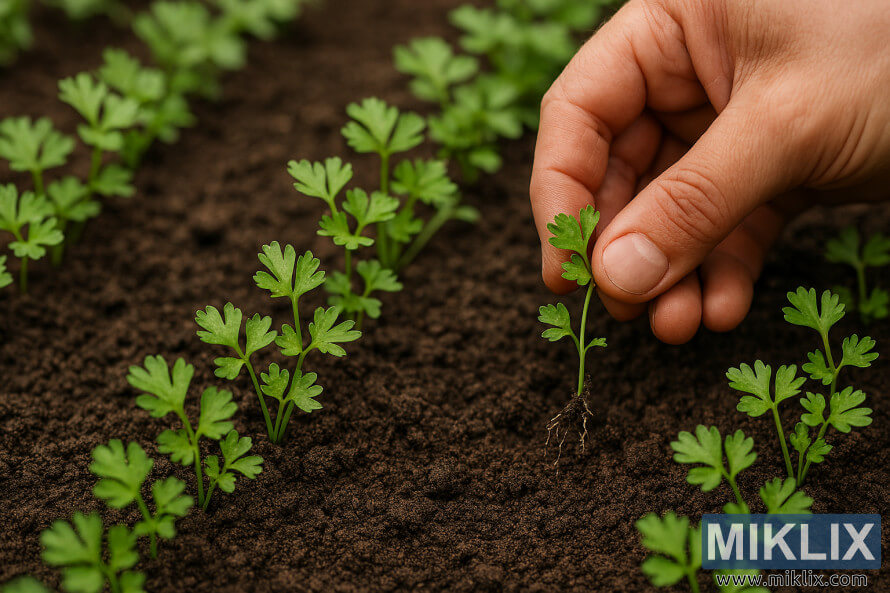
Thinning & Weeding
Proper spacing and weed management are essential for healthy parsley growth:
- Thin seedlings to 8-10 inches apart once they develop their first true leaves.
- Remove the weakest seedlings, keeping the strongest ones.
- Keep the area around parsley plants weed-free to reduce competition for nutrients and water.
- Hand pull weeds carefully to avoid disturbing parsley's roots.
- Apply a thin layer of mulch to suppress weeds and retain soil moisture.
Common Problems
While parsley is generally easy to grow, it can face some challenges:
Pests
- Aphids: Spray with insecticidal soap or a strong stream of water.
- Carrot fly larvae: Cover young plants with row covers and practice crop rotation.
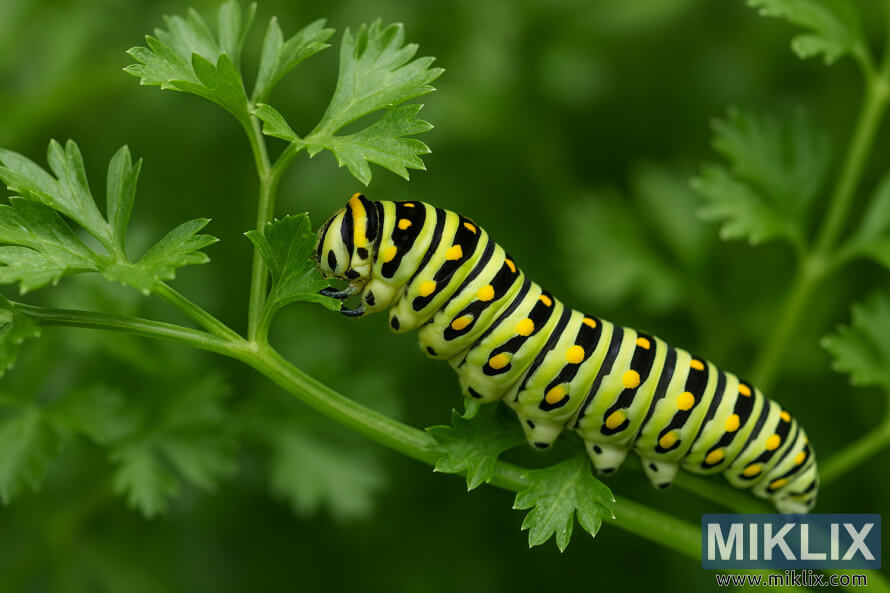
- Black swallowtail butterfly caterpillars: These beautiful creatures use parsley as a host plant. Consider planting extra to share with these beneficial insects.
Diseases
- Leaf spot: Avoid overhead watering and ensure good air circulation.
- Root rot: Improve drainage and avoid overwatering.
- Powdery mildew: Ensure adequate spacing between plants and good air circulation.
Harvesting and Storage
When and How to Harvest
Proper harvesting techniques will ensure a continuous supply of fresh parsley:
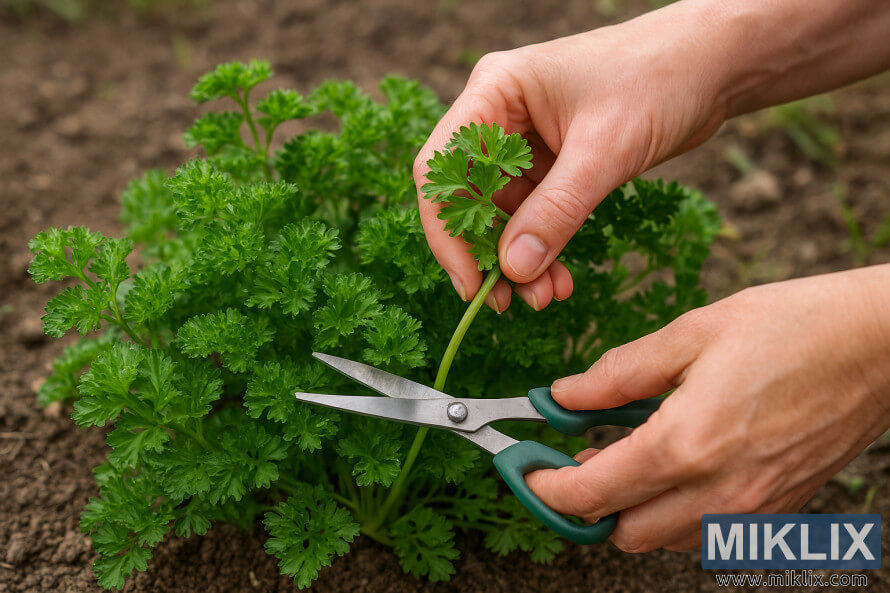
- Begin harvesting when plants have developed three segments on their leaf stems, typically 70-90 days after planting.
- Cut outer stems at the base of the plant using scissors or garden shears.
- Always harvest from the outside, leaving the inner growth to mature.
- Never remove more than one-third of the plant at once.
- Regular harvesting encourages bushier growth and prevents flowering.
- Morning is the best time to harvest, when essential oils are most concentrated.
Click or tap the image for more information and higher resolutions.
Storage Methods
Parsley can be stored in several ways to preserve its flavor and nutritional value:
Fresh Storage
For short-term storage of fresh parsley:
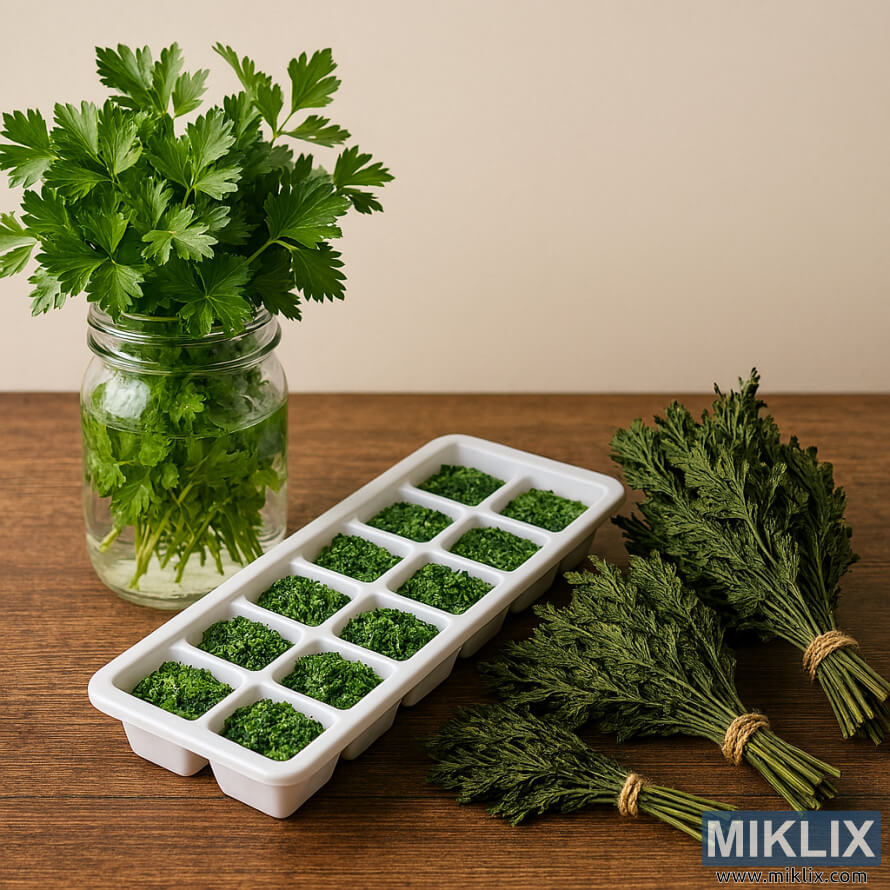
- Trim stem ends and place in a glass of water (like a bouquet)
- Cover loosely with a plastic bag
- Refrigerate and change water every 2-3 days
- Will stay fresh for up to 2 weeks
Freezing
Freezing preserves flavor better than drying:
- Wash and thoroughly dry leaves
- Chop if desired, or freeze whole sprigs
- Place in freezer bags, removing air
- Alternatively, freeze in ice cube trays with water or oil
- Use frozen parsley directly in cooking (no need to thaw)
Drying
Though some flavor is lost, dried parsley is convenient:
- Hang bundles upside down in a warm, dark place
- Ensure good air circulation
- Once completely dry, crumble and store in airtight containers
- Keep away from light and heat
- Use within 6 months for best flavor
Click or tap the image for more information and higher resolutions.
Troubleshooting Common Issues
Why is my parsley turning yellow?
Yellowing parsley leaves can indicate several issues:
- Overwatering: Ensure soil drains well and allow the top inch to dry between waterings.
- Nutrient deficiency: Apply a balanced, organic fertilizer or compost tea.
- Natural aging: Older, outer leaves naturally yellow. Remove them to encourage new growth.
- Too much sun: In hot climates, provide afternoon shade to prevent stress.
My parsley is bolting (flowering) too early. What should I do?
Bolting is triggered by heat and is part of parsley's natural lifecycle as a biennial. To delay bolting:
- Provide afternoon shade in hot weather
- Keep soil consistently moist
- Harvest regularly to encourage leafy growth
- Remove flower stalks as soon as they appear
- Plant a new batch of parsley every 3-4 months for continuous harvest
Once parsley has fully bolted, the leaves become bitter. Consider letting a few plants flower to attract beneficial insects and collect seeds for next season.
Why are my parsley seeds not germinating?
Parsley seeds are notoriously slow to germinate. Common issues include:
- Patience needed: Parsley can take 2-4 weeks to germinate, sometimes longer.
- Old seeds: Parsley seeds lose viability after 2-3 years. Use fresh seeds.
- Improper depth: Seeds should be planted 1/4 inch deep.
- Temperature: Soil should be 50-85°F (10-29°C) for germination.
- Inconsistent moisture: Keep soil consistently moist but not waterlogged.
Try soaking seeds overnight before planting or freezing them for 2 days to improve germination rates.
What are these caterpillars on my parsley and should I remove them?
The striped caterpillars with black and yellow markings are likely black swallowtail butterfly larvae. These beneficial insects use parsley as a host plant:
- They won't kill your parsley plants, though they will eat some leaves
- Consider planting extra parsley to share with these beautiful pollinators
- If you want to save your parsley, gently relocate caterpillars to wild carrot/Queen Anne's lace (another host plant)
- The adult butterflies are important pollinators in your garden ecosystem
Click or tap the image for more information and higher resolutions.
Growing Parsley in Containers
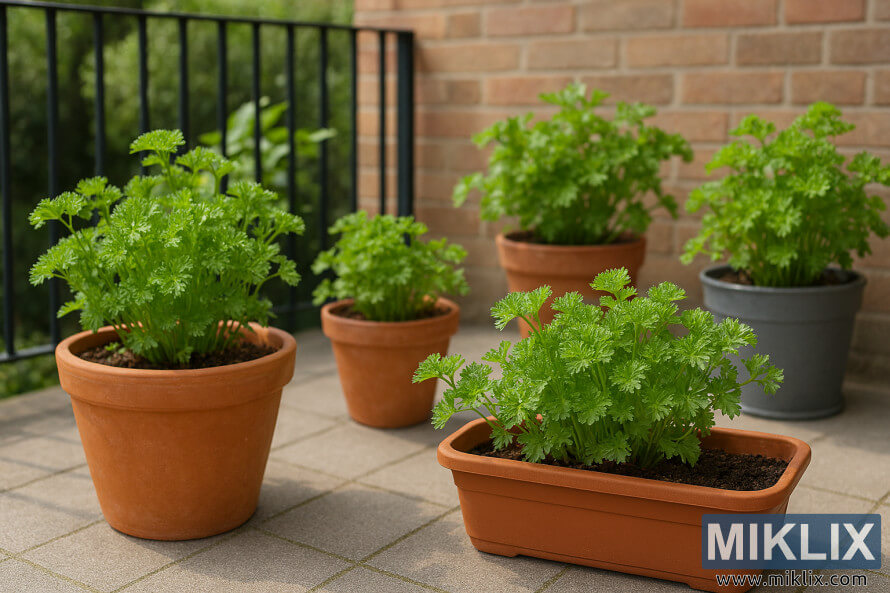
Parsley thrives in containers, making it perfect for patios, balconies, or windowsills
Don't have garden space? Parsley grows exceptionally well in containers, making it accessible for apartment dwellers or those with limited outdoor space:
Container Selection
- Choose containers at least 8 inches deep to accommodate parsley's taproot
- Ensure containers have drainage holes
- Wider pots allow for multiple plants and better stability
- Clay pots provide good drainage but dry out faster
- Plastic or glazed ceramic containers retain moisture longer
Potting Mix
- Use high-quality potting mix, not garden soil
- Add compost (about 25%) for nutrients and moisture retention
- Consider adding perlite or vermiculite for improved drainage
- Avoid moisture-control potting mixes which may retain too much water
- Replace or refresh potting mix annually for best results
Container Care Tips
- Water more frequently than garden-grown parsley as containers dry out faster
- Check moisture levels daily during hot weather
- Feed every 3-4 weeks with diluted liquid fertilizer
- Move containers to shadier locations during extreme heat
- Protect from freezing in winter by moving containers to a sheltered location
- Consider growing parsley indoors on a sunny windowsill during winter months
Click or tap the image for more information and higher resolutions.
Companion Planting with Parsley
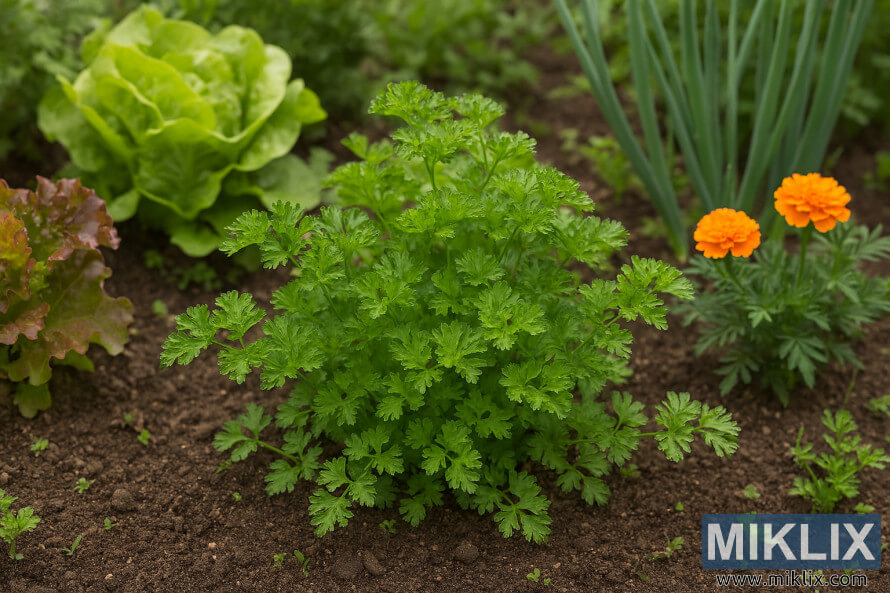
Parsley thrives when planted alongside compatible companions
Companion planting can enhance your parsley's growth while benefiting other plants in your garden. Strategic placement of parsley can deter pests, attract beneficial insects, and even improve the flavor of neighboring plants.
Good Companions for Parsley
- Tomatoes: Parsley repels certain tomato pests and may improve tomato flavor
- Asparagus: Parsley deters asparagus beetles
- Roses: Parsley attracts beneficial insects that prey on rose pests
- Corn: Parsley helps deter corn earworms
- Carrots: Despite being related, they grow well together
- Chives and Onions: These alliums help deter pests that might affect parsley
Plants to Avoid Near Parsley
- Lettuce: May inhibit parsley's growth
- Mint: Tends to be invasive and can overwhelm parsley
- Alliums (in large quantities): While some are beneficial, too many can stunt parsley growth
Parsley also makes an attractive border plant for flower beds and can be interspersed among ornamentals for both utility and beauty.
Click or tap the image for more information and higher resolutions.
Culinary Uses for Your Harvest
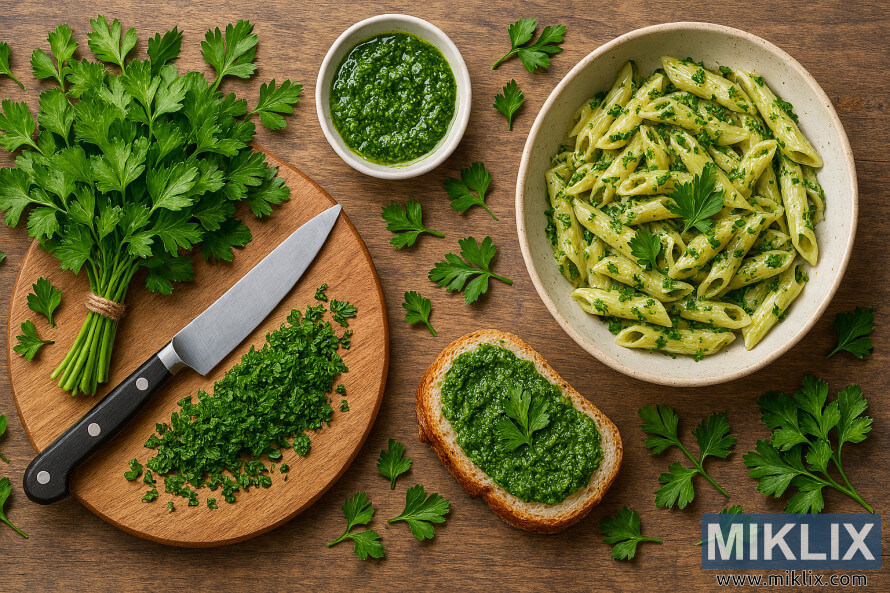
Fresh parsley adds bright flavor and color to countless dishes
Now that you're growing your own parsley, here are some delicious ways to enjoy your harvest:
Fresh Applications
- Garnish for soups, stews, and roasted meats
- Key ingredient in tabbouleh and other grain salads
- Add to green salads for a flavor boost
- Mix into omelets and scrambled eggs
- Blend into fresh salsa and dips
Cooked Dishes
- Essential in bouquet garni for stocks and soups
- Add to pasta sauces in the last few minutes
- Mix into meatballs and burgers
- Include in stuffings for poultry and vegetables
- Stir into risotto just before serving
Preserves & Condiments
- Blend into herb butter for bread or vegetables
- Make parsley pesto with garlic and nuts
- Create herb-infused oils and vinegars
- Dry or freeze for year-round use
- Mix into marinades for meat and vegetables
Remember that flat-leaf parsley generally holds up better in cooking, while curly parsley makes a more attractive garnish. Both varieties are nutritional powerhouses, rich in vitamins A, C, and K, as well as antioxidants and essential oils.
Click or tap the image for more information and higher resolutions.
Conclusion
With proper care, your parsley garden will provide abundant harvests throughout the growing season
Growing parsley in your own garden is a rewarding experience that provides fresh, flavorful herbs for your kitchen while adding beauty to your garden space. Whether you choose the robust flavor of flat-leaf varieties or the decorative appeal of curly parsley, this versatile herb is relatively easy to grow and offers abundant harvests with proper care.
Remember these key points for success:
- Choose the right variety for your culinary needs
- Be patient during the slow germination period
- Provide consistent moisture and fertile soil
- Harvest regularly to encourage bushy growth
- Consider succession planting for year-round harvests
With its bright flavor, nutritional benefits, and ornamental value, parsley deserves a place in every garden. Whether you're growing it in dedicated herb beds, mixed into vegetable gardens, or in containers on a sunny windowsill, this classic herb will reward your efforts with months of fresh, homegrown flavor.
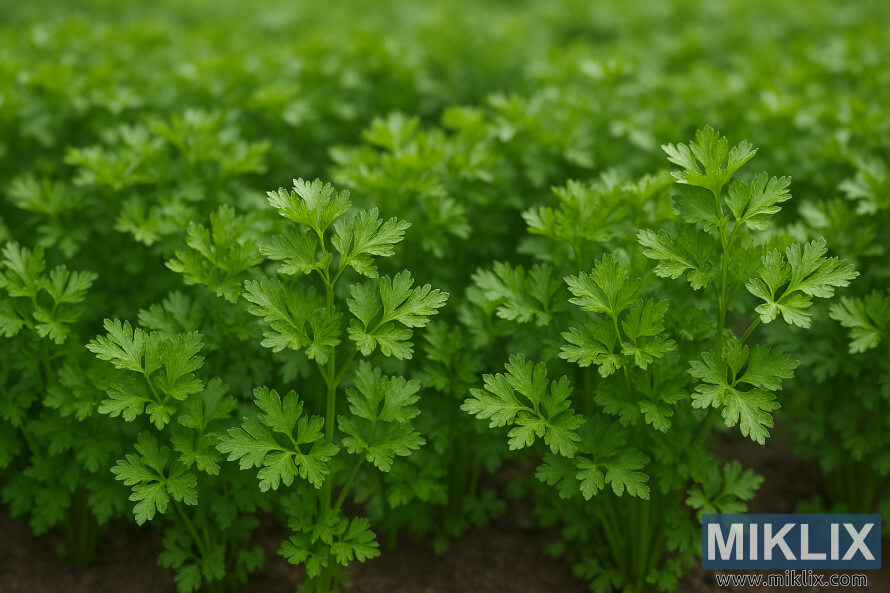
Click or tap the image for more information and higher resolutions.
Further Reading
If you enjoyed this post, you may also like these suggestions:
- A Complete Guide to Growing Tarragon at Home
- A Guide to Growing Cilantro in Your Own Garden
- The Complete Guide to Growing Basil: From Seed to Harvest