
Growing You Own Garlic: A Complete Guide
Published: December 10, 2025 at 9:38:11 PM UTC
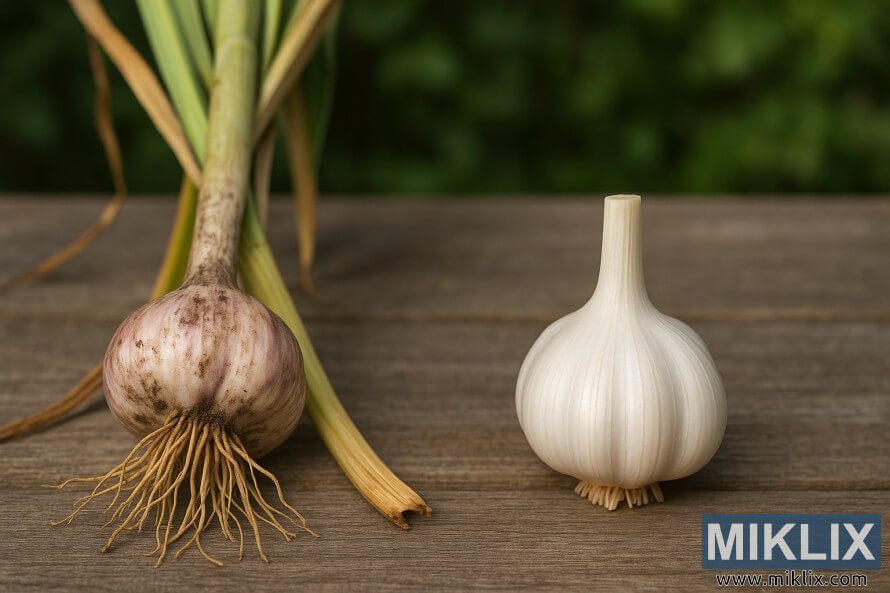
There's something magical about growing your own garlic. That moment when you pull a fully formed bulb from the soil after months of patient tending feels like uncovering buried treasure. Not only does homegrown garlic deliver unmatched flavor that store-bought varieties can't compete with, but the process itself connects you to thousands of years of agricultural tradition.
Click or tap the image for more information and higher resolutions.
Whether you're a seasoned gardener or just starting out, this guide will walk you through everything you need to know to grow spectacular garlic right in your own garden.
From selecting the perfect varieties for your climate to knowing exactly when to harvest, we'll cover each step of the garlic-growing journey. You'll discover why fall planting yields the best results, how to care for your growing plants, and the secrets to proper curing for long-term storage. Let's dig in and start your path to garlic-growing success!
Why Grow Your Own Garlic?
Growing your own garlic offers benefits that extend far beyond just having a steady supply for your kitchen. Here's why you should consider adding this remarkable plant to your garden:
Superior Flavor and Quality
Homegrown garlic delivers a depth of flavor that store-bought varieties simply can't match. When you grow your own, you can select varieties prized for their unique flavor profiles—from mild and sweet to bold and spicy. Plus, you'll avoid the chemical treatments often used on commercial garlic to prevent sprouting.
Cost-Effective
A single garlic bulb can be separated into multiple cloves, each of which will grow into a new bulb. This means a small initial investment can yield a substantial harvest that lasts for months. Even better, you can save your largest, healthiest bulbs for replanting, creating a self-sustaining cycle year after year.
Sustainability
Growing your own garlic reduces the environmental impact associated with commercial farming and transportation. You'll know exactly what went into growing your food, avoiding pesticides and other chemicals if you choose. Plus, garlic is a natural pest repellent that can help protect other plants in your garden.
Variety Access
Grocery stores typically offer only one or two varieties of garlic, but when you grow your own, you can experiment with dozens of fascinating cultivars not available commercially—each with unique flavors, storage capabilities, and growing characteristics.
Understanding Garlic Varieties
Before you start planting, it's important to understand the different types of garlic and which will grow best in your climate. There are two main categories of garlic, each with distinct characteristics and growing requirements.
Hardneck Garlic (Allium sativum var. ophioscorodon)
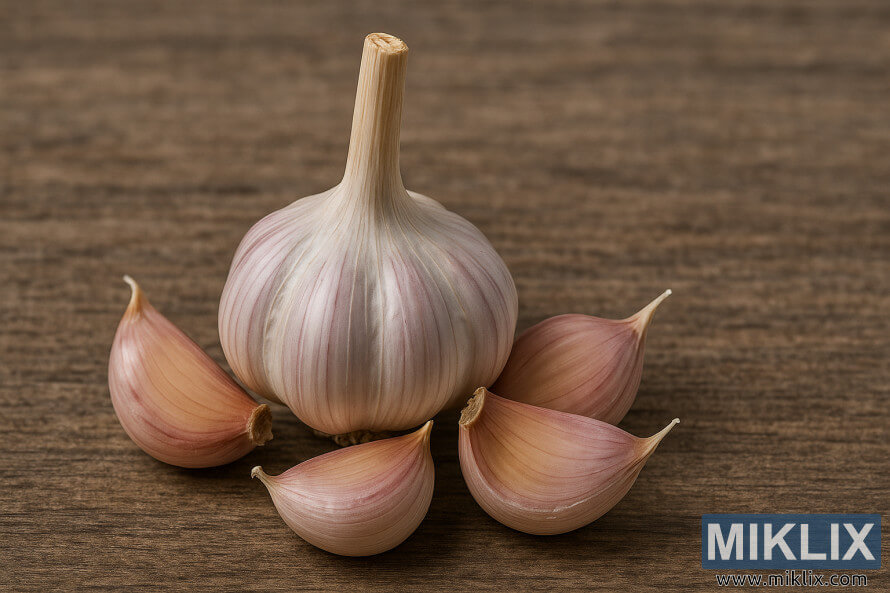
Hardneck varieties produce a stiff central stalk (scape) and typically have fewer but larger cloves arranged in a single ring around this central stem. These varieties are extremely cold-hardy, making them ideal for northern climates (Zones 3-6).
- Produces edible scapes in spring that must be removed to maximize bulb size
- Generally more complex, robust flavors
- Larger cloves that are easier to peel
- Shorter storage life (4-6 months)
- Requires cold exposure to develop properly
Popular Hardneck Varieties: Rocambole, Purple Stripe, Porcelain, Music, German Red, Spanish Roja, Chesnok Red
Click or tap the image for more information and higher resolutions.
Softneck Garlic (Allium sativum var. sativum)
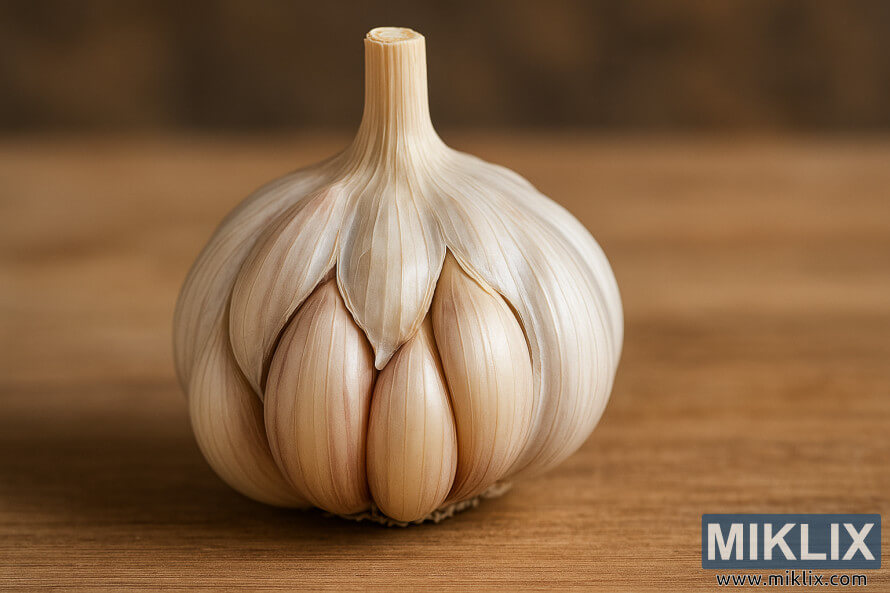
Softneck varieties are what you typically find in grocery stores. They have a flexible stem and produce multiple layers of cloves of varying sizes. These varieties are better suited to milder climates (Zones 7-10) but some can adapt to colder regions.
- Does not produce scapes
- More cloves per bulb, including many small inner cloves
- Milder flavor profile
- Excellent storage life (6-9 months)
- Can be braided for decorative storage
Popular Softneck Varieties: Artichoke, Silverskin, California Early, California Late, Inchelium Red, Silver White
Click or tap the image for more information and higher resolutions.
Best Time to Plant Garlic
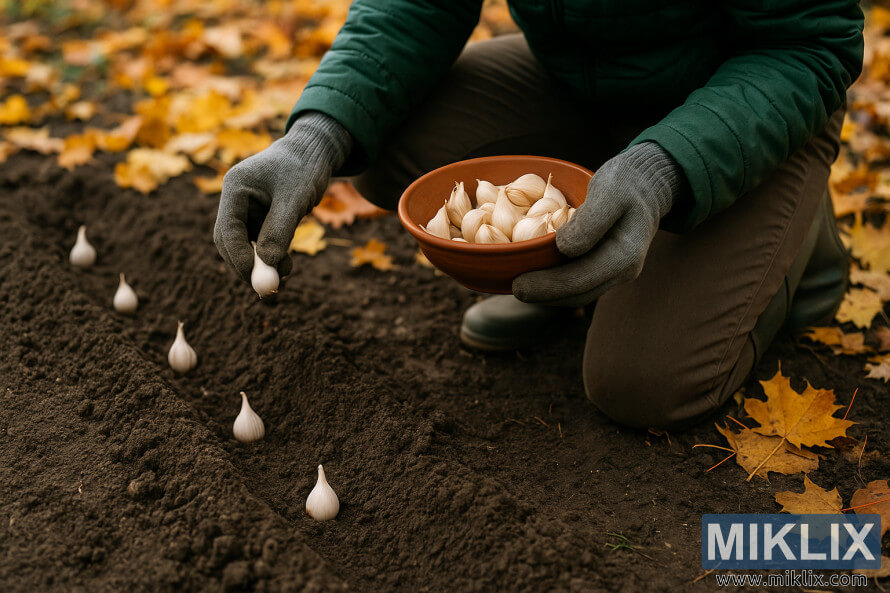
One of the most distinctive aspects of growing garlic is its planting schedule. Unlike most garden vegetables that are planted in spring, garlic performs best when planted in fall. This gives the plants time to establish roots before winter dormancy, resulting in larger, more flavorful bulbs come harvest time.
Fall Planting Timeline by Climate Zone
| Climate Zone | Planting Window | Notes |
| Cold (Zones 3-5) | Early to mid-October | Plant 4-6 weeks before ground freezes |
| Moderate (Zones 6-7) | Mid-October to early November | Plant after first light frost |
| Warm (Zones 8-9) | Late October to November | Plant when soil temperatures cool |
| Hot (Zones 10+) | November to December | May need pre-chilling in refrigerator |
Why Fall Planting Works Best
Garlic needs a period of cold exposure (vernalization) to trigger proper bulb formation. When planted in fall, cloves establish roots before winter sets in, then go dormant during the coldest months. Come spring, they resume growth with a well-established root system, giving them a significant head start over spring-planted garlic.
Pro Tip: Mark your calendar for planting about 2-3 weeks after the first fall frost in your area, but before the ground freezes solid. This timing sweet spot gives garlic enough time to establish roots without sprouting too much top growth before winter.
Spring Planting Option
While fall planting is ideal, you can plant garlic in early spring as soon as the soil can be worked. Spring-planted garlic won't have the benefit of winter root development, so bulbs will typically be smaller, but you'll still get a harvest. If planting in spring, choose softneck varieties, which don't require as much cold exposure.
Click or tap the image for more information and higher resolutions.
Choosing the Perfect Growing Location
Selecting the right location is crucial for growing successful garlic. The plant has specific requirements that, when met, will reward you with robust, flavorful bulbs.
Sunlight Requirements
Garlic thrives in full sun, requiring at least 6-8 hours of direct sunlight daily. In hotter southern climates, some afternoon shade can be beneficial, but northern growers should prioritize maximum sun exposure.
Soil Conditions
Garlic performs best in loose, fertile, well-draining soil with a pH between 6.0 and 7.0. Heavy clay soils can cause misshapen bulbs and increase the risk of rot, while sandy soils may not retain enough moisture and nutrients.
Drainage Considerations
Good drainage is essential for garlic. Waterlogged soil can cause bulbs to rot, especially during winter dormancy. If your garden has poor drainage, consider growing in raised beds, which provide better control over soil conditions and drainage.
Crop Rotation
Avoid planting garlic in areas where other alliums (onions, leeks, shallots) have grown in the past 3-4 years. This helps prevent soil-borne diseases and pests that affect the allium family.
Soil Testing: Before planting, consider testing your soil to determine its pH and nutrient levels. This will help you make appropriate amendments to create optimal growing conditions for your garlic.
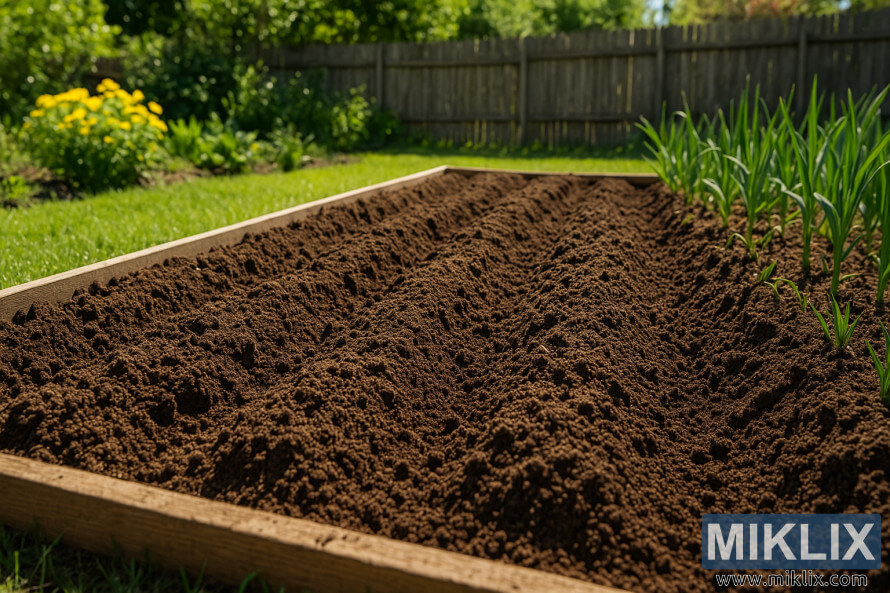
Click or tap the image for more information and higher resolutions.
Preparing Your Soil for Planting
Proper soil preparation is one of the most important factors in growing successful garlic. Taking the time to create ideal soil conditions before planting will pay dividends in the size and quality of your harvest.
Basic Soil Amendments
Start by incorporating 2-3 inches of well-rotted compost or aged manure into your planting area. This improves soil structure, adds nutrients, and enhances beneficial microbial activity. For clay soils, adding additional organic matter helps improve drainage, while sandy soils benefit from compost's water-retention properties.
Fertilization
Garlic is a heavy feeder, particularly of nitrogen. Before planting, work in a balanced organic fertilizer (like 5-5-5) according to package directions. Some growers also add bone meal (for phosphorus) or wood ash (for potassium) to support bulb development.
Raised Bed Option
If your native soil is particularly heavy or poorly drained, consider building raised beds for your garlic. A depth of 8-12 inches is ideal, filled with a mixture of 75% quality compost and 25% vermiculite or perlite for optimal drainage and nutrition.
Container Growing
Garlic can also thrive in containers at least 8-10 inches deep with drainage holes. Use a high-quality potting mix amended with compost. Each container should be large enough to space cloves 4-6 inches apart.
Step-by-Step Planting Guide
Now that you've selected your garlic variety and prepared your soil, it's time for the most satisfying part—planting! Follow these steps for the best results:
- Break apart the bulb. Carefully separate the garlic bulb into individual cloves just before planting (1-2 days maximum). Keep the papery skin on each clove intact as it protects against soil-borne diseases.
- Select the best cloves. Choose the largest, healthiest cloves for planting. Larger cloves produce larger bulbs. Save the smaller cloves for cooking.
- Determine spacing. Mark planting holes 4-6 inches apart in rows spaced 10-12 inches apart. For intensive gardening, you can use offset rows with 7-inch spacing.
- Plant at proper depth. Dig holes 2-3 inches deep. In colder regions, plant slightly deeper (3-4 inches) for better winter protection.
- Orient correctly. Place each clove in its hole with the pointed end facing up and the flat root end facing down. This orientation is crucial for proper growth.
- Cover and firm. Gently fill the holes with soil and lightly firm it around each clove to eliminate air pockets without compacting the soil.
- Water thoroughly. Give your newly planted garlic a good soaking to help settle the soil around the cloves and initiate root growth.
- Apply mulch. Cover the planting area with 4-6 inches of straw, shredded leaves, or other organic mulch. This insulates the soil, suppresses weeds, and maintains moisture levels.
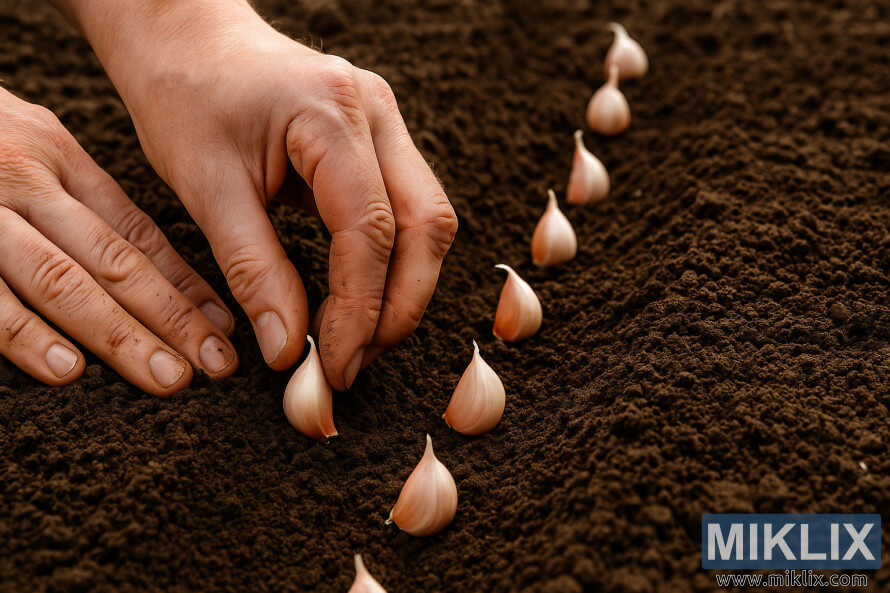
Click or tap the image for more information and higher resolutions.
Planting Depth Tip: A good rule of thumb is to plant each clove at a depth equal to twice its height. For most garlic varieties, this works out to about 2-3 inches deep.
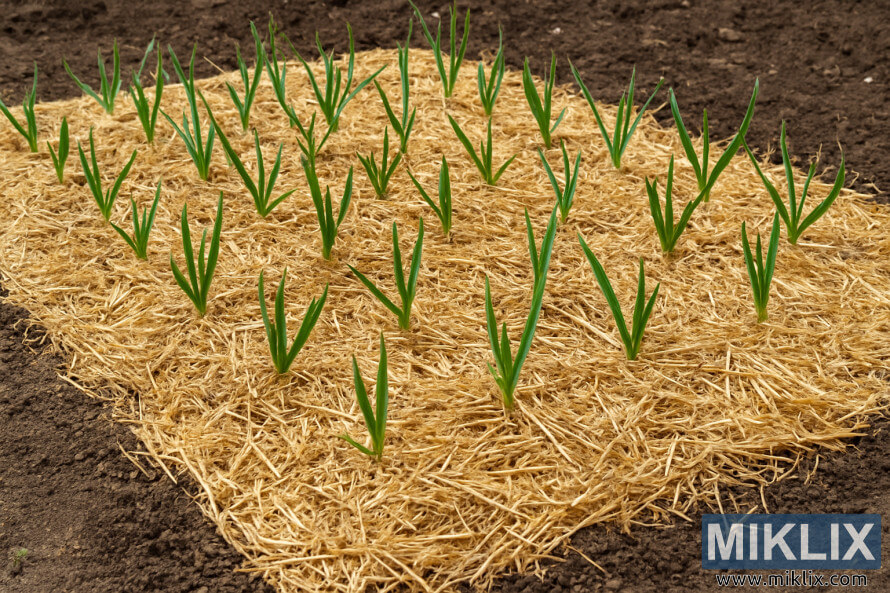
Click or tap the image for more information and higher resolutions.
Winter Care and Early Spring Maintenance
After planting your garlic in fall, there's a period of relative inactivity during winter months. However, there are still important care considerations during this time and as spring approaches.
Winter Protection
The mulch you applied at planting time serves as crucial winter protection. In very cold regions (Zones 3-5), you may need to add an additional layer of mulch after the ground freezes. This prevents frost heaving, which can push cloves out of the ground during freeze-thaw cycles.
Early Emergence
Don't panic if you see green shoots emerging during a winter warm spell. Garlic is quite hardy, and the shoots can withstand cold temperatures. If temperatures drop severely after emergence, you can add a light covering of additional mulch for protection.
Spring Awakening
As temperatures warm in spring, garlic will begin active growth. Once the threat of hard freezes has passed (usually when daytime temperatures consistently reach 40°F/4°C), you can pull back some of the mulch to allow the soil to warm more quickly. Keep a thin layer in place to suppress weeds and retain moisture.
Early Spring Fertilization
When you see active growth resuming in spring, apply a nitrogen-rich fertilizer. This gives plants the nutrients they need for vigorous leaf development, which directly correlates to bulb size. A side dressing of blood meal, diluted fish emulsion, or a balanced organic fertilizer works well.
Caution: Stop fertilizing once you see bulbs beginning to form (usually in late spring). Late fertilization can delay maturity and reduce storage quality.
Growing Season Care
As your garlic plants develop through spring and early summer, proper care will ensure the best possible harvest. Here's what to focus on during the active growing season:
Watering
Garlic needs consistent moisture during the growing season, especially from spring through early summer when bulbs are forming. Provide about 1 inch of water per week when rainfall is insufficient. Water deeply but infrequently to encourage deep root development.
Reduce watering once the leaves begin to yellow (about 2-3 weeks before harvest). This helps prevent bulb rot and allows the bulbs to begin drying in the soil.
Weed Control
Garlic doesn't compete well with weeds, so regular weeding is essential. Be careful when weeding near garlic plants to avoid damaging the shallow roots. Maintaining a layer of mulch helps suppress weeds while retaining soil moisture.
Hand pulling is often the safest method for removing weeds close to garlic plants. For larger areas between rows, a shallow hoe can be used with care.
Scape Removal
Hardneck varieties produce a flowering stem called a scape in late spring or early summer. These curly stems should be removed once they form a complete loop to redirect the plant's energy into bulb formation rather than seed production.
Don't discard the scapes! They're delicious in stir-fries, pesto, or grilled as a spring delicacy with a mild garlic flavor.
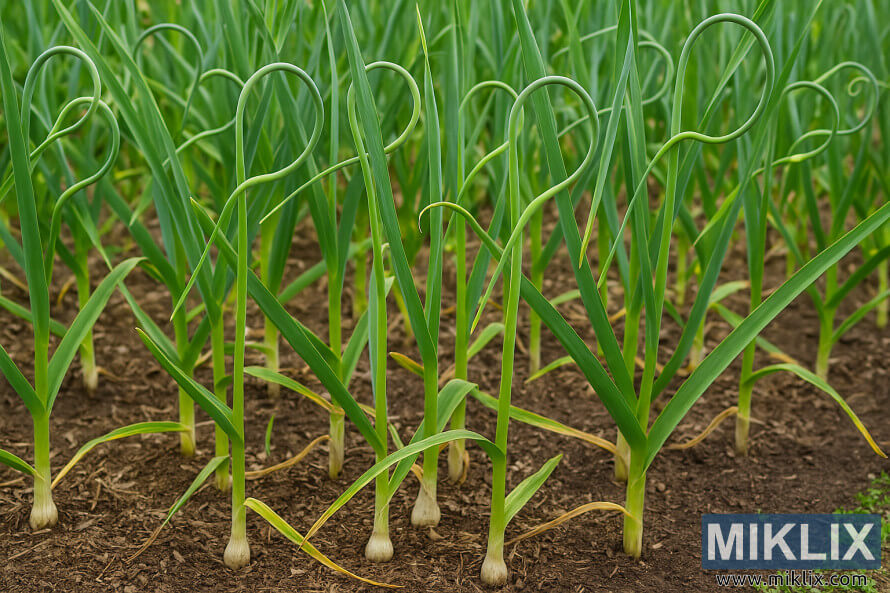
Click or tap the image for more information and higher resolutions.
Troubleshooting Common Problems
While garlic is generally resistant to many garden pests and diseases, it can still face challenges. Being able to identify and address these issues quickly will help ensure a successful harvest.
Pest Management
| Pest | Symptoms | Solution |
| Onion Maggots | Wilting plants, stunted growth, rotting bulbs | Crop rotation, row covers, avoid planting in soil where onions or garlic recently grew |
| Thrips | Silvery speckling on leaves, distorted growth | Insecticidal soap, neem oil, introduce beneficial insects |
| Nematodes | Stunted growth, deformed bulbs | Crop rotation, solarizing soil, planting marigolds as companions |
Disease Management
| Disease | Symptoms | Solution |
| White Rot | Yellowing leaves, white fungal growth on bulbs | Crop rotation (5+ years), plant disease-free stock |
| Botrytis (Neck Rot) | Water-soaked tissue, gray mold | Proper spacing, good air circulation, careful curing |
| Rust | Orange-brown pustules on leaves | Remove affected plants, improve air circulation, avoid overhead watering |
Prevention is Key: The best defense against garlic pests and diseases is prevention through proper crop rotation, planting disease-free stock, maintaining good air circulation, and practicing good garden sanitation by removing plant debris.
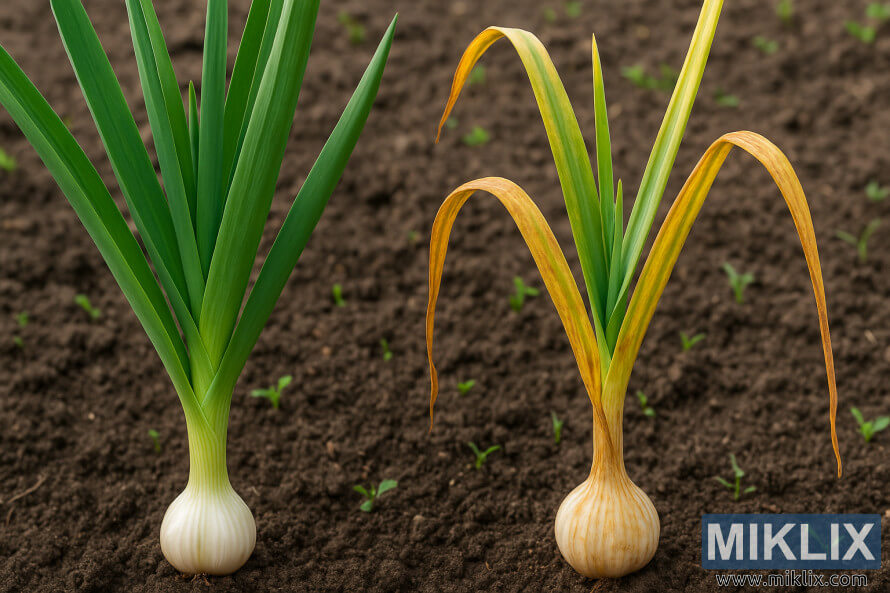
Click or tap the image for more information and higher resolutions.
When and How to Harvest Garlic
After months of patient tending, the moment finally arrives to harvest your garlic. Timing is crucial—harvest too early and the bulbs will be undersized; too late and they may begin to split open, reducing storage quality.
Harvest Timing
Garlic is typically ready to harvest in mid-summer, about 7-8 months after fall planting or 90-120 days after spring planting. Rather than relying solely on the calendar, look for these visual cues:
- The lower third to half of the leaves have turned yellow or brown while the upper leaves remain green
- For most varieties, this means about 5-6 green leaves remain at the top
- The bulbs feel firm and well-formed when gently squeezed through the soil
- If you dig up a test bulb, the cloves should fill out the skins completely, and the outer wrappers should be intact
Harvesting Process
- Choose a dry day. Harvest when the soil is relatively dry to make digging easier and reduce cleaning time.
- Loosen the soil. Use a garden fork or spade to gently loosen the soil around each plant, working about 6 inches away from the stem to avoid damaging the bulbs.
- Lift carefully. Gently pull each plant from the loosened soil, taking care not to bruise the bulbs or break the stems.
- Keep stems attached. Leave the roots and stems intact for the curing process.
- Brush off excess soil. Gently remove loose soil, but don't wash the bulbs as moisture can promote rot.
Important: Don't leave harvested garlic in direct sun for more than an hour, as this can cause sunscald and reduce storage quality.
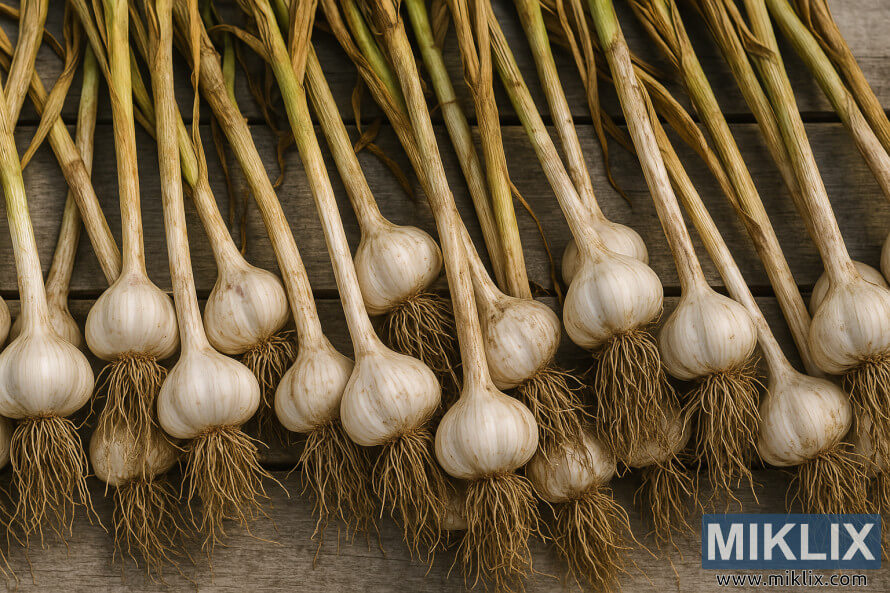
Click or tap the image for more information and higher resolutions.
Curing and Storing Your Harvest
Proper curing and storage are essential to preserve your garlic's flavor and extend its shelf life. The curing process allows the outer layers to dry and form protective wrappers around the bulbs.
Curing Process
- Find the right location. Choose a warm, dry, well-ventilated area out of direct sunlight. Ideal conditions are 70-80°F (21-27°C) with 50-60% humidity.
- Arrange for air circulation. You can:
- Hang bundles of 8-10 plants by their stems
- Lay plants in a single layer on screens or racks
- Use a fan on low setting to maintain air movement
- Allow sufficient time. Curing typically takes 2-4 weeks, depending on humidity levels. The garlic is properly cured when:
- The roots are dry and brittle
- The stems are completely dry
- The outer wrappers are papery and crisp
- The bulbs feel solid and dry
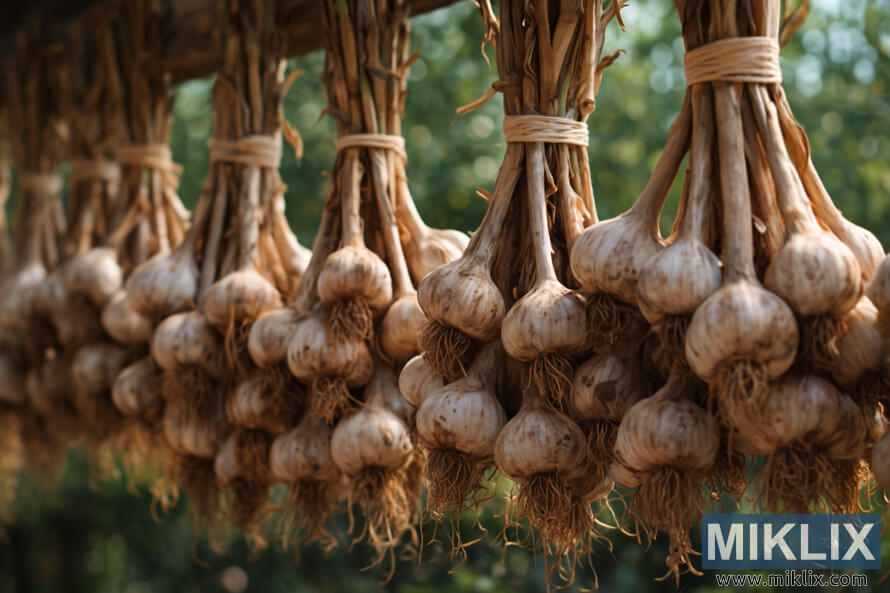
Click or tap the image for more information and higher resolutions.
Preparing for Storage
Once curing is complete, prepare your garlic for long-term storage:
- Trim the roots to about 1/4 inch from the bulb base
- For softneck varieties, either braid the stems or cut them to about 1-2 inches above the bulb
- For hardneck varieties, cut stems to 1-2 inches above the bulb
- Gently brush off any remaining soil, but keep the protective outer wrappers intact
- Set aside your largest, healthiest bulbs for replanting in fall
Storage Conditions
Proper storage conditions will maximize your garlic's shelf life:
- Store in a cool, dry, dark location with good air circulation
- Ideal temperature is 55-65°F (13-18°C) with 40-60% humidity
- Avoid refrigerating garlic, as the cold and humidity can cause sprouting
- Keep away from onions, which can affect garlic's dormancy
- Check periodically and remove any bulbs that show signs of sprouting or softening
Saving Garlic for Next Season's Planting
One of the most rewarding aspects of growing garlic is the ability to save your own "seed" for future plantings. This creates a self-sustaining cycle and allows your garlic to adapt to your specific growing conditions over time.
Selecting the Best Seed Garlic
When choosing which bulbs to save for replanting, look for these qualities:
- Size: Select the largest, most well-formed bulbs
- Health: Choose bulbs free from disease, damage, or soft spots
- Completeness: Look for bulbs with all cloves intact and firmly attached to the base plate
- Variety characteristics: Select bulbs that best represent the desired traits of that variety
Storage Until Planting Time
Seed garlic requires special storage consideration to maintain its viability:
- Store seed garlic separately from your culinary supply
- Keep bulbs whole until 1-2 days before planting
- Maintain ideal storage conditions (55-65°F with 40-60% humidity)
- For hardneck varieties that require cold stratification, move to a cooler location (around 40°F) about 4-6 weeks before planting
Garlic Improvement Tip: By consistently selecting the largest, healthiest bulbs for replanting year after year, you'll gradually improve your garlic's performance in your specific growing conditions—a process called "selection pressure" that gardeners have used for centuries.
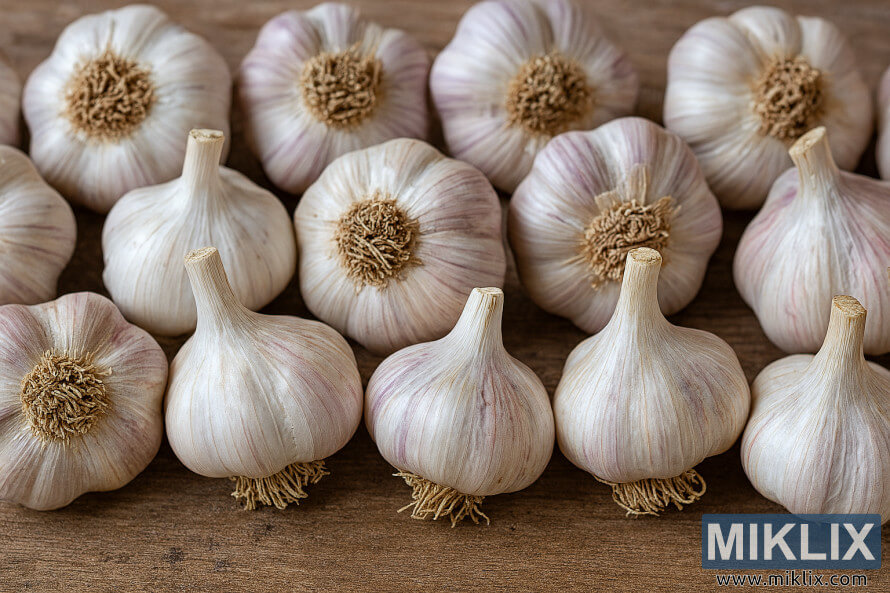
Click or tap the image for more information and higher resolutions.
Quick Start Checklist for Growing Garlic
Essential Steps for Garlic Growing Success
Fall Preparation (September-November)
- Select appropriate varieties for your climate
- Prepare well-drained, fertile soil with compost
- Break apart bulbs into cloves 1-2 days before planting
- Plant cloves 2-3 inches deep, 4-6 inches apart
- Water thoroughly after planting
- Apply 4-6 inches of mulch for winter protection
Spring/Summer Care (March-July)
- Remove excess mulch once growth resumes
- Apply nitrogen-rich fertilizer in early spring
- Keep well-watered (1 inch per week)
- Remove scapes from hardneck varieties
- Stop watering 2-3 weeks before harvest
- Harvest when 5-6 green leaves remain
- Cure for 2-4 weeks in warm, dry location
Enjoying the Fruits of Your Labor
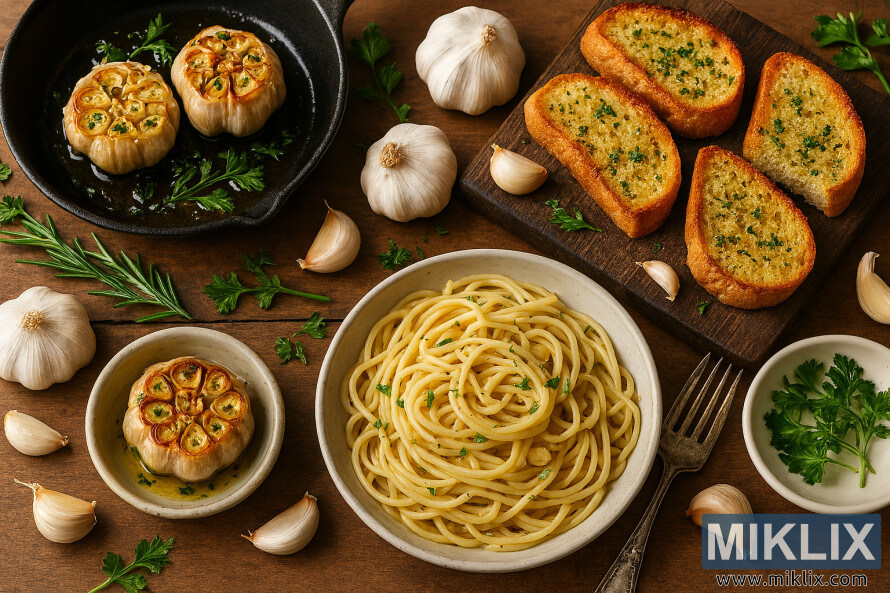
Growing your own garlic is a journey that connects you to thousands of years of agricultural tradition. From the simple act of planting a clove in fall to the satisfaction of harvesting full bulbs the following summer, each step brings its own rewards. The patience required is more than compensated by the superior flavor, quality, and variety you'll enjoy from your homegrown harvest.
As you become more experienced, don't be afraid to experiment with different varieties, growing techniques, and even saving your own seed stock. Over time, your garlic will adapt to your specific growing conditions, potentially becoming more robust and flavorful with each passing season.
Whether you're using your harvest to create delicious meals, sharing with friends and family, or saving cloves for next year's planting, homegrown garlic represents one of the most satisfying and practical crops for home gardeners. So dig in, get your hands dirty, and enjoy the wonderful world of growing your own garlic!
Click or tap the image for more information and higher resolutions.
Further Reading
If you enjoyed this post, you may also like these suggestions:
- A Complete Guide to Growing Your Own Oregano
- The Complete Guide to Growing Basil: From Seed to Harvest
- A Complete Guide to Growing Tarragon at Home