
A Guide to Growing Cilantro in Your Own Garden
Published: February 6, 2026 at 6:03:06 PM UTC
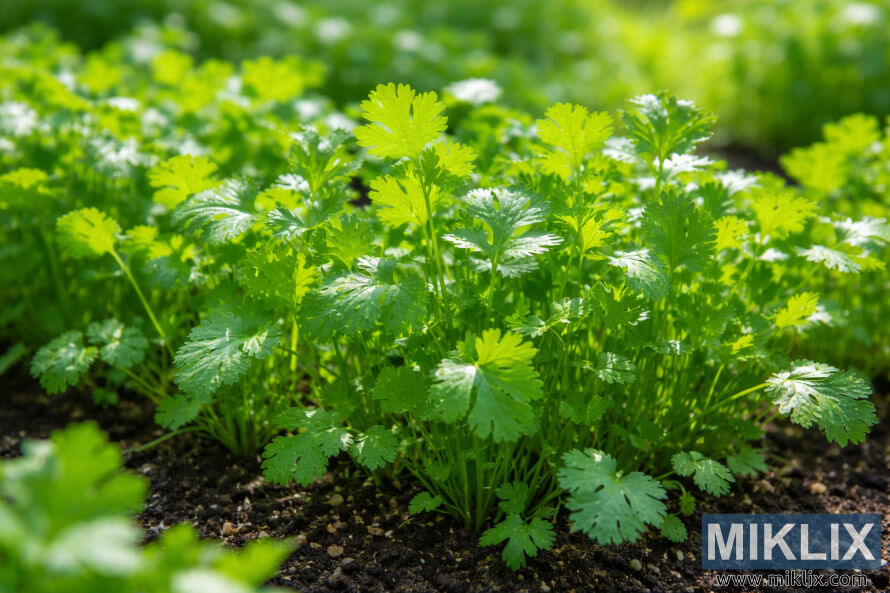
Cilantro (also known as coriander) is a versatile herb that adds distinctive flavor to countless dishes, particularly in Mexican, Asian, and Mediterranean cuisines. Growing your own cilantro provides a constant supply of fresh leaves that far surpass the flavor of store-bought herbs.
Click or tap the image for more information and higher resolutions.
While cilantro has a reputation for being tricky to grow, understanding its preferences and life cycle is the key to success. This guide will walk you through everything you need to know to grow abundant, flavorful cilantro right in your own garden.
Understanding Cilantro: The Basics
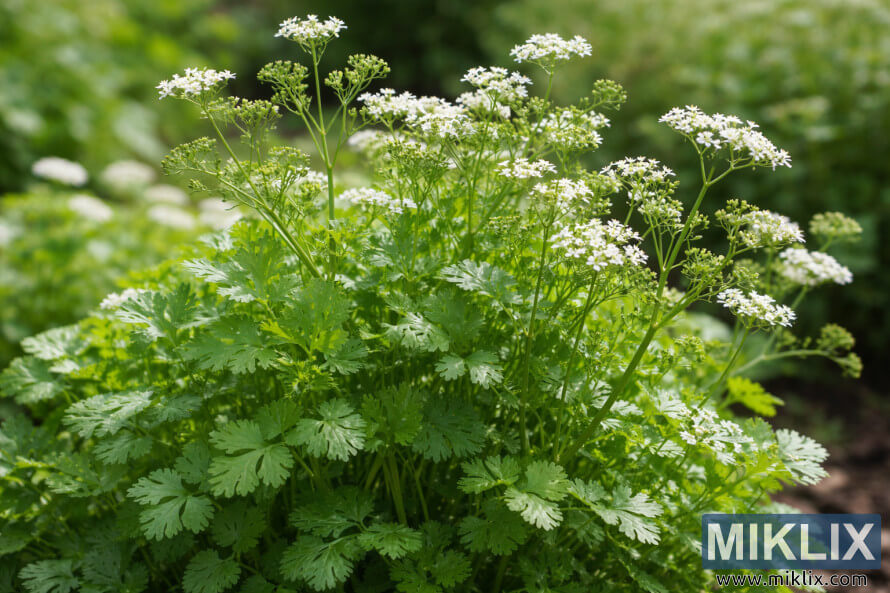
Before diving into growing techniques, it's helpful to understand what makes cilantro unique. Cilantro is a cool-season annual herb in the Apiaceae family, which includes carrots, parsley, and dill. The entire plant is edible—the leaves are known as cilantro, while the seeds are called coriander. Cilantro has a distinctive life cycle that gardeners need to understand: it grows leafy foliage in cool weather, then quickly produces flowers and seeds (bolts) when temperatures rise.
Cilantro Quick Facts
- Botanical name: Coriandrum sativum
- Growing season: Cool weather (spring and fall)
- Days to maturity: 45-70 days from seed
- Light requirements: Full sun to partial shade
- Water needs: Consistent moisture
- Soil preference: Well-draining, rich in organic matter
- Spacing: 6-8 inches between plants
- Companion plants: Basil, mint, tomatoes, peppers
Cilantro leaves and coriander seeds have completely different flavor profiles. The leaves have a bright, citrusy flavor (though some people perceive it as soapy due to genetic factors), while the seeds have a warm, spicy, and slightly citrus flavor.
Click or tap the image for more information and higher resolutions.
When to Plant Cilantro
Timing is crucial for successful cilantro growth. As a cool-season herb, cilantro thrives in temperatures between 50-85°F (10-29°C). When temperatures consistently rise above 85°F (29°C), cilantro will quickly bolt (produce flowers and seeds), ending its leafy growth stage.
Spring Planting
In most regions, start planting cilantro seeds outdoors 2-3 weeks before the last spring frost. The cool spring temperatures will promote lush leaf growth before summer heat arrives. In warmer climates (zones 9-11), focus more on fall/winter growing.
Fall Planting
For a fall crop, sow seeds 8-10 weeks before the first expected frost. Fall-planted cilantro often produces better than spring plantings because the plants mature as temperatures cool rather than warm, extending the harvest period.
Winter Growing
In zones 8 and warmer, cilantro can grow throughout winter. In colder regions, you can extend the season using cold frames or row covers, as cilantro can tolerate light frost.
Choosing the Right Location
Selecting the optimal growing location is essential for healthy cilantro plants. Consider these factors when deciding where to plant your cilantro:
Light Requirements
Cilantro grows best in full sun (6+ hours daily) in cool climates. In warmer regions, provide afternoon shade to prevent early bolting. The partial shade helps keep soil temperatures cooler, extending the plant's leafy growth phase.
Garden Placement
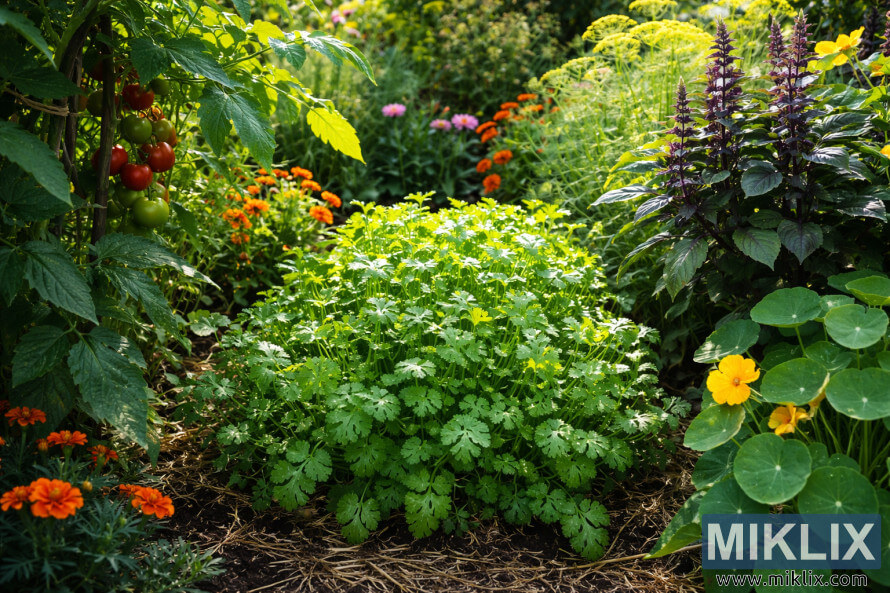
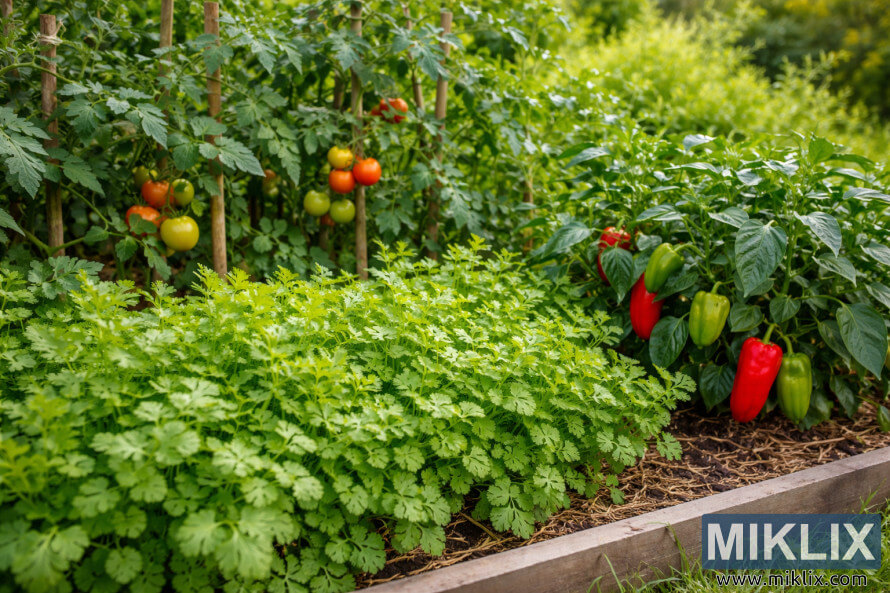
Plant cilantro in a location where taller plants can provide afternoon shade as temperatures warm. Consider the east side of tomatoes or peppers, which will benefit from cilantro's ability to attract beneficial insects while providing the herb with needed shade.
Growing Options
Cilantro adapts well to various growing environments:
- In-ground gardens: Ideal for succession planting and self-seeding
- Raised beds: Provides good drainage and soil control
- Containers: Perfect for small spaces or moving to optimal conditions
- Indoor growing: Possible with sufficient light (6+ hours)
Click or tap the image for more information and higher resolutions.
Soil Preparation for Cilantro
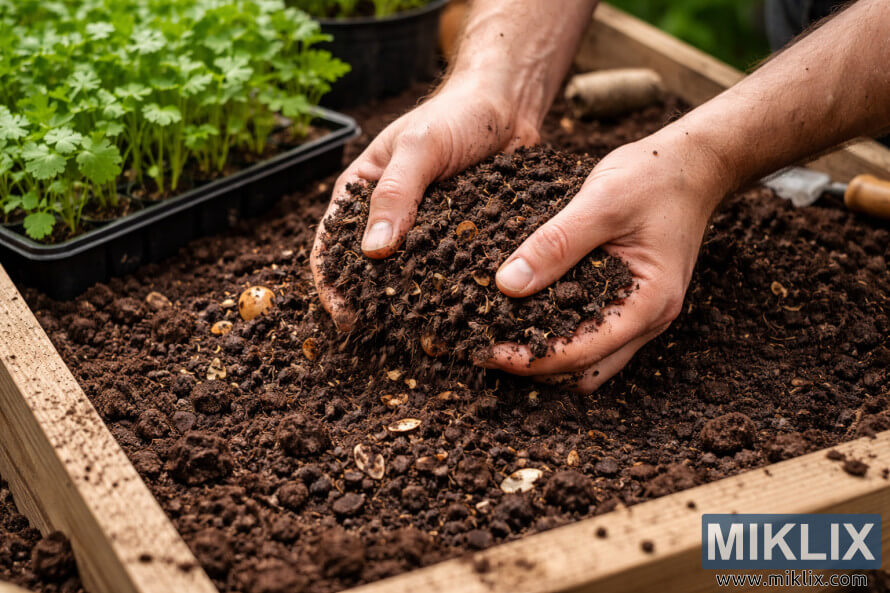
Cilantro thrives in well-draining, loamy soil rich in organic matter. The right soil preparation will encourage strong root development and healthy growth.
Ideal Soil Composition
Create the perfect growing environment with these soil characteristics:
- Texture: Loamy soil that drains well but retains some moisture
- pH level: Slightly acidic to neutral (6.2-6.8)
- Organic matter: Rich in compost or well-rotted manure
- Depth: At least 8-12 inches for proper root development
Click or tap the image for more information and higher resolutions.
Soil Preparation Steps
- Remove any weeds, rocks, or debris from the planting area
- Loosen the soil to a depth of 8-12 inches using a garden fork or tiller
- Mix in 2-3 inches of compost or aged manure to improve soil structure and fertility
- For container growing, use a high-quality potting mix with added compost
- Level the soil surface and water lightly before planting
Pro Tip: For container growing, choose pots at least 8 inches deep to accommodate cilantro's taproot. Ensure containers have drainage holes to prevent waterlogged soil, which can lead to root rot.
Planting Cilantro: Seeds vs. Transplants
Cilantro can be grown from either seeds or transplants, though direct seeding is generally preferred due to cilantro's sensitive taproot that doesn't transplant well.
Growing from Seeds
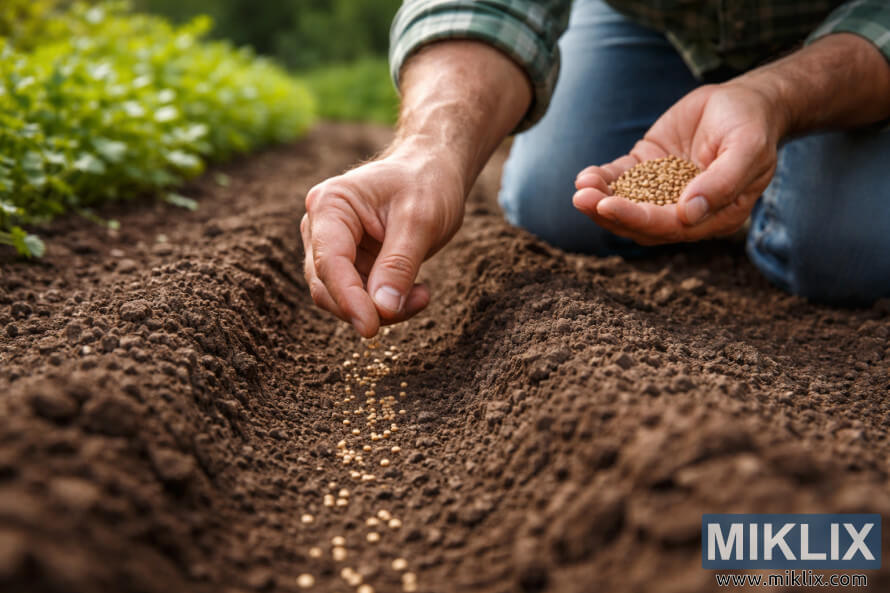
Direct seeding is the most reliable method for growing cilantro:
- Sow seeds 1/4 to 1/2 inch deep in prepared soil
- Space seeds 2 inches apart in rows 12 inches apart
- Keep soil consistently moist until germination (7-14 days)
- Once seedlings reach 2 inches tall, thin to 6-8 inches apart
- Save thinned seedlings for culinary use
For a continuous harvest, sow new seeds every 2-3 weeks during the growing season.
Click or tap the image for more information and higher resolutions.
Using Transplants
If using transplants (less ideal but sometimes necessary):
- Choose young, healthy plants without flowering stems
- Transplant in the evening or on a cloudy day to reduce transplant shock
- Handle plants carefully to minimize root disturbance
- Space plants 6-8 inches apart
- Water thoroughly after transplanting
Benefits of Direct Seeding
- Develops stronger root systems
- Less transplant shock
- More cost-effective
- Allows for succession planting
- Seeds can be saved for future plantings
Challenges of Transplanting
- Sensitive taproot is easily damaged
- Higher risk of transplant shock
- Often leads to earlier bolting
- More expensive than seeds
- Limited variety selection
Watering and Fertilizing Cilantro
Proper watering and fertilization are essential for growing healthy, flavorful cilantro. The right balance will promote leafy growth while preventing bolting.
Watering Guidelines
Cilantro needs consistent moisture to thrive:
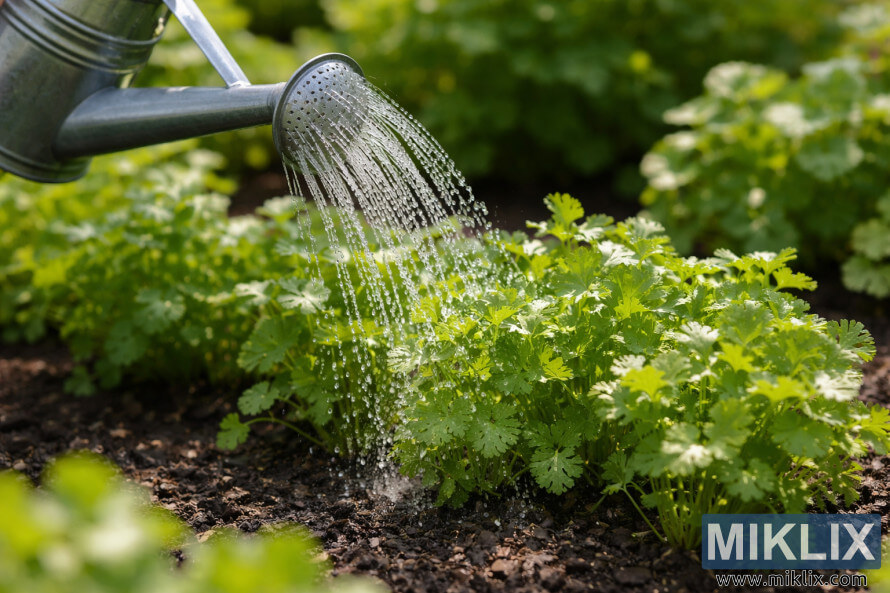
- Keep soil evenly moist but not waterlogged
- Water when the top inch of soil feels dry
- Apply water at the base of plants to keep foliage dry
- Water more frequently during hot, dry periods
- Mulch around plants to retain soil moisture
Container-grown cilantro typically requires more frequent watering than garden-grown plants, sometimes daily during hot weather.
Click or tap the image for more information and higher resolutions.
Fertilizing Approach
Cilantro is a light feeder that doesn't require heavy fertilization:
- Start with compost-rich soil for initial nutrients
- Apply a balanced, organic fertilizer at half strength when plants are 2 inches tall
- Avoid high-nitrogen fertilizers, which can reduce flavor intensity
- For container plants, apply a diluted liquid fertilizer every 4-6 weeks
- Stop fertilizing once plants begin to flower
Ongoing Care and Maintenance
Regular maintenance helps ensure healthy cilantro plants and extends the harvest period. These care practices will help you get the most from your cilantro crop.
Mulching
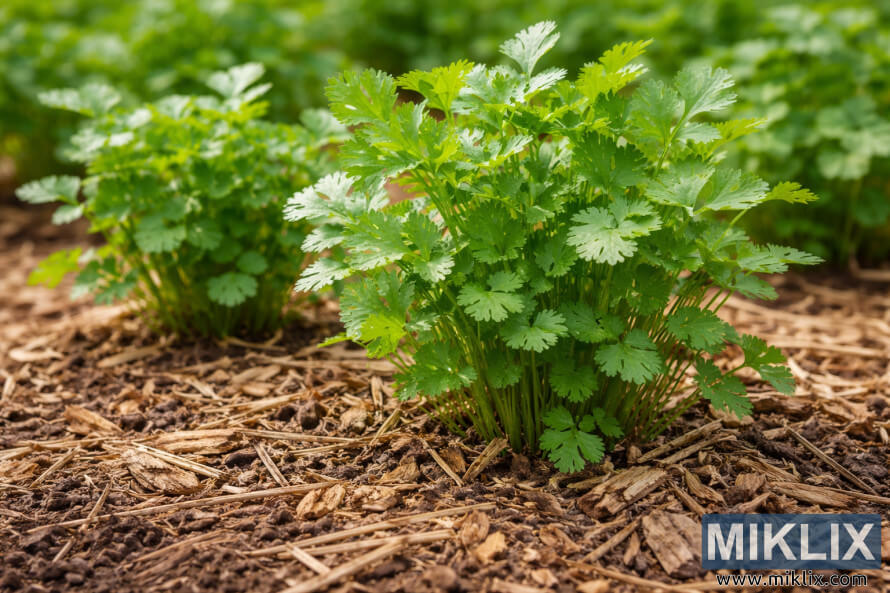
Apply a 1-2 inch layer of organic mulch around cilantro plants to:
- Conserve soil moisture
- Suppress weed growth
- Keep soil temperatures cooler
- Prevent soil splashing onto leaves
Suitable mulch materials include straw, shredded leaves, or fine wood chips. Keep mulch slightly away from plant stems to prevent rot.
Click or tap the image for more information and higher resolutions.
Weed Management
Keep the area around cilantro plants weed-free to reduce competition for nutrients and water:
- Remove weeds by hand when they're small
- Be gentle when weeding to avoid disturbing cilantro's shallow roots
- Use mulch to suppress weed growth
- Consider using a small hand cultivator for larger areas
Preventing Early Bolting
Extend the leafy growth phase of cilantro with these techniques:
Temperature Management
- Plant in partial shade in warm climates
- Use taller plants to provide afternoon shade
- Apply mulch to keep soil cool
- Water in the morning to reduce heat stress
Regular Harvesting
- Harvest outer leaves frequently
- Pinch off the center growth to encourage branching
- Remove flower stalks as soon as they appear
- Practice succession planting for continuous harvest
Variety Selection
- Choose slow-bolting varieties like 'Leisure' or 'Santo'
- Consider 'Calypso' for heat tolerance
- Try 'Slow Bolt' variety in warmer regions
- Look for varieties bred for your climate
Harvesting and Using Cilantro
Knowing when and how to harvest cilantro ensures the best flavor and encourages continued growth. With proper harvesting techniques, you can enjoy fresh cilantro for weeks or even months.
When to Harvest
Timing is important for optimal flavor and plant health:
- Begin harvesting when plants reach 6 inches tall and have several stems
- Harvest in the morning when essential oils are most concentrated
- Pick leaves before the plant begins to flower for best flavor
- Harvest regularly to encourage bushier growth
- Allow some plants to flower if you want to harvest coriander seeds
How to Harvest
Proper harvesting techniques promote continued growth:
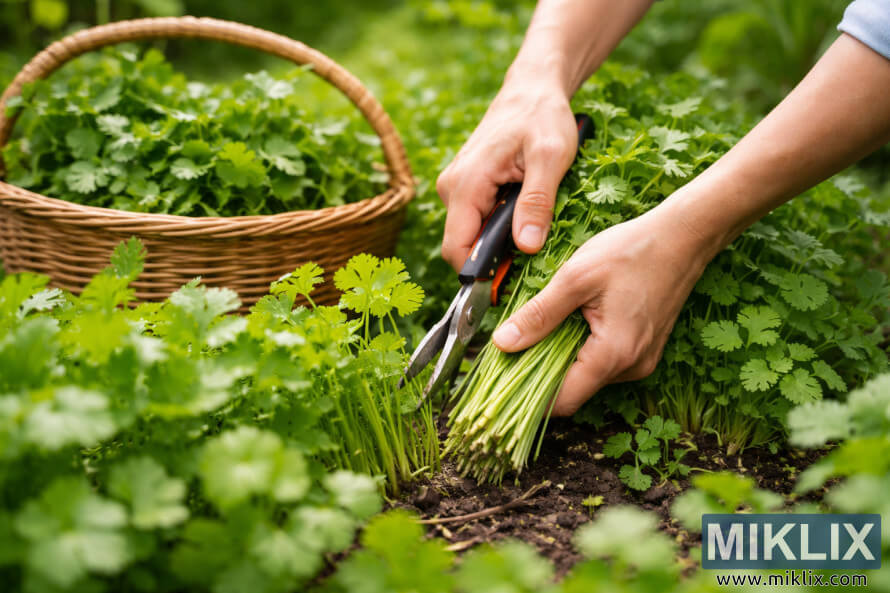
- Use clean, sharp scissors or garden shears
- Cut outer stems near the base of the plant
- Never harvest more than one-third of the plant at once
- Leave the center growing point intact for continued production
- Harvest entire plants if they begin to bolt
Click or tap the image for more information and higher resolutions.
Storing and Preserving
Fresh cilantro has the best flavor, but there are several ways to preserve it:
Fresh Storage
- Trim stem ends and place in a glass of water
- Cover loosely with a plastic bag
- Refrigerate for up to 1 week
- Change water every 2-3 days
Freezing
- Chop leaves and stems
- Pack into ice cube trays with water or oil
- Freeze, then transfer to freezer bags
- Use frozen cubes directly in cooking
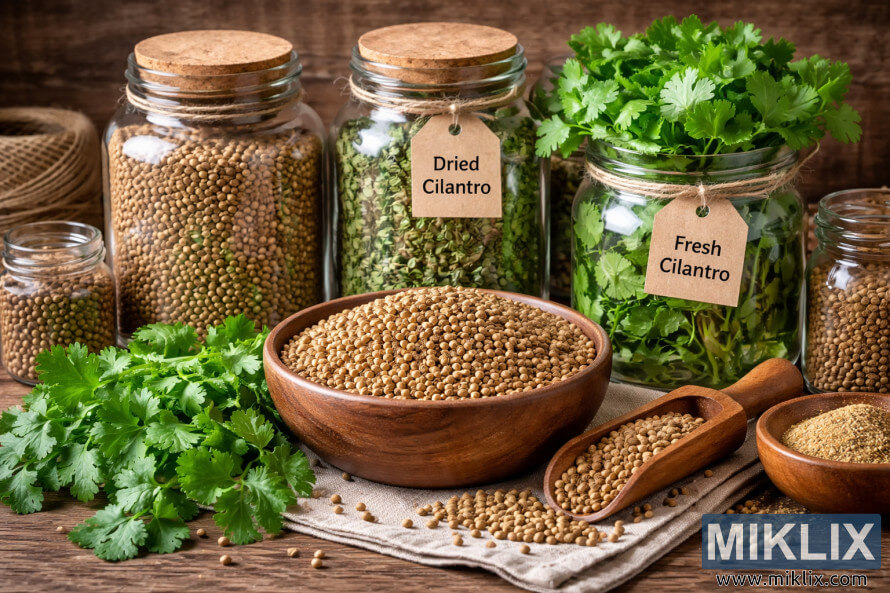
Coriander Seeds
- Allow plants to flower and form seed heads
- Harvest when seeds turn brown
- Dry in paper bags until completely dry
- Store in airtight containers
Click or tap the image for more information and higher resolutions.
Troubleshooting Common Cilantro Problems
Even with proper care, cilantro can sometimes face challenges. Here's how to identify and address common problems you might encounter.
Pest Management
Cilantro is relatively pest-resistant, but may occasionally face these issues:
Aphids
Small green or black insects that cluster on stems and undersides of leaves.
- Spray plants with a strong stream of water
- Apply insecticidal soap if infestation is severe
- Introduce beneficial insects like ladybugs
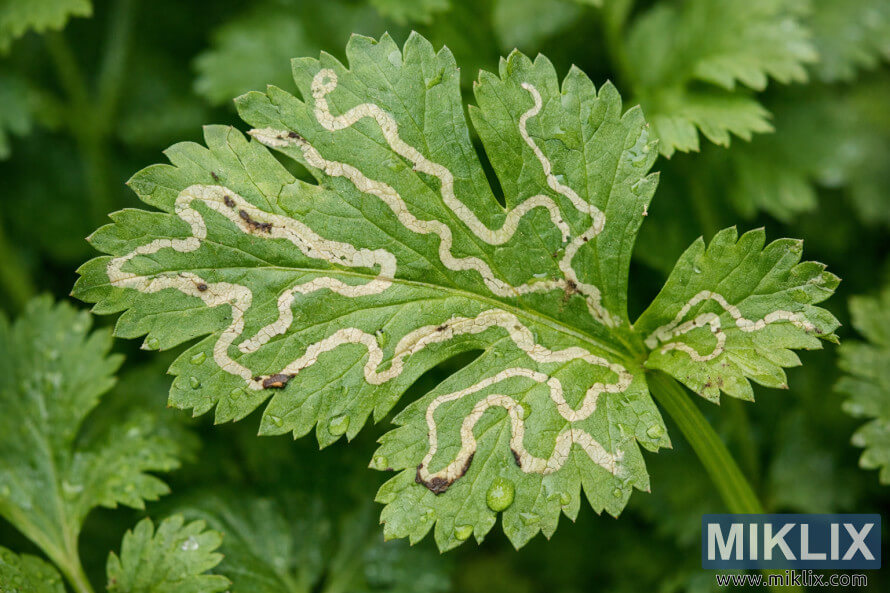
Leaf Miners
Tiny larvae that create tunnels within leaves.
- Remove and destroy affected leaves
- Use row covers to prevent adult flies from laying eggs
- Apply neem oil as a deterrent
Click or tap the image for more information and higher resolutions.
Disease Prevention
Prevent these common cilantro diseases with good cultural practices:
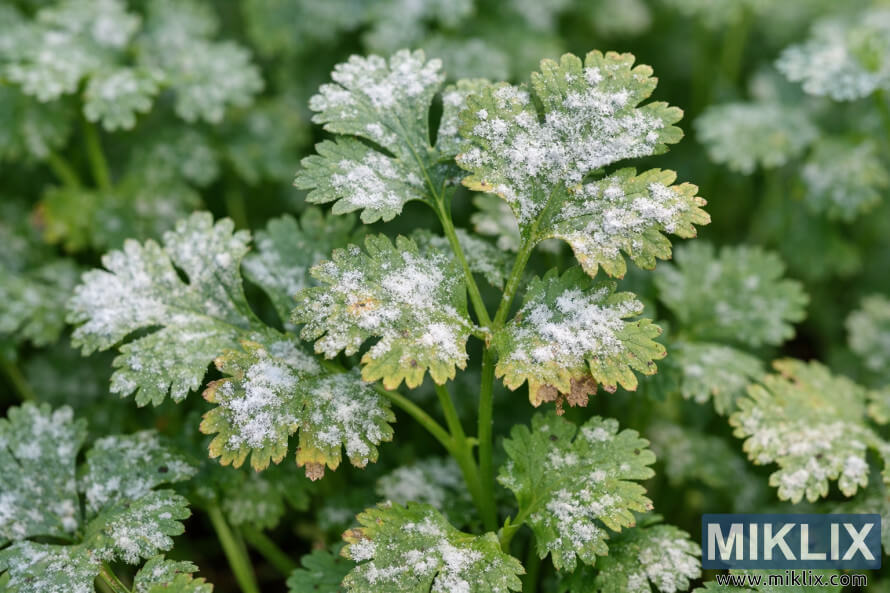
Powdery Mildew
White powdery coating on leaves, typically in humid conditions.
- Ensure good air circulation between plants
- Water at the base to keep foliage dry
- Apply a baking soda spray (1 tsp in 1 quart water)
Bacterial Leaf Spot
Dark, water-soaked spots on leaves that may turn yellow.
- Remove and destroy affected plants
- Avoid overhead watering
- Practice crop rotation
| Problem | Symptoms | Possible Causes | Solutions |
| Yellowing Leaves | Leaves turning yellow, starting from bottom | Overwatering, poor drainage | Reduce watering frequency, improve soil drainage |
| Leggy Growth | Tall, sparse plants with few leaves | Insufficient light, overcrowding | Provide more sunlight, thin plants to proper spacing |
| Early Bolting | Premature flowering, bitter leaves | Heat stress, long daylight hours | Provide shade, plant in cooler seasons, use slow-bolt varieties |
| Poor Germination | Few seedlings emerging | Old seeds, improper planting depth | Use fresh seeds, plant at correct depth (¼-½ inch) |
Click or tap the image for more information and higher resolutions.
Companion Planting with Cilantro
Cilantro makes an excellent companion plant in the garden. It attracts beneficial insects like hoverflies, parasitic wasps, and ladybugs that help control pest populations. Strategic companion planting can improve growth and flavor while deterring pests.
Good Companions
These plants grow well alongside cilantro:
- Tomatoes: Cilantro attracts beneficial insects that prey on tomato pests
- Peppers: Similar growing conditions and pest protection benefits
- Spinach: Provides shade for cilantro as temperatures warm
- Lettuce: Similar water and light requirements
- Peas: Fix nitrogen in soil, benefiting cilantro growth
- Anise: Helps cilantro germinate more effectively
Click or tap the image for more information and higher resolutions.
Plants to Avoid
Some plants don't pair well with cilantro:
- Fennel: Inhibits growth of many plants, including cilantro
- Dill: Can cross-pollinate with cilantro, affecting seed production
- Potatoes: Compete for nutrients and may not thrive together
Garden Design Tip: Plant cilantro around the edges of vegetable beds where it can receive morning sun and afternoon shade from taller plants. This arrangement benefits both the cilantro and its companions while creating an attractive garden border.
Growing Cilantro in Containers
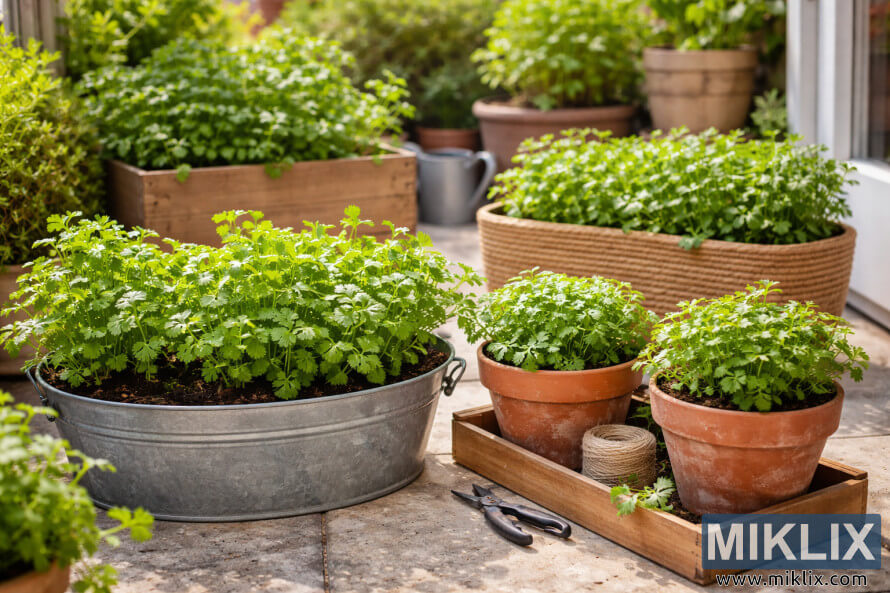
Container growing is an excellent option for cilantro, especially if you have limited space or want to move plants to optimal conditions as seasons change. With the right setup, container-grown cilantro can be just as productive as garden-grown plants.
Container Selection
Choose the right container for successful cilantro growth:
- Select containers at least 8-12 inches deep to accommodate cilantro's taproot
- Ensure containers have adequate drainage holes
- Width should be at least 8 inches for a small cluster of plants
- Terra cotta pots work well as they allow soil to breathe
- Plastic or ceramic containers retain moisture longer
Container Growing Tips
Follow these practices for container success:
- Use high-quality potting mix with added compost
- Plant seeds ¼ inch deep, about 10-15 seeds per 8-inch pot
- Thin seedlings to 2-3 inches apart when they reach 2 inches tall
- Check soil moisture daily, as containers dry out faster than garden soil
- Move containers to cooler locations during hot weather
- Fertilize with half-strength liquid fertilizer every 3-4 weeks
Click or tap the image for more information and higher resolutions.
Cilantro Varieties Worth Growing
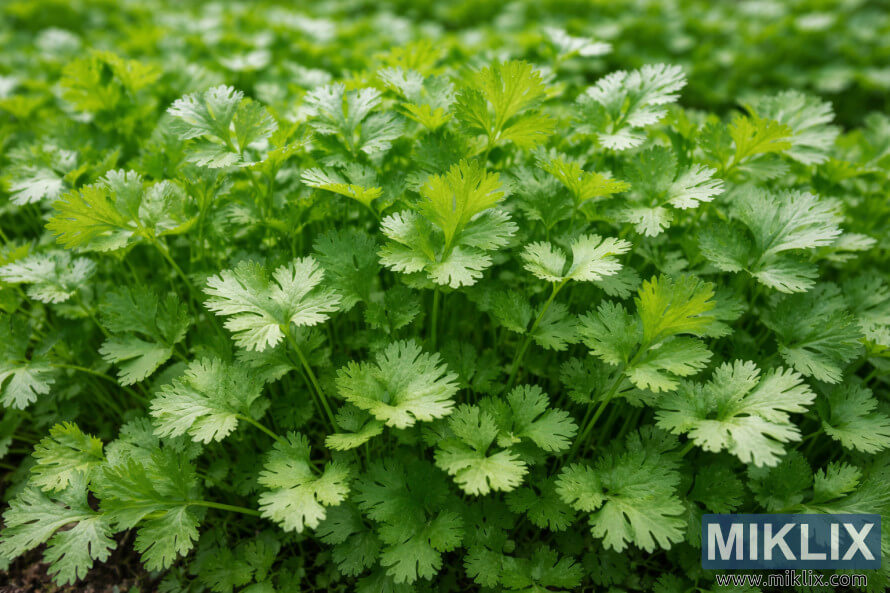
While all cilantro varieties (Coriandrum sativum) share similar characteristics, some cultivars offer advantages for specific growing conditions or culinary uses. Exploring different varieties can help you find the perfect cilantro for your garden.
Click or tap the image for more information and higher resolutions.
Slow-Bolt
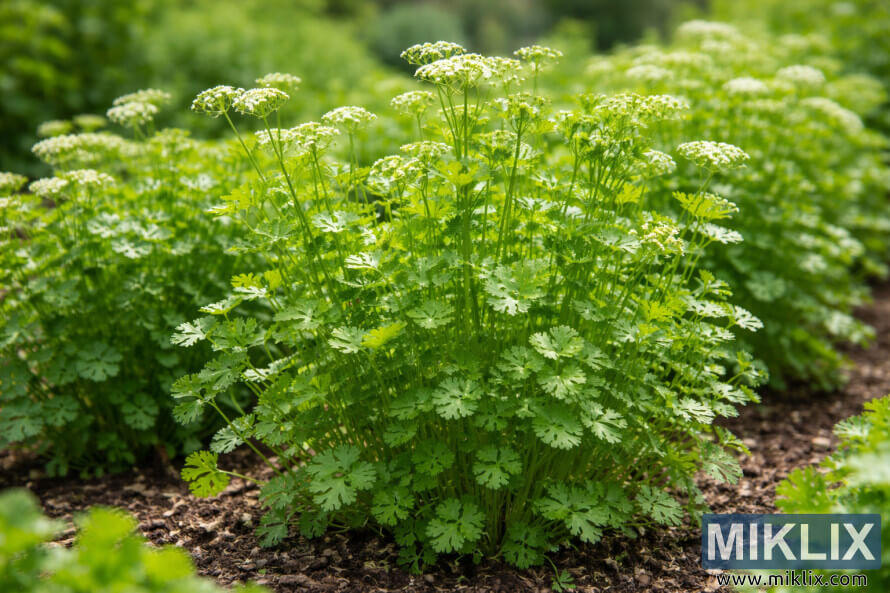
As the name suggests, this variety is bred to resist bolting in warmer temperatures. It produces abundant foliage and can extend your harvest by 2-3 weeks compared to standard varieties.
- Heat Tolerant
- High Yield
Click or tap the image for more information and higher resolutions.
Calypso
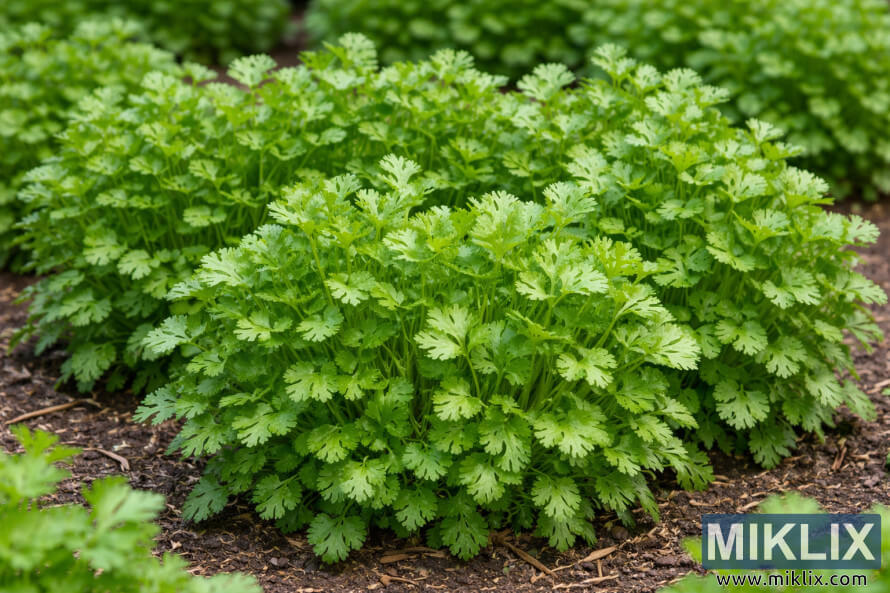
One of the most bolt-resistant varieties available, Calypso produces a compact, bushy plant with high leaf yield. It recovers quickly after cutting, making it ideal for multiple harvests.
- Bolt Resistant
- Compact
Click or tap the image for more information and higher resolutions.
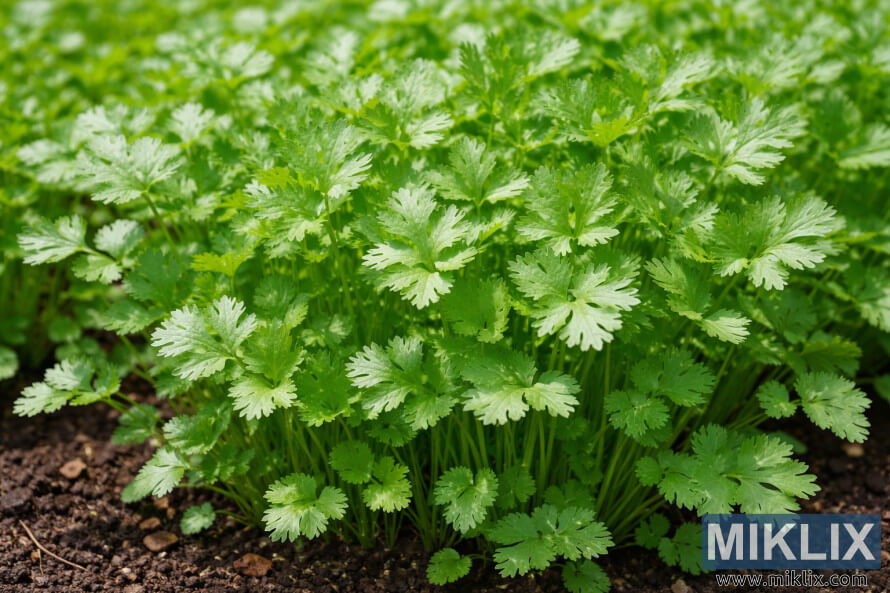
Santo
A popular, reliable variety with excellent flavor. Santo produces broad leaves and grows to about 12-18 inches tall. It offers good bolt resistance and is suitable for both fresh use and seed (coriander) production.
- Versatile
- Good Flavor
Click or tap the image for more information and higher resolutions.
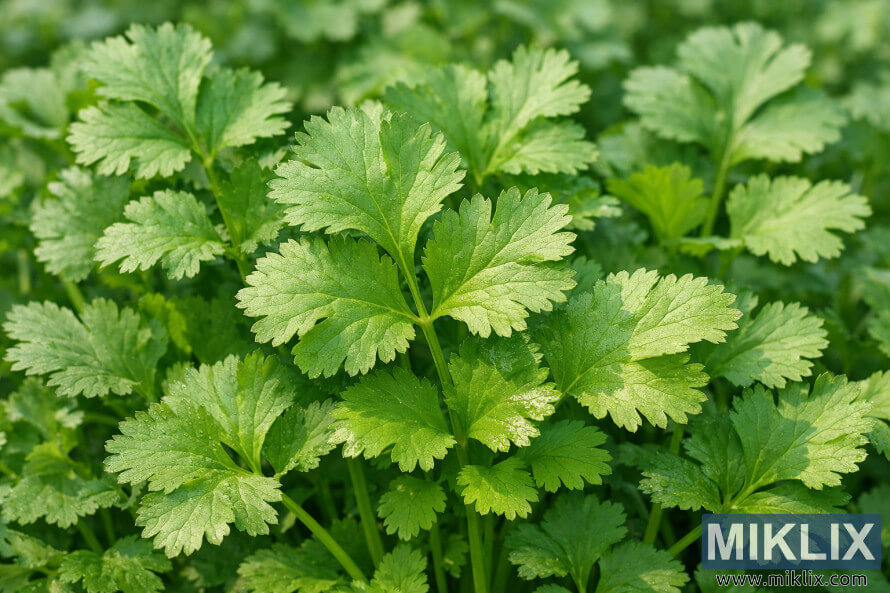
Leisure
Known for its large leaves and vigorous growth, Leisure offers good bolt resistance and excellent flavor. It's a reliable producer in most growing conditions.
- Large Leaves
- Vigorous
Click or tap the image for more information and higher resolutions.
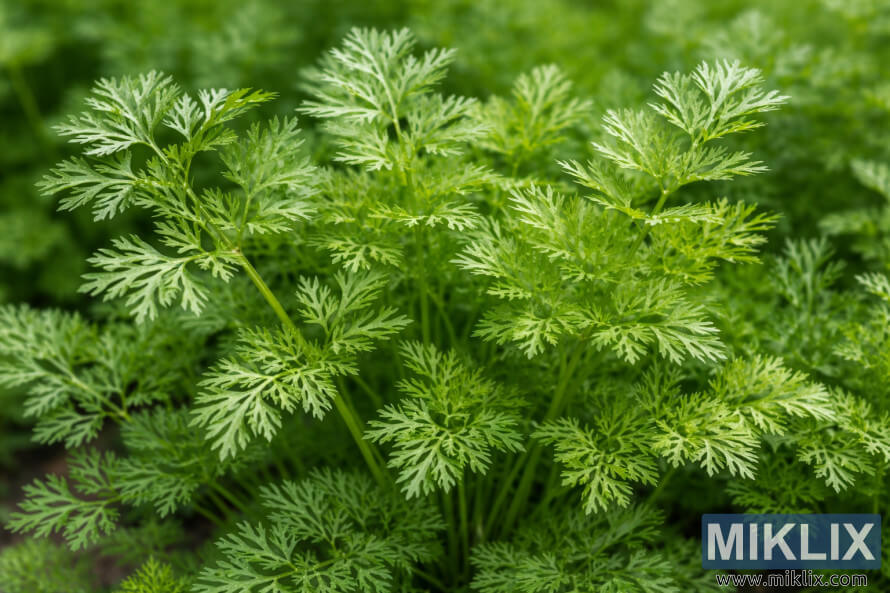
Delfino
A unique variety with fern-like foliage that resembles dill. Delfino offers excellent flavor with a distinctive appearance that adds visual interest to the garden and plate.
- Unique Appearance
- Decorative
Click or tap the image for more information and higher resolutions.
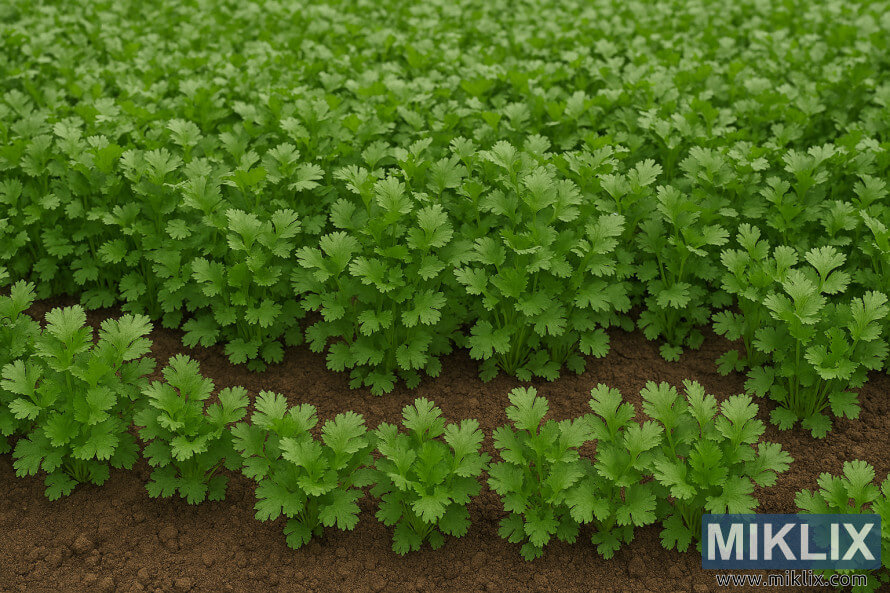
Cruiser
A newer variety bred for uniform growth and excellent leaf production. Cruiser offers good heat tolerance and recovers quickly after cutting, making it ideal for multiple harvests.
- Uniform
- Productive
Click or tap the image for more information and higher resolutions.
Frequently Asked Questions About Growing Cilantro
Why does my cilantro keep dying or bolting quickly?
Cilantro bolts (flowers and goes to seed) quickly in response to heat and long daylight hours. To extend the leafy growth phase:
- Plant during cooler seasons (spring and fall)
- Provide afternoon shade in warmer weather
- Use bolt-resistant varieties like 'Slow-Bolt' or 'Calypso'
- Keep soil consistently moist
- Harvest regularly to delay flowering
- Succession plant every 2-3 weeks for continuous harvest
Can I grow cilantro indoors?
Yes, cilantro can be grown indoors with these considerations:
- Provide at least 6 hours of bright light (a sunny south-facing window or grow lights)
- Use a container at least 8 inches deep with drainage holes
- Maintain cooler temperatures (65-70°F/18-21°C is ideal)
- Check soil moisture frequently, as indoor air can be dry
- Rotate the container regularly to ensure even growth
- Expect somewhat slower growth compared to outdoor plants
Are cilantro and coriander the same plant?
Yes, they come from the same plant (Coriandrum sativum), but the terms refer to different parts:
- Cilantro: The leafy stems used as an herb (common term in North America)
- Coriander leaves: Same as cilantro (term used in Europe and other regions)
- Coriander seeds: The dried seeds used as a spice
- Coriander root: Used in some cuisines, particularly Thai
The plant produces edible leaves first, then flowers and seeds. The leaves and seeds have distinctly different flavors.
Why do some people dislike cilantro?
Some people perceive cilantro as having a soapy or unpleasant taste due to genetic factors. About 4-14% of the population has a variation in olfactory receptor genes that makes them sensitive to aldehydes, chemical compounds found in cilantro and soap. This is a genetic trait, not an acquired taste preference.
For those who don't enjoy cilantro leaves, the seeds (coriander) often still taste pleasant, as they have a different flavor profile without the aldehydes that cause the soapy taste perception.
Conclusion: Enjoying Your Cilantro Harvest
Growing cilantro successfully is all about understanding its preferences and life cycle. By providing the right conditions—cool temperatures, consistent moisture, and proper harvesting techniques—you can enjoy a bountiful supply of this flavorful herb from your own garden.
Remember that cilantro is a cool-season crop, so plan your planting accordingly. Use succession planting to ensure a continuous harvest, and don't be discouraged if plants bolt quickly during warm weather—it's just part of their natural cycle. When plants do bolt, you can enjoy the bonus of harvesting coriander seeds or allowing them to self-sow for future crops.
Whether you're growing cilantro in a dedicated herb garden, mixed vegetable beds, or containers on a balcony, the fresh flavor of home-grown cilantro will elevate your culinary creations. The satisfaction of stepping outside to snip fresh herbs for your meals is one of the true joys of gardening.
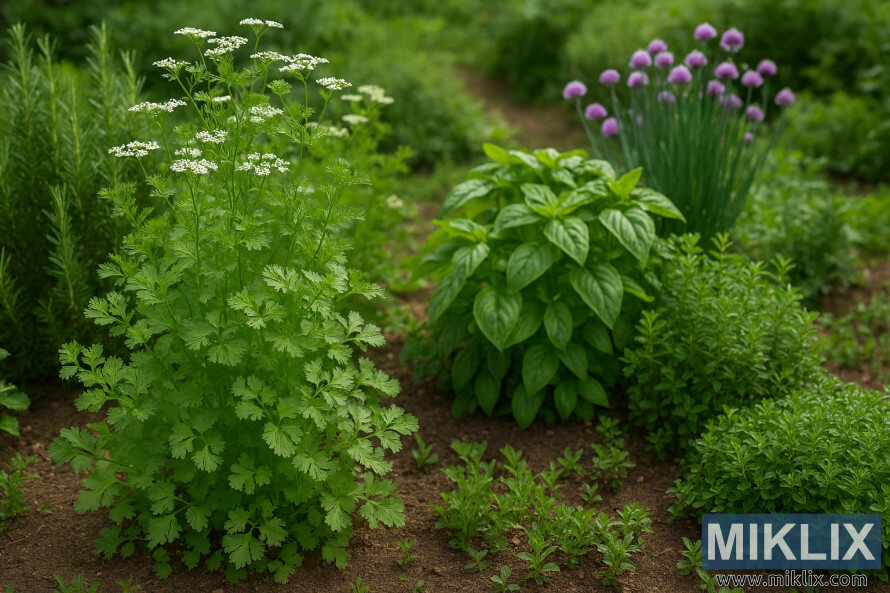
Click or tap the image for more information and higher resolutions.
Further Reading
If you enjoyed this post, you may also like these suggestions:
- Growing You Own Garlic: A Complete Guide
- Complete Guide to Growing Your Own Mustard Plants
- A Complete Guide to Growing Thyme From Planting to Harvest