
A Guide to Growing Marjoram in Your Own Garden
Published: February 8, 2026 at 6:20:35 PM UTC
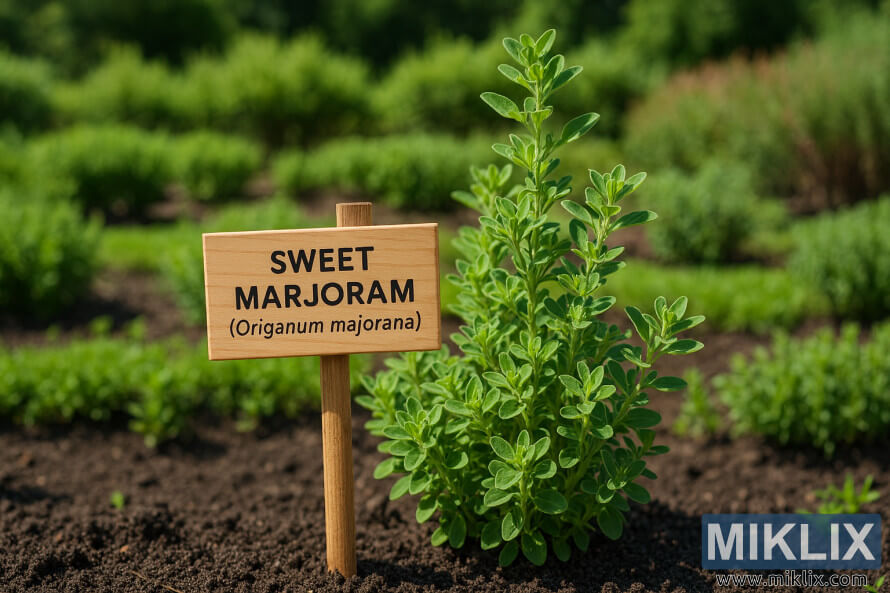
Marjoram (Origanum majorana) is a fragrant Mediterranean herb that brings a delicate, sweet flavor to your culinary creations. With its soft gray-green leaves and subtle floral aroma, sweet marjoram makes an excellent addition to any herb garden.
Click or tap the image for more information and higher resolutions.
This versatile herb not only enhances dishes ranging from soups and stews to salads and marinades but also attracts beneficial pollinators to your garden. Whether you're a seasoned gardener or just starting out, this guide will walk you through everything you need to know about growing this delightful herb right in your own backyard.
Popular Marjoram Varieties
Before diving into growing techniques, it's helpful to understand the different types of marjoram you might encounter:
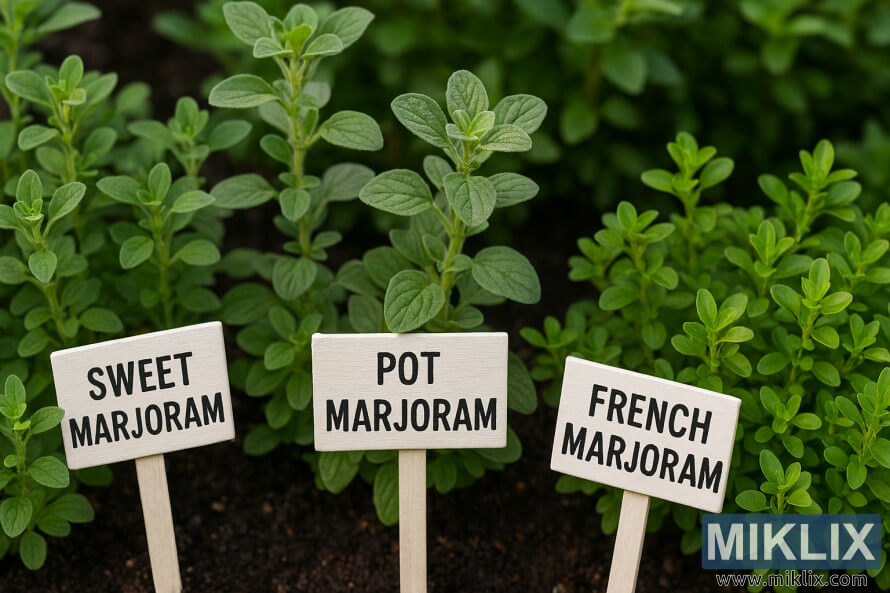
Common marjoram varieties: Sweet marjoram (left), Pot marjoram (center), and French marjoram (right)
- Sweet Marjoram (Origanum majorana) - The most common culinary variety with a delicate, sweet flavor. It grows as a tender perennial in zones 9-10 but is treated as an annual in colder regions.
- Pot Marjoram (Origanum onites) - Slightly hardier than sweet marjoram with a stronger flavor. It produces white flowers in summer and grows to about 50cm tall.
- French Marjoram (Origanum 'French') - A hardy variety with golden-green leaves and a spicier flavor than sweet marjoram. It typically reaches 45cm in height and width.
- Variegated Marjoram (Origanum majorana 'Variegata') - Grown as much for its decorative variegated leaves as for culinary use. Prefers partial shade and moist, well-draining soil.
For most home cooks, sweet marjoram is the preferred choice due to its mild, pleasant flavor that complements a wide range of dishes without overpowering them.
Click or tap the image for more information and higher resolutions.
Choosing the Right Location and Soil
Sunlight Requirements
Marjoram thrives in full sun conditions, requiring at least 6-8 hours of direct sunlight daily. In particularly hot climates, especially in the southern United States, providing some afternoon shade can protect the plants from intense heat during summer months. The Mediterranean origin of marjoram makes it well-adapted to sunny, warm conditions.
Soil Conditions
For successful marjoram cultivation, soil quality is crucial:
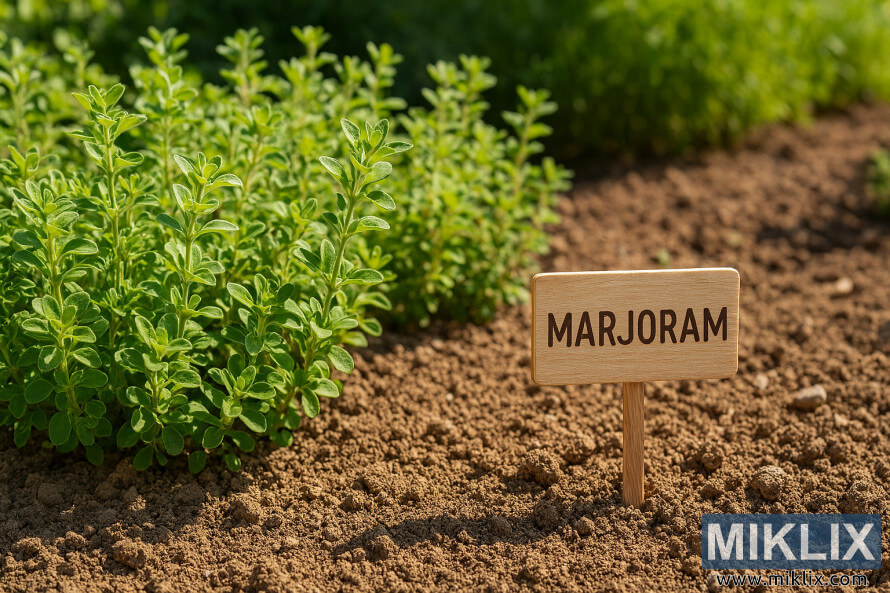
- Soil Type: Well-draining, sandy or loamy soil is ideal. Heavy clay soils should be amended with compost and sand to improve drainage.
- pH Level: Marjoram prefers slightly alkaline to neutral soil with a pH between 6.7 and 7.5.
- Drainage: Good drainage is essential as marjoram is susceptible to root rot in waterlogged conditions.
- Organic Matter: Incorporate compost or aged manure to enrich the soil without making it too nutrient-dense.
Click or tap the image for more information and higher resolutions.
Container Growing
If your garden soil isn't ideal or you have limited space, marjoram grows excellently in containers:
- Choose containers at least 8 inches deep with drainage holes
- Use high-quality potting mix formulated for herbs or vegetables
- Add 20-25% perlite or coarse sand to improve drainage
- Consider terracotta pots which allow soil to breathe and prevent overwatering
Planting Methods for Marjoram
Starting from Seeds
Growing marjoram from seeds requires patience but offers the most economical approach:
- Start seeds indoors 6-8 weeks before the last frost date
- Use seed-starting trays with good quality seed-starting mix
- Scatter seeds thinly on the surface (don't cover as they need light to germinate)
- Maintain soil temperature around 70°F (21°C) for optimal germination
- Keep soil consistently moist but not waterlogged
- Expect germination within 7-14 days
- Transplant seedlings outdoors after all danger of frost has passed
Click or tap the image for more information and higher resolutions.
Using Cuttings
Propagating marjoram from cuttings is faster than seeds and ensures plants identical to the parent:
- Take 3-4 inch cuttings from healthy, non-flowering stems
- Remove leaves from the bottom half of each cutting
- Dip the cut end in rooting hormone (optional but helpful)
- Plant in a small pot with moist potting mix
- Cover with a plastic bag to create humidity
- Place in bright, indirect light
- Roots should develop within 2-3 weeks
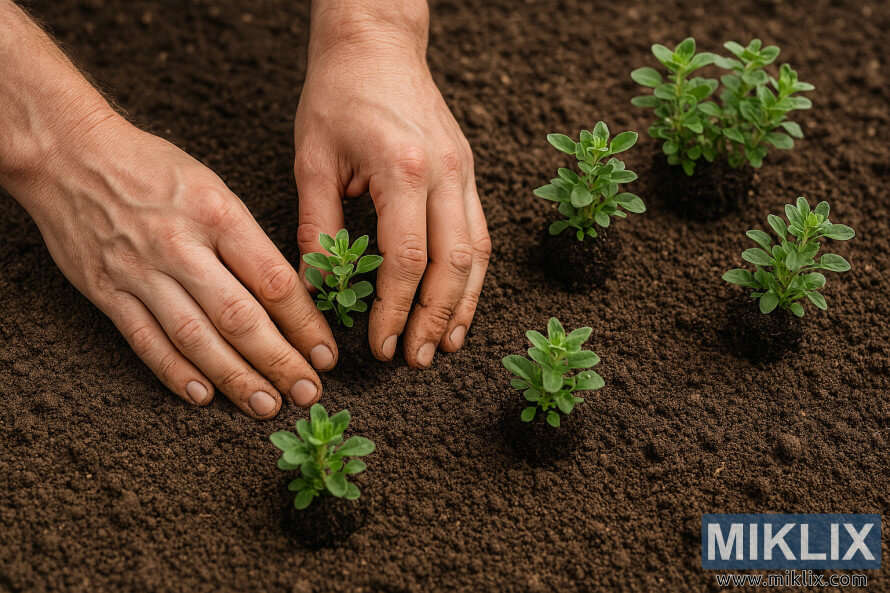
Planting Purchased Seedlings
The easiest method for beginners is to start with established plants:
- Purchase healthy seedlings from a reputable nursery in spring
- Plant after all danger of frost has passed
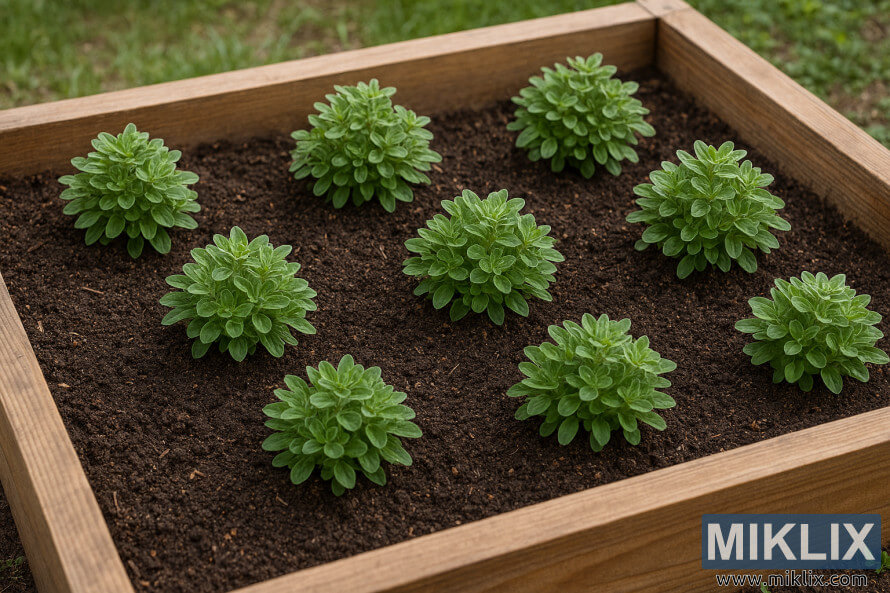
- Space plants 12 inches apart to allow for proper air circulation
- Plant at the same depth as they were in their nursery containers
- Water thoroughly after planting
Click or tap the image for more information and higher resolutions.
Care and Maintenance
Watering Guidelines
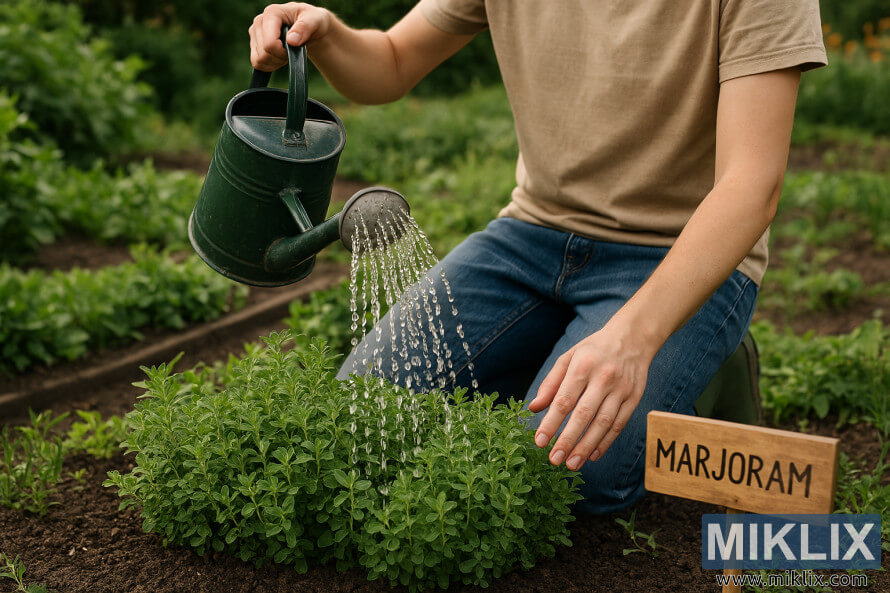
Marjoram has moderate water needs, reflecting its Mediterranean origins:
- Water newly planted marjoram regularly until established
- Once established, water only when the top inch of soil feels dry
- Avoid overhead watering which can promote fungal diseases
- Water less frequently but deeply to encourage deep root growth
- Reduce watering during rainy periods and in winter
- Container-grown plants will need more frequent watering, especially in hot weather
Click or tap the image for more information and higher resolutions.
Fertilizing
Marjoram doesn't require heavy feeding. In fact, too much fertilizer can reduce the concentration of essential oils that give the herb its flavor:
- Start with well-amended soil when planting
- Apply a light application of balanced, organic fertilizer in spring
- For container plants, feed with half-strength liquid fertilizer monthly during the growing season
- Avoid high-nitrogen fertilizers which promote leafy growth at the expense of flavor
Pruning and Pinching
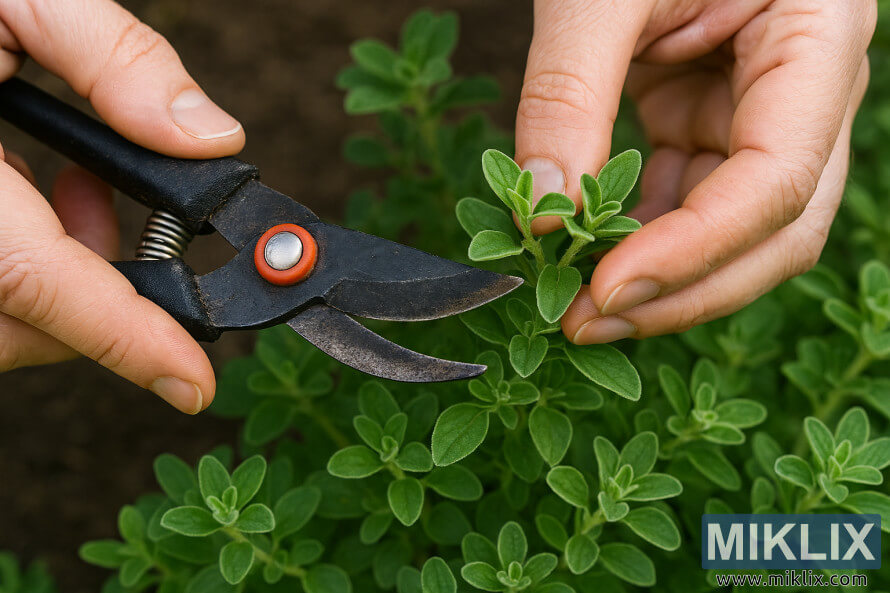
Regular pruning encourages bushier growth and prevents plants from becoming woody:
Pinch back growing tips to encourage bushier growth and prevent flowering
- Pinch back growing tips when plants reach 4-6 inches tall
- Remove flower buds as they appear to maintain leaf production and flavor
- Trim plants back by one-third after flowering
- Avoid cutting into woody stems as they may not regrow
Click or tap the image for more information and higher resolutions.
Mulching
A light layer of mulch helps maintain soil moisture and suppress weeds:
- Apply a thin layer (1-2 inches) of organic mulch around plants
- Keep mulch away from stems to prevent rot
- Consider gravel or pebble mulch which reflects heat and improves drainage
- Refresh mulch as needed throughout the growing season
Harvesting Marjoram
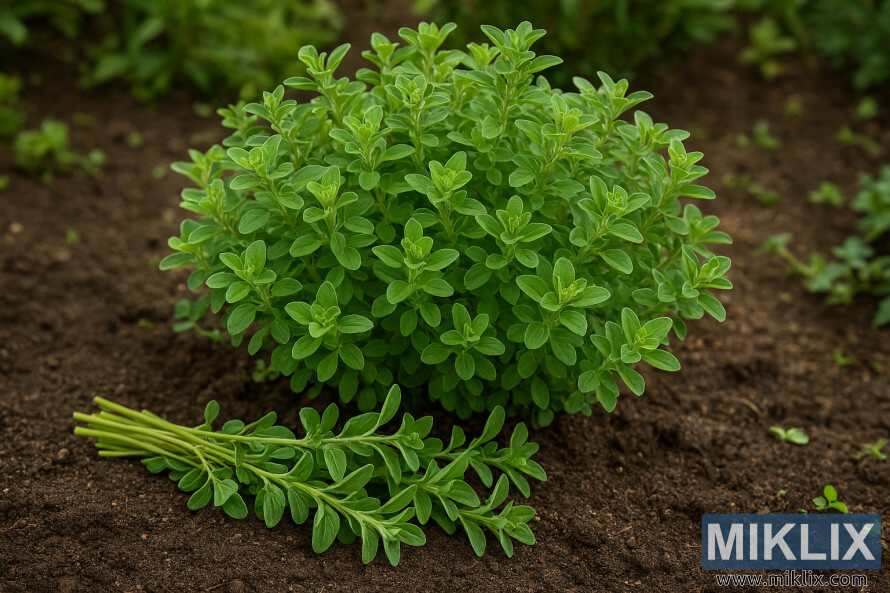
Harvest marjoram just before flowering for the best flavor
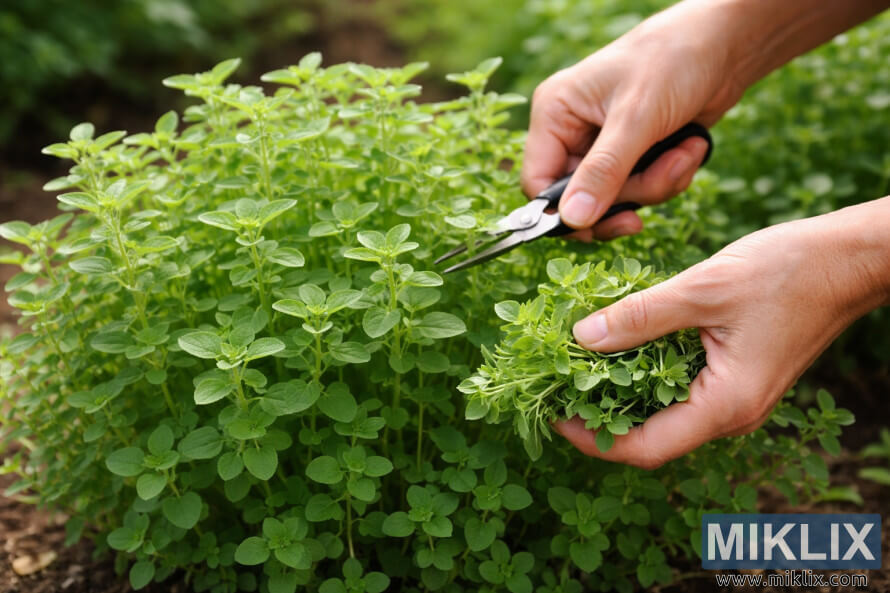
Harvesting marjoram at the right time ensures the best flavor and encourages continued growth:
When to Harvest
- Begin harvesting when plants reach 6 inches in height, typically 4-6 weeks after planting
- Harvest in the morning after dew has dried but before the heat of the day
- The best flavor comes just before flowering begins
- Regular harvesting encourages bushier growth and higher yields
How to Harvest
- Use clean, sharp scissors or pruning shears
- Cut stems about 2-3 inches from the top
- Never harvest more than one-third of the plant at once
- Cut just above a set of leaves or growth node to encourage branching
Click or tap the image for more information and higher resolutions.
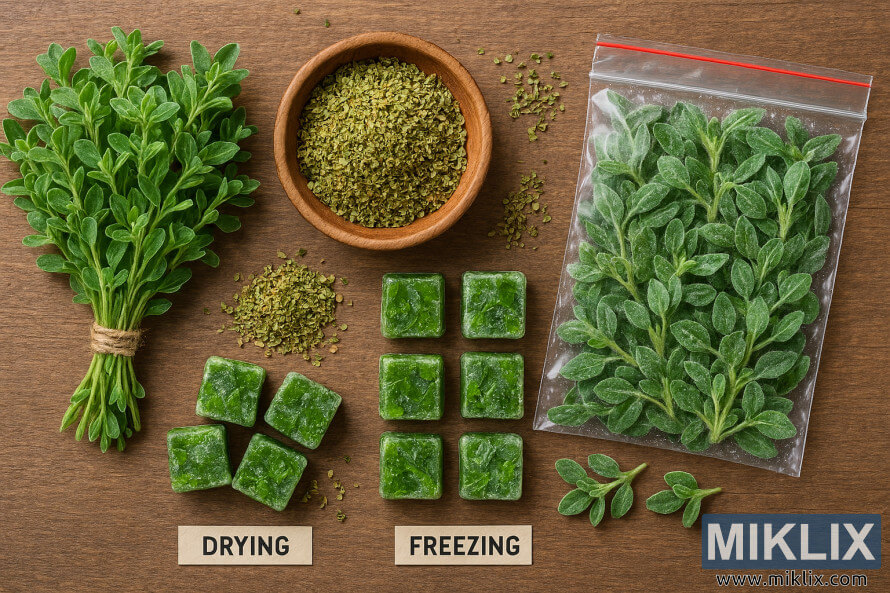
Storing Fresh Marjoram
To enjoy your harvest for longer periods:
- Short-term storage: Place stems in a glass of water like a bouquet or wrap in damp paper towels and refrigerate for up to one week
- Freezing: Chop leaves and place in ice cube trays with water or olive oil
- Drying: Hang small bundles upside down in a warm, dry, well-ventilated area away from direct sunlight
- Dried storage: Once completely dry, store leaves in airtight containers away from light and heat for up to one year
Click or tap the image for more information and higher resolutions.
Common Pests and Problems
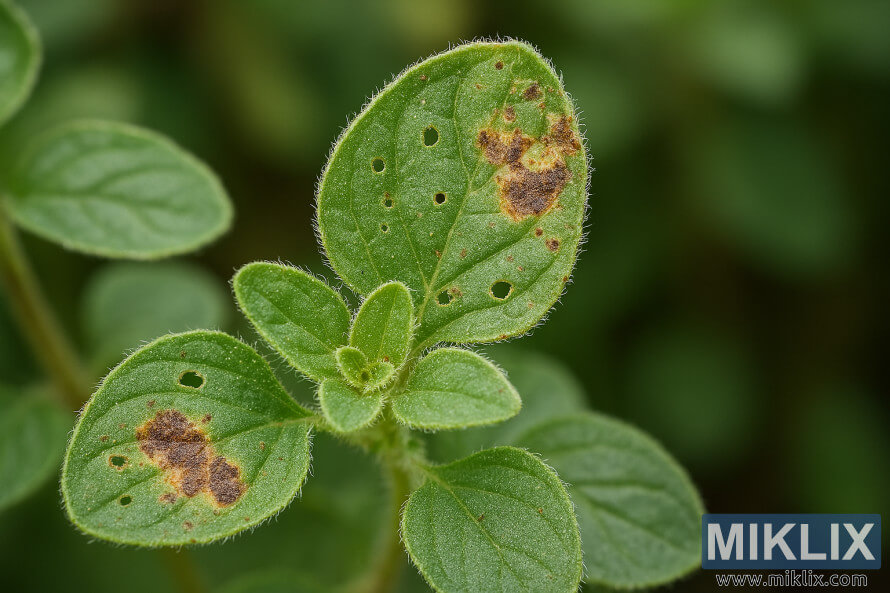
Common marjoram problems: aphids (left), powdery mildew (center), and overwatering symptoms (right)
While marjoram is generally resistant to many pests and diseases, it can occasionally face challenges:
Pest Issues
Aphids
Signs: Clusters of tiny insects on stems and leaf undersides; sticky residue; distorted growth
Solutions: Spray with strong water stream; apply insecticidal soap; introduce beneficial insects like ladybugs
Spider Mites
Signs: Fine webbing; stippled, yellowing leaves; tiny moving dots visible with magnification
Solutions: Increase humidity; spray with water; apply neem oil or insecticidal soap
Whiteflies
Signs: Small white flying insects that scatter when disturbed; yellowing leaves
Solutions: Yellow sticky traps; insecticidal soap; neem oil applications
Leafhoppers
Signs: Pale mottling on leaves; small insects that jump when disturbed
Solutions: Reflective mulch; insecticidal soap; row covers for young plants
Disease Problems
Powdery Mildew
Signs: White powdery coating on leaves; eventually causes leaf distortion
Solutions: Improve air circulation; avoid overhead watering; apply sulfur-based fungicide if severe
Root Rot
Signs: Wilting despite moist soil; yellowing leaves; brown, mushy roots
Solutions: Improve drainage; reduce watering; replant in fresh soil if in containers
Click or tap the image for more information and higher resolutions.
Cultural Problems
Overwatering
Signs: Yellowing leaves; soft, droopy stems; fungal growth on soil
Solutions: Reduce watering frequency; ensure good drainage; allow soil to dry between waterings
Nutrient Deficiency
Signs: Yellowing between leaf veins; stunted growth; poor flavor
Solutions: Apply balanced organic fertilizer; adjust soil pH if needed
Prevention Tip: Many marjoram problems can be prevented with proper spacing, good air circulation, appropriate watering, and regular monitoring. Inspect plants weekly for early signs of issues.
Overwintering and Perennial Care
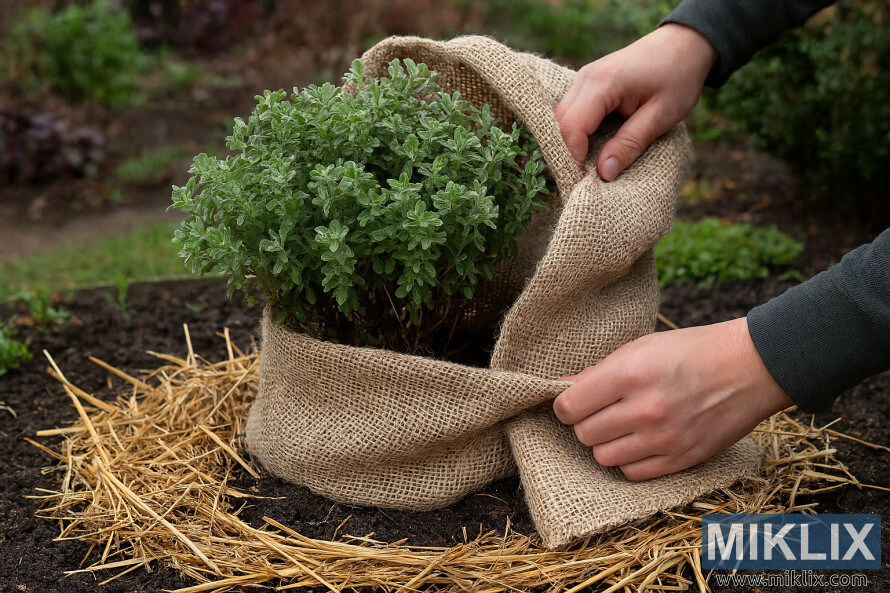
Overwintering techniques: bringing indoors (left), using cloches (center), and mulching (right)
Marjoram's cold hardiness varies by variety, with sweet marjoram being the most tender. Your approach to overwintering will depend on your climate zone:
Cold Climate Care (Zones 3-6)
- In these regions, sweet marjoram is best treated as an annual
- Take cuttings in late summer to grow indoors over winter
- Alternatively, pot up entire plants before first frost and bring indoors
- Place in a sunny window or under grow lights
- Reduce watering during winter months
- Maintain indoor temperatures above 55°F (13°C)
Moderate Climate Care (Zones 7-8)
- Sweet marjoram may survive with protection; hardier varieties like French marjoram have better chances
- Apply 2-3 inches of mulch around the base of plants
- Consider covering with garden fleece or cloches during cold spells
- Ensure excellent drainage to prevent winter rot
- Avoid winter pruning which can stimulate vulnerable new growth
Warm Climate Care (Zones 9-11)
- All marjoram varieties can typically survive as perennials
- Reduce watering in winter months
- Prune back by one-third in late fall to encourage compact growth
- Apply light mulch to protect roots from occasional cold snaps
- In zone 9, consider light protection during unusual cold events
Click or tap the image for more information and higher resolutions.
Spring Renewal
For perennial marjoram plants that have survived winter:
- Remove winter mulch as temperatures warm
- Prune away any dead or damaged growth
- Divide overcrowded plants every 2-3 years in early spring
- Apply a light application of balanced fertilizer
- Resume normal watering as new growth appears
Frequently Asked Questions
Can I grow marjoram indoors year-round?
Yes, marjoram can be grown indoors year-round if provided with sufficient light. Place it in your sunniest window (south-facing is ideal) or use grow lights. Indoor marjoram may become leggy over time, so regular pinching is important. Ensure good air circulation and avoid overwatering, as indoor conditions can be more humid than marjoram prefers.
How do I tell the difference between marjoram and oregano?
Marjoram and oregano are closely related and can look similar, but marjoram has softer, more oval gray-green leaves compared to oregano's darker, more pointed leaves. The most noticeable difference is in flavor: marjoram is sweeter and more delicate, while oregano is stronger and more pungent. Marjoram flowers are typically white or light pink, while oregano flowers are usually purple.
Why is my marjoram turning yellow?
Yellowing marjoram leaves can indicate several issues: overwatering is the most common cause, but it could also be nutrient deficiency, insufficient light, or pest problems. Check the soil moisture first—marjoram prefers soil on the drier side. If the soil isn't waterlogged, examine the plant for pests and consider whether it's getting enough sunlight. A light application of balanced fertilizer might help if nutrient deficiency is suspected.
When should I harvest marjoram for drying?
The best time to harvest marjoram for drying is just as the flower buds form but before they open. This is when the leaves contain the highest concentration of essential oils for maximum flavor. Harvest in the morning after the dew has dried but before the heat of the day causes oils to dissipate. Cut stems about 6 inches long and hang small bundles upside down in a warm, dry, well-ventilated area away from direct sunlight.
Can marjoram be grown alongside other herbs?
Marjoram makes an excellent companion for many other herbs, especially those that share similar growing requirements like thyme, rosemary, and sage. These Mediterranean herbs all prefer full sun and well-draining soil. Marjoram also grows well with basil, though basil requires more water, so plant them at the edge of each other's growing areas. Avoid planting marjoram near mint, which can quickly overtake it.
Conclusion
Growing marjoram in your garden offers both culinary and aesthetic rewards. This versatile Mediterranean herb requires minimal care once established and will provide you with fresh, flavorful leaves throughout the growing season. By following the guidelines in this article—providing well-draining soil, plenty of sunlight, moderate water, and occasional pruning—you'll be well on your way to marjoram success.
Whether you're growing sweet marjoram in containers that move indoors for winter or establishing hardy varieties as perennials in your garden beds, the delicate flavor of fresh marjoram will elevate your cooking to new heights. The subtle pine and citrus notes of this herb pair beautifully with vegetables, meats, and salad dressings, making it well worth the minimal effort required to grow it.
Start with just a few plants, and you'll likely find yourself expanding your marjoram patch as you discover more ways to enjoy this delightful herb. Happy growing!
Click or tap the image for more information and higher resolutions.
Further Reading
If you enjoyed this post, you may also like these suggestions:
- A Guide to Growing Chives in Your Own Garden
- The Complete Guide to Growing Basil: From Seed to Harvest
- A Guide to Growing Aloe Vera Plants at Home