
Fermenting Beer with White Labs WLP810 San Francisco Lager Yeast
Birt:
Síðast uppfært: 16. mars 2026 kl. 22:56:45 UTC
White Labs WLP810 San Francisco Lager Yeast is a versatile strain that bridges lager clarity with warm-fermenting flexibility. This White Labs lager is promoted for California common and steam beer. It can also yield clean pilsners, märzens, and Helles when kept toward the lower end of its range.
Fermenting Beer with White Labs WLP810 San Francisco Lager Yeast
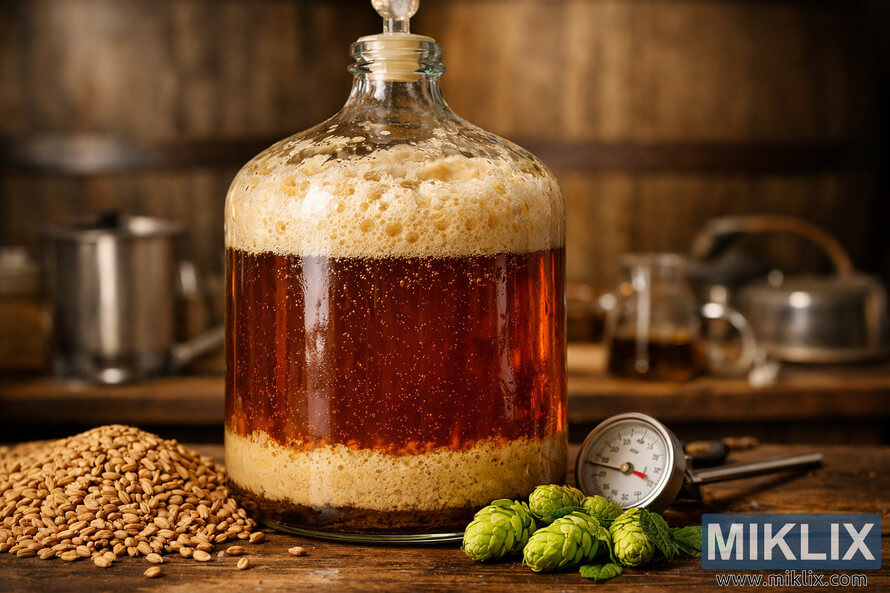
Smelltu eða pikkaðu á myndina til að fá frekari upplýsingar og hærri upplausn.
A common point of debate in fermenting with WLP810 is starter temperature. White Labs specifies a fermentation window of 58°–65°F (14°–18°C). However, many community threads recommend proofing a starter briefly at 70°–75°F (21°–24°C) to confirm activity. This discrepancy matters when planning starters, oxygenation, and pitching schedules for consistent results.
Key Takeaways
- White Labs WLP810 San Francisco Lager Yeast is a core strain suited for California common and clean lager styles.
- Typical attenuation is 70–75% with high flocculation and medium alcohol tolerance (5–10%).
- Manufacturer fermentation range is 58°–65°F (14°–18°C); starter practices may vary among brewers.
- Retail SKU WLP810NG and PurePitch options affect buying and handling choices, plus accessory needs.
- Balance starter proofing and pitching temperature to maintain lager-like character while ensuring healthy fermentation.
Overview of White Labs WLP810 San Francisco Lager Yeast
The WLP810 overview provides brewers with a detailed look at a versatile yeast strain. It bridges the gap between lager and warm-fermenting traditions. Originating from San Francisco, this yeast is a Core product by White Labs, available with PurePitch handling for consistent results. It has STA1 QC negative results and an organic SKU for those seeking certified strains.
Strain background and origin
WLP810's roots are in American hybrid lager practices. It's known for cooler ale-range fermentations, resulting in a clean, steam-beer character. Its San Francisco lager origin highlights regional history. White Labs notes that it's a Saccharomyces strain, adapted for fermenting between 58°–65°F (14°–18°C). Retail documentation includes PurePitch Next Generation handling and common accessories for liquid yeast use.
Core characteristics from White Labs data
- Attenuation: 70–75%, supporting moderate finishing gravities without excessive sweetness.
- Flocculation: high, leading to well-clearing beers with minimal fining.
- Alcohol tolerance: medium, roughly 5–10%, ideal for clean-fermenting recipes.
- Temperature range: 58–65°F (14–18°C), a key characteristic of WLP810.
Recommended beer styles for WLP810
White Labs recommends several styles for WLP810. These include California common (steam beer), Amber Lager, American Lager, Cream Ale, Kölsch, Märzen, and Pale Lager. Brewers often choose WLP810 for hybrid lagers or when they desire lager-like crispness without strict cold fermentation schedules.
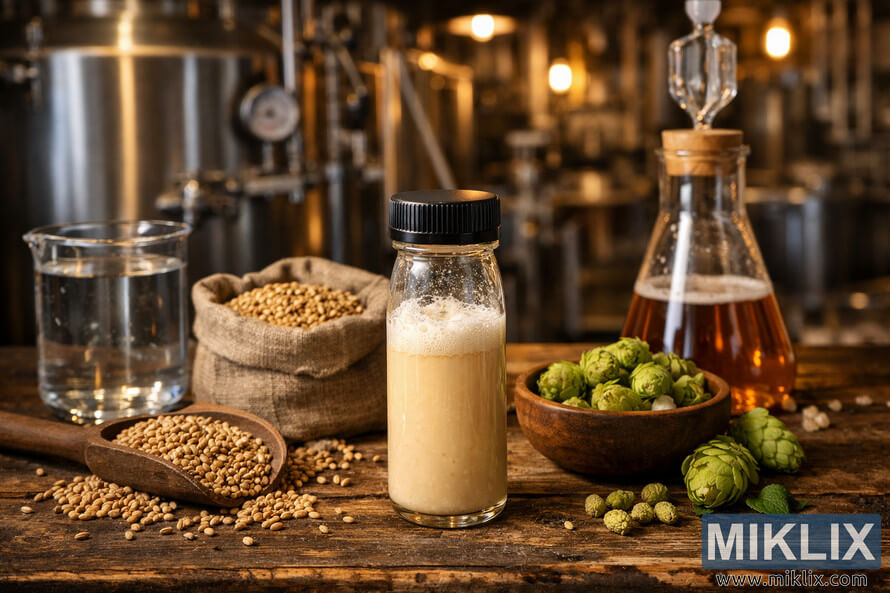
Smelltu eða pikkaðu á myndina til að fá frekari upplýsingar og hærri upplausn.
Key Fermentation Performance Metrics for WLP810
The following points clarify how WLP810 behaves in typical fermentations. Brewers can use these metrics to plan original gravity, expected attenuation, and clarity goals before brewing.
Attenuation range and what it means for final gravity
White Labs reports an attenuation range near 70–75%. This range indicates how much sugar will convert to alcohol and CO2, leading to a moderately dry finish.
To estimate final gravity WLP810 will deliver, calculate FG from your original gravity using the expected attenuation. Use that FG to forecast ABV and mouthfeel. This helps in choosing mash and adjunct strategies to achieve your target balance.
Flocculation behavior and its impact on clarity
WLP810 shows flocculation high, so yeast settle quickly once activity slows. This trait speeds up the time to bright beer and reduces the need for long clarifying periods.
Fast settling can be helpful for kegging, but flocculation high can also risk premature drop-out if fermentation stalls. Plan nutrient additions and fermentation management to avoid early flocculation that leaves fermentable sugars behind.
Alcohol tolerance and implications for recipe design
This strain has a medium alcohol tolerance of about alcohol tolerance 5–10%. Aim OG targets that keep expected ABV inside that window for the cleanest finish.
- For beers under 5% ABV, expect routine performance with no special measures.
- For beers between 5% and 10% ABV, consider nutrient support and larger pitches to maintain vigor.
- If you design beers above 10% ABV, plan step-feeding, blended strains, or repitching strategies to avoid stressed yeast.
PurePitch formats and targeted nutrients such as Servomyces can help when you push toward the upper end of alcohol tolerance 5–10%. Adjust your recipe and fermentation schedule so final gravity WLP810 achieves matches your style goals.
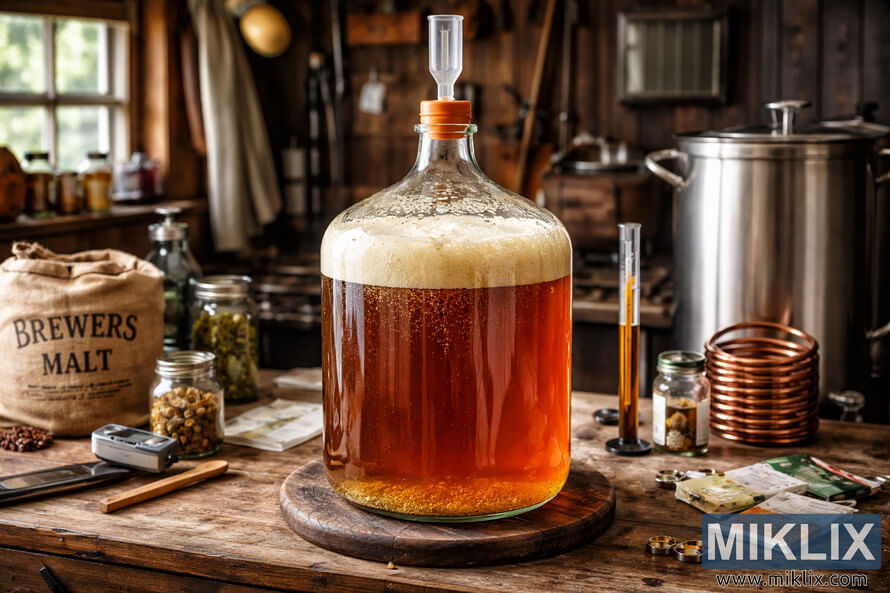
Smelltu eða pikkaðu á myndina til að fá frekari upplýsingar og hærri upplausn.
Optimal Fermentation Temperatures and Ranges
White Labs WLP810 thrives in a cool, controlled fermentation environment. Brewers achieve consistent results by aiming for temperatures that enhance lager characteristics while ensuring complete fermentation.
Adhere to the recommended 58–65°F range for primary fermentation. This range allows for clean flavors at the lower end and a hint of fruity complexity at the higher end.
Temperatures around 58°F are ideal for styles like Pilsner, Helles, and Märzen. The yeast produces crisp, restrained esters, maintaining a clean profile without fruity notes.
At 65°F, the yeast exhibits a bit more character. This is beneficial for California common or hybrid ales, adding a subtle ester lift. The beer remains lager-like within the recommended temperature range.
Starter temperatures vary among brewers. Many warm their starters higher than the final fermentation temperature to accelerate cell growth. Typically, the starter is kept at 70–75°F for rapid activity. Then, it's chilled or acclimated before pitching.
- Follow White Labs’ 58–65°F for main fermentation when aiming for classic lager character.
- If you need faster biomass, run a warmer starter temp WLP810, then step the yeast down to lager yeast temp before adding to wort.
- For hybrid styles, consider the upper end of 58–65°F to nudge ester production without losing the strain’s clean baseline.
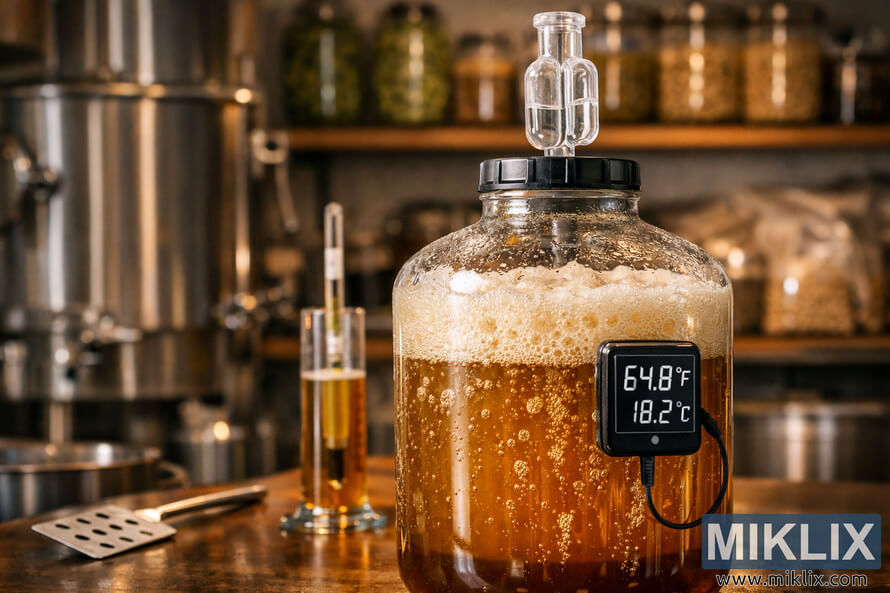
Smelltu eða pikkaðu á myndina til að fá frekari upplýsingar og hærri upplausn.
Pitching Rates and Starter Recommendations
Ensuring the right pitching rate for WLP810 is crucial for maintaining steady and clean fermentation. This yeast excels in lager-style and hybrid beers, where clean attenuation is key. Below, we outline steps for determining when to create a WLP810 starter and its ideal size for reliable fermentation.
The decision to make a WLP810 starter hinges on yeast form and batch size. It's advisable to use a starter for a single White Labs vial in 5-gallon batches, for wort gravities over 1.055, or for a swift, clean fermentation start. A starter helps reduce lag time and minimizes the risk of ester development from stressed yeast cells.
Yeast starter sizes vary based on batch volume and gravity. The table below outlines common sizes for a 5-gallon batch. For higher original gravities or older yeast, increase the starter size accordingly.
- Light ales or small test batches: 0.5 to 1 liter starter.
- Standard 5-gallon beers (OG ~1.045): 1 to 1.5 liters.
- Higher OG beers or lager-style aiming for a clean finish: 2 to 3 liters or a stepped build.
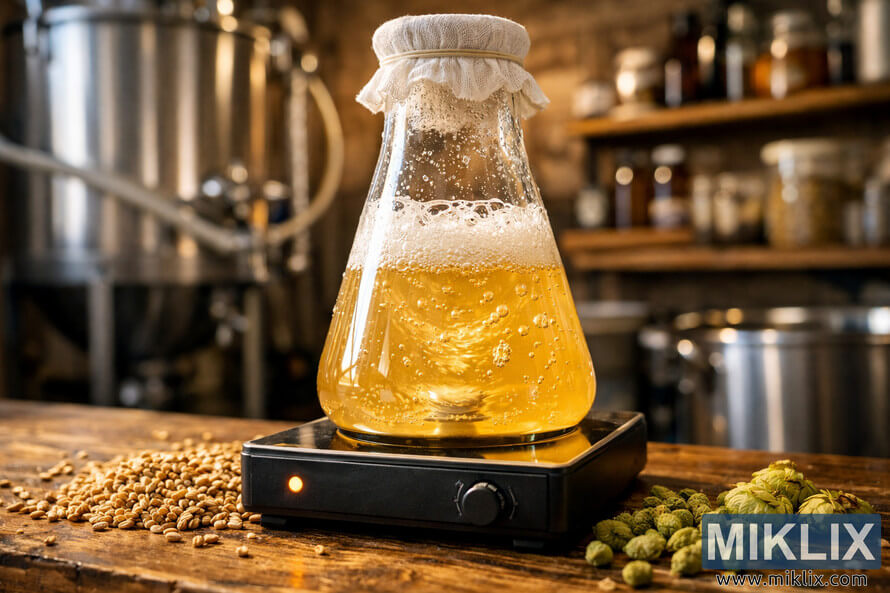
Utilizing a magnetic stir plate or wort whipper enhances growth efficiency. This allows brewers to maintain lower starter volumes while achieving target cell counts. Many also add yeast nutrient, like Servomyces, during the build to boost vitality and viability.
Starter temp proofing practices differ among brewers. Some warm starters to 70–75°F (21–24°C) to quickly confirm activity, then cool or step down before pitching. This method accelerates visible signs of life without subjecting WLP810 to prolonged warm fermentation.
For lager-style clean profiles, aim to acclimate the starter to the fermentation range of 58–65°F (14–18°C) before pitching. A short step-cool period or placing the starter in a cooler environment for 12–24 hours helps reduce thermal shock and preserves the desired ester balance.
Plan your pitching rate for WLP810 to align with your recipe goals. Underpitching can lead to sluggish attenuation and off-flavors. Overbuilding a starter wastes time and materials. Adhere to the recommended yeast starter sizes and follow starter temp proofing to ensure a healthy, active yeast population ready for clean fermentation.
Smelltu eða pikkaðu á myndina til að fá frekari upplýsingar og hærri upplausn.
Fermentation Schedule and Timeline
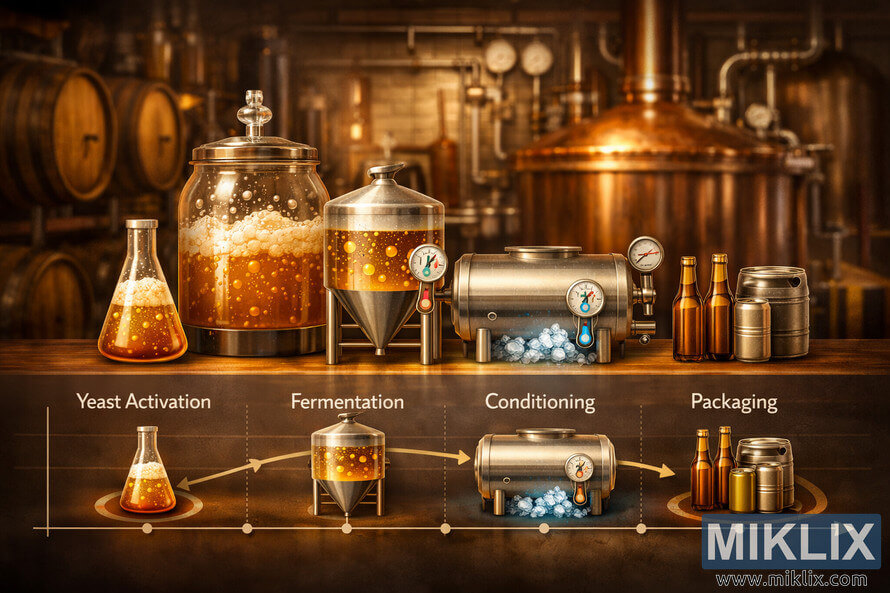
Timing and clear checkpoints are crucial for achieving the best results with White Labs WLP810. Below is a concise roadmap for brewers aiming for reliable outcomes and a clean finish. Monitor activity, measure gravity, and adjust conditioning to align with your desired style.
Primary fermentation expectations with WLP810
Visible activity should appear within 24–48 hours, provided pitching rates and oxygen levels are sufficient. Fermentation occurs at the cooler end of ale temperatures. Thus, primary fermentation typically lasts 3–7 days, aiming for 70–75% attenuation.
Signs of healthy fermentation and when to move on
- Vigorous krausen and steady airlock activity in the first 48–72 hours indicate yeast health.
- Gravity readings reaching expected attenuation signal the end of primary fermentation.
- High flocculation means visual clearing can precede true terminal gravity. Rely on two or more consistent gravity checks 24–48 hours apart before racking.
Cold conditioning and lagering options for crispness
Post-primary fermentation and stable readings, gradually lower temperatures for cold conditioning. Short cold conditioning is suitable for hybrid styles like California common. For classic pilsner or Helles, lagering WLP810 at near-freezing temperatures for weeks enhances clarity and smoothness.
Align your WLP810 fermentation timeline with gravity checks, not just calendar days. This method minimizes the risk of under- or over-conditioning, leading to a cleaner, crisper final product.
Smelltu eða pikkaðu á myndina til að fá frekari upplýsingar og hærri upplausn.
Water, Mash, and Wort Considerations for Lager Styles
Opting for the correct water, mash, and aeration approach is key to achieving a clean, lager-like profile with WLP810. Making small tweaks to mineral balance, mash schedule, and oxygen levels allows brewers to fine-tune dryness, body, and yeast performance. This ensures the strain's neutrality is not overshadowed.
Water profiles that complement yeast character
Align your lager water profile with the style you aim to brew. For pilsners or Helles, aim for low chloride and a balanced sulfate-to-chloride ratio. This preserves the crisp malt presence. For California common or drier ambers, increase sulfate to highlight hop dryness.
Use calcium judiciously to enhance mash conversion and yeast health. Adjust alkalinity with gypsum or calcium chloride, avoiding large additions that could obscure WLP810’s clean fermentation traits.
Mash temperatures to support attenuation and mouthfeel
Set your mash temperature between 148–152°F (64–67°C) for a drier finish and higher fermentability. This range supports WLP810's expected attenuation of 70–75% while maintaining a light body.
For a fuller mouthfeel, aim for mash temperatures of 156–158°F (69–70°C). This will increase dextrins and residual sweetness. Keep your mash plans simple to control fermentability and achieve consistent final gravity.
Wort aeration and oxygen needs before pitching
WLP810 benefits significantly from proper wort aeration. For medium pitching rates, ensure thorough aeration or measured oxygenation. This provides enough dissolved oxygen for healthy cell wall formation and a vigorous start.
Employ air-stone aeration for smaller batches and pure oxygen for larger volumes or high-gravity worts. Timing is crucial to ensure oxygen is present before yeast contact. Avoid adding oxygen after pitching to prevent oxidation.
Adjuncts, Hops, and Recipe Ideas for WLP810
WLP810 is versatile, suitable for lagers and hybrid lagers. It can be used to create warm-fermenting California common beers or cool-fermenting pilsners and Helles. Here are recipe ideas, hop suggestions, and tips for using adjuncts without disrupting fermentation.
- Traditional steam and California common approaches
- Base malt: use a pale two-row or pilsner malt at 90–95% to keep a firm backbone for a California common recipe.
- Specialty malts: add 3–6% Munich or Vienna for light breadiness and color, plus 1–2% crystal 10–20L for body.
- Hops: choose American or English aroma hops like Cascade, Northern Brewer, or East Kent Goldings at low rates for balance.
- Fermentation: aim 62–65°F to highlight the hybrid character this yeast brings to a steam beer.
- Low-ester lagers and pilsner-focused builds
- Grain bill: a classic pilsner recipe WLP810 performs best with high-quality pilsner malt and minimal specialty grains (up to 5% total).
- Hop profile: use noble hops such as Saaz, Tettnang, or Hallertau for bitterness and a delicate noble aroma.
- Process: ferment near 58°F, manage oxygenation and pitch adequate yeast to keep ester formation low and clarity high.
- Adjuncts and lighter lager styles
- Common adjuncts for lagers include flaked corn, rice, or glucose to lighten body and increase fermentables for American Lager or Cream Ale interpretations.
- Use adjuncts at 10–30% of the grist, depending on desired lightness, and adjust mash schedule to avoid excess dextrins.
- When adjuncts raise simple sugar levels, maintain strong oxygenation and proper pitching rates to prevent sluggish fermentation and off-flavors.
- Practical recipe outlines (starter points)
- California common: 90% two-row, 5% Munich, 3% crystal 10L, 2% aromatic; Northern Brewer for bittering, Cascade late. FG target mid-1.010s.
- Classic Pilsner: 97% pilsner malt, 3% dextrine/pale malt; Saaz at traditional boil and late additions. FG target low-1.010s for crisp finish.
- Light adjunct lager: 70% two-row, 20% flaked corn, 5% rice, 5% debittered crystal; clean noble or neutral hop choice. FG target low-1.010s to mid-1.00s.
- Tips to keep fermentation clean
- Control temperature closely across the fermentation window you choose to avoid unwanted esters.
- Pitch healthy yeast and oxygenate wort sufficiently when using high adjunct loads.
- Keep specialty malts conservative so the yeast can showcase its crisp character without masking fermentation nuances.
These sketches can guide recipe testing and scaling. Use them as templates for WLP810 recipes, then tweak hop timing, mash schedule, and adjunct percentage to match your flavor goals.
Fermentation Troubleshooting and Common Issues
WLP810 troubleshooting begins with careful observation and simple adjustments. First, check the gravity readings, fermentation activity, and yeast cake behavior. Many issues stem from underpitching, poor oxygenation, or early yeast drop-out.
Stuck or slow fermentation causes and fixes
High flocculation can cause yeast to drop out early, leading to a stuck fermentation. Ensure a proper pitch rate and adequate wort aeration before pitching.
If fermentation is slow, try warming the fermenter slightly to boost yeast activity. Gently stir the yeast by swirling the fermenter or using a sanitized spoon to suspend the yeast cake.
Creating a yeast starter that was active and proofed at pitching time can help. Warm-proofing the starter and then acclimating it to the target temperature can prevent sluggish starts and enhance attenuation.
Off-flavors to watch for and mitigation strategies
Off-flavors like diacetyl, sulfur, and unwanted esters can occur when fermentation is stressed. Low yeast health, nutrient-poor wort, or sudden temperature changes increase this risk.
Keep temperatures steady between 58°–65°F, where WLP810 thrives. If buttery notes appear, allow a diacetyl rest towards the end of primary fermentation.
Adding proven nutrients like Servomyces can help when wort composition suggests deficiencies. Proper oxygenation at pitch and a healthy starter can also reduce off-flavor risks.
When to repitch or use nutrients
Repitching guidance hinges on starter viability and the severity of the stall. If gravity hasn't moved after 48–72 hours, and rousing plus nutrients fail, prepare an active starter and repitch.
Add nutrients when signs of sluggishness appear early or with high adjunct percentages that limit yeast amino acid access. Servomyces and general yeast nutrients support healthy fermentation.
Keep detailed records of your actions and readings. This helps refine WLP810 troubleshooting steps for future batches.
Yeast Health, Nutrition, and Additives
Ensuring yeast vitality is crucial for brewing lagers with WLP810. Proper nutrition, regular viability checks, and a strategy for reuse are key. These steps help homebrewers and professional brewers achieve consistent results with White Labs WLP810.
- Visual and gravity checks
- Before pitching, check yeast viability by observing starter activity and tracking gravity. A rising krausen or steady gravity drop indicates active cells ready for fermentation.
- Starter practice
- Use a magnetic stir plate and a wort whipper to enhance cell growth and uniformity. These tools are essential for creating a lively culture for lager fermentations.
- STA1 status
- STA1 negative QA results signify no STA1 enzyme activity. Keep genetic and phenotypic notes to avoid surprises in attenuation or diastatic behavior.
Opt for nutrients that nourish yeast without introducing off-flavors. Formulated brewing supplies provide amino acids, micronutrients, and vitamins for fast, clean fermentation.
- Servomyces recommendation
- Many brewers use Servomyces yeast nutrient capsules for starters and high-gravity batches. Follow manufacturer guidelines for balanced micronutrient support.
- When to feed
- Add nutrients at the end of the boil or at first wort cooling for optimal uptake. Include a small dose at the start of starters to aid early cell division.
When repitching, plan carefully. Track cell counts and vitality on a log sheet. Repeated repitching without proper counting can lead to decreased fermentation vigor and flavor risks.
- Yeast banking
- Consider building a yeast bank for consistent batches. Store clean, propagated slants or cryo stocks following White Labs guidance to preserve strain character.
- Repitch schedule
- Establish a repitching routine based on cell counts and beer style goals. For lager-style beers, aim for fresher, higher-vitality generations to maintain clean profiles.
If a batch shows slow starts or off aromas, run targeted checks. Measure viability, inspect starter activity, and confirm adequate oxygenation. If numbers fall short, treat the wort with nutrients, or rehydrate and repitch a fresh culture.
Consistent attention to yeast health WLP810, routine viability checks, and judicious use of additives like Servomyces recommendation will ensure crisp lagers. For long-term reuse, set clear criteria for when to repitch WLP810 versus refreshing from a banked source.
Packaging and Handling White Labs Liquid Yeast
Proper packaging and careful handling significantly impact yeast performance. For strains like WLP810, maintaining cold chain, transit time, and proofing steps is crucial. This approach ensures viability and minimizes the need for large starters.
Storage temperatures and shelf life for liquid WLP810
Keep liquid yeast in the refrigerator at 34°F to 40°F (1°C–4°C). This temperature range slows down metabolism, preserving viability. Always check the production or expiration date provided by White Labs before use.
If a pack is nearing its shelf life, consider a small proof or starter to verify cell health. Proofing at warmer temperatures for a brief period can reveal sluggish or under-pitched samples. This allows brewers to adjust without risking the batch.
Shipping considerations and cold chain items (ice packs, insulated mailers)
WLP810 shipping benefits from insulated mailers and quality ice packs. Retailers often provide insulated mailers and gel ice packs for live cultures. These items help maintain the cold chain during transit.
- Ship fast when possible; overnight or next-day shipping limits exposure to temperature swings.
- Use sufficient ice packs and an insulated mailer to protect against warm trucks and sorting centers.
- Be aware of retailer SKUs, such as WLP810NG for quick shipment, and any freight-only items or discount restrictions.
Using PurePitch or next-generation handling protocols
PurePitch WLP810 handling protocols provide detailed proofing and pitching guidance. Follow White Labs PurePitch Next Generation documentation for warming, swirling, and proof times. This ensures consistent results.
If a vial arrives warm or shows transit stress, follow PurePitch WLP810 proofing instructions before adding it to wort. Proper proofing reduces the risk of stuck or sluggish fermentation. It also saves time on building large starters.
Alcohol Tolerance and Recipe Limits
White Labs WLP810 has a medium alcohol tolerance, around 5–10% ABV. This range is crucial when setting original gravities to ensure fermentation finishes cleanly and yeast health is maintained. By carefully designing recipes, you can avoid off-flavors from stressed yeast while preserving the San Francisco lager's unique character.
The OG you aim for depends on the expected attenuation and yeast health. For most homebrewers, aiming for 70–75% attenuation is ideal. This range helps achieve final ABVs between 5–10%, resulting in clean finishes without excessive ester development.
To adjust fermentability, focus on mash profile and fermentable mix. Targeting mash temps of 148–152°F (64–67°C) will favor more fermentable wort and reliable attenuation. Reducing crystal or dextrin malts and limiting unfermentable adjuncts is key for a clean finish within the yeast's tolerance.
- Fermentability adjustments include lowering mash rests or increasing diastatic malt to boost attenuation.
- Monitor pre-boil gravity and estimate attenuation to confirm OG targets WLP810 will hit desired ABV.
For higher ABV with WLP810, consider advanced techniques. Large starters, serial repitching, intense oxygenation at pitch, and robust nutrient regimens can help. Servomyces or similar nutrients, along with PurePitch best practices, can enhance viability when pushing tolerance limits.
For consistently high-strength beers, consider switching to a yeast with higher alcohol tolerance. This approach saves time and reduces risk. When using WLP810 for a big beer, plan for extended conditioning and close monitoring to ensure a stable, clean result.
Flocculation and Clarification Strategies
WLP810 yeast settles quickly in the fermenter, leading to clearer beer faster than many ale strains. This natural settling can shorten conditioning times. However, brewers must check the final gravity before packaging to prevent refermentation or under-attenuation.
High flocculation traits and expected settling behavior
WLP810 yeast clumps form and drop out rapidly once fermentation slows. Expect a clear beer in just a few days after fermentation activity ceases. This quick settling reduces the need for extended maturation periods. Yet, maintaining yeast health is crucial for complete attenuation.
Fining, cold crash, and filtration options for bright lagers
For a cold crash lager, chill the fermenter to near-freezing for 24–72 hours to enhance particle drop-out. Fining WLP810 with isinglass, gelatin, or silica gels can expedite clarity when time is of the essence. Filtration offers the quickest path to commercial-style bright lagers. However, fining followed by cold conditioning is gentler, preserving delicate malt and hop flavors.
Impact on bottling and kegging timelines
High flocculation can significantly reduce wait times before packaging. However, it's essential to confirm stable final gravity across two readings 24 hours apart. If using fining or cold crash lager techniques, allow for full yeast settlement to avoid clogging filters or uneven carbonation. For bottling, ensure enough viable yeast remains for natural carbonation. Alternatively, force-carbonate in kegs to control timing precisely.
Comparing WLP810 to Other Lager and Ale Strains
White Labs WLP810 sits between traditional lager yeasts and ale strains. It produces clean, lager-like flavors but ferments warmer than Saccharomyces pastorianus. This versatility is perfect for brewers aiming for lager taste without the need for cold conditioning.
Differences from traditional bottom-fermenting lager yeasts
Traditional lager yeasts require cold fermentation and extended lagering for crispness. WLP810, however, tolerates warmer temperatures, up to 65°F (18°C), while maintaining a low ester profile. This makes it ideal for brewers seeking a quicker process without sacrificing flavor.
How it compares to ale strains that ferment warm
WLP810 stands out when compared to ale strains in terms of ester production and attenuation. Unlike many ale yeasts, which produce fruity esters at warmer temperatures, WLP810 produces fewer esters. It also achieves 70–75% attenuation with high flocculation, resulting in a drier, clearer beer than many ales.
- Esters: lower with WLP810 than typical warm-fermenting ales.
- Attenuation: WLP810 often finishes drier than some ale strains.
- Flocculation: high for WLP810, aiding faster clarification.
Choosing the right yeast for hybrid styles like California common
When brewing a California common, selecting the right yeast is crucial. WLP810 is an excellent choice for those desiring lager-like cleanliness with the convenience of warmer fermentation. It's perfect for crafting steam beers with a crisper profile than those made with ester-forward ales.
- Choose WLP810 when you need lager character but limited cold time.
- Choose a true cold-fermenting lager strain for classic, very clean lagers.
- Choose ale strains when you want pronounced fruitiness or chewy malt character.
WLP810 offers brewers a middle ground between strict lager techniques and warm ale fermentations. Its unique position makes it a practical choice for hybrid brews and small breweries aiming for consistent results without the need for extensive refrigeration.
Buying and Availability in the United States
Securing White Labs WLP810 for home or professional brewing in the United States is straightforward. However, stock levels can fluctuate based on the retailer and season. It's wise to plan ahead for pre-orders during peak brewing months to prevent delays for larger batches.
White Labs provides a dedicated product page for WLP810 San Francisco Lager Yeast. They note the availability of a WLP810 organic option. Brewers looking for WLP810 organic should verify organic certification and batch code upon ordering. Organic lots tend to sell out faster than standard strains due to their limited availability.
When purchasing WLP810 from USA sellers, expect chilled shipping, ice packs, and insulated mailers. Many retailers provide PurePitch handling information and advise following White Labs' storage guidelines. It's important to be aware of shipping cutoff days, especially around holidays, to prevent warm transit.
- Retail availability: check both local shops and national suppliers for the WLP810 SKU and stock status.
- Pricing notes: expect single-vial pricing near the example $14.99; bulk or case options may lower per-unit cost.
- Shipping constraints: items may be cold-shipped, freight-only, or excluded from promotions; pre-orders may require full payment.
To ensure a smooth White Labs WLP810 purchase, confirm SKU details and verify if the lot is organic if needed. Review shipping options before checkout. This approach guarantees timely delivery and proper handling for the healthiest yeast slurry.
Real-World Brewer Experiences and Best Practices
Homebrewers and professional breweries share hands-on insights that bridge lab data with practical brewing. This collection focuses on practical steps for clean, consistent beer when using WLP810. It includes tips, patterns, and record-keeping strategies to ensure consistent batches.
User-reported temperature strategies and starter tips
Many brewers proof starters at 70–75°F (21–24°C) to confirm activity quickly. After proofing, they acclimate the yeast to 58–65°F (14–18°C) before pitching. This balances fast starter growth with a cleaner ester profile from cooler fermentation.
WLP810 brewer experiences highlight the importance of pitch rate and oxygenation. Brewers who follow precise starter tips—recording starter size and proofing temp—see fewer lag issues and steadier fermentation curves.
Community-successful recipes and fermentation logs
Community recipes WLP810 often vary by style. For California common and steam beers, brewers use warmer ranges for a fruitier profile. For pilsner and Helles, they keep temps low and extend cold conditioning to sharpen clarity.
Shared fermentation logs reveal common success factors: correct pitch rate, measured oxygenation, and thorough cold conditioning. These elements appear repeatedly in posts and notebooks, describing bright, balanced results.
Documenting your batch for repeatable results
- Record starter size, proofing temperature, and time.
- Log pitch rate, fermentation temperature, OG/FG, and daily gravity readings.
- Note any nutrient additions such as Servomyces and handling methods like PurePitch.
Well-kept fermentation logs become templates for future brews. When a recipe performs well, the brew log lets you replicate the exact steps and tweak single variables with confidence.
Practical practice from WLP810 brewer experiences highlights careful notes and small, controlled changes. Using community recipes WLP810 as a starting point, apply WLP810 starter tips and keep detailed fermentation logs to turn one good batch into many.
Conclusion
The White Labs WLP810 San Francisco Lager Yeast offers a clean fermentation profile across 58°–65°F (14°–18°C). This summary reveals its 70–75% attenuation, high flocculation, and medium alcohol tolerance (5–10%). It also has a STA1 negative status, making it ideal for California common and other lager-style beers.
Practically, fermenting with WLP810 requires proper pitching rates and good wort oxygenation. Attention to starter proofing is also crucial. Consider using nutrients like Servomyces when necessary. For consistent attenuation and a crisp finish, think about using PurePitch handling or a stir plate.
Buying and handling WLP810 is straightforward. It is commonly stocked as SKU WLP810NG and ships with standard cold-chain packaging. Brewers following cold conditioning and lagering routines will find it yields bright, clean results. This matches the expectations outlined in this San Francisco Lager Yeast review.
In summary, the White Labs WLP810 is a versatile, brewer-friendly strain for hybrid and lager recipes. With careful attention to recipe design, oxygenation, and handling, it can produce high-quality beers for both hobbyists and professionals.
FAQ
What is White Labs WLP810 San Francisco Lager Yeast and what makes it unique?
WLP810 San Francisco Lager Yeast is a core strain from White Labs, designed for fermentation between 58°–65°F (14°–18°C). It retains lager-like character, making it perfect for California common/steam beer and Märzen, Pilsner, and Helles at the lower end. The strain is also available in organic form and has a STA1 QC result of negative.
What are the key performance metrics (attenuation, flocculation, alcohol tolerance)?
WLP810 typically attenuates 70–75%, resulting in a dry finish. It flocculates highly, settling yeast quickly for clearer beers. Alcohol tolerance is medium, around 5–10% ABV, requiring careful planning for a clean fermentation.
What fermentation temperatures should I use for different styles?
White Labs recommends 58°–65°F (14°–18°C). For cleaner lagers like Pilsner, Helles, and Märzen, use the lower end. The higher end is better for California common/steam beer, producing a slightly more estery character while remaining lager-like.
There’s conflicting advice about starter temperature — what should I do?
Practices vary. Many brewers warm starters to 21°–24°C (70°–75°F) to check for activity, then cool them to 58°–65°F (14°–18°C) before pitching. Tools like BeerSmith suggest staying close to the manufacturer's range. A warm proof followed by gradual cooling is a practical approach.
When is a starter necessary for WLP810 and how large should it be?
Use a starter for lagers, higher gravity beers, or when yeast has been stored or aged. For 5–6 gallon batches, a 1–2 L starter is common. For higher OGs, scale up to 3–4 L or use a stir plate. Follow PurePitch Next Generation handling guidelines when available.
How do attenuation and mash temperature choices affect final gravity and mouthfeel?
With 70–75% attenuation expected, mash temperature determines fermentability. Mash at 148–152°F (64–67°C) for a more fermentable wort and drier finish. Higher mash temps yield more dextrins and fuller body. Use the attenuation range to estimate final gravity and ABV when calculating recipes.
What are common pitching and oxygenation recommendations for WLP810?
Ensure adequate pitching rates and oxygenation, especially for lager-style fermentations. Oxygenate wort thoroughly before pitching. Consider making a larger starter or using pure oxygen for higher gravity beers. Good oxygenation reduces the risk of sluggish or stuck fermentations and counters premature flocculation.
How does high flocculation affect fermentation and clarification?
High flocculation helps yeast settle quickly, shortening time to bright beer. However, it raises the risk of premature flocculation and stuck fermentations. Monitor gravity to confirm attenuation before racking. Use cold conditioning, finings, or filtration as needed to speed clarity while ensuring fermentation is complete.
What cold conditioning or lagering steps are recommended for crispness?
For crisper lagers, lower temperature progressively after terminal gravity and lager for several weeks near freezing. This mellow flavors and enhances clarity. California common typically needs a shorter conditioning period, while Pilsner and Helles benefit from extended cold conditioning for best results.
What water profile and mash tactics best showcase WLP810?
Use a water profile and hop/salt balance suited to the chosen style. For Pilsner/Helles, softer water with a balanced sulfate-to-chloride ratio highlights malt and creates a clean profile. For drier, hop-forward beers, raise sulfate. Mash in the 148–152°F (64–67°C) range to encourage fermentability matching the yeast’s attenuation.
Can I use adjuncts like corn or rice with WLP810 for American lager styles?
Yes. WLP810 is suitable for American Lager or Cream Ale recipes that include adjuncts. When using adjuncts, ensure adequate nutrition and oxygenation since adjuncts can dilute nutrient availability. Maintain proper pitching and fermentation control to avoid off-flavors from stressed yeast.
What are common causes and fixes for slow or stuck fermentation with this strain?
Causes include underpitching, insufficient oxygenation, low viability, or premature flocculation. Fixes: add a healthy starter or re-pitch active yeast, oxygenate gently (if early in fermentation), raise temperature slightly to restart activity, use yeast nutrient like Servomyces, or rouse yeast by gently swirling the fermenter. Always check gravity before taking corrective action.
Which nutrients or additives are recommended?
Servomyces and general yeast nutrients are commonly recommended. Retailers selling WLP810 often suggest Servomyces for improved yeast performance. Use nutrients when pushing higher OGs, brewing adjunct-heavy worts, or when a starter shows weak activity.
How should I store and handle liquid WLP810 prior to pitching?
Store refrigerated and be mindful of shelf life. If the pack has been in transit or is near its date, proof with a starter or warm proofing to confirm viability. Retailers offer ice packs and insulated mailers to preserve the cold chain during shipping; follow PurePitch or White Labs handling protocols where provided.
What shipping and buying considerations should I be aware of in the U.S.?
WLP810 (SKU examples like WLP810NG) is sold by many retailers, often with in-stock listings and price points around typical liquid yeast kits. Retail pages note shipping constraints (ice packs, insulated mailers, some items ship freight only), free-shipping thresholds, and occasional exclusions from sitewide discounts. Pre-orders sometimes require full payment to reserve stock.
How does WLP810 compare to traditional bottom-fermenting lager yeasts and ales?
WLP810 differs by fermenting warmer while keeping lager-like cleanliness. Traditional bottom-fermenting Saccharomyces pastorianus strains usually require colder temps for the same character. Compared to ale strains, WLP810 tends to produce fewer esters at its recommended temps and offers higher flocculation and a lager-like finish, making it ideal for hybrid styles like California common.
What should I do if I want to brew above WLP810’s alcohol tolerance?
WLP810’s medium tolerance (5–10% ABV) suggests avoiding high OGs for a clean result. For higher ABV beers, options include building much larger starters or serially repitching robust yeast, using oxygenation strategies, adding nutrients, or choosing a higher-tolerance strain instead. PurePitch protocols and nutrient additions can help but have practical limits.
How can I document results to reproduce successful batches?
Keep a detailed brew log: starter size and proof temperature, pitch rate, OG and FG, mash schedule and temps, water profile and salts, oxygenation method, fermentation temps and timeline, and any nutrients used. Note gravity readings and timing for racking and conditioning. Replicating these parameters helps achieve consistent results with WLP810.
Frekari lestur
Ef þér líkaði þessi færsla gætirðu einnig haft gaman af þessum tillögum:
- Að gerja bjór með Fermentis SafLager S-189 geri
- Að gerja bjór með Wyeast 1332 Northwest Ale geri
- Að gerja bjór með Wyeast 1728 skosku ölgeri