
Hops in Beer Brewing: Buket
出版された:
最終更新日 2026年5月14日 16:33:42 UTC
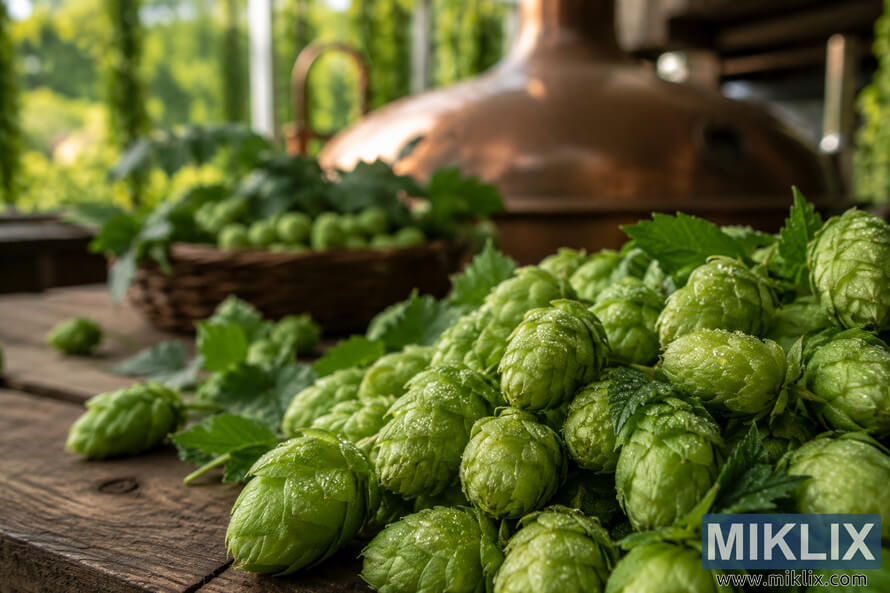
Buket hops stand out for their unique aromatic profile, appealing to American craft brewers. They introduce floral and spicy nuances, significantly altering a beer's character. This is especially true when added during the whirlpool, dry hop, or late-boil stages. For those delving into Buket brewing, they offer a way to enhance a beer's top notes without overwhelming the malt.
Hops in Beer Brewing: Buket
画像をクリックまたはタップすると、詳細と高解像度が表示されます。
Key Takeaways
- Buket hops supply floral and spicy aromatics useful for aroma-forward beers.
- Use heated fine-mesh filtration to cut hop/protein mess before bottling.
- Add Buket late in fermentation with a muslin bag to limit oxygen exposure.
- Avoid unnecessary transfers; cold crash and a hop strainer reduce losses.
- Balance Buket brewing choices with a supportive malt backbone for best results.
Overview of Buket hops and their place in brewing
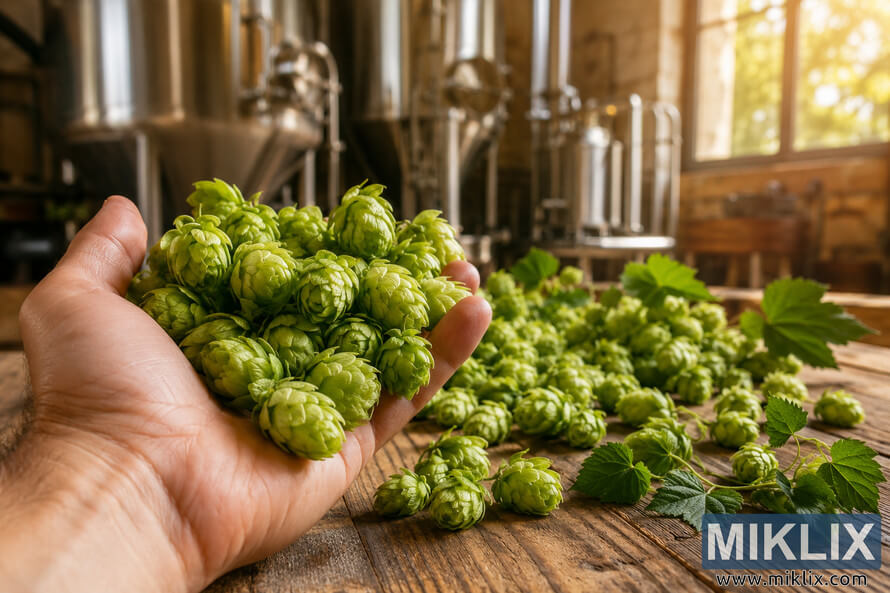
Buket hops gained commercial attention through targeted breeding. This aimed to balance floral aromatics with clean bitterness. Their origin is traced back to Central or Eastern European programs. Handling and sanitation are crucial in the brewery workflow, from harvest to packaging.
画像をクリックまたはタップすると、詳細と高解像度が表示されます。
When comparing Buket to older varieties, brewers focus on workability. The choice of equipment, hop strainers, and cold crash steps impacts extraction. Careful transfer management is essential to preserve delicate aromas in Buket United States craft batches.
Comparing Buket to Cascade reveals key differences. Cascade is known for citrus and grapefruit notes, while Buket is floral and herbal. This distinction affects late additions, dry hopping, and yeast pairings in craft brewing.
- Buket breeding aimed for aroma clarity and disease tolerance in field trials.
- Buket origin informs planting and harvest timing for reliable oil profiles.
- Brewery process choices—pellets or whole-cone, hop bags, and filtration—change yield and clarity when working with Buket.
Effective handling is as crucial as the flavor itself. Simple steps like heating a fine-mesh strainer and pouring young beer through it can remove unwanted hop and protein particles. This improves clarity before bottling. For those using plastic bucket fermenters, adding Buket hops late in fermentation and employing a muslin bag for small additions minimizes oxygen contact. This helps preserve the Buket aroma.
Minimizing transfers is key to maintaining yield and clarity. Transferring break material into a secondary can lead to significant losses. Hence, many brewers rely on hop strainers and cold crashing to settle trub effectively. With careful Buket hop usage and proper settling techniques, volume losses can be kept under a half gallon in typical five-gallon batches.
Aroma and flavor profile of Buket hops
Buket hops are celebrated for their unique aroma. They offer a blend of floral and spicy notes with a hint of citrus. This combination creates a clean, fresh character in beer, enhancing its overall taste without dominating it.
Primary aroma notes and flavor descriptors
The aroma of Buket hops is dominated by white floral, herbal spice, and a touch of lemon peel. When used correctly, it brings out gentle stone fruit and a tea-like green flavor. To preserve this delicate flavor, it's crucial to add Buket hops late in the brewing process. This ensures that the volatile oils are retained in the final product.
How Buket contributes to beer balance and complexity
Buket's flavor adds a midrange complexity that bridges the gap between hop brightness and malt body. Its floral and spicy elements can soften bitterness and enhance hop-derived esters. Cold crashing and filtering after fermentation help preserve Buket's aroma, ensuring a clean and vibrant beer.
Examples of beer styles that highlight Buket’s profile
- Session pale ales that showcase Buket aroma without heavy malt interference.
- Single-hop IPAs emphasizing Buket in IPAs for floral-citrus clarity in the glass.
- Belgian-style pale ales and saisons where Buket flavor complements yeast spice.
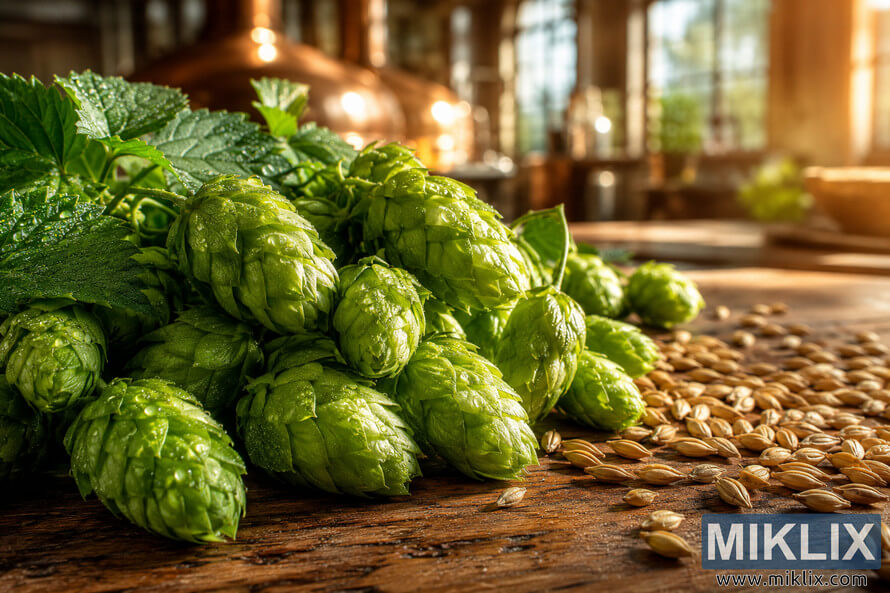
Effective handling is key to showcasing Buket's unique qualities. Late whirlpool additions, precise dry hopping, and the use of hop strainers are essential. Filtration after fermentation can remove haze while preserving the aroma. Small adjustments in contact time ensure consistent Buket aroma across batches.
画像をクリックまたはタップすると、詳細と高解像度が表示されます。
Alpha acids, beta acids, and oil composition
Buket hops offer a balanced mix of bitterness and aromatic oils, crucial for brewers. The Buket alpha acids determine the bitterness level in the wort. The timing and method of hop addition significantly impact the final aroma, as Buket hop oils are affected by handling and timing.
Typical alpha acid range and implications for bitterness
Buket alpha acids fall within a moderate range, making them versatile for both bittering and balanced IPAs. Early boil additions lead to predictable bitterness. Calculations based on Buket alpha acids and adjustments for boil length and wort gravity are essential for controlled bitterness.
Hop oils that influence aroma
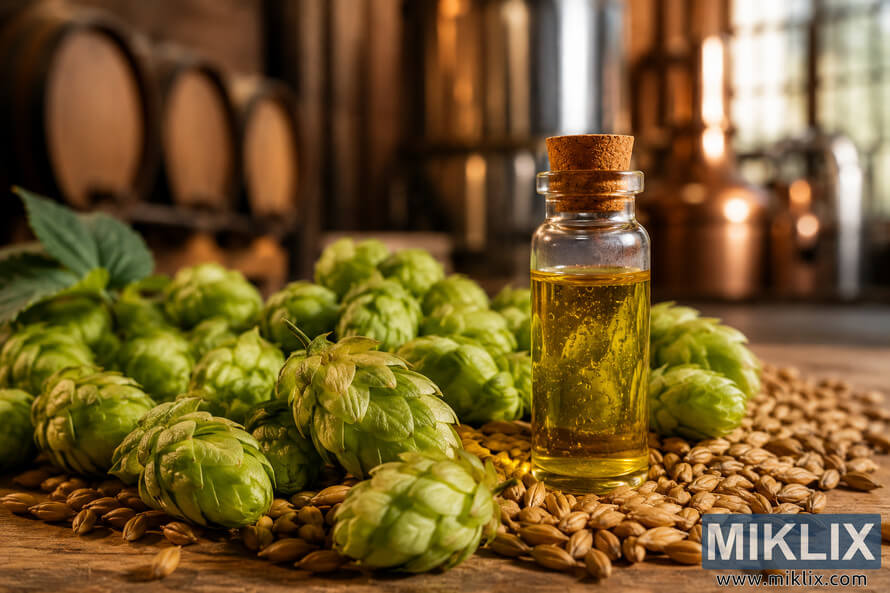
The Buket hop oils, rich in volatile terpenes, shape its aroma and flavor. Myrcene contributes a fruity, resinous top note, while humulene adds a woody, spicy backbone. Preserving these oils is critical, as excessive heat and oxygen can damage them.
How oil composition affects hopping decisions
The choice between using Buket for bittering or aroma depends on its oil volatility and alpha acid content. Early boil additions convert alpha acids to bitterness but lose much of the aromatic oils. Late additions and dry hopping retain more oils, enhancing aroma without harsh vegetal tones. Proper handling and storage are key to preserving these delicate compounds.
- Use pelletized Buket with care; interaction with proteins can trap oils in break material.
- Prefer late whirlpool contact for aroma while keeping some calculated Buket bitterness.
- Employ hop strainers and cold settling to reduce hop debris and protect volatile Buket hop oils.
画像をクリックまたはタップすると、詳細と高解像度が表示されます。
When to use Buket hops in the boil and whirlpool
Timing is crucial when working with Buket hops. Schedule additions carefully to achieve the desired bitterness while preserving delicate aroma oils. Late boil and whirlpool additions should focus on aromatic work, leaving early boil hops for bitterness extraction.
Boil additions for bittering: considerations and dosages
For bittering, add Buket hops at the boil's start. Dosages should align with alpha acid levels. For example, one ounce (28 g) in a 5-gallon (19 L) batch will impact IBUs based on alpha acids. Adjust to achieve your desired IBU and taste.
When aiming for a strong backbone, avoid combining late bittering with large whirlpool additions. This combination can increase perceived harshness.
Late boil and whirlpool additions to preserve aromatic oils
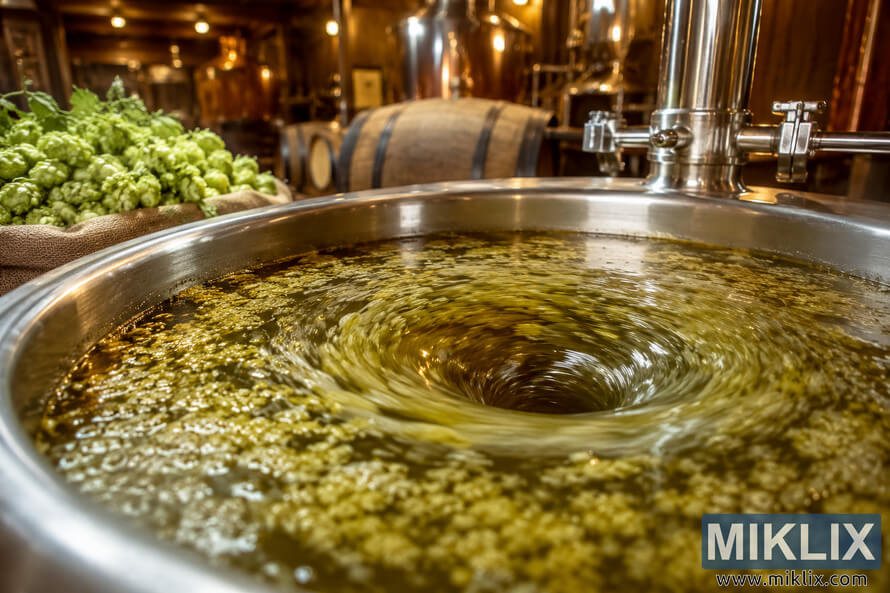
Save aromatic character with short late-boil hops and a cool whirlpool. A 5–10 minute late-boil addition preserves more volatiles than a long boil. For fuller aroma, whirlpool at 170–180°F (77–82°C) for 10–30 minutes.
When transferring to fermenters, add hops later to reduce oxygen contact. This practice helps preserve hop oils and keeps the brightest Buket notes in the beer.
Practical tips to avoid unwanted vegetal or harsh notes
- Limit contact time with heavy break material. Strain wort through a fine-mesh strainer during transfer to cut down on hop/protein mess and help with avoiding vegetal notes.
- Use hop strainers or bags for whirlpool and dry-hop additions to ease removal and lower sediment transfer.
- Cold crash before packaging so solids settle. Fewer suspended particles reduce the chance of harsh flavors.
- Avoid unnecessary racking that stirs trub back into the beer. Gentle transfers preserve clarity and aroma.
画像をクリックまたはタップすると、詳細と高解像度が表示されます。
Dry hopping with Buket hops
Buket hops add floral and citrus notes after fermentation. The timing and method of addition greatly influence the beer's aroma and mouthfeel. Below, we explore the best practices for dry hopping with Buket hops, including timing, techniques, and how to minimize oxygen exposure.
Timing: early vs late vs multiple additions
Early dry hops, added near the end of fermentation, blend with yeast activity, softening harshness. Late additions, placed after fermentation, preserve volatile oils for a brighter aroma. A multiple dry hop schedule allows for layered complexity without overwhelming bitterness.
Timing Buket dry hops depends on the beer style. For delicate pilsners, a single late addition is best. For hazy IPAs, a multiple dry hop schedule with a small early dose and a larger late dose maximizes aroma while preserving biotransformation benefits.
Methods for adding dry hops in a bucket fermenter
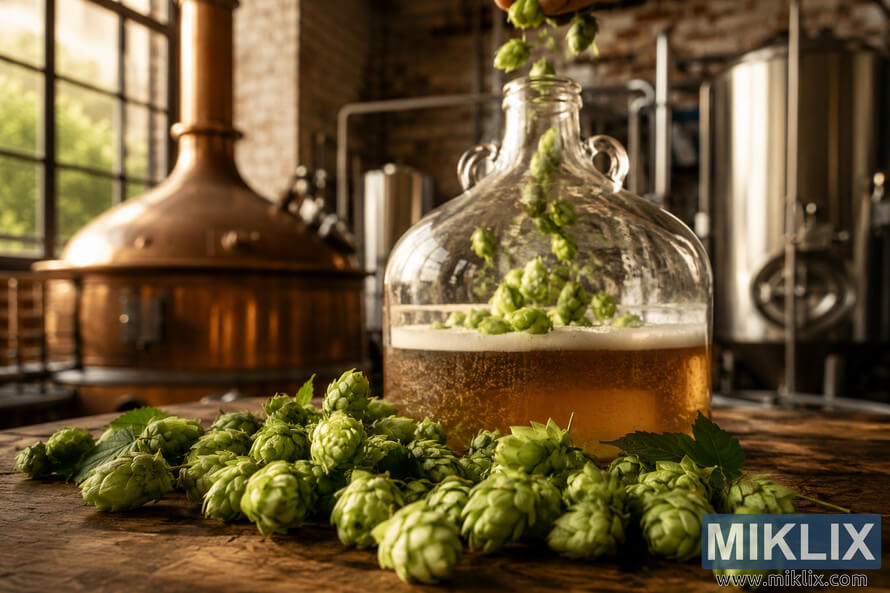
Many homebrewers use muslin bags for bucket dry hopping. Bags make removal easy and reduce debris in the beer. Another option is a stainless hop strainer used during racking to catch loose pellets or trub.
When working in a plastic fermentation bucket, place the hops in a sanitized bag and lower them gently near the end of fermentation. For multiple additions, swap or top up bags rather than dumping large amounts at once.
Managing oxygen exposure when dry hopping
To minimize oxygen dry hop impact, avoid splashing during additions and removals. Keep transfers minimal and let sediment settle to reduce oxygen-risky moves. Purging with CO2 helps where available, but many backyard brewers achieve good results with careful, late additions in a muslin bag.
Use a hop strainer and cold crash to compact hop material and protect Buket hop character. These steps lower trapped hop matter and reduce oxidation risk while preserving aroma from Buket dry hopping.
画像をクリックまたはタップすると、詳細と高解像度が表示されます。
Handling pellet vs whole-cone Buket hops
Buket hops react differently when added to wort or fermenters. Brewers must consider how pellets and whole cones affect clarity and cleanup. With simple tools and a few steps, losses can be minimized, ensuring a clear beer.
Effects of pellets on clarity and break material
Buket pellets release more particulate than whole-cone hops. Upon contact, they crumble and bind with proteins, increasing break material. This can lead to cloudier beer if not managed properly.
When added to hot wort, pellets swell and release lupulin dust. This dust clumps with protein break, carrying through fermentation. Expect more solids with Buket pellets than with whole-cone hops.
Filtering and lautering practices to remove hop debris
Effective hop debris filtration saves volume and enhances appearance. For kettle work, whirlpool with a coarse hop strainer or kettle screen to trap solids. This reduces the load on downstream filters and minimizes post-fermentation haze.
In simple bucket setups, use a sanitized fine-mesh bag or muslin for dry hopping. Pouring beer through a sanitized fine-mesh strainer or baker’s sieve during racking clears loose material. Cold crashing after transfer aids in settling solids, making filtration easier.
Pros and cons of pellet versus whole-cone for homebrewers
- Pellet benefits: consistent dosing, space efficiency, and easier storage. Pellets enhance contact area for oils, often leading to stronger extraction in shorter times.
- Pellet drawbacks: more break and trub, higher need for hop debris filtration, and possible losses when transferring into primary fermenters.
- Whole-cone benefits: gentler on wort, less particulate, and simpler cleanup. Whole cones are easier to contain in hop bags, reducing post-fermentation cloudiness.
- Whole-cone drawbacks: take more storage space, can be uneven in alpha content, and may require larger additions to match pellet extraction.
Homebrewers should match their choice between pellet and whole-cone hops to their equipment and goals. For those prioritizing clarity and ease of cleanup, Buket whole-cone or contained additions are better. However, if compact storage and rapid flavor extraction are key, Buket pellets offer strong aroma but require better hop debris filtration and handling to protect yield.
Managing hop trub and sediment when using Buket
Keeping a brew bright and preserving beer volume during packaging is crucial. Pellet Buket hops bind with proteins and other break material, forming a dense mass. This mass settles or clogs equipment. Practical steps at transfer and cold side handling are essential.
How hops combine with proteins to create break material
Heat and whirlpooling release hop particulates, which then collide with denatured proteins and tannins. Pellet hops accelerate this process. The result is a compact trub pile that can trap beer if not handled carefully.
- Use muslin bags or stainless hop strainers to contain pellet fragments during dry hopping in a bucket fermenter.
- Time additions so most hop matter falls out before the final transfer.
- Sanitize strainers and pass beer through them when bottling to remove large clumps.
Cold crashing and settling strategies to reduce losses
Lowering temperature helps solids compact and sink faster. A gentle cold crash of 24–72 hours clarifies beer and frees it from hop sediment. If cold crash hops are impractical, extend conditioning time to pack solids into a tighter yeast and trub cake.
- Cool the fermenter gradually to avoid shocking yeast and stirring up sediment.
- Allow at least a day after cold crash before siphoning to preserve beer volume.
- Minimize agitation during taps and transfers to keep settled matter in place.
Using hop strainers and filtration to preserve volume
Filtering or straining during transfer removes trapped hop sediment while limiting losses. A sanitized hop strainer or fine mesh filter catches pellets and protein clumps before they reach bottles or kegs. Properly used, these tools help preserve beer volume and reduce the need for additional clarifying steps.
- Avoid extra transfers; each move risks suspension of settled trub and lost beer.
- During final transfer, position the outlet above the trub line and run through a sanitized strainer.
- If using pumps, fit filter pads or inline strainers rated for hop debris to protect lines and taps.
Effective Buket trub management saves time and product. With careful timing of additions, cold crash hops where possible, and routine use of hop strainers, homebrewers can cut sediment losses. This approach better preserves beer volume for bottling and kegging.
Sanitation and hop processing best practices
Clean handling is key to preserving Buket hops' aroma and ensuring beer quality. Implementing simple sanitation routines for hop tools and post-fermentation care is crucial. These steps protect the beer's flavor while preventing microbial contamination. By focusing on these details during brew day, you can significantly reduce risks and streamline cleanup.
Boiling tools and autoclave-like sanitation
Boiling water in the brew pot is an effective method for sterilizing small equipment. Submerge items like rulers, fine-mesh strainers, and spoons for ten minutes with the lid on. This process mimics the high-pressure conditions of an autoclave, ensuring thorough sterilization of equipment that comes into contact with the beer.
Boiling effectively removes surface microbes, thereby reducing the risk of microbial contamination during dry hopping. Use clean tongs to handle items and place them on sanitized surfaces to maintain cleanliness.
Cleaning muslin bags, strainers, and fermentation gear
Muslin bags and strainers absorb hop oils and break down material. It's essential to rinse them immediately after use to prevent residue buildup that can support bacterial growth. A mild detergent wash followed by a thorough rinse and drying is recommended for repeated use.
To enhance protection, sanitize muslin bags and other porous items by boiling or using a no-rinse sanitizer safe for fabric. For rigid strainers and stainless fittings, perform sterilization by boiling or using a peracetic acid or iodophor dip, following the manufacturer's instructions.
Minimizing microbial risk when adding hops post-fermentation
- Work efficiently and maintain a clean environment to minimize exposure to air and reduce oxygen and contamination risks.
- Utilize sanitized containers and tools for hop transfers. When feasible, purge canisters with CO2 to protect the aroma and further minimize microbial contamination risks.
- Limit handling of hops; place them in a sanitized hop bag if necessary and avoid reusing dirty bags without proper cleaning and sanitizing.
Adhering to consistent sanitation practices and routine sterilization of hop tools is essential for a safe dry-hopping process. Clean equipment, careful transfers, and the use of heat-based or chemical sanitizers help preserve hop character and lower the risk of post-fermentation infections.
Recipe formulation: pairing Buket hops with malts and yeasts
Creating a Buket recipe involves making choices that highlight the hop's unique qualities. Opt for a lighter malt profile to allow floral and herbal notes to emerge. It's crucial to minimize hop particulate during processing to preserve the aroma.
Malt backbone choices to complement Buket’s aromatics
Start with a pilsner, Vienna, or light Maris Otter as your base malt. This choice enhances the Buket hop's character. Incorporate small amounts of Munich or biscuit malts for body without overpowering the aroma. To avoid hop particulate issues, employ gentle transfers and a short cold crash. This method reduces trub contact, preserving Buket's delicate aromas.
Yeast strains that showcase Buket hop character
Opt for neutral yeast strains like Wyeast 1056 or White Labs WLP001 to showcase Buket hops. For those who prefer a hint of fruit esters, English ale strains such as Wyeast 1968 are suitable. Dry-hop late to preserve volatile oils. This approach allows for a unique interaction between hops and yeast, enhancing the beer's character.
Adjuncts and citrus/fruity additions that harmonize with Buket
Introduce fresh citrus peels, bitter orange, or light fruit purees with strict sanitation. Add these adjuncts near the end of fermentation or during conditioning. This method protects the aroma and minimizes oxygen uptake. For a clean Buket citrus pairing, use measured zest and include hop strainers to limit particulate in the final beer.
- Simple base for a 5-gallon Buket recipe: 9 lb pilsner, 1 lb Vienna, 0.5 lb dextrin malt.
- Hopping plan: modest bittering at 60 min, main aroma at 10 min, whirlpool at flameout, late dry-hop at day 4 post-fermentation.
- Yeast pick: WLP001 for clarity or Wyeast 1968 for fruity complexity.
When crafting a Buket recipe, focus on minimal transfers. Utilize hop bags or strainers and cold crash to reduce sediment. This approach ensures the preservation of floral, herbal, and citrus notes, essential for a robust Buket citrus pairing.
Scaling Buket hop usage from homebrew to small commercial batches
Transitioning a Buket-based recipe from a 5-gallon bucket to a 1-barrel or 3-barrel system demands meticulous planning. You must adjust hop mass, contact time, and handling to maintain the desired aroma and bitterness levels.
Adjusting hop quantities and schedules for larger volumes
- Scale Buket hops by weight, not volume; alpha acid and oil concentration change impact bitterness and aroma as batch size grows.
- Use proportional contact time for late additions and dry hops. Shorter contact per unit volume can under-extract aroma.
- When Buket lot consistency varies, treat the first commercial batch as a calibration brew and tweak future additions by measured AA% and oil content.
Equipment considerations for commercial dry hopping and trub management
- Replace muslin bags with CO2-purged hop lines, hop cannons, or dedicated in-line strainers to reduce oxygen pickup during commercial dry hopping.
- Plan filtration and settling early. Large-scale boiled strainers and sanitation routines similar to autoclave methods help manage increased hop/protein break from pelletized Buket.
- Minimize transfers, use cold crashing, and install hop strainers before packaging to improve Buket trub management and preserve yield.
Quality control: consistency of Buket hop lots and substitutions
- Track Buket lot consistency by logging alpha acids, oil profile, and sensory notes for each delivery. Adjust dosing sheets accordingly.
- If supply shifts, select Buket substitutes that match key oil markers and flavor descriptors rather than relying on name alone.
- Conduct small pilot brews when changing lots or using substitutes to ensure the finished beer meets your target profile.
Troubleshooting common issues when using Buket hops
When using Buket hops, start with simple checks and follow clear steps. Brewers often encounter haze, off-flavors from oxygen, and lost volume due to heavy hopping. Targeted fixes can help preserve aroma and yield, while reducing haze and off-flavors.
Addressing haze and post-fermentation cloudiness from hop debris
Cold crash the fermenter for 24–72 hours to help particulates settle. When using pellets, expect more breakage of hop-protein. Sanitize a fine-mesh strainer and pour the beer through it into a clean container before bottling or kegging to remove visible debris.
Utilize a hop strainer or bag during dry hopping to catch debris. If filtration is available, run the beer slowly through a coarse filter. This reduces particulate counts and minimizes hop cloudiness without stripping aroma.
Preventing off-flavors from oxygen exposure during additions
Add hops near the end of active fermentation to reduce oxygen pickup risk. For bucket dry-hopping, place hops in a sanitized muslin bag or stainless strainer to limit agitation during transfer. Use gentle siphoning and purge headspace with CO2 when possible to minimize oxygen contact and avoid Buket off-flavors.
Stagger multiple late dry-hop additions rather than one large dose. This balances aroma extraction and lowers time that hop oils sit exposed to oxygen. It cuts the chance of stale or vegetal notes forming.
Recovering lost volume when sediment and hops reduce yield
Plan for predictable losses by accounting for trub and yeast cake in your pre-boil volume. If you already lost beer, cold crash to consolidate sediment. Then, use a hop strainer while racking to recover as much clear beer as possible and recover lost beer into a sanitized vessel.
Avoid extra transfers that disturb settled break material. If cold crashing is not feasible, let sediment settle longer. Accept a small loss while adjusting future batches to compensate for trub-related volume loss.
Brewing techniques to maximize Buket hop character
To maximize Buket's potential, focus on techniques that enhance volatile oils and minimize vegetal extraction. Employ small, timed hop additions and meticulous transfers to safeguard delicate aromas. Consider equipment and handling as integral to your recipe for optimal Buket aroma in your beer.
Hop dosing strategies for aroma-forward beers
Opt for multiple late additions over a single, heavy dose to avoid harsh vegetal notes and build a complex aroma. For smaller batches, stagger Buket dosing at fermentation's end and during cold conditioning. In 5–10 gallon brews, divide the total dry-hop amount into three portions, spaced 48–72 hours apart.
Use of hop bags, mesh strainers, and contact time control
- Hop bags, especially those designed for Buket, allow for precise control over contact time and easy removal. Opt for fine-mesh nylon or stainless steel to filter out debris while ensuring unimpeded flow.
- In bucket fermenters, place hops in a muslin or nylon bag near the end of fermentation. This method minimizes oxygen exposure and enhances Buket aroma without the need for complex equipment.
- Utilize a hop strainer during transfers to capture particles. This approach reduces suspended solids, thereby preserving more hop aromatics in the beer.
Cold-side hop handling and minimizing oil loss
Cold-side hop handling must be gentle to prevent oil loss. Minimize splashing during racking and avoid prolonged contact with yeast and cold trub. Limit transfers post-dry hopping to maintain Buket's oil-driven aromas in the beer.
Sanitize hop bags and strainers with heated water or a no-rinse sanitizer before use. A clean, warm strainer free of particulates during cold crash is crucial for preserving hop oils and maintaining the Buket profile.
When using pellets, expect increased break material. Filter young beer through a heated strainer if feasible to remove solids and protect the aroma. Thoughtful management of contact time, precise Buket dosing, and careful cold-side hop handling are key to preserving hop oils and achieving clear, aromatic results.
Conclusion
Buket hops summary: Buket hops add floral and spicy notes to various beers, from pilsners to saisons. It's crucial to use the right hop form and ensure sanitary filtration. This prevents protein and hop debris from clouding the beer. Using boiling strainers and fine filters after adding pellets significantly improves clarity and stability.
Buket brewing tips emphasize late boil and whirlpool additions. Also, use conservative dry-hopping in a muslin bag or with a hop strainer to protect delicate oils. For homebrewing with Buket, minimize transfers and limit oxygen exposure during post-fermentation additions. This helps preserve aroma and prevents off-flavors.
Scaling up to small commercial runs with Buket requires consistent lot testing, cold crashing, and hop strainers during transfers. These steps control the process, reducing losses to trub and yeast cake. They maintain yield while preserving the unique character of Buket craft brewing.
Keep your brewing process simple. Focus on sanitary handling, measured dry-hop timing, and careful filtration. These steps encapsulate a practical Buket hops summary and a concise set of brewing tips. They assist brewers at all scales in maximizing the benefits of this distinctive hop.
FAQ
What is Buket and where does it fit among common hop varieties?
Buket is a European hop known for its delicate floral, spicy, and fruity aromas. It's often compared to Cascade or Saaz for its aroma rather than bitterness. Brewers use it to add subtle complexity to pale ales, pilsners, and saisons.
How do Buket’s alpha acids and oil composition affect hopping decisions?
Buket has a low-to-moderate alpha acid range, making it ideal for late additions. Its oil profile, including myrcene and humulene, enhances aroma. Preserve these oils by using late additions and minimizing hot-side contact.
When should I add Buket in the boil or whirlpool to keep aroma intact?
Add Buket in the late boil (last 5–10 minutes) or whirlpool at reduced temperatures. This preserves volatile oils. Multiple late additions can layer aromas without harsh compounds.
What’s the recommended approach to dry-hopping Buket in a plastic bucket fermenter?
Place Buket pellets in a sanitized muslin bag near the end of fermentation. This minimizes oxygen pickup. Make several late additions to build aroma without vegetal notes.
How can I limit oxygen exposure when dry-hopping at home without specialized gear?
Add hops late in fermentation to reduce oxygen uptake. Use a muslin bag or stainless hop cage. Purging with CO2 or closed transfers helps, but careful late additions in a bag are effective.
Do pellet Buket hops cause more trub and haze than whole-cone? How should I handle that?
Yes, pellet hops produce more trub than whole-cone hops. Contain pellets in a bag during dry-hopping. Cold crash and use a hop strainer or fine-mesh filtration to remove debris.
What practical filtration or sanitation methods work if pellets create a hop/protein mess?
Sanitize a fine-mesh strainer by boiling water for about 10 minutes. Pour the young beer through the heated strainer to remove particulates. This technique reduces debris and minimizes contamination risk.
How much volume am I likely to lose to Buket trub and yeast cake, and how can I minimize it?
Without controls, transfers and trub can cost significant volume. Use hop strainers, avoid unnecessary secondary transfers, and cold crash to settle solids. This can limit losses under a half-gallon on typical 5–6 gallon batches.
Should I sanitize muslin bags and strainers after dry-hopping, and how?
Yes. Clean muslin bags and strainers with gentle detergent, rinse thoroughly, dry, and sanitize before the next use. Boiling or chemical sanitizers like Star San can be used on heat-safe strainers. Proper cleaning prevents microbial contamination.
Can filtering after fermentation harm Buket’s aroma oils?
Careful filtration that removes hop/protein particulates without excessive aeration can improve clarity while preserving aroma. Avoid aggressive filtration or high-temperature contact that strips volatiles. Gentle pour-through filtration or in-line strainers on cold transfer lines will remove debris while retaining most of Buket’s aromatic oils.
How do yeast strain and malt choice affect Buket’s perceived character?
Neutral yeast strains highlight hop aroma, while ester-producing strains can complement or mask Buket’s floral-spicy notes. A lighter malt backbone with moderate sweetness allows Buket’s delicate aromatics to stand out. Adjust yeast and malt choices to either spotlight Buket or blend it into a more complex profile.
What are simple hop-dosing strategies to maximize Buket aroma without extracting vegetal flavors?
Use late-boil and whirlpool additions, multiple small dry-hop additions near the end of fermentation, and keep contact time moderate. Employ hop bags or cages to make removal easy and reduce free-floating particulate. Minimize hot-side contact and avoid extended long-term dry-hop soaks that can pull vegetal compounds.
For small commercial scaling, what equipment and process changes matter for Buket?
At larger volumes, move beyond muslin bags to CO2-purged dosing, hop cannons, or in-line strainers to control oxygen and particulate. Invest in cold-crash capability, dedicated hop-handling gear, and filtration planning to preserve yield and consistency. Track Buket lot variation in alpha acids and oil content for recipe adjustments.
What common troubleshooting steps help clear haze or off-flavors from Buket additions?
To address haze, use cold crashing, hop strainers during racking, or gentle filtration before packaging. To prevent off-flavors linked to oxygen, time dry hops late, reduce handling, and purge lines if possible. If vegetal or grassy notes appear, shorten contact time or split hops into multiple late additions on future batches.
Are there adjuncts or pairings that work well with Buket’s aroma?
Buket pairs well with citrus peels, light stone fruit adjuncts, and subtle herbal additions. Use the same sanitation and oxygen-control rigor for adjuncts as for hops. Match adjunct intensity to Buket’s delicate character so neither overpowers the other.
さらに読む
この投稿が気に入った場合は、次の提案も気に入るかもしれません: