
Fermenting Beer with Wyeast 1762 Belgian Abbey Style Ale II Yeast
Diterbitake:
Dianyari pungkasan: 25 Maret 2026 ing 18:59:19 UTC
Wyeast 1762 is a sought-after liquid culture for homebrewers and professionals aiming at crafting rich, complex Belgian and strong ales. This strain's versatility and performance in high-gravity beers make it a favorite among brewers.
Fermenting Beer with Wyeast 1762 Belgian Abbey Style Ale II Yeast
Klik utawa tutul gambar kanggo informasi luwih lengkap lan resolusi sing luwih dhuwur.
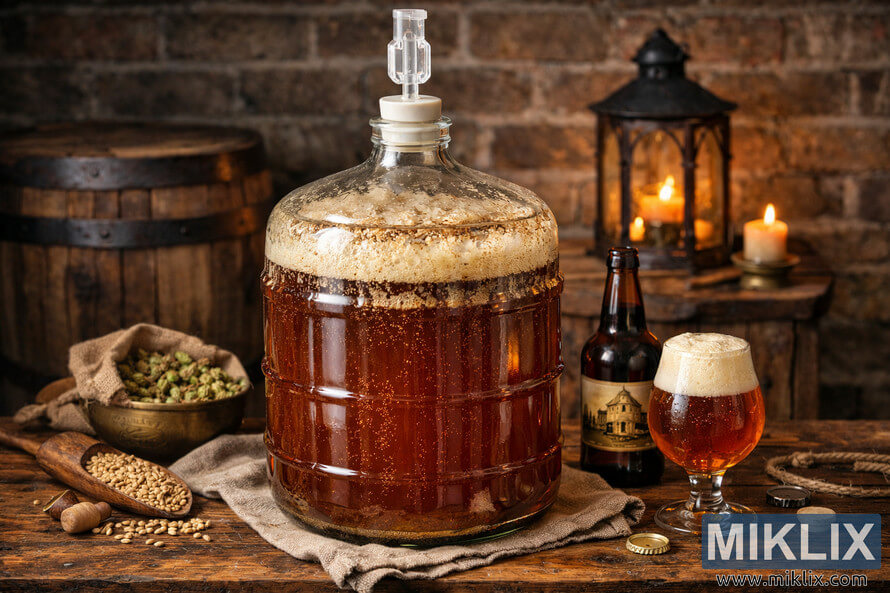
This article delves into the specifics of using Wyeast 1762 Belgian Abbey II for fermenting Belgian ales and strong styles. It's aimed at homebrewers seeking detailed, actionable advice. The yeast is sold as Wyeast 1762 Belgian Abbey II Yeast, commonly referred to as SKU WY1762.
Our review covers its typical applications, from Belgian blonde and dubbel to golden strong ales and American barleywine. We discuss the importance of proper storage and the expected performance of this yeast. We also highlight why brewers choose it for its ability to create complex, fruity, and spicy fermentations. Additionally, we provide practical details on buying, including shipping policies, satisfaction guarantees, and quick-ship options for brewers.
Key Takeaways
- Wyeast 1762 Belgian Abbey II is a liquid Belgian ale yeast favored for fruity esters and spicy phenolics.
- The product appears in retail channels as Wyeast WY1762, often priced around $13.99 and available for prompt shipment.
- This strain suits Belgian blonde, dubbel, tripel, and other strong ales that benefit from complex fermentation character.
- Homebrewers should consider starter size, storage on arrival, and shipping conditions to preserve viability.
- The following sections detail specs, starter guidelines, temperature control, and recipe tips for best results fermenting Belgian ales with Wyeast 1762 Belgian Abbey II.
Overview of Wyeast 1762 Belgian Abbey Style Ale II Yeast
Wyeast 1762 is a sought-after liquid culture for homebrewers and professionals aiming at crafting rich, complex Belgian and strong ales. It is sold under SKU WY1762, accompanied by Q&A, customer reviews, and suggested accessories. This strain's versatility and performance in high-gravity beers make it a favorite among brewers.
The Wyeast background is rooted in a long history of branded liquid yeast offerings, backed by practical retailer support. The WY1762 origin is evident from its SKU listings at major homebrew shops and packaging that includes starter recommendations and shipping options. This makes it easy to source and pair with yeast starter gear.
Origin and brand background
This strain is featured in Wyeast catalogs as a Belgian-style, high-tolerance yeast with a solid support network. Retail listings often include customer reviews and Q&A, aiding brewers in deciding when to use WY1762 for strong ales and Belgian blonds. The brand connection reassures brewers about quality and product handling.
Typical beer styles and signature characteristics
Wyeast 1762 is suitable for Belgian Blonde, Belgian Dark Strong, Belgian Golden Strong, and robust ales like Biere de Garde and Russian Imperial Stout. It is known for fruity esters, spicy phenolics, and its ability to ferment complex, high-SG worts while preserving flavor depth and clarity.
Key factual specs
- Yeast attenuation: 73–77% on typical worts, which helps predict final gravity and perceived dryness in strong beers.
- Flocculation: medium, allowing a balance between settling and retained mouthfeel.
- Alcohol tolerance: up to 12% ABV, suitable for high-ABV Belgian and specialty ales.
- Yeast cell count: typically quoted as 100 billion cells per pack, useful when planning starters and pitch rates.
- Recommended fermentation temperature range: 65–75 °F, which offers control over ester and phenol development.
These Belgian Abbey yeast specs provide brewers with clear targets for starter size, pitch rate, and temperature control. Knowing yeast attenuation and cell count helps calculate expected final gravity and conditioning timeline.
Klik utawa tutul gambar kanggo informasi luwih lengkap lan resolusi sing luwih dhuwur.
Why Choose Wyeast 1762 for Belgian and Strong Ales
Wyeast 1762 is a top choice for brewers aiming for complex fruit and spice profiles without sacrificing clarity. It offers a distinct flavor profile, characterized by noticeable pear and apple esters. Additionally, it provides a clove-like spice from its phenolics. This yeast is ideal for those looking to balance fruity esters with subtle phenolics in high-ABV beers.
The flavor profile of Wyeast 1762 is crucial for various styles. At warmer temperatures, it enhances Belgian ale yeast esters, enriching the aroma and mid-palate. At moderate temperatures, the phenolics are present but subtle, adding a gentle spicy note that complements candi sugar and rich malts.
Its performance across Belgian styles is influenced by gravity and temperature. For blond or golden strong ales, it offers lively fruit notes and a clean finish. In dubbel, it supports dark fruit flavors with balanced phenolic spice. Tripels benefit from its dry finish and high attenuation, maintaining a soft fruity character. Dark strong ales gain complexity without overpowering roasted or caramel malt notes.
- Attenuation and mouthfeel: moderate-to-high attenuation promotes dryness that highlights malt and sugar additions.
- Flocculation: medium flocculation keeps some yeast in suspension longer to sustain ester development.
- Alcohol tolerance: strong tolerance makes it suitable for beers pushing toward 12% ABV.
When comparing Belgian yeast strains, note the differences in ester intensity, phenolic spice, flocculation, and alcohol tolerance. Wyeast 1762 leans towards fruit-forward character with a steady phenolic presence and less aggressive flocculation. This versatility makes it a go-to for high-ABV beers requiring both estery complexity and structural spice.
Temperature control and starter size are key to shaping the outcome. Small adjustments can significantly alter the ester-to-phenolic balance. Brewers can fine-tune the Wyeast 1762 flavor profile to emphasize bold Belgian ale yeast esters or a more restrained phenolics expression, depending on the recipe and desired finish.
Klik utawa tutul gambar kanggo informasi luwih lengkap lan resolusi sing luwih dhuwur.
Preparing and Storing Liquid Yeast Packs
Proper handling is crucial for a successful fermentation. Follow simple steps to ensure the viability and preserve the strain character of Wyeast 1762. This will make all the difference in your brewing process.
Upon receiving Wyeast packs, inspect the package immediately. Note the delivery temperature and any visible damage to the pouch. Record the pack date and lot number from the label for future reference.
- Place packs in the refrigerator at 35–45°F as soon as possible.
- Keep them upright and avoid freezing or prolonged warm periods.
- Use within the manufacturer’s recommended window to maximize viability.
Receiving and cold storage best practices
Open the insulated mailer carefully and inspect contents. A properly packed shipment often includes an ice pack to maintain a cold chain during transit.
If the insulated mailer shows signs of extreme thaw or heat exposure, separate those packs and decide on use based on visible signs and dates. Contact customer service when in doubt about live yeast condition on arrival.
Shelf life and signs a pack is compromised
Yeast shelf life varies by supplier and storage conditions. Use packs before the expiration date for peak performance.
- Watch for swollen or leaking pouches.
- Reject packs with unusual odors or discolored slurry.
- Lower cell counts show as sluggish fermentation; consider a fresh pack or a larger starter.
Shipping and handling considerations (ice packs, insulated mailers)
Sellers often offer accessory options like an ice pack and insulated mailer to safeguard live cultures. These help limit temperature swings that reduce viability.
Plan orders with transit time in mind. Pre-order and freight notes can affect timing for live yeast deliveries. For long shipments, choose expedited options and verify that couriers handle biological products per retail guidance.
Klik utawa tutul gambar kanggo informasi luwih lengkap lan resolusi sing luwih dhuwur.
Building an Effective Yeast Starter for Wyeast 1762
Creating a healthy starter is crucial for Wyeast 1762 to ferment confidently and showcase its Belgian traits. Proper yeast preparation reduces lag time, minimizes the risk of stuck fermentation, and ensures the strain reaches expected attenuation in high-gravity beers.
Why a starter improves fermentation
A strong starter boosts viable cell count and stress tolerance for WY1762 starter yeast. This is particularly beneficial for Belgian and strong ales, as it promotes complete fermentation and enhances ester and phenolic development. Retailers often bundle Wyeast packs with starters and nutrients for this purpose.
Starter size guidelines
Start with the 100 billion cell count as a reference for yeast starter size. For average-strength ales, a 1–2 L starter might suffice. However, for higher original gravity beers or batches over 1.080, a larger starter or a stepped build is necessary to achieve the desired pitching rates.
- Low gravity (≤1.050): 1–2 L starter
- Medium gravity (1.051–1.070): 2–3 L starter or stepped 1 L → 2 L
- High gravity (≥1.071): 3 L+ or multiple step-ups to achieve cell counts beyond the pack’s 100 billion cells
Recommended tools and supplies
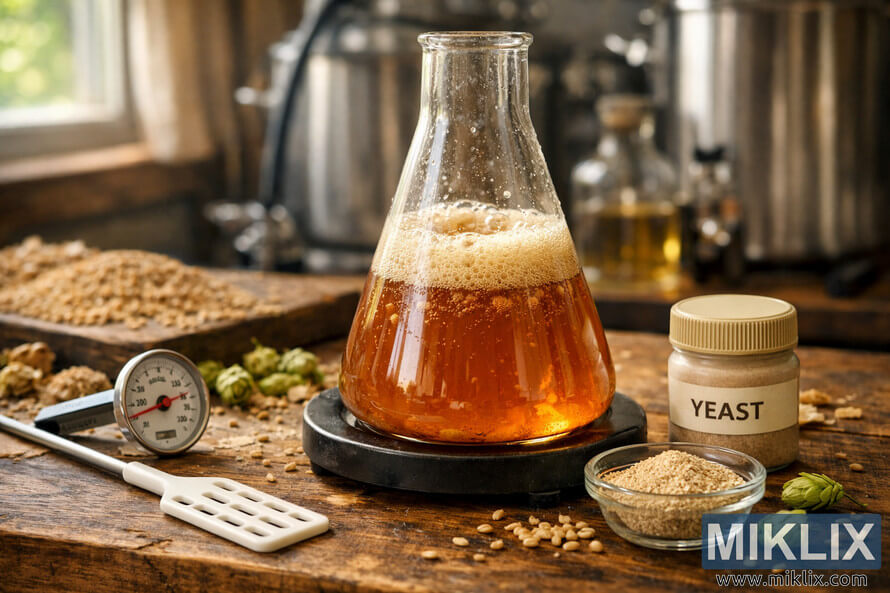
A yeast starter kit and a stir plate are essential for rapid growth and improved viability in a Wyeast 1762 starter. Stir plates ensure consistent oxygen and nutrient exchange, promoting vigorous and even propagation.
Canned wort is a convenient, sanitized option that reduces preparation time and variability. Many brewers prefer Propper Starter™ canned wort for its consistency when building WY1762 starter batches.
Practical tips for success
- Sanitize all starter vessels and caps thoroughly.
- Use a stir plate for the primary growth phase; it yields denser, healthier yeast than static starters.
- Consider yeast nutrient or Servomyces to feed early growth when using higher gravity starter volumes.
- Cool and decant most of the starter beer before pitching to avoid diluting the batch wort.
By following these steps and matching yeast starter size to your original gravity, WY1762 starter will reach the necessary cell counts. This ensures clean, reliable finishes and allows the strain to express its signature profile during fermentation.
Klik utawa tutul gambar kanggo informasi luwih lengkap lan resolusi sing luwih dhuwur.
Optimal Fermentation Temperature and Management
Temperature is key to achieving the yeast character you desire. Wyeast 1762 fermentation temp falls within the 65–75°F range suggested by the manufacturer. A cooler temperature, closer to 65°F, results in a cleaner profile with less esters and softer phenolics. On the other hand, warmer temperatures, near 75°F, enhance fruitiness and spicy phenolic notes typical of Belgian ales.
Controlling the fermenter temperature is crucial for flavor and fermentation speed management. Maintaining a steady 65–68°F ensures a restrained Belgian yeast temperature behavior. Allowing the fermenter to rest in the low 70s increases ester production and accentuates spicy character. Monitoring gravity and aroma is essential for deciding when to adjust.
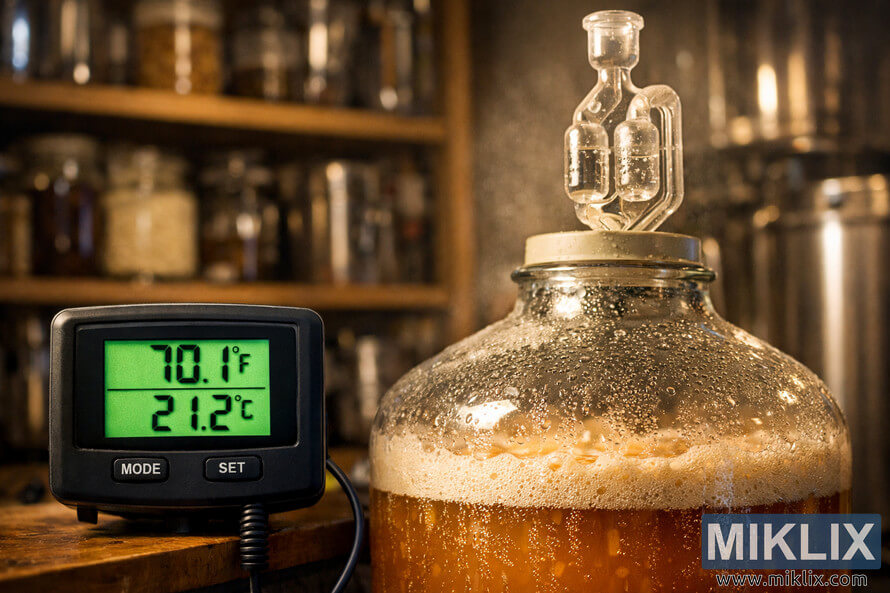
Effective homebrewing strategies significantly impact your results. Utilizing a dedicated fermentation chamber with a small heater and thermostat offers precise control. For those on a budget, building a swamp cooler with a digital thermometer is a cost-effective alternative. It's advisable to place a probe directly on the fermenter for more accurate readings rather than relying on ambient room temperatures.
- Target pitch and starter size to match gravity; healthy cell counts reduce stress and unwanted phenolics.
- Consider a controlled ramp: start in the mid-range and raise a few degrees during peak activity to help attenuation.
- Drop a few degrees after primary activity to encourage a cleaner finish without erasing desired esters.
Warm fermentation speeds up attenuation effects when yeast are healthy and well-pitched. Wyeast 1762 exhibits an attenuation window around 73–77%, with higher values more likely under warmer, vigorous conditions. Cooler finishes can pull perceived sweetness down and tidy up phenolic spice while preserving complexity.
Recording temperatures and final gravities for every batch is essential. This data helps correlate Belgian yeast temperature choices with fermenter temperature control methods and attenuation effects for future recipes.
Klik utawa tutul gambar kanggo informasi luwih lengkap lan resolusi sing luwih dhuwur.
Expected Fermentation Performance and Troubleshooting
Wyeast 1762 typically reaches attenuation levels between 73–77% under optimal conditions. Ensure proper pitching rates, adequate oxygenation, and controlled temperatures. Aim for a starter size that matches the batch gravity to achieve the necessary cell count. Ferment between 65–75°F to balance fruity esters and spicy phenolics, aiming for the target final gravity.
Common issues include sluggish or stopped fermentation, unexpected sweetness, or solvent-like off-flavors. Troubleshooting Belgian fermentation begins with basic checks. Verify gravity readings, confirm fermentation temperature, and smell for signs of infection or stressed yeast.
Employ these practical stuck fermentation fixes before considering more drastic measures.
- Rouse yeast by gently swirling the fermenter to resuspend settled cells.
- Raise temperature a few degrees toward the upper range to reactivate metabolism.
- Confirm initial oxygenation prior to pitching in future batches; avoid aerating once active fermentation has begun.
When these steps fail, consider yeast nutrients and repitching. High-ABV beers benefit from staged nutrient additions. Products like Fermaid K or Servomyces restore vital nitrogen and micronutrients. Follow the manufacturer's dosing instructions and add nutrients early in fermentation, not after long dormancy.
Decide on repitching or oxygenation based on activity and time. If gravity remains unchanged after gentle rousing and a warm day, prepare a fresh, active starter of a reliable strain and pitch. Oxygenate wort only before yeast pitching. For severe stalls, repitching with a healthy culture plus yeast nutrients offers the best chance to reach target FG without creating fusel off-flavors.
Keep detailed records of pitching rate, starter size, oxygenation method, and nutrient additions. Good logs facilitate easier troubleshooting Belgian fermentation and enhance consistency for strong ales fermented with Wyeast 1762.
Yeast Handling Techniques to Preserve Strain Character
Proper yeast handling is crucial for maintaining the distinctiveness and reliability of Wyeast 1762. Even minor adjustments in pitching rates, oxygen levels, and repitching practices can significantly alter the flavor and attenuation of your brews. Adhere to these guidelines to ensure the health of your yeast during the brewing of Belgian and strong ales.
The importance of pitching rates escalates with increasing gravity. For standard-strength Belgians, a single WY1762 pack or a modest starter is often sufficient. However, for high-ABV brews, a larger starter or multiple packs are necessary to boost the viable cell count. This approach helps in reducing lag and stress on the yeast culture.
- Estimate the required cells based on batch size and target gravity.
- As OG and target ABV increase, adjust the WY1762 pitching rate upward to maintain yeast health.
Pitching and high-ABV batches
Wyeast 1762 can handle ABVs up to about 12%, making it suitable for many strong Belgian styles. For brews aiming above 8%, it's advisable to use larger starters. A well-sized starter minimizes the risk of stuck fermentation and enhances ester balance.
Rouse, oxygenation, and gentle handling
Before pitching, oxygenate the wort to aid yeast in building sterols and cell walls. Refrain from adding oxygen once fermentation is underway. Gentle handling is essential to preserve viability and avoid off-flavors.
- Oxygenate to the recommended levels for your gravity before pitching.
- During early fermentation, consider rousing the yeast once to re-suspend it if activity slows.
- Avoid rough transfers and excessive splashing after active fermentation begins.
Reusing and harvesting yeast
Harvesting yeast from primary or secondary fermentation yields a usable slurry. Wyeast 1762 exhibits medium flocculation, allowing for sufficient yeast for repitching. Store the harvested yeast in the refrigerator and use it within a few generations to preserve strain character.
When repitching, verify yeast viability and create a starter if necessary. Limit successive repitches to prevent flavor and performance drift. Proper sanitation and cold storage are key to maintaining a clean, active culture.
Recipe Design Tips When Using Wyeast 1762
Wyeast 1762 is a yeast strain that rewards brewers who focus on its unique spicy phenolics and fruity esters. It's best to design recipes that allow the yeast's character to shine while providing enough malt backbone for higher ABV beers. Below are practical choices for grain, hops, and adjuncts to pair with this strain.
- Malt bill basics
- Begin with a Pilsner or Belgian pale base to keep the color light. This allows yeast-driven complexity to dominate. For a balanced Belgian malt bill, add modest amounts of Vienna or Munich for breadiness. Include one to two percent light crystal (10–20L) for subtle color and caramel note.
- For dubbel and darker strong ales, introduce aromatic malts like Special B or darker candi syrups. Keep total specialty malts low enough that the WY1762 attenuation (73–77%) can preserve dryness.
- Body management
- To raise alcohol without heavy body, use clear candi sugar or invert sugar. A candi sugar tripel recipe often uses 20–30% simple sugar to reach target ABV while maintaining a dry finish.
- Hop choices
- Choose restrained varieties so hops for Belgian ale support rather than mask esters. Saaz, Styrian Goldings, East Kent Goldings, and Hallertau are classic picks for bitterness and gentle aroma.
- Use hops sparingly in late additions if you want a light floral or spicy lift. For stronger aromatic lift, a single small whirlpool addition of a continental hop keeps balance with the yeast.
- Adjuncts and sugar techniques
- Adjuncts Belgian ales accept include candi sugar, inverted sugar, and light caramel syrups to push ABV while keeping body low. For a candi sugar tripel, stage sugar additions across active fermentation to minimize osmotic shock.
- When brewing very high ABV beers, consider step-feeding simple sugars and scheduling yeast nutrient additions to prevent stress. This helps Wyeast 1762 finish clean and reach its tolerance without harsh off-flavors.
- Simple recipe framework
- 90% Belgian pale or Pilsner, 5% Vienna, 3% light crystal, 2% special aromatic (or clear candi sugar up to 20–30% of fermentables for tripels).
- Hopping schedule
- Bittering to 25–35 IBU with noble or English/Continental hops, late additions for 5–10 IBU aroma, optional small whirlpool or dry hop for subtle lift.
- Fermentation note
- Pitch an appropriate starter and ferment in the mid-to-high range of the yeast’s profile to coax desired ester-phenolic balance.
These guidelines help you craft a recipe Wyeast 1762 will showcase. Thoughtful Belgian malt bill choices, measured hops for Belgian ale, and careful use of adjuncts Belgian ales welcome will deliver classic Belgian character with controlled body and strong ABV performance.
Packaging and Conditioning with Wyeast 1762
The choice of packaging method is crucial when using Wyeast 1762. This strain's medium flocculation and sustained activity make it suitable for both bottle conditioning and kegging. Consider clarity, timing, and how carbonation will impact esters and phenolics.
- Bottle conditioning vs kegging considerations
- Bottle conditioning can add depth and natural carbonation to Belgian ales over time. The yeast in the bottle continues to condition, softening hot alcohol notes in high-ABV beers. Kegging, on the other hand, offers precise control over CO2 levels and allows for quicker yeast drop for a clearer presentation.
- Practical tips
- For bottle conditioning, prime with dextrose or light candi sugar for predictable carbonation. When kegging, carbonate at serving temperatures or use force carbonation to achieve your target volumes while preserving aromatic lift from the yeast.
- Carbonation targets to showcase yeast profile
- Belgian carbonation levels vary by substyle. Aim for 3.0–3.5 volumes CO2 for tripels and golden ales to enhance fruity esters and create a lively mouthfeel. For dubbels and darker strong ales, target 2.3–2.8 volumes to balance malt richness and spicy phenolics.
- Measuring and adjusting
- Use a carbonation chart to match temperature and volumes. If bottle conditioning Wyeast 1762, choose priming amounts conservatively and allow extra conditioning time if your bottles are on the cool side.
- Aging windows for flavor development
- Aging strong ales rewards patience. High-ABV beers often show best after months of conditioning. Extended cell activity in bottle conditioning Wyeast 1762 can round harsh ethanol and meld complex sugars with yeast esters.
- Suggested timelines
- For beers around 8–10% ABV, plan 3–6 months of aging. For 10% and above, aging strong ales for 6–12 months produces smoother profiles and integrated flavors. Store bottles upright in a cool, dark place to minimize oxygen exposure during long rests.
When deciding between bottle conditioning and kegging, consider the beer's style, how you want the yeast to evolve, and your serving needs. Thoughtful packaging choices let Wyeast 1762 show its signature character while achieving the right Belgian carbonation levels and a satisfying final beer.
Tasting Notes and Review Criteria for Homebrewers
Track sensory impressions with a clear fermentation sensory checklist. Begin with a quick pour and note the aroma, look, and initial taste. Keep entries concise to compare batches effectively without losing detail.
When assessing aroma, use Belgian ale review criteria. List fruity esters like banana, pear, or stone fruit. Note spicy phenolics such as clove and pepper. Record any solvent or sulfur notes that suggest stress or off-fermentation.
Evaluate body and mouthfeel next. Wyeast 1762 tasting notes often show a medium body and moderate carbonation. Check foam stability and coating. Note perceived sweetness versus dryness to see how attenuation shapes balance.
- Aroma intensity and clarity
- Primary flavors and ester/phenolic balance
- Perceived sweetness, dryness, and alcohol warmth
- Mouthfeel, carbonation, and head retention
- Finish length and aftertaste
Follow a simple scoring grid to evaluate Belgian yeast performance. Rate each item on a 1–5 scale to standardize your notes. This helps you evaluate Belgian yeast across different recipes and temperatures.
Record brewing variables alongside tasting notes. Include pitch rate, starter size, fermentation temperature, and original gravity. These entries let you refine pitch and temp to nudge esters or phenolics in future brews.
- Fill out the fermentation sensory checklist within 24–72 hours of packaging.
- Retaste after two weeks and again at one month for higher ABV beers.
- Compare scores to identify trends and reproducible effects.
When writing Wyeast 1762 tasting notes, mention how the strain influences perceived sweetness and dryness. Note if higher temps push esters and mask dryness. Record whether higher attenuation yields a cleaner, drier finish or leaves residual richness.
Use these observations to refine recipes and process. Small changes to mash profile, candi sugar use, or conditioning time can shift balance. Keep consistent records so you can reproduce successes and avoid repeat problems.
Where to Buy and Cost Considerations in the United States
Finding Wyeast 1762 in the U.S. is straightforward when you know what to check. Homebrew retailers and regional shops list SKU WY1762 with customer reviews and shipping notes. Many stores show an example WY1762 price around $13.99 and indicate stock levels or pre-order status.
Before you complete an order, keep shipping rules in mind. Live packs require careful handling, so liquid yeast shipping often uses insulated mailers and ice packs. Some shops set free shipping thresholds at $79 or $99. Other listings may limit certain items to freight-only or require in-store pickup.
- Retail price example: WY1762 price ≈ $13.99 per pack.
- Stock notes: in-stock for quick shipment or available for pre-order.
- Shipping: check for insulated mailers and same-day packing to reduce warm transit time.
Consider accessories when you place your order. A small starter kit and yeast nutrient will help fermentation start strong. Insulated mailers and ice packs protect viability during transit. Buying these items at the same time saves on separate shipping fees.
- Starter kit options: Yeast Starter Kit 2000 mL for making a healthy build-up.
- Nutrient choices: Servomyces or similar nutrient capsules to support fermentation.
- Packaging: Ice Pack & Insulated Mailer or Large Ice & Insulated Mailer for warm months.
Compare total cost before checkout. Add WY1762 price, items like Propper Starter canned wort, and yeast accessories to see if you reach a free shipping threshold. Consider local pickup if shipping windows or liquid yeast shipping conditions make transit risky. Wyeast distribution in the U.S. keeps this strain widely available, but planning reduces the chance of delayed or compromised packs.
Safety, Legal, and Sanitation Practices
Keeping your brewing area clean is crucial for flavor and health. When handling Wyeast 1762 or any liquid culture, follow basic yeast sanitation steps. Sanitize starter flasks, stir bars, transfer lines, and work surfaces before opening a pack. Store live yeast cold and avoid cross-contamination by using single-use gloves or dedicated tools for starters.
For starters, use a simple checklist: sanitize glassware, boil canned wort or use sterile media, cool to the target pitch temperature, and pitch in a sanitized environment. A magnetic stir plate or a sanitized shaker shortens lag time and reduces contamination risk. Keep records of each starter: strain, pitch date, batch gravity, and any sanitation steps you took.
Some strains can tolerate high ABV. When brewing strong Belgian ales, be aware of yeast limits and how higher alcohol affects flavor and stability. Practice safe brewing practices by labeling high-ABV batches clearly and storing them out of reach of minors. Drink responsibly and advise others to do the same.
Brewing legal considerations matter if you plan to sell or enter competitions. Federal and state laws differ on homebrew sale and distribution. For contests or commercial steps, maintain thorough recordkeeping brewing competitions require: strain ID, fermentation temps, original and final gravity, and sanitation procedures. Judges and inspectors expect clear, accurate logs.
- Sanitation essentials: use iodophor or Star San on contact surfaces and rinse-free methods where possible.
- Starter handling: minimize air exposure and work quickly to reduce contamination chances.
- Labeling: include ABV, pitch date, and safety warnings on bottles or kegs for distribution.
- Records: store batch sheets digitally and keep backups for competitions or regulatory reviews.
Good habits cut spoilage and legal headaches. A consistent sanitation routine plus clear recordkeeping brewing competitions and sales will keep your beers clean and your brewing legal considerations simple. This approach protects your work and helps you reproduce winning batches.
Conclusion
Wyeast 1762 emerges as a top choice for U.S. homebrewers aiming to brew Belgian-style and strong ales. It boasts a 100 billion cell count per pack, 73–77% attenuation, and medium flocculation. Its 65–75°F fermentation window ensures the fruity esters and spicy phenolics brewers seek, provided they handle it correctly.
Practical preparation is key: creating a suitable starter, managing fermentation temperature, and using a starter kit or nutrients are crucial. Retailers often sell WY1762 near a $13.99 MSRP, paired with starters, insulated mailers, and yeast nutrients. This combination ensures viability and fast, reliable fermentations.
This Belgian Abbey ale yeast summary: when paired with thoughtful recipe design and careful handling, Wyeast 1762 offers versatility and consistent character. It suits brewers aiming for balance, complexity, and predictable attenuation. For those who value good technique, Wyeast 1762 is a practical, performance-oriented choice.
FAQ
What is Wyeast 1762 Belgian Abbey II and what beers is it best for?
Wyeast 1762 Belgian Abbey II is a liquid yeast strain from Wyeast (SKU WY1762). It's versatile, suitable for Belgian Blonde, Belgian Golden Strong, and Belgian Dark Strong ales. It's also great for Belgian Specialty Ales, Biere de Garde, American Barleywine, Russian Imperial Stout, and Strong Scotch Ale. This yeast strain emphasizes fruity esters and spicy phenolics, ideal for complex Belgian-style beers.
What are the key specifications for Wyeast 1762?
The specs include 73–77% attenuation, medium flocculation, and a fermentation range of 65–75°F. It can tolerate up to 12% ABV and comes with about 100 billion cells per pack. These details help in determining the right amount of yeast to use and the beer's dryness.
How should I receive and store a Wyeast 1762 pack?
Keep the yeast cool. It comes in insulated mailers with ice packs. Refrigerate it immediately at 35–45°F. Avoid temperature changes and use it within the recommended shelf life to maintain viability.
How long does a liquid Wyeast 1762 pack remain viable and how can I tell if it’s bad?
Viability depends on storage and age. Properly stored packs can last weeks. Signs of spoilage include leaking, swelling, off smells, discolored slurry, or no activity after a starter. A small test starter can confirm its health.
Do I need a starter for Wyeast 1762 and how big should it be?
A starter is beneficial for most beers. For high-gravity ales, a larger starter is necessary. Size your starter based on the beer's OG and target pitching rate. A 2L–3L starter or multiple packs are recommended for beers near the strain's 12% tolerance.
What starter tools and supplies pair well with Wyeast 1762?
Useful items include a 2000 mL yeast starter kit and a stir plate. Propper Starter canned wort and yeast nutrient like Servomyces are also helpful. Insulated mailers and ice packs protect the yeast during shipping.
What fermentation temperatures should I use to get the desired Belgian character?
Ferment between 65–75°F. Lower temperatures result in cleaner flavors, while warmer temperatures enhance fruity esters and spicy phenolics. Warmer ferments tend to reach higher attenuation levels.
How can I control temperature in a home brewery?
Use a dedicated fermentation chamber or a temperature-controlled fridge. Alternatively, employ a swamp cooler with a controller, place fermenters in an insulated area, or monitor ambient temperatures closely. Consistent temperature is crucial for balanced flavors.
What causes stuck or sluggish fermentation with 1762 and how do I fix it?
Causes include insufficient viable cells, poor oxygenation, high gravity without staged feeding, low nutrients, or cold temperatures. Rousing the yeast, warming the fermenter, oxygenating the wort, adding yeast nutrient, or repitching can help.
How much alcohol can Wyeast 1762 tolerate and how should I pitch for high-ABV beers?
It tolerates up to 12% ABV. For high-ABV beers, increase pitching rates with larger starters or multiple packs. Ensure good oxygenation and consider staged nutrient additions to support yeast health.
Can I harvest and reuse yeast from Wyeast 1762?
Yes. Its medium flocculation makes it suitable for harvesting. Store the slurry refrigerated and reuse within a few generations. Sanitize equipment, track generations, and build a fresh starter before repitching.
How should I design a recipe when using Wyeast 1762?
Start with a clean base like Pilsner malt and add Munich, Vienna, or light caramel malts for depth. For darker ales, use richer malts. Keep bitterness moderate and use noble or English/Continental hops. Consider clear candi or invert sugar to boost ABV without heavy body. Step-feeding and adequate nutrients are key for high-ABV beers.
Is Wyeast 1762 suitable for bottle conditioning and kegging?
Yes. Its medium flocculation supports both bottle conditioning and kegging. Bottle conditioning can enhance complexity in high-ABV beers but may require longer conditioning times. Typical carbonation targets are 3.0–3.5 volumes CO2 for tripels/golden ales and 2.3–2.8 volumes for dubbels and dark strong ales.
How long should I age beers fermented with 1762?
Aging time depends on the beer's strength. High-ABV Belgian and strong ales benefit from several months to a year of aging. Lower-ABV Belgian styles may be ready sooner but still improve with short conditioning and proper carbonation.
What sensory characteristics should I expect from Wyeast 1762?
Expect fruity esters like banana, pear, or stone fruit and spicy phenolics like clove and pepper when fermented warmer. The strain's attenuation produces a dry finish. Medium flocculation affects body and foam stability. Record aroma, flavor balance, mouthfeel, and finish to refine future batches.
Where can I buy Wyeast 1762 in the United States and what does it cost?
It's available through major U.S. homebrew retailers and local shops. Retail listings show SKU WY1762 and prices around $13.99 per pack. Many sellers offer free shipping thresholds (commonly $79–$99), and accessories like starter kits, canned wort, and insulated mailers are sold alongside live yeast.
What shipping and handling should I expect when ordering live Wyeast 1762?
Retailers ship live yeast in insulated mailers with ice packs to protect viability. Some items may be freight-only or available for pre-order. Consider shipping speed, insulated packaging options, and whether in-store pickup is available to avoid heat exposure in transit.
What sanitation and recordkeeping practices are recommended when using Wyeast 1762?
Sanitize all starter flasks, stir bars, transfer lines, and packaging gear. Maintain cold storage for live packs and harvested slurry. Keep records of pitch date, strain (WY1762), OG, fermentation temps, starter size, and any nutrient or oxygenation steps. These records are useful for competitions, recipe refinement, or commercial sales.
Are there common accessory purchases to pair with Wyeast 1762?
Useful items include a 2000 mL yeast starter kit (~$27.49), Propper Starter canned wort (~$4.99), Servomyces yeast nutrient (~$11.99), and insulated mailers with ice packs ($4.99–$8.99). A stir plate and temperature-control gear are also recommended for consistent results.
Wacan Salajengipun
Yen sampeyan seneng karo kiriman iki, sampeyan bisa uga seneng saran iki:
- Fermentasi Bir karo Bulldog B34 German Lager Yeast
- Fermentasi Bir karo White Labs WLP833 German Bock Lager Ragi
- Fermentasi Bir karo Wyeast 3763 Roeselare Ale Blend