
Gambar: Quince Tree with Visible Pest Infestation and Disease Damage
Diterbitake:
Dianyari pungkasan: 5 Maret 2026 ing 21:48:11 UTC
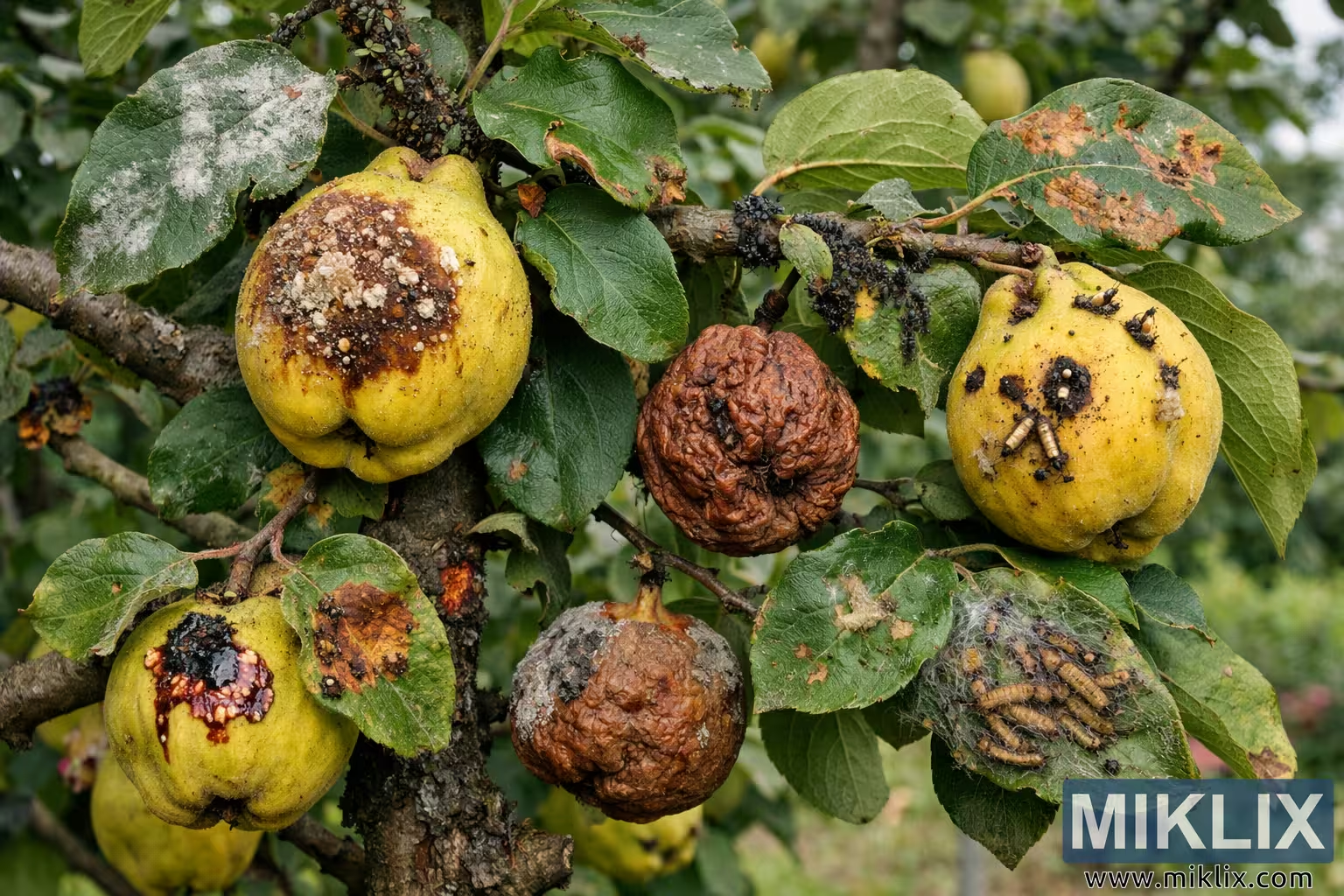
High-resolution landscape image of a quince tree displaying multiple pest infestations and disease symptoms, including fungal rot, insect larvae, aphids, and damaged foliage.
Quince Tree with Visible Pest Infestation and Disease Damage
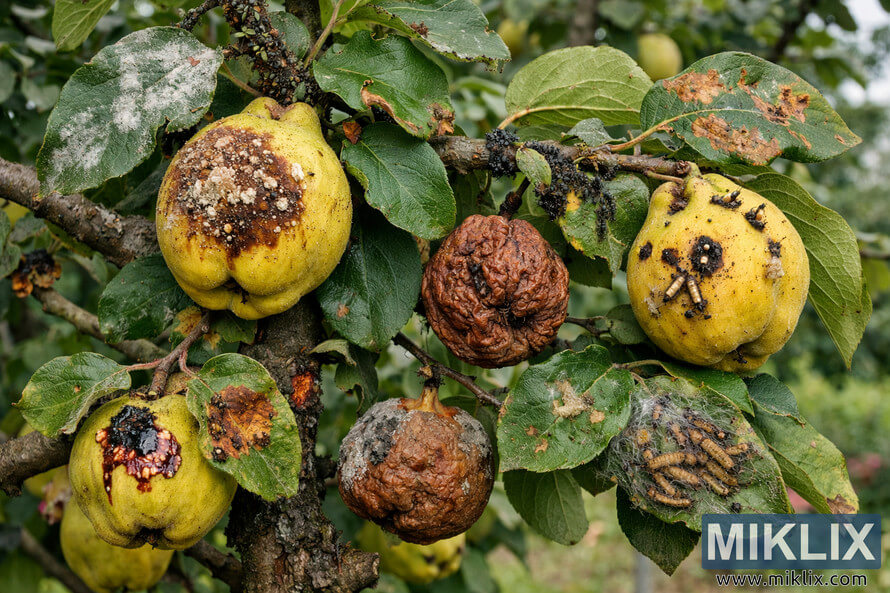
Versi sing kasedhiya saka gambar iki
File gambar sing kasedhiya kanggo diundhuh ing ngisor iki kurang dikompres lan resolusine luwih dhuwur - lan akibate, kualitase luwih dhuwur - tinimbang gambar sing disemat ing artikel lan kaca ing situs web iki, sing luwih dioptimalake kanggo ukuran file supaya bisa ngurangi konsumsi bandwidth.
Ukuran biasa (1,536 x 1,024)
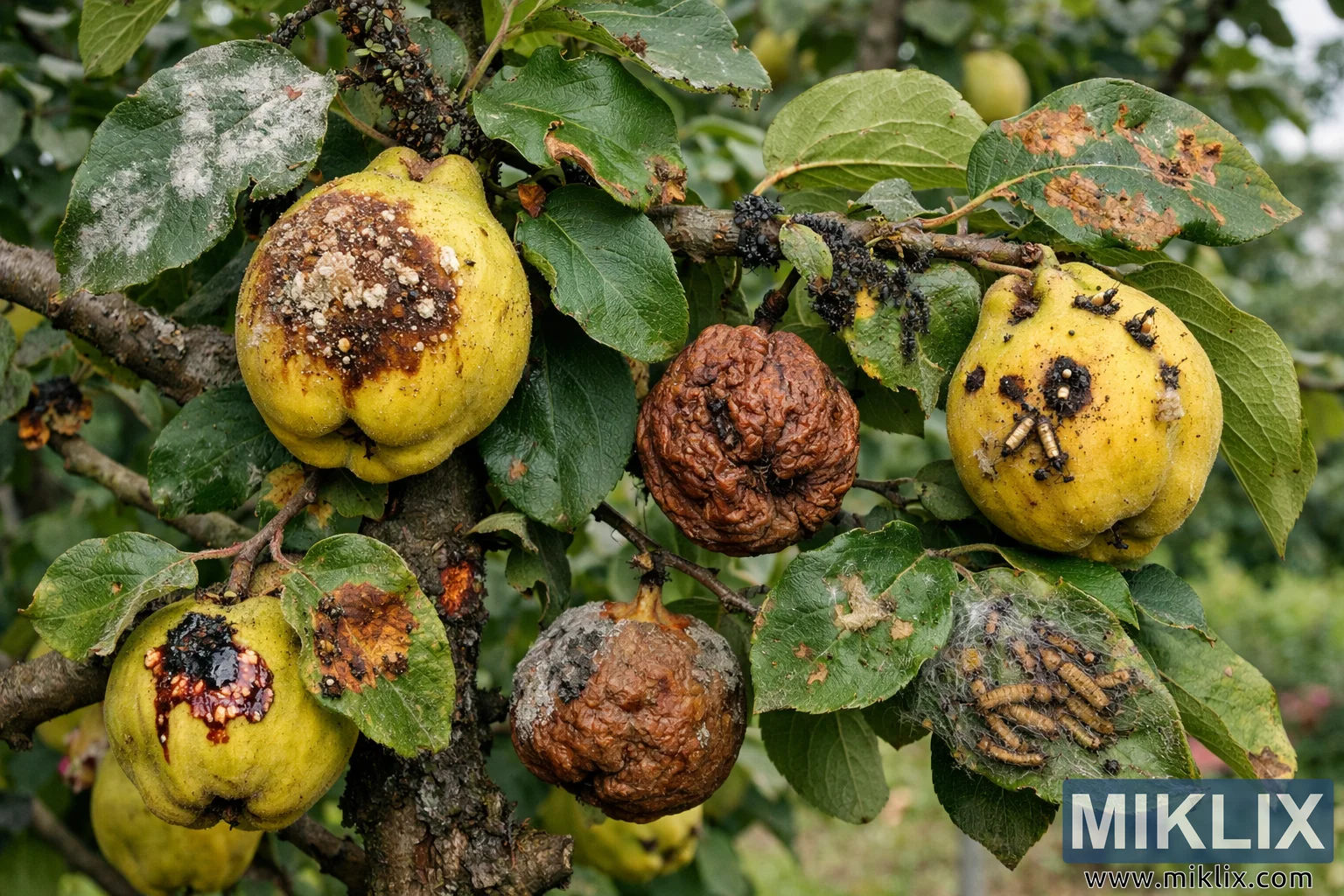
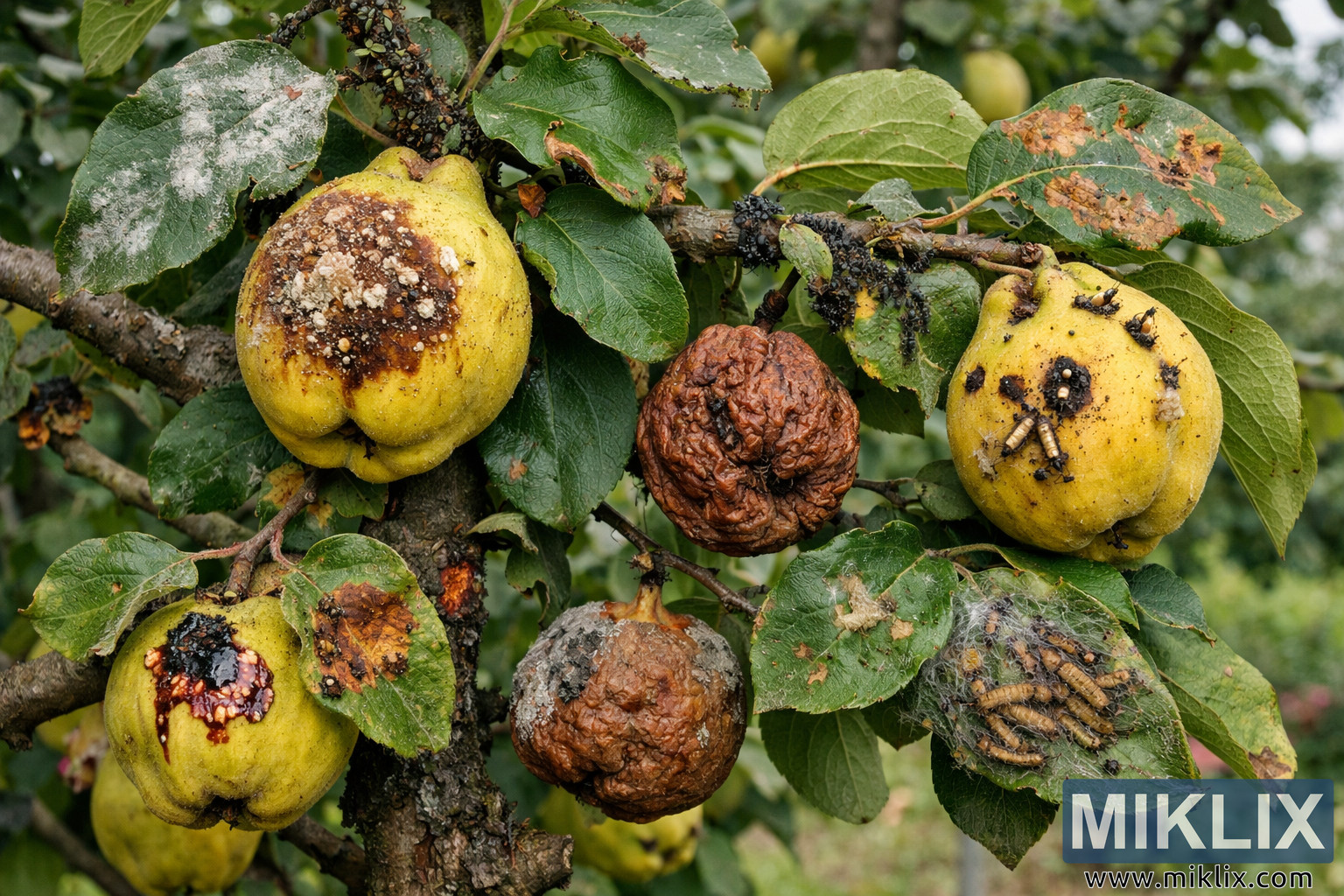
Ukuran gedhe (3,072 x 2,048)
Ukuran gedhe banget (4,608 x 3,072)
Ukuran ekstra gedhe (6,144 x 4,096)
Ukuran gedhe banget lucu (1,048,576 x 699,051)
- Isih upload... ;-)
Katrangan gambar
This high-resolution landscape photograph captures a detailed close-up view of a quince tree branch heavily affected by a combination of pest infestations and plant diseases. Several ripe yellow quinces hang from the woody branch, each displaying distinct symptoms of decline and decay. The fruits vary in condition: some appear partially healthy with smooth yellow skin, while others are visibly compromised by dark, sunken lesions, cracked surfaces, and advanced rot. One fruit in the center is severely shriveled and brown, its surface deeply wrinkled, indicating prolonged fungal infection and dehydration. Another fruit shows a large, dark necrotic patch with crusted, whitish fungal growth clustered across the damaged area.
Clusters of small insects are visible along the stems and on the undersides of leaves, suggesting aphid infestation. In certain areas, blackened residues and sooty mold-like coatings appear along the branch, hinting at honeydew accumulation and secondary fungal colonization. On the right side of the image, a leaf is covered with webbing that encloses multiple pale larvae, likely caterpillars feeding on leaf tissue. The larvae are grouped together within a thin silken mesh, actively consuming the green surface and leaving skeletonized patches behind.
The leaves themselves show multiple forms of damage: irregular brown spots, yellowing margins, curling edges, and small perforations consistent with insect feeding. Some leaves exhibit rust-colored blotches and early signs of chlorosis, while others are partially desiccated. The bark of the branch appears rough and slightly cracked, with darkened areas that may indicate canker formation or secondary infection at wound sites.
The background is softly blurred, providing a natural garden setting with muted green tones that contrast against the sharply focused diseased fruits and foliage in the foreground. Natural daylight illuminates the textures vividly, highlighting the contrast between healthy plant tissue and affected areas. The composition emphasizes the diversity of symptoms present on a single quince tree, illustrating how multiple biotic stress factors can coexist simultaneously. The image serves as a comprehensive visual study of plant pathology and orchard health challenges, documenting the combined impact of fungal pathogens, insect pests, and environmental stress on fruit-bearing trees.
Gambar kasebut ana hubungane karo: Complete Guide to Growing Your Own Quince Trees