
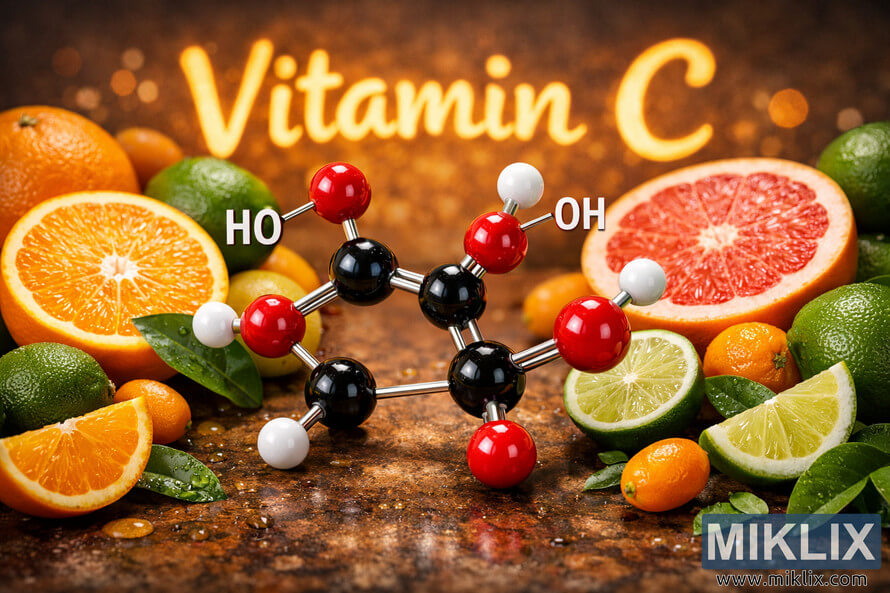
Gambar: Vitamin C Molecular Structure with Citrus Fruits in Vibrant Landscape Composition
Diterbitake:
Dianyari pungkasan: 16 Juli 2026 ing 20:45:32 UTC
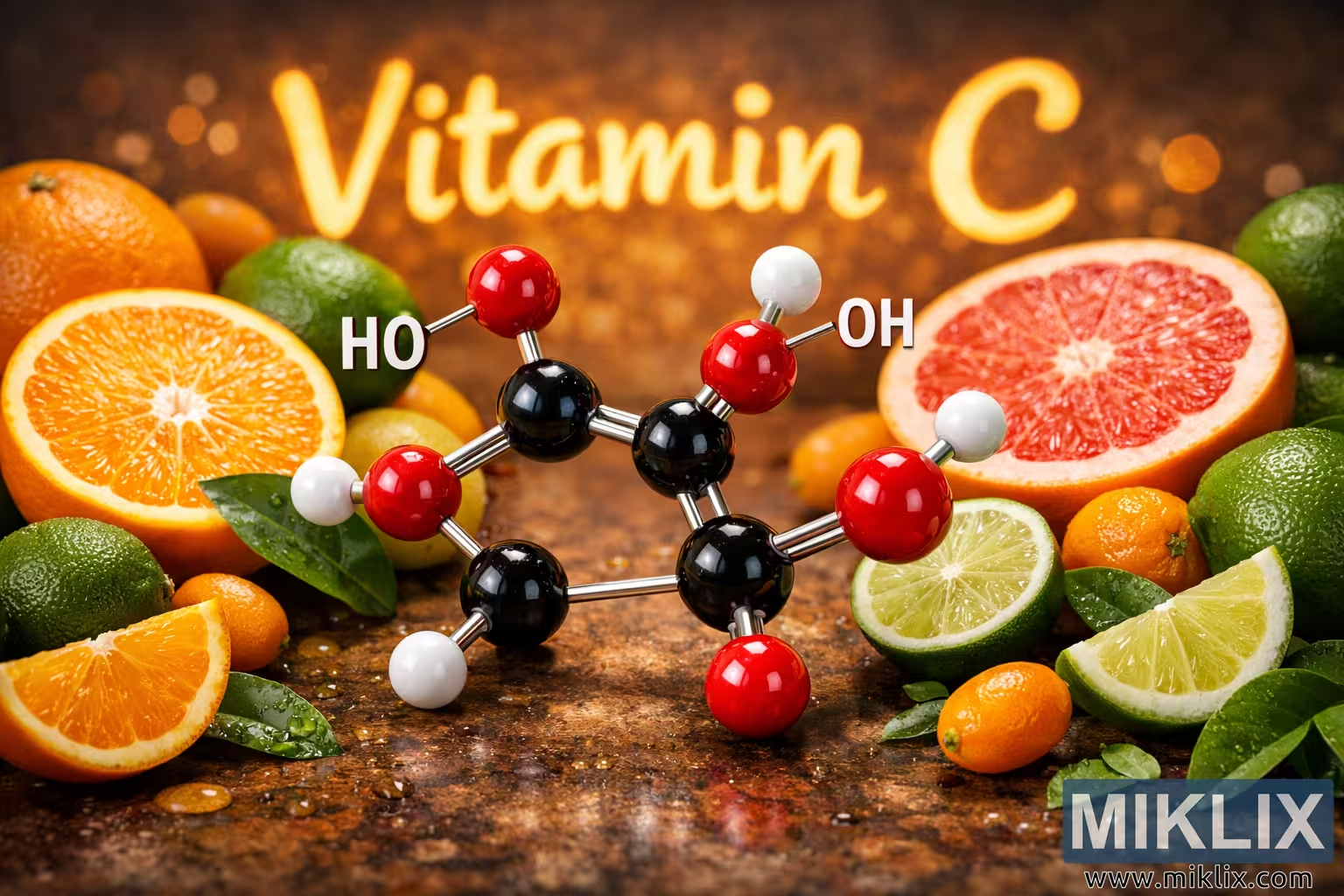
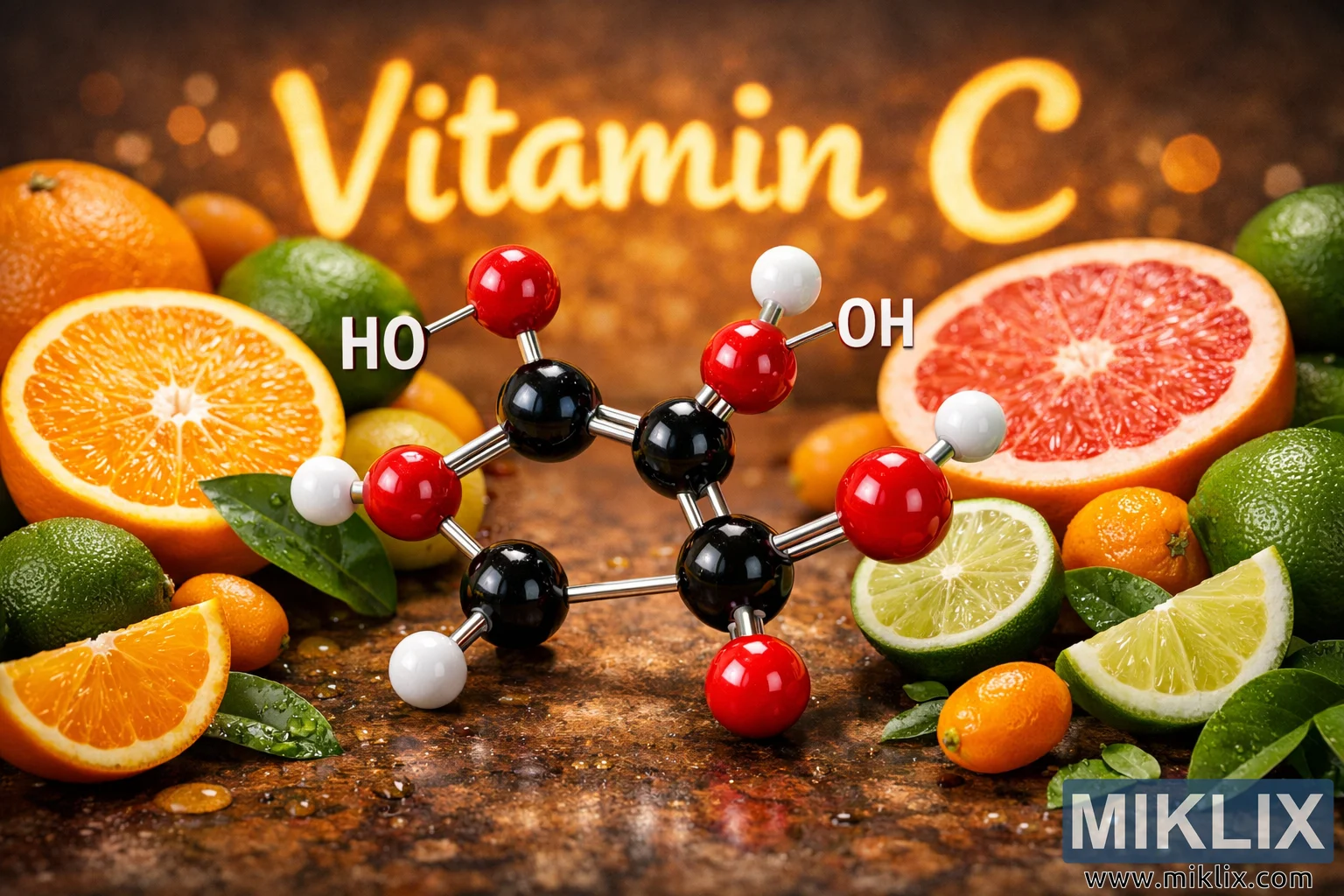
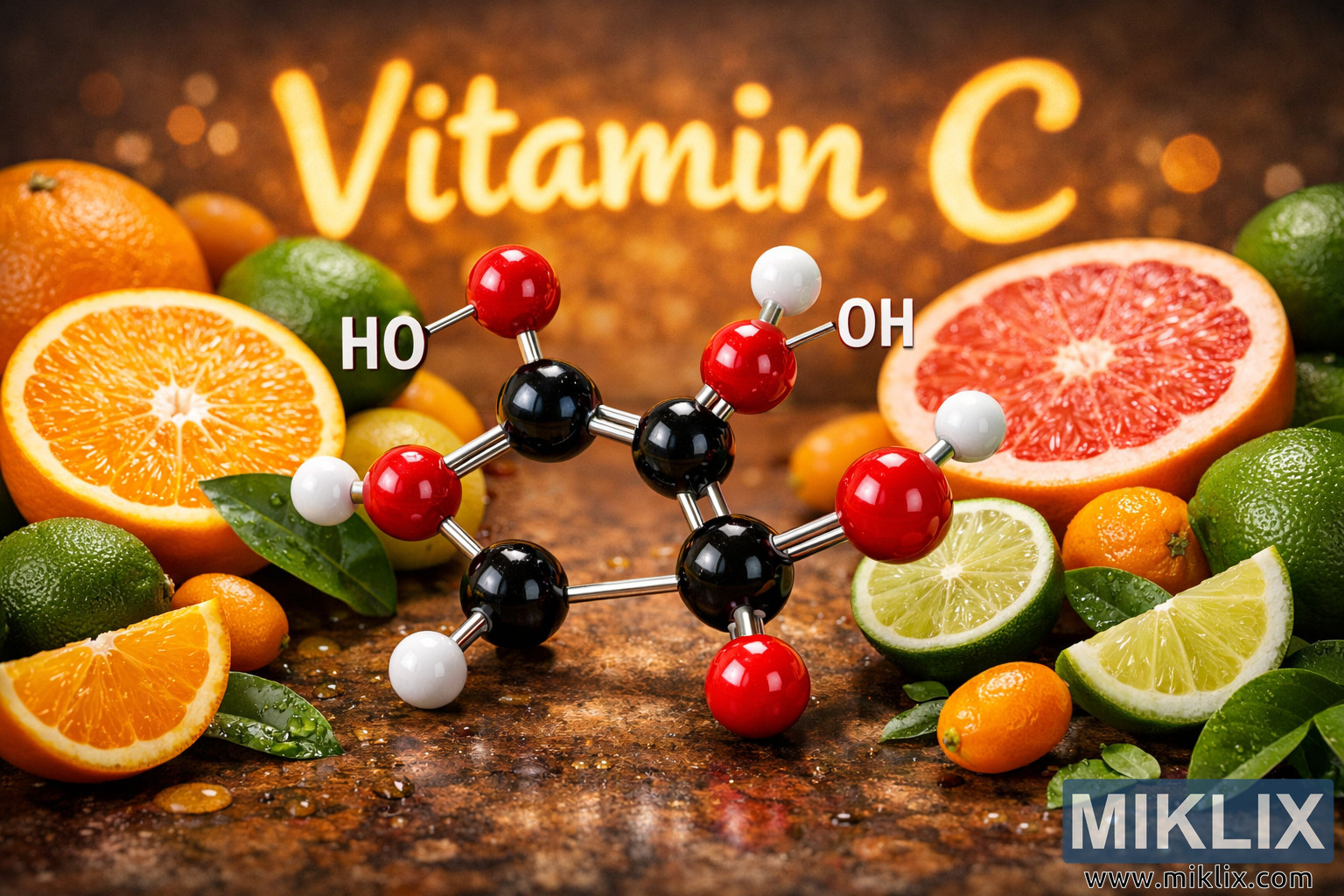
A vibrant landscape image featuring the molecular structure of Vitamin C surrounded by an assortment of fresh citrus fruits. The detailed 3D model of ascorbic acid is color-coded and labeled, while oranges, lemons, limes, tangerines, grapefruit, kumquats, and green leaves create a rich, fresh composition. Glowing "Vitamin C" text in the blurred background reinforces the theme of health, energy, and nutrition.
Vitamin C Molecular Structure with Citrus Fruits in Vibrant Landscape Composition
Versi sing kasedhiya saka gambar iki
File gambar sing kasedhiya kanggo diundhuh ing ngisor iki kurang dikompres lan resolusine luwih dhuwur - lan akibate, kualitase luwih dhuwur - tinimbang gambar sing disemat ing artikel lan kaca ing situs web iki, sing luwih dioptimalake kanggo ukuran file supaya bisa ngurangi konsumsi bandwidth.
Ukuran biasa (1,536 x 1,024)
Ukuran gedhe (3,072 x 2,048)
Ukuran gedhe banget (4,608 x 3,072)
Ukuran ekstra gedhe (6,144 x 4,096)
Ukuran gedhe banget lucu (1,048,576 x 699,051)
- Isih upload... ;-)
Katrangan gambar
This high-resolution landscape image presents a visually rich and scientifically inspired composition centered around the molecular structure of Vitamin C, also known as ascorbic acid, surrounded by an abundant assortment of fresh citrus fruits. The scene is carefully arranged on a smooth, neutral surface that subtly reflects light, giving the entire image a polished, almost studio-like quality.
At the heart of the composition stands a detailed 3D molecular model of Vitamin C. The model is constructed from glossy spheres connected by thin metallic rods that represent the bonds between atoms. The spheres are color-coded to distinguish the different elements: black spheres symbolize carbon atoms, red spheres represent oxygen atoms, and white spheres indicate hydrogen atoms. These spheres are arranged in a precise configuration that reflects the actual chemical structure of ascorbic acid, with the rods forming a network of single and double bonds that curve and angle through space.
Several parts of the molecular model are labeled to highlight key functional groups. Small, clean labels such as "HO" and "OH" are attached near specific red and white spheres, indicating hydroxyl groups that are characteristic of Vitamin C’s structure. One red sphere is shown double-bonded to a black sphere, representing a carbonyl oxygen, while another red sphere is connected to a black sphere and a white sphere, forming an "OH" group. These labels are subtle yet legible, adding an educational dimension to the image without overwhelming the visual harmony. The metallic rods connecting the spheres catch the light, creating tiny specular highlights that emphasize the three-dimensional nature of the model.
Surrounding this central molecular structure is a lush arrangement of citrus fruits that visually reinforces the association between Vitamin C and citrus. On the left side of the image, a halved orange is prominently displayed, its bright, juicy interior facing the viewer. The segments of the orange are clearly defined, with tiny juice vesicles glistening under the light. Nearby, whole and sliced lemons add a vibrant yellow hue, their textured rinds and pale, translucent flesh contributing to the sense of freshness. Limes, with their deep green skins and light green interiors, are interspersed among the lemons and oranges, creating a dynamic interplay of warm and cool tones. Small tangerines, some whole and some partially peeled, introduce a softer orange color and a slightly different texture, with their looser, more delicate skin.
On the right side of the image, the citrus variety continues. A halved grapefruit with a rich, reddish-pink interior draws attention with its bold color contrast against the surrounding fruits. The grapefruit’s segments are slightly larger and more pronounced than those of the orange, and the central pith is visible, adding structural detail. Around the grapefruit, whole and sliced limes are arranged, along with small, oval-shaped kumquats that bring a deeper orange tone and a playful, miniature scale to the composition. Scattered among the fruits are fresh green leaves, likely from citrus trees, which introduce organic shapes and a natural, leafy texture that softens the overall arrangement.
The foreground of the image features additional citrus elements that guide the viewer’s eye toward the molecular model. An orange slice lies near the lower left corner, its curved edge echoing the round shapes of the spheres in the molecular structure. Lime wedges are placed to the right, their triangular forms and bright interiors adding visual rhythm and variety. Small kumquats are dotted around the base of the molecular model, some resting against the metallic rods, subtly linking the scientific centerpiece with the natural fruits. Tiny droplets of water are visible on the surfaces of many of the fruits, catching the light and suggesting that they are freshly washed or misted, enhancing the impression of freshness and vitality.
In the background, slightly out of focus, the words "Vitamin C" appear in glowing yellow-orange text. The lettering seems to float against a warm, blurred backdrop, with soft bokeh light effects creating circular highlights that echo the spherical shapes of both the molecular model and the citrus fruits. The glow of the text reinforces the theme of energy, health, and brightness associated with Vitamin C, while the blurred background ensures that the primary focus remains on the molecular structure and the fruits in the foreground. The color of the text harmonizes with the oranges and grapefruits, tying the scientific and natural elements together in a cohesive visual narrative.
The lighting in the image is well-balanced and vibrant, with a gentle directional light that appears to come from slightly above and in front of the scene. This lighting creates soft shadows beneath the molecular model and the fruits, grounding them on the surface and adding depth. Highlights on the glossy spheres of the molecular model and the moist surfaces of the fruits give the image a lively, almost tactile quality. The overall color palette is warm and inviting, dominated by oranges, yellows, and greens, with touches of red from the grapefruit and subtle metallic tones from the rods of the molecular structure.
The composition is carefully arranged to maintain visual balance across the landscape orientation. The molecular model occupies the central region, acting as a focal point, while the fruits are distributed around it in a way that feels abundant but not cluttered. The left and right sides mirror each other in terms of color and density, with the halved orange and grapefruit serving as anchor points. The green leaves and lime wedges create diagonal lines that lead the eye toward the center, and the glowing "Vitamin C" text in the background provides a gentle visual anchor in the upper portion of the frame.
Overall, the image successfully combines scientific representation with natural beauty. The precise, geometric arrangement of the molecular model contrasts with the organic shapes and textures of the citrus fruits, yet the shared theme of Vitamin C unites them. The viewer is invited to appreciate both the chemical complexity of ascorbic acid and the sensory appeal of the fruits that are commonly associated with it. The result is a dynamic, educational, and aesthetically pleasing landscape image that celebrates health, freshness, and the fascinating intersection of science and nature.
Gambar kasebut ana hubungane karo: Health Benefits of Chives: Nature's Nutritional Powerhouse