
Gambar: Okra Nutritional Composition Infographic
Diterbitake:
Dianyari pungkasan: 30 Juli 2026 ing 18:38:13 UTC
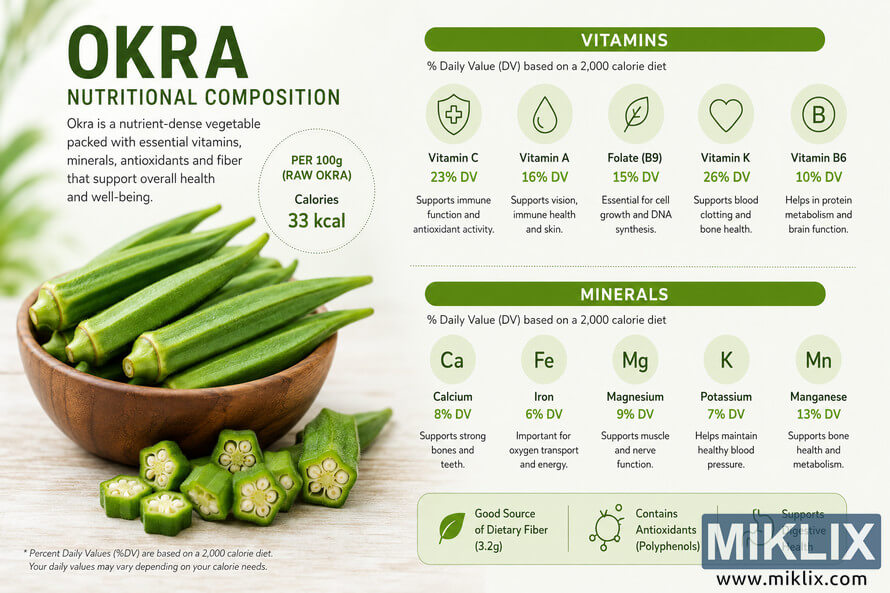
A clean okra nutrition infographic highlighting vitamins, minerals, calories, dietary fiber, antioxidants, and digestive health benefits in a fresh green layout.
Okra Nutritional Composition Infographic
Versi sing kasedhiya saka gambar iki
File gambar sing kasedhiya kanggo diundhuh ing ngisor iki kurang dikompres lan resolusine luwih dhuwur - lan akibate, kualitase luwih dhuwur - tinimbang gambar sing disemat ing artikel lan kaca ing situs web iki, sing luwih dioptimalake kanggo ukuran file supaya bisa ngurangi konsumsi bandwidth.
Ukuran biasa (1,536 x 1,024)
Ukuran gedhe (3,072 x 2,048)
Ukuran gedhe banget (4,608 x 3,072)
Ukuran ekstra gedhe (6,144 x 4,096)
Ukuran gedhe banget lucu (1,048,576 x 699,051)
- Isih upload... ;-)
Katrangan gambar
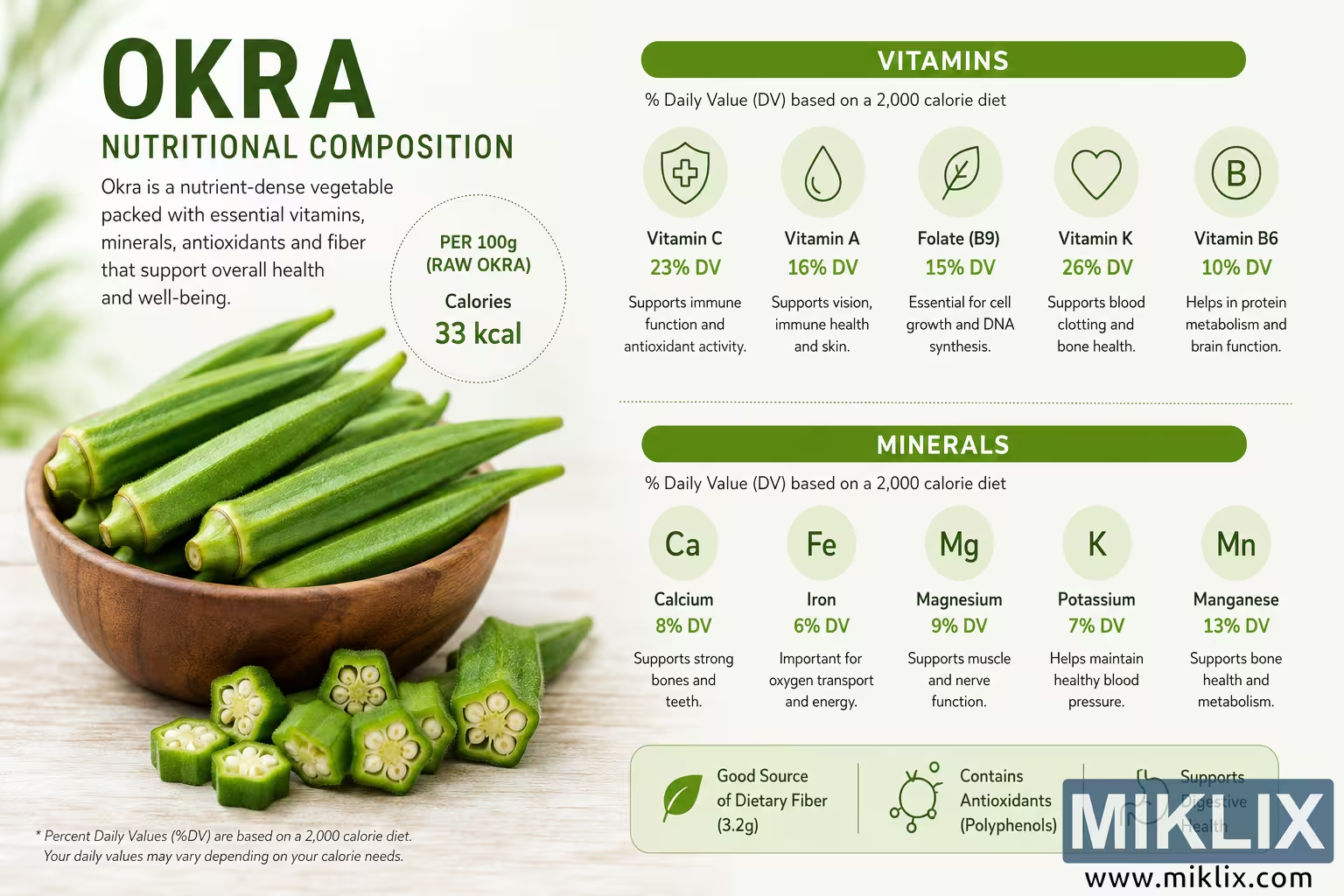
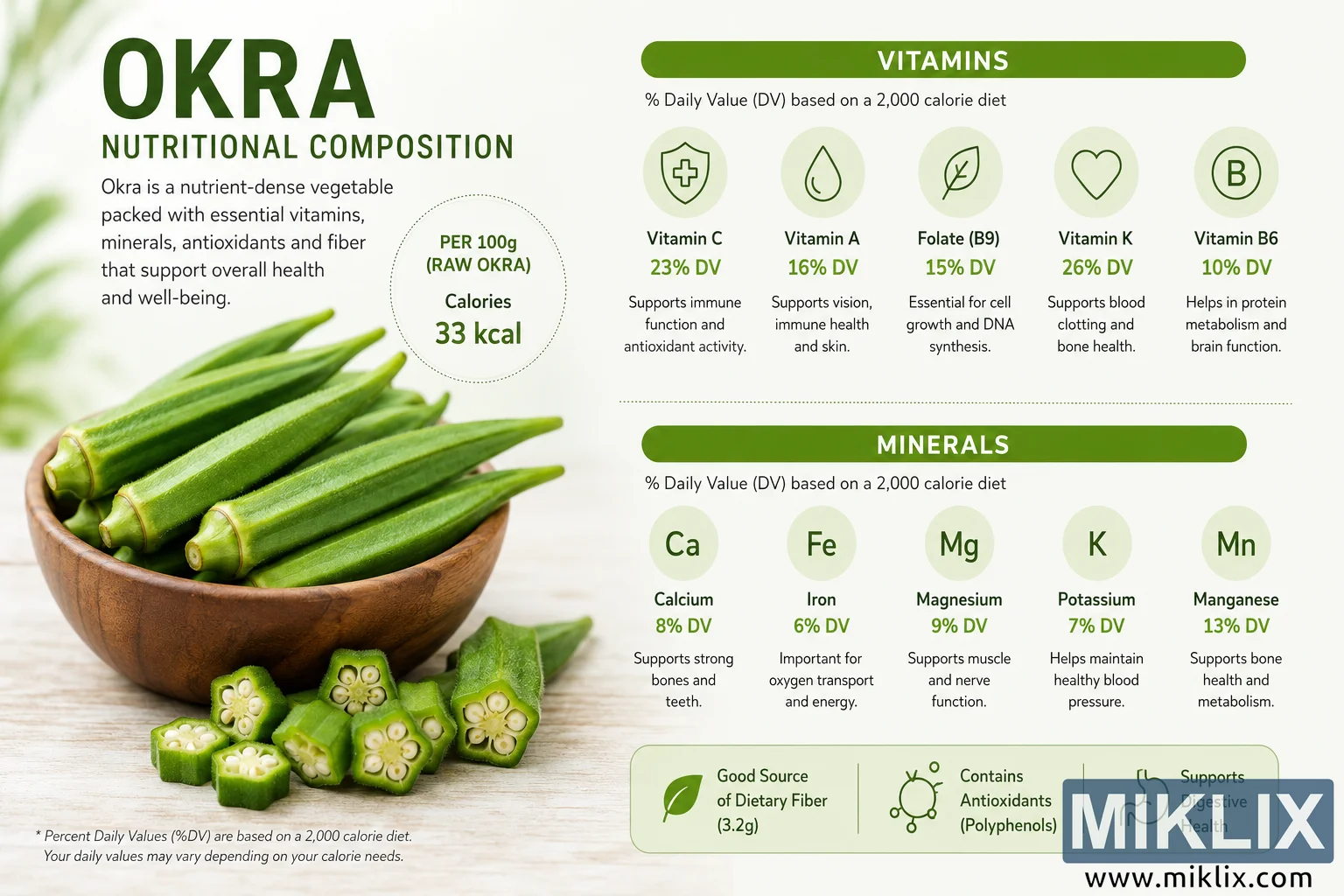
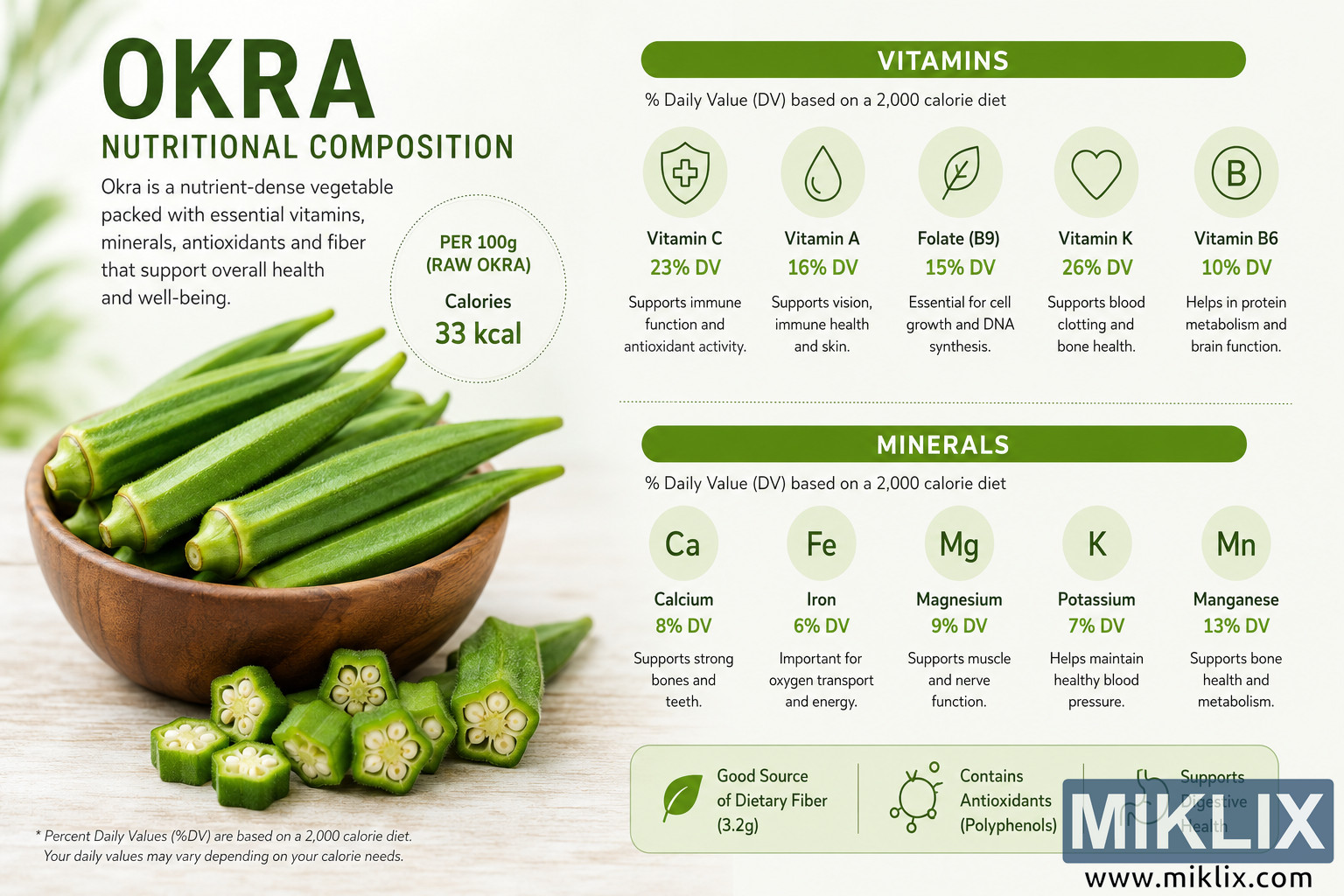
This landscape-oriented nutritional composition infographic presents okra as a fresh, nutrient-dense vegetable using a clean, modern layout with soft green and cream tones. The image is divided into two main visual zones: a photographic food presentation on the left and a structured nutrition breakdown on the right. On the left side, a large wooden bowl holds several whole okra pods, arranged naturally so their ridged green surfaces and tapered shapes are clearly visible. In front of the bowl, sliced okra pieces are scattered on a pale wooden surface, showing the distinctive star-shaped cross sections and pale seeds inside. The background is bright, airy, and softly blurred, with hints of green foliage that reinforce a natural, wholesome, plant-based feeling. At the top left, the word “OKRA” appears in very large, bold, dark green lettering. Beneath it, the subtitle “NUTRITIONAL COMPOSITION” is displayed in a narrower uppercase style, creating a clear educational title area. A short explanatory paragraph states that okra is a nutrient-dense vegetable packed with essential vitamins, minerals, antioxidants, and fiber that support overall health and well-being. Near the center-left, a circular callout highlights the serving basis and calories: “PER 100g (RAW OKRA)” and “Calories 33 kcal.” This calorie circle is outlined with a subtle dotted border and uses dark green text, matching the overall design language. The right side of the infographic contains two major sections, each introduced by a long rounded green header bar. The upper header reads “VITAMINS,” followed by the note “% Daily Value (DV) based on a 2,000 calorie diet.” Under this heading, five vitamin entries are arranged in a horizontal row, each with a pale green circular icon above the nutrient name, daily value percentage, and a short benefit statement. The vitamin entries shown are Vitamin C at 23% DV, Vitamin A at 16% DV, Folate (B9) at 15% DV, Vitamin K at 26% DV, and Vitamin B6 at 10% DV. The icons are simple line illustrations, including a shield-like health symbol, a droplet, a leaf, a heart, and a letter B symbol. The descriptions mention immune support, antioxidant activity, vision and skin support, cell growth and DNA synthesis, blood clotting and bone health, and protein metabolism and brain function. A dotted horizontal divider separates the vitamin section from the mineral section below. The lower green header reads “MINERALS,” again followed by the daily value note. Beneath it, five mineral entries appear in another evenly spaced row. Each mineral is represented by a pale green circular badge containing a chemical-style abbreviation, followed by the full mineral name, the percentage daily value, and a short supporting statement. The minerals shown are Calcium at 8% DV, Iron at 6% DV, Magnesium at 9% DV, Potassium at 7% DV, and Manganese at 13% DV. Their supporting text references strong bones and teeth, oxygen transport and energy, muscle and nerve function, healthy blood pressure, and bone health and metabolism. At the bottom right, a rounded rectangular highlight panel presents three additional wellness notes separated by thin vertical dividers. These notes identify okra as a good source of dietary fiber, listing 3.2g, and indicate that it contains antioxidants, specifically polyphenols, and supports digestive health. Each of these bottom benefits is paired with a simple green line icon: a leaf, a circular antioxidant-like symbol, and a digestive system icon. Along the bottom left edge, a small italic-style footnote explains that percent daily values are based on a 2,000 calorie diet and that daily values may vary depending on calorie needs. Overall, the infographic combines realistic food photography with clean iconography and educational text. The design feels polished, accessible, and health-focused, using consistent green accents to emphasize freshness, nutrition, and plant-based wellness. It does not include any visible brand names or logos, and the composition is suitable for use as an educational nutrition graphic, article illustration, wellness blog image, or healthy eating reference visual.
Gambar kasebut ana hubungane karo: Okra Benefits: How This Nutritious Vegetable Supports Your Health