
Gambar: Scientific Research Scene Featuring Okra Extract and Blood Sugar Analysis
Diterbitake:
Dianyari pungkasan: 30 Juli 2026 ing 18:38:13 UTC
High-resolution scientific illustration featuring okra extract research, laboratory glassware, blood glucose graphs, HbA1c charts, and fresh okra in a clean laboratory setting. Ideal for articles about nutrition research, diabetes, metabolic health, and plant-based scientific studies.
Scientific Research Scene Featuring Okra Extract and Blood Sugar Analysis
Versi sing kasedhiya saka gambar iki
File gambar sing kasedhiya kanggo diundhuh ing ngisor iki kurang dikompres lan resolusine luwih dhuwur - lan akibate, kualitase luwih dhuwur - tinimbang gambar sing disemat ing artikel lan kaca ing situs web iki, sing luwih dioptimalake kanggo ukuran file supaya bisa ngurangi konsumsi bandwidth.
Ukuran biasa (1,536 x 1,024)
Ukuran gedhe (3,072 x 2,048)
Ukuran gedhe banget (4,608 x 3,072)
Ukuran ekstra gedhe (6,144 x 4,096)
Ukuran gedhe banget lucu (1,048,576 x 699,051)
- Isih upload... ;-)
Katrangan gambar
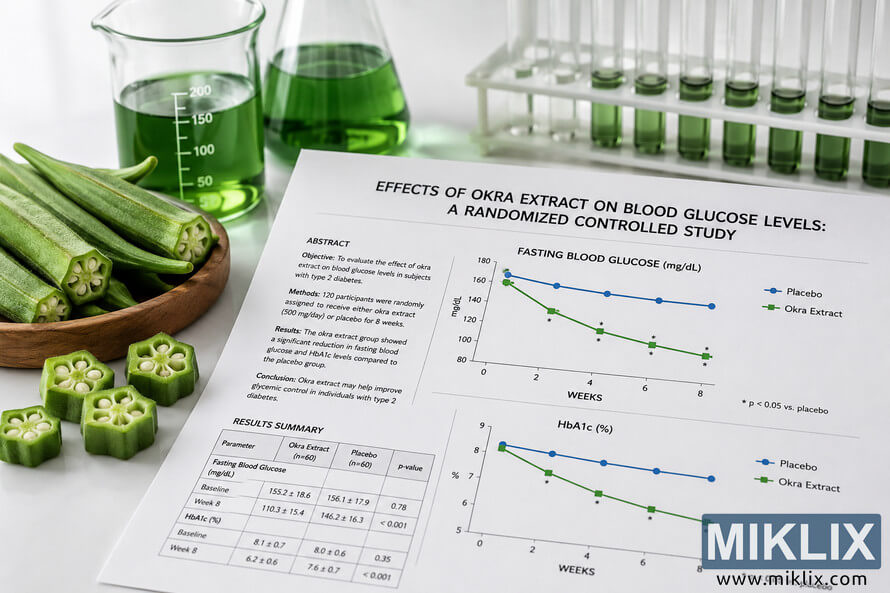
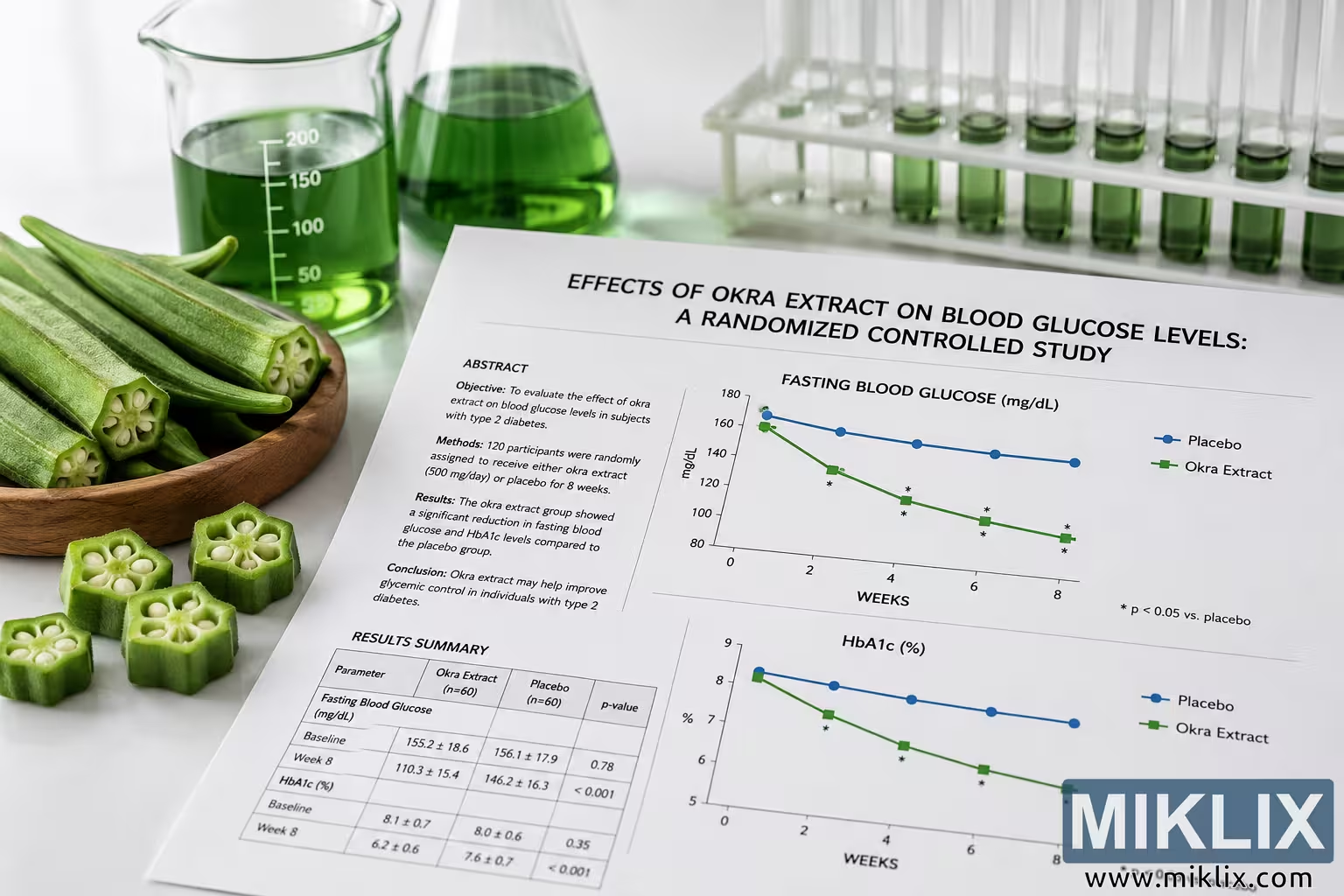
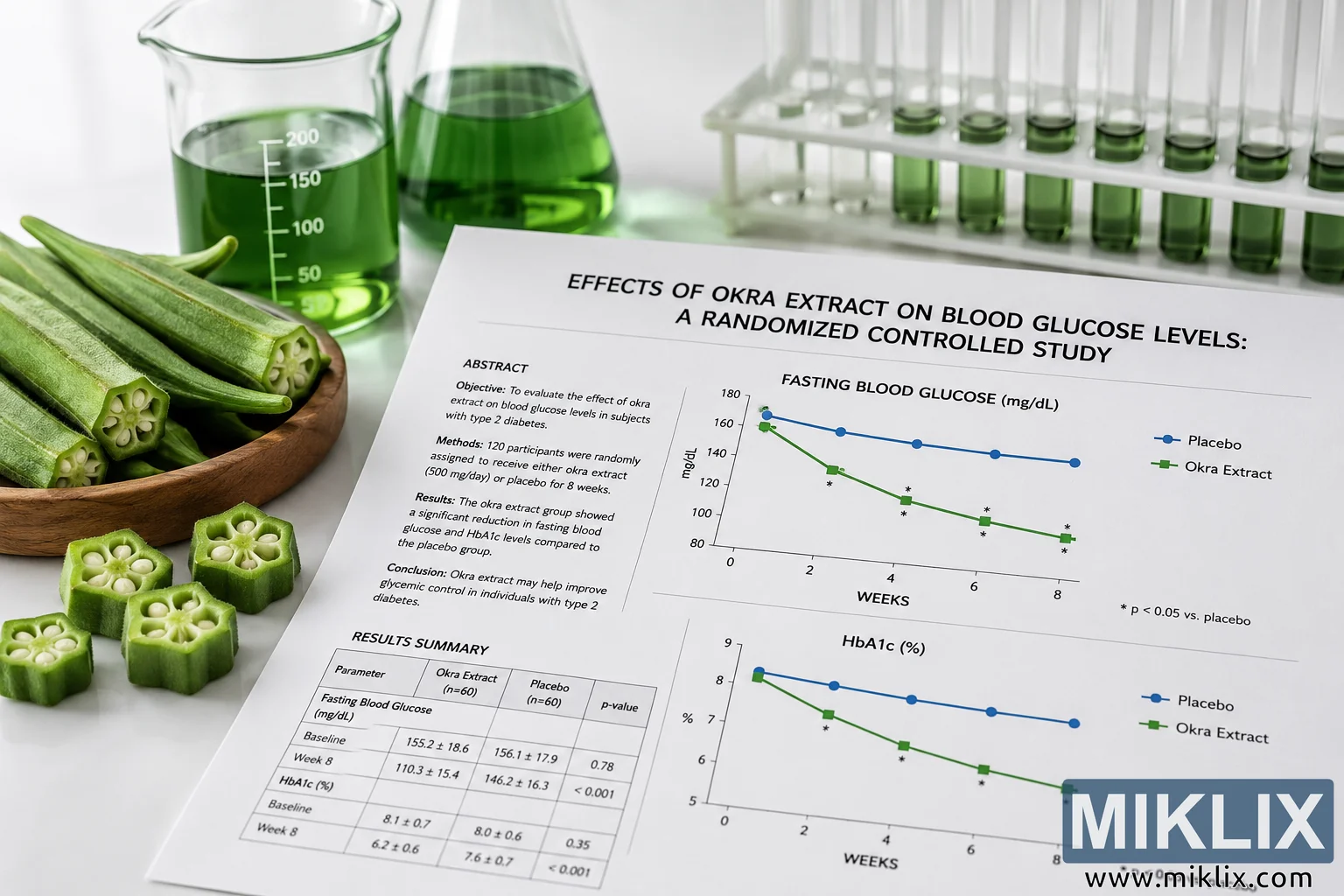
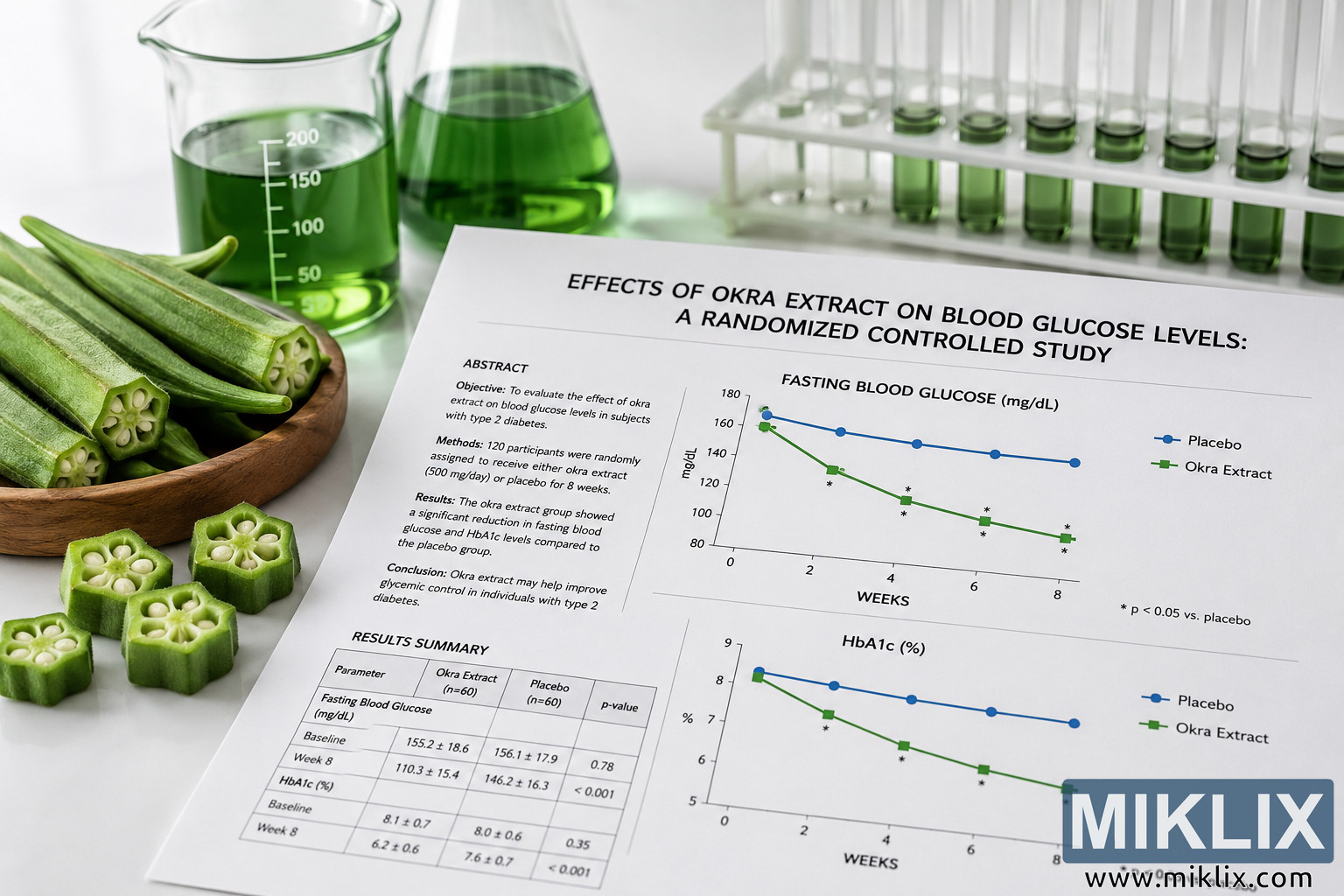
This image presents a clean, high-resolution scientific research composition arranged on a bright white laboratory-style surface. The overall aesthetic is minimalistic, professional, and designed to communicate biomedical research related to okra extract and its potential effects on blood glucose measurements. The scene is illuminated with soft, diffused lighting that minimizes harsh shadows while emphasizing the crisp textures of laboratory equipment, fresh plant material, and printed research graphics. The composition is photographed from a slightly elevated angle, allowing nearly the entire workspace to remain visible while naturally guiding the viewer's attention toward the central research document.
Dominating the foreground is a printed scientific report positioned diagonally across the image. The document features a large research-style headline discussing the effects of okra extract on blood glucose levels in a randomized controlled study. Multiple sections resemble those typically found in academic publications, including headings for an abstract, methods, results, and a summary table. Although the page resembles an authentic scientific manuscript, it functions primarily as a conceptual visualization rather than a literal published paper. The typography is clean, modern, and highly legible, reinforcing the impression of formal scientific documentation.
Two prominent graphs occupy much of the right side of the report. The upper graph illustrates fasting blood glucose measurements across multiple weeks, while the lower graph depicts HbA1c values over a similar timeline. Each chart contains two colored trend lines representing different comparison groups, visually suggesting differing trajectories over time. Clearly labeled axes, grid lines, legends, numerical scales, and statistical annotation marks contribute to the appearance of rigorous quantitative analysis. The charts visually imply a comparison between groups while remaining generic enough to function as an illustrative research graphic rather than documentation of a specific real-world study.
Beneath the graphs is a compact results summary table containing multiple rows and columns with numerical values and statistical indicators. The table enhances the impression of a carefully organized experimental report by presenting structured measurements, comparison categories, and significance values. Individual numbers are small and not intended to represent authoritative scientific data but instead reinforce the overall laboratory research theme.
On the left side of the composition sits a shallow wooden bowl containing several fresh green okra pods. The vegetables display vivid natural coloration with subtle ridges running along their length. Several okra pods have been sliced crosswise, exposing their distinctive star-shaped cross sections filled with pale seeds arranged symmetrically within each segment. Additional sliced pieces are scattered naturally across the tabletop in front of the bowl, adding visual depth and emphasizing the botanical subject of the research. The fresh produce contrasts pleasantly with the clinical white environment and laboratory materials, balancing natural ingredients with scientific investigation.
Behind the document, several pieces of transparent laboratory glassware reinforce the experimental setting. A large glass beaker filled with translucent green liquid stands prominently toward the left background, displaying measurement markings typical of laboratory equipment. Slightly farther back is a conical laboratory flask containing a similar green solution. On the right side of the background, a white test tube rack supports multiple clear glass test tubes filled with varying levels of the same green liquid. The liquids appear consistent in color and transparency, suggesting plant extract preparation or laboratory sample processing. Reflections on the glass surfaces create realistic highlights that enhance the polished studio appearance of the image.
The background remains softly blurred, drawing attention toward the printed report and botanical specimens while preserving sufficient detail to identify the laboratory environment. The restrained depth of field provides a professional photographic quality commonly associated with scientific publications, educational materials, medical presentations, nutrition articles, and health research websites.
The overall color palette is dominated by crisp whites, natural greens, light gray tones, transparent glass reflections, and subtle wood textures. These colors communicate cleanliness, freshness, and scientific precision without introducing distracting visual elements. No commercial branding, corporate logos, trademarks, product packaging, or identifiable manufacturers appear anywhere within the composition. Every object contributes to the central theme of nutritional science and laboratory investigation.
Overall, the image conveys the concept of scientific research examining okra extract in relation to blood sugar measurements through an organized arrangement of laboratory glassware, fresh botanical material, analytical charts, and research documentation. The composition successfully combines natural food ingredients with clinical scientific imagery, making it suitable as an illustrative visual for articles discussing nutrition research, diabetes studies, plant-based compounds, laboratory investigations, metabolic health, or educational content related to blood glucose analysis.
Gambar kasebut ana hubungane karo: Okra Benefits: How This Nutritious Vegetable Supports Your Health