
Gambar: Kidney Health and Oxalate-Containing Foods Visualization
Diterbitake:
Dianyari pungkasan: 30 Juli 2026 ing 18:38:13 UTC
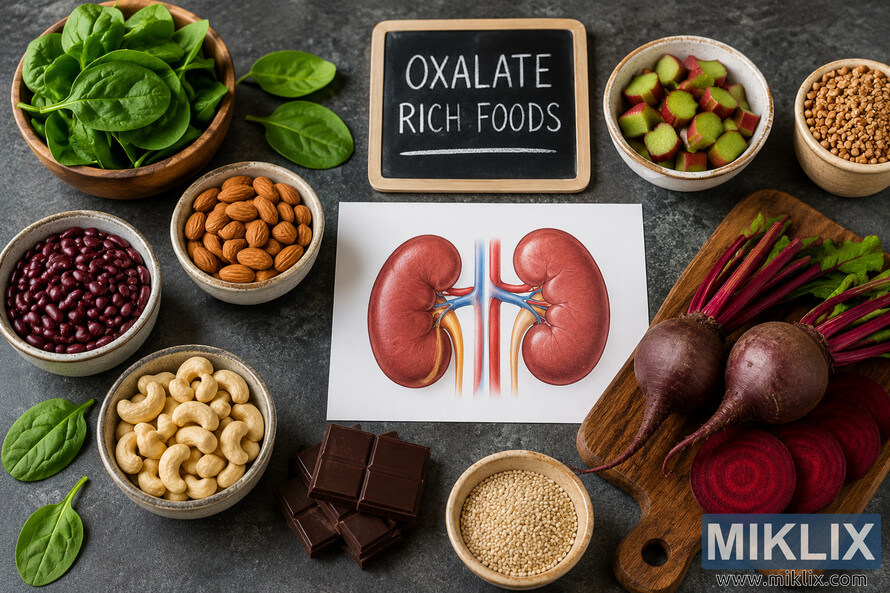
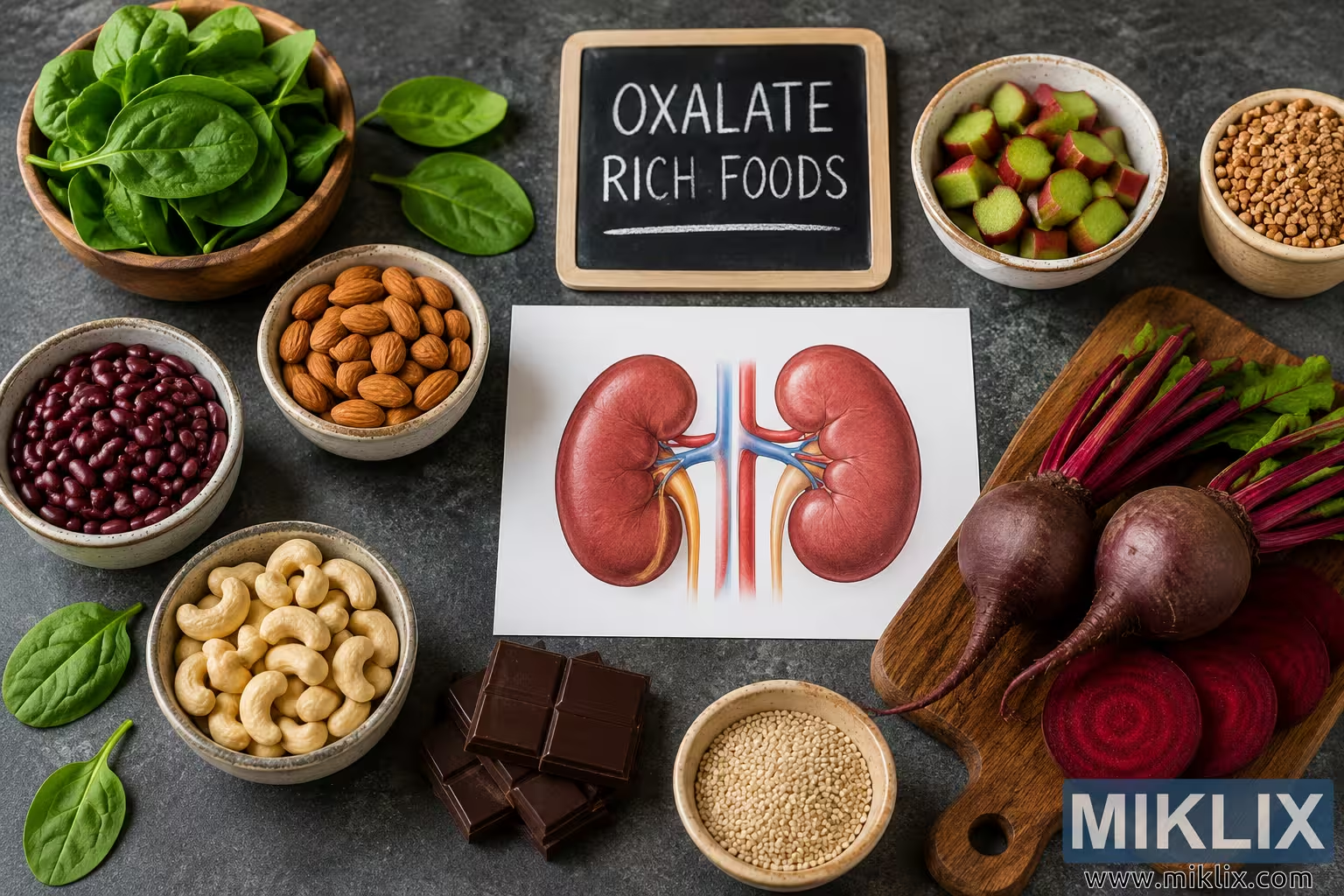
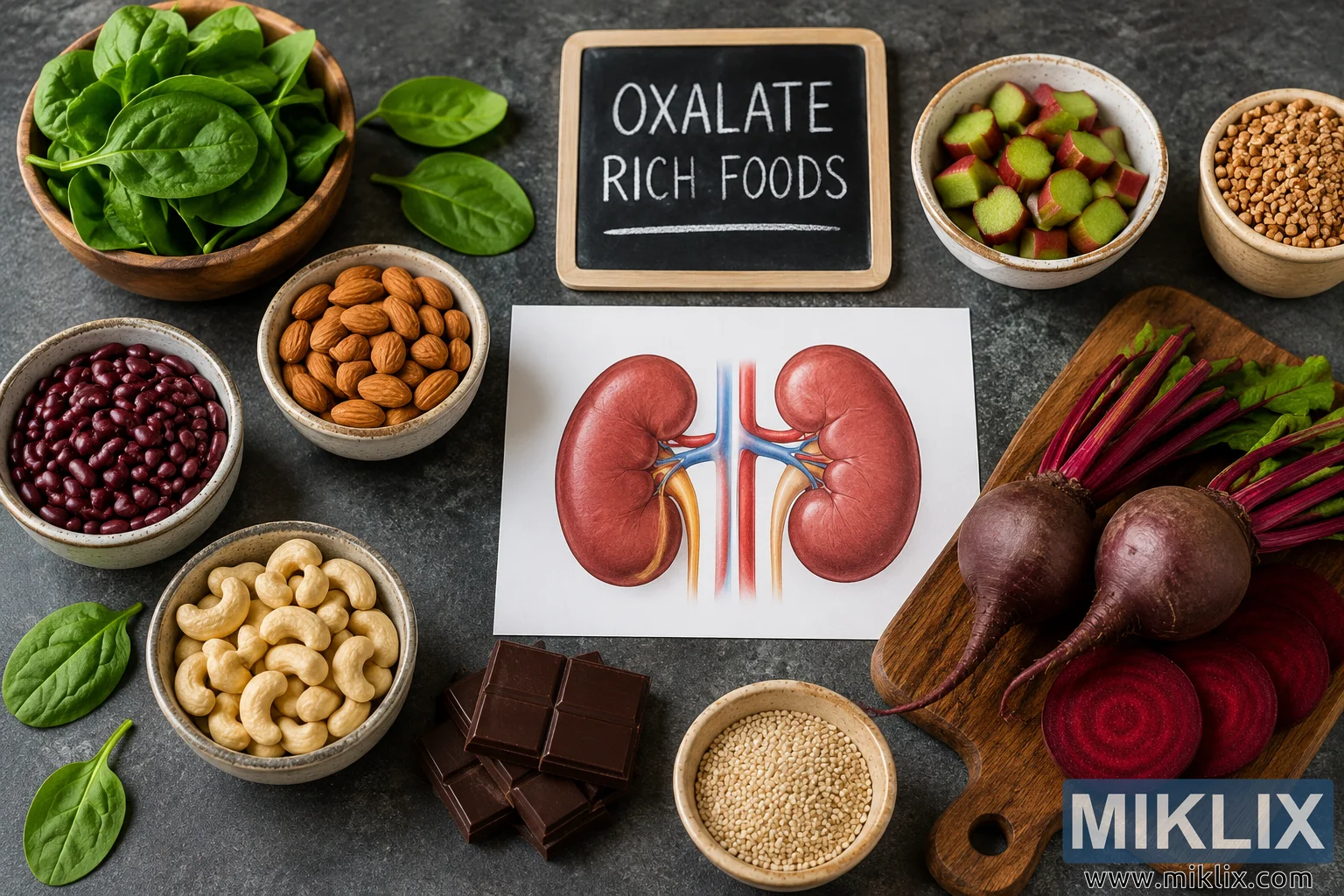
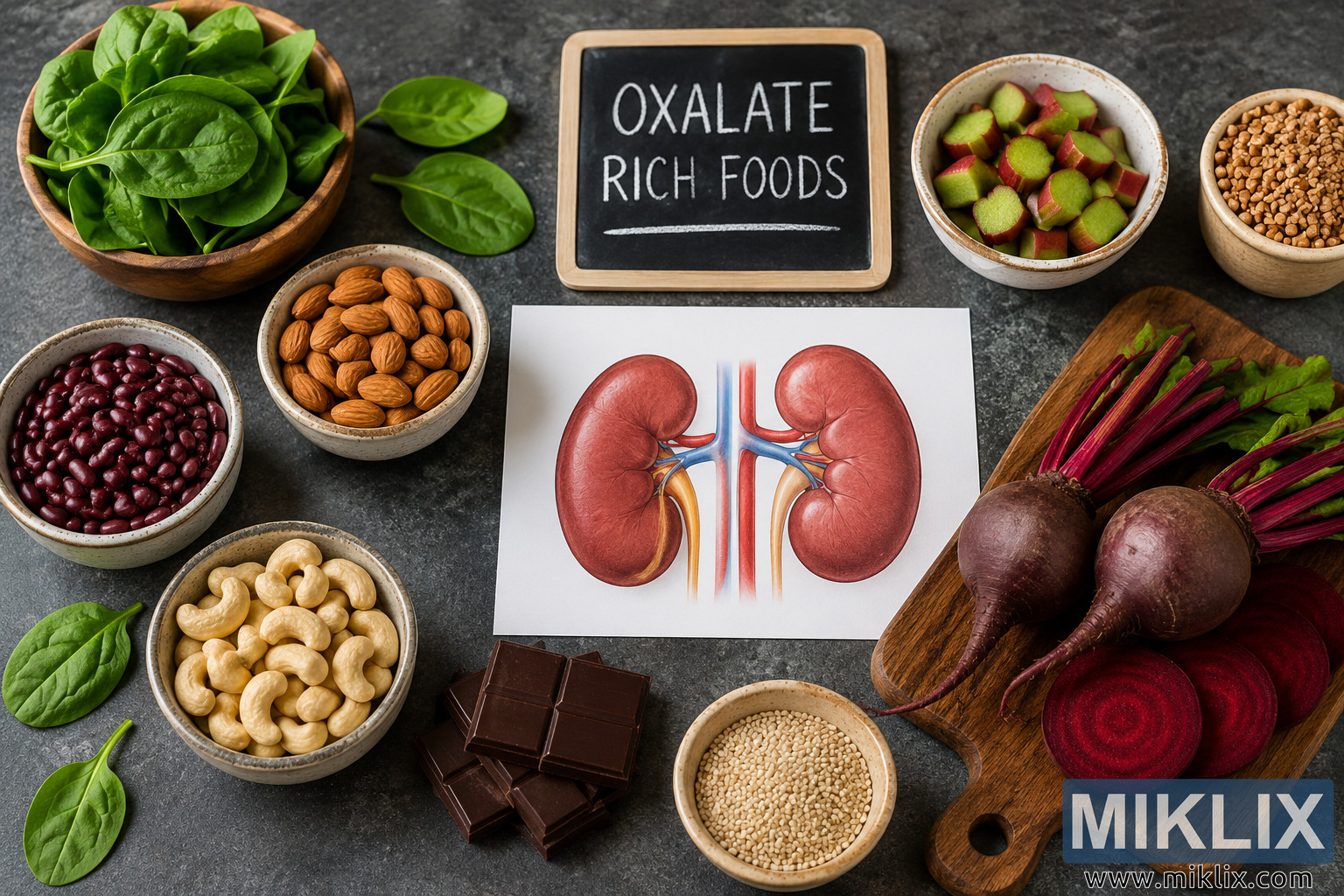
Landscape visualization of kidney health featuring an anatomical kidney illustration surrounded by commonly recognized oxalate-containing foods such as spinach, almonds, beans, cashews, sesame seeds, chocolate, beetroot, rhubarb, and cereal. Educational image for nutrition and kidney stone awareness.
Kidney Health and Oxalate-Containing Foods Visualization
Versi sing kasedhiya saka gambar iki
File gambar sing kasedhiya kanggo diundhuh ing ngisor iki kurang dikompres lan resolusine luwih dhuwur - lan akibate, kualitase luwih dhuwur - tinimbang gambar sing disemat ing artikel lan kaca ing situs web iki, sing luwih dioptimalake kanggo ukuran file supaya bisa ngurangi konsumsi bandwidth.
Ukuran biasa (1,536 x 1,024)
Ukuran gedhe (3,072 x 2,048)
Ukuran gedhe banget (4,608 x 3,072)
Ukuran ekstra gedhe (6,144 x 4,096)
Ukuran gedhe banget lucu (1,048,576 x 699,051)
- Isih upload... ;-)
Katrangan gambar
This landscape-oriented educational visualization presents an overhead flat-lay composition focused on the relationship between kidney health and foods that are commonly recognized as containing relatively high levels of oxalates. The scene is arranged on a dark charcoal-gray stone tabletop that provides strong visual contrast and allows the colorful ingredients to stand out clearly. Positioned in the center of the composition is a detailed anatomical illustration depicting a pair of healthy human kidneys. The kidneys are rendered in natural shades of reddish-pink with visible blood vessels and ureters extending downward, creating an immediately recognizable focal point that emphasizes the medical and nutritional theme of the image. Above the kidneys sits a small rectangular chalkboard framed in light wood. Written across the board in white chalk-style lettering are the words "OXALATE RICH FOODS," clearly identifying the educational topic of the illustration. The lettering appears hand-drawn and contributes to the infographic-like presentation without overwhelming the central anatomical illustration. Surrounding the kidneys in a balanced and symmetrical arrangement are numerous bowls, ingredients, and food items that are frequently associated with higher oxalate content. In the upper left corner is a wooden bowl filled with fresh spinach leaves displaying vibrant shades of green and realistic leaf textures. Nearby, several loose spinach leaves are scattered across the tabletop, adding depth and visual continuity to the composition. To the left of the kidneys sits a ceramic bowl filled with dark red kidney beans whose glossy appearance contrasts with the matte stone background. Slightly above this bowl is another ceramic dish containing whole almonds with warm brown tones and natural surface textures. Below the beans appears a bowl of whole cashews whose curved ivory-colored shapes create additional visual variety. Beneath the central kidneys rests a stack of dark chocolate squares featuring smooth surfaces and clean edges. Nearby is a small bowl filled with pale sesame seeds, emphasizing another food commonly discussed in relation to oxalate intake. On the right side of the composition lies a wooden cutting board supporting several whole beetroots with stems attached, accompanied by freshly sliced beetroot rounds that reveal striking concentric rings of deep crimson and burgundy. The cutting board introduces a warm natural wood texture that complements the ceramic bowls distributed throughout the image. In the upper right section sits a bowl containing chopped rhubarb pieces displaying green interiors and reddish outer skins. Adjacent to it is another bowl filled with small cereal or grain pieces, adding further diversity to the food selection. The foods are intentionally spaced around the kidneys in a circular arrangement that naturally guides the viewer's attention between the anatomical illustration and the surrounding dietary examples. Soft, even lighting minimizes harsh shadows while enhancing color saturation, making each ingredient appear fresh and easily identifiable. The overall composition is clean, balanced, and highly organized, creating an appearance similar to an educational health infographic or nutrition awareness poster. The image does not imply that these foods should necessarily be avoided by every individual. Instead, it visually represents foods that are commonly discussed in the context of oxalate intake and kidney stone prevention, encouraging viewers to consider dietary choices alongside broader kidney health discussions. The photograph-style rendering combines realistic food textures with a medical illustration to create an engaging educational visual suitable for articles, blog posts, nutrition guides, healthcare presentations, patient education materials, wellness websites, and informational content related to kidney health, nephrology, dietetics, and nutrition. The dark stone background, natural wooden elements, ceramic bowls, and carefully balanced arrangement contribute to a modern, professional aesthetic while maintaining a clear educational focus. The image contains no visible commercial branding, logos, product packaging, or promotional elements, allowing it to serve as a neutral visual resource for informational use.
Gambar kasebut ana hubungane karo: Okra Benefits: How This Nutritious Vegetable Supports Your Health