
Gambar: Colorful Rutabaga Nutrient Infographic
Diterbitake:
Dianyari pungkasan: 10 September 2026 ing 09:57:58 UTC
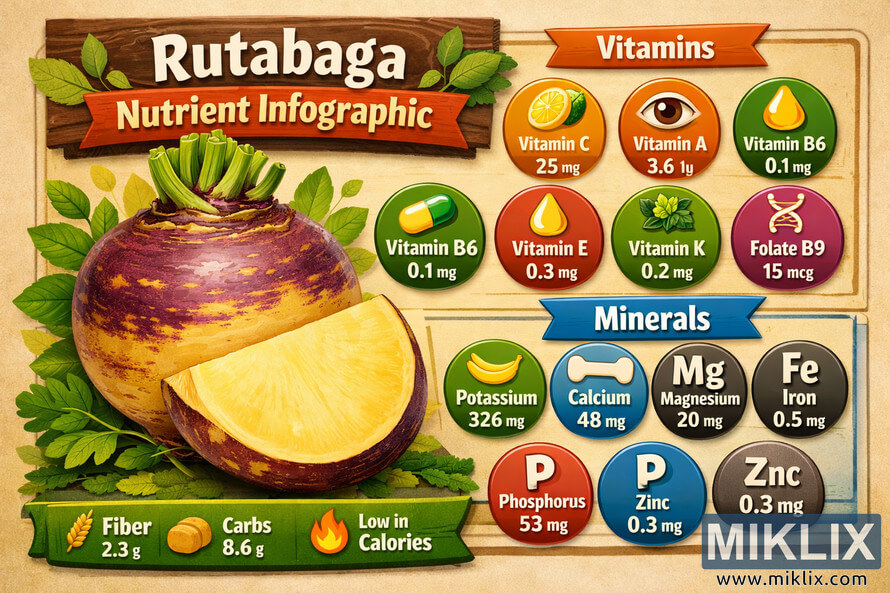
A vibrant rutabaga nutrient infographic in landscape orientation, featuring a detailed rutabaga illustration, a rustic wooden title sign, and colorful sections for vitamins, minerals, fiber, carbohydrates, and calorie content. Circular icons with clear labels highlight key vitamins like Vitamin C, A, B6, E, K, and Folate B9, as well as minerals such as Potassium, Calcium, Magnesium, Iron, Phosphorus, and Zinc. A green banner at the bottom emphasizes fiber, carbs, and low calories, making this image ideal for nutrition education, healthy eating articles, and food-related websites.
Colorful Rutabaga Nutrient Infographic
Versi sing kasedhiya saka gambar iki
File gambar sing kasedhiya kanggo diundhuh ing ngisor iki kurang dikompres lan resolusine luwih dhuwur - lan akibate, kualitase luwih dhuwur - tinimbang gambar sing disemat ing artikel lan kaca ing situs web iki, sing luwih dioptimalake kanggo ukuran file supaya bisa ngurangi konsumsi bandwidth.
Ukuran biasa (1,536 x 1,024)
Ukuran gedhe (3,072 x 2,048)
Ukuran gedhe banget (4,608 x 3,072)
Ukuran ekstra gedhe (6,144 x 4,096)
Ukuran gedhe banget lucu (1,048,576 x 699,051)
- Isih upload... ;-)
Katrangan gambar
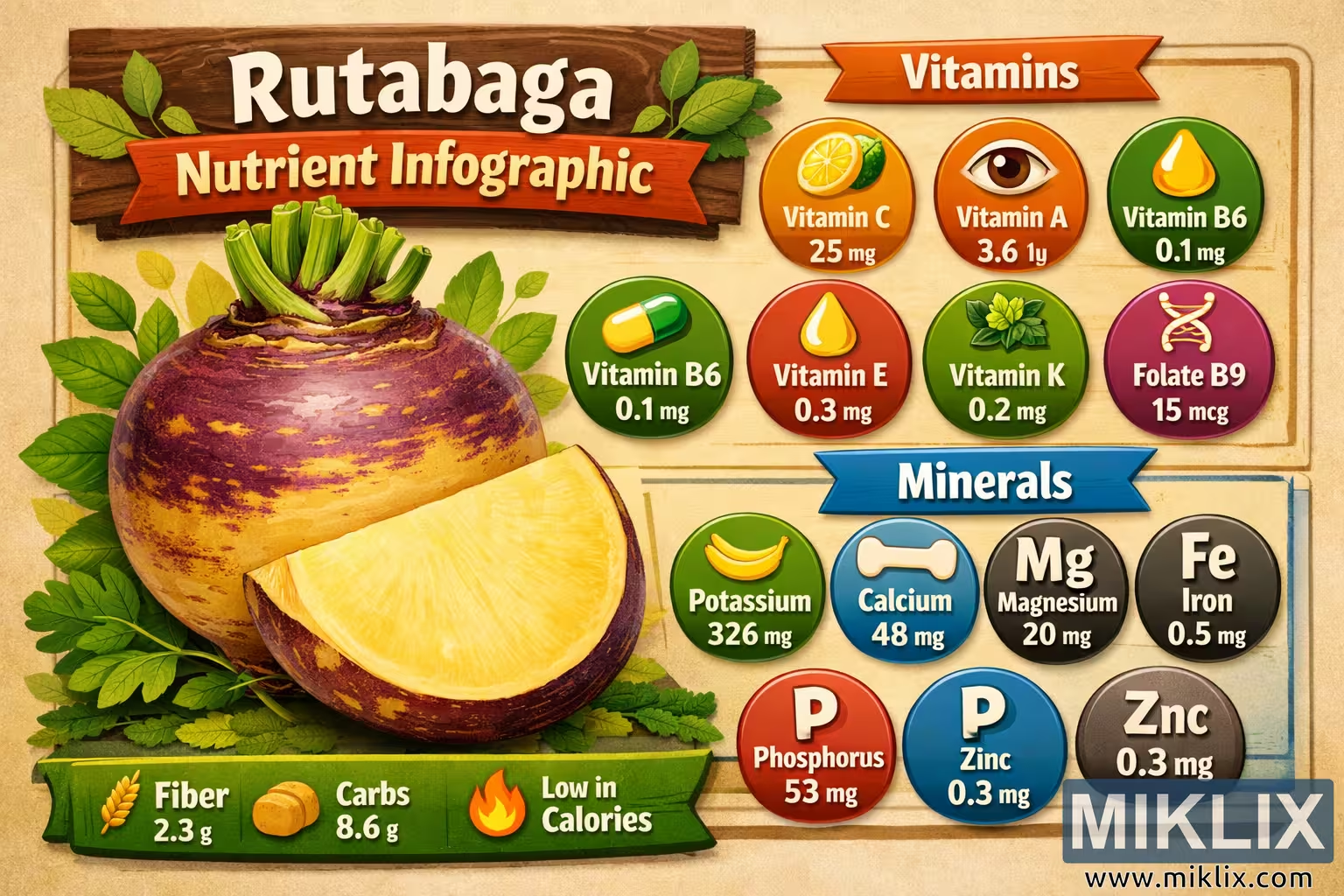
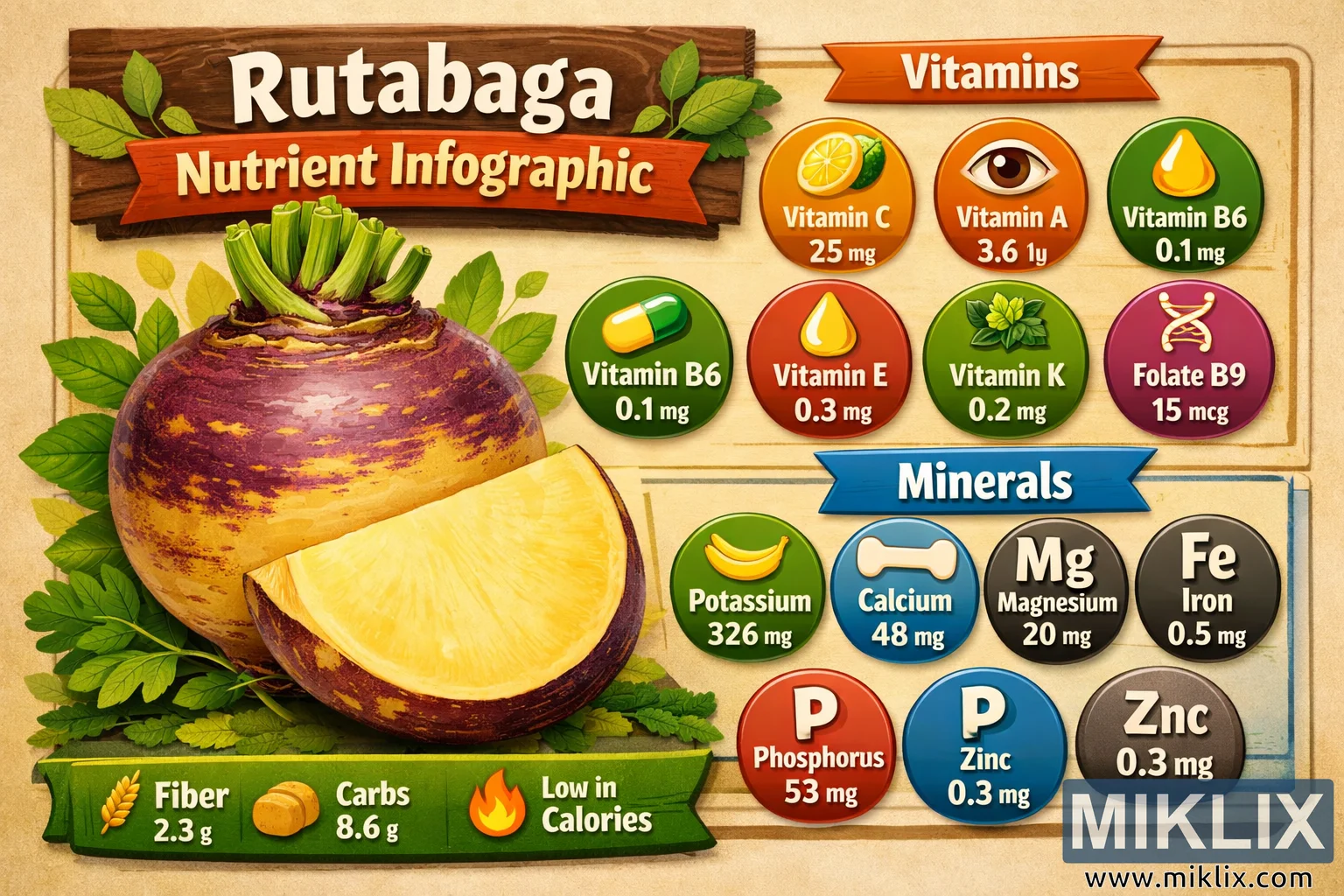
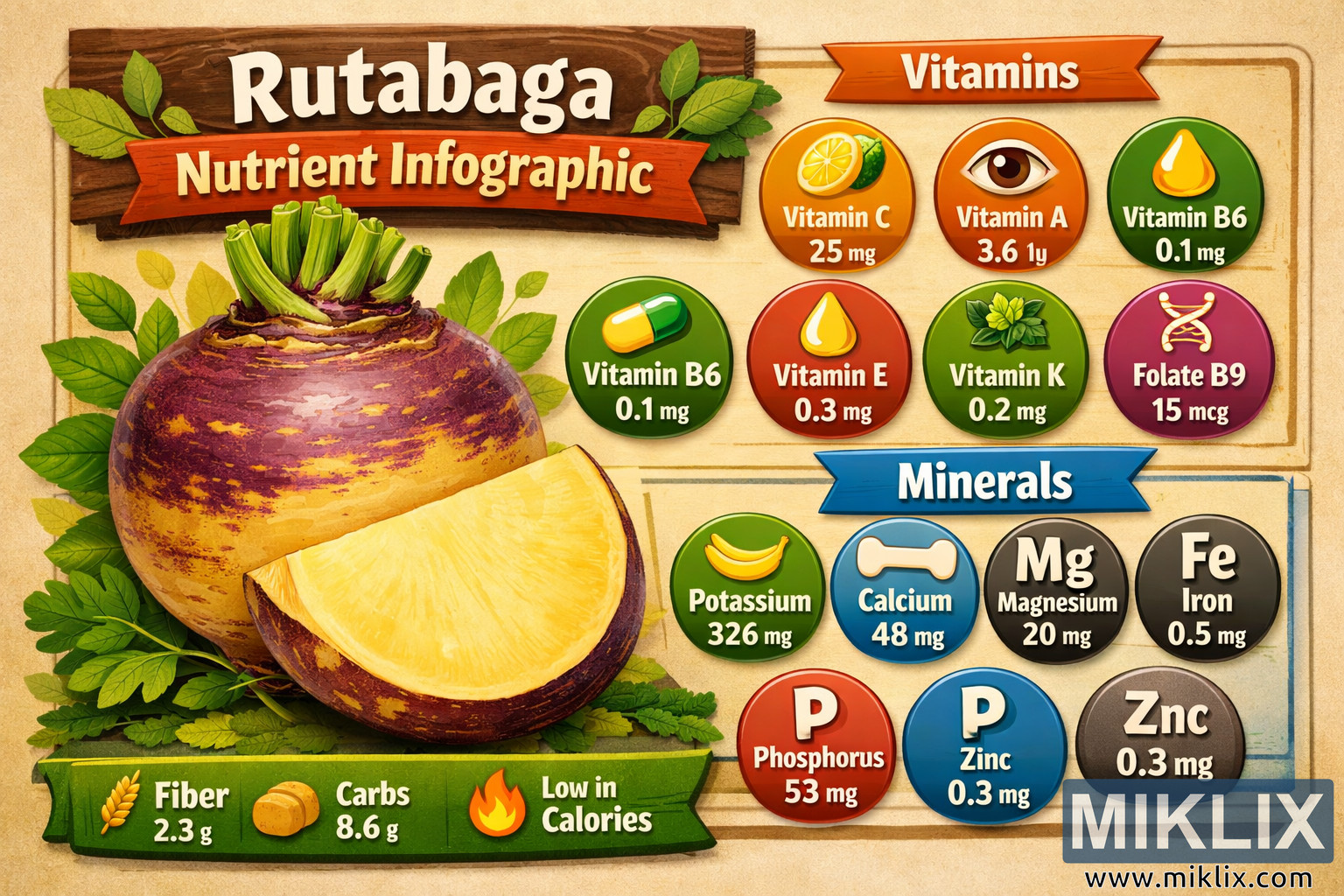
This image is a vibrant, landscape-oriented digital infographic that visually explains the nutritional composition of rutabaga in a clear, engaging, and colorful style. The overall layout is carefully organized into distinct sections, each highlighting a different aspect of rutabaga’s nutrients, including vitamins, minerals, fiber, carbohydrates, and calorie content. The background is warm and inviting, with earthy tones and subtle gradients that evoke a natural, wholesome feeling, while the foreground elements are crisp, bright, and easy to read. On the left side of the infographic, there is a detailed illustration of a rutabaga rendered in a semi-realistic, yet stylized manner. The rutabaga has purple and yellow skin, with the purple hue concentrated near the top and fading into a creamy yellow toward the bottom. Next to the whole rutabaga, a sliced half is displayed, revealing its pale yellow interior. The cut surface is smooth and slightly glossy, suggesting freshness and moisture. Around the rutabaga, small green leaves and hints of foliage add a sense of farm-to-table authenticity and natural origin. Above this illustration, a prominent title reads "Rutabaga Nutrient Infographic" in large, bold letters. The text is white and yellow, standing out against a wooden sign background that looks like a rustic plank or board. The wooden sign is adorned with green leaves, giving the impression that the rutabaga and its nutritional information are part of a garden or harvest scene. The title immediately communicates the purpose of the image and sets the tone for a friendly, educational visual experience. On the upper right side of the infographic, the section dedicated to vitamins is clearly labeled with the heading "Vitamins" written in white text inside an orange banner. This banner stretches horizontally and serves as a visual anchor for the vitamin icons below. Under the banner, six circular icons are arranged in a neat grid or cluster, each representing a specific vitamin found in rutabaga. Each icon has a distinct color and a small illustrative symbol that helps viewers quickly associate the nutrient with its function or common source. The first icon is for Vitamin C, accompanied by a lemon symbol and the text "25 mg," emphasizing rutabaga’s contribution to immune support and antioxidant intake. The second icon represents Vitamin A, featuring an eye symbol and the text "3 6 IU," hinting at its role in vision and overall eye health. The third icon is for Vitamin B6, shown with a green capsule symbol and labeled "0.1 mg," suggesting its importance in metabolism and nervous system function. The fourth icon highlights Vitamin E, depicted with a droplet symbol and the text "0.3 mg," pointing to its antioxidant properties and role in protecting cells from oxidative stress. The fifth icon is for Vitamin K, illustrated with a leafy green symbol and the text "0.2 mcg," referencing its role in blood clotting and bone health. The sixth icon represents Folate (Vitamin B9), shown with a DNA helix symbol and labeled "15 mcg," indicating its importance in cell division and overall growth processes. Each vitamin icon is enclosed in a circular frame with bright colors, and the text is clear and legible, making it easy for viewers to scan and understand the information at a glance. Below the vitamins section, on the lower right side of the infographic, the minerals section is introduced with the heading "Minerals" written in white text inside a blue banner. This banner mirrors the style of the vitamins banner but uses a cool blue tone to differentiate the mineral category. Underneath, six circular icons present key minerals found in rutabaga, each with a unique symbol and numerical value. The first mineral icon is for Potassium, featuring a banana symbol and the text "326 mg," highlighting rutabaga’s role in supporting heart health, fluid balance, and muscle function. The second icon represents Calcium, with a bone symbol and the text "48 mg," emphasizing its contribution to bone strength and structural support. The third icon is for Magnesium, shown with an "Mg" symbol and labeled "20 mg," pointing to its involvement in energy production, muscle function, and enzyme activity. The fourth icon highlights Iron, depicted with the letters "Fe" and the text "0.5 mg," indicating its role in oxygen transport and red blood cell formation. The fifth icon represents Phosphorus, illustrated with a "P" symbol and the text "53 mg," suggesting its importance in bone health, energy metabolism, and cell structure. The sixth icon is for Zinc, shown with a stylized zinc symbol and labeled "0.3 mg," referencing its role in immune function, wound healing, and enzyme activity. These mineral icons, like the vitamin icons, are arranged in a visually balanced manner, with bright colors and clear typography that make the data approachable and visually appealing. At the bottom of the infographic, a green banner stretches across the width of the image, tying together the information with a focus on macronutrients and overall energy content. This banner is divided into three sections, each containing an icon and text. The first section is labeled "Fiber" and features an icon of a wheat stalk, along with the text "2.3 g," highlighting rutabaga’s contribution to digestive health and satiety. The second section is labeled "Carbs" and shows a loaf of bread icon with the text "8.6 g," indicating the carbohydrate content and its role in providing energy. The third section is labeled "Low in Calories" and includes a flame icon with the text "~ 37 kcal," emphasizing that rutabaga is a relatively low-calorie food, suitable for balanced diets and weight-conscious meal planning. Behind the green banner, subtle illustrations of greenery and foliage reinforce the natural, plant-based origin of the food. The overall color palette of the infographic combines warm oranges, yellows, and browns with cool blues and greens, creating a harmonious visual balance. The typography is modern and clean, with headings in bold, larger fonts and nutrient values in smaller, yet readable text. The use of icons and symbols throughout the image helps convey complex nutritional information in a simple, intuitive way, making the infographic suitable for educational materials, health blogs, cooking websites, or social media posts about healthy eating. The composition ensures that the rutabaga illustration, vitamin section, mineral section, and macronutrient banner are all clearly visible and distinct, while still feeling like parts of a cohesive design. Every element is sharp and well-defined, with even lighting and consistent shading, giving the infographic a polished, professional appearance. Overall, this image communicates the nutritional richness of rutabaga in a visually engaging format, inviting viewers to learn more about this root vegetable and consider incorporating it into their meals.
Gambar kasebut ana hubungane karo: Rutabaga: The Root Vegetable Packed with Nutrients