
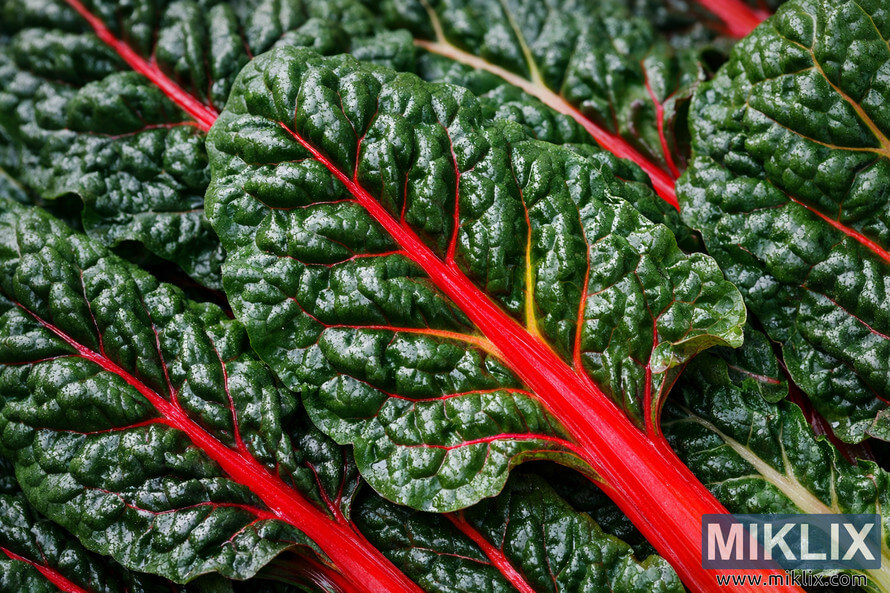
Gambar: Fresh Swiss Chard Leaves Close-Up
Diterbitake:
Dianyari pungkasan: 12 September 2026 ing 14:51:37 UTC
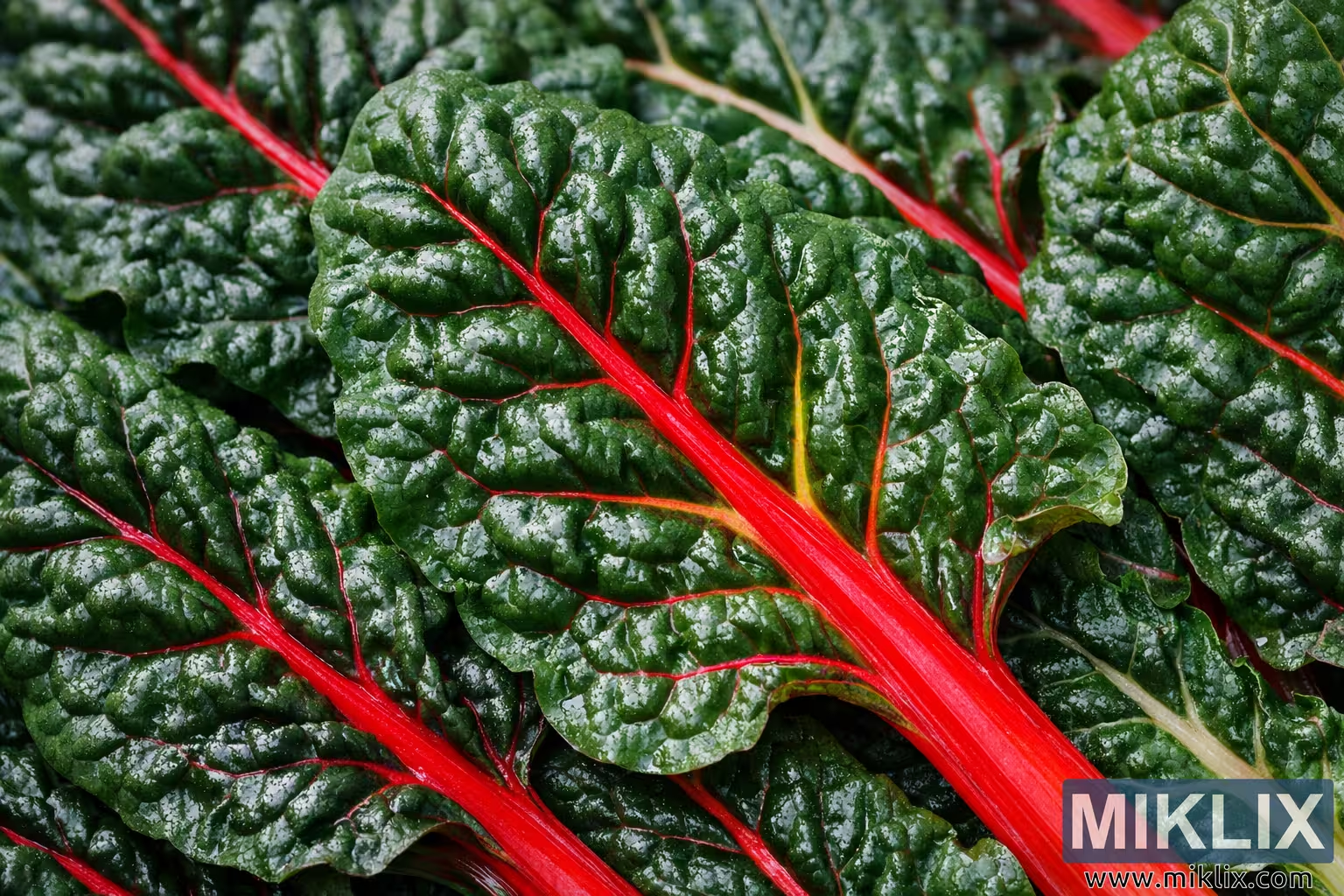
A detailed macro photograph of fresh Swiss chard leaves highlighting their mineral-rich deep green color, vibrant red veins, and natural texture. Perfect for illustrating healthy produce, organic farming, or nutrient-rich vegetables.
Fresh Swiss Chard Leaves Close-Up
Versi sing kasedhiya saka gambar iki
File gambar sing kasedhiya kanggo diundhuh ing ngisor iki kurang dikompres lan resolusine luwih dhuwur - lan akibate, kualitase luwih dhuwur - tinimbang gambar sing disemat ing artikel lan kaca ing situs web iki, sing luwih dioptimalake kanggo ukuran file supaya bisa ngurangi konsumsi bandwidth.
Ukuran biasa (1,536 x 1,024)
Ukuran gedhe (3,072 x 2,048)
Ukuran gedhe banget (4,608 x 3,072)
Ukuran ekstra gedhe (6,144 x 4,096)
Ukuran gedhe banget lucu (1,048,576 x 699,051)
- Isih upload... ;-)
Katrangan gambar
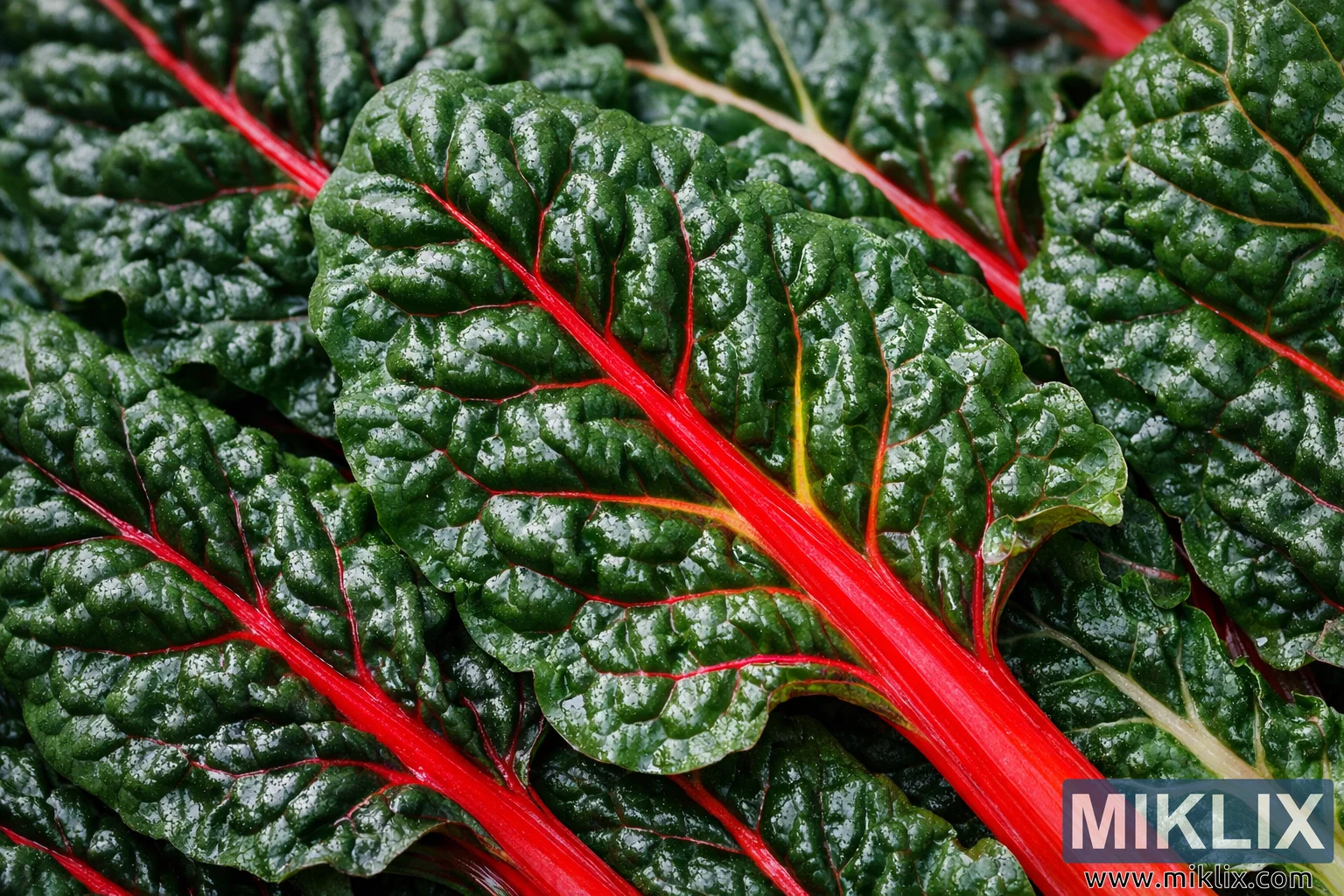
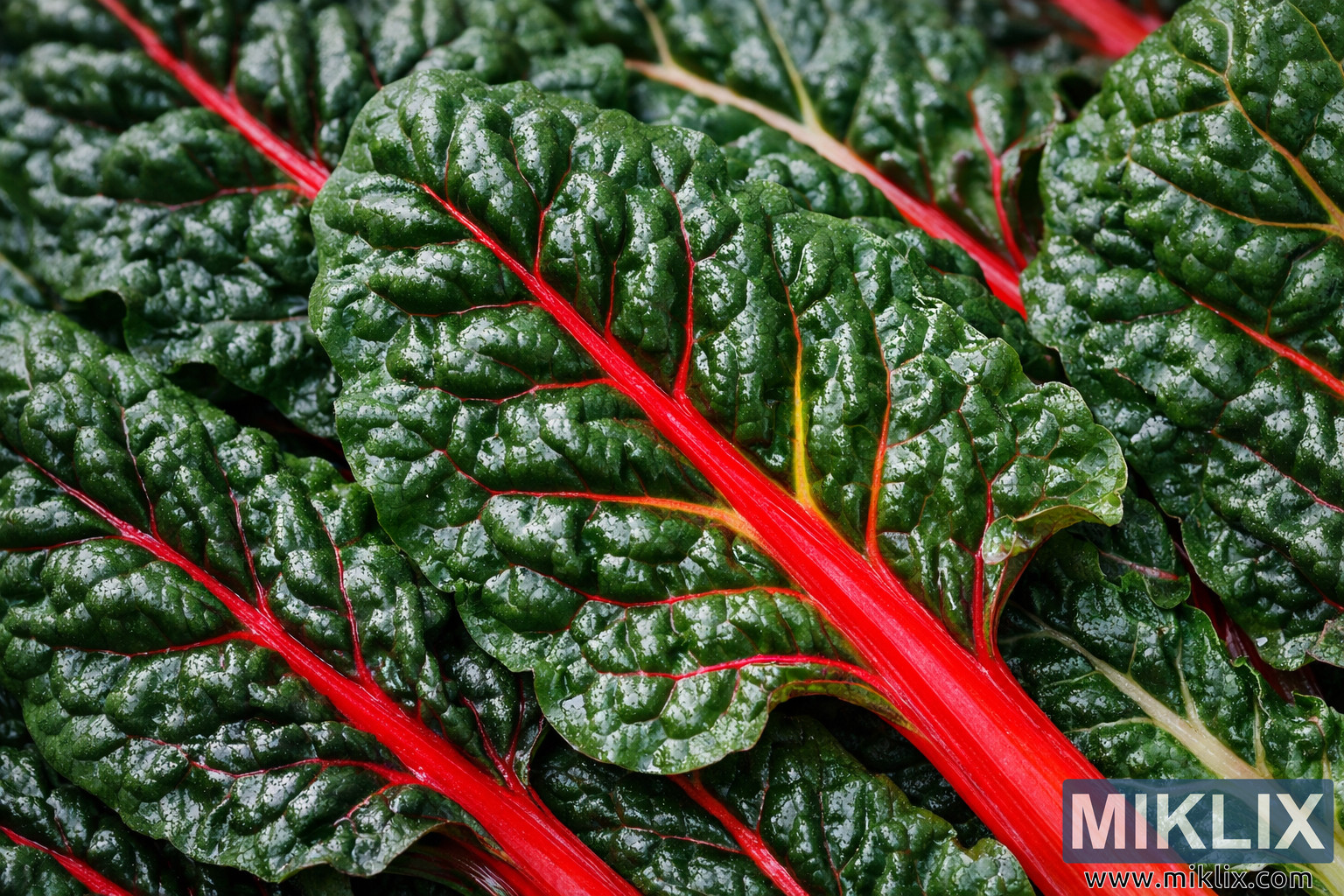
This image presents a breathtaking close-up view of fresh Swiss chard leaves, captured in exquisite detail to reveal the natural beauty and complexity of this nutrient-rich vegetable. The composition focuses on the intricate textures and vivid colors that define Swiss chard, emphasizing the deep green hue of the leaves and the striking contrast of their red and yellow veins. The photograph is taken in landscape orientation, allowing the viewer to immerse themselves in the lush expanse of overlapping leaves that fill the frame.
The surface of each leaf glistens with tiny droplets of water, suggesting freshness and vitality. These droplets catch the light, creating subtle highlights that accentuate the glossy, crinkled texture of the foliage. The veins of the Swiss chard are particularly captivating: thick, red stems run diagonally through the composition, branching into a network of smaller veins that transition from red to golden yellow as they spread outward. This interplay of color adds depth and dynamism to the image, evoking the natural vibrancy of living plant tissue.
The lighting is soft yet directional, illuminating the leaves from above and slightly to the side. This approach enhances the three-dimensional quality of the image, casting gentle shadows that define the contours and folds of the leaves. The result is a sense of tactile realism — one can almost feel the cool, slightly waxy surface of the chard under their fingertips. The shallow depth of field ensures that the central leaf remains in sharp focus, while the surrounding leaves gradually blur into the background, creating a natural sense of depth and perspective.
The color palette is dominated by rich greens, punctuated by the vivid reds and yellows of the veins. The greens range from deep forest tones to lighter emerald shades, reflecting the mineral richness and chlorophyll density of the plant. The reds are bold and saturated, providing a visual counterpoint that draws the eye across the frame. The yellows, though subtler, add warmth and balance to the composition. Together, these colors form a harmonious natural spectrum that conveys both energy and nourishment.
The photograph’s composition is carefully balanced, with the diagonal placement of the red stem creating a dynamic visual line that guides the viewer’s gaze. The overlapping leaves form organic patterns reminiscent of natural fractals, emphasizing the complexity and order found in nature. The image captures not just the appearance of Swiss chard but its essence — a symbol of vitality, growth, and the beauty of edible plants.
Every detail in the image contributes to a sense of abundance and health. The crinkled surfaces of the leaves suggest resilience and strength, while the moisture hints at freshness and life. The image could easily serve as a visual metaphor for sustainability, organic agriculture, or the connection between humans and the earth. It evokes the sensory experience of harvesting fresh produce, the crisp sound of leaves being handled, and the earthy aroma of garden greens.
From a technical perspective, the photograph demonstrates mastery of macro photography. The focus is precise, capturing microscopic details such as the fine ridges along the veins and the subtle variations in leaf texture. The exposure is perfectly balanced, preserving both shadow detail and highlight clarity. The composition avoids clutter, instead presenting a clean, immersive view that celebrates the natural geometry of the plant.
In essence, this image is a celebration of life and nourishment. It transforms a simple vegetable into a work of art, inviting viewers to appreciate the elegance of nature’s design. The Swiss chard leaves appear almost sculptural, their folds and veins forming a living tapestry of color and form. The photograph reminds us that beauty can be found in the everyday — in the humble ingredients that sustain us and in the quiet perfection of organic growth.
Viewed as a whole, the image conveys a sense of calm and vitality. The deep greens soothe the eye, while the bright veins energize the composition. It is both a scientific study of plant anatomy and an artistic exploration of color and texture. Whether used in culinary contexts, educational materials, or environmental campaigns, this image stands as a testament to the richness of the natural world and the artistry inherent in even the simplest leaf.
Gambar kasebut ana hubungane karo: Swiss Chard: Why It Is One of the Healthiest Leafy Greens