
Fermenting Beer with Wyeast 2565 Kölsch Yeast
ထုတ်ဝေသည်-
နောက်ဆုံး မွမ်းမံပြင်ဆင်သည်- ၂၀၂၆၊ ဧပြီ ၁၉ UTC ၂၁:၃၁:၃၅
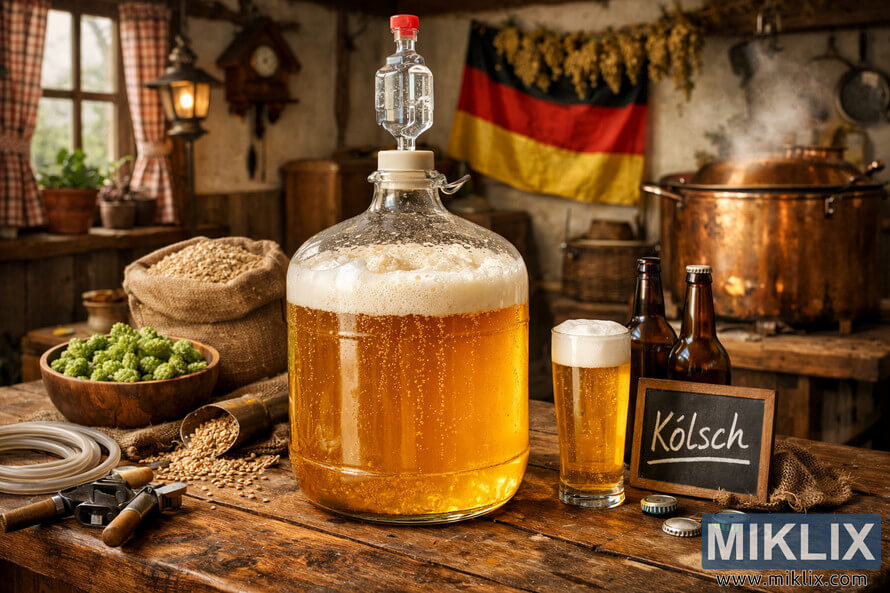
Wyeast 2565 Kölsch Yeast is a classic top-cropping strain rooted in Cologne brewing tradition. Homebrewers prize it for a hybrid character that blends ale-like fruitiness with a lager-like clean finish.
Fermenting Beer with Wyeast 2565 Kölsch Yeast
နောက်ထပ်အချက်အလက်များနှင့် ပိုမိုမြင့်မားသော ရုပ်ထွက်အရည်အသွေးများအတွက် ပုံကို နှိပ်ပါ သို့မဟုတ် တို့ပါ။
This strain ferments well in the recommended cold range and supports authentic Kolsch-style fermentation when kept near 55–60°F (13–16°C). It has low flocculation and often remains powdery in suspension after primary fermentation, so bright beers usually need cold crashing, fining, or filtration.
Expect moderate attenuation around 73–77% and robust alcohol tolerance near 10% ABV. Brewers commonly use Wyeast Kolsch 2565 not only for Kölsch but for cream ales, blondes, Berliner Weisse, and other light styles where a subtle fruit character and clean finish are desired.
In many Kölsch yeast review threads, users note apple and pear esters when temperatures climb, but a crisp, restrained profile when fermented cool.
Key Takeaways
- Wyeast 2565 Kölsch Yeast offers a hybrid ale/lager profile prized for Kolsch-style fermentation.
- Ferment cool (55–60°F / 13–16°C) for the cleanest results and fewer esters.
- Low flocculation means plan for cold crashing or fining to achieve clarity.
- Typical attenuation is 73–77%; alcohol tolerance approaches 10% ABV.
- Versatile strain: works well in cream ales, blonde ales, Berliner Weisse, and light fruit beers.
What makes Wyeast 2565 Kölsch Yeast unique for homebrewers
Wyeast 2565 boasts a lineage from Cologne breweries, embodying a strong Köln yeast pedigree. This appeals to brewers who value tradition and consistent performance. Homebrewers appreciate its top-cropping behavior and reliable attenuation. These traits make it ideal for both small batches and larger brews.
This strain bridges the gap between ale and lager worlds. It offers ale-like fruitiness upfront, finishing with lager-like cleanliness. This balance makes it a favorite for those seeking a quick-conditioning pseudo-lager with subtle complexity.
Flavor-wise, 2565 is known for delicate esters and a faint wine or grape note, reminiscent of Chardonnay. This nuance is part of its Kolsch heritage, distinguishing it from other Kölsch strains like WLP029. Brewers opt for 2565 when they desire a restrained fruit presence that adds personality to light beers.
Forum reports and brewer notes highlight its distinct ester mix and low diacetyl production. The outcome is a clear, drinkable beer with a Kölsch yeast flavor profile. This supports pilsner-like malts and noble hopping without overpowering them. Many use 2565 for traditional Kölsch, cream ales, and experimental light styles where subtle fruit and a clean finish are desired.
နောက်ထပ်အချက်အလက်များနှင့် ပိုမိုမြင့်မားသော ရုပ်ထွက်အရည်အသွေးများအတွက် ပုံကို နှိပ်ပါ သို့မဟုတ် တို့ပါ။
Wyeast 2565 Kölsch Yeast
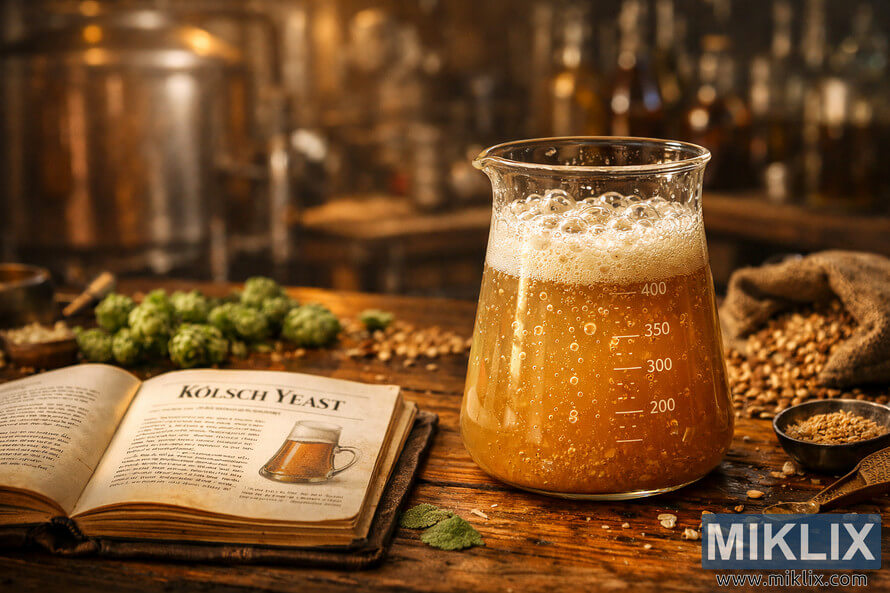
Wyeast 2565 is a true top-cropping Kölsch strain from Cologne, known for its distinctive character and a light, wine-like fruitiness. Brewers appreciate the Wyeast 2565 identity for its soft ester profile and crispness when fermented in the recommended range. The yeast remains suspended as a fine powder after fermentation, leading to low flocculation without intervention.
Managing strain behavior is straightforward. As a top-cropping yeast, 2565 behaves like traditional ale yeasts during active fermentation. It produces a subtle, apple-pear-wine tone, characteristic of Kolsch. Cold conditioning and fining are effective in clearing the beer when the powdery cells refuse to drop on their own.
When choosing a Kolsch yeast, consider the options. In community comparisons, WLP029 vs 2565 often arises. WLP029 typically offers a cleaner finish and clears faster. WY1007, on the other hand, is seen as a more neutral, lager-like alternative that drops easier, making it ideal for those prioritizing clarity and neutrality.
- Flavor: 2565 brings delicate fruit and slight wine notes that some find essential for an authentic Kölsch-style beer.
- Clarity: WLP029 tends to clear more readily than 2565; WY1007 clears even easier.
- Handling: Cold crash and fining can resolve the low-flocculation tendency of 2565.
The choice of 2565 for Kolsch yeast choices is often driven by taste. Those aiming for the traditional Cologne profile accept the extra finishing steps for the estery signature that 2565 provides. Others prefer WY1007 or WLP029 for a cleaner, more neutral canvas for hops or malt nuances.
Decide based on your final goals. Use 2565 when subtle fruit and classic character are key. Opt for WLP029 or WY1007 when clarity, neutrality, or simpler handling is more important.
နောက်ထပ်အချက်အလက်များနှင့် ပိုမိုမြင့်မားသော ရုပ်ထွက်အရည်အသွေးများအတွက် ပုံကို နှိပ်ပါ သို့မဟုတ် တို့ပါ။
Fermentation temperature range and its impact on flavor
Wyeast 2565 is highly sensitive to temperature. Even slight changes can significantly alter ester levels and mouthfeel. Brewers aiming for a clean Kölsch profile tend to keep temperatures lower. Those seeking fruit notes, however, carefully increase the temperature.
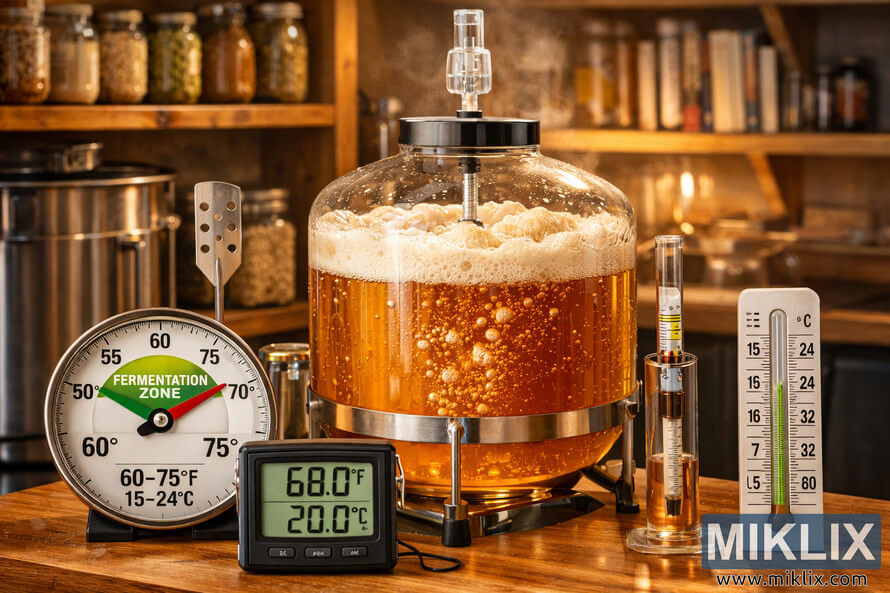
Recommended cold range: 55–60°F (13–16°C) for clean profile
To achieve a crisp, lager-like finish, aim for 55–60°F. This temperature range minimizes phenolic and fruity esters, promoting quick conditioning. For a cleaner Kolsch, start fermentation cooler and maintain consistent temperatures during the active phase.
Extended range and effects up to 70°F (21°C): increased esters and fruitiness
Increasing Wyeast 2565 temperature to the mid- to high-60s enhances apple and pear notes. Near 70°F, the strain can produce pronounced esters, deviating from traditional Kölsch profiles. This can be beneficial for creating unique pale ales and blondes with a fruity twist.
Practical tips for summer fermentation when ambient temps are higher
- Employ a swamp cooler, frozen water bottles, or an insulated cooler to stabilize Wyeast 2565 temperature during summer fermentation.
- Position the fermenter in a basement or cellar where nighttime lows can counteract daytime heat.
- Pitch slightly cooler wort to offset expected ambient temperature increases during active fermentation.
- If precise temperature control is challenging, opt for recipes and hopping levels that tolerate softer ester profiles. Alternatively, select a strain known for lower fruitiness.
နောက်ထပ်အချက်အလက်များနှင့် ပိုမိုမြင့်မားသော ရုပ်ထွက်အရည်အသွေးများအတွက် ပုံကို နှိပ်ပါ သို့မဟုတ် တို့ပါ။
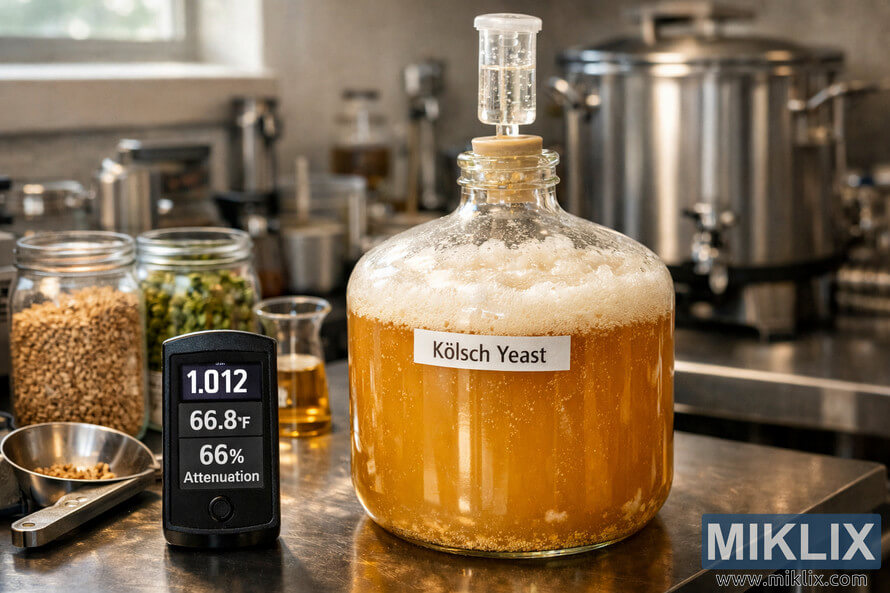
Attenuation and alcohol tolerance: recipe planning
When planning a recipe with Wyeast 2565, it's crucial to balance attenuation, original gravity, and the beer's body. This strain is renowned for its high attenuation, resulting in a crisp finish with lighter malt bills. To achieve an authentic Kölsch, select mash and grain options that align with your desired mouthfeel.
- Expected attenuation and final gravity
- Wyeast 2565 typically attenuates between 73–77%. This range directly influences the Kolsch's final gravity. Calculate your original gravity to achieve a final gravity that maintains the beer's light body. A modest OG, achieved with pilsner malt and a touch of wheat, often results in a crisp, drinkable beer.
- Alcohol tolerance and style fit
- This yeast's alcohol tolerance is near 10% ABV, allowing brewers to experiment with stronger beers. However, Kolsch-style beers are typically lower in ABV. High-gravity beers can alter the ester balance and body. Use this tolerance to explore stronger ales but monitor flavor shifts carefully.
- Adjusting mash and OG
- Lowering mash temperatures (148–152°F) increases fermentability. This helps the strain reach its attenuation range without a heavy body.
- To achieve a fuller mouthfeel, slightly raise the mash temperature or add dextrin malt. This keeps the Kolsch final gravity higher while maintaining balance.
- For recipes with higher ABV, stagger fermentables or add simple sugars. This avoids excessive harshness while utilizing the yeast's alcohol tolerance.
When crafting a recipe, use yeast calculators with 73–77% attenuation in mind. Factor in expected mash efficiency for a reliable prediction of Kolsch final gravity. This approach helps avoid surprises in body and drinkability.
နောက်ထပ်အချက်အလက်များနှင့် ပိုမိုမြင့်မားသော ရုပ်ထွက်အရည်အသွေးများအတွက် ပုံကို နှိပ်ပါ သို့မဟုတ် တို့ပါ။
Flocculation behavior and clarity management
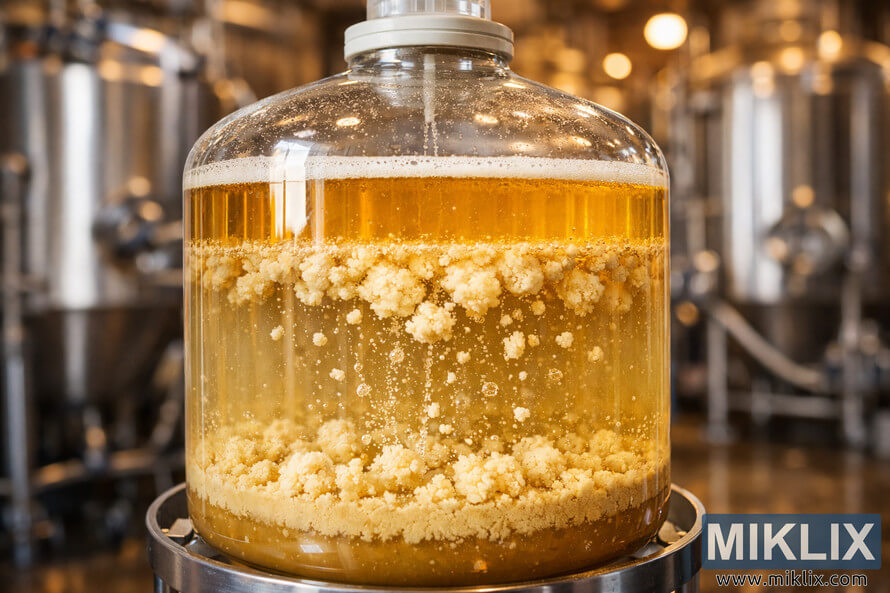
Wyeast 2565 flocculation is notably low, with the yeast often hanging in a powdery suspension long after fermentation ends. Brewers aiming for a bright Kölsch will need to take extra steps for glass-clear beer. A combination of temperature control, fining, or filtration usually yields the quickest results.
Low flocculation and powdery suspension
This strain tends to remain suspended rather than forming a tight yeast raft. Clarity issues arise from tiny cells that float instead of settling. This behavior slows down clearing Kolsch yeast without intervention.
Commercial Kolsch strains like WY1007 or White Labs WLP029 settle faster, which is why homebrewers often report longer waits with 2565. Expect a longer settling time if relying solely on gravity.
Cold crashing, fining, and filtering strategies
- Cold crash Kolsch for 48–72 hours near 35–40°F to encourage yeast and haze proteins to drop out.
- Use gelatin fining Kolsch after cold crash; a quick hit of 0.25–0.5 g per liter at 40°F typically clears beer in 24–48 hours.
- Consider filtration when you need bright beer fast; plate or cartridge options remove suspended cells that fining may leave behind.
Combining methods yields the best results. A short cold crash followed by gelatin fining Kolsch and gentle filtration produces bright beer without long cellar times.
Real-world timelines: clearing vs forum myths
Online threads often claim 2565 takes six weeks or more to clear. However, practical tests show otherwise. Many brewers achieve near-bright clarity in four days after a 48-hour cold crash Kolsch, gelatin fining Kolsch, and another 48 hours of conditioning.
If you keg, cold crash and fine in the keg, then carbonate lightly and rack. This approach shortens the wait compared to bottle conditioning or passive aging.
For brewers chasing a clear pour, plan for active clearing steps. Expect faster results with consistent cold control, a properly mixed gelatin dose, and, when needed, a filtration pass to polish the beer. These steps tame the powdery suspension and make Wyeast 2565 flocculation manageable for homebrewed Kölsch.
နောက်ထပ်အချက်အလက်များနှင့် ပိုမိုမြင့်မားသော ရုပ်ထွက်အရည်အသွေးများအတွက် ပုံကို နှိပ်ပါ သို့မဟုတ် တို့ပါ။
Selecting styles beyond Kölsch: versatility of 2565
Wyeast 2565 is versatile for light, delicate beers where yeast character can shine. It's ideal for subtle fruit and a clean finish, enhancing malt clarity. Here are practical style ideas and cautions for recipe choices.
It's a great match for cream ale, blonde ale, American wheat, and other light ales. These styles benefit from the yeast's soft fruity esters and a slight wine-like note. If you're exploring cream ale yeast options, 2565 offers a unique, rounded profile.
- Cream ale: clean body and gentle ester lift make it a strong pairing for this style.
- Blonde ale: retains malt softness while adding subtle complexity.
- American wheat: light bready malt with delicate fruit works well.
Experimental uses can yield interesting results with gentle handling. Consider 2565 for Berliner Weisse, fruit beers, or cider blends. It provides a background fruitiness that complements added fruit without overpowering it.
- Berliner Weisse: lets acidity and yeast esters coexist with balance.
- Fruit beers and cider blends: yeast adds depth and a soft vinous edge.
- Spice or herb beers: subtle yeast fruit can support botanical notes.
However, this strain may not be suitable for all styles. Strongly hopped IPAs or heavily malted, robust ales can clash with its Kolsch-like character. High hopping rates can fight the yeast’s delicate profile. Rich, malty beers may either obscure the yeast or suffer from an odd flavor mismatch.
- Strongly hopped styles: hop bitterness and aroma can compete with yeast esters.
- Heavy malt profiles: bready, caramel-forward beers mask or conflict with 2565 traits.
For brewers exploring Kolsch yeast other styles, keep fermentation temperature controlled. When developing Wyeast 2565 recipe ideas, plan the malt bill and hopping to either highlight or minimize the yeast’s fruitiness. Small test batches reveal how 2565 shifts in different contexts.
Pitching rates, starters, and yeast health
Opting for the correct Wyeast 2565 pitching rate is crucial for achieving a clean Kölsch profile and consistent attenuation. For batches of 5+ gallons, it's advisable to create a Kolsch yeast starter or use multiple packs for higher original gravities. Failing to size starters properly can lead to sluggish starts, stressing the yeast and altering flavors.
How many cells to pitch for typical batch sizes
- Utilize a pitching calculator to align cell counts with your target gravity and batch volume.
- For low-gravity Kolsch, a single healthy Wyeast pack might suffice, but a starter enhances reliability.
- For richer worts or larger volumes, increase counts with a stepped starter or combine packs.
Making and using a starter with Wyeast packs vs smack packs
- Wyeast liquid packs benefit from a 12–24 hour starter, boosting cell count and reducing lag time.
- Smack packs perform similarly; simply crack and feed them into prepared wort for the starter.
- Ensure starters are aerated and kept at moderate temperatures to prevent stressing the culture before pitching.
Oxygenation, nutrient use, and avoiding stalled fermentations
- Proper yeast oxygenation at pitch aids in building sterols and cell walls for robust growth.
- If anticipating high gravity, incorporate yeast nutrients to support thorough fermentation.
- Keep a close eye on gravity and fermentation activity to catch issues early and prevent stuck fermentation.
Fermentation schedule and temperature control techniques
Timing and temperature are crucial for Kölsch-style ales. A clear plan for lag, active fermentation, diacetyl rest, and cold conditioning is essential. This ensures a clean profile, which Wyeast 2565 favors.
- Lag phase (24–48 hours) — Expect a short lag after pitching. Keep wort steady at the target start temperature to avoid stress on the yeast.
- Active fermentation (3–7 days) — Ferment in the mid-50s to mid-60s depending on how much ester you want. Tracking gravity twice daily gives confidence that activity is proceeding.
- Diacetyl rest if needed — Many brewers skip an extended diacetyl rest with 2565, yet a brief warm-up can help clean trace buttery compounds. Time one carefully and keep it short to avoid extra esters when you want a very clean beer.
- Cold conditioning (3–14 days) — Drop temperature for clarity and stability. Cold storage speeds flocculation and improves brightness.
Step-by-step timeline: lag, active, diacetyl rest, conditioning
Start at your chosen set point and log conditions. For a crisp Kölsch, target the low 50s to low 60s. Aim for predictable gravity drop during active fermentation and plan the diacetyl rest Kolsch batches rarely require.
Using temperature ramps to control ester production
A gentle temperature ramp can increase fruitiness in a controlled way. Raise the fermenter a few degrees during the middle of active fermentation to nudge ester formation, then lower it for the finish. This temperature ramp Kolsch method gives you a tool to shape flavor without drastic swings.
Affordable homebrewer setups for 55–65°F control
Temperature control need not be expensive. Many use a converted refrigerator or chest freezer with a digital temperature controller for precise results. This fermentation chamber DIY approach delivers consistent mid-50s to mid-60s ranges for true Kölsch character.
Low-cost alternatives include a swamp cooler with insulated jacket or a water bath with a thermostat. These give repeatable control for small batches and fit into most homebrewer workflows.
Conditioning, maturation, and carbonating a Kölsch-style beer
Following active fermentation with Wyeast 2565, a brief maturation period enhances drinkability and clarity. The process of Kolsch conditioning benefits from cold temperatures, allowing yeast and proteins to settle. This approach shortens the wait time while maintaining the beer's delicate balance of fruitiness and clean finish.
- Quick-conditioning with 2565
- Ferment at the cooler end of the strain range, then lower the temperature to the high 30s°F for a pseudo-lager effect. Quick-conditioning with 2565 leverages its low diacetyl production, so lengthy rests are less crucial.
- A 48-hour cold crash at ~38°F will compact much of the yeast and trub. Many brewers pair that with a brief fining treatment for faster brightening.
- Cold storage and clarity timeline
- After cold crash, apply gelatin and hold another 48 hours to accelerate clearing. Lagering Kölsch for a week or two at near-freezing temperatures stabilizes flavor and reduces haze risk.
- Forum-tested routines show that time plus cold and finings produce stable flavor without long lager periods. Short maturation still benefits from patience; flavor melds over days, not hours.
- Kegging versus bottling and carbonation targets
- Kegging speeds clarification because you can cold-condition and force-carbonate. Carbonation Kolsch in a keg at 2.3–2.8 volumes CO2 yields the classic spritz and mouthfeel.
- Bottling can reach the same carbonation Kolsch level by priming, but yeast in suspension can prolong haze and require extra conditioning time. Bottled beer may need more weeks before it shows true clarity.
- Practical tip: cold-condition in the keg, then force-carbonate to target volumes. This gives a bright pour and consistent carbonation Kolsch faster than bottle conditioning.
Common off-flavors and troubleshooting with 2565
Wyeast 2565 is known for producing a clean Kölsch. However, off-flavors can still occur. This guide aims to identify common issues and provide practical solutions. It ensures that homebrewers can quickly address any deviations from the desired flavor profile.
Fruity esters are more likely when fermentation temperatures are high. To combat this, ferment at temperatures between the mid-50s and low-60s Fahrenheit. Maintaining cooler temperatures, consistent pitching, and moderate oxygenation at the start can help control ester levels. If esters appear later, extending the cold conditioning period can help mellow the flavors.
Diacetyl is rare with this strain, but off-flavors can still happen. For diacetyl 2565 troubleshooting, a warm diacetyl rest at 65–68°F for 24–48 hours can help. Ensure fermentation is complete before starting this rest. Cold storage for an extended period often resolves any remaining diacetyl without harsh measures.
Many brewers encounter transient sulfur aromas early in fermentation. Sulfur in beer usually dissipates with time and aeration within the first 24–48 hours. If sulfur persists, try gently rousing the yeast, a brief warm period, and then cold-conditioning. Filtration or additional aging typically clears any remaining aromas.
- Keep fermentation temps steady and on the lower side to avoid Kolsch off-flavors.
- If esters appear, drop temps and extend conditioning to reduce esters Kolsch.
- Address sulfur in beer with patience: rousing, short warm rest, and longer lagering usually solve it.
Preventive measures like proper pitching rates, healthy starters, and yeast nutrients can minimize off-flavor risks. Monitor temperatures closely, using a reliable thermometer or controller. Documenting each batch makes it easier to apply fixes over time.
Comparing Wyeast 2565 to other Kolsch and German strains
Choosing the right yeast is crucial in crafting a Kölsch. This section delves into the practical differences to help brewers select the perfect strain. We'll explore the nuances of each yeast, guiding you in choosing the one that aligns with your desired flavor and clarity.
The contrast between 2565 and WLP029 is striking. Wyeast 2565 is a top-cropping strain from Cologne, known for its powdery suspension and low flocculation. It imparts subtle fruit and wine-like notes. On the other hand, White Labs WLP029 offers a cleaner profile, dropping clearer faster and providing a more neutral Kölsch character.
WY1007 stands out for its neutrality and rapid clearing. This strain ferments in a lager-like manner, producing minimal esters. It's ideal for brewers aiming for a neutral canvas for hops or malt. WY1007 is the go-to for those prioritizing fast clarity and minimal yeast character.
The choice of Kolsch strain significantly impacts your recipe and process. For delicate fruity or winy flavors, 2565 is the preferred choice. WLP029 is better suited for an ester-free, traditional Kölsch. Meanwhile, WY1007 offers a neutral, lagerish profile.
When selecting Kolsch yeast, consider the following:
- Flavor: 2565 imparts faint fruit and wine notes; WLP029 is cleaner; WY1007 is most neutral.
- Flocculation: WLP029 and WY1007 clear quicker; 2565 can stay in suspension longer.
- Fermentation temp: WLP029 and 2565 perform well in the high 50s to low 60s; WY1007 tolerates cool ranges for crisper results.
Align strain traits with your brewing process. If you rely on extended cold conditioning or filtration, 2565's low flocculation is less of an issue. For quick clarity in commercial runs, WY1007 is often preferred. Many brewers opt for WLP029 for a classic, clean Kölsch impression.
These comparisons serve as a guide, not a rule. Small-scale trials and sensory evaluations will reveal how each strain performs in your setup. Monitor attenuation, clarity, and aroma to refine your choices over time.
Equipment and sanitation best practices for clean Kölsch fermentation
Clean Kölsch brewing begins with the right tools and adherence to strict procedures. A concise list of necessary items ensures yeast-driven flavors remain pure. This pursuit aims for a bright, delicate finish. The choice of equipment should align with the cold fermentation profile and low-flocculation nature of this style.
For a temperature-stable brew day, a temperature-controlled fermenter is essential. Pair this with a fridge or freezer and an external controller for precise temperature control. An accurate hydrometer or refractometer is also crucial. An immersion chiller or plate chiller aids in quick wort cooling, minimizing hot-side oxidation. These tools support precise yeast temperature control and steady fermentation from pitch to conditioning.
Smaller accessories play a significant role. A reliable airlock, sanitary tubing, and a wort pump are vital for reducing oxygen pick-up during transfers. Opt for fermenters with good thermal contact, such as stainless conicals or jacketed fermenters, if feasible. Proper Kolsch fermentation equipment minimizes variables that could mask the subtle yeast character.
- Temperature-controlled fermenter or chest freezer with external controller
- Immersion chiller or plate chiller for fast cooling
- Hydrometer or refractometer for accurate gravity readings
- Conical fermenter or carboy with minimal headspace
Sanitation is paramount when working with delicate Kölsch flavors. Utilize a no-rinse sanitizer like Star San for all equipment that comes into contact with cooled wort or beer. Sanitize transfer lines, clamps, and fittings just before use. Clean tanks and kegs promptly after use to prevent biofilm buildup, which can harbor off-flavor producers.
Yeast handling is critical. Prepare starters with known, healthy cultures and avoid oxygen exposure after primary fermentation to protect subtle esters. Maintaining consistent yeast temperature control during active fermentation prevents stress that can create unwanted fruity or sulfur notes.
Given that Wyeast 2565 and similar strains often leave beer hazy, plan for clearing steps. Cold crashing to near-freezing encourages yeast and trub to settle. Follow this with fining agents to enhance brightness and shorten cellar time.
- Cold crash for 48–72 hours to encourage settling
- Gelatin or Biofine as fining tools to accelerate clarity
- Filtration when you need commercial-level brightness
By combining reliable Kolsch fermentation equipment, strict sanitation routines, precise yeast temperature control, and targeted fining tools, you achieve a clean, balanced Kölsch. These practices allow the yeast's delicate character to shine without interference from haze or off-flavors.
Real brewer experiences and community notes on 2565
Homebrewers consistently note the presence of apple and pear esters in Wyeast 2565. These flavors, reminiscent of light wine or grape, emerge when fermentation warms up. Such notes are common in both Kolsch brewer experiences and broader light-ale trials.
Forum threads and cellar notes frequently advise on the importance of cold fermentation. This method helps maintain a clean profile. Many recommend fermenting between 55–60°F for a more restrained character. As temperatures approach the mid-60s, the apple and pear notes become more pronounced, a preference for some brewers.
- Reported flavor impressions: apple, pear, winy character
- Clearing advice: cold crash plus fining agents such as gelatin
- Strain comparisons: some prefer WLP029 or WY1007 for different fruit or clarity results
A homebrewer's case study involved Pilsner malt, a touch of wheat, and Tettnang hops. Despite imperfect temperature control, the batch finished straw-colored and crisp. A winy aroma lingered until a cold crash and gelatin fining sped up clearing. This experience is echoed in several 2565 recipe examples on forums.
Practical tips from Kolsch brewer experiences include gentle oxygenation at pitch and using healthy starters for larger batches. Small temperature shifts can also help tune esters. Community Kolsch tips often suggest experimenting with mash bill and hopping to balance the yeast’s fruit and wine notes.
- Start with a clean Pilsner base and modest wheat for body.
- Pitch a robust starter to avoid extended lag and off-flavors.
- Cold crash and use a fining to accelerate clarity if serving as a Kölsch-style beer.
Wyeast 2565 reviews in homebrew logs are generally positive when brewers understand what to expect. Those aiming for a neutral Kölsch should keep temperatures low. For those desiring more fruit character, warming fermentation slightly can achieve this. The community frequently shares 2565 recipe examples and adjustments, aiding in reproducing or tweaking these results.
Conclusion
Wyeast 2565 summary: This Cologne top-cropping strain offers a unique blend. It provides clean, lager-like clarity when kept cool. Yet, it also reveals a restrained apple/pear estery note if warmed. Brewers aiming for an authentic Kölsch profile will find it reliable. It boasts low diacetyl and 73–77% attenuation, perfect for light, drinkable beers with subtle fruit and a faint wine-like edge.
Fermenting with Kolsch yeast requires careful attention to temperature and clarity. For the cleanest results, maintain fermentation between 55–60°F. If you prefer a fruitier character, fermenting at 70°F is acceptable. Due to its slow flocculation, a cold crash and fining like gelatin or filtration are essential. They enhance brightness without stripping flavor.
Best Kolsch practices include pitching healthy cell counts and oxygenating the wort. A short lager-style conditioning is crucial for settling yeast and stabilizing flavors. Homebrewers have successfully used 2565 for Kölsch, cream ales, and blondes. Its tolerance near 10% ABV allows for stronger recipes while preserving delicate Kölsch traits.
In summary, fermenting with Wyeast 2565 demands meticulous temperature control and post-fermentation care. Adhere to the Wyeast 2565 summary as a guide. Manage temperature, support yeast health, and plan for fining or cooling. This will help achieve the bright, balanced beer characteristic of the style.
နောက်ထပ်အချက်အလက်များနှင့် ပိုမိုမြင့်မားသော ရုပ်ထွက်အရည်အသွေးများအတွက် ပုံကို နှိပ်ပါ သို့မဟုတ် တို့ပါ။
FAQ
What is Wyeast 2565 Kölsch yeast and where does it come from?
Wyeast 2565 is a top-cropping Kölsch strain from a traditional Cologne, Germany brewery. It offers a unique blend of ale fruitiness and lager cleanliness. Brewers love it for authentic Kölsch and quick-conditioning pseudo-lagers at cool temperatures.
What flavor profile does 2565 contribute?
2565 adds subtle fruit esters and a wine-like note, similar to Chardonnay. At warmer temperatures, it reveals apple and pear flavors. However, cool fermentation yields a crisp, clean Kölsch profile.
How does 2565 compare to WLP029 and WY1007?
2565 has more fruit and a winy character than WLP029, which is cleaner and clearer. WY1007 is neutral and lager-like, ideal for a clean profile and fast clearing. Choose 2565 for Kölsch fruitiness, WLP029 for cleanliness, and WY1007 for neutrality.
What is the fermentation temperature range and how does it affect flavor?
The recommended range is 56–70°F, with a cold range of 55–60°F for a clean profile. Higher temperatures increase ester production. For a cleaner taste, ferment at the lower end and consider temperature control.
What practical tips help manage fermentation in warm weather?
Use a temperature-controlled fridge, a swamp cooler, or a water-bath with insulation for summer brewing. Active cooling and temperature reduction reduce esters. If temperature control is not possible, consider a more neutral strain like WY1007.
What are the attenuation and alcohol tolerance figures for 2565?
2565 has an attenuation of 73–77%, resulting in a dry finish. It can handle beers up to 10% ABV, but esters and body may change at high OGs.
How should I adjust my mash and OG when using 2565?
Use a Pilsner malt base with a small wheat addition for Kölsch. Set OG to achieve the desired final gravity. For stronger beers, expect fuller attenuation and consider ester interaction with malt.
Does 2565 flocculate well? How do I get bright beer?
2565 has low flocculation, so it stays in suspension. For bright beer, cold crash and use gelatin or Biofine finings. Filtering or extended settling also help.
What cold-crash and fining steps work in real practice?
Cold crash at ~38°F for 48 hours, then add gelatin for another 48 hours before kegging. This method often results in near-bright clarity within four days. Longer conditioning or filtration can further stabilize clarity.
What beer styles are a good fit for 2565 beyond Kölsch?
2565 suits cream ale, blonde ale, American wheat, light session ales, and some bières de garde. It's also used in Berliner Weisse, fruit beers, and cider blends. Avoid it in heavily hopped or malty beers.
Can 2565 be used in cream ales, APAs, or ciders?
Yes, but it may impart a Kölsch-like character. Ferment cooler to minimize esters for a more neutral finish.
How many cells should I pitch and should I make a starter?
For consistent results, make a starter, especially with Wyeast liquid packs. This ensures adequate cell counts. Low-gravity Kolsch beers might ferment from a single pack, but a starter improves reliability, especially at cool temperatures.
How do I make and use a starter with Wyeast 2565?
Rehydrate or smack the pack, then build a starter for your target gravity. Aerate well and let it finish before decanting and pitching. Starters boost yeast health and fermentation vigor, especially at cool temperatures.
What oxygenation and nutrient practices help avoid stalled fermentations?
Oxygenate wort at pitch and consider yeast nutrients for high-gravity beers. Maintain recommended fermentation temperatures and monitor gravity. Warm slightly for a short diacetyl rest or to restart sluggish activity if needed.
What fermentation schedule should I follow with 2565?
Expect a 24–48 hour lag, then active fermentation for several days. Allow conditioning. Diacetyl rest is usually unnecessary, but a short warm rest can help if needed. Finish with cold conditioning to clarify and stabilize flavor.
Can I use temperature ramps to shape ester production?
Yes. Start fermentation at the lower end (mid-50s°F) for a clean profile. Raise temps into the mid-60s for more fruit if desired. Avoid sustained temps near 70°F to keep esters restrained.
What affordable equipment options help hold 55–65°F?
Use a temperature-controlled fridge, a swamp cooler, or a water-bath with insulation. For small budgets, a water-bath with overnight ice changes and insulation can work short-term.
How quickly can I condition and carbonate a Kölsch-style beer with 2565?
2565 supports quick-conditioning pseudo-lagers. Cold-conditioning for several days to a few weeks improves clarity and flavor. Many brewers reach acceptable clarity within a few days with cold crashing and fining, then carbonate to typical Kölsch levels.
How long should I cold-store to stabilize flavor and clarity?
A few days to a couple of weeks of cold storage after fermentation is often enough with finings. For maximum brightness and stability, a week or more at near-freezing temperatures helps. The exact time depends on your fining and filtration steps.
What carbonation levels are typical for Kölsch when kegging vs bottling?
Aim for moderate carbonation around 2.3–2.8 volumes CO2 for Kölsch. Kegging with forced CO2 reaches stable carbonation and clarity faster. Bottle conditioning works but may leave haze due to 2565's poor flocculation.
What off-flavors are common with 2565 and how do I troubleshoot them?
The main off-flavor concern is excessive fruity esters at warmer temperatures. Reduce esters by fermenting at 55–60°F and maintaining temperature control. Diacetyl is generally low to none; if detected, perform a short warm rest. Transient sulfur aromas may appear early but usually dissipate during conditioning and cold storage.
What should I do if fermentation stalls or under-attenuates?
Check pitch rate, wort oxygenation, and temperature. Warm the fermenter slightly to encourage activity, ensure proper yeast nutrient use for high-gravity worts, and consider re-pitching healthy yeast if necessary. Monitor gravity to confirm progress before taking corrective steps.
What sanitation and equipment practices protect delicate Kölsch flavors?
Use a reliable no-rinse sanitizer like Star San, sanitize all transfer lines and vessels, and minimize oxygen pickup after fermentation. Essential gear includes a temperature-controlled fermenter, accurate thermometer, hydrometer or refractometer, and fining tools like gelatin or a plate/filter setup if you plan to clarify aggressively.
What community experiences summarize 2565’s strengths and weaknesses?
Homebrewers praise 2565 for its desirable subtle fruit and winy character, reminiscent of authentic Kölsch. Its weaknesses include low flocculation and a tendency to stay in suspension, requiring cold-conditioning and fining. Many choose 2565 for flavor and accept extra finishing steps for brightness.
Are there example recipes or tweaks brewers recommend for 2565?
A common successful recipe uses Pilsner malt with a small wheat addition, Tettnang or Hallertau hops, modest OG to keep body light, and fermentation at 55–60°F. Cold crash and gelatin fining after fermentation speed clarity. Adjust mash and hopping to BJCP Kölsch guidelines if targeting competition or classic balance.
နောက်ထပ်စာဖတ်ခြင်း။
ဤပို့စ်ကို သင်နှစ်သက်ပါက၊ ဤအကြံပြုချက်များကို သင်လည်း နှစ်သက်နိုင်ပါသည်-
- White Labs WLP051 California V Ale Yeast ဖြင့် ဘီယာကို အချဉ်ဖောက်ခြင်း
- Wyeast 1099 Whitbread Ale Yeast ဖြင့် ဘီယာကို အချဉ်ဖောက်ခြင်း
- White Labs WLP060 American Ale Yeast Blend ဖြင့် ဘီယာကို အချဉ်ဖောက်ခြင်း