
Fermenting Beer with Wyeast 3056 Bavarian Wheat Blend
Publicado:
Última atualização: 31 de maio de 2026 às 16:40:21 UTC
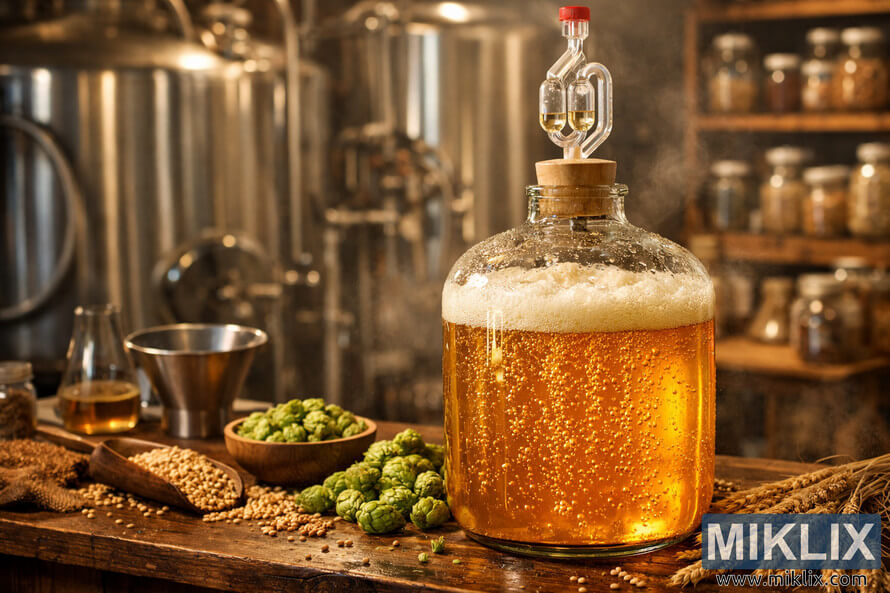
Wyeast 3056 Bavarian Wheat Blend offers a distinct flavor profile, ideal for traditional German wheat beers. It produces pronounced fruity esters, leaning towards banana, and distinct phenolic notes reminiscent of clove. This balance is achieved through moderate attenuation and a soft mouthfeel, thanks to wheat proteins.
Fermenting Beer with Wyeast 3056 Bavarian Wheat Blend
Clique ou toque na imagem para obter mais informações e resoluções mais altas.
Key Takeaways
- Wyeast 3056 Bavarian Wheat Blend is tailored for classic German wheat styles.
- Expect banana esters and clove phenolics when fermenting wheat beer in recommended ranges.
- Good mouthfeel and traditional haze make it ideal for hefeweizen and related beers.
- This Wyeast 3056 review will cover pitching, temperature control, and troubleshooting.
- Advice is oriented to U.S. homebrewers and craft brewers sourcing and storing Bavarian wheat yeast.
Why Choose Wyeast 3056 Bavarian Wheat Blend for Your Brew
The yeast's flavor profile excels in recipes where yeast character is paramount. At cooler temperatures, the clove character becomes more pronounced. Conversely, warmer temperatures enhance the banana esters. Small adjustments in pitch rate, oxygenation, and fermentation temperature can significantly impact the final aroma and taste.
Profile overview and expected flavor contributions
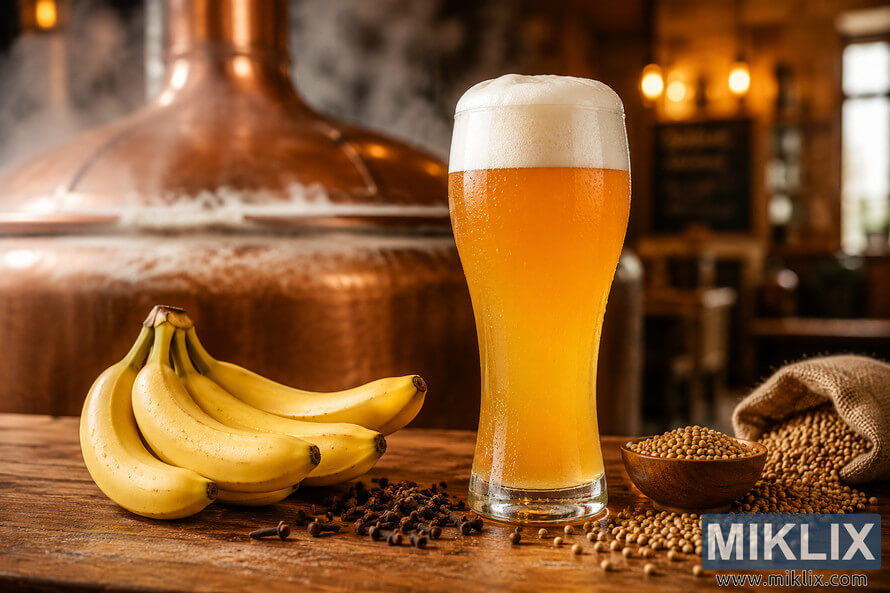
This yeast is known for producing isoamyl acetate, contributing to banana-like esters, and 4-vinyl guaiacol, which imparts clove-like phenolics. It offers a rounded palate, thanks to wheat body and moderate attenuation, leaving enough residual sweetness to support esters. The intensity of these flavors can be adjusted by temperature and handling, making it versatile for both expressive and restrained beers.
How it compares to other wheat yeast strains
In a comparison of wheat beer yeasts, Wyeast 3056 often strikes a balance between banana and clove esters. Wyeast 3068 Weihenstephan tends to emphasize phenolic character more. White Labs WLP300 Hefeweizen, on the other hand, produces more banana esters at similar temperatures. The flocculation and clarity of the beer can vary significantly between strains, affecting haze retention and settling behavior.
Use cases: Hefeweizen, Dunkelweizen, Weizenbock
- Hefeweizen: Wyeast 3056 is ideal for a classic, drinkable hefe with lively esters and a soft mouthfeel. It's best suited for ABV ranges of 4.5–5.5%, where yeast character remains prominent. Many brewers consider it the best yeast for hefeweizen.
- Dunkelweizen: Combine 3056 with Munich or crystal malts for toasty and caramel notes. The yeast's banana and clove notes complement darker malt flavors without overpowering them. Aim for 5.5–6.5% ABV for balance.
- Weizenbock: For stronger, higher-gravity weizenbock, Wyeast 3056 can tolerate elevated alcohol and supply ester/phenol complexity. It plays well against a robust malt backbone. Target 7.0–9.0% ABV and manage fermentation to keep esters from becoming flabby.
Clique ou toque na imagem para obter mais informações e resoluções mais altas.
Understanding the Yeast: Strain Characteristics and Genetics
Wyeast 3056 strain characteristics influence fermentation and aroma development. It acts like a top-fermenting Saccharomyces cerevisiae, common in wheat and ale brewing. Brewers can anticipate active fermentation at the surface, with a dense krausen, especially in warmer temperatures.
Top-fermenting ale behavior and attenuation
As an ale yeast, Wyeast 3056 exhibits typical ale behavior. It ferments near the surface, creating a distinct head. Attenuation is moderate, usually between 65–75%, influenced by wort composition, oxygen, and pitching rate. Lower mash temperatures and adequate oxygen can increase attenuation. Strong starters and healthy pitches help achieve the higher end of attenuation.
Phenolic and ester production tendencies
This strain is renowned for its ester and phenolic production. Isoamyl acetate and similar esters, driven by yeast enzymes, contribute banana-like flavors. Simultaneously, phenolic precursors are converted into clove-like 4-vinyl guaiacol. The balance between fruity esters and spicy phenolics is influenced by temperature, wort pH, malt levels, and mash schedule.
Flocculation and its impact on beer clarity
Flocculation in Wyeast 3056 is moderate to low. High wheat content contributes to hazy beers. Clearing may require extended conditioning or cold crashing. Lower flocculation enhances head retention and mouthfeel, while aggressive settling improves clarity in filtered styles.
Preparing Your Starter and Pitching Rates
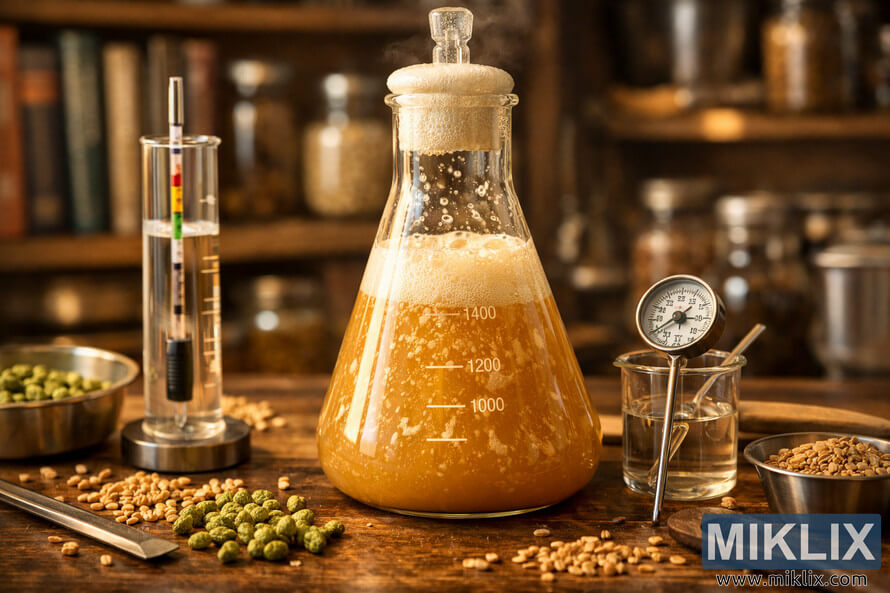
Mastering yeast for Wyeast 3056 begins with careful planning. Determine if you need to create a starter based on batch gravity, pack age, and your yeast splitting or repitching plans. This preparation ensures fermentation is consistent and predictable.
Clique ou toque na imagem para obter mais informações e resoluções mais altas.
When to build a starter
Creating a starter is essential for batches with an OG above 1.055. It's also crucial for older packs or when cell counts are in doubt. For split batches or when repitching, a fresh starter is vital to maintain vitality and prevent lag.
Starter size guidelines by batch gravity and volume
Starter volume should align with batch gravity and size. For a 5-gallon (19 L) batch at 1.045–1.055 OG, a 1.0–1.5 liter starter is typically sufficient. For beers with a higher gravity of 1.060–1.075 OG, increase to 2–3 liters or combine multiple packs.
- Aim for roughly 0.75–1.5 million cells per mL per degree Plato for ales.
- Target higher cell counts for higher gravity to control ester production and attenuation.
- Use a stir plate or frequent shaking to maximize growth in smaller starter volumes.
Rehydration vs. direct pitching for liquid yeast
Liquid yeast, such as Wyeast, comes in smack packs or vials. Wyeast suggests proofing in a starter rather than dry rehydration. Direct pitching from a fresh, high-cell-count pack can suffice for lower gravities.
Building a starter boosts cell count and vitality, which is beneficial for fuller-bodied or high-gravity beers. Rehydrating liquid yeast is less common; it's more typical for dry yeast. Liquid strains often perform best after a starter is built.
Optimal Fermentation Temperatures and Schedules
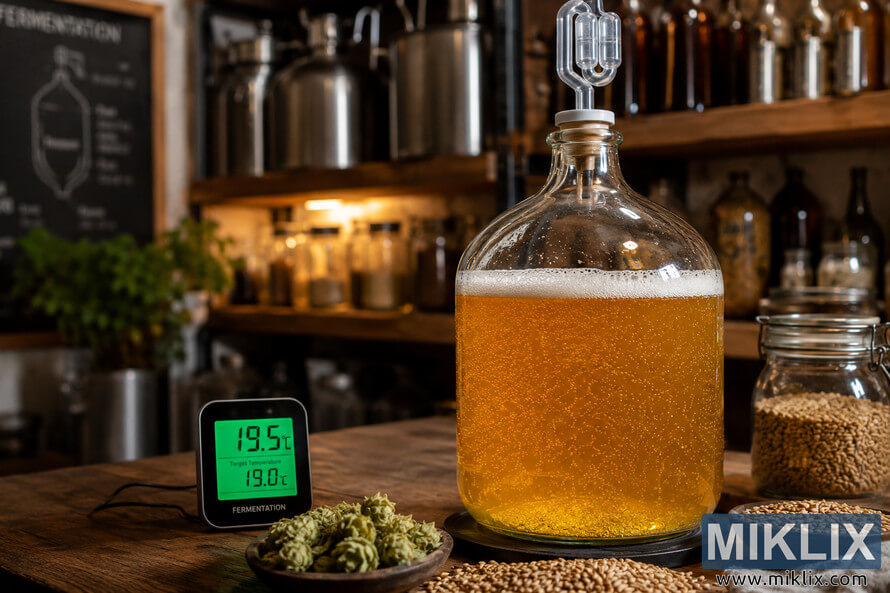
Mastering the temperature with Wyeast 3056 is crucial for Bavarian wheat beers. A well-thought-out plan is key to shaping esters and phenols while avoiding off-flavors. Start with these ranges, then fine-tune based on your recipe and taste preferences.
Temperature ranges for desired flavor profile
To emphasize clove notes, ferment between 62–68°F (17–20°C). This temperature range enhances phenolic compounds, a favorite among brewers.
For a more banana-forward flavor, aim for 68–72°F (20–22°C). However, keep temperatures below 74°F (23°C) to prevent harsh off-flavors and fusel alcohols.
Managing diacetyl and off-flavors through temperature control
Diacetyl forms early in fermentation when yeast decarboxylate valine precursors. Healthy yeast can reabsorb diacetyl during active fermentation.
Preventing diacetyl starts with proper oxygenation, pitching rate, and nutrient levels. These steps reduce yeast stress and limit diacetyl formation.
As primary fermentation nears completion, slightly increase the temperature. This helps the yeast clean up diacetyl. This method is a practical way to manage diacetyl without long conditioning periods.
Temperature ramping strategies during fermentation
- Begin at the lower end of your target range for a cleaner phenolic balance.
- Keep this temperature steady during primary fermentation, usually 3–7 days, depending on gravity and activity.
- Gradually increase 2–4°F (1–2°C) for 24–48 hours as a diacetyl rest when fermentation slows.
- For high-gravity weizenbocks, implement a controlled yeast temperature ramp throughout primary. This aids in better attenuation and encourages desirable esters without stressing the yeast.
Monitor temperatures closely, document your findings, and refine your Wyeast 3056 fermentation plan over several batches. Consistent temperature control leads to more consistent hefeweizen fermentation results.
Clique ou toque na imagem para obter mais informações e resoluções mais altas.
Recipe Design Tips for Wheat Beers
Creating a wheat beer recipe involves setting a clear goal. You might aim for a light and bready hefeweizen, a darker and malt-forward dunkelweizen, or a rich weizenbock. Focus on a simple grain bill to let the Wyeast character and yeast esters take center stage. Small, deliberate choices are key to achieving a classic result.
When selecting your wheat percentage, precision is crucial. For a traditional hefeweizen, aim for 50–70% wheat. The remaining portion should be a light Pilsner or Vienna base malt for a clean backbone. Some traditional German recipes use 100% wheat for authenticity, but this can complicate lautering.
In crafting a dunkelweizen recipe, start with a similar wheat base. Then, add 10–20% Munich or CaraMunich to enhance color and malt depth. Light crystal malts or Melanoidin can be used in modest amounts to add toast and roundness, without overpowering the banana and clove esters.
- Base malts: Pilsner or Vienna for clarity and balance.
- Specialty: CaraMunich, Melanoidin, or light crystal at 5–10% for dunkelweizen recipe depth.
- Optional: oats or dextrin malt at 2–5% for creaminess in richer styles.
Adjuncts should be used sparingly. Flaked wheat or oats can enhance head retention and mouthfeel. In a weizenbock, a touch of Munich or a darker crystal can introduce caramel and toffee notes. Avoid heavy roasted malts, as they can clash with yeast-driven spice.
Hop choices for wheat beer should be restrained. Traditional styles often employ noble hops like Hallertauer, Tettnang, or Saaz for their soft spice and gentle aroma. Late hop additions and minimal early hopping are recommended to achieve low bitterness while preserving delicate hop notes.
- Hefeweizen: IBUs around 8–14 to keep malt and yeast front and center.
- Dunkelweizen: IBUs 10–18 to balance added Munich or crystal without drying the palate.
- Weizenbock: IBUs 15–25+ depending on how much malt sweetness you want to offset.
When planning hop schedules, favor aroma additions and short whirlpool rests. This approach provides subtle floral or spicy lift without overpowering the beer. Keep hop choices consistent with the style's gentle profile.
Final tweaks include mash temperatures in the mid-150s °F for a balanced body. Keep specialty malts low to avoid masking yeast character. Test small batches to refine your recipe and verify how different wheat percentages behave in your system.
Clique ou toque na imagem para obter mais informações e resoluções mais altas.
Water Chemistry Considerations for Bavarian Wheat Styles
Water's impact on flavor is often underestimated by homebrewers. For Bavarian wheat styles, aim for soft-to-moderate alkalinity and low bicarbonate levels. This ensures a clean, delicate flavor profile. Target a mash pH of 5.2–5.6 to support enzyme activity and preserve malt character. Achieving good water chemistry in wheat beer involves simple, measured steps rather than drastic changes.
Ideal mineral targets and pH for wheat beers
Calcium is crucial for yeast health and clarity. For Bavarian wheat beers, keep calcium between 50 and 150 ppm. High bicarbonate levels in light wheat grists can raise mash pH and mute flavors. Aiming for a mash pH of 5.2–5.6 enhances bright esters and balances mouthfeel.
Adjusting sulfate-to-chloride ratios for softness or dryness
Balance chloride and sulfate to control body and perceived bitterness. Bavarian wheat beers prefer a chloride-forward profile for a soft mouthfeel. Aim for a chloride sulfate ratio of 1:1 to 1:3 sulfate:chloride for fullness. Increasing sulfate can enhance bitterness and dryness in drier weizenbocks.
Practical testing and adjustment steps at home
Begin by testing tap water with a municipal report or an at-home kit. If minerals are high, dilute with reverse osmosis or distilled water before adding salts. Use calcium chloride for chloride and gypsum for sulfate in small, measured increments.
- Measure current levels and calculate additions rather than guessing.
- Check mash pH wheat beer using strips or a calibrated meter about 10–15 minutes into the mash.
- Make conservative changes; small amounts often produce the best improvement.
Keep detailed notes on any adjustments and their impact on the beer's taste. This approach ensures consistent Bavarian character in your wheat beers without overcorrecting.
Oxygen Management and Yeast Health
Proper oxygenation and nutrient strategy are crucial for a clean, vigorous fermentation with Wyeast 3056 Bavarian Wheat Blend. Small mistakes early on can lead to off-flavors or stalled activity. Below, we'll discuss when to add oxygen, the right nutrients to use, and how to spot stressed yeast for quick action.
When and how much oxygen to introduce pre-pitch
For typical ales, aim for dissolved oxygen around 8–10 ppm before pitching. Use a pure oxygen setup with a diffusion stone for consistent results. Alternatively, aerate by vigorous shaking or splashing during transfer for small batches.
Raise oxygen levels for ales in higher gravity worts. High-gravity weizenbocks need more oxygen up front. This supports yeast cell reproduction and reduces stressed yeast symptoms.
Supplementing nutrients for vigorous fermentation
Wheat-heavy or adjunct-rich worts can lack FAN and trace minerals. Use a yeast nutrient labeled to supply free amino nitrogen and minerals at the pitch. Typical dosing is 1 tsp per 5 gallons at pitch, with an optional half-dose during the lag phase if fermentation shows slow onset.
Consider a commercial yeast nutrient formulated for liquid strains such as yeast nutrient Wyeast 3056 recommendations. When rehydrating or building starters, include a nutrient boost. This maximizes cell health and reduces the risk of sluggish attenuation.
Signs of stressed yeast and corrective actions
- Long lag time (>36 hours) or very slow bubbling.
- Stuck fermentation or gravity not dropping as expected.
- Sensory cues: sour phenolics, acetaldehyde (green apple), or a thin body.
If you see stressed yeast symptoms, first check temperature and wort oxygenation history. Only reintroduce oxygen at the start; adding oxygen late can create oxidation faults.
Next, add an appropriate nutrient dose and verify fermentation temperature is in the recommended range. For stalled or very weak ferments, build a fresh starter or repitch active yeast from a healthy batch. Use an energizer cautiously; it can help, but it is not a substitute for adequate initial oxygen levels and yeast nutrient Wyeast 3056 care.
Monitoring Fermentation Progress Effectively
Monitoring fermentation closely gives brewers control and confidence. A combination of measurement and observation is key to judging yeast performance. Regular checks are crucial for catching issues early and protecting flavor development.
Gravity tracking best practices and tools
- Use a calibrated wort hydrometer or a quality refractometer to record original gravity before pitching.
- Take daily readings for the first week. Expect the largest drop in gravity between days 3 and 7 for typical wheat ales.
- When using a refractometer, correct readings for alcohol with an online calculator or mobile app to avoid misleading values.
- Keep a simple log of temperature and gravity. That record helps spot slowdowns and guides interventions.
Visual and sensory cues of healthy fermentation
- Active krausen formation within 12–48 hours is a positive fermentation sign. For wheat beers, krausen often reaches one to two inches and can last several days.
- Steady bubbling in an airlock suggests activity, but do not rely on it alone.
- A fresh, yeasty aroma without solvent or sharp acetone notes indicates healthy yeast behavior.
- A consistent reduction in specific gravity confirms sugars are converting to alcohol and CO2.
When to consider repitching or adding nutrients
- Consider repitching when gravity stalls for several days despite proper temperatures and oxygen management. An under-pitched batch or old yeast often causes stalls.
- Add yeast nutrient early in fermentation if you suspect a weak starter or low nutrient must. Late additions rarely revive a stuck fermentation.
- For emergency repitching, prepare a small, vigorous starter from a fresh liquid yeast or dry yeast to restore activity quickly.
- Use tracking specific gravity trends to make timely decisions rather than reacting to a single reading.
Clique ou toque na imagem para obter mais informações e resoluções mais altas.
Conditioning and Maturation for Clean Flavor Development
Once fermentation slows, the focus shifts to conditioning and allowing flavors to mature. Proper handling at this stage is crucial for achieving clarity, aroma, and mouthfeel. Small decisions about conditioning and secondary fermentation can have a bigger impact than simply adding more time in primary fermentation.
Bavarian-style wheat beers typically benefit from extended time on the primary yeast cake. This approach minimizes handling and reduces the risk of oxygen contamination during transfers. Secondary fermentation is best reserved for clarifying the beer, adding fruit, or for extended aging.
Cold crashing wheat beer for a short period can help settle yeast and haze particles. A 24–72 hour period at 35–40°F (2–4°C) effectively drops proteins and yeast, enhancing clarity. However, it's important to note that an aggressive cold crash can alter the traditional cloudy appearance and soften esters or phenols.
For those desiring a cloudy beer with cleaner flavors, gentle cold conditioning is recommended. If aiming for a clear presentation, extend the cold crash to 72 hours. To preserve the signature haze, skip or shorten the cold crash, ensuring aroma intensity and visual appeal.
Hefeweizen maturation timelines are generally shorter than those for higher-gravity wheat styles. A typical schedule includes 5–10 days of primary fermentation, followed by 1–3 weeks of conditioning. Dunkelweizen usually requires 3–5 weeks to mature, smoothing out malt and yeast notes.
Weizenbock, on the other hand, demands longer cellaring. Expect 4–8+ weeks, depending on original gravity and desired maturation. Regular tasting intervals are essential to track development and determine when the beer reaches the desired balance.
- Minimize transfers to prevent oxygen contamination when avoiding secondary fermentation.
- Cold crash wheat beer briefly for clarity; avoid prolonged cold holds if haze is desired.
- Follow maturation timelines hefeweizen as a guide, then adjust based on tasting feedback.
Bottle Conditioning and Carbonation Guidance
Proper bottle conditioning is key to the final mouthfeel and sparkle of wheat beers. It's important to use a measured approach when adding priming sugar. This ensures your bottles reach the right carbonation without over-foaming.
Priming rates for stylistically appropriate carbonation
Each style of wheat beer has its own carbonation target. For example, hefeweizen should have 3.5 to 4.5 volumes of CO2 for a lively feel. Dunkelweizen is best at 2.8–3.8 volumes, while weizenbock ranges from 2.5–3.5 volumes, depending on its gravity. Use a priming calculator to convert these targets into grams of dextrose or corn sugar, taking into account residual CO2 from fermentation and batch temperature.
Mouthfeel considerations and avoiding overcarbonation
High-gravity beers can handle more pressure but risk gushing if over-primed. Using thick bottles and high-pressure rated crown caps helps prevent rupture. When bottle conditioning wheat beer, especially weizenbock, it's safer to err on the side of caution with priming sugar. If kegging, set the CO2 pressure to match the desired carbonation levels and allow the keg to equilibrate.
Shelf conditioning times and serving preparation
Allow bottles to condition at room temperature for 7–21 days, depending on yeast activity and ambient warmth. Cooler cellars will extend this time. Chill bottles before serving to ensure yeast drops out and sediment settles. For a classic Hefeweizen pour, leave a small amount of yeast in the bottle or swirl gently to suspend it. Then, serve at 45–55°F (7–13°C) to highlight the beer's aroma and mouthfeel.
Common Fermentation Issues and Troubleshooting
Fermenting with Wyeast 3056 can deliver classic wheat beer character, but a few problems recur for homebrewers. This short guide walks through common causes and clear actions for phenolic characters, stalled batches, and infection risks. Use the tips below for practical wheat beer troubleshooting and to keep brews on track.
Causes of strong clove or medicinal notes include high mash temperatures that increase phenolic precursors, using POF+ malts or adjuncts, high fermentation temperatures, and stressed or underpitched yeast. Sulfur compounds that normally detox the wort can remain if yeast health is poor.
- Lower fermentation temperature into the recommended range for the strain to reduce phenolic off-flavors.
- Drop mash rests by 2–4°F to limit POF precursor formation in future brews.
- Increase healthy pitch rates and avoid temperature swings that stress yeast.
- If phenolics persist, balance the profile with ester-promoting conditions next time or blend the batch with a cleaner beer.
Stalled or stuck fermentation can look like gravity plateaus that won’t budge. Common causes include insufficient pitch rate, low dissolved oxygen at inoculation, lack of yeast-assimilable nitrogen, and sudden temperature shock.
- Raise the fermenter temperature gently into a safe range for Wyeast 3056 to reactivate yeast activity.
- Gently swirl or rouse the yeast to resuspend settled cells; avoid vigorous oxygenation once active fermentation has started.
- Pitch a fresh, active starter or a reliable ale strain if the original yeast shows poor viability.
- Add yeast nutrient if the must was low in free amino nitrogen; follow manufacturer dosing guidelines.
Contamination prevention homebrew starts with rigid sanitation and careful handling. Use cleaners like PBW and a no-rinse sanitizer such as Star San. Avoid cross-contamination during racking and transfers by keeping work areas and utensils clean.
- Watch for infection signs: unexpected sourness, pellicles, or surface films that differ from normal krausen patterns.
- For mild infections, consider reconditioning, blending, or repurposing the beer depending on the style and severity.
- For severe or unpredictable infections, discard to protect future batches and review sanitation steps.
When troubleshooting, document gravity, pitch rates, temperatures, and any interventions. That record helps identify patterns and improve future batches. Consistent attention to yeast health and cleanliness will reduce the most common headaches for wheat brewers.
Tasting Notes and Serving Suggestions
Wyeast 3056 embodies a classic Bavarian wheat profile. It presents banana esters at warmer fermentation temperatures and clove phenolics at cooler ones. Some batches also exhibit a faint bubblegum character, complemented by soft, bready wheat and a light tartness. The moderate dryness ensures a crisp finish without overpowering the aromas.
Use this quick guide to read the beer and refine your process.
- Aroma: Look for ripe banana, clove, dough, and a touch of citrus or spice.
- Appearance: Expect a hazy, straw-to-golden color with a long-lasting white head.
- Flavor: Balance ester and phenol notes against soft wheat malt and gentle dryness.
- Mouthfeel: Medium-light body with creamy carbonation and a springy finish.
Glassware and temperature significantly impact perception. Pour into a tall weizen glass or a tulip to enhance the head and concentrate aromatics. Serve at 45–55°F (7–13°C) to maintain a balance between banana and clove, ensuring liveliness.
Food pairings should complement the beer's profile. Classic choices include weisswurst, soft pretzels, and mild cheeses. Seafood, grilled chicken, and lighter German dishes also pair well. For dunkelweizen or weizenbock, pair with heartier sausages, roasted pork, and aged cheeses to match richer malt notes.
When evaluating a beer sample, use a simple checklist to guide tweaks for the next batch.
- Smell: note dominant esters or phenols and any off-aromas.
- Look: record haze, head retention, and color.
- Taste: judge balance between banana, clove, wheat, and sweetness.
- Feel: assess carbonation and body.
- Finish: note bitterness, dryness, and any lingering blemishes.
Apply these notes to adjust fermentation temperature, pitch rate, or grain bill. Small changes can lead to noticeable shifts in hefeweizen tasting notes, helping you refine the profile for future batches.
Where to Buy and Storage Best Practices for Wyeast 3056
Finding Wyeast 3056 Bavarian Wheat Blend in the United States is straightforward when you know where to look. Reputable Wyeast retailers include MoreBeer, Northern Brewer, Midwest Supplies, and many local homebrew shops affiliated with the American Homebrewers Association. Always check lot codes and freshness dates before purchasing Wyeast 3056 US stock. This ensures the yeast's viability.
Reliable US vendors and online retailers
Order from established suppliers that display manufacture and expiration dates. Local homebrew stores often rotate inventory quickly and can advise on recent shipments. Online shops such as MoreBeer, Northern Brewer, and Midwest Supplies usually list Wyeast strains and offer customer support for product questions.
Storage temperature and shelf life considerations
Keep packs refrigerated at 36–40°F (2–4°C) to preserve cell health. Use yeast before the printed expiration date for best results.
Viability drops as packs age. Store liquid yeast upright, avoid freezing, and buy close to brew day when possible. For older packs, build a starter to boost cell count and reduce risk of sluggish fermentation.
Handling Wyeast packs and smack packs vs. vials
Different Wyeast formats need distinct care. Smack packs require activation to mix the nutrient slurry and wake the culture. Vials with nutrient slurry may arrive already mixed or need gentle swirling.
Sanitize the exterior before opening. For smack pack handling, strike the pouch firmly to break the inner activation capsule, then gently knead and place upright. Wait 12–24 hours for a visible foam head or creamy krausen before decanting into a starter or pitching directly.
- Do not shake aggressively; treat packs gently to protect cells.
- If proofing, transfer the swollen pack to a sanitized jar and pour into a starter when a healthy foam appears.
- When in doubt, err on the side of building a starter rather than underpitching.
Conclusion
Wyeast 3056 Bavarian Wheat Blend is a top pick for brewers aiming at authentic German wheat beers. It offers a balanced mix of esters and phenolics, perfect for hefeweizen, dunkelweizen, and weizenbock. This blend is known for its classic banana-and-clove flavor when fermented correctly. The reliability of Wyeast 3056 is evident when brewers manage pitch rates, temperature, and yeast health.
To get the most out of Wyeast 3056, start with a larger batch by building a starter. Oxygenate the wort before adding the yeast, and use yeast nutrients when necessary. Fermenting within the recommended temperature range allows you to fine-tune the flavor, leaning towards banana esters or clove phenolics. Proper conditioning also helps control haze and enhances flavor smoothness. These steps are crucial in avoiding stalled fermentation and unwanted flavors.
When purchasing and handling Wyeast 3056, it's essential to buy from trusted US vendors. Store the yeast packs in cold conditions and follow the activation or starter protocols to ensure high viability. Adhering to these practices will enable homebrewers to consistently brew Bavarian wheat beers that are true to style. This ensures the strain's full potential is realized.
FAQ
What makes Wyeast 3056 Bavarian Wheat Blend a good choice for brewing hefeweizen and other wheat beers?
Wyeast 3056 is a liquid, top-fermenting Bavarian wheat blend. It's formulated to produce the classic banana and clove flavors found in traditional German wheat beers. It tends toward moderate attenuation and a soft, pillowy mouthfeel thanks to wheat proteins. When pitched and fermented within recommended temperature ranges, it reliably delivers the ester-phenol balance brewers expect in hefeweizen, dunkelweizen, and weizenbock.
How does fermentation temperature affect the flavor profile with this strain?
Temperature has a strong influence. Fermenting cooler (about 62–68°F / 17–20°C) emphasizes phenolic, clove-like notes, while warmer fermentation (68–72°F / 20–22°C) encourages banana esters. Going above ~74°F (23°C) risks fusel alcohols and solventy off-flavors. Use a controlled schedule: steady primary at your target range, then a modest diacetyl rest if needed.
When should I build a starter for Wyeast 3056 and how large should it be?
Build a starter for any batch above roughly 1.055 OG, for older packs, or when splitting/repitching. For a typical 5-gallon (19 L) batch at 1.045–1.055 OG, a 1.0–1.5 L starter is usually sufficient. For 1.060–1.075 OG, increase to 2–3 L or use multiple packs. Aim for about 0.75–1.5 million viable cells per mL per degree Plato depending on gravity and desired ester profile.
Can I pitch Wyeast 3056 directly from the pack or should I proof it first?
Wyeast liquid formats typically arrive as smack packs or vials and benefit from activation. Many brewers proof or build a starter rather than direct pitching to ensure vitality and cell count. For low-gravity batches, a fresh pack can be pitched directly, but a starter improves reliability—especially for higher gravities or older packs.
What pitching rate and oxygenation practices work best for this yeast?
Pitch enough healthy cells for your gravity—see starter guidelines above. Aerate wort to roughly 8–10 ppm dissolved oxygen for ale fermentations; methods include pure oxygen with a stone or vigorous aeration when cooling. Proper oxygenation and pitch rate reduce lag time, minimize phenolic stress, and support clean attenuation, particularly in high-gravity weizenbocks.
How does Wyeast 3056 compare to Wyeast 3068 or White Labs WLP300?
3056 tends to strike a balanced banana/clove profile and flocculates moderately. Wyeast 3068 (Weihenstephan) is often perceived as more phenolic, while White Labs WLP300 can lean stronger toward banana esters at similar temps. Outcomes vary with pitch rate, oxygenation, mash schedule, and fermentation temperature, so small recipe and process adjustments yield meaningful differences.
What mash and recipe guidelines should I follow for a classic hefeweizen or dunkelweizen?
For hefeweizen target 50–70% wheat malt with Pilsner or Vienna base malt for a clean backbone. Dunkelweizen benefits from 10–20% Munich or light crystal malts for color and malt complexity. Keep hops low—8–18 IBU for hefeweizen, 15–25+ for weizenbock if needed—and favor noble varieties like Hallertauer or Tettnang. Use small adjuncts only sparingly to preserve yeast character.
What water chemistry should I aim for when brewing Bavarian wheat styles?
Aim for soft to moderate mineral content and a mash pH around 5.2–5.6. Favor a chloride-forward profile (higher Cl- to SO4-) for a fuller, softer mouthfeel typical of Bavarian wheat beers. Keep bicarbonates low for pale wheat beers, and make conservative salt adjustments based on your municipal water report or by diluting with reverse osmosis water when needed.
How do I manage diacetyl and other off-flavors during fermentation?
Preventative measures include adequate oxygen at pitch, correct pitching rate, healthy yeast nutrition, and stable fermentation temps. If diacetyl appears, raise the temperature a few degrees for 24–48 hours near the end of primary to allow yeast to reabsorb precursors. Address other off-flavors by correcting pitch rate, improving sanitation, and avoiding excessive fermentation temperatures.
What signs indicate stressed yeast or a stuck fermentation, and how do I fix it?
Signs include long lag (>36 hours), very slow gravity drop, sour phenolics, acetaldehyde, or a thin body. Remedies: ensure appropriate temperature, gently swirl to resuspend yeast, build and pitch a fresh starter or active ale yeast if pitch was insufficient, and add yeast nutrient early in fermentation. Do not add oxygen after active fermentation begins.
Should I cold crash my wheat beer if I want traditional haze?
Cold crashing at 35–40°F (2–4°C) for 24–72 hours will help drop yeast and proteins for clearer beer. However, traditional hefeweizen haze is stylistic and desirable; cold crashing can reduce that character and mute aromatics. For unfiltered presentation, limit or skip cold crash and let natural conditioning preserve cloudiness and mouthfeel.
What carbonation levels and priming should I aim for bottle conditioning wheat beers?
Hefeweizen is typically bright and effervescent—target 3.5–4.5 volumes CO2. Dunkelweizen: 2.8–3.8 volumes. Weizenbock: 2.5–3.5 volumes depending on style. Use a priming sugar calculator to account for residual CO2 and temperature. Avoid overpriming in high-gravity beers to prevent gushers or excessive pressure—select appropriate bottles or kegging pressure.
How long should I cellar a weizenbock or high-gravity wheat beer before drinking?
Maturation depends on gravity. Hefeweizen can be ready in 2–4 weeks (5–10 days primary then 1–3 weeks conditioning). Dunkelweizen typically 3–5 weeks. Weizenbock benefits from longer maturation—4–8+ weeks—to mellow alcohol and integrate esters. Taste periodically to judge readiness and let time smooth harsh edges.
Where can I buy fresh Wyeast 3056 in the U.S., and how should I store it?
Reputable U.S. suppliers include MoreBeer, Northern Brewer, and Midwest Supplies, plus local homebrew shops listed through the American Homebrewers Association. Refrigerate packs at 36–40°F (2–4°C) and use before the expiration date. For older packs, build a starter to restore cell count. Store upright, avoid freezing, and purchase close to brew day when possible.
How do I handle and activate Wyeast smack packs or vials safely?
Sanitize the exterior before opening. For a smack pack, strike the inner pouch to break the nutrient seal, then incubate at room temperature 12–24 hours until a visible foam head indicates activation. Either decant into a sanitized starter wort or pitch after proofing. Handle gently to preserve cell health and avoid temperature shocks during transfer.
What tasting cues should I look for to evaluate if my process produced the desired profile?
Use a checklist: aroma (banana ester vs clove phenol), appearance (haze and head retention), flavor balance, mouthfeel, bitterness, and finish. If clove dominates, consider lowering fermentation temp or adjusting mash schedule. If banana is weak, raise fermentation temperature slightly or evaluate pitch rate and oxygenation. Log results and tweak one variable at a time for consistent refinement.
How can I reduce excessive clove/phenolic character if my batches are too phenolic?
Reduce phenolics by fermenting at the warmer end of the recommended range to favor esters, lower mash temperatures to decrease POF+ precursors, increase pitch rate and oxygenation to reduce yeast stress, and verify your water and grain choices. If phenolics persist, adjust the recipe or try a different yeast strain on the next batch.
Are there special nutrient or oxygen needs when brewing a high-gravity weizenbock with Wyeast 3056?
Yes. High-gravity worts need extra oxygen at pitch—target 8–10 ppm DO—and often benefit from measured additions of yeast nutrient containing FAN and minerals. Consider staged nutrient additions early in fermentation and build a larger starter to ensure sufficient cell mass. These steps support healthy attenuation and desired ester development in strong weizenbocks.
Leitura adicional
Se você gostou deste post, você também pode gostar destas sugestões:
- Fermentação de cerveja com levedura Wyeast 3711 French Saison
- Fermentação de cerveja com levedura Fermentis SafAle WB-06
- Fermentação de cerveja com levedura White Labs WLP028 Edinburgh/Scottish Ale.