
Fermenting Beer with Wyeast 3278 Belgian Lambic Blend
Objavljeno:
Nazadnje posodobljeno: 4. junij 2026 ob 6:24:31 pop. UTC
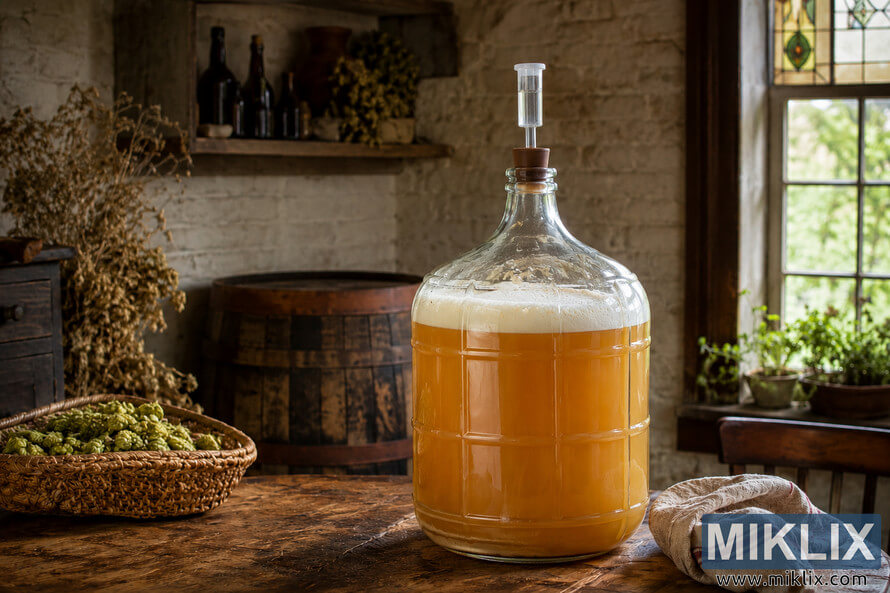
Lambic brewing originated in the Senne valley near Brussels. It relies on cool, open-air fermentation and long barrel aging. This process creates complex sour beers with lactic acidity, acetic edges, and brettanomyces-derived funk. These beers also have subtle fruit and vinous notes that develop over years.
Fermenting Beer with Wyeast 3278 Belgian Lambic Blend
Kliknite ali tapnite sliko za več informacij in višje ločljivosti.
Key Takeaways
- Wyeast 3278 Belgian Lambic Blend offers a practical route to controlled wild ale fermentation.
- Expect mixed fermentation dynamics from Belgian lambic yeast and associated bacteria.
- Proper equipment prep and sanitation are essential to prevent cross-contamination.
- Recipe choices—malts, hops, and adjuncts—shape the final balance of funk and acidity.
- Aging, blending, and careful monitoring are key to developing classic lambic character.
Introduction to Wyeast 3278 Belgian Lambic Blend and Lambic Brewing
Lambic brewing stands out due to its unique characteristics. Unlike other sour ales, lambics use wild and mixed fermentations. This slow process, combined with low hopping rates and aged malts, results in a soft malt backbone. This allows microbes to create layered acidity and earthy complexity.
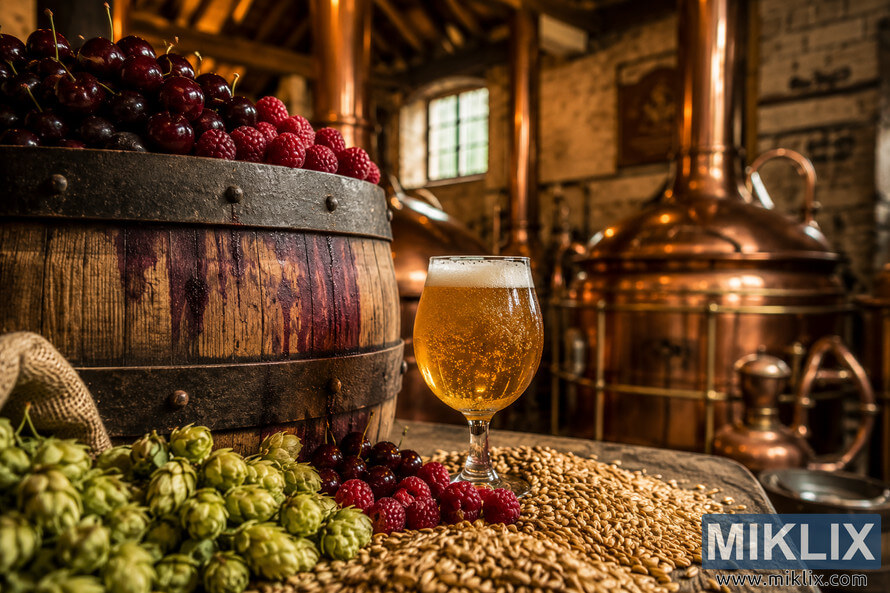
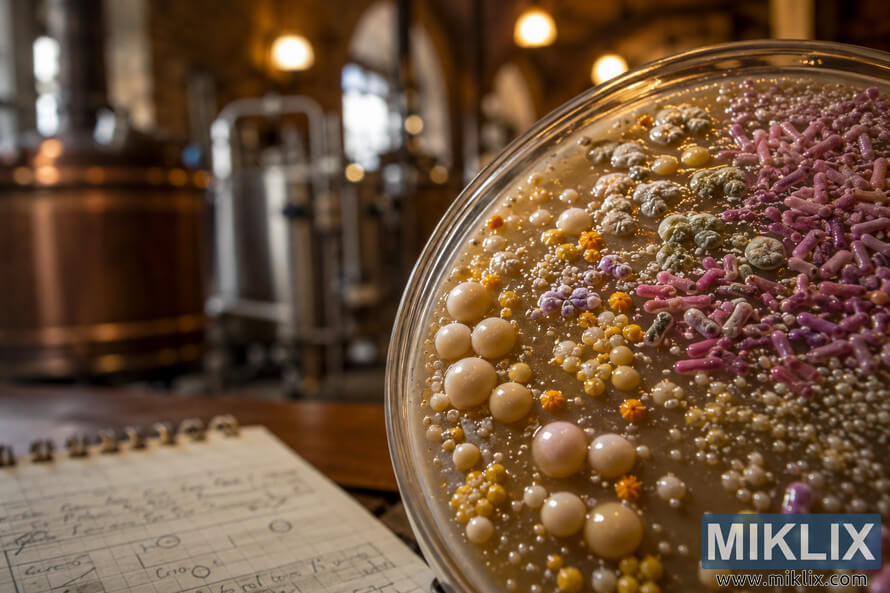
Wyeast 3278 offers a controlled way to achieve these flavors. It's a commercial mixed-culture pack designed to mimic traditional microflora. The blend includes Saccharomyces strains, multiple Brettanomyces strains, Pediococcus, and Lactobacillus. These organisms provide souring, funk, and prolonged conditioning.
Brewers can use this blend as a liquid culture for direct pitching or propagation in a starter. This Wyeast lambic blend overview helps replicate lambic-like results. It eliminates the need for spontaneous inoculation or a coolship, offering more predictable timing. It also encourages mixed-culture brewing dynamics.
Who should consider this blend?
- Homebrewers and craft brewers aiming for lambic-style complexity but lacking access to spontaneous fermentation setups.
- Those who want repeatable mixed-culture brewing across batches and clearer planning of aging schedules.
- Sour ale beginners willing to learn long-term monitoring of pH, gravity, and sensory change and prepared to manage cross-contamination risks in their brewery.
Using Wyeast 3278 does not remove the need for patience or careful sanitation. It requires an understanding of how mixed organisms interact and how aging shapes final balance. When managed correctly, the blend can be a practical bridge between traditional methods and modern brewery control.
Kliknite ali tapnite sliko za več informacij in višje ločljivosti.
Understanding the Microbial Profile of Wyeast 3278
The microbial profile of Wyeast 3278 combines familiar brewing organisms into a single pack. This blend aims to recreate the character of lambic. It outlines the yeasts and bacteria present and their impact on aroma, acidity, and mouthfeel. Brewers use this information to plan fermentation and aging.
Primary yeasts and bacteria included
- Saccharomyces cerevisiae for rapid alcohol production and initial attenuation.
- Brettanomyces species, often bruxellensis and anomalus, for long-term funk and complex ester development.
- Pediococcus for slow-developing lactic acidity and potential diacetyl, which Brettanomyces can later metabolize.
- Lactobacillus strains that provide earlier lactic acid and a quicker drop in pH in some ferments.
How each organism contributes to flavor and acidity
Saccharomyces cerevisiae handles the initial fermentation. It produces ethanol and common ale esters. It also reduces gravity early, allowing other microbes to work on residual sugars.
Brettanomyces generates barnyard, leathery, and fruity notes that evolve over months. It slowly attenuates dextrins left by Saccharomyces, changing body and dryness over long aging periods.
Pediococcus creates a deep, rounded lactic acidity and can cause a slick or viscous mouthfeel in early years. Its diacetyl production is part of the traditional lambic timeline, since Brettanomyces often cleans those flavors with time.
Lactobacillus brings faster souring and a brighter, sharper acid bite when present. The balance between Lactobacillus and Pediococcus shapes whether a beer tastes crisp or more plushly sour.
Comparing to other lambic blends and cultures
Mixed culture comparison shows distinct trade-offs. Wyeast 3278 offers reproducibility and a known timeline, unlike spontaneous inoculation, which can yield wider microbial diversity and unexpected results.
Compared to blends from vendors such as White Labs or Omega Yeast, differences lie in strain ratios and emphasis. Some blends prioritize rapid souring through Lactobacillus. Others push Brettanomyces intensity for bolder funk. Brewers pick a pack based on desired timeline, acid profile, and tolerance for strong Brett character.
Understanding the microbial profile Wyeast 3278 helps plan fermentation stages, anticipate flavor shifts, and choose whether a commercial blend fits a project or if a spontaneous approach suits experimental aims.
Kliknite ali tapnite sliko za več informacij in višje ločljivosti.
Preparing Your Brewery Equipment for Wild/Sour Fermentation
Wild and mixed-culture fermentations require meticulous preparation. Prioritize sour brewing sanitation before introducing any culture. Cleaning and sanitizing equipment significantly reduces the risk of unwanted microbial contamination. It's crucial to keep brewing and transfer procedures straightforward for all involved.
Sanitation vs. controlled inoculation for mixed cultures
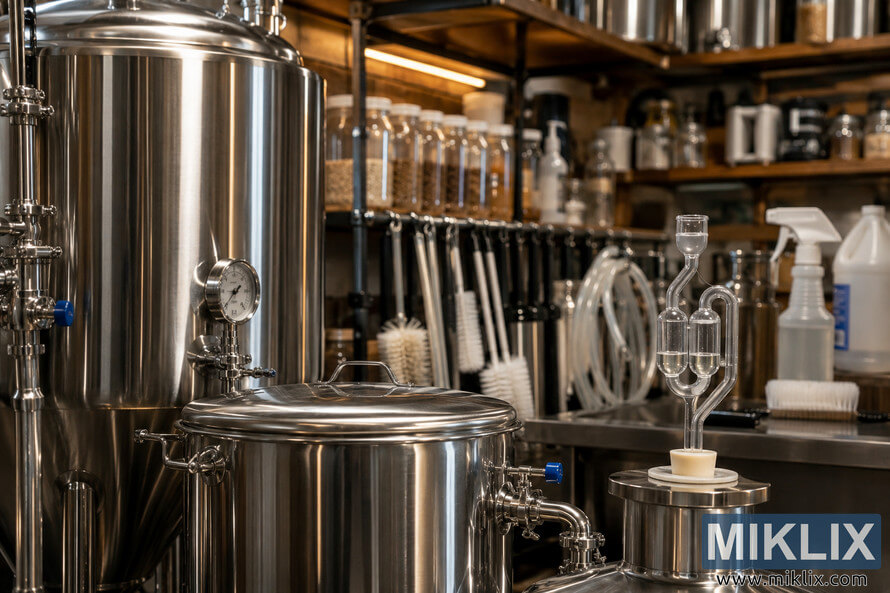
Begin with a thorough cleaning using products like PBW or OxiClean Free for kettles and hoses. Then, sanitize all contact surfaces with Star San or iodophor. This method prevents wild contamination while allowing the desired organisms to thrive.
Using a commercial blend for inoculation offers more consistent results than spontaneous methods. However, maintaining sanitary practices until pitching is essential to minimize off-flavor causing microbes.
Equipment choices: fermenters, airlocks, and seals
Opt for dedicated fermenters for sour beers when feasible. Glass carboys, stainless conicals, and oak barrels are viable options. Consider factors like durability, cleanability, and flavor impact when selecting fermenters for lambic.
Employ sealed lids with sanitized fittings and a blow-off tube during the initial, vigorous fermentation phase. Once primary fermentation subsides, transition to a fitted airlock. Opt for airlocks like the three-piece or modern screw-cap grommets, which are easy to sanitize and protect against excess oxygen.
Avoid using unprotected spigots that can trap residue. If using conicals, choose removable, cleanable valves. Consider dedicating taps to sour beers to minimize cross-contamination risks.
Preventing cross-contamination in a homebrew setup
Dedicate tubing, siphons, racking equipment, and bottles to sour batches when feasible. If not possible, extend soak times and separate cleaning cycles for equipment that comes into contact with sour beer. This reduces the risk of contamination during transfers.
- Store sour barrels and cultures away from clean ales.
- Isolate workspaces during transfers and blending to prevent stray splashes.
- Label equipment clearly so household members or brew partners do not mix items.
Implementing these measures helps prevent wild contamination and safeguards your cellar. Consistent adherence to these small routines ensures the integrity of both mixed-culture and non-sour beers in your brewery.
Kliknite ali tapnite sliko za več informacij in višje ločljivosti.
Recipe Planning for Brewing with Wyeast 3278
Begin by setting clear goals for your batch. Choose between a traditional gueuze-style base or an American twist with extra mouthfeel. This decision will influence your grain bill, hopping, and blending strategy.
Base malts and lambic grist suggestions
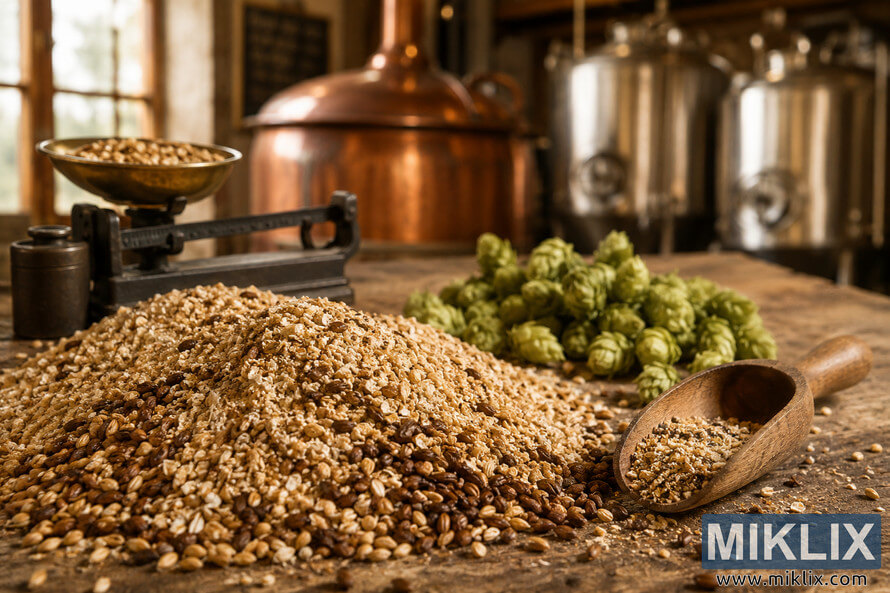
- Start with a pale base, such as pilsner or pale malt, for the majority of your recipe. Incorporate 20–40% malted or raw wheat to enhance protein and head retention. Traditional recipes often include aged barley or kilned malt to replicate classic flavors.
- Keep specialty malts to a minimum to maintain a pale beer. Brettanomyces and bacteria should be the stars. Flaked wheat or rolled oats can add body without obscuring acidity.
Hop choices and hopping rates
- Choose low-alpha or well-aged hops to minimize antimicrobial effects. Aim for very low IBUs, often under 10, to allow the culture to flourish. Noble-style hops are ideal for American interpretations seeking neutrality.
- Store hops in a dry, oxygen-limited container if possible. This method softens the lambic hops character, reduces bitterness, and preserves preservative qualities.
Adjuncts, fruit additions, and blending considerations
- Add fruit in secondary fermenters or barrels. Cherries for kriek and raspberries for framboise are classic choices. Fruit introduces sugars for refermentation and fresh aromatics, so monitor gravity and sanitation closely.
- Use adjuncts like honey or lactose with caution. They alter microbial dynamics and final balance. Test new adjuncts in small batches to refine techniques before scaling up.
When planning blends, save portions of young and aged beer. Track gravity and pH for each lot and record tasting notes. Blending fruited lambic is most successful when you test small ratios first and expand once balance is proven.
For those drafting fruit lambic recipes, start with conservative fruit loads and increase in future batches based on results. Maintain separate barrels or carboys for trials. This approach reduces risk and helps you build a reproducible recipe library.
Kliknite ali tapnite sliko za več informacij in višje ločljivosti.
Pitching and Inoculation Best Practices
Ensuring a proper initial inoculation is crucial for fermentation and aging success. Preparation, pitch rates, and timing are key to control lactic souring, Brettanomyces development, and balance. This is especially true when pitching Wyeast 3278 into a lambic-style brew.
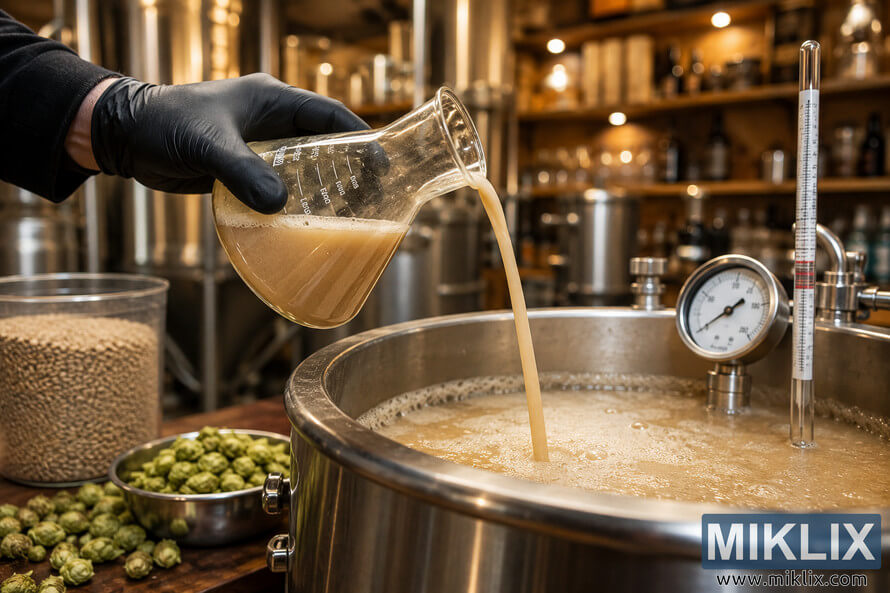
Starting with vendor guidance, rehydrate the blend carefully. Wyeast liquid packs suggest starter sizes for adequate cell counts. For a 5–6 gallon batch, use a sterile starter wort with a gravity near 1.030. Stepped starters can help build healthy biomass. Ensure starters are clean and free from unsterile adjuncts to prevent unwanted microbes.
When pitching a mixed culture, focus first on a robust Saccharomyces population. This protects the wort early and drives clean primary fermentation. Bacteria and Brett can tolerate lower cell counts, promoting slower acid and Brett development later. If skipping a starter, increase ale pitch rates slightly or make a starter for predictable results.
Balance is essential. Overpitching Saccharomyces can suppress Brett and some bacteria, reducing funk and slowing souring. Underpitching may lead to sluggish starts or unwanted invaders. Adjust your mixed culture pitch rate to achieve the desired flavor profile: more Saccharomyces for faster, ester-forward fermentations, and lighter Sacch counts for extended Brett character.
Timing and staged inoculation offer finer control. Many brewers pitch the full blend at once for spontaneous fermentation mimicry. Others prefer staged inoculation, adding Saccharomyces first for primary fermentation dominance, then Brett and bacteria for controlled souring and funk. This method often reduces early acetic risk and allows for Brett activity nudging during aging.
When staging inoculations, keep detailed records. Note days, temperatures, gravity, and tasting notes to refine timing in future batches. Whether all-at-once or staggered, consistency and sanitation are crucial for reliable results.
Kliknite ali tapnite sliko za več informacij in višje ločljivosti.
Fermentation Temperatures and Schedules
Temperature and time are crucial in shaping the flavor of a mixed-culture brew. Begin with a detailed plan for primary fermentation. Then, move to cooler storage to enhance complexity from bacteria and Brettanomyces. Monitoring and testing are key to achieving the desired character in your beer.
Recommended temperature ranges for primary fermentation
For traditional lambic-style primary fermentation, aim for temperatures between 60–68°F (15–20°C). This range promotes Saccharomyces activity without excessive esters or acetic acid. Match your yeast strain to the manufacturer's guidelines for optimal performance.
Consistent temperatures are more important than fluctuating ones. Sudden spikes can lead to volatile acidity and off-flavors. Use a thermostat or glycol chiller to maintain a steady lambic fermentation temperature during the first two to four weeks.
Cool storage and extended aging for lambic character
After fermentation slows, store the beer at 50–60°F (10–15°C). This cool conditioning phase allows Pediococcus and Brett to break down complex sugars and adjust acidity. Many brewers age their lambic in barrels or neutral oak for six months to several years to develop its signature funk.
Barrel aging introduces micro-oxygenation and subtle wood notes. Opt for neutral barrels to emphasize microbial character or lightly toasted oak for added tannin and vanilla. Regularly track sensory changes to determine the best time for blending or bottling.
Monitoring fermentation activity and signs of completion
To monitor wild fermentation, track gravity and pH alongside sensory checks. Expect a slow decline in gravity as Brett and bacteria ferment complex dextrins. A steady, long-term decline is typical for mixed cultures.
Look for visual signs like reduced airlock activity, subsiding krausen, and gradual clearing. Gravity alone is not enough to confirm completion. Taste trials and pH readings are essential to gauge Pediococcus activity and acidity levels.
- Record gravity and pH at regular intervals.
- Taste monthly after three months in barrel or cool storage.
- Use dry hopping or blending late if you need aromatic lift without restarting primary activity.
Effective temperature control, patient cool conditioning, and regular monitoring of wild fermentation lead to balanced, complex results. Keep detailed records of your processes to improve future batches.
Managing Oxygen Exposure and Oxidation Risk
Wild and mixed fermentations require a delicate balance between air and exclusion. Small, controlled oxygen doses can feed Brettanomyces in barrels, adding desirable complexity. However, excess oxygen can introduce acetic acid and stale notes, ruining months of work.
When limited oxygen benefits fermentation
During barrel aging, micro-oxygenation aids Brett in interacting with oak compounds. This interaction can create layered aromas and savory phenolics over time. Timing is crucial; early oxygen spikes can lead to volatile acidity. Late, measured exposure nudges slow biochemical pathways without pushing the beer toward vinegar.
Techniques to minimize unwanted oxidation
- Keep headspace tiny. Top barrels with finished beer to maintain a near-full volume.
- Blanket stainless tanks with CO2 or nitrogen before and after transfers to reduce oxygen pickup.
- Use closed transfers and source hoses to limit splashing when moving beer.
- Work quickly and cleanly during fruit additions. Expose beer for the shortest time possible.
Racking and transfers to preserve beer quality
Move beer carefully to avoid agitation and oxygen uptake. Gravity feeds, racking canes, and gentle siphons cut oxygen contact compared with pump-splash methods. Balance clarity goals with risk; each transfer can remove gross lees but adds a chance to introduce air.
For long-term storage, use the same beer to top barrels rather than water or air. This practice supports oxidation prevention in lambic and reduces flavor dilution. When planning a racking sour beer event, schedule transfers to coincide with cleaning and blending. This minimizes handling and preserves delicate aromatics.
Good oxygen control wild beers strategy pairs measured barrel exposure with disciplined cellar technique. This mix protects your batch while letting Brett-driven complexity evolve on its own timeline.
Primary Flavors and Aromas to Expect
When you taste a lambic brewed with mixed cultures, you'll encounter a broad spectrum of flavors. Initially, yeast esters set the stage. Over time, bacteria and Brettanomyces introduce acidity and funk, evolving with handling and aging.
Expect a clean lactic sourness from Lactobacillus, complemented by more intricate notes. Brettanomyces imparts barnyard, leather, and farmhouse funk. Some Brett strains also contribute tropical or stone-fruit esters, enhancing the aroma.
Acetic acid may appear in small amounts, imparting a sharp vinegar taste. To manage acetic levels and preserve delicate aromas, minimize oxygen exposure during aging. The interplay between lactic and acetic sourness determines the beer's brightness and sharpness.
Saccharomyces contributes fruity esters early in fermentation. These can range from pear and apple to citrus, influenced by strain and temperature. Lactobacillus produces sharper lactic notes, while Pediococcus contributes rounder acidity that matures slowly.
- Fruity esters: set the initial impression and can be boosted by fermentation warmth.
- Lactic acidity: gives fresh, yogurt-like tang and supports drinkability.
- Funk from Brett: adds barnyard, earthy, or fruity complexity over months.
Aging and blending significantly influence the final lambic profile. Neutral oak aging softens acidity and allows Brett to break down harsh compounds. Small oxidative shifts can introduce vinous notes, a prized characteristic for many brewers.
Blending offers control over intensity. Combining young, bright beer with aged, funk-forward barrels creates a balanced flavor profile. Fruit additions can add sweet-tart layers, blending seamlessly through careful mixing.
Measuring Progress: pH, Gravity, and Microbial Indicators
Monitoring mixed fermentation is essential, involving regular checks and clear benchmarks. Brewers track pH levels in lambic, observe gravity trends in mixed fermentation, and monitor microbial indicators in sour beers. This approach helps control flavor development and manage spoilage risks.
How to use pH to track souring development
- Take regular pH readings weekly to monthly during active souring, then drop to monthly as the beer ages.
- Targets for lambic-style ales typically sit in the mid-to-high 3s over time.
- Rapid pH drops suggest strong Lactobacillus activity. Gradual declines point to Pediococcus and Brett contributions.
- Use a calibrated pH meter for accuracy and pair readings with tasting to judge balance.
Interpreting gravity readings in mixed fermentations
- Expect gravity mixed fermentation to continue lowering slowly for months as Brett metabolizes complex sugars.
- Use consistent hydrometer or refractometer methods. Correct refractometer readings for alcohol content.
- Do not assume the beer is finished when gravity stalls briefly. Monitor long-term trends and sensory changes.
Identifying healthy vs. problematic microbial activity
- Healthy signs: steady pH decline, gradual gravity drop, increasing palate complexity, absence of solvent-like off-aromas.
- Problematic signs: pellicles or film yeasts paired with strong acetic vinegar smells, indicating acetobacter overactivity.
- Persistent buttery diacetyl that fails to resolve after extended aging can betray bacterial issues rather than Brett cleanup.
- Visible fuzzy mold indicates surface oxygen contamination. Mold requires corrective action and, often, discarding affected beer.
- If acetic acidity becomes excessive, reduce oxygen exposure, blend with less-acidic beer, or consider abandoning the batch if unfixable.
Regularly recording pH, gravity, and sensory notes creates a timeline of microbial indicators sour beers. This record helps you decide when to blend, age longer, or intervene.
Blending Strategies and Barrel/Aging Options
Blending is crucial for crafting lambic beers. It allows brewers to balance acidity, funk, and body. The choice of barrel influences the final flavor, whether it's bottle or barrel aging.
Neutral barrel aging maintains microbial character without overpowering oak notes. Use barrels that held wine or beer to enhance complexity. This method is perfect for those seeking authenticity and subtle oxidative development.
Oak barrels are preferred for adding wood-derived flavors. New oak barrels introduce vanilla, spice, and tannins, improving structure and mouthfeel. However, use them sparingly to preserve the delicate microbial nuances.
Establish a blending program with various aged vessels. Employ a solera or parallel barrels to blend young and aged batches. Small trial blends, adjusted in 10% steps, help achieve the perfect balance of sourness and funk.
- Record pH and gravity alongside tasting notes for each trial.
- Dilute overly sour or highly bretty lots by adding younger beer.
- Keep recipes reproducible by logging final blend percentages.
The choice between bottle and barrel aging depends on your goals and resources. Bottle when acidity, funk, and residual sugars will mature naturally. Bottle conditioning enhances carbonation and allows further maturation.
Continue barrel aging for deeper integration, tannin development, or Brett evolution. Many projects age for one to three years before bottling. Consider oxygen risk, storage space, and market timing when deciding between bottle and barrel aging.
Combine analytical checks with sensory trials. This approach ensures consistent blends that highlight the benefits of neutral barrel aging or oak barrels lambic.
Bottle Conditioning, Carbonation, and Packaging
Bottle conditioning wild beer can enhance complexity and respect traditional lambic craftsmanship. However, it requires meticulous planning. Live Brettanomyces and bacteria will continue to ferment in the bottle, altering the beer's aroma and acidity over time.
Before sealing, weigh the pros and cons. The benefits include natural carbonation and a gradual flavor development, sought after by many homebrewers and commercial producers. However, there are risks such as unpredictable carbonation and the possibility of over-pressurization if gravity and pH levels are not stable.
- Use conservative priming rates when bottle conditioning wild beer to reduce bottle stress.
- Consider forced carbonation when you need precise control of CO2 volumes.
- Choose thick-walled bottles rated for sparkling wines or Champagne for higher safety margins.
Set target lambic carbonation levels based on style and serving tradition. Traditional lambics vary from restrained to lively, with gueuze often at the higher end. Aim for 1.5–2.5 volumes CO2, depending on the blend and its age.
- For a mellow, aged lambic profile, aim for about 1.5–1.8 volumes CO2.
- For sparkling gueuze-style beers, target 2.2–2.5 volumes CO2 and use robust bottles.
- Cold crash before bottling to reduce yeast in suspension when you want lower conditioning activity.
Packaging sour beer demands strict hygiene and careful labeling. Sanitize all equipment. Include batch number, bottling date, terminal gravity, and pH on each label to track changes during aging.
Proper storage of lambic bottles is crucial for preserving quality. Store upright for the initial few weeks of conditioning, then move to a cool, dark place for long-term aging. Maintain consistent temperatures and avoid sunlight to prevent oxidation and preserve delicate aromatics.
Inform consumers about the expected evolution of their beer. Many lambics improve over years, gaining complexity and softer acidity. Good packaging and attentive storage ensure a successful aging journey.
Troubleshooting Common Issues When Using Wyeast 3278
Working with mixed cultures can be both rewarding and challenging. This guide aims to help you diagnose and address common problems when using Wyeast 3278. It's designed for home brewers and small-scale professionals.
Off-flavors and likely microbial sources
- Solvent or fusel alcohols often come from high fermentation temperatures or stressed Saccharomyces strains. Lower temps and proper pitching rates reduce risk.
- Medicinal or phenolic chlorine notes point to chlorophenols from chlorinated tap water reacting with phenolic compounds. Use dechlorinated water to prevent this off-flavors sour beer profile.
- Excessive acetic vinegar usually signals acetobacter activity driven by oxygen exposure. Limit headspace, close seals, and consider blending down or discarding when acetic is extreme.
- Persistent buttery diacetyl often traces to Pediococcus. Brettanomyces can clean diacetyl over extended aging, so patient cellaring can resolve this without intervention.
- Mold or musty aromas mean surface mold and an oxygen or sanitation failure. Discard batches with visible mold and deep-clean equipment before reuse.
Slow or stuck fermentations and recovery approaches
- Check temperature first. Gently raise temps into safe ranges to reactivate Saccharomyces or Brett activity and encourage completion.
- Early stuck fermentations may benefit from a measured dose of sterile oxygen and yeast nutrient. Use caution when adding oxygen if wild bacteria are present.
- Consider re-pitching a healthy Saccharomyces strain if the primary yeast is compromised. Restarting with a fresh culture then reintroducing the mixed culture later can fix stuck wild fermentations.
- Patience matters. Many wild fermentations progress slowly. Confirm activity with stable gravity and falling pH rather than timetable expectations.
Contamination concerns and corrective steps
- If unwanted organisms overtake the batch—excessive acetobacter or foreign molds—isolate the vessel and assess salvage. Blending with a clean, lower-acidity beer or re-fermenting with controlled cultures are options.
- Discard batches that show dangerous mold or make unsafe aromas. Safety comes first when contamination wild brewing appears severe.
- Trace contamination sources by auditing sanitation, water treatment, and equipment flow. Deep-clean and sanitize all gear before the next brew.
- Keep logs of equipment use, wort handling, and batch history. Detailed records help prevent repeat problems and make it easier to troubleshoot Wyeast 3278 issues in future runs.
When in doubt, measure gravity and pH, catalog sensory notes, and act deliberately. Repair steps vary with the specific problem. Use controlled interventions to protect the character you want from Wyeast 3278 while minimizing off-flavors sour beer and managing contamination wild brewing risks.
Comparing Wyeast 3278 Belgian Lambic Blend to Alternatives
The decision between a commercial blend and spontaneous fermentation influences the entire brewing process. Wyeast 3278 provides a mix of Brettanomyces, Pediococcus, and Saccharomyces for consistent lambic-style beers. Brewers must align their goals with the risks and rewards of each approach.
When comparing commercial lambic blends, consistency, support, and predictable aging timelines are key. Companies like Wyeast, White Labs, Omega, and Lallemand offer detailed datasheets and user feedback. This information aids in predicting souring, Brett development, and flavor profiles.
Spontaneous vs cultured inoculation offers a different brewing experience. Spontaneous methods capture local microflora and terroir, resulting in unique, variable beers. Cultured blends, on the other hand, offer more control and lower the risk of extreme off-flavors, ideal for home or small commercial setups.
- Pros of commercial blends: repeatability, technical support, clearer timelines for aging.
- Cons of blends: may lack the full range of local complexity and can lock you into proprietary ratios.
- Pros of spontaneous methods: terroir-driven complexity and one-of-a-kind microbial profiles.
- Cons of spontaneous methods: higher risk, need for coolship or dedicated space, and slower, less predictable results.
When evaluating vendor blends, examine product specifications, community tasting notes, and aging timelines. This information helps predict the balance between acidity, funk, and maturation rate you desire.
Opt for Wyeast 3278 for a lambic-style beer with controlled, repeatable results. It's suitable for projects requiring reliable primary fermentation and longer-term Brett and Pediococcus complexity.
For brewers aiming for pure regional character, a spontaneous program might be the best choice. However, for those prioritizing consistency, time management, and lower risk, commercial lambic blends like Wyeast 3278 are often preferred over open-air inoculation.
Wyeast 3278 Belgian Lambic Blend
This entry on Wyeast 3278 Belgian Lambic Blend provides essential details, purchasing options, and pre-pitch handling. It offers concise specs, storage advice, and feedback from brewers on aging and blending.
Product specs and availability
- Distributed as a liquid culture pack from Wyeast Labs and authorized vendors.
- Viability varies by production date; check the printed use-by or manufacture code for Wyeast 3278 specs before purchase.
- Common pack sizes suit homebrew batches; commercial users should contact distributors for larger formats and scaling guidance.
Storing and handling advice
- Refrigerate immediately and avoid freezing or exposure to high heat when storing liquid yeast blend.
- Create a starter for larger or older packs to boost cell counts and ensure reliable fermentation.
- Follow vendor storage timelines; careful storing liquid yeast blend practices preserve viability and flavor development.
Real-world user feedback
- user reviews Wyeast 3278 commonly praise balanced lambic-like acidity and evolving Brett character over 6–24 months.
- Many brewers note consistent primary fermentation when proper starters and pitch rates are used.
- Community threads stress patience, detailed record-keeping, and dedicated equipment to avoid cross-contamination and to reproduce results.
Conclusion
fermenting Wyeast 3278 conclusion: Wyeast 3278 Belgian Lambic Blend offers a straightforward route to lambic-style complexity. It doesn't require spontaneous inoculation. The blend's combination of Saccharomyces, Brettanomyces, Pediococcus, and Lactobacillus creates lactic acidity, brett funk, and evolving complexity over time. This makes it a reliable choice for brewers aiming for sour character, unlike wild-caught cultures.
Best practices are crucial. Use dedicated equipment and maintain strict sanitation to avoid cross-contamination. Opt for a low-hop grist that supports long aging. Properly propagate and pitch, and manage oxygen during transfers. Keep an eye on pH and gravity, knowing that patience is key in sour beer.
Final recommendation: Wyeast 3278 is ideal for experienced homebrewers and small commercial brewers. They must accept the time and effort mixed-culture fermentations require. Keep detailed records of temperatures, pitch rates, aging times, and blending ratios. Through thoughtful experimentation and meticulous record-keeping, you can refine your recipes and replicate successful batches.
FAQ
What is Wyeast 3278 Belgian Lambic Blend and why use it?
Wyeast 3278 is a commercial mixed-culture liquid blend. It combines Saccharomyces, Brettanomyces, Pediococcus, and Lactobacillus strains. This blend emulates traditional lambic microflora. Brewers use it for lambic-style sourness and Brett-driven funk without spontaneous coolship inoculation.
It offers reproducibility and a controlled path to complex sour ales. However, it requires long aging and dedicated sanitation practices.
Who should consider brewing with Wyeast 3278?
Experienced homebrewers, sour-beer hobbyists, and small commercial brewers should consider it. It's best for those comfortable with long ferment/aging timelines. They should also be skilled in managing mixed cultures and preventing cross-contamination in shared equipment.
What organisms are in the blend and how do they affect flavor?
The blend contains Saccharomyces for primary attenuation and Brettanomyces for long-term funk. Pediococcus adds slow, round lactic acidity, and Lactobacillus contributes earlier lactic souring. Together, they produce layers of lactic sourness, barnyard, and leathery Brett notes, and evolving esters.
Exact strain ratios are proprietary, so sensory timelines can vary by lot and handling.
How should I prepare equipment for wild or mixed-culture fermentation?
Rigorously clean and sanitize all equipment before pitching. Dedicate fermenters, tubing, siphons, and bottles to sour beers when possible. Use PBW or equivalent cleaners and sanitizers like Star San.
Isolate spaces for transfers and label gear to prevent accidental cross-use with non-sour batches.
Should I make a starter for Wyeast 3278, and how large should it be?
For standard 5–6 gallon batches, making a starter is recommended. It ensures sufficient Saccharomyces cell counts and overall viability, especially if packs are near their use-by date. Use a low-gravity starter (~1.030) and consider stepped generations for larger commercial batches.
Properly prepared starters improve fermentation reliability and reduce risk of undesirable microbes taking hold.
What pitching strategy yields the best results: single pitch or staged inoculation?
Both approaches work. Pitching the full blend at once mimics traditional mixed fermentation and simplifies timing. Staged inoculation—establishing Saccharomyces first, then adding Brett/Pediococcus later—gives more control over early acidity and acetic development.
Choose based on desired timeline: single pitch for authenticity and simplicity, staged for tighter control over flavor progression.
What fermentation temperatures should I use for lambic-style beers?
Start primary fermentation in the cool-to-moderate range, roughly 60–68°F (15–20°C). After active fermentation, move beer to cooler storage around 50–60°F (10–15°C) or into barrels for extended aging. Avoid sustained high temperatures that encourage excessive acetic acid or solvent off-flavors.
Temperature profiles strongly influence ester production and Brett character.
How long should I age beer fermented with Wyeast 3278?
Expect extended aging: typical projects range from six months to multiple years. Brett and Pediococcus evolve flavor slowly; many brewers age 12–24 months to reach balanced complexity. Aging duration depends on desired sourness, funk intensity, and whether barrel influence is sought.
How do I manage oxygen exposure during aging?
Limit oxygen pickup during transfers and storage by minimizing headspace, using CO2 purging in stainless vessels, and topping barrels with finished beer. Some controlled micro-oxygenation from barrel wood can benefit Brett activity, but excessive oxygen leads to acetic acid and spoilage.
Work quickly and use inert gas where possible during racking and blending.
What sensory changes should I expect over time?
Early on, expect Saccharomyces-driven esters and primary fermentation aromas. Over months, Lactobacillus and Pediococcus add lactic acidity; Brett develops barnyard, leathery, and fruity phenolics. Acidity often moves from sharper lactic notes to rounder, vinous profiles with extended aging.
Blending and barrel contact further modify acidity, tannin, and oxidative complexity.
How should I track progress — pH, gravity, or both?
Use both. Regular pH readings indicate souring development; lambic-style beers often trend into the mid-to-high 3s. Gravity will decline slowly as Brett ferments complex sugars, sometimes for months.
Calibrated pH meters and consistent gravity measurement practices (hydrometer or corrected refractometer) provide the best picture of microbial activity and readiness.
Can I bottle-condition beers fermented with Wyeast 3278?
Yes, but with caution. Bottle-conditioning preserves tradition and allows continued evolution, but live Brett and bacteria can produce unpredictable carbonation and pose a bottle-bomb risk if residual sugars remain high. Use conservative priming rates, stable gravity trends, and strong bottles.
Forced carbonation is an alternative for predictable CO2 levels.
What common problems occur with mixed-culture ferments and how do I troubleshoot them?
Common issues include excessive acetic acid from oxygen exposure, persistent diacetyl from Pediococcus, slow or stuck fermentations, and contamination with mold or unwanted bacteria. Troubleshooting steps: reduce oxygen exposure, lengthen aging to allow Brett cleanup, gently raise temperature to reactivate fermentation if needed, re-pitch a healthy Saccharomyces if primary yeast failed, or blend with younger beer to dilute acetic intensity.
Discard heavily moldy or unsafe batches.
How does Wyeast 3278 compare to spontaneous inoculation and other vendor blends?
Compared with spontaneous inoculation, Wyeast 3278 offers reproducibility, a lower risk of random off-flavors, and easier repetition across batches. Compared with other commercial blends (White Labs, Omega, Lallemand), differences lie in strain selection and bacterial proportions, which affect souring speed, Brett intensity, and timeline. Choose a blend based on desired flavor profile and timeline tolerance.
What grist, hopping, and adjunct strategies work best with this blend?
Use a traditional lambic-style grist: pale/pilsner malts with a significant portion of malted or raw wheat (20–40%) and minimal specialty malts to keep color pale. Use aged or very low-alpha hops at low IBU (
Where can I buy Wyeast 3278 and how should I store it before pitching?
Wyeast 3278 is available from major US homebrew suppliers, local homebrew shops, and online retailers. Shipments are temperature sensitive—buy from reputable vendors and avoid warm transit. Refrigerate upon receipt, avoid freezing, and use before the viability date.
Prepare a starter if packs are near expiration or pitching into larger batches.
Any packaging and long-term storage advice for finished bottles or kegs?
Sanitize thoroughly before packaging. Label with batch, date, gravity, and pH. Store bottles in cool, dark conditions; many lambic-style beers benefit from extended cellaring at stable, cool temperatures. For kegs, minimize oxygen pickup when filling and seal tightly.
Inform consumers about continued flavor evolution and potential changes over time.
How can I prevent cross-contamination of non-sour beers in a shared brewery?
Dedicate equipment to sour projects when possible. If sharing is unavoidable, deep-clean and sanitize repeatedly, and reserve specific fermenters, hoses, and bottling gear for sours. Physically separate sour storage and work areas.
Train staff and household members to follow strict handling procedures to avoid accidental reuse of contaminated gear.
Are there safety concerns or regulations to consider when producing sour beers commercially?
Yes. Commercial producers must follow local food safety and labeling regulations. Use proper sanitation to prevent pathogenic contamination. Manage pressure risks in bottle-conditioned products and ensure packaging glass meets strength standards.
Maintain traceability and accurate records for batches, especially when blending and aging in barrels shared among multiple lots.
Nadaljnje branje
Če vam je bila ta objava všeč, vam bodo morda všeč tudi ti predlogi:
- Fermentacija piva z belgijskim kvasom Bulldog B16 Saison
- Fermentacija piva s kvasom Lallemand LalBrew Abbaye
- Fermentacija piva s kvasovko Bulldog B23 Steam Lager