
Hops in Beer Brewing: Keyworth’s Midseason
Објављено:
Последње ажурирано: 22. мај 2026. 17:21:05 UTC
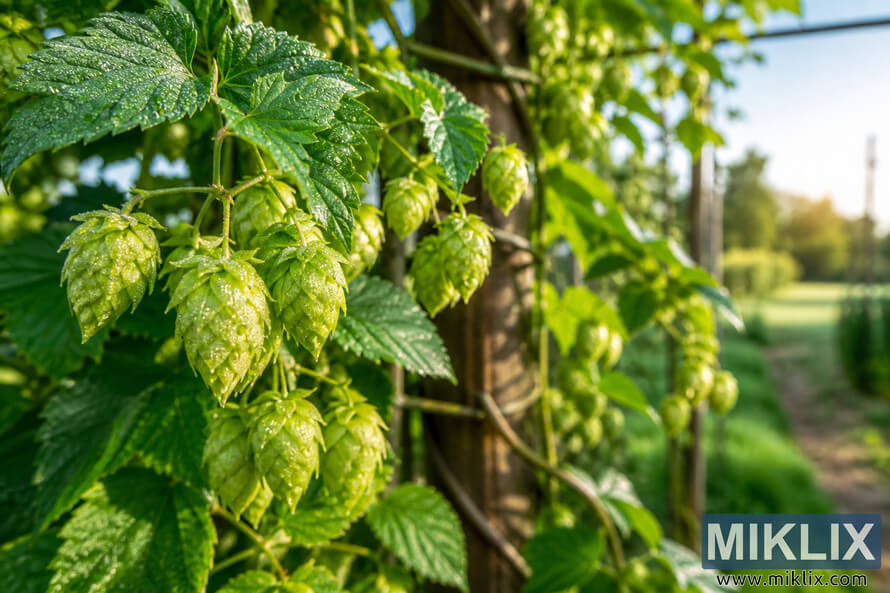
Keyworth Midseason stands out as a British hop variety, crucial in 20th-century hop breeding. It continues to be significant in today's hop brewing. Developed at Wye College by Professor Ernest Salmon, it comes from seedling OR55 and the Y90 line. Its unique blackcurrant, lemon, and earthy flavors are cherished for both classic and modern beer styles.
Hops in Beer Brewing: Keyworth’s Midseason
Кликните или додирните слику за више информација и веће резолуције.
Renowned for its vigor and dense cones, Keyworth Midseason ripens mid-to-late season. It was chosen for its moderate wilt resistance in the 1940s. This combination of practicality and flavor made it a staple for growers and brewers alike. It's particularly favored for pale ales, IPAs, and darker beers.
Key Takeaways
- Keyworth Midseason is a British hop variety developed at Wye College with documented lineage from OR55 and Y90.
- Keyworth’s Midseason hops feature blackcurrant, lemon, and earthy notes prized in many beer styles.
- The variety was selected for moderate wilt resistance and shows vigorous, dense cone production.
- It suits a range of brewing uses, from session pale ales to aroma-forward IPAs and blended stouts.
- Availability in the UK and careful processing help preserve the delicate hop characteristics favored by brewers.
Origins of Keyworth’s Midseason hops and historical context
Keyworth’s Midseason hops have their roots in early 20th-century British breeding efforts. These efforts aimed to enhance disease resistance and brewing quality. The variety emerged from a lineage shaped by practical trials, village cultivation, and targeted selection for traits beneficial to growers and brewers.
At Wye College, breeding work led to the development of many notable cultivars, transforming British hop agriculture. These hops were bred by experienced researchers who tackled wilt pressures and market demands. Ernest Salmon's programs combined local selections with wild genetics to enhance resistance and aroma.
One key plant, OR55, started as a seedling in 1924. It was raised from open-pollinated seed from parent Y90. This lineage linked OR55 to desirable traits like steady yield and aroma suitable for traditional ales.
Y90, the parent of OR55, carried heritage from a wild Neomexicanus lineage. This lineage introduced resilience traits that supported moderate wilt resistance in later cultivars. The Neomexicanus lineage also brought genetic diversity, aiding Keyworth’s Midseason in adapting to regional disease and climate challenges.
The hop was named after Keyworth village in Nottinghamshire, where it was cultivated and adopted widely. Its origins reflect the village's influence and the breeding path from Wye College, OR55 seedling selection, and Y90’s wild ancestry.

Кликните или додирните слику за више информација и веће резолуције.
Development timeline and selection for disease resistance
The creation of Keyworth’s Midseason aimed at real-world performance and lasting health. Initial breeding focused on traits valued by farmers, with a strong emphasis on wilt resistance. This trait became crucial during the evaluation process.
Selection in 1943 for moderate wilt resistance
In 1943, breeders chose seedling OR55 for its moderate wilt resistance. This characteristic made it a strong candidate for commercial trials. The moderate resistance was seen as vital for hop farms facing soil-borne diseases in the mid-20th century.
Trials and Hops Marketing Board recommendations in the 1940s
Field trials began soon after. The 1945 trial showed the variety's brewing quality and field durability. The 1948 trial confirmed these results, earning national approval.
The Hops Marketing Board's positive findings encouraged planting the variety. Their support highlighted the variety's performance and brewer acceptance.
Commercial planting growth through the 1950s
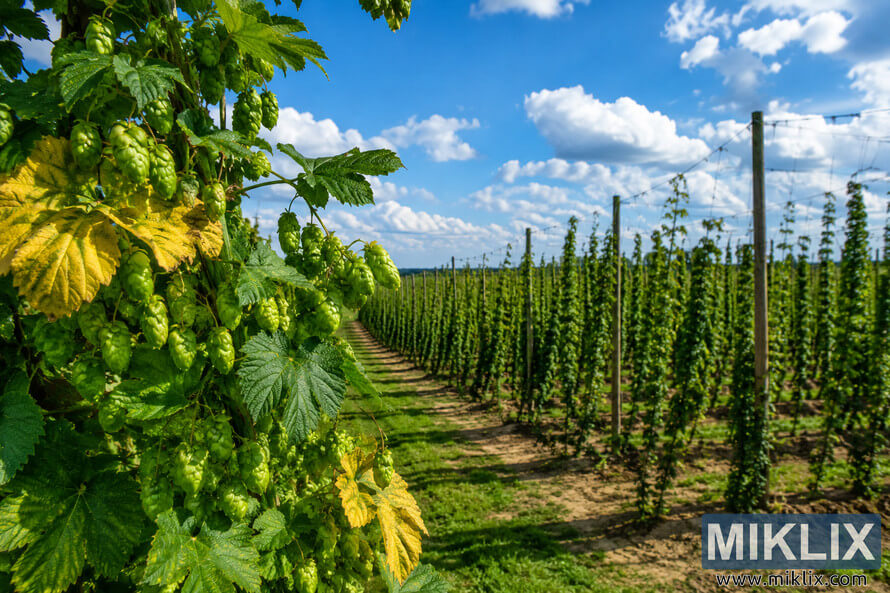
Commercial planting started in 1949 with 133 acres. The need for disease-resistant hops led to a peak of 573 acres by 1954.
Growers continued to cultivate existing fields for many years. By the late 1960s, the Hops Marketing Board advised against new plantings. Yet, many fields remained productive until the 1980s.
Кликните или додирните слику за више информација и веће резолуције.
Agronomic traits and field performance
Keyworth’s Midseason emerged as a dependable option for farmers due to its agronomic traits. It boasted high hop vigour and a robust growth habit, ensuring consistent yields across different environments. Its midseason maturity allowed for better timing of harvests, aligning with processing capabilities and labor availability.
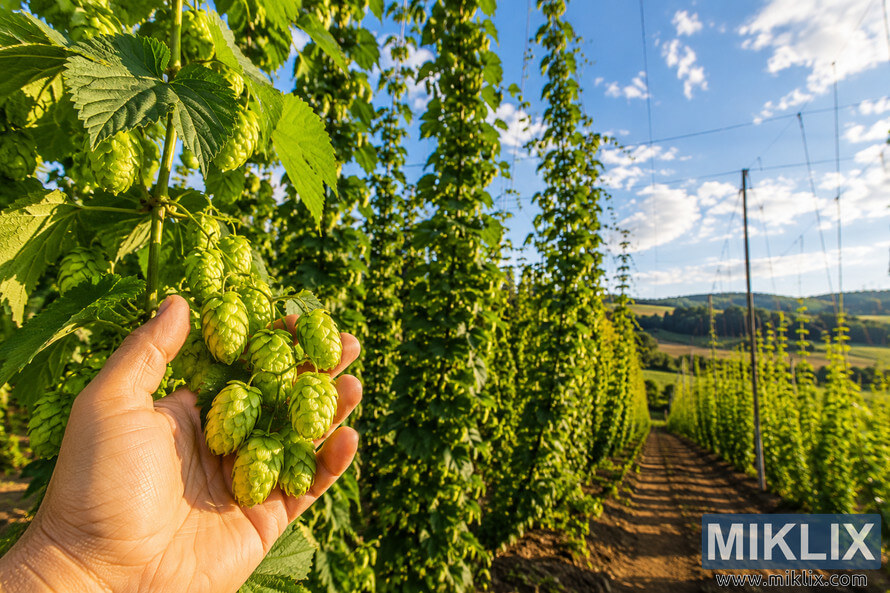
The variety's strong hop vigour resulted in large, dense cones. These cones were ideal for handling and drying, thanks to their density. This density also packed alpha acids and aroma compounds more efficiently, simplifying storage and transport for brewers.
Its mid-to-late season timing positioned harvests between early varieties and late-season weather risks. This timing was beneficial for scheduling, reducing conflicts with other labor-intensive crops.
- Vigour and canopy: vigorous vines produced healthy bine growth that supported heavier flower loads without frequent retraining or support work.
- Cone build: dense cone density made yields more marketable by weight and quality metrics.
- Harvest timing: steady midseason maturity narrowed peak harvesting days, which helped processing throughput.
Commercial trials and plantings consistently showed high hop yields. Growers preferred it, especially when faced with wilt and other pressures. As a result, acreage trends increased in the late 1940s and early 1950s, reaching a peak as producers sought disease-resistant, dependable hops.
By the late 1960s, the Hops Marketing Board cautioned against new plantings. Shifts in brewery preferences, the introduction of new cultivars, and updated disease management made some growers hesitant. Despite this, existing plants remained productive into the 1980s, showcasing the variety's enduring value.
Кликните или додирните слику за више информација и веће резолуције.
Sensory profile: flavors and aromas of Keyworth’s Midseason hops
Keyworth’s Midseason hops offer a distinct, layered aroma that is highly valued by brewers and tasters. The sensory profile is centered around a blend of fruit and earthy notes. This combination is particularly effective in both traditional British ales and contemporary craft beers.
- Primary notes — The dominant flavors are often described as blackcurrant and lemon hops. These fruit notes are complemented by a subtle earthy undertone. This earthy base grounds the beer, balancing out the fruitiness.
- Floral touch — A fresh floral hop aroma is commonly detected by brewers. This floral element enhances the top notes, adding brightness without overwhelming the malt.
- Spice and nuance — In addition to floral notes, many brewers notice spicy hop characteristics. These spicy undertones are particularly evident in dry-hopped or late-addition beers. They add depth and complexity to pale ales and session beers.
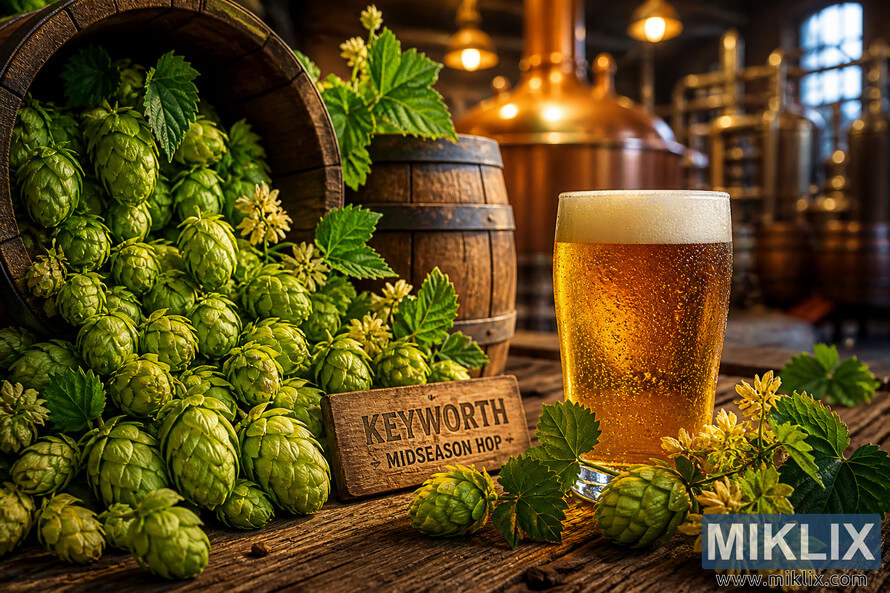
The processing of hops significantly impacts the aroma and flavor of Keyworth’s Midseason. Techniques such as hand harvesting, low-temperature kilning, and quick pelletizing help retain volatile oils. This ensures that the blackcurrant, lemon, floral, and spicy notes remain vibrant even after storage.
Both homebrewers and professional brewers rely on the Keyworth sensory profile when selecting hops. Late boil and dry-hop additions emphasize the fruit and floral aspects. Early additions, on the other hand, highlight the variety's firm bitterness.
Кликните или додирните слику за више информација и веће резолуције.
Brewing uses and styles that benefit from Keyworth’s Midseason hops
Keyworth Midseason hops offer a blend of blackcurrant, lemon, and earthy flavors, enhancing various beer styles. Their steady alpha acids and aromatic properties are crucial for achieving balance and complexity. They are ideal for adding a mild fruity note without overpowering the malt.
Pale ales and session beers benefit from the floral-citrus lift provided by Keyworth Midseason. Small amounts added late in the brewing process can introduce freshness while keeping bitterness in check. Homebrewers find that using modest amounts helps maintain drinkability in beers with lower alcohol content.
IPAs and other aroma-forward styles benefit from Keyworth's expressive top notes. Pairing it with bold citrus or resinous varieties allows for a layered aroma. In double or single-IPAs, it enhances fruit and spice notes without overshadowing the malt.
Darker beers, such as stouts and porters, can be brightened by Keyworth's subtle fruit notes. Use hops for stouts sparingly. Brief late additions or small dry-hop portions can introduce a blackcurrant-lemon lift, balancing out chocolate and roast malts.
- Blending hops often yields the best results: pair Keyworth with Fuggle or East Kent Goldings for classic balance.
- For modern citrus-forward beers, combine with Citra or Mosaic while keeping Keyworth as a supporting aromatic layer.
- In dark ales, trial 10–20% of total dry-hop weight as Keyworth to avoid overwhelming roast notes.
Experimentation is key. Adjust hop timing to suit your recipe goals and blend hops thoughtfully. This approach unlocks the unique contribution of Keyworth Midseason across a range of beer styles.
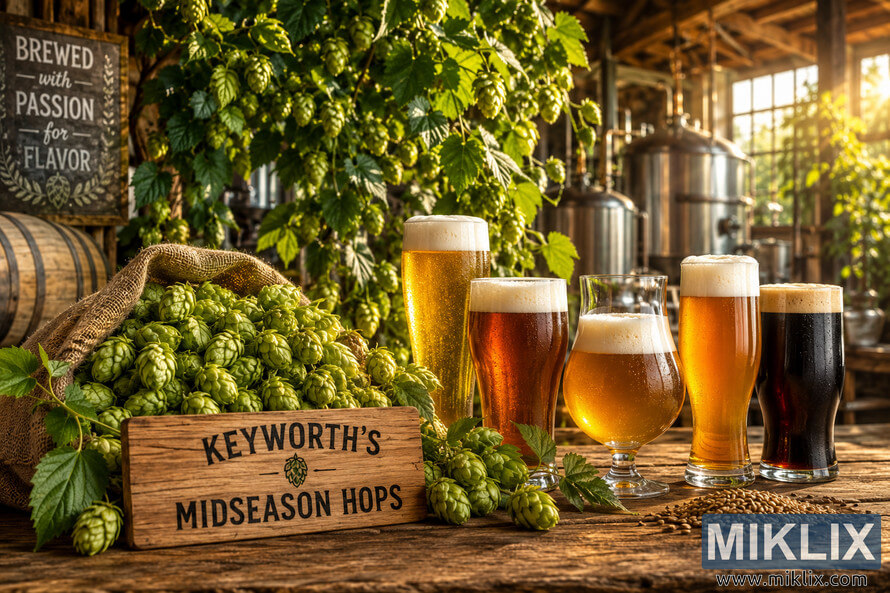
Кликните или додирните слику за више информација и веће резолуције.
Best practices for hopping: timing, quantity, and techniques
Effective hopping begins with a clear goal: whether it's bitterness, flavor, or aroma. Early boil additions control bitterness and balance malt. Late additions and whirlpool hops enhance citrus and blackcurrant without harsh bitterness. Use these guidelines to align Keyworth’s Midseason traits with your recipe.
Begin with early additions at the boil start for consistent bitterness. Homebrewers typically use modest amounts for bittering, as Keyworth's delicate flavor should not be overshadowed by high IBUs. Allocate 0.5–1 oz per 5-gallon batch for a clean, balanced backbone.
For flavor enhancement, add hops 10–5 minutes before the end of the boil. For more pronounced varietal notes, add hops to the whirlpool at 170–180°F and hold for 15–30 minutes. This method targets essential oils for citrus and blackcurrant appeal.
Dry hopping recommendations for aroma enhancement
Dry hopping boosts aroma without bitterness. Start with a conservative amount to avoid vegetal or grassy notes. Use lower temperatures and limit agitation to preserve volatile aromatics.
Keep contact time brief for delicate varieties. For a stronger nose, increase the amount rather than extending time. This method preserves freshness and maintains hop-derived aromatics.
Suggested dosages for homebrew batches
- Bittering: 0.5–1 oz per 5 gallons to set IBUs without masking flavor.
- Late flavor additions: 1–2 oz per 5 gallons to highlight Keyworth’s citrus and blackcurrant notes.
- Dry hop dosage: 1–2 oz per 5 gallons for moderate aroma; increase to 2–4 oz for a pronounced hop character.
Adjust these amounts based on taste and target IBUs. Monitor aroma during dry hopping and keep temperatures low to reduce vegetal extraction. Trial batches help refine the balance between bitterness, flavor, and aroma. This ensures precise use of late hop additions and dry hop dosage.
Working blends: pairing Keyworth’s Midseason with other hops
Keyworth’s Midseason offers a unique blend of bright lemon and blackcurrant notes atop an earthy floral base. It's perfect for adding a touch of perfume and fruit to traditional English beers without overpowering them. Here are some pairing suggestions and guidelines to maintain balance in your recipes.
Traditional British combinations
- Pairing it with Fuggle or Goldings creates a smooth, earthy foundation. These hops complement Keyworth’s citrus with their floral undertones. Start with an ounce at late boil or whirlpool for a 5-gallon batch. Adjust dry-hop quantities to your liking.
Modern hop combinations
- For a modern twist, blend Keyworth with New World hops. Citra, Mosaic, or Centennial enhance the citrus profile. Simcoe or Amarillo add resinous notes, balancing the beer with English character.
Balancing bitterness, flavor, and aroma
- Use high-alpha hops for bittering, reserving Keyworth for late additions and dry hopping. This preserves the delicate floral and blackcurrant notes. Aim for a balanced bitterness, with Keyworth contributing 10–30 minutes and post-fermentation additions.
- In a session pale ale, combine Keyworth with Goldings and a mild bittering hop. Focus on Keyworth for aroma in late additions.
- For an IPA, blend Keyworth with Citra and Simcoe. Use a layered approach for whirlpool and dry-hop additions to preserve fruit and resin clarity.
- In an English-style bitter, choose Fuggle pairing, low IBUs, and a single late Keyworth addition. This highlights the blackcurrant and lemon notes.
Small batches of 1–2 gallons are ideal for fine-tuning quantities. Taste each stage to ensure the recipe balance and prevent overpowering Keyworth’s aroma with aggressive bittering or too many assertive hops.
Processing and quality control of Keyworth’s Midseason hops
Keyworth’s Midseason hops are handled with care to preserve their flavor. Growers harvest hops at the peak of ripeness and quickly move them to drying facilities. This fast process minimizes oil loss and microbial growth.
Harvest timing and handling
Field crews often pick by hand, checking for cone readiness and lupulin color. For larger areas, mechanical harvesters are used, but timing remains crucial. This ensures the preservation of oils.
Low-temperature drying and pelletizing process
Low-temperature drying is key to preserving delicate aromas and volatile oils. Kilns operate at cool, slow temperatures to prevent thermal breakdown. This process aims for a stable moisture level, ensuring hops retain their character during storage.
After drying, hops are pelletized to create uniform material. This simplifies dosing for brewers. Pelletizing also reduces oxygen exposure, making storage and handling easier. Proper pellet press and cooling steps maintain pellet integrity.
Analytical and sensory quality control
Quality control involves both sensory checks and laboratory tests. Trained tasters evaluate aroma, bitterness, and any off-notes. Chemical assays measure alpha acid content and total oil for consistency.
- Packaging dates and storage instructions help brewers assess freshness.
- Certificates list alpha acid testing results, moisture, and any contaminants.
- Routine sampling ensures batches meet established specifications.
These practices—strict harvesting windows, careful drying, controlled pelletizing, and consistent quality control—ensure brewers can rely on Keyworth’s Midseason hops. They provide predictable bitterness and aroma.
Brewer feedback and real-world performance
Brewers who work with Keyworth Midseason report a mix of surprise and appreciation. Early plantings were praised for their agronomy but saw limited kitchen use. Modern craft brewers and homebrewers have rediscovered the hop for its fresh floral lift, citrus clarity, and light spice. This gives beers extra depth when used thoughtfully.
- Homebrewer impressions of aroma and flavor often highlight bright blackcurrant and lemon notes. Homebrew feedback points to a clean, English-style fruitiness that sings in small-batch pale ales and session beers.
- Many hobbyists note that late additions and modest dry hopping preserve delicate top notes. Those following homebrew feedback recommend careful storage to keep those aromas intact.
- Professional brewers cite consistent cone quality and predictable bitterness. Pro brewer notes emphasize reliability across multiple batches when hops arrive fresh and are stored cold.
- Brewpubs and regional breweries appreciate the hop’s flexibility. Pro brewer notes often mention that Keyworth Midseason blends well with Fuggle or Goldings to enrich aroma without overpowering malt character.
Several beers showcase the hop’s strengths. Pale ales spotlight blackcurrant and lemon in the nose while IPAs use it for subtle citrus lift in complex hop bills. Stouts and porters benefit when Keyworth Midseason adds fruit brightness against roasted malts.
- Small-batch pale ale: highlights the hop’s floral-citrus profile and tests homebrew feedback on dry hopping levels.
- Session IPA: uses late whirlpool additions to exploit aroma without excessive bitterness, reflecting brewer reviews Keyworth Midseason for versatility.
- Porter blend: pairs the hop with darker malts to surface lemon and blackcurrant, an example of beers with Keyworth hops that add complexity.
Across home and professional settings, brewer reviews Keyworth Midseason show a pattern. Treat the hop gently, store it well, and expect nuanced fruit and spice that lift many styles. Real-world performance earns respect when brewing teams apply those practices and compare notes.
Genetic legacy: descendants and breeding influence
Keyworth Midseason has left a lasting impact on British hop breeding. Its unique blend of vigor and disease resistance was highly valued. These traits guided the creation of new varieties, aiming to merge aroma with field resilience.
Keyworth Midseason played a pivotal role as the maternal parent of notable hops. It is the recorded mother of Density and Defender, passing on crucial traits. These traits were sought after by breeders, leading to the development of sturdy and productive varieties.
In the UK, breeding teams took note of Keyworth's influence. It showed how controlled crosses could introduce wild-derived resilience while preserving commercial attributes. This shift in focus aimed to combine flavor with agronomic stability.
The early emphasis on disease resistance was crucial. The selection for moderate wilt resistance in the 1940s set a precedent. This focus on wilt-resistant hops became a core objective in variety development.
- Recorded lineage: Keyworth Midseason as parent to Density and Defender
- Trait transfer: vigor and improved disease resilience
- Program impact: British hop breeding emphasized durable cultivars
Today, the genetic legacy of Keyworth is evident in trials and commercial plantings. Breeders continue to explore this legacy, seeking new sources of tolerance and aroma. This example illustrates how a single variety can influence decades of breeding goals and practices.
Practical recipe ideas using Keyworth’s Midseason hops
These simple templates help you explore Keyworth’s Midseason in homebrew recipes. Use Keyworth hops for late kettle and dry-hop work to lift citrus and blackcurrant notes without dominating malt character. Suggested dosages: 1–2 oz late addition and 1–2 oz dry hop per 5 gallons when you want a clear aromatic presence.
Below are three approachable concepts. Each keeps process steps clear and fits common equipment and schedules used by American homebrewers.
- Simple pale ale concept
- Grain bill: Maris Otter or English pale malt base, 8–10 lb for 5 gal, with 0.5–1 lb light crystal for color and mouthfeel.
- Bittering: Use a neutral high-alpha hop (Target, Magnum) to reach 30–40 IBUs at 60 minutes.
- Late additions: Add 1 oz Keyworth at 10 minutes and 1 oz at whirlpool/0 minutes for flavor.
- Dry hop: Add 1–2 oz Keyworth for 3–5 days to emphasize bright citrus and blackcurrant aroma.
- Yeast: English ale strain like Wyeast 1968 or Safale S-04 for balanced ester profile.
- Notes: This pale ale recipe Keyworth variant highlights hop aroma while keeping a classic English malt backbone.
- Balanced English-style bitter
- Grain bill: Maris Otter, 0.5 lb medium crystal, small flaked barley for head retention.
- Bittering: Traditional English hop (East Kent Goldings) to target 24–32 IBUs for a sessionable bitter.
- Late addition: 0.5–1 oz Keyworth at 10 minutes to add a floral-citrus lift without shifting the classic profile.
- Dry hop: Single small dry hop of 0.5–1 oz Keyworth if you want subtle aroma enhancement.
- Yeast: British ale yeast such as Wyeast 1968 or White Labs WLP002 for authentic bitterness and finish.
- Notes: English bitter Keyworth permutations keep the beer drinkable and true to style while gaining a fresh top-note.
- Stout or porter with bright lift
- Grain bill: Pale malt base plus roasted barley, chocolate malt, and a touch of crystal for balance.
- Bittering and body: Moderate IBUs from English hop varieties to support roast without excessive hop bite.
- Late or whirlpool: 0.5–1 oz Keyworth at whirlpool to preserve delicate citrus and blackcurrant esters against roast notes.
- Dry hop: Light dry hop of 0.5–1 oz Keyworth for 2–3 days to add lift. Use sparingly so roast remains primary.
- Yeast: English ale yeast or a cleaner American strain depending on desired finish.
- Notes: A stout Keyworth approach brightens chocolate and roast without creating a clash when kept subtle.
These homebrew recipes favor late additions and gentle dry hopping to show Keyworth’s fruit and citrus clarity. Adjust dosages based on your batch size and palate. Keeping hop amounts modest preserves balance and lets malt and roast character remain central where desired.
Conclusion
Keyworth Midseason summary: This hop variety originated from Wye College seedling OR55 and the Y90 lineage. It has ties to wild Neomexicanus genetics. Selected in 1943 for its moderate wilt resistance, it became a reliable, high-yielding British hop. It has dense cones and matures mid-to-late season.
Its genetics later influenced varieties like Density and Defender. This marks a significant point in British hop heritage.
As a hops in brewing conclusion, Keyworth’s Midseason brings unique flavors. It offers blackcurrant, lemon, earthy, floral, and spicy notes. These are perfect for pale ales, IPAs, and darker beers.
Brewers should add it late in the boil and use dry hopping carefully. Proper storage after drying and pelletizing is crucial. When blended with Fuggle or Goldings, or paired with modern New World hops, it adds depth without overpowering malt.
For U.S. brewers aiming for authentic character, source fresh Keyworth Midseason from reputable UK suppliers or importers. Store hops frozen to preserve oils. This summary highlights its historical significance, practical brewing value, and enduring role in British hop heritage. Use it thoughtfully in contemporary recipes to showcase its aromatic strengths.
FAQ
What are Keyworth’s Midseason hops and where did they originate?
Keyworth’s Midseason is a British hop variety developed at Wye College under Professor Ernest Salmon. It started as seedling OR55 from open‑pollinated seed collected from Y90, a descendant of a wild Neomexicanus hop. The variety was selected for practical field resilience and brewing use. It became associated with the village of Keyworth in Nottinghamshire.
What was the breeding purpose behind Keyworth’s Midseason?
Breeders prioritized resistance to wilt disease when selecting OR55 in 1943. The wild Neomexicanus-derived parentage of Y90 contributed resilience traits. Selection aimed to stabilize UK hop production amid mid‑20th century disease pressures.
When was Keyworth’s Midseason trialed and adopted commercially?
Trials in 1945 and 1948 judged the variety acceptable for brewing, prompting support from the Hops Marketing Board. Commercial plantings began in 1949 with 133 acres. By 1954, plantings peaked at 573 acres as growers sought reliable, disease‑resistant varieties.
Why did acreage later fall and new plantings get discouraged?
By 1968, the Hops Marketing Board discouraged new plantings due to changing brewery preferences and the introduction of newer varieties. Existing plantings remained productive until roughly the mid‑1980s.
What agronomic traits make Keyworth’s Midseason notable for growers?
The variety is vigorous, produces large dense cones, and delivers consistent yields. It matures mid‑to‑late season, aiding in managing harvest schedules. Its moderate wilt resistance made it attractive in its era.
How is Keyworth’s Midseason described sensory‑wise?
Traditional descriptions highlight blackcurrant, lemon, and earthy notes. Modern reports add fresh floral and spicy nuances. These create a layered aroma and flavor profile useful for both English and hybrid beer styles.
How do processing methods affect Keyworth’s aroma and flavor?
Hand harvest at peak ripeness, immediate low‑temperature drying (kilning), and pelletizing preserve volatile oils and resins. Pelletizing stabilizes hops for storage and handling. Proper quality control ensures consistent performance.
Which beer styles benefit most from Keyworth’s Midseason?
It works well in pale ales and session beers for floral‑citrus lift. In IPAs and aroma‑forward styles, it adds distinctive fruit and spice top notes. In darker beers (stouts, porters), it adds blackcurrant and lemon complexity without overpowering roast character.
When should I add Keyworth’s hops in the brewday to get desired effects?
Early boil additions provide bittering. Late kettle or whirlpool additions extract more flavor and aroma. Use these to showcase citrus and blackcurrant notes. Dry hopping maximizes aroma; recommended homebrew late additions are 1–2 oz per 5 gallons and dry hop 1–2 oz per 5 gallons for moderate aroma.
What homebrew dosages are suggested for Keyworth’s Midseason?
Suggested per 5‑gallon batch: bittering 0.5–1 oz, late flavor addition 1–2 oz, dry hop 1–2 oz for moderate aroma. For stronger aroma, increase late/dry hop amounts to 2–4 oz per 5 gallons, adjusting for balance and IBUs.
Which hop pairings work well with Keyworth’s Midseason?
Traditional British companions include Fuggle and Goldings to emphasize earthy and floral foundations. Modern pairings with citrus‑forward New World hops or resinous varieties highlight lemon and blackcurrant while retaining English character. Use a higher‑alpha neutral hop for bittering and Keyworth for flavor/aroma to maintain balance.
How should brewers store Keyworth’s hops for best freshness?
Check packaging dates and analytical data (alpha acids, oil content). Store vacuum‑sealed in the freezer to preserve alpha acids and aromatics. Pelletized hops, when properly frozen, tend to retain potency longer than whole cones.
Where can UK and U.S. brewers source Keyworth’s Midseason hops?
In the UK, homebrew suppliers such as The Homebrew Company, The Malt Miller, and Brew UK commonly list Keyworth with crop year and analysis. U.S. brewers should use reputable importers or specialty suppliers and confirm crop year, alpha acids, and packaging dates before purchase.
What quality controls are used to ensure Keyworth’s performance?
Suppliers and processors perform sensory analysis and chemical testing for alpha acids and oil content, screen for contaminants, and monitor crop handling. Harvest timing, low‑temperature kilning, and controlled pelletizing all form part of standard quality practice.
How have brewers described Keyworth’s real‑world performance?
Homebrewers praise its fresh floral, citrus, and spice notes; professional brewers note consistent quality and flexibility across styles when hops are fresh and well stored. It’s considered dependable for adding layered aromatic interest.
Does Keyworth’s Midseason have notable descendants or breeding influence?
Yes. Keyworth Midseason is the mother of the British varieties Density and Defender. Its Neomexicanus‑linked resilience and vigour influenced later British breeding priorities, especially the focus on wilt resistance in variety development.
Can you give simple recipe ideas that showcase Keyworth’s Midseason?
Simple pale ale: Maris Otter base, late kettle Keyworth additions, 1–2 oz dry hop, and a higher‑alpha neutral hop for bittering to 30–40 IBUs. Balanced English bitter: traditional malts, Keyworth late addition and light dry hop for floral‑citrus lift. Stout/porter: use small late whirlpool addition or light dry hop to introduce blackcurrant/lemon brightness without clashing with roast malts.
Даље читање
Ако сте уживали у овом посту, можда ће вам се свидети и ови предлози: