
Hops in Beer Brewing: Hallertauer Taurus
Published: December 26, 2025 at 10:23:08 AM UTC
Hallertauer Taurus, a German-bred dual-purpose hop, was introduced in 1995 by the Hop Research Center in Hüll. It's prized for its balance of bittering power and flavor potential.
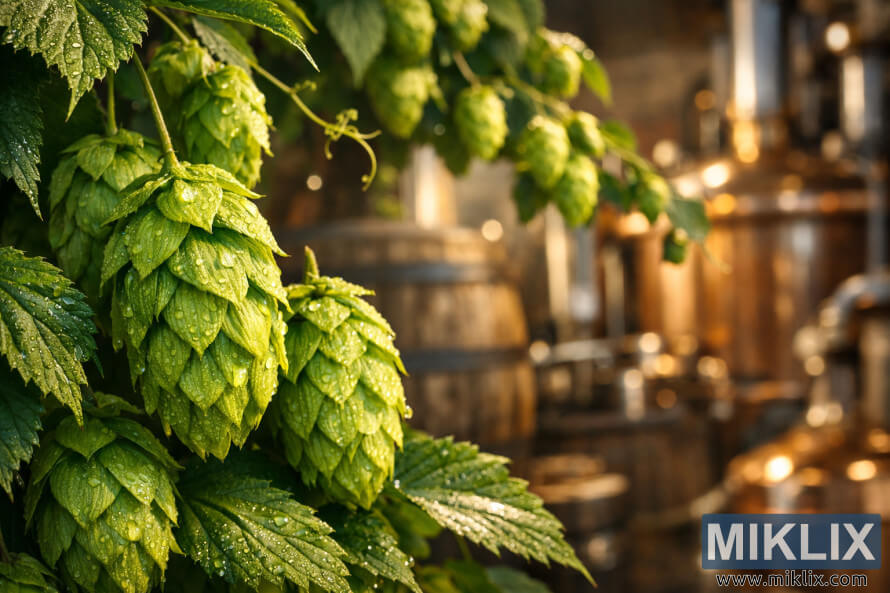
Click or tap the image for more information and higher resolutions.
This article offers a detailed, practical guide to Hallertauer Taurus hops and their significance in modern brewing. It delves into Hallertauer Taurus hops history, its lineage, and key characteristics for recipe creation and sourcing.
Key Takeaways
- Hallertauer Taurus hops offer a German-grown profile suited to both aroma and moderate bittering roles.
- Datasheet values and Hop Research Institute records inform predictable usage and substitution choices.
- Practical tips will cover dosing, timing, and pairing with malts and yeast.
- Supply and format differences affect alpha stability and lupulin concentration—buy smart for consistency.
- The article is designed for U.S. brewers seeking reliable, data-backed guidance on Hallertau Taurus.
Introduction to Hallertauer Taurus and its place in brewing
Hallertauer Taurus, a German-bred hop, was introduced in 1995 by the Hop Research Center in Hüll. It's prized for its balance of bittering power and flavor potential. This makes it a favorite among brewers.
As a dual-purpose hop, Taurus excels throughout the brewday. It's used for early boil additions to provide clean bitterness. Later, it adds rounded spice notes. For a subtle earthiness, it's perfect for dry hopping.
The hop's firm alpha acids ensure predictable dosing for large-scale brewing. Its aromatic profile, with earth, spice, and hints of chocolate or banana, enhances complexity. This is especially true when used in later stages of brewing.
It's widely featured in supplier catalogs and recipe databases. Commercial breweries like Paulaner use it for styles like Märzen and Oktoberfest. Homebrewers appreciate it for its reliable bittering strength and distinct character, all from a German origin.
- Breeding and release: developed from Hüll breeding material, recognized since 1995.
- Typical uses: early bittering, whirlpool, late additions, dry hop.
- Target brewers: those wanting a high-alpha, German hop with earthy and spicy notes.
Origin and pedigree of Hallertauer Taurus
The roots of Hallertauer Taurus lie in Germany, specifically the Hallertau region. At the Hop Research Institute Hüll, breeders crafted this variety in the late 20th century. It was first released in 1995, with a breeding ID of 88/55/13.
The lineage of Hallertauer Taurus showcases a blend of German and English hop genetics. It is often identified by the international code HTU. This cultivar's German heritage underscores its suitability for Central European growers.
Notes from the Hop Research Institute Hüll reveal a focus on yield and flavor consistency. The development of Hallertauer Taurus involved extensive field trials and clonal selection. Its introduction to global hop catalogs started in the mid-1990s.
Understanding the historical harvest timing is crucial for growers. Traditionally, English hops were harvested from September to early October. This period is still referenced by brewers when planning the Hallertauer Taurus harvest. The genealogy and pedigree of Hallertauer Taurus explain its widespread use in brewing recipes.
Key brewing characteristics of Hallertauer Taurus hops
Hallertauer Taurus is a top choice for brewers seeking both bittering and aroma. It excels as a dual-purpose hop, excelling in the boil and adding a delightful aroma in whirlpool or dry hop additions.
Alpha acids in Hallertauer Taurus range from 12% to 17.9%, with averages around 15%. This range allows for consistent bittering and flexibility in achieving desired IBUs.
Beta acids are typically between 4–6%, leading to a 2:1 to 4:1 alpha/beta ratio. This balance ensures stable bitterness and some aging resilience.
- Co-humulone in Hallertauer Taurus is about 20–25% of total alpha acids. This lower co-humulone results in a smoother bitterness.
- Hop Storage Index values are around 0.3–0.4. A moderate HSI shows the importance of freshness; older hops can lose potency and aroma.
- Total oils are moderate, ranging from 0.9–1.5 mL per 100 g, averaging 1.2 mL/100 g. This oil content enhances floral and spicy late-hop flavors without overpowering malt.
When crafting recipes, consider Hallertauer Taurus's typical alpha acid range. Adjust boil dosages or use lupulin products for precision. For aroma, remember the moderate oil content and low co-humulone to achieve balanced bitterness and refined hop flavor.
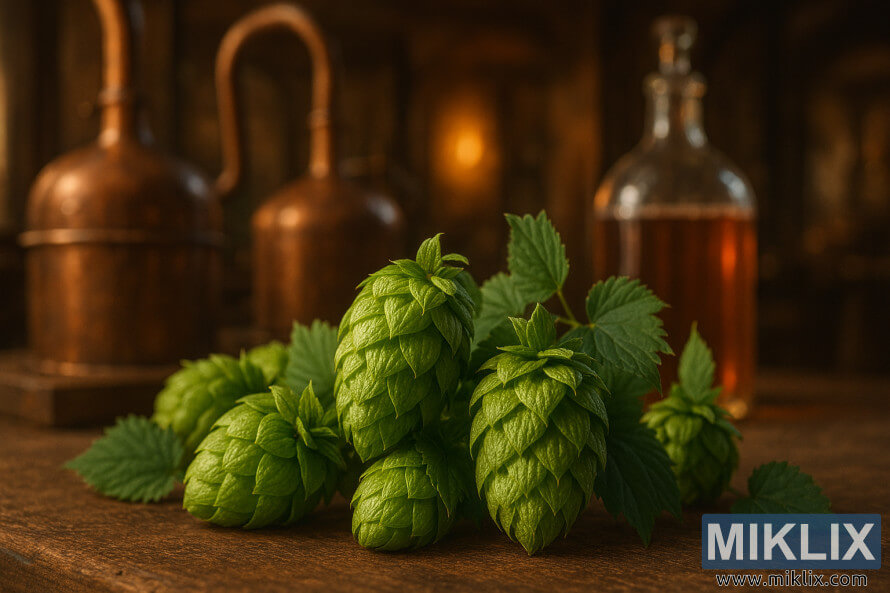
Click or tap the image for more information and higher resolutions.
Flavor and aroma profile of Hallertauer Taurus
Hallertauer Taurus flavor is rich in earthy and spicy notes, perfect for traditional German lagers. Tasting panels and recipe notes often highlight peppery and curry-like tones. These give the hop a unique savory quality.
The aroma of Hallertauer Taurus is a blend of darker and brighter notes. Brewers note chocolate and banana hints, especially in malt-forward beers. Lighter recipes reveal floral, currant, and lime impressions.
Timing of use impacts the hop's character. Adding it late in the boil or in the whirlpool enhances its flavor and aroma. This approach showcases the chocolate banana hop without excessive bitterness.
For a firm bitterness, early additions are key. This method emphasizes the hop's spicy side while retaining subtle earthy and floral notes.
Balance is crucial in brewing with Hallertauer Taurus. Paulaner and similar producers aim for clear bitterness and traditional spice. The spicy pepper hop notes and mellow herbal nuances complement the malt structure.
- Late addition or whirlpool: emphasize Hallertauer Taurus aroma and chocolate banana hop traits.
- Early boil addition: favor bittering with spicy pepper hop influence.
- Medium use: allows floral, currant, and lime nuances to appear as secondary notes.
When crafting recipes, test small changes. Adjust timing to control the beer's profile. Decide whether the chocolate banana hop or the spicy pepper hop should dominate.
Essential oil composition and sensory impact
Hallertauer Taurus essential oils average about 1.2 mL per 100 g of hops, with a typical range of 0.9 to 1.5 mL/100 g. This modest oil content shapes how the variety performs in late additions and dry hopping.
The hop oil breakdown shows myrcene at roughly 29–31% of total oils, about 30% on average. Myrcene gives resinous, citrus, and fruity notes. It is volatile and prone to loss during the boil, so brewers favor late additions to capture aroma.
Humulene appears at about 30–31%, averaging near 30.5% of the total. This compound adds woody, noble, and spicy aromas and holds up better to heat than myrcene. The near parity of myrcene and humulene creates a balanced aromatic backbone.
Caryophyllene contributes around 7–9% (average about 8%). That fraction brings peppery, woody, and herbal tones that support bitterness without overwhelming delicate fruit notes.
Farnesene levels are low, around 0–1% with an average near 0.5%. Even at trace amounts, farnesene offers a fresh, green, floral nuance that can lift hop character in lighter styles.
The remaining 28–34% of oils includes β-pinene, linalool, geraniol, selinene and other terpenes. These components add floral, citrus, and complex terpene layers that shift with hopping technique and timing.
When you consider myrcene humulene caryophyllene farnesene levels together, the sensory result makes sense. A balanced myrcene/humulene mix yields resinous and earthy bitterness plus spicy, woody aromatic notes. Secondary floral and fruit accents come from the minor terpenes.
Practical brewing guidance ties to the hop oil breakdown. Use late kettle additions or dry hop to preserve volatile oils for aroma. For more structural spice and noble character, allow some longer boil time to favor humulene and caryophyllene retention.
Brewing values and practical usage parameters
Hallertauer Taurus brewing values empower brewers to fine-tune bitterness and aroma with precision. Alpha acid percentages range from 12 to 17.9, averaging around 15. Beta acid percentages hover between 4 and 6, with an average of 5.
The alpha-beta ratio, crucial for bitterness and aging, varies between 2:1 and 4:1, typically settling at 3:1. This ratio significantly impacts the beer's bitter character and its aging trajectory.
Co-humulone levels, a key factor in bitterness perception, are moderate, averaging 22.5 percent. This moderate level influences the perceived harshness of early boil additions and modern bitterness expectations.
Hop storage index is a critical metric for handling. It ranges from 0.3 to 0.4, with most crops falling around 35 percent. Proper cold, vacuum-sealed storage is essential to slow down alpha and beta loss and preserve aroma.
Total oils, averaging 1.2 mL per 100 g, vary between 0.9 and 1.5 mL per 100 g. For optimal aroma capture, favor late additions, whirlpool hops, or dry hopping over early-boil additions.
- Bitterness dosing: use smaller amounts than with lower-alpha hops when adding early in the boil.
- Aroma dosing: add at flameout, whirlpool, or for dry hop to maximize oils.
- IBU planning: adjust calculations for crop-year alpha variability and hop storage index.
Practical handling requires meticulous IBU measurement due to the high alpha acid percent. Always refer to supplier lab sheets for exact alpha, beta, and co-humulone values when crafting recipes. This ensures precise bittering and realistic aroma expectations.
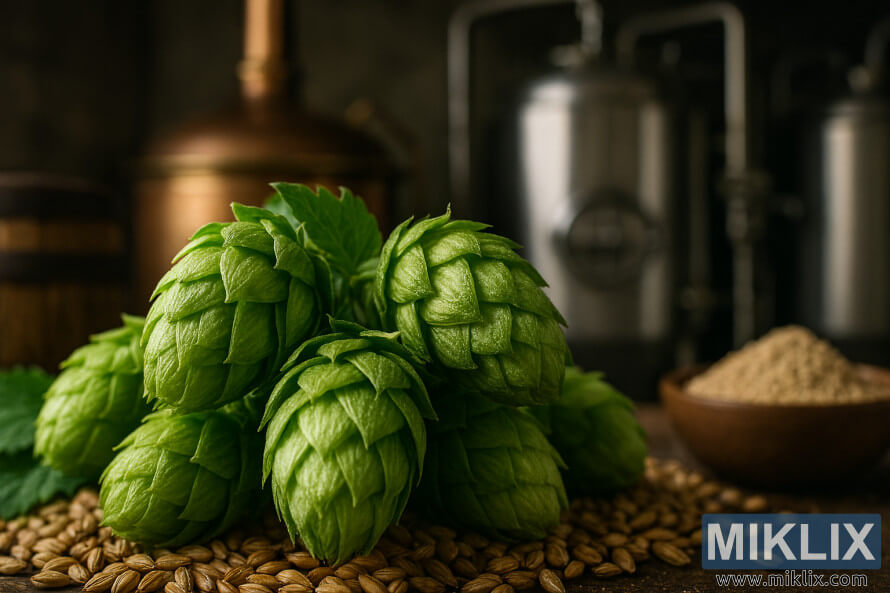
Click or tap the image for more information and higher resolutions.
Hallertauer Taurus as a dual-purpose hop
Hallertauer Taurus is celebrated for its versatility as a dual-purpose hop. It meets the needs of brewers seeking both bittering efficiency and aromatic qualities. This single variety can fulfill multiple roles in various lager and ale recipes.
With 12–18% alpha acids, Taurus is a high-alpha dual hop. Early additions in the boil provide clean, lasting bitterness. This makes it economical for base bitterness in large batches and for crisp lagers.
Later in the boil, or as a dry-hop, Hallertauer Taurus reveals its earthy, spicy, and subtle chocolate or banana notes. Its aromatic impact is more subdued than that of showy aroma hops. Yet, it adds a depth that enhances rustic or dark-fruited flavors.
Many brewers opt to split the usage of Hallertauer Taurus. A small early addition sets the IBUs, while later additions enhance spice and earthy aromas. It's crucial to keep the early dose modest to avoid overpowering the delicate topnotes.
- Use for clean, efficient bittering in pilsners and classic lagers.
- Employ late additions for brown ales, porters, or spiced saisons.
- Combine with floral or citrus varieties when bright topnotes are needed.
Compared to aroma-only hops like Citra, Hallertauer Taurus offers less floral or citrus lift. It's best paired where spice, earth, and subtle chocolate tones are desired, rather than for bold fruity topnotes.
Practical dosing tips: use it mainly as a bittering backbone, then add 10–30% of the total hop weight late for character. This approach showcases the high-alpha dual hop nature while preserving nuanced aroma contributions.
Common beer styles that suit Hallertauer Taurus
Hallertauer Taurus is a perfect fit for traditional German-style beers. It's often chosen for lagers that need a firm bitterness and subtle spice.
For darker malts, Schwarzbier hops complement Taurus beautifully. The earthy and chocolate notes of Taurus enhance roasted malts without dominating them.
In Märzen and festbier recipes, Oktoberfest hops benefit from Taurus. Its spice and mild fruit notes support malt-forward profiles, balancing sweetness.
Modern hybrid beers rely on Hallertauer Taurus as a bittering backbone. It's combined with aromatic varieties to add depth, keeping the focus on aroma hops.
- Traditional lagers: Märzen and festbier styles using Oktoberfest hops and Taurus for structure.
- Darker lagers: Schwarzbier and Munich-style dark lagers that gain complexity from Schwarzbier hops mixed with Taurus.
- German ales: Smaller-cask or cask-conditioned ales that highlight German ale hops in restrained, spicy ways.
Recipe databases show Taurus in hundreds of brews, indicating its widespread use. Paulaner’s Oktoberfest style is a notable example, proving its suitability for festival lagers.
In IPAs and hop-forward styles, Taurus takes a supporting role. It's used for bittering, while citrus or resinous varieties are layered for aroma.
When planning a beer, match Hallertauer Taurus with malt sweetness and yeast-derived esters. This approach brings out the best in these hops across classic and hybrid beer styles.
Pairing Hallertauer Taurus with malts and yeasts
When pairing Hallertauer Taurus, start with a light malt base. Pilsner malt is ideal, as it keeps the beer clean and allows the floral spice and earthy notes to shine. Munich and Vienna malts add warm bread and toffee, enhancing the hop's gentle spice.
For darker lagers, consider roasted or deep caramel malts for a Schwarzbier-style balance. These malts bring out chocolate and coffee flavors, contrasting the hop's earthy spice. Light crystal or Munich I/II malts can highlight banana and chocolate without overpowering the aroma.
- Recommended malt pairings: Pilsner, Munich, Vienna, light crystal, roasted malts for darker beers.
- Use restrained specialty malt percentages to avoid hiding delicate hop aromatics.
When it comes to yeast, choose clean, low-phenol strains for Hallertauer Taurus. Traditional German lager yeasts like Wyeast 2124 Bohemian Lager, Wyeast 2206 Bavarian Lager, and White Labs WLP830 German Lager are excellent. They ensure crisp fermentation, allowing bitterness and spice to shine while keeping esters in check.
For those who prefer German-style ales, clean ale yeasts or restrained English strains can work well. Avoid highly phenolic Belgian or wheat yeasts, as they can introduce fruity or clove notes that might clash with the hop's banana and chocolate hints.
- Choose lower fermentation temperatures to emphasize hop spice and earthy notes.
- Target clean attenuation to preserve body and let malt-hop interplay remain clear.
- Adjust specialty malt levels when using ale strains to prevent flavor clashes.
The key to balancing malt pairings and yeast choices for Hallertauer Taurus is understanding your goal. For a crisp lager, opt for lager yeast Hallertauer strains and a light malt bill. For darker, richer beers, increase roasted or caramel malts while keeping yeast clean to showcase both malt roast and hop spice.
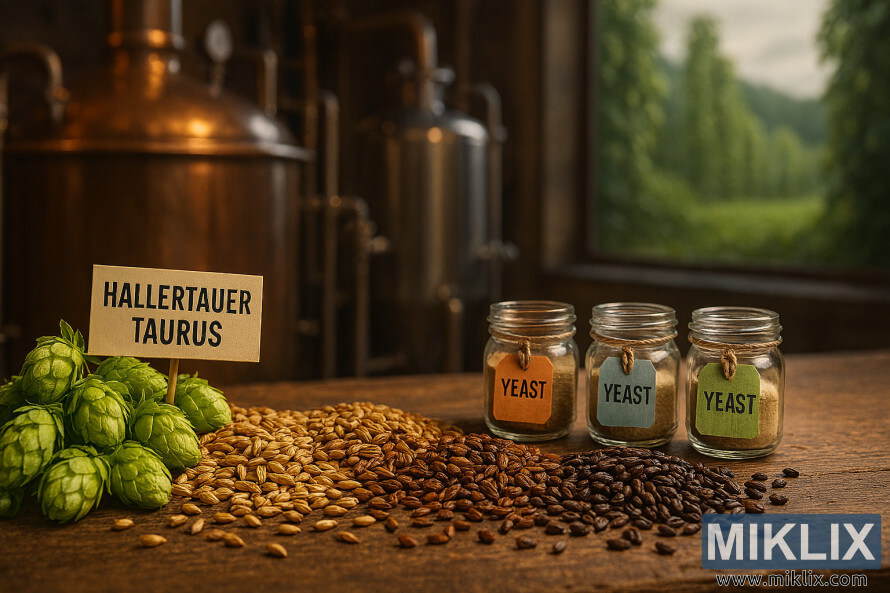
Click or tap the image for more information and higher resolutions.
Hop substitutions and alternatives
When Hallertauer Taurus is scarce, brewers seek substitutes that match its bittering power or aroma. Magnum and Herkules are common choices for bittering. Hallertau Tradition offers a closer noble character, while Citra adds a fruitier twist.
For comparable alpha acids, consider Magnum or Herkules as substitutes. Both have high alpha acids and clean bitterness. Adjust weights or IBU calculations to achieve the desired bitterness.
For late hops and dry hopping, Hallertau Tradition is a good alternative to Hallertauer Taurus. It provides a milder, spicy-lime aroma, though with less resin and a gentler noble note than Taurus.
Citra is a suitable alternative when aiming for a bright, citrus-forward flavor. However, aroma shifts will be noticeable. Reduce late-addition quantities to retain some of the original profile.
- Match alpha acids: calculate replacement weight or use a brewing calculator.
- Compare oil profiles: myrcene, humulene, and caryophyllene affect aroma transfer.
- Adjust timing: swap bittering hops like Magnum or Herkules at the same boil times.
Supplier catalogs and recipe tools are invaluable for finding Hallertauer Taurus substitutes. Examine alpha, oil percentages, and sensory descriptors to select the best alternative hops Hallertauer Taurus for your recipe.
Test small batches when introducing a Magnum substitute or Herkules substitute. Minor adjustments to dosage and timing help maintain balance. This allows you to assess aroma changes and bitterness behavior.
Supply, availability, and purchasing tips
Hallertauer Taurus availability changes with harvest cycles and demand. Retailers like Yakima Valley Hops, Hops Direct, and specialty hop shops list lots on Amazon and brewery supply sites. Before committing, check the crop year and lot size.
When buying Hallertauer Taurus hops, examine the alpha percentage and oil analytics. These figures show bittering power and aroma strength. Many suppliers post lab data for each lot. Use this information to match hops to your recipe.
- Compare crop year to assess freshness and HSI.
- Confirm cultivar ID like HTU codes if provided.
- Note origin claims: Germany listings are common, some lots are from the UK or contract farms.
Hop purchasing tips emphasize freshness and storage. Opt for recent harvests for the highest alpha and essential oils. Vacuum-sealed, frozen storage slows degradation. For longer storage, keep hops refrigerated or frozen to protect volatile oils and reduce alpha loss.
Prices and quantities vary among sellers. Smaller pellets are ideal for homebrewers seeking peak quality. For those using Hallertauer Taurus frequently, bulk lots ensure consistency. Always check supplier reviews and return policies before making bulk orders.
- Request lot analytics for alpha and oil composition.
- Compare prices from multiple Hallertauer Taurus suppliers.
- Balance lot size with safe storage capacity.
Be cautious with listings lacking detail. Clear labeling, lab reports, and stated harvest year indicate reputable sellers. Follow these tips to minimize risk and secure the finest batches for your brewing needs.
Processing formats and lupulin availability
Brewers often find Hallertauer Taurus in whole cone and pelletized forms. Whole cone hops preserve the flower's integrity. They offer subtle aroma nuances, ideal for small-batch or traditional brewing.
Pelletized hops, on the other hand, are easier to store and dose. They compress the hop into a uniform medium, fitting standard dosing equipment. Commercial brewers often choose pellets for their inventory control and consistent usage.
Major processors like Yakima Chief Hops, Hopsteiner, and BarthHaas do not offer Hallertauer Taurus in lupulin powder form. Lupulin concentrates, such as Cryo, LupuLN2, or Lupomax, could enhance aroma intensity. However, these options are not available for this variety.
Without lupulin powder, brewers must adjust their hop addition strategies. They may need to use larger late additions, whirlpool charges, or extended dry-hops to achieve the desired aroma. Fresh Hallertauer Taurus pellets can help maximize aroma while minimizing vegetal carryover.
Handling whole cone hops requires more space and gentle care to avoid breakage. Pellets, on the other hand, are more compact and resistant to oxidation when vacuum-sealed and refrigerated.
- Choose whole cone for tradition and tactile selection when aroma nuance matters.
- Choose Hallertauer Taurus pellets for consistent dosing, easier storage, and lower loss during transfer.
- Plan hop schedules with larger late or dry-hop volumes given the lack of lupulin powder availability.
When sourcing, verify the harvest dates and supplier freshness notes. Fresh pellets and timely additions ensure the most reliable aroma from Hallertauer Taurus formats. This allows brewers to achieve their intended flavor profile, even without lupulin concentrates.
Click or tap the image for more information and higher resolutions.
Health-related compounds: xanthohumol and antioxidants
Hallertauer Taurus is notable due to its high xanthohumol content. Xanthohumol, a prenylated chalcone, is found in hop cones. It is studied for its antioxidant properties and other bioactive effects.
Research indicates that some hop antioxidants, like xanthohumol, may outperform common dietary polyphenols in certain tests. This has sparked interest from nutraceutical companies and academic researchers. The high xanthohumol content in Taurus makes it a prime candidate for such studies.
Brewers should be aware that beer processing significantly alters xanthohumol levels. Boiling, conversion to isoxanthohumol, and yeast metabolism all impact final concentrations. Packaging and storage also play roles in retaining antioxidants. Thus, the xanthohumol content in raw hops does not match that in finished beer.
For those interested in hop antioxidants, Hallertauer Taurus xanthohumol is significant for research and educational purposes. Brewers can emphasize its uniqueness without making unsubstantiated health claims. In the United States, regulations restrict promotional language suggesting disease prevention or treatment.
Scientists continue to explore xanthohumol's mechanisms and safe dosages. For researchers studying bioactive hop compounds, Taurus's profile is valuable. However, brewing decisions are primarily based on flavor, aroma, and processing requirements, not assumed health benefits.
Recipe examples and dosing guidance
Hallertauer Taurus is featured in over 443 recipes, covering a range of beer styles. These include lagers, ales, Schwarzbier, and Oktoberfest/Märzen. By examining these recipes, brewers can align their flavor goals and determine the right amount of Taurus to use.
When it comes to bittering, Taurus's high alpha acid content requires careful adjustment. Brewers must reduce the weight of Taurus compared to hops with lower alpha acids. To calculate the IBUs, use the alpha percent and boil time provided by your supplier. This approach ensures the bitterness is balanced without overpowering the beer.
Adding Taurus late in the boil, between 10–5 minutes, enhances the beer with spicy and earthy notes. The amounts used at this stage are typically small. This allows the unique flavors of Taurus to shine through without dominating the beer.
For whirlpool or hop stands at 170–180°F, Taurus extracts volatile oils while minimizing harsh bitterness. Moderate additions during this stage emphasize the beer's spice and darker-seed character. This technique is particularly beneficial for styles like Schwarzbier and Märzen, where the malt backbone is key.
When it comes to dry-hopping, moderate to light rates are recommended. Taurus is known for its earthy and spicy aroma, rather than citrusy topfruit notes. Dry-hop amounts should be carefully planned to enhance the beer's aroma without overshadowing its malt character.
- Lager bittering: 0.25–0.5 oz per gallon, adjusted by alpha and target IBUs Hallertauer Taurus.
- Late additions/whirlpool: 0.05–0.2 oz per gallon to add aroma and flavor nuance.
- Dry-hop: 0.05–0.1 oz per gallon for aroma enhancement.
Always calculate the IBUs of Hallertauer Taurus based on the current alpha acid percentage from your supplier. Adjustments should be made for hop storage index and boil time. This ensures accurate and consistent dosing guidance for each batch.
Consider brewing a Schwarzbier with Munich and Pilsner malt, using Taurus for late additions to add spice. An Oktoberfest/Märzen can be crafted with Vienna and Munich malts, relying on Taurus for bittering. For a German-style ale, use Taurus as the primary bittering hop with modest late additions to enhance complexity.
By following these dosing guidance points and calculating IBUs for Hallertauer Taurus, brewers can achieve the desired earthy and spicy character. This approach ensures that the base malts and yeast profile remain prominent without being overpowered.
Conclusion
Hallertauer Taurus conclusion: This German-bred hop offers a unique blend of bittering and aroma. It was introduced in 1995 by the Hop Research Center in Hüll. It boasts high alpha acids, ranging from 12–18%, and moderate total oils, near 1.2 mL/100g. This makes it ideal for brewers seeking a balance between bitterness and aroma.
Summary Hallertauer Taurus hops: Taurus is best used as a dual-purpose hop. It excels in German-style lagers, Märzen, and Oktoberfest, as well as Schwarzbier. Its depth complements Pilsner and Munich malts. Timing and dosage are crucial — early additions for clean bitterness, and later for enhancing spicy and chocolate notes.
Best uses Taurus: Opt for pellets or whole-cone hops from reputable suppliers. Ensure to check alpha values and crop year. Store them cold and vacuum-sealed, as no lupulin concentrate is available. Its high xanthohumol levels are of interest for research but should not be marketed as health benefits.
Final recommendation: Select Hallertauer Taurus for its efficient bittering and earthy, spicy depth. Pair it with traditional German malts and a clean lager yeast. This will allow the hop's character to shine while keeping recipes simple and balanced.
Further Reading
If you enjoyed this post, you may also like these suggestions: