
Hops in Beer Brewing: Pride of Kent
Published: May 30, 2026 at 5:15:15 PM UTC
Pride of Kent hops hold a special place in English brewing history. Once cherished across Kent for their subtle aroma, they are now a nostalgic reminder of mid-20th century ales. Homebrewers and historians often recall them, highlighting their role in classic bitters and pale ales.
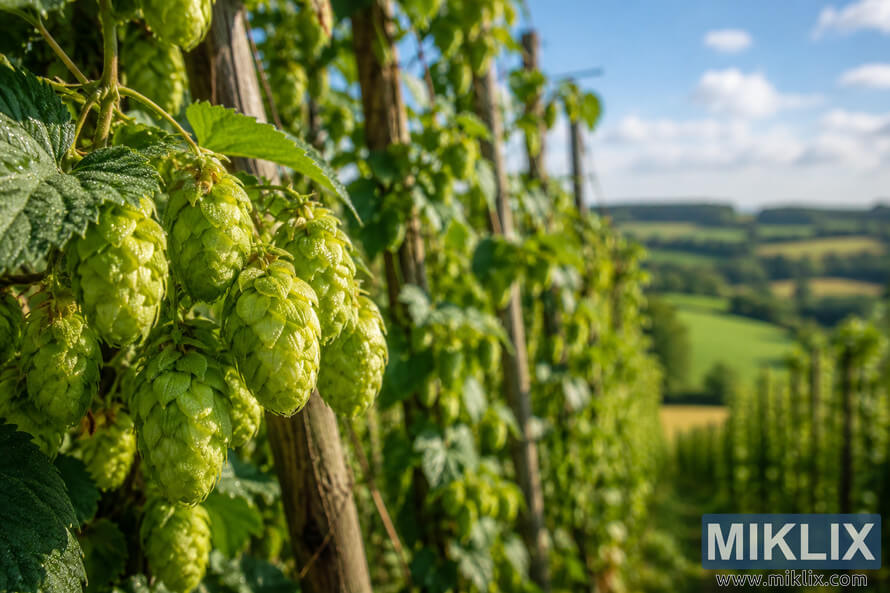
Click or tap the image for more information and higher resolutions.
Today, Pride of Kent's decline is evident in hop lists at retailers and in hop compendia. This is due to lower alpha acids, susceptibility to disease, and the rise of more productive varieties. Yet, its aroma-focused profile makes it suitable for adding floral and earthy notes to English beers.
This article aims to gather breeding notes, botanical descriptions, market availability, and brewing advice. It's for brewers and growers to assess Pride of Kent's relevance in modern recipes. By exploring its origins, chemical makeup, and ideal uses, we'll help you determine if it's right for your next English-style ale or single-hop experiment.
Key Takeaways
- Pride of Kent is an historical English hop variety associated with Kent hops and traditional brewing hops.
- It is primarily valued for aroma rather than high alpha acid bittering power.
- Availability is limited compared with mainstream commercial varieties; specialty sellers and small estates may hold stock.
- Use Pride of Kent in English ales, bitters, and delicate pale ales to highlight floral and earthy traits.
- Research pedigree and regional sources if you plan to grow or source Pride of Kent hops for brewing experiments.
Heritage and origin of Pride of Kent hops
Pride of Kent's roots trace back to 20th-century English hop breeding. It is among the traditional Kent varieties celebrated for their aroma. Breeder notes and records highlight its origin as part of regional efforts to enhance aroma and field performance. This variety is found in pedigree charts, used by growers and brewers to track hop lineage over decades.
Breeding background and parentage
In the UK, breeders conducted targeted crosses in the 1900s to improve flavor and disease resistance. Pride of Kent exhibits traits from these controlled crosses. It is recognized as a contributor in later breeding programs. The hop parentage evidence connects it to English lines chosen for their soft, floral aromas and consistent yields.
Historical use in Kent and English brewing
For decades, Pride of Kent was a staple in regional ales and bitters in Kent and England. Brewers valued it for its aroma and balance, not for its bittering power. The decline in commercial planting mirrors broader trends in Kent hop history, where older varieties were replaced.
Relationship to Pride of Ringwood and other Kent varieties
Pride of Ringwood is a cross involving Pride of Kent and a Tasmanian wild hop. This places Pride of Kent as a parent in subsequent varieties. Its lineage connects it to the Golding-family tradition and English hop breeding's evolution. This relationship explains the shared aromatic notes and why modern breeding programs reference Pride of Kent.

Click or tap the image for more information and higher resolutions.
Botanical characteristics and cone description
Pride of Kent exhibits the classic features of English aroma hops. Its cones are small to medium in size, fairly compact, and resemble those of the Golding family. Growers and catalogs describe them as tidy, tapered, and light green, drying to a pale straw color.
The lupulin glands within the bracts are responsible for the hop cone's aroma. These glands, rich in aromatic oils, contribute floral and herbal notes reminiscent of East Kent Goldings and Fuggles. When whole cones are crushed or warmed, brewers often experience a delicate, layered bouquet.
The hop's growth habit is typical of a bine, climbing vigorously when supported by strings or trellises. Plants develop strong lateral shoots and produce predictable yields with proper care. Understanding this habit is essential for planning trellis height and bine spacing to ensure optimal sun and air circulation.
- Typical cone size: small to medium, compact profile.
- Surface texture: tight bracts with visible lupulin pockets.
- Aroma cues: floral, herbal, light spice from lupulin oils.
Propagation is usually by rhizome to maintain variety integrity. Reliable hop rhizome information is vital for establishing true-to-type bines. Growers should source certified rhizomes or trusted nursery stock to avoid confusion with wild or similar Golding-type plants.
Field observers often note similarities between regional wild hops and Golding-family varieties, complicating identification. To confirm plant identity, focus on cone morphology, lupulin scent, and verified hop rhizome information before expanding plantings.
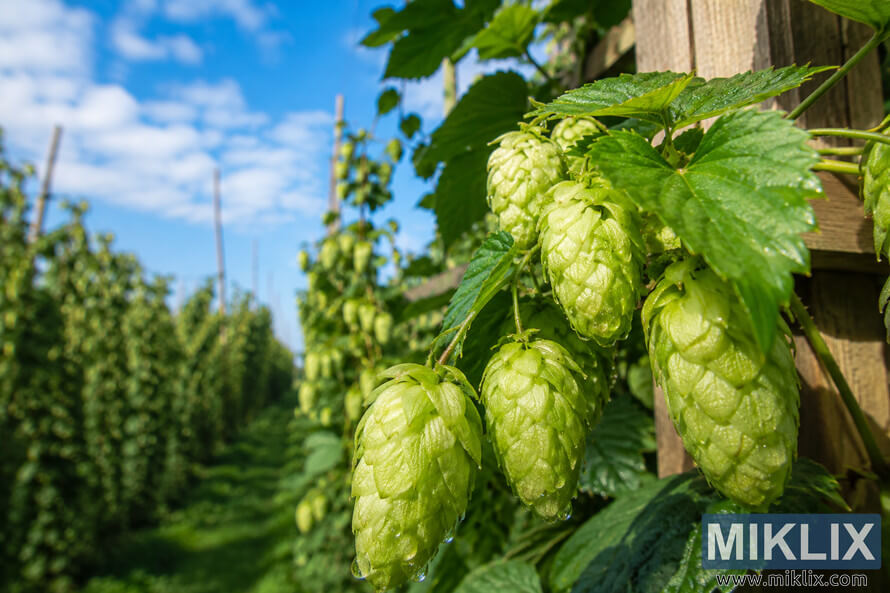
Click or tap the image for more information and higher resolutions.
Availability and rarity in modern markets
Pride of Kent availability has seen a decline in recent years. This shift is due to the preference for high-alpha and disease-resistant cultivars in commercial acreage. Market demand, breeder priorities, and crop losses have made traditional aroma hops less common. They are now scarce in trade catalogs and on retail shelves.
The decline of older varieties is linked to economic factors and plant health. Growers prioritize varieties that offer consistent yields and strong bittering potential for large-scale brewing. Heritage types, often vulnerable to pests or fungal pressures, have struggled to compete. This has led to reduced plantings and visibility.
Rare hop varieties are mostly found in niche supply channels. Small farms, specialty nurseries, and conservation plantings preserve many heritage genetics. Networking through regional hop associations and homebrewing communities often reveals leads for scarce stocks.
Why some traditional varieties became hard to find
- Shift in commercial demand to higher alpha hops cut plantings of older aroma types.
- Disease and pest susceptibility reduced yields and discouraged wider cultivation.
- Breeding focus on disease resistance and yield favored new cultivars over heritage lines.
Sources to search for Pride of Kent hops or rhizomes
Begin with established hop suppliers and retail catalogs that list pellets, whole cones, and nursery stock. Major U.S. suppliers and Pacific Northwest retailers often carry a broad range, though some items are seasonal.
- Check specialty UK hop merchants and regional nurseries for heritage rhizomes.
- Consult hop rhizomes suppliers and horticultural research institute catalogs for preserved lines.
- Post queries on homebrewing forums and reach out to small hop farms known for heritage or wild harvests.
Effective searches combine online catalogs with direct contact. Inquire about planned propagations with hop rhizomes suppliers and ask retailers about sourcing rare stock. Persistence is key when tracing where to buy Pride of Kent or locating other rare hop varieties.

Click or tap the image for more information and higher resolutions.
Alpha and beta acid profile and chemical composition
Pride of Kent hops embody the essence of England's aroma-hop tradition. They are prized for their aromatic oils, not their bittering power. This characteristic influences recipe formulation and aroma expectations.
Expected alpha acid range and variability by season
Alpha acids in Pride of Kent hops are expected to be low to moderate, around 3%–6%. Beta acids are modest, ensuring aging stability without overpowering bitterness.
Seasonal variability in alpha acids is typical for English aroma hops. Weather, soil, and vintage impact oil concentration and alpha levels annually. Brewers must adjust bittering calculations based on vintage data or recent assays to prevent unexpected IBUs.
Oil composition and typical aromatic compounds
Pride of Kent hops are rich in humulene and farnesene, with myrcene and caryophyllene present in smaller amounts. These compounds contribute floral, herbal, and spicy notes to the hop's aroma.
- Humulene: provides warm, woody, floral notes.
- Farnesene: adds delicate green and floral highlights.
- Myrcene and caryophyllene: contribute fresh herbal and spicy accents.
Understanding the chemistry of Pride of Kent hops aids brewers in timing late additions, whirlpool hops, and dry hopping. These hops reward gentle handling to preserve their delicate floral and herbal aromas.
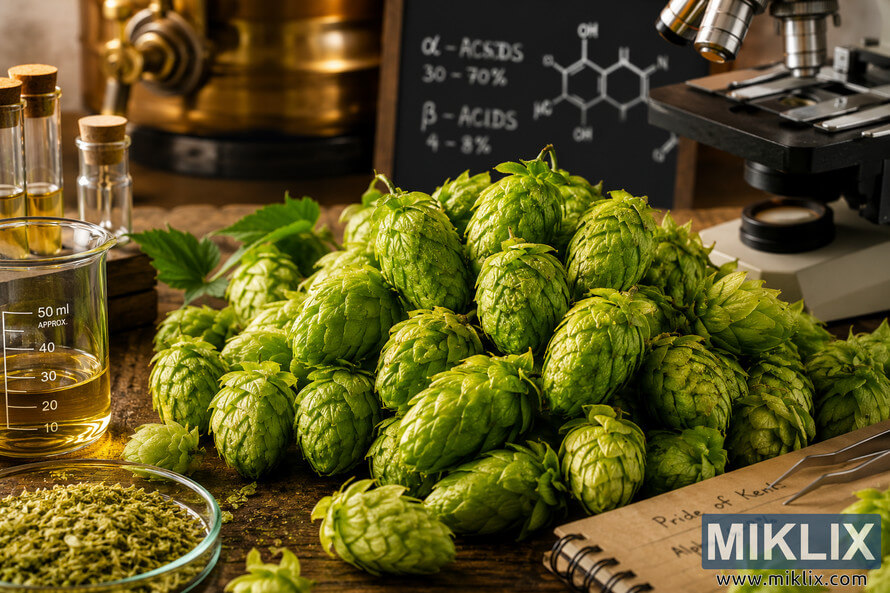
Click or tap the image for more information and higher resolutions.
Flavor and aroma profile in finished beer
Pride of Kent presents itself with a soft, old-world hop aroma, unlike the bright, citrusy notes of other varieties. Its taste profile features a delicate floral and honeyed top, complemented by an earthy, herbal base and a hint of spice. This combination aligns it with classic English hops, which emphasize subtlety over boldness.
Common tasting notes: floral, herbal, earthy, spice
The aroma is characterized by delicate floral notes reminiscent of lavender and soft honey. The floral herbal hops add a rounded, perfumed quality without overpowering the palate.
The earthy and herbal undertones evoke thyme and dried leaves. A mild spiciness, akin to light black pepper or clove, emerges in the finish, adding depth without overwhelming the senses.
How Pride of Kent interacts with malt and yeast
When paired with Maris Otter or English pale ale malt, Pride of Kent creates a harmonious balance. The malt's sweetness and biscuit notes fill the midpalate, while the hop aromatics provide a subtle lift. This interaction ensures a balanced and nuanced flavor profile.
Traditional English ale yeasts enhance the hop's rounded aromatics. They introduce soft fruit or biscuit notes that complement the floral and honeyed aspects of the hop. This synergy results in a beer that is both cohesive and enjoyable.
- Topnotes: soft floral and honey
- Midnotes: herbal and earthy
- Finish: mild spice, restrained

Click or tap the image for more information and higher resolutions.
Best beer styles to showcase Pride of Kent
Pride of Kent is ideal for beers that highlight subtle, floral, and herbal hop notes over bold bitterness. Its lineage ties it to traditional British brewing. Its delicate aromas also enhance lighter continental styles.
English bitters, ordinary bitter, and ESB are perfect for showcasing Pride of Kent. These styles allow the hop's floral and earthy flavors to complement malt and yeast. In cask-conditioned ales, the hop aroma matures beautifully, enhancing the malt profile.
- English bitters and ordinary bitter: showcase restrained floral and herbal notes without masking malt.
- ESB and classic English pale ale: provide a balance of subtle aroma and moderate bitterness ideal for Pride of Kent pale ale recipes.
- Cask ales: let gentle hop character meld with cellar conditioning for smooth drinkability.
Pride of Kent also complements lighter continental and farmhouse styles. It's particularly suited for saisons and pale saisons, where its floral lift can enhance the yeast-driven spice without overpowering it.
- Single-hop Pride of Kent pale ale: highlight delicate aroma by limiting late additions and using a clean English or neutral ale yeast.
- Saison with subtle hopping: blend small amounts of Pride of Kent with a more assertive saison hop to temper spice and add floral depth.
- Hybrid pale ales: combine Golding-family aroma with a touch of modern citrus hop for contrast while keeping tradition forward.
For brewers looking to showcase Pride of Kent, it offers versatility. Use it where its aroma complements malt and yeast, rather than competing with them. This approach allows the hop's subtle charm to shine in both English and farmhouse styles.
How to use Pride of Kent in the brew schedule
Pride of Kent shines as an aroma hop, not a primary bittering agent. Its floral and herbal notes, akin to Goldings and Pride of Ringwood, require careful planning. Early additions establish bitterness, while later additions enhance character.
- Begin with a modest early addition for Pride of Kent bittering. Due to its low alpha acids, more weight is needed for similar IBUs. Balance cost and flavor accordingly.
- Save most hops for late additions. Adding them in the last 10–15 minutes of the boil preserves floral oils better than prolonged high-heat exposure.
- Whirlpool at 170–180°F (76–82°C) to extract aroma without extensive isomerization. This method enhances flavor and maintains a cleaner hop profile.
Dry hopping and whirlpool use for aromatic lift
- Post-fermentation dry hopping with Pride of Kent is ideal for a vibrant nose. Use larger quantities to compensate for low alpha acids and emphasize aroma.
- Combine whirlpool and dry hop steps for layered aroma. A whirlpool addition pulls volatile oils into solution. A later dry hop refreshes and adds fresh floral and herbal notes.
- Choose pellet or whole-cone forms with intent. Pellets extract faster and can be used in shorter contact times. Whole cones offer a gentler, slower release of aroma.
Portioning is key to showcasing subtleties. Split late hop additions between end-of-boil, whirlpool, and dry hop for complex, persistent character. Avoid long boil exposure and high temperatures to preserve the hop's finer traits.
Substitutes and comparables for Pride of Kent
Brewers often seek Pride of Kent substitutes when it's hard to find. Golding-family hops and Fuggles are top choices. Each has its own aroma, so pick the right one for your beer.
East Kent Goldings offer floral, honeyed, and lemon notes. They complement malt well. Whitbread Goldings and other Golding-family hops are similar to Pride of Kent. They're great for bitters, pale ales, and recipes needing a floral touch.
Fuggles, on the other hand, have an earthier profile. They bring woody and herbal flavors. Use Fuggles for beers that need a rustic, herbal taste or more body.
- East Kent Goldings or Whitbread Goldings — best for floral and honeyed aroma; gentle and classic.
- Fuggles — best for earthier, herbal, and woody character; more rustic and robust.
- Bramling Cross and other Golding-family hops — consider when a berry or sharper citrus edge is desired.
When substituting, match late additions and dry-hop timing. This preserves delicate aromas. Adjust quantities by 10–20% to balance. Choose Goldings for subtle top notes and Fuggles for herbal depth.
Beers made with East Kent Goldings will be smoother and more floral. Fuggles will add a darker herbal tone and firmer bitterness. Pride of Ringwood or POR might be closer to Pride of Kent, but Goldings are the best swap for traditional English styles.
Growing Pride of Kent: tips for home growers
Growing Pride of Kent requires patience and dedication. This guide will help you choose the right site, prepare the soil, and propagate the rhizomes. By following these steps, you can cultivate strong, healthy bines that showcase the variety's classic traits.
Soil, climate, and site selection considerations
Opt for a sunny location with well-draining, fertile loam and a pH between 6.0–7.5. Full sun and consistent summer moisture are key for optimal cone growth. While the Pacific Northwest's climate aligns with Kent's, careful site selection can help growers succeed across various regions.
Ensure strong trellis support and good air circulation to minimize disease risk. Raised beds or mounded rows aid in drainage on heavier soils. Mulching retains soil moisture and reduces weed competition during the first year.
Pest, disease resistance, and rhizome propagation notes
Opt for certified, disease-free stock whenever possible. Older English varieties may be susceptible to downy mildew, powdery mildew, and verticillium. Inspect incoming material carefully. Watch for hop aphids and spider mites, and treat promptly with targeted controls or horticultural oils.
Hop rhizome propagation is the preferred method for establishing true-to-type plants. Plant rhizomes in spring, laying them horizontally 2–4 inches deep. Allow vigorous bines to develop. Trim weak roots, train strong shoots on strings, and space plants for better airflow.
- Kent hop growing tips: choose certified rhizomes, pick a sunny site, and test soil pH before planting.
- Grow Pride of Kent with regular summer hydration and nitrogen management to support cone set.
- Rotate plantings, sanitize pruners, and remove infected shoots to limit the spread of hop pests and diseases.
When sourcing material, rely on reputable UK and U.S. suppliers and local hop clubs. For legacy varieties, select locally adapted plants over successive seasons to enhance resilience. By focusing on hop rhizome propagation and regular scouting, you can increase the chances of a healthy, productive yard crop.
Processing and forms: whole cone, pellet, and rhizome
Pride of Kent hops are available in three forms: whole cones, pellets, and rhizomes. Each form impacts handling, aroma, and long-term use differently. The choice affects workflow in both the brew house and the garden.
Whole-cone hops retain the flower's integrity. Many prefer them for late additions and dry hopping for their fresh, delicate aroma. However, they require more storage space and careful handling. Pellets, made from milled cones, offer easier dosing and better extraction for bittering and flavor. They also have a longer shelf life when properly packaged.
Rhizomes are the underground segments for propagating new hop plants. It's crucial to source certified rhizome forms to ensure variety purity and reduce disease risk. Store rhizomes cool and slightly moist before planting in early spring to encourage healthy shoots.
Here are quick pros and cons to consider when choosing between forms for brewing and growing.
- Pellet advantages: compact packaging, simpler measuring, improved extraction, and extended useful life when vacuum-sealed and frozen.
- Pellet drawbacks: milling exposes oils to oxidation during processing; some brewers sense a small change in aroma nuance compared to whole cones.
- Whole-cone advantages: visual integrity, preferred for traditional dry-hopping, and perceived aromatic nuance by some brewers.
- Whole-cone drawbacks: bulkier, harder to dose, and shorter shelf stability unless stored carefully.
- Rhizome notes: intended for propagation, not brewing; keep cool, avoid drying out, and plant early in the growing season.
Proper hop storage is key to preserving hop character. Aroma hops are rich in volatile oils that oxidize quickly when exposed to oxygen, heat, or light.
Follow these storage best practices to preserve hop aroma and maintain alpha stability:
- Vacuum-seal or use low-oxygen packaging to limit oxidation.
- Keep hops cold. Store pellets or whole cones in a refrigerator for short term, or in a freezer at around -18°C (0°F) for longer term.
- Avoid repeated thaw cycles. Thaw only what you will use in a single session.
- Buy smaller quantities of aroma varieties and rotate stock within a year for best freshness.
- Store rhizomes cool and moist, not frozen, and plant when soil conditions are favorable.
For many, the choice is clear. Opt for pellets for convenience, consistency, and longer shelf life. Choose whole cones for traditional handling and subtle aromatic differences in dry-hopped beers. Focus on hop storage to protect volatile oils, whether you store Pride of Kent whole-cone vs pellet, shop for hop rhizome forms, or focus on preserving hop aroma during handling.
Brewing recipes and single-hop experiments featuring Pride of Kent
Below are practical recipe notes and a tasting protocol to run clear, repeatable trials that highlight Pride of Kent characteristics. Use a simple grain bill and a neutral English ale yeast to let the hop aroma speak. Place the image centered for visual context.
Example outline for an English pale ale Pride of Kent test batch
- Target: OG 1.044–1.048, ABV ~4.0–4.8%.
- Malt bill: 90–95% Maris Otter or English pale malt, 5–10% crystal 10–40L for color and touch of sweetness.
- Hopping: aim 25–35 IBU using early bittering additions from a mild high-alpha hop or from the tested Pride of Kent with adjusted weight for low alpha acids.
- Late additions: last 10 minutes of boil for flavor, whirlpool at 170–180°F with a larger Pride of Kent charge to capture volatile aromatics.
- Dry hop: 3–5 g/L of Pride of Kent for 48–72 hours to lift aroma without adding vegetal notes.
- Yeast: English ale strains such as Wyeast 1968 London ESB or White Labs WLP002 to support malt-hop balance.
Single-hop experiment design and split-batch ideas
- Brew a single base wort and split into three vessels. Use Pride of Kent in one, East Kent Goldings in the second, and Fuggles or Pride of Ringwood in the third for comparison.
- Keep all variables identical except hop identity, hop form, and addition schedule. Log alpha acid of each lot and adjust quantities to hit the same IBU target.
- Run versions with whole-cone and pellet forms to note differences in intensity and freshness.
Stepwise hop tasting method and sensory protocol
- Standardize glassware: use tulip or nonic pint glasses rinsed with neutral water; pour gently to preserve aroma.
- Service temperature: 50–55°F for pale ales to open hop aroma without masking bitterness.
- Conditioning time: taste at 2 weeks, 4 weeks, and 8 weeks to document evolution.
- Tasting template: record aroma, flavor, intensity, duration, perceived bitterness, and balance. Note herbal, floral, earthy, and spice cues.
- Use triangle tests or small panels to detect subtle differences; randomize samples and blind the tasters when possible.
Recording and analysis tips for a rigorous single-hop experiment
- Log harvest year, alpha acid assay, hop form, and storage conditions for each lot.
- Note addition timings, whirlpool temperature, and dry-hop grams per liter.
- Compare mouthfeel and overall integration with the chosen English ale yeast to judge how Pride of Kent interacts with malt and fermentation esters.
This brew-and-taste outline makes a clear Pride of Kent recipe path and a repeatable single-hop experiment. The hop tasting method above yields structured notes that help brewers choose when Pride of Kent adds the desired English aroma character.
Comparative pedigree: where Pride of Kent fits in hop family trees
Pride of Kent is a cornerstone in English hop family charts, known for its traditional aroma. It has direct connections to later varieties, showcasing how floral and herbal oils have evolved over time. Pedigree records and charts often link Pride of Kent to Goldings and other Kent hops.
The following list highlights notable points from historic pedigrees and breeding notes.
- Pride of Ringwood's parentage is often cited as a cross between Pride of Kent and a Tasmanian wild hop. This explains its similar aromatic profile. Forum contributors note that Pride of Ringwood retains about 95% of Pride of Kent’s flavor and aroma.
- Pedigree charts place Pride of Kent within the English Golding/fatherland cluster. This links it to many regional aroma types used in traditional ales.
- In 20th-century hop breeding, Pride of Kent was used to preserve floral and herbal compounds. Breeders aimed to improve disease resistance and alpha acid stability while maintaining these traits.
Breeders used Pride of Kent for its aromatic traits and adaptability in making new crosses. The hop family tree reveals how this legacy has influenced its descendants. It has guided selection goals over the decades.
Pedigree charts are essential for tracking aromatic compounds and agronomic traits. They help growers and researchers compare lineage, identify shared parents, and plan crosses. This combines the legacy aroma with modern performance.
Conclusion
Pride of Kent summary: This heritage hop is cherished for its floral, herbal, and earthy scent. However, it's now scarce due to historical shifts in English brewing and disease pressures. These factors have pushed many traditional English hops, including Pride of Kent, out of mainstream production. Today, they are mostly found in specialist collections or private gardens.
For those looking to brew with Pride of Kent, POK brewing guidance is essential. Late additions, whirlpool rests, and dry hopping are recommended to preserve its delicate aroma. In English-style ales, pair it with straightforward malts and clean ale yeasts. This allows the floral and spice notes to shine without interference.
If Pride of Kent is not available, consider alternatives like Pride of Ringwood, East Kent Goldings, Whitbread Goldings, or Fuggles. For those in the United States, specialized suppliers, hop nurseries, and homebrewing networks may have rhizomes for cultivation. However, it's crucial to respect local regulations regarding planting.
This heritage hop conclusion highlights the importance of stewardship and adaptability. Celebrate Pride of Kent's historical significance. Use informed brewing techniques to showcase its aroma. And, when sourcing is limited, rely on comparable traditional English hops.
FAQ
What is Pride of Kent and where did it originate?
Pride of Kent is a traditional English aroma hop grown in Kent. It belongs to the Golding-style family of Kent hops. Historically, it was used in mid-20th century English brewing. Records show it as a heritage Kent variety, adding aromatic traits to later hops.
What is Pride of Kent’s breeding background and parentage?
Pride of Kent is part of the Golding-family lineage on English hop pedigree charts. It is cited as a parent of Pride of Ringwood. In the 20th century, breeders used Pride of Kent to pass floral and herbal oil profiles to new cultivars. They selected for alpha acids, disease resistance, and regional adaptation.
How was Pride of Kent used historically in Kent and English brewing?
Historically, Pride of Kent was used as an aroma hop in traditional English ales, bitters, and cask-conditioned beers. It was favored for its delicate floral, honeyed, and herbal notes. These complemented English malts and ale yeast. Its use declined with brewery consolidation and the industry's shift toward higher-alpha and more disease-resistant varieties.
What is the relationship between Pride of Kent and Pride of Ringwood?
Pride of Ringwood (POR) is reported to have Pride of Kent as a parent, crossed with a Tasmanian wild hop. Brewers and growers note POR retains most of Pride of Kent's flavor and aroma. This makes POR a practical substitute when POK is unavailable.
What does a Pride of Kent cone typically look like and smell like?
Cones resemble Golding-family hops: small-to-medium, fairly compact with olive-green to pale-yellow lupulin. Aromatically, they lean floral, honeyed, and lightly herbal. They also have subtle earthy and spicy undertones, similar to East Kent Goldings and Fuggles.
How does Pride of Kent grow and how is it propagated?
Pride of Kent is propagated by rhizome to preserve varietal traits. It grows as vigorous bine on trellis systems. Like other traditional Kent varieties, it prefers full sun, well-drained fertile soil, and regular summer moisture. Rhizome propagation in spring is standard for home and commercial plantings.
Is Pride of Kent commercially available today?
Pride of Kent is rare in modern commercial catalogs and often difficult to source. Many traditional English varieties declined in commercial planting. Brewers seeking POK should check specialized UK hop merchants, heritage nurseries, hop research institutes, and small estates or wild-harvest operations for rhizomes or limited cone/pellet runs.
Why did some traditional varieties like Pride of Kent become hard to find?
Multiple factors reduced their prevalence: brewery consolidation and the rise of keg beers and lagers favored higher-alpha and consistent hops. Breeders prioritized disease resistance and alpha-acid performance. Disease pressures and changing market demand led growers to replace or abandon older varieties, shrinking commercial stocks.
Where should I look for Pride of Kent hops or rhizomes?
Search specialty hop suppliers in the UK, heritage nurseries, university and breeder catalogs, hop farms known for wild or heritage harvests, and homebrewing networks. Internationally, some small estates and wild-harvesters (anecdotally cited examples include Australian wild-hop harvesters) may hold related genetics or limited stock.
What alpha acid range should I expect from Pride of Kent?
Exact historic values are scarce, but Pride of Kent likely follows Golding-family patterns: low-to-moderate alpha acids roughly in the 3%–6% range with vintage and growing-condition variability. Plan bittering calculations conservatively and use it primarily for late additions for aroma.
What is Pride of Kent’s typical oil composition and aromatic compounds?
Expected oil profile favors humulene and farnesene with notable myrcene and caryophyllene contributions. That oil mix yields floral, honeyed, herbal, and mild spicy notes. Seasonal and site variation affect oil proportions, so aroma intensity can vary by harvest.
What flavor and aroma does Pride of Kent contribute to finished beer?
In beer, POK typically offers delicate floral topnotes, honeyed and light citrus nuances, an herbal-earthy base, and a touch of spice. It integrates gently with malty English bases and allows yeast character to remain prominent rather than dominating with pungent fruit or resinous notes.
How does Pride of Kent interact with malt and yeast?
Pride of Kent pairs best with traditional English malts—Maris Otter or pale ale malt—and restrained specialty malts. English ale yeasts that highlight malt sweetness and subtle esters (for example Wyeast 1968 or White Labs WLP002) let Pride of Kent’s floral and herbal oils show without competing with aggressive hop-derived fruitiness.
Which beer styles best showcase Pride of Kent?
Classic fits are English bitters, ordinary and strong bitters, ESB, English pale ales, and cask-conditioned ales. It also suits saisons and farmhouse ales or any restrained pale ale where a gentle floral/herbal hop aroma is desired rather than assertive tropical or citrus character.
How should I schedule Pride of Kent additions in the brew?
Use a small early-boil charge only for base bitterness, since alpha acids are low. Favor late-boil additions, whirlpool at 170–180°F (76–82°C), and post-fermentation dry hopping to preserve delicate oils. Larger late and whirlpool charges will yield aroma without excessive isomerization.
Is dry hopping with Pride of Kent effective?
Yes. Dry-hopping amplifies floral and herbal aromatics typical of Pride of Kent. Because POK’s oils are delicate, use moderate quantities and allow adequate contact time post-fermentation. Whole-cone dry hops can give a slightly different aromatic perception from pellets; choose form based on preference and availability.
What are practical substitutes for Pride of Kent?
Close substitutes include East Kent Goldings and Whitbread Goldings for the soft floral/honeyed profile, and Fuggles for a more herbal, earthy character. Pride of Ringwood often approximates POK closely because of its parentage. Adjust late-addition quantities to match aroma intensity and balance.
When should I choose a substitute over searching for true Pride of Kent?
If immediate brewing plans require consistent supply or you cannot obtain rhizomes, choose East Kent or Whitbread Goldings or Pride of Ringwood. Use Fuggles when a more rustic earthiness is desired. Search for true POK if you want historical authenticity or to cultivate the variety.
What soil, climate, and site conditions suit growing Pride of Kent?
Site selection mirrors other Kent varieties: full sun, fertile well-drained loam soil, pH around 6.0–7.5, steady summer moisture, and good air circulation. Temperate maritime climates like Kent are ideal; in other regions, select sheltered, well-drained sites and monitor irrigation carefully.
What pest and disease risks should growers expect and how is propagation best handled?
Older varieties can be more susceptible to downy mildew, powdery mildew, verticillium, and root issues. Monitor for hop aphids and spider mites. Propagate using certified clean rhizomes to reduce disease introduction, plant in spring, train bines on trellis, and employ sanitation, crop rotation, and mildew management strategies.
What forms of Pride of Kent are sold and what are their pros and cons?
Available forms (when you can find them) include whole-cone, pellet, and rhizomes. Pellets offer ease of storage, measurement, and extraction efficiency. Whole-cone is favored by some for perceived freshness and nuance in dry-hopping. Rhizomes are required for planting and varietal preservation.
How should I store Pride of Kent hops to preserve aroma?
Store hops cold and oxygen-free. Vacuum-seal and freeze pellets or whole cones at about -18°C (0°F) or refrigerate short-term. Avoid repeated thaw cycles. Store rhizomes cool and moist and plant in early spring. Buy small quantities of aroma hops to use while fresh.
Can you suggest a simple English pale ale recipe outline to showcase Pride of Kent?
Use a straightforward malt bill: English pale malt or Maris Otter base with 5%–10% light crystal malt. Target OG 1.044–1.048 for ~4.0–4.8% ABV. Bitter to ~25–35 IBU with a small early addition, then add a larger late-boil or whirlpool charge and 3–5 g/L dry hop with Pride of Kent (or substitute East Kent Goldings/Pride of Ringwood) to highlight its floral/herbal aroma. Ferment with an English ale yeast.
How can I run single-hop experiments to evaluate Pride of Kent?
Brew small single-hop or split-batch trials using identical malt and yeast. Standardize OG, mash, and fermentation. Use consistent addition timing (early, late, whirlpool, dry-hop) and compare forms (pellet vs whole). Assess aroma, flavor, perceived bitterness, and balance across samples and record vintage and alpha values.
Where does Pride of Kent sit in hop family trees and breeding programs?
Pride of Kent sits in the English Golding-family lineage and has been recorded as a parent of Pride of Ringwood. Breeders used it to pass aromatic humulene/farnesene-driven traits into progeny. It represents the heritage aroma pool that informed later breeding for both sensory and agronomic traits.
Further Reading
If you enjoyed this post, you may also like these suggestions:
- Hops in Beer Brewing: Yakima Cluster
- Hops in Beer Brewing: Northdown
- Hops in Beer Brewing: Northern Brewer (US)