
Hops in Beer Brewing: Saxon
Published: March 27, 2026 at 5:49:41 PM UTC
Saxon hops are a British aroma hop, cherished for their clear, old-world character. Brewers seek this traditional balance in their recipes. The Saxon hop profile offers floral and mild earthy notes. Its moderate alpha acid of about 9% makes it versatile for late additions and blending.
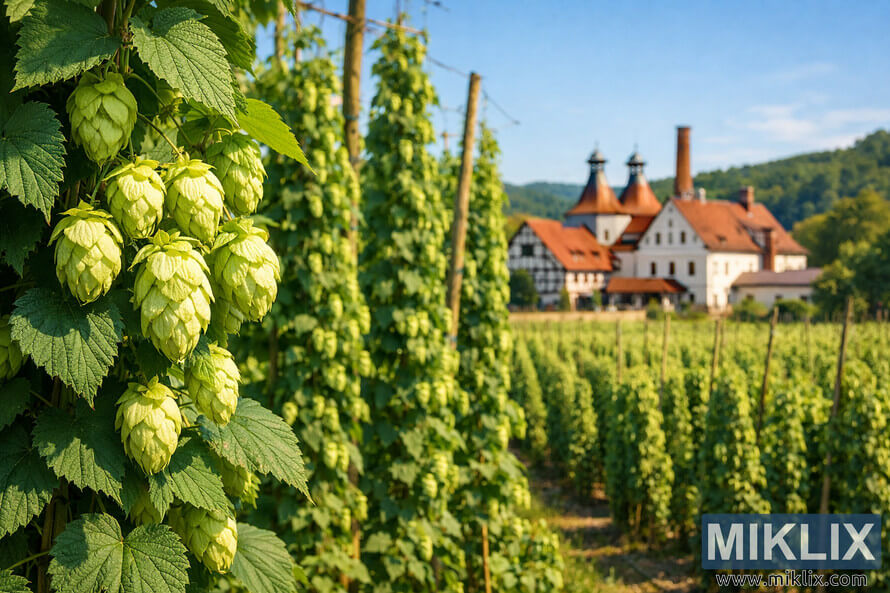
Click or tap the image for more information and higher resolutions.
The history of hops in beer brewing stretches back long before modern plantations. Early English brewing used malt, gruit herbs, and short fermentations. Hops, brought from the Low Countries, were introduced to Kent and Maidstone by the late 15th century. Laws soon governed hop quality and packing, and production evolved with mechanization and breeding.
Today, Saxon is among the British aroma hops celebrated for its terroir and subtlety. American brewers often pair Saxon with pale malts and clean yeast strains to enhance its aroma. In a hop bill, Saxon typically makes up about 50% of the additions, aiming for authentic British aroma without excessive bitterness.
Key Takeaways
- Saxon hops are British aroma hops with a gentle floral and earthy Saxon hop profile.
- Saxon alpha acid sits around 9%, giving moderate bittering potential with strong aroma use.
- Hops in beer brewing replaced earlier gruit traditions in England and became regulated commodities.
- Saxon is often used for late additions, whirlpool, and dry hopping to showcase aroma.
- American brewers value Saxon for its Old World character and pairing with pale malts and neutral yeasts.
Introduction to Saxon hops and their role in brewing
Saxon hops are a favorite among brewers who desire a classic British aroma with just the right amount of bitterness. This introduction highlights how they contribute floral, earthy, and spicy notes without overpowering the malt.
What makes Saxon hops distinct
Saxon is celebrated as a British aroma hop, known for its balanced characteristics. It has moderate alpha acids, around 9%, making it ideal for late-kettle and dry-hop applications. Brewers opt for Saxon to infuse their beers with subtle floral notes, a touch of grass, and a deep herbal complexity.
Brief history and British origin
The Saxon hop's origins are deeply rooted in British hop cultivation, particularly after the Flanders era. The emphasis on hop pockets and grower records underscores the importance of provenance. This historical focus is why modern brewers seek out genuine British aroma hops for their heritage flavor and traceable origins.
How Saxon fits into modern brewing trends
Today's brewing trends, focusing on terroir and hop personality, have revitalized interest in Saxon hops. Craft brewers often use Saxon at about half of their hop bill to enhance aroma while maintaining moderate bitterness. The growing trend for traditional varieties like Saxon adds Old World complexity to modern pale ales and hybrid styles.
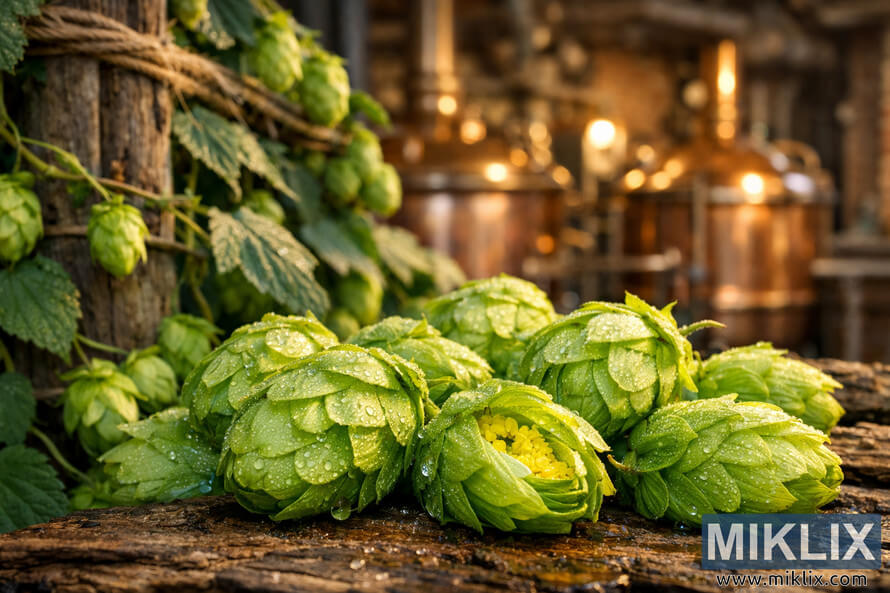
Click or tap the image for more information and higher resolutions.
Botanical background and origins of hop cultivation
Hops are a climbing perennial with a rich history. Their origins trace back to wild Humulus species found along riverbanks and in wood margins. Initially, people used young shoots as vegetables and leaves in small remedies. Later, hops became crucial in brewing.
The transition from wild gathering to planned cultivation marked the beginning of hop history. By the Middle Ages, growers in the Low Countries and Germany started selecting plants for larger cones and more consistent yields. This selection effort shaped the genetics of many modern commercial varieties.
In continental towns, brewers perfected drying and storing cone techniques to preserve aroma. These advancements helped hops spread across regions through trade. Hops became a key ingredient in northern European brewing traditions before they were established in English fields.
- Wild plant origins and early uses
- Rise of systematic cultivation in the Low Countries
- Processing advances that encouraged wider adoption
Hops arrived in England through trade with Flanders and Kent. Maidstone and other Kentish areas started cultivating hops at the end of the 15th century. Early English growers adapted continental techniques to local conditions, laying the groundwork for British varieties.
Expansion led to legal and market pressures. Laws in the 17th century aimed to curb poor-quality or adulterated hops. These regulations highlight the significant impact of hop cultivation on brewing economics in England and beyond.
The Saxon hop line emerged from these British efforts. Selective breeding focused on aroma and stability, connecting wild Humulus plants to the specific hops English brewers value today.
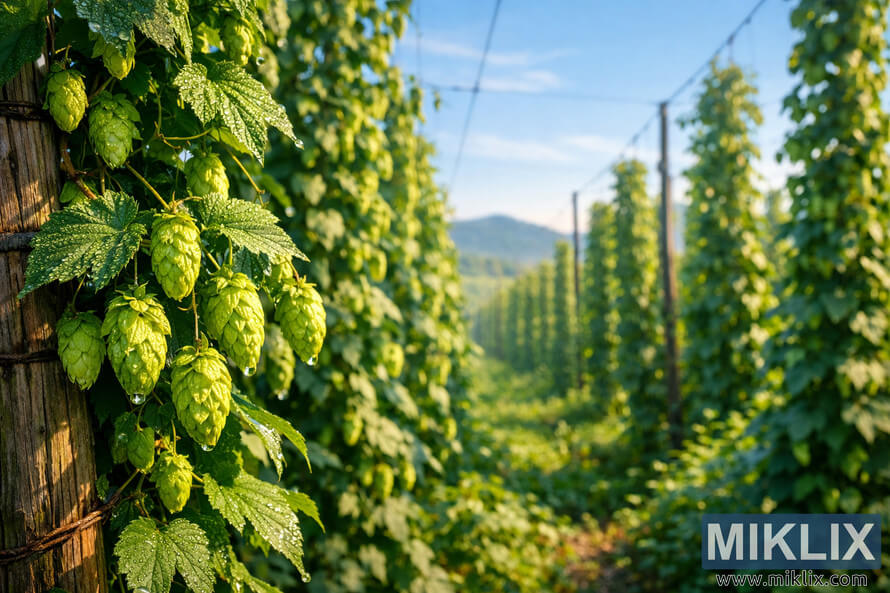
Click or tap the image for more information and higher resolutions.
Historical context: from Anglo-Saxon ale to hopped beer
Early English brewers adopted a straightforward approach. In Anglo-Saxon brewing, ale was the staple, an unhopped malt brew flavored with herbs like bog myrtle and yarrow. Yeast was obtained from the air or reused dregs, leading to a short fermentation period of one to three days. These ales were low in strength, designed for immediate consumption.
The distinction between ale and beer is crucial for understanding later developments. Ale was the term for unhopped malt drinks, while beer denoted hopped brews. Records from the time suggest that 'beor' could also refer to honey beer. Hops were initially valued for their preservative qualities rather than their flavor.
By the late 1400s, hops were introduced to England through trade and travel. The history of hops in England is marked by cultivation and regulation from this period. By 1603, Parliament started setting standards for hop quality, encouraging wider adoption and the establishment of hop gardens across counties.
The 17th century saw significant changes in the beer scene. Hopped beer became more popular, pushing traditional ale out of the elite's drinking preferences. Brewers began to adapt their recipes, techniques, and record-keeping practices. The use of hop pockets and documentation linked hops to growers, fostering a commercial hop trade.
The emergence of Saxon hops fits within this broader context. Once hops became a staple in English brewing, local varieties like Saxon were integrated into the British hop portfolio. This blend of tradition and new cultivation significantly influenced the evolution of English ales and beers through the 17th century.
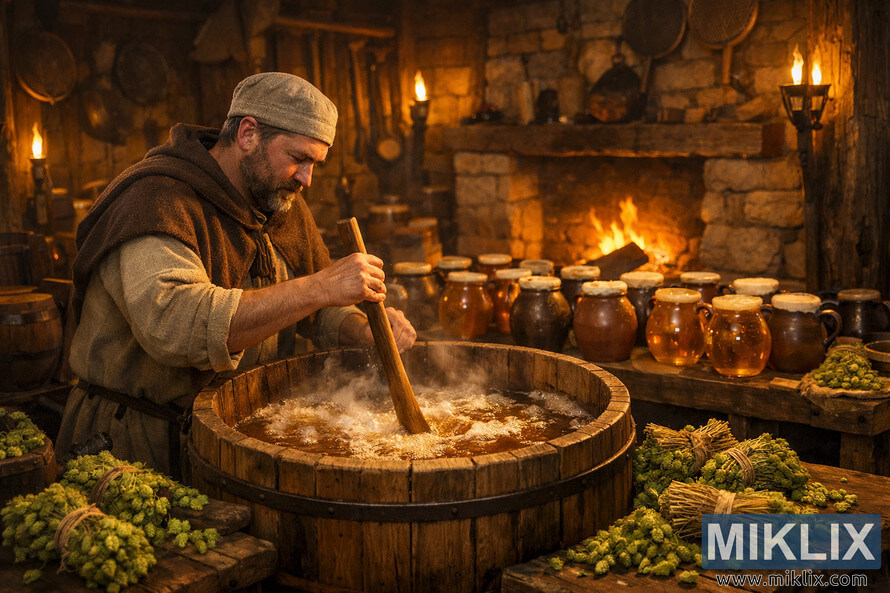
Click or tap the image for more information and higher resolutions.
Characteristics of Saxon hops
Saxon hops embody the essence of British aroma hops. They are celebrated for their balanced bitterness and distinct aromatic profile. This variety is a quintessential example of an aroma hop, offering enough bitterness to complement malt flavors when necessary.
The alpha acid content of Saxon hops is around 9%. This moderate level is ideal for early additions, ensuring the beer's flavor isn't overwhelmed. It's also perfect for finishing touches, providing a subtle yet nuanced character to the brew.
- Saxon aroma profile: floral top notes, gentle earthiness, and a subtle herbal lift that recalls traditional British aromatics.
- Saxon flavor descriptors often include tea-like tannins, mild citrus peel, and soft spice that supports malt-forward beers.
- Saxon hop usage in recipes commonly places the variety as a primary aroma component rather than the sole bittering hop.
In most recipes, Saxon hops make up about half of the hop bill. This usage underscores their role in enhancing flavor while allowing other hops to add depth and complexity.
For those aiming to highlight terroir and subtle aromatic nuances, Saxon is an excellent choice. It pairs well with Maris Otter or pale ale malts and clean ale yeasts, making it a versatile addition to any brew.
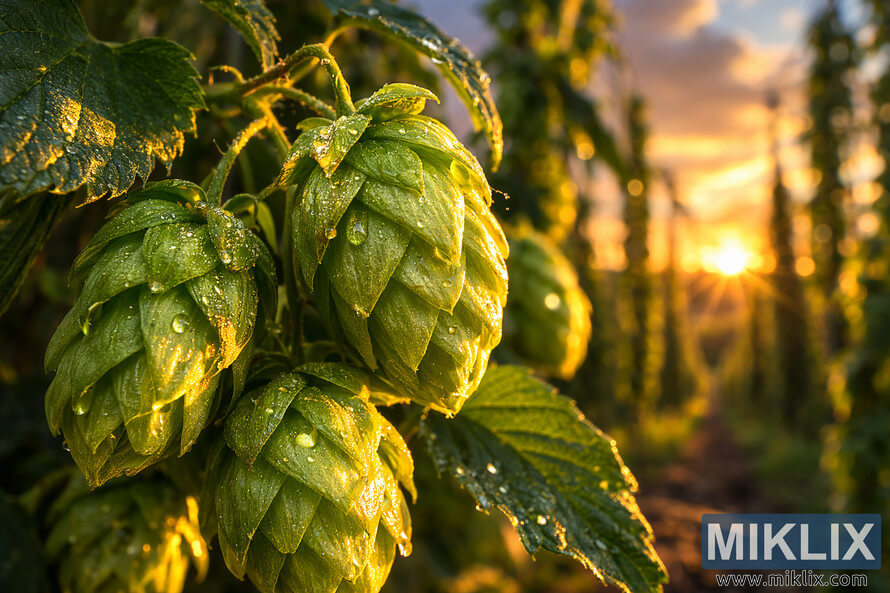
Click or tap the image for more information and higher resolutions.
Growing and cultivation considerations for Saxon
Saxon hops thrive in local conditions. British hop growing has a rich history in Kent and parts of the West Midlands. Growers carefully consider soil type, rainfall, and trellis systems to meet plant needs and expected yields.
Climate is crucial for hop health. A temperate climate with cool nights and warm days is ideal for cone development. Excessive summer heat or prolonged drought can significantly reduce yields. Heavy wet seasons, on the other hand, increase disease pressure and shorten the harvesting window.
Horticultural advancements have transformed modern hop fields. Research at Wye College and other institutions led to the development of hedgerow hops. These varieties grow about eight feet tall, reducing establishment costs and allowing for mechanized harvesting and maintenance.
- Lower trellis height makes mechanized picking feasible.
- Reduced plant vigor lowers labor and input needs.
- Hedgerow hops encourage more diverse field edges and beneficial insects.
Pest control and plant health are key considerations. Modern British hop growing focuses on selecting varieties with high hop disease resistance. Breeders aim to minimize losses from mildew and viruses, reducing the need for fungicides and maintaining yields despite variable weather.
Practical steps are essential for managing risks in Saxon cultivation. Regular scouting, balanced irrigation, and rotation of treatments help prevent outbreaks. Many growers combine cultural controls with resistant selections to minimize chemical use while maintaining cone quality.
Market and environmental factors influence farm choices. Acreage can fluctuate based on demand and disease pressures. Producers who adopt hedgerow hops and select resistant strains often experience lower costs per hectare and better alignment with modern supply chains.
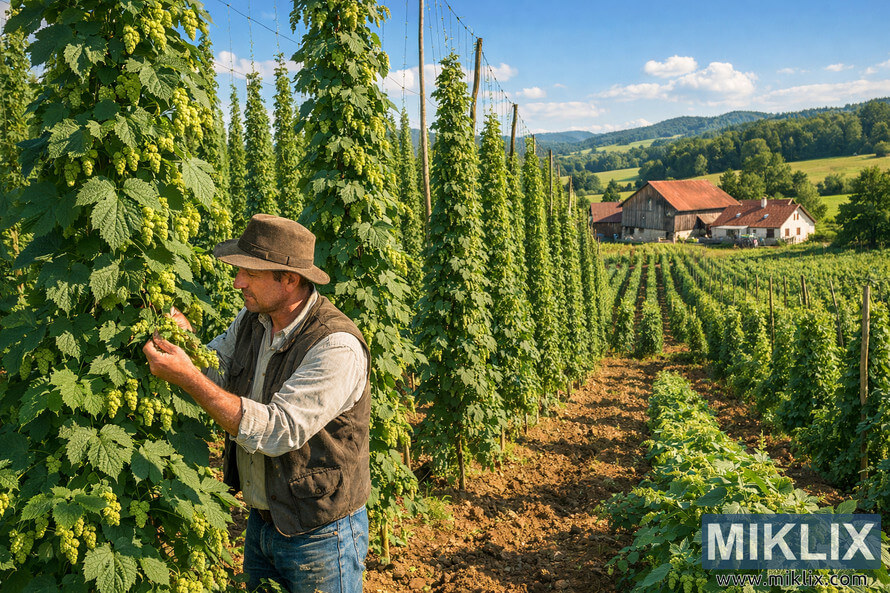
Click or tap the image for more information and higher resolutions.
Harvesting, processing, and hop pockets
Saxon growers blend tradition with modern efficiency during harvest. They time their picking to preserve volatile oils, ensuring minimal bruising. This approach directly impacts the quality of hop drying and storage.
Harvest methods vary, with hand-picking favored on small British farms for its gentle touch. Mechanical systems, introduced in 1922, became widespread. By the late 1950s, they offered faster and more consistent harvesting, especially for varieties bred for machine efficiency.
After harvest, drying is immediate to minimize oil loss and preserve alpha acids. Historical regulations, dating back to 1603, have shaped today's practices. These include marking hop pockets with year, place, and grower's name to ensure authenticity. Such standards are crucial for maintaining hop quality.
Packing methods significantly affect aroma retention. Growers often use vacuum-sealed or nitrogen-flushed bags. They prefer pellets or extracts for longer shelf life. Proper packing, combined with controlled drying, protects flavor compounds for the brewery.
Effective hop storage is key, limiting exposure to oxygen, light, and heat. Cold storage is ideal for aroma hops like Saxon. Without cold rooms, breweries should rotate stock and use products within their shelf life to prevent spoilage.
Practical steps for brewers and growers:
- Plan harvest windows to optimize oil levels and reduce handling damage during hop harvesting.
- Use rapid, even hop drying to lock in aroma and stabilize alpha acid content.
- Stamp hop pockets with clear provenance details to meet hop quality standards and protect reputation.
- Store hops cold, oxygen-free, and dark to maximize hop storage life.
Saxon hops in brewing recipes and formulations
Saxon hops are highly valued for their aroma in modern brewing. They are added where volatile oils can survive heat and move into the wort or beer. The aim is to bring out floral, spicy, and light citrus notes without introducing harsh vegetal flavors.
Position Saxon as a late addition specialist. It's best to add them in the final 10–15 minutes of the boil to capture top-note oils. Adding Saxon in the whirlpool or at hop-stand temperatures (below 80°C / 176°F) helps preserve delicate aromatics with minimal bitterness.
Dry hopping releases fresher, more volatile aromas. It's beneficial to plan a Saxon dry hop during active fermentation for biotransformation benefits or after fermentation for a cleaner aroma. Keep the contact time short and avoid heavy agitation to prevent unwanted grassy or vegetal off-notes.
- Dosage guidance: Saxon hop dosage varies by style and intensity target. Use measured additions to control aroma and bitterness.
- Timing: late kettle → whirlpool → dry hop for layered aromatic development.
- Balance: pair Saxon with hops that add bitterness or complementary fruit or resinous notes when Saxon covers about half the hop bill.
When Saxon makes up roughly 50% of the hop bill, it sets the beer's aromatic profile. It's often blended with a higher-alpha bittering hop or a fruit-forward partner to enhance mouthfeel and flavor. With alpha acids near 9%, Saxon contributes modest bitterness but excels in aroma.
Practical recipe notes include adjusting Saxon hop dosage based on batch size and desired intensity. For a 20-liter batch aiming for a classic British pale profile, allocate Saxon across a small late-kettle charge, a whirlpool stand, and a short dry hop. Taste and small pilot batches help refine the final formula.
Flavor pairings and complementary hop varieties
Saxon is celebrated for its moderate alpha acids and aromatic profile. It offers floral, earthy, and subtle fruity notes. Brewers aiming to highlight these should focus on recipes that emphasize aroma. The right malt and yeast choices, along with strategic hop pairings, will enhance Saxon without overpowering it.
Which malts and yeasts highlight Saxon character
- Start with Maris Otter or British pale malt for a nutty, biscuity flavor. Add light crystal malts at low SRM for a touch of sweetness. These malts keep the flavor profile balanced.
- Opt for classic English ale yeasts like Wyeast 1968 or White Labs WLP002. They bring out rounded fruity esters and a soft finish. For a cleaner profile, choose American ale yeasts or hybrid strains to complement Saxon's aroma.
Hop pairings that balance or enhance Saxon aroma
- Pair Saxon with mild British varieties like East Kent Goldings or Fuggles. These hops enhance floral and earthy notes, creating a cohesive Old World profile.
- Add restrained New World hops like Willamette or Cascade in late additions. This lifts delicate fruit notes without overpowering Saxon. Use high-alpha bittering hops at the start for IBUs, reserving Saxon for whirlpool or dry-hop additions.
- Consider fractional dry hopping or short contact times to preserve volatile aromatics. This approach improves Saxon pairings by avoiding vegetal or grassy off-notes.
Style recommendations for pairing
- Traditional British ales and bitters: Use Saxon as 40–60% of the aroma bill in classic recipes. This reinforces Old World character and emphasizes balance and drinkability.
- Pale ales and hybrid styles: Choose cleaner yeast for Saxon and lighter malts. This presents a brighter hop expression. A modern pale ale can offer subtle complexity without the punchy citrus.
- Saisons and mixed fermentation beers: Use Saxon sparingly for a restrained, complex aroma. It plays well with phenolics and barrel-driven notes.
Saxon hops in popular beer styles
Saxon hops introduce a subtle, floral essence that enhances beers aiming for balance and a delicate aroma. They are preferred in brewing where the hop's nuanced character complements malt and yeast without overpowering the palate. This variety excels in both traditional and innovative beer styles.
In traditional British ales and pale ales, Saxon's gentle perfume and soft bitterness are a perfect fit. It's ideal for pale ale recipes, adding floral and herbal notes without overshadowing the classic English malt. For session bitters and cask ales, Saxon's measured contribution enhances the English yeast esters.
American brewers often blend Saxon into their recipes to capture Old World charm. By incorporating Saxon in beers aiming for a transatlantic balance, they achieve a subtle British flair in otherwise American-centric brews. This strategy is particularly effective in pale or amber ales, blending heritage with contemporary drinkability.
Mixed fermentation and farmhouse saisons provide a canvas for Saxon's subtle expression. In these styles, Saxon supports the peppery yeast phenolics and barrel funk, allowing the yeast and microbes to shine. A judicious use of Saxon in saisons adds floral complexity without dominating the beer.
- For English-style pale ales: prioritize late additions of Saxon in pale ale for aroma retention.
- For American hybrids: balance Saxon in beer styles with an American bittering hop to bridge flavors.
- For saisons and mixed fermentation: use Saxon in saisons at low rates, paired with farmhouse yeasts and neutral barrels.
Brewing techniques to maximize Saxon aroma
To enhance the floral and herbal notes of Saxon, focus on timing, temperature, and water chemistry. These factors are crucial for volatile oil retention and balance in the final beer. Employ specific techniques to maintain Saxon's brightness while avoiding harsh vegetal compounds.
Late additions and hop-stand strategy
For beers focused on aroma, plan late hop additions in the final 10–15 minutes of the boil. A flameout addition followed by a hop stand at 176–194°F preserves essential oils. This method limits the isomerization of alpha acids.
Late hop additions layer scent without increasing bitterness. When Saxon is a primary aroma contributor, it often makes up about half the hop bill. This ensures a consistent profile.
Whirlpool hop use and temperature control
After flameout, whirlpool hop use at lower temperatures concentrates aroma while reducing harshness. Gentle whirlpooling for 15–30 minutes aids in trub separation and maximizes aromatic extraction.
Keep the hop-contact temperature below active boiling to avoid excessive isomerization. This method is suitable for recipes that rely on Saxon for a prominent floral character.
Dry hopping approaches and contact time
Saxon dry hop can be done cold or warm, depending on desired extraction. Short contact of 3–5 days highlights bright topnotes and reduces grassy character.
Longer contact of 5–10 days pulls more depth but raises the risk of vegetative or oxidized notes. Use nets or stainless steel hop bags to keep dosing accurate and ease removal.
Water profile and mash choices
Set a water profile for hops that supports aromatics. A balanced sulfate-to-chloride ratio works for many styles. Slightly higher chloride emphasizes malt body and presents hop aroma in a rounded way.
Target mash temperatures between 152–156°F (67–69°C) to produce a moderate fermentable profile. This mash range preserves enough body to carry Saxon without making the beer thin.
- Use Saxon brewing techniques that emphasize late additions and controlled hop stands.
- Combine whirlpool hop use with brief dry-hop regimes for clarity and aroma focus.
- Match the water profile for hops and mash temperature to the beer style to support hop expression.
Recipe example using Saxon hops
This recipe is designed to create a British-style pale ale. It highlights floral, herbal, and subtle fruity notes. The goal is a balanced body and moderate bitterness, with the Saxon aroma recipe as the main hop character.
Target profile
The beer should have Old World floral and herbal top notes, along with light fruit esters. It should have moderate bitterness and a clean finish, perfect for session or standard-strength pale ales.
Batch size
The recipe is for 5 gallons (19 L). Aim for an original gravity of 1.046–1.050. The expected final gravity is ~1.010–1.014.
- Maris Otter pale malt — 9 lb (4.1 kg)
- Crystal 20L — 1 lb (0.45 kg)
- Light Munich — 0.5 lb (0.23 kg)
Hop bill (total hops)
Saxon is the centerpiece of this recipe. Use it for roughly half the bill to emphasize its aroma. A neutral or British bittering hop will fill in the bitterness.
- Neutral bittering hop (e.g., Target or Magnum) — for bittering to reach target IBUs
- Saxon — 50% of total hop additions (split between late kettle, whirlpool, and dry hop)
- Complementary hop (e.g., East Kent Goldings or a mild American hop) — remaining 50% to round flavor
Example hop schedule (total ~25 IBU)
- Bittering neutral hop at 60 min — add as needed to reach target IBUs (calculate using Saxon alpha ~9% only if used early)
- Saxon at 10 min — 30% of Saxon additions
- Saxon at flameout/whirlpool (steep 20 min) — 40% of Saxon additions
- Dry hop Saxon + partner hop for 3–5 days — 30% of Saxon additions
Yeast and fermentation
Use English ale yeast like Wyeast 1968 or White Labs WLP002. Ferment at 18–20°C (64–68°F) for clean attenuation and moderate fruit character.
Mash and water
Mash at ~154°F (68°C) for a balanced body. This supports the Saxon 50 percent hop bill without masking aroma. Adjust water profile modestly to avoid harsh bitterness.
Process notes
Use a neutral bittering hop early to avoid losing delicate aromatics. Add Saxon in the late kettle and whirlpool for aroma extraction. Finish with a short dry-hop contact of 3–5 days to capture fresh Saxon top notes without vegetal character.
Packaging and conditioning
Allow the beer to condition long enough for hop aromatics to settle into the malt frame. Expect a final gravity near 1.010–1.014, depending on mash efficiency and original gravity choices in this Saxon recipe.
Preservation, storage, and commercial availability
Ensuring Saxon hops remain in top condition requires careful management of temperature, oxygen, and packaging. Aroma hops, in particular, lose their volatile oils more quickly than bittering compounds. Simple home or brewery practices can preserve alpha acids and aroma for extended periods.
Effective Saxon hop storage is straightforward. Store them cold in the refrigerator for short-term use and freeze for longer periods. Utilize vacuum-sealed bags or nitrogen-flushed packaging to minimize oxygen exposure. Opened packages should be consumed promptly to prevent aroma degradation.
Saxon hop pellets offer significant advantages for both homebrewers and commercial brewers. They reduce volume, minimize oxidation, and simplify the measuring process. Many brewers opt for pellets for their consistent utilization and ease of handling during milling and dosing.
Whole-cone hops and hop extracts still hold value. Whole cones add a traditional touch to cask ales. CO2 extracts and isomerized products, on the other hand, extend shelf life and are ideal where stable alpha levels are crucial. Select the form that aligns with your recipe objectives and storage capabilities.
- Cold storage maintains alpha acid stability.
- Vacuum or nitrogen reduces oxygen-driven aroma loss.
- Pellets and extracts offer longer shelf life compared to loose cones.
Availability of Saxon hops can vary by season and supplier. They can be purchased through specialty distributors and established merchants who provide origin, alpha acid, and crop year details. When acquiring Saxon hops, verify the crop date and packaging specifics to gauge freshness.
Securing British hops in the USA necessitates strategic planning. Import channels and distributors facilitate the entry of British varieties into U.S. markets. However, lead times are critical. Partner with reputable hop merchants such as BarthHaas, Yakima Chief, or independent U.S. distributors that disclose origin and storage practices.
When planning to purchase Saxon hops for a batch, consider shipping and storage upon arrival. Inquire about Saxon hop pellets availability and whether they ship frozen or with insulated packaging. Opt for shorter transit times and prompt refrigerated storage to preserve the hop's aroma and alpha profile.
For brewers aiming for consistent aroma contribution, consider ordering in bulk and freezing unopened packages. Alternatively, opt for extracts for longer projects. Clear labeling, crop year information, and trusted distributors are essential when sourcing British hops in the USA. They facilitate reliable supply for seasonal recipes.
Terroir and the appeal of Old World British hops
Soil, climate, and long-standing horticulture shape hop personality. British hop terroir gives plants a balance of minerality, restrained aromatics, and subtle earthiness. This balance is prized by many brewers. It contrasts with the louder New World fruit-forward varieties, helping beers carry a clear sense of place.
Brewers seeking regional hops authenticity look for more than flavor alone. They value provenance, grower reputation, and historical practices tied to hop pockets and stenciled sacks. Stan Hieronymus and other writers note that terroir tells a story brewers can use to craft a coherent beer narrative.
Old World hops show restraint in the glass. When used as a prominent aroma element, Saxon terroir can bring floral top notes, gentle earth, and faint fruit. This unfolds across the sip, making Saxon ideal for beers aiming to showcase subtle complexity rather than aggressive bitterness.
- How British terroir influences hop character: cool, maritime climate preserves delicate aromatic oils and yields both floral and herbal nuances.
- Why brewers value authenticity and regional hops: beers gain credibility and a sensory link to place, which appeals to craft drinkers and restaurateurs alike.
- Examples of Saxon expressing Old World qualities in beer: in a classic British pale ale, Saxon terroir can read as rounded floral aroma with a dry, earthy finish.
Regulatory, economic, and industry context
The tale of hops in Britain intertwines law, markets, and science. Historic laws established quality standards and trade practices that still shape the hop economy today. Ongoing hop breeding efforts tackle disease, cost pressures, and evolving brewer demands, making the Saxon industry context dynamic.
Three early laws set lasting precedents. The 1603 Act penalized adulterated hops to safeguard consumers. Later laws mandated hop pockets to be labeled with year, place, and grower's name. The 1710 duty prohibited non-hop additives in beer, emphasizing purity and traceability. These laws are the foundation of today's hop regulations.
The British hop economy has experienced significant fluctuations in acreage and value. Plantings reached a peak of around 77,000 acres in 1878. The 20th century saw a sharp decline followed by oscillations influenced by lager demand, imported varieties, and shifting consumer preferences. Mid-century stabilization was achieved with the establishment of the Hops Marketing Board. The 1982 EEC rule changes ended centralized control, empowering independent producer groups to alter marketing and investment strategies.
- Market pressures: lager popularity reduced demand for traditional British aroma hops.
- Supply shifts: imported hops and varietal diversity changed planting decisions.
- Policy impacts: marketing and subsidy changes reshaped acreage and consolidation.
Research and breeding are crucial for the British hop industry's resilience. Wye College and Horticulture Research International spearheaded varietal development, including hedgerow hops and disease resistance. When Wye College's formal breeding ceased in 2007, the British Hop Association founded Wye Hops to continue progress. Current efforts focus on developing low-input, disease-resistant varieties with a range of alpha acids while preserving unique flavors.
Practical outcomes from hop breeding influence growers and brewers. New cultivars aim to reduce pesticide use and stabilize yields. Brewers seeking traditional flavors rely on specific varieties, making targeted breeding essential to maintain the British hop industry and protect market positions of varieties like Saxon.
The interplay of hop regulations, market cycles, and targeted breeding will shape availability, cost, and quality. Investors, growers, and brewers must consider policy changes, consumer trends, and agronomic advancements when planning for future hop development.
Conclusion
Saxon hops conclude the journey from ancient brewing to modern craft. They replaced gruit, offering both preservation and flavor. This British variety carries the Old World scent, reflecting its origins in the Low Countries and British breeding. It bridges traditional and modern brewing needs.
The Saxon hop summary highlights its moderate alpha level, around 9%. It's a strong late-addition aroma hop. Recipes often include Saxon for half of the hop bill, added late to preserve floral, earthy, and herbal notes. This approach captures the regional character brewers desire.
Integrating Saxon hops in U.S. breweries offers a path to authentic British balance. It's ideal for session British ales, hybrid pale ales, or blended saisons. Saxon merges terroir, history, and modern methods, creating a unique, well-rounded aroma.
FAQ
What are Saxon hops and why are they used in brewing?
Saxon is a British aroma hop with a moderate alpha acid level around 9%. It's chosen for its aromatic contribution, offering floral, herbal, and fruity or earthy notes. This makes it ideal for late-kettle, whirlpool, and dry-hop additions, where volatile oils can be preserved.
How do Saxon’s alpha acids affect recipe decisions?
Saxon's alpha acids near 9% can add some bitterness if added early. However, its strength lies in its aroma. Brewers often pair it with a higher-alpha bittering hop for early additions. Saxon is reserved for late additions or dry hopping to preserve its aroma.
What percentage of the hop bill should Saxon typically represent?
Saxon usually makes up about 50% of the hop bill when it's a primary aroma contributor. This allows it to define the beer's Old World aroma while a complementary hop adds bitterness or other flavors. Adjust the ratio based on your stylistic goals.
What brewing techniques best capture Saxon’s aroma?
Use Saxon in late-kettle additions (last 10–15 minutes), at flameout with a hop stand (around 80–90°C/176–194°F), and in dry hopping for 3–5 days. This maximizes volatile oil extraction without harshness. Shorter dry-hop contact preserves bright aroma; longer contact risks grassy or oxidized notes.
Which malts and yeasts pair well with Saxon?
Traditional British malts, such as Maris Otter and small portions of crystal malt, highlight Saxon’s Old World character. English ale yeasts (for example, Wyeast 1968 or White Labs WLP002) provide rounded esters that complement Saxon. Neutral or clean American ale yeasts also work when you want the hop aroma to stand out in a brighter context.
What beer styles suit Saxon hops?
Saxon fits traditional British ales, pale ales, and bitters where balanced, nuanced aroma is prized. It also works in hybrid modern pale ales, saisons, and mixed-fermentation beers where restrained, complex hop character supports yeast-driven or barrel-aged profiles rather than overwhelming them.
How should I store Saxon hops to preserve aroma and alpha acids?
Store hops cold—refrigerated for short-term, frozen for longer storage—in vacuum-sealed or nitrogen-flushed packaging to limit oxygen exposure. Pellets and CO2-extracted products extend usable life. Minimize time between opening and use and follow supplier crop-year and alpha listings for freshness.
In what forms are Saxon hops available and how does that affect use?
Saxon is available as whole cone, pellets, or extract. Pellets are common for consistent utilization and easier storage; whole cones can provide slightly different aroma perception for some brewers. Extracts offer long shelf life and stable bitterness but may lack some fresh hop nuance compared with pellets.
Where did Saxon hops come from and how does that tie to British hop history?
Saxon derives from the cultivated British hop lineage that followed hops’ introduction to England from the Low Countries in the late 15th century. It sits within a tradition of varieties bred and selected in Britain for regional character, reflecting century-long horticultural development, regulatory quality controls, and attention to terroir.
How does British terroir influence Saxon’s character?
Soil, temperate climate, and regional horticulture in areas like Kent and the West Midlands shape hop oil composition and aroma expression. British terroir tends to emphasize subtle, rounded floral and herbal notes rather than explosive citrus or resinous New World character, which helps Saxon convey an Old World profile prized by many brewers.
What cultivation and harvesting practices affect Saxon quality?
Modern British cultivation balances disease resistance, yield variability, and lower chemical inputs. Hedgerow or shorter trellis varieties and mechanized harvesting reduce labor and improve consistency. Prompt drying, careful packing, and adherence to quality standards—rooted in historic regulations—ensure good preservation of alpha acids and volatile oils.
Are there legal or historical quality marks I should look for when sourcing Saxon?
Historically, English law required hop pockets stenciled with the crop year, grower’s name, and place of growth to guarantee provenance. Today, reputable hop merchants list origin, alpha acid, and crop year. Look for suppliers who provide that provenance information and who maintain cold-chain storage to preserve aroma.
What complementary hops pair well with Saxon?
Pair Saxon with other British varieties for a cohesive Old World profile, or with milder New World hops to add subtle fruit or resin without masking Saxon’s floral and herbal notes. Use higher-alpha bittering hops early if extra IBUs are needed while keeping Saxon for late additions and dry hop stages to preserve its aroma role.
How can I formulate a basic Saxon-forward pale ale recipe?
Build a Maris Otter base with a small crystal malt addition for balance. Use a neutral or English ale yeast and split hops so Saxon accounts for about 50% of the hop bill. Place bittering hops early (a neutral high-alpha option), add Saxon at 10 minutes and flameout/whirlpool, and dry hop with Saxon for 3–5 days. Mash around 152–156°F (67–69°C) and ferment at 18–20°C (64–68°F).
Can Saxon be used in mixed-fermentation or barrel-aged beers?
Yes. Saxon’s restrained, complex aroma works well in saisons, mixed-fermentation beers, and barrel-aged brews where hop character should not overpower yeast-driven phenolics or barrel-derived notes. Use conservative dry-hop dosages and shorter contact times to blend with microbial and oxidation-driven complexity.
How should water chemistry and mash temperature be adjusted to support Saxon’s expression?
A slightly higher chloride-to-sulfate ratio emphasizes malt body and helps present hop aromatics in a rounded context. Mash temperatures in the mid-range (152–156°F / 67–69°C) produce balanced fermentability and enough residual body to support Saxon’s aroma without thinning the beer’s mouthfeel.
Are there storage or processing steps that specifically protect Saxon’s volatile oils?
Yes. Quickly dry hops after harvest, use vacuum or nitrogen-flushed bales, store cold or frozen, and prefer pellets or fresh extracts if long storage is necessary. Minimize oxygen exposure during packaging and transfer. For brewers, add Saxon late and avoid excessive heat or long boil times to protect delicate oils.
How do modern breeding and industry trends affect Saxon availability and characteristics?
British breeding programs focus on disease resistance, lower inputs, and machine-harvest compatibility, which can influence availability and the agronomic traits of varieties like Saxon. Industry cycles, acreage shifts, and market demand for terroir-driven hops affect supply. Reliable growers and hop merchants help navigate seasonal variability.
Further Reading
If you enjoyed this post, you may also like these suggestions: