
Image: Belgian strong ale fermenting in a rustic abbey carboy
Published: November 30, 2025 at 8:00:57 PM UTC
Last updated: November 30, 2025 at 8:01:39 PM UTC
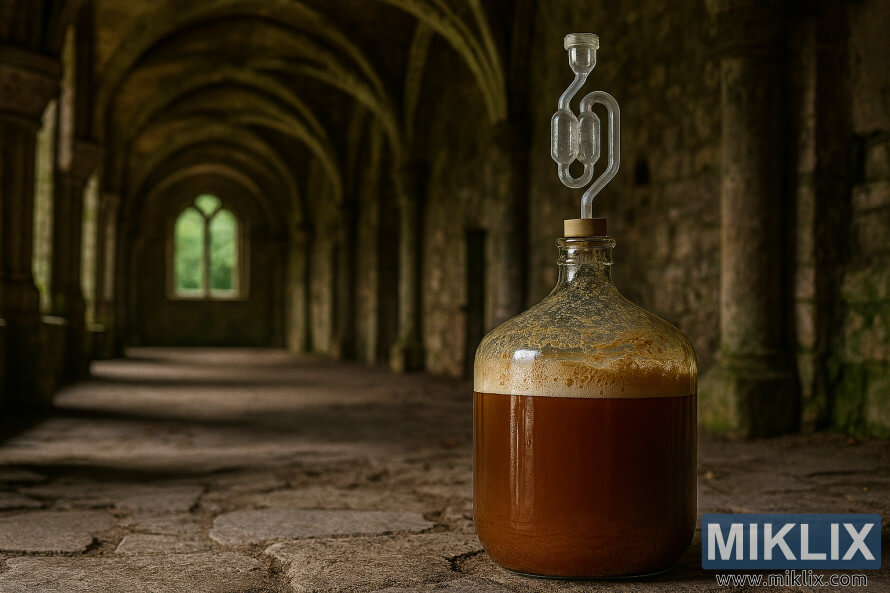
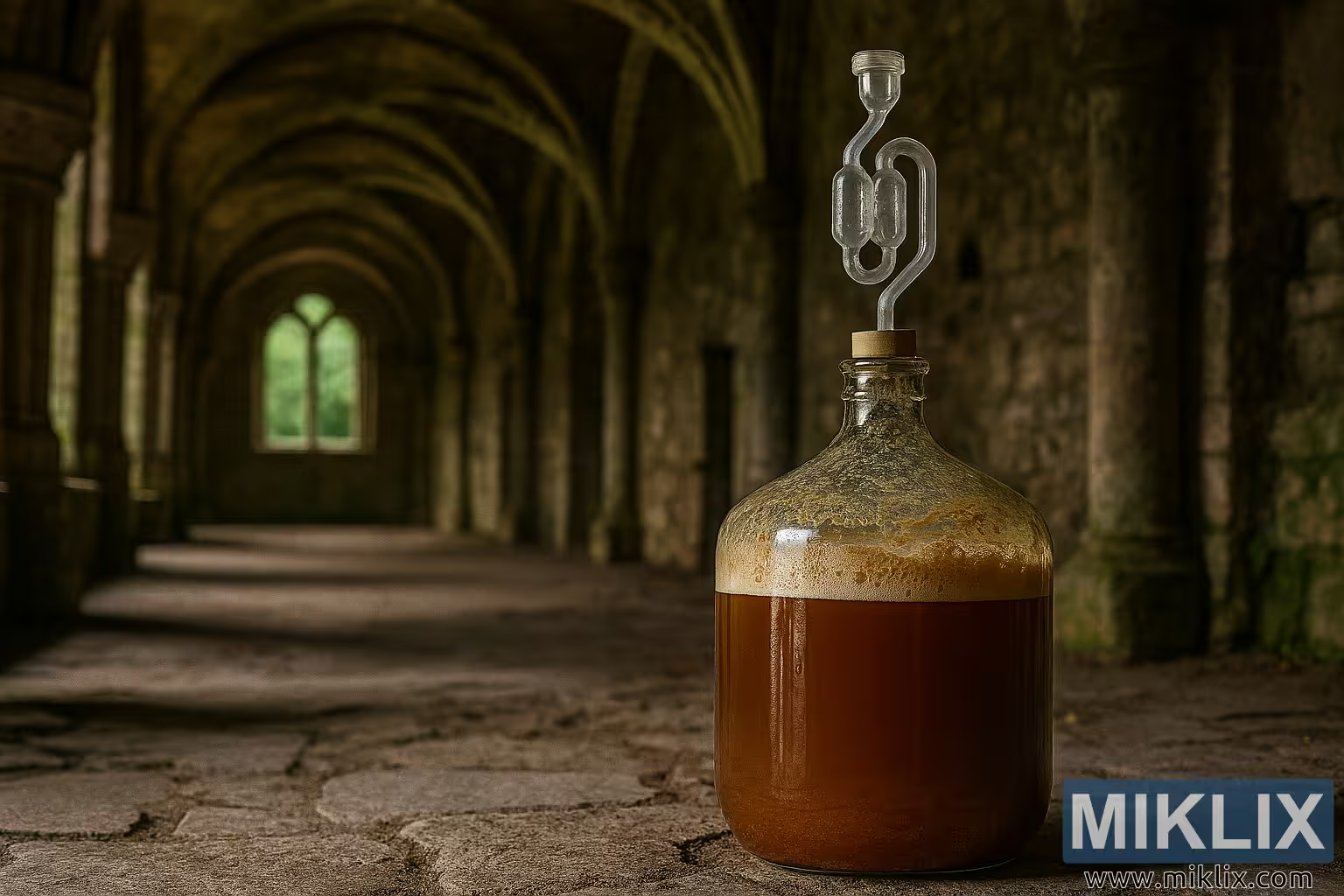
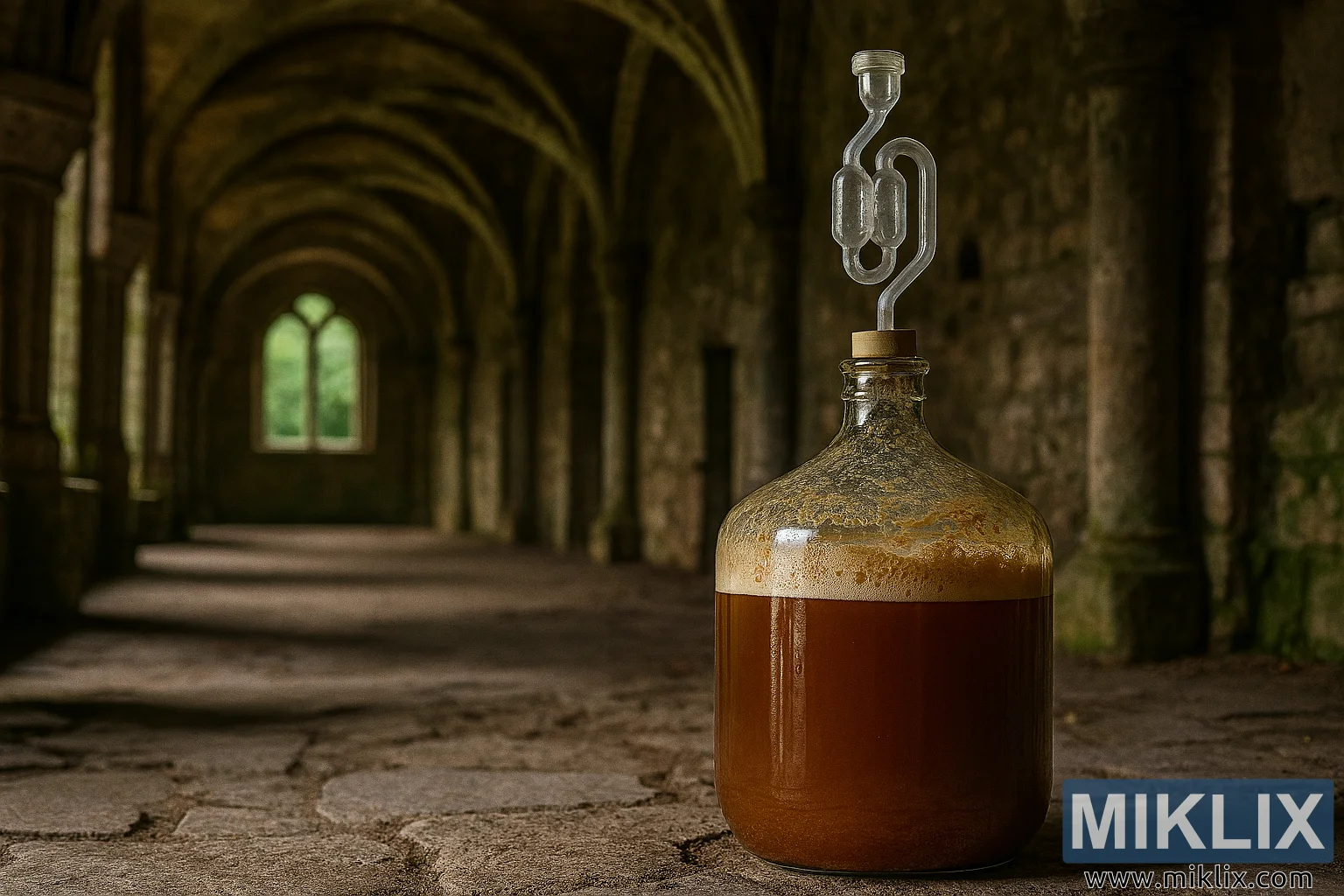
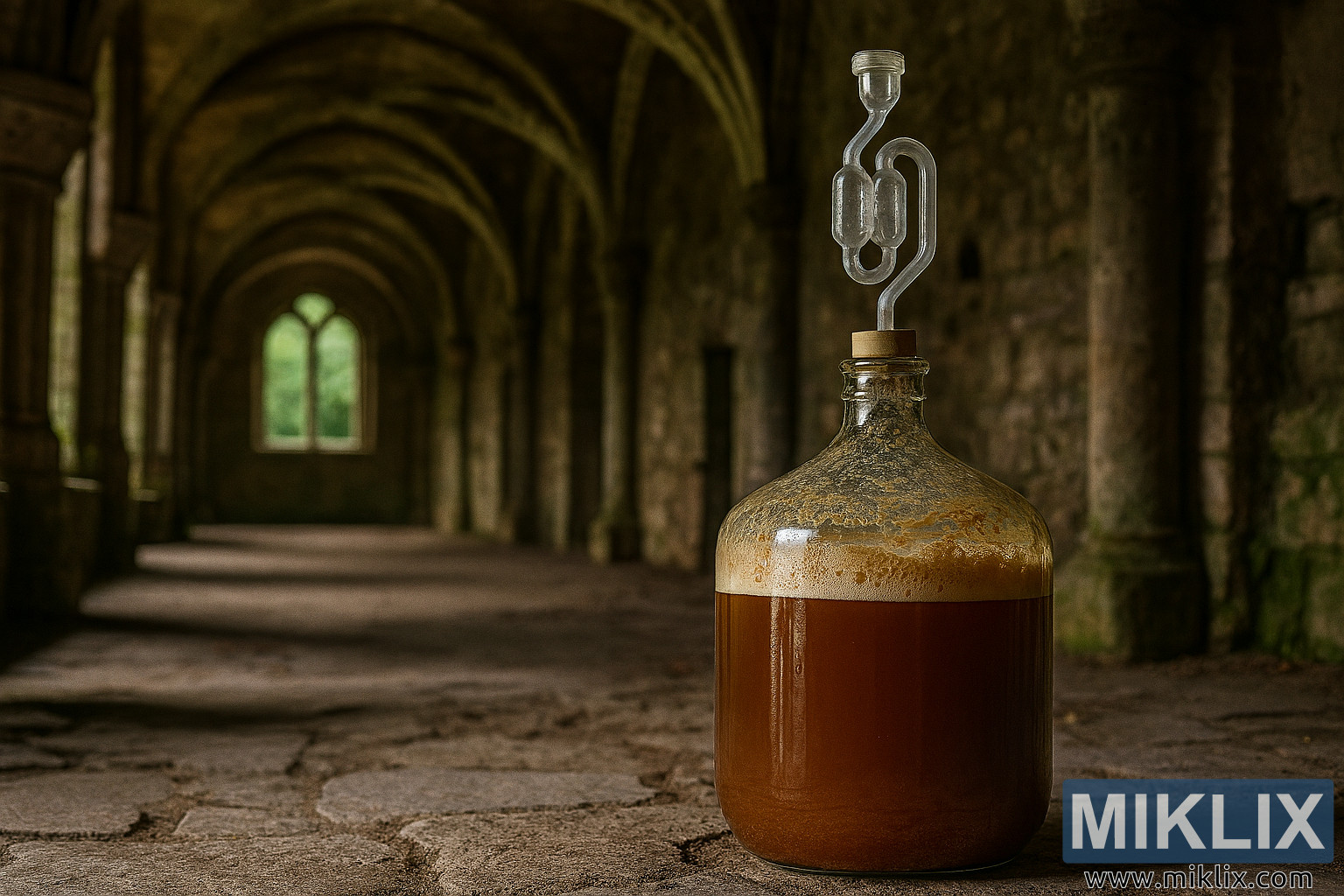
Landscape photo of Belgian strong ale fermenting in a glass carboy with an S-shaped airlock inside a traditional rustic Belgian abbey.
Available versions of this image
The image files available for download below are less compressed and higher resolution - and as a result of that, higher quality - than the images embedded in articles and pages on this website, which are more optimized for file size in order to reduce bandwidth consumption.
Regular size (1,536 x 1,024)
Large size (3,072 x 2,048)
Very large size (4,608 x 3,072)
Extra large size (6,144 x 4,096)
Comically large size (1,048,576 x 699,051)
- Still uploading... ;-)
Image description
A high-resolution, landscape photograph depicts a glass carboy of Belgian strong ale actively fermenting inside a traditional rustic Belgian abbey. The carboy sits in the right foreground, its rounded, slightly bulbous body narrowing into a short neck sealed with a beige rubber stopper. An S-shaped glass airlock rises cleanly from the stopper, a small amount of clear liquid visible within its twin loops, ensuring a one-way release of carbon dioxide while protecting the wort from outside air. The beer itself is a deep amber, refracting warm tones that range from honey-gold near the edges to copper and burnished chestnut through the center. At the top, a thick krausen of off-white to pale tan foam crowns the surface, clinging to the interior glass with uneven lacing and leaving faint, streaky residue that speaks to recent vigorous activity.
The carboy rests on a worn stone floor composed of large, irregular slabs whose soft edges and shallow cracks suggest centuries of footfall. The table seen in earlier imagery is absent here; instead, this placement on the floor emphasizes the humble, utilitarian roots of monastic brewing. In the mid-ground, the abbey’s Romanesque architecture unfolds in a rhythmic procession of rounded arches supported by stout columns. The limestone blocks, weathered and mottled, exhibit variations of cream, gray, and warm ochre, with patches of darker patina, subtle mossing, and occasional lichen growth. Capitals are modestly carved, more functional than ornate, reinforcing the abbey’s sense of sturdy longevity. The barrel-vaulted ceiling—ribbed and slightly irregular—curves overhead, its bricks laid in an enduring pattern that channels the eye toward the far end of the hall.
Natural light filters in through a large arched opening and a tall, slender window with a simple stone surround. The illumination is soft and diffused, neither harsh nor dim, and it falls diagonally across the scene to rake the textures of stone, foam, and glass. Highlights glint along the airlock and the meniscus of liquid trapped in its loops, while the carboy’s curved surface gathers and bends reflections into gentle distortions. The foam layer at the beer’s surface shows bubbles of varying sizes—tight clusters near the center, broader, more irregular pockets toward the edge—and the boundary where the krausen meets the glass is slightly jagged, hinting at ongoing churn. A few small bubbles cling to the inner surface below the foam, rising lazily in strings that catch the light and vanish beneath the frothy crown.
The composition is carefully balanced: the carboy and airlock anchor the right foreground, while a receding corridor of arches draws the viewer’s gaze into depth, establishing a clear vanishing point and a contemplative sense of space. The palette is predominantly warm and earthy—amber ale, beige foam, golden highlights—counterpoised by cooler tones in the stone and faint green from distant foliage beyond the openings. The image’s mood is calm and purposeful, embodying the disciplined craft of monastic brewing: patient, precise, and bound to place. The accuracy of the S-shaped airlock, with its transparent glass loops and water trap visible, underscores the realism of the scene, adding a small, technical detail that signals authenticity to brewers and attentive viewers alike.
Subtle details reward close inspection: faint condensation smudges where warm fermentation meets cooler ambient air; minute scratches and soft scuffs on the carboy’s surface from repeated cleaning and handling; the slightly uneven fill level that suggests a generous headspace preserved to manage krausen during peak activity. The stone floor’s pitted texture, filled with fine dust and tiny organic fragments, contributes to the sense of age, while the abbey’s enveloping acoustics seem to hush the space, as if to keep the yeast undisturbed. The final impression is one of living tradition—an active fermentation in conversation with centuries-old architecture—captured in a single, quietly luminous moment.
The image is related to: Fermenting Beer with Fermentis SafAle BE-256 Yeast