
Fermenting Beer with White Labs WLP830 German Lager Yeast
Published: March 17, 2026 at 9:35:05 PM UTC
White Labs WLP830 German Lager Yeast is a top choice for those brewing clean, crisp lagers. It provides a neutral base that enhances malt and hop flavors, and also offers beta-lyase activity, which can release hop-derived thiols like passionfruit and guava.
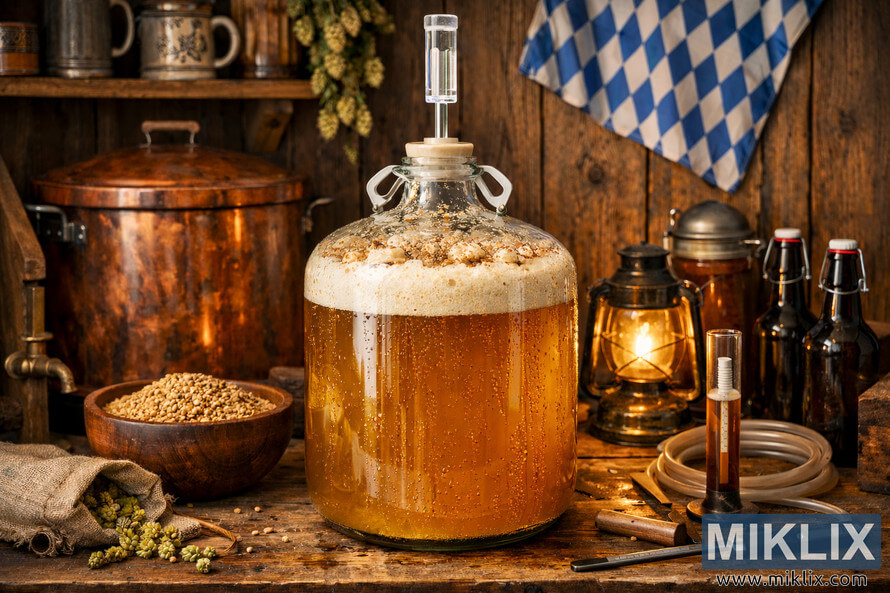
Click or tap the image for more information and higher resolutions.
This WLP830 review offers practical tips for fermenting with this yeast. Whether you're brewing classic or modern lagers, WLP830's strengths remain consistent. It offers reliable attenuation, medium alcohol tolerance, and a flavor profile that suits various lager styles. Retail packs include enough yeast for a standard pitch, and they're chilled with a 3 oz ice pack. Proper shipping precautions are crucial, especially in hot weather.
This section introduces the practical guide and sets the stage for handling, pitching, and temperature control. To achieve the clean, drinkable beers WLP830 is known for, follow standard sanitation and temperature management. Expect excellent performance when fermenting with WLP830 under the recommended conditions.
Key Takeaways
- White Labs WLP830 German Lager Yeast is a versatile, popular lager strain suitable for many styles.
- It produces clean, crisp beers with subtle hop accentuation and beta-lyase activity.
- WLP830 often ships with enough yeast for a standard pitch and benefits from proper thermal packaging.
- Fermentation approach can be traditional or modern; temperature and pitch management remain critical.
- This WLP830 review will cover specs, pitching, and style-specific tips for homebrewers and small breweries.
Why Choose White Labs WLP830 German Lager Yeast for Your Lagers
White Labs WLP830 is a versatile lager strain suitable for a broad spectrum of styles, from Pilsner to Dopplebock. Its reliability in attenuation and predictable behavior make it a favorite among brewers. The strain's balance of neutrality and subtle enzymatic activity facilitates the creation of clean, drinkable lagers with enhanced hop expression.
Overview of strain characteristics
WLP830 boasts medium flocculation and a medium alcohol tolerance, ranging from 5–10% ABV. It achieves typical attenuation levels of 74–79%, resulting in crisp finishes without sacrificing body. Additionally, it is STA1 negative, ensuring it lacks diastatic activity that could lead to over-attenuation.
Typical flavor profile: clean, crisp, hop accentuation
This lager strain profile is characterized by a clean metabolic footprint and low ester production. The outcome is a crisp lager base that accentuates malt and hop choices. WLP830 enhances hop aroma through beta-lyase activity, freeing bound thiols in modern hop varieties.
Why brewers favor this strain for multiple lager styles
- Consistency: predictable attenuation and moderate flocculation make cell management straightforward.
- Versatility: it works well across light and richer lagers while remaining neutral enough to highlight malt and hops.
- Hop friendliness: considered a hop accentuating yeast, it boosts aroma without adding phenolic or soapy notes.
- Convenience: packaged for pitch-at-rate use, reducing the need for large starters for many homebrew and commercial batches.
For brewers seeking classic clean lager yeast performance with a modest boost in hop aroma, WLP830 is a practical, proven choice. It strikes a balance between tradition and modern hop potential.
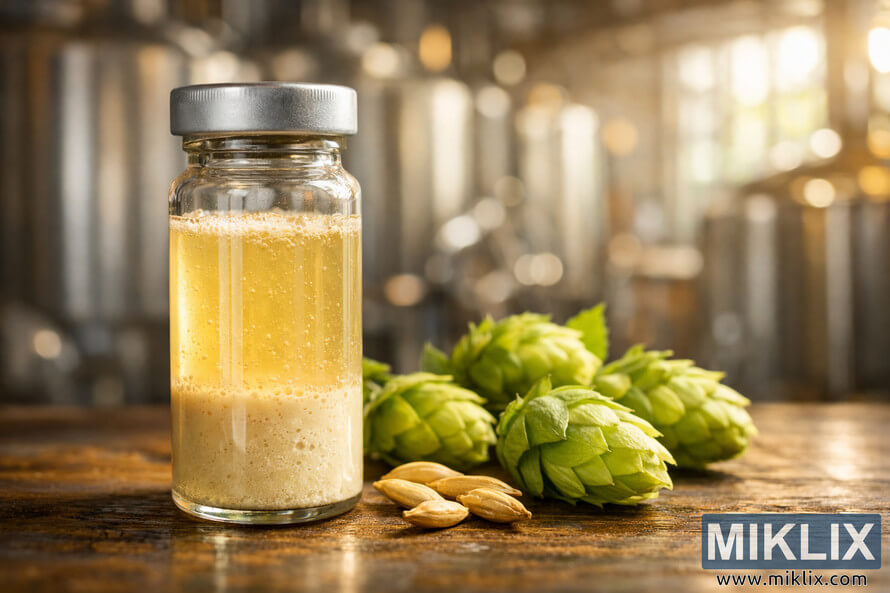
Click or tap the image for more information and higher resolutions.
Product specifications and lab data for WLP830
White Labs WLP830 is designed to provide brewers with precise data for recipe planning. The specs include attenuation, flocculation, alcohol tolerance, and fermentation temperature range. Additionally, STA1 quality control results are available. This information is crucial for both commercial and home brewers to set expectations before pitching.
Attenuation, flocculation, and alcohol tolerance
Attenuation is targeted at 74–79%, ensuring a clean finish in pale lagers. This range is crucial for achieving a predictable final gravity.
The strain exhibits medium flocculation, making yeast harvesting practical. This characteristic also helps in maintaining a clear beer without excessive yeast carryover.
Alcohol tolerance is rated medium, around 5–10% ABV. This is important for brewers planning to brew higher gravity beers, as it affects both attenuation and mouthfeel.
Recommended fermentation temperature range (50°–55°F / 10°–13°C)
WLP830 thrives in cool lager temperatures. The ideal fermentation range is 50°–55°F (10°–13°C). This range supports a clean ester profile and consistent attenuation.
For traditional lager processes, maintaining a controlled temperature is essential. White Labs ensures the yeast is shipped chilled to protect its viability.
STA1 result and what negative STA1 means for brewers
The STA1 result is negative for this strain. This means there's less risk of overattenuation in beers with unfermentable dextrins.
Brewers aiming for predictable final gravity will find the STA1 negative status beneficial. It's particularly useful in classic lager styles where controlled attenuation and mouthfeel are paramount.
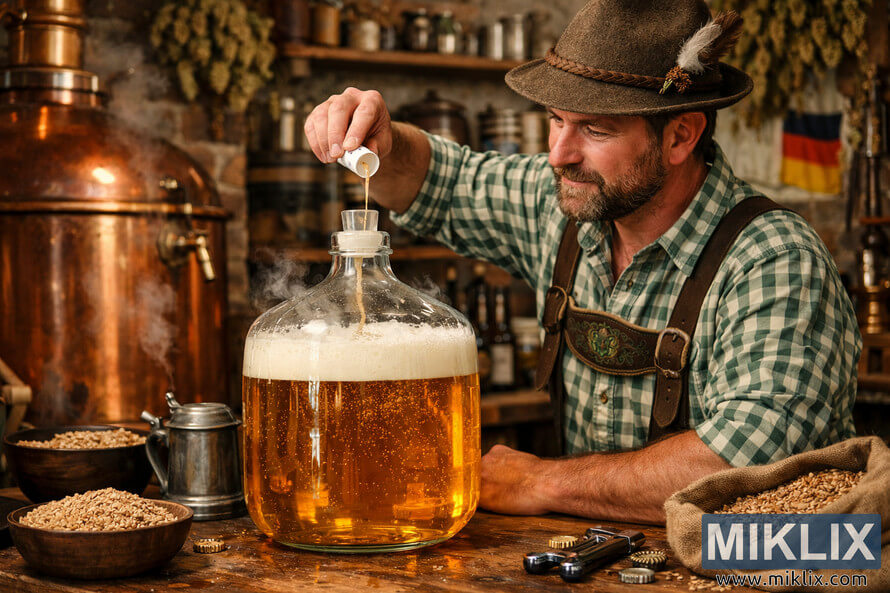
Click or tap the image for more information and higher resolutions.
Preparing your wort for successful fermentation with WLP830
Effective wort preparation is crucial for a clean lager fermentation. Recipes should align with the strain's attenuation and alcohol limits. This ensures yeast can complete fermentation without stress. Cold-shipped yeast is fragile; it must be kept chilled and handled gently until it's pitched.
Target OG for lagers should align with style expectations. For Pilsner and Pale Lager, aim below 1.050 (about 12°–13°P). Märzen, Helles, or Vienna Lager should have moderate OGs within WLP830’s 5–10% ABV range. Doppelbock styles require careful recipe planning to avoid alcohol tolerance issues.
Consider fermentability when selecting malts and mash schedules. A slightly lower mash temperature encourages fermentable sugars. This helps the yeast reach the final gravity. Use the recommended OG for lagers as a guide when calculating mash profile and adjuncts.
Target original gravity for suggested styles
Decide OG based on style, not by pushing limits. Low to mid-strength lagers under 1.050 are ideal for a clean finish. For beers above that, consider attenuation (74–79%) and expected alcohol to prevent stuck fermentations.
Oxygenation and nutrient recommendations for medium alcohol tolerance
Oxygenate wort at pitching to support healthy cell growth. Oxygenation for lager yeast is critical. Target dissolved oxygen levels appropriate for your batch size and pitch rate. Use a pure oxygen source or a vigorous aeration method for best results.
- Provide oxygen at pitch; lagers need it more than ales.
- Add a yeast nutrient when brewing higher gravity lagers to support medium alcohol tolerance.
- Match oxygenation timing to your chosen pitching method; warm-pitch and cold-pitch approaches change yeast demand.
Sanitation and yeast handling best practices
Sanitize all transfer lines, buckets, and tools before touching wort. Yeast handling White Labs recommends maintaining the cold chain while the vial or pack waits to be pitched. If using a high-count pack, note that starters may be unnecessary.
Open yeast containers near sanitized vessels only. Avoid splashing and oxygen exposure after the initial aeration. Good sanitation and careful yeast handling White Labs style reduce contamination risk and protect viability.
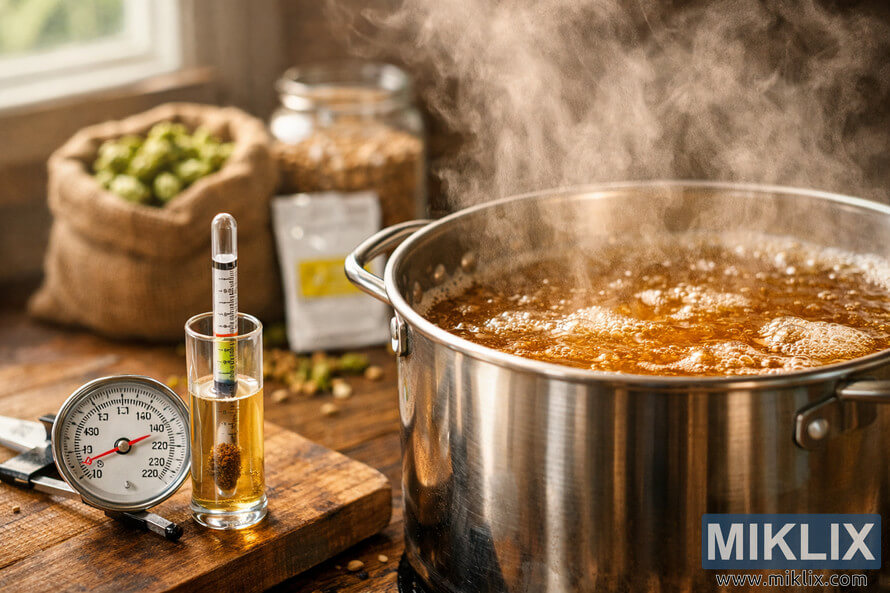
Click or tap the image for more information and higher resolutions.
Pitching rates and yeast management for clean lager profiles
Accurate pitching is crucial for a clean lager. Targeted cell counts control lag time, ester formation, and sulfur cleanup. Below are practical guidelines for WLP830 pitching rate, adjusting for gravity and temperature, and using lab-grown products like PurePitch.
Industry standard pitch rates for lagers are usually expressed in cells/mL/°Plato. For most lager builds, aim for 1.5–2 million cells/mL/°Plato when repitching or using conventional wet yeast. Use 1.5 million cells/mL/°Plato up to about 15°Plato. For worts above 15°Plato, increase to 2 million cells/mL/°Plato to support healthy attenuation and a clean profile.
Cold pitching at traditional lager temperatures typically pushes toward the higher end of those ranges. Higher pitch rates shorten lag time and cut ester production. This helps preserve the crisp, clean character brewers expect from WLP830 pitching rate practices.
Adjusting pitch rate by starting gravity and temperature lets you tailor performance. If you plan a warm-pitch method—briefly raise yeast to ale temperatures before cooling—you can often use lower initial counts, similar to 1.0 million cells/mL/°Plato used for ales. For very high gravity worts, increase total cell mass and consider oxygen and nutrient additions to support the extra stress on yeast.
PurePitch pitching and other lab-grown yeast products come with different expectations. These strains often show higher glycogen reserves and viability. This lets vendors recommend lower nominal pitch volumes. Packaged cell counts for lab-grown yeast can fall in the 7–15 million total cells per mL range for retail conventions, so always convert to cells/mL/°Plato with a calculator or vendor guidance before dosing.
When repitching, verify viability and generation count. Older retail packs can lose viability, which skews your effective cells/mL/°Plato. If you lack a viability check, lean toward a higher pitch to protect the clean lager profile you want from WLP830.
- Match pitch to method: cold start prefers ~2 million cells/mL/°Plato; warm-pitch can allow ~1.0 million cells/mL/°Plato.
- For OG: up to 15°Plato use 1.5 million cells/mL/°Plato; above 15°Plato use 2 million cells/mL/°Plato.
- Use vendor calculators for PurePitch pitching or White Labs recommendations to convert pack counts into accurate dosing.
More yeast generally reduces lag and ester production, which helps achieve a neutral lager base. Balance that benefit with cost and available pitch methods to pick the right WLP830 pitching rate for your recipe and cellar routine.
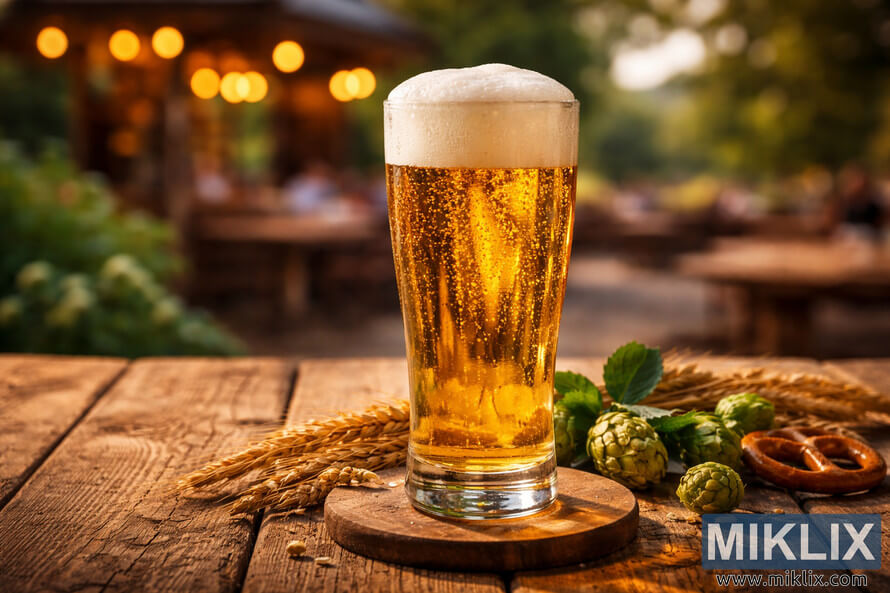
Click or tap the image for more information and higher resolutions.
Fermentation temperature strategies for WLP830
Temperature control with White Labs WLP830 is crucial for aroma, clarity, and fermentation time. Brewers employ various strategies, including timing, temperature ramps, and the diacetyl rest. These methods ensure yeast health and predictability, tailored to your equipment and recipe.
The traditional lager cold start method promotes slow, controlled fermentation. Start between 48–55°F (8–13°C) to adhere to the recommended WLP830 fermentation temperature. Fermentation progresses slowly, with a free rise as activity increases. Raise the temperature to about 65°F (18°C) for the diacetyl rest when attenuation reaches 50–60%. Hold this temperature for 2–6 days. Then, gradually lower the temperature by 4–5°F (2–3°C) per day until it reaches a lagering temperature near 35°F (2°C). This method is ideal for achieving a delicate, clean flavor profile, characteristic of traditional German lagers.
The warm pitch lager method shortens lag time and may reduce the need for large starter volumes. Pitch at 60–65°F (15–18°C) to observe fermentation signs within 12 hours. Once fermentation is underway, lower the temperature to 48–55°F (8–13°C) to control ester production while maintaining yeast health. At 50–60% attenuation, perform a diacetyl rest at about 65°F (18°C) for 2–6 days. Finally, cool down to near 35°F (2°C) for conditioning. This method is suitable for brewers seeking faster starts without compromising on a clean finish.
- Monitor gravity, not time. Use attenuation markers for the diacetyl rest timing.
- Strive to maintain the WLP830 fermentation temperature between 50°–55°F (10°–13°C) during main fermentation when feasible.
- When cooling, aim for gradual temperature drops of 2–3°C (4–5°F) per day to avoid stressing the yeast.
Effective diacetyl rest management is key to avoiding buttery off-flavors. Perform the diacetyl rest near 50–60% attenuation by raising the temperature to about 65°F (18°C) and holding for 2–6 days. Avoid excessive temperatures for delicate Czech or Pilsner styles. After the rest, cool slowly and condition longer if needed for extra polish. Proper timing and temperature ramps help the yeast reabsorb vicinal diketones, resulting in a clean lager profile.
Opt for the method that aligns with your schedule and preferences. The lager cold start method minimizes ester load and preserves traditional character. The warm pitch lager method, on the other hand, accelerates startup and enhances viability with lower pitch rates. Regardless of the method, consistent monitoring of WLP830 fermentation temperature and careful diacetyl rest timing will yield a cleaner, brighter final beer.
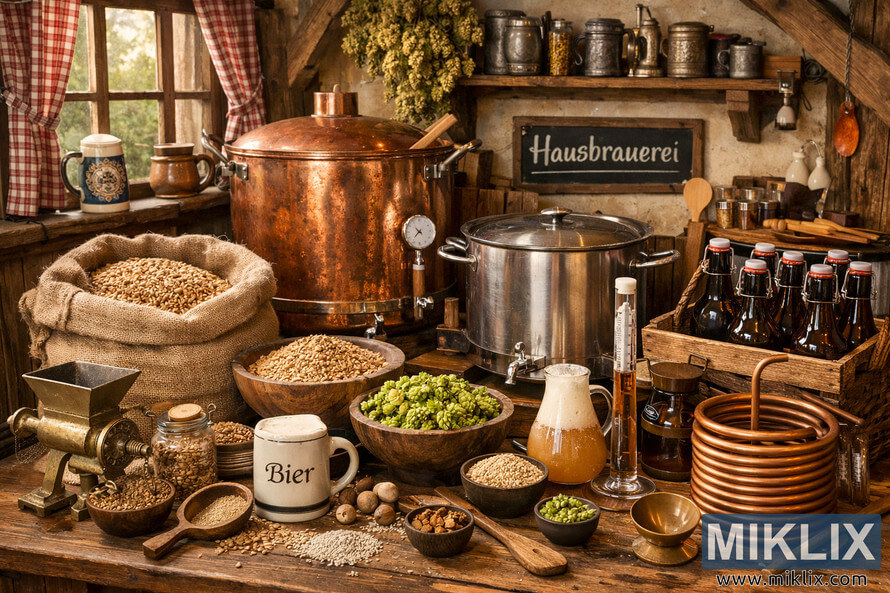
Click or tap the image for more information and higher resolutions.
Yeast health, repitching, and harvesting WLP830
Effective yeast management is key to maintaining consistent and clean lagers. WLP830, a medium-flocculation strain, settles reliably after fermentation. This makes harvesting and repitching lager yeast a viable option for several generations.
When to harvest and how to collect settled yeast
Wait until primary fermentation is complete and the beer has cooled to lager temperatures. By then, most yeast will have flocculated. Start collecting the slurry after a cold crash or during the cooling ramp.
Sanitize vessels and scoop or siphon the slurry from the cone or carboy bottom. Keep the harvested slurry cold and minimize oxygen exposure. Label jars with date, batch, gravity, and estimated cell count for tracking.
Signs of healthy versus stressed yeast
Healthy WLP830 shows steady CO2 production early, a predictable gravity drop, and attains expected attenuation in the 74–79% range. Sensory impressions remain clean with minimal off-flavors.
Stressed yeast reveals long lag times, slow or stuck fermentations, and off-notes like excess diacetyl or sulfur. Microscopic smears or quick staining can also show very low viability before repitching.
Guidelines for repitching and viability assessment
Always perform yeast viability checks before reuse. Count cells and stain a sample to estimate live percentage. Then, adjust the pitch volume to hit standard lager cell counts for your wort gravity.
- Use a hemocytometer or third-party lab service for accurate counts.
- Increase slurry volume if viability falls; consider making a starter when counts drop or when contamination risk rises.
- Track generation number and discard slurry after several generations or at first sign of contamination.
Repitching lager yeast from well-handled WLP830 yeast harvesting saves cost and preserves strain character. Back up process control with routine yeast viability checks to protect beer quality and avoid fermentation problems.
Fermenting different lager styles with WLP830
White Labs WLP830 German lager yeast is versatile for various lager recipes. Its clean profile highlights malt and hop flavors, keeping esters to a minimum. Adjustments in pitch, oxygen, and temperature are crucial for achieving the desired style and strength.
For Pilsner and pale lagers, start with soft water and a light malt bill. Target lower original gravities and cool fermentation between 50°–55°F (10°–13°C) to reduce esters. A warm pitch followed by rapid cooling can shorten the lag phase while maintaining crispness. For delicate lagers, a tight diacetyl rest and extended cold conditioning with WLP830 Pilsner are essential to refine the profile.
Helles, Marzen, and Vienna lagers benefit from richer malt character. Increase mash temperatures for more body in Marzen and Vienna. Monitor pitch rate and oxygen levels to support the fuller wort. A clear diacetyl rest and longer lagering are crucial for rounding out malt flavors. WLP830 Helles and WLP830 Marzen are ideal for these recipes, enhancing malt depth while maintaining a clean lager backbone.
Dark styles like Schwarzbier, Rauchbier, and Doppelbock require careful attention to attenuation and alcohol limits. WLP830 exhibits moderate attenuation and medium flocculation, suitable for most dark lagers. For strong doppelbocks, manage nutrients and oxygenation carefully and consider a more attenuative strain if the original gravity exceeds the yeast's tolerance. When fermenting Schwarzbier with WLP830, extended conditioning is necessary to soften roasted and smoky flavors, resulting in a smooth, clear dark lager.
- Adjust pitch rates upward for higher OGs to maintain healthy fermentation.
- Use a diacetyl rest at the end of primary to eliminate buttery off-notes.
- Extend lagering for darker beers to smooth roast and smoke characters.
Align yeast management with recipe goals for clean, lager-typical results with WLP830. This yeast excels in Pilsner, Helles, Marzen, and darker styles when fermentation schedules and oxygenation are optimized for the beer's strength.
Controlling ester and sulfur production with temperature and pitch
Fermentation temperature and pitching rate are key factors in shaping ester and sulfur levels when using White Labs WLP830. A warm pitch or higher fermentation temperature boosts yeast growth and ester production, adding fruity esters. Conversely, a cold start results in a cleaner, crisper beer with less sulfur compounds. It's crucial to cool down quickly after a warm pitch to prevent excessive esters.
WLP830 exhibits beta-lyase activity, facilitating hop biotransformation. This activity enhances tropical hop notes from Citra, Mosaic, or Simcoe without overpowering them with phenolics. Brewers aiming for vibrant hop aromas should use WLP830 with beta-lyase hops and moderate temperatures. This approach allows for biotransformation while keeping ester levels in check.
Effective sulfur management requires careful process and timing. A diacetyl rest at 65°F (18°C) when attenuation reaches 50–60% is essential. This step helps yeast reabsorb diacetyl and speeds up cleanup. Cold conditioning at around 35°F (2°C) is also crucial for dissipating volatile sulfur compounds. Techniques like spunding or high-pressure fermentation can reduce metabolites but may impact clarity and flocculation. It's important to weigh these trade-offs based on your lagering needs.
Addressing slow or stuck ferments often resolves sulfur or ester issues. Ensure proper pitch viability, oxygenation, and temperature control. For those in a hurry, pseudo-lager methods like kveik or WLP925 with high-pressure lagering can be effective. However, these methods alter ester and sulfur profiles. For traditional, hop-forward lagers, WLP830 provides a clean slate. Control temperature and pitch to fine-tune ester levels, exploit beta-lyase hops for biotransformation, and employ disciplined lagering for sulfur management.
FAQ
What makes White Labs WLP830 German Lager Yeast a good choice for lagers?
WLP830 is a versatile German lager strain known for its clean, crisp metabolic profile and medium flocculation. It ferments between 50–55°F (10–13°C) with 74–79% attenuation and 5–10% alcohol tolerance. This yeast reliably produces neutral lager character while showing beta-lyase activity. This activity can enhance hop-derived tropical thiols, making it suitable for both classic Pilsners and modern hop-forward lagers.
What are the key lab specs for WLP830 I should plan around?
Key specs include attenuation 74–79%, medium flocculation, alcohol tolerance of roughly 5–10% ABV, and a recommended fermentation range of 50–55°F (10–13°C). WLP830 is STA1 negative, which lowers the risk of overattenuation from dextrinase activity. Use these figures to size your pitch and design wort gravity so the yeast can finish cleanly.
How should I pitch WLP830 for a cold-start traditional lager?
For a traditional cold start, pitch at a lager-standard rate: roughly 1.5–2 million cells per mL per °Plato, leaning to 2 million for cold pitches. Oxygenate the wort adequately at pitching, aim for clean nutrient levels, and use fresh, viable yeast. Higher pitch reduces lag and ester formation, helping maintain the clean profile expected in lagers.
Can I use WLP830 without making a starter?
Many retail WLP830 packs now contain enough cells to pitch at commercially recommended rates without a starter for typical batch sizes and gravities. Check the pack's cell count and use White Labs’ Pitch Rate Calculator or a cell-count method for higher-gravity beers. When in doubt, make a starter or use a larger PurePitch lab-grown pack to ensure adequate pitching rates.
What fermentation temperature strategies work best with WLP830?
Two common approaches: a traditional cold start (48–55°F / 8–13°C), allowing a slow fermentation and then a diacetyl rest with a free rise to ~65°F (18°C) before ramping down to lagering temps; or a warm-pitch method (start 60–65°F / 15–18°C until active, then lower to 48–55°F) to shorten lag time. Both require a diacetyl rest and gradual cooling to ~35°F (2°C) for lagering.
How do I manage diacetyl and sulfur when fermenting with WLP830?
Perform a diacetyl rest near 50–60% attenuation by raising the fermenter to ~65°F (18°C) for 2–6 days to allow yeast to reabsorb diacetyl, then cool slowly. Extended cold conditioning at ~35°F (2°C) helps dissipate sulfur volatiles. Proper pitch rate, oxygenation, and nutrient management reduce stressing the yeast and limit off-flavors.
What pitching rates apply if I use the warm-pitch method with WLP830?
Warm-pitching can allow slightly lower cell counts—ale-like rates around 1.0–1.5 million cells/mL/°Plato—because the higher initial growth shortens lag. However, if you intend a very clean lager, use lager pitch rates or the manufacturer’s calculator to target ~1.5–2 million cells/mL/°Plato for cold fermentations. Adjust for OG and viability.
How does WLP830’s beta-lyase activity affect hop choices?
WLP830’s beta-lyase activity can release bound thiols from hop-derived precursors, enhancing tropical, passionfruit, or guava notes—particularly with thiol-rich modern varieties like Citra and Mosaic. For classic European lagers, pair it with Saaz or Hallertau for restrained noble character. For hop-forward lagers, plan late additions, dry hopping, and tight temperature control to maximize desirable biotransformation.
What original gravity ranges are ideal for the styles suggested with WLP830?
For Pilsner and Pale Lager keep OGs modest (typically under ~1.050) to stay within WLP830’s attenuation and alcohol tolerance. Helles, Vienna, and Marzen can be slightly higher—adjust mash temps for body. Stronger Bock or Doppelbock styles may challenge the yeast’s 5–10% ABV tolerance; consider oxygen, nutrients, and possibly a higher-tolerance strain or blended pitching plan for very high OGs.
How should I oxygenate and add nutrients when using WLP830?
Provide adequate oxygen at pitching—generally 8–12 ppm for high-gravity worts or proportionally less for low-gravity brews. Use a yeast nutrient appropriate for lager fermentations if your malt bill is complex or high in adjuncts. Proper oxygenation supports healthy growth and reduces sulfur and diacetyl risks during a long, cool fermentation.
What are common signs of healthy versus stressed WLP830 fermentations?
Healthy signs: short lag time (with adequate pitch), steady CO2 release, predictable gravity decline toward the 74–79% attenuation range, and clean sensory notes. Stressed signs: extended lag, stuck or sluggish gravity drop, high diacetyl or sulfur, and off-flavors. Check viability, oxygenation, temperature, and sanitation if stress appears.
When and how should I harvest and repitch WLP830?
Harvest after primary fermentation and after cooling ramps when yeast has flocculated. Cold crash, sanitize collection vessels, and store slurry cold. Monitor generation count, viability, and contamination risk; typical repitch cycles depend on brewery practices. Use cell counts and viability staining to adjust pitch rates for the next batch or make a starter when viability drops.
How does WLP830 compare to other White Labs lager strains like WLP800 or WLP820?
WLP830 is positioned as a versatile German lager strain with neutral ester profile and moderate attenuation, suitable across many lager styles. WLP800 and WLP820 target more specific regional Pilsner or Czech profiles with distinct flavor nuances. Choose WLP830 for broad flexibility and hop biotransformation potential; pick other strains when chasing a specific regional yeast character.
How should WLP830 be handled during shipping and storage?
Retail packs often arrive chilled with a 3 oz ice pack; White Labs recommends using a Thermal Shipping Package for extended cold protection. Keep packs refrigerated and pitch as soon as practical. Warm transit or long delays can reduce viability—verify pack date and consider a starter if any doubt exists about cell health.
What troubleshooting steps help with stuck or slow fermentations using WLP830?
Troubleshoot by checking pitch rate and viability, ensuring adequate oxygen and nutrient levels, and verifying fermentation temperature. Perform a gentle temperature ramp to re-energize yeast, make a starter or add a healthy high-viability culture if necessary, and check for contamination. Monitor gravity and sensory indicators closely to decide the right corrective action.
What lagering and conditioning schedule works best after primary fermentation with WLP830?
After diacetyl rest and terminal gravity, gradually cool to lagering temperatures around ~35°F (2°C). Conditioning duration depends on style—from a few weeks for lighter lagers to months for complex bocks or doppelbocks. Cold conditioning clarifies beer, reduces sulfur, and mellows malt phenolics for a polished lager.
Where can U.S. brewers source WLP830 and what does it cost?
WLP830 is available from White Labs and many U.S. homebrew retailers. Retail pricing can vary; an example listing showed about $16.99 for a retail pack. Consider PurePitch or larger lab-grown options for higher cell counts or lower pitched rates. Use Thermal Shipping Package options during warm weather to protect viability in transit.
Further Reading
If you enjoyed this post, you may also like these suggestions:
- Fermenting Beer with White Labs WLP838 Southern German Lager Yeast
- Fermenting Beer with White Labs WLP351 Bavarian Weizen Ale Yeast
- Fermenting Beer with CellarScience Berlin Yeast