
Fermenting Beer with Wyeast 1099 Whitbread Ale Yeast
Published: December 31, 2025 at 12:17:37 AM UTC
Wyeast 1099 Whitbread Ale Yeast is suitable for several classic English-style ales. This yeast offers moderate attenuation and reliable flocculation and is perfect for bitters, milds, and traditional pale ales.
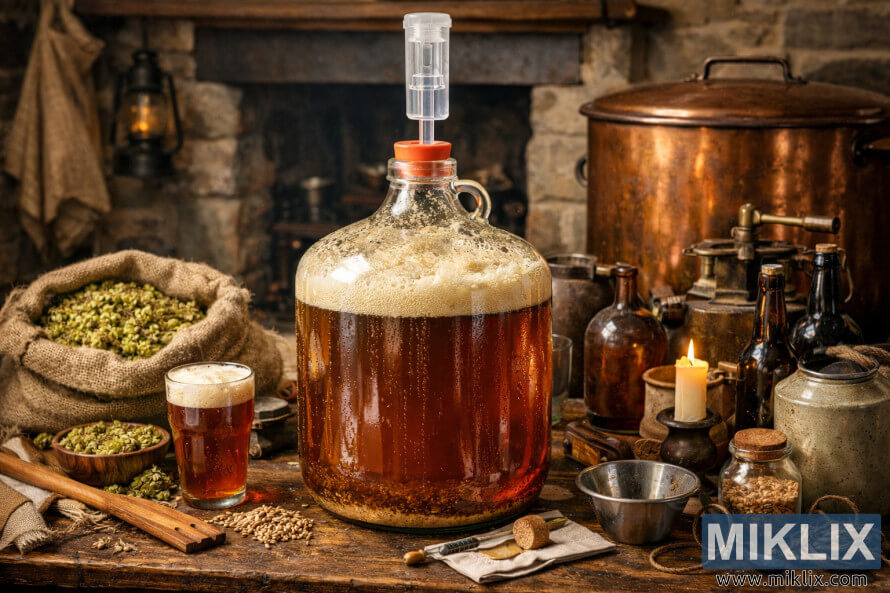
Click or tap the image for more information and higher resolutions.
Homebrewers seeking consistent English character will find this strain predictable. It's forgiving when managed within its preferred temperature range.
This review aims to guide homebrewers through fermenting with 1099. It covers preparing Wyeast liquid yeast and pitching rates. It also discusses fermentation control and troubleshooting.
The article provides insights on recipe fits and what to expect for attenuation and clarity. This helps plan mash profiles and conditioning time.
Wyeast 1099 is widely available from homebrew retailers and online shops. Many sellers ship with cold packs to protect viability. Standard retail context affects how you store and pitch the pack. This introduction prepares you for detailed, step-by-step advice on getting dependable results with Whitbread 1099 in home batches.
Key Takeaways
- Wyeast 1099 Whitbread Ale Yeast is ideal for traditional English ales and delivers classic yeast character.
- This Whitbread 1099 review emphasizes practical guidance for U.S. homebrewers on pitching and fermentation.
- Wyeast liquid yeast requires careful storage and may arrive with cold packs from retailers.
- Fermenting with 1099 yields moderate attenuation and good flocculation for clear ales.
- Subsequent sections cover starters, temperature ranges, troubleshooting, and recipe recommendations.
Why Choose Wyeast 1099 Whitbread Ale Yeast for Homebrewing
Wyeast 1099 Whitbread Ale yeast is perfect for many English styles. It offers a mild malty profile with a hint of fruitiness. This makes it ideal for those who prefer a fuller malt character over a dry, tart finish. At cooler temperatures, it produces low esters, resulting in clean and balanced beers.
The benefits of Wyeast 1099 include strong flocculation and excellent clearing power. This means you can achieve bright beer without the need for heavy filtration or fining agents. The clarity enhances malt colors in bitters and ESB recipes, while preserving body and mouthfeel.
For homebrewers aiming for the best yeast for bitters, 1099 is a top choice. It provides a traditional English character that suits session bitters, brown ales, and stronger bitters. It's also great for creating malt-forward IPAs or classic ESBs with rounded sweetness and minimal fruity esters.
Its temperature flexibility makes it easy to work with in most home setups. Fermenting between 64–75°F (18–24°C) ensures consistent results. Lower temperatures result in a cleaner finish, ideal for delicate English ales or balancing hoppier American styles.
- Flavor fit: mildly malty, slightly fruity, low tartness
- Use cases: bitters, brown ales, ESB, IPA, American Pale Ale variants
- Practical gains: good flocculation, bright beer, easy conditioning
- Fermentation range: performs well 64–75°F (18–24°C)
Choosing Wyeast 1099 answers many brewing questions about achieving malt depth with drinkability. It's the best yeast for bitters and ideal for creating ESBs and IPAs with balance, clarity, and versatility.
Wyeast 1099 Whitbread Ale Yeast
Wyeast 1099 is a stable strain of Saccharomyces cerevisiae 1099, favored by many homebrewers for classic British-style ales. It boasts a moderate apparent attenuation of about 68–72%. This characteristic helps preserve body while still finishing clean enough for balanced beers.
Whitbread yeast characteristics include medium-high flocculation, leading to well-clearing beers during conditioning. Its alcohol tolerance reaches near 10% ABV. This makes it flexible for session ales up to stronger British bitters or old ales without compromising yeast performance.
Typical fermentation temperature ranges from 64–75°F (18–24°C). Fermenting at the cooler end reduces ester production and highlights malt character. Warmer fermentations, on the other hand, bring out a mild fruitiness that suits some pale ales and traditional recipes.
Sensory notes for Saccharomyces cerevisiae 1099 lean toward gentle maltiness with light fruity esters when pushed warm. Compared to adjacent strains, Whitbread yeast characteristics offer a subtler ester profile. This makes it ideal for recipes that call for malt-forward balance.
Practical uses follow clear patterns:
- English bitters and pale ales that need moderate attenuation and a full mouthfeel.
- Brown ales and porters where malt complexity should remain prominent.
- Stronger ales up to about 10% ABV when pitched healthy and given proper nutrients.
Understanding the Wyeast 1099 specifications and behavior of Saccharomyces cerevisiae 1099 is crucial. It helps brewers choose mash profiles, pitch rates, and temperature management to match desired Whitbread yeast characteristics.
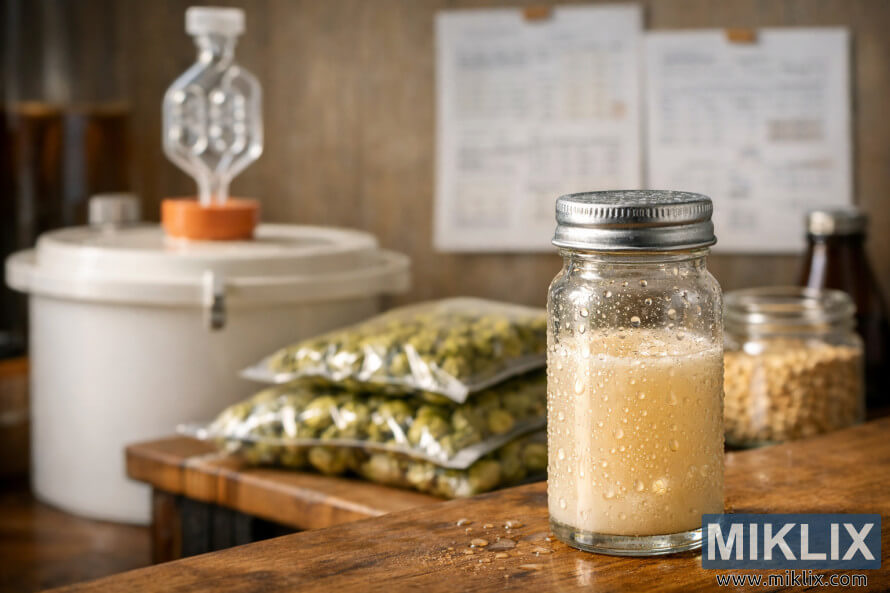
Click or tap the image for more information and higher resolutions.
Preparing and Storing Liquid Yeast Packs
Ensure liquid yeast remains cold from the moment of purchase until brew day. This step is crucial for preserving viability. When buying online, request a liquid yeast cold pack. Opt for retailers that refrigerate shipments before sending them out.
Choose expedited shipping to reduce transit time. A cold pack is essential for maintaining safe temperatures. It slows down the loss of viable cells, which is vital for yeast shelf life.
Adhere to the Wyeast smack-and-rinse protocol for handling Wyeast 1099. Activate the pack as directed by Wyeast, wait for the nutrient pouch to swell. Then, rinse the spent pouch to recover the yeast. This step is crucial before pitching or creating a starter.
Upon arrival, inspect the pack for swelling or small bubbles, indicating activation. If the pack looks flat or damaged, contact the retailer. Avoid pitching compromised yeast to your wort.
- Verify production and expiration dates; fresher packs offer higher cell counts.
- Keep them refrigerated at 35–40°F until use.
- If there's a delay, refrigeration slows aging but doesn't halt decline in viability.
Before pitching, let the pack sit at room temperature briefly. This allows the yeast to wake up without thermal shock. Observe activity post-smack-and-rinse to confirm life before creating a starter or pitching directly.
When preparing a starter with Wyeast 1099, use clean, aerated wort. Scale the starter size according to the pack's age. Older packs may require larger starters to achieve adequate cell counts due to reduced shelf life.
Store unused packs upright in the fridge and rotate stock to use the oldest packs first. Proper storage and transit with a liquid yeast cold pack enhance fermentation outcomes. It also minimizes the risk of starter failures.
Pitching Rates and Making a Starter
For a standard 5-gallon ale at 1.040–1.050, a fresh Wyeast 1099 pitching rate can often be met with a single smack pack. This assumes the pack is within its viable window and you plan to ferment at typical ale temperatures. However, older packs or higher gravity worts need more cells to avoid extended lag.
When gravity climbs above 1.055 or the pack age is uncertain, consider making yeast starter for 1099. A 1–2 L starter will boost cell count for most mid-strength beers. Stronger beers call for larger starters or two packs mixed to reach the target pitching rate.
Smack pack vs starter is a common debate among homebrewers. Smack packs offer convenience and fast activation. Starters supply higher vitality and a healthier yeast population, which reduces lag and lowers the risk of stuck fermentations.
- Starter sizing: use 1 L for moderate increases, 2 L for higher gravities, scale up for big beers.
- Activation time: smack packs show activity in a few hours, starters need 12–48 hours to build robust yeast.
- Cell health: starters improve viability and reduce stress during fermentation.
Watch for signs of insufficient pitching: very slow gravity drops, long lag time, or prolonged high final gravity. If this happens, rousing the yeast, adding nutrient, or preparing a fresh starter can revive fermentation.
Plan your pitching based on wort gravity and pack age. Tracking Wyeast 1099 pitching rate and choosing between a smack pack vs starter helps you hit attenuation targets and finish beers cleanly.
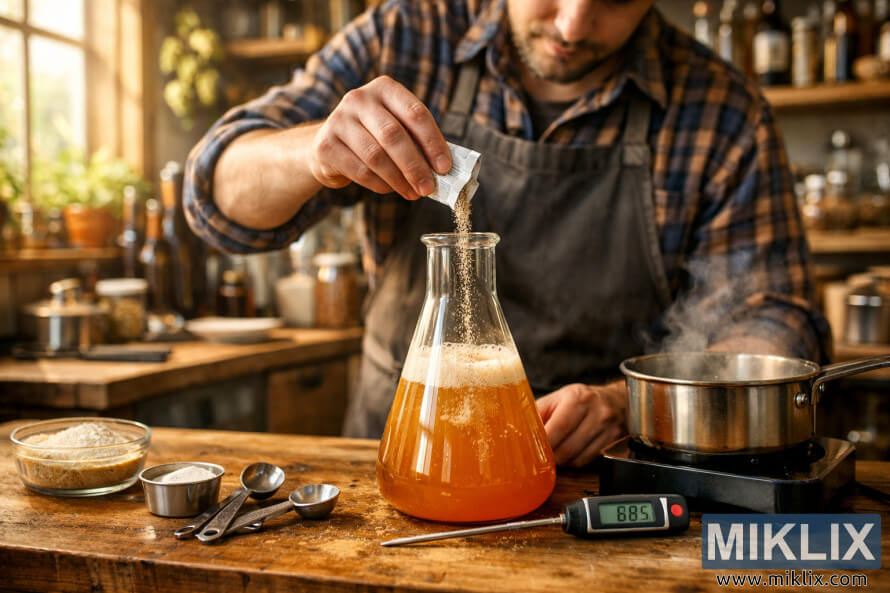
Click or tap the image for more information and higher resolutions.
Optimal Fermentation Temperatures and Management
Wyeast 1099 thrives in a moderate temperature range. Aim for fermenting between 18–24°C, or 64–75°F. The cooler end, 64–68°F, enhances a cleaner malt profile and minimizes ester production.
As temperatures approach 24°C, yeast activity peaks, and fermentation accelerates. Brewers fermenting at this higher end often note increased fruitiness. For those aiming for delicate ales, staying closer to the lower end helps maintain restrained flavors.
Consistent temperatures are crucial. Employ a refrigerator with an external thermostat, a dedicated fermenter fridge, or a temperature-controlled chamber. Reliable temperature control ensures minimal off-flavors and predictable fermentation.
Without precise equipment, closely monitor gravity and airlock activity. Sudden temperature changes can lead to fusel alcohols and solvent notes. Small, gradual adjustments are more effective than large ones during fermentation.
- Keep primary fermentation stable within your chosen band.
- For faster finishes, aim near the upper limit but expect more esters.
- For cleaner profiles, ferment at the lower limit and allow a full conditioning period.
Some homebrewers successfully ferment at 24–26°C with acceptable ester levels. However, a cooler fermentation typically yields a cleaner finish. If attenuation is slow, a gentle rouse or swirl can stimulate yeast activity.
Rousing is beneficial since this strain tends to remain suspended. Gently swirl the fermenter once or twice during early active fermentation. This encourages a complete finish without stressing the yeast.
Monitor and record temperatures and gravity readings. A stable 1099 fermentation temperature and meticulous temperature control Wyeast 1099 are key to achieving consistent results when fermenting at 18–24°C.
Fermentation Timeline and Monitoring with 1099
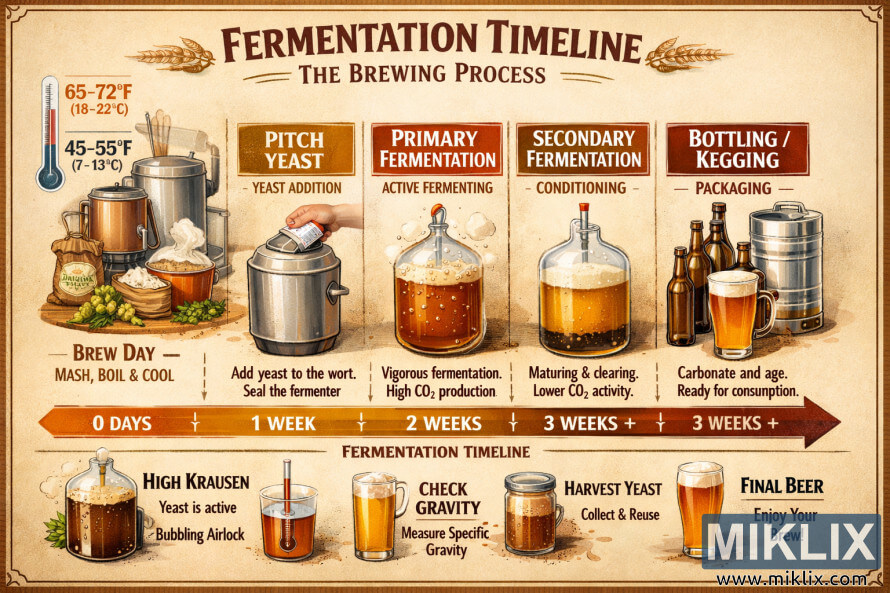
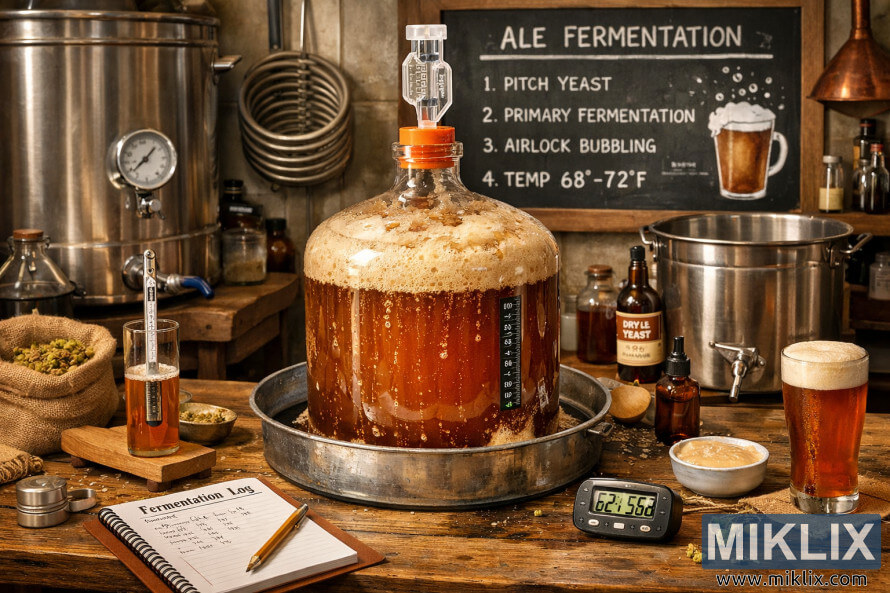
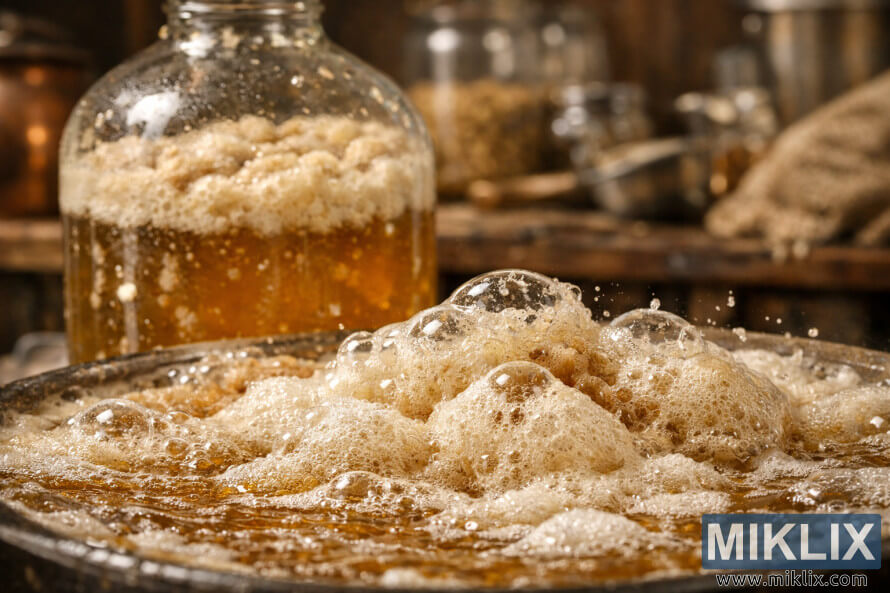
Primary activity with Wyeast 1099 typically shows up within 12–48 hours after a healthy pitch. Visible krausen, steady airlock bubbling, and a quick drop in specific gravity mark the start. Expect many ales to register clear activity in that window.
How long to ferment with Whitbread varies by recipe, pitching rate, and temperature control. For most beers, plan on 1–3 weeks in primary. Higher original gravities or low pitching rates may push that toward the longer end.
Regular readings help. Monitoring gravity 1099 means taking gravity checks every 2–3 days until readings stabilize on two consecutive measurements. This confirms true attenuation and prevents premature packaging.
- Day 1–3: vigorous fermentation, krausen forms and peaks.
- Day 4–10: activity slows, gravity drops steadily.
- Day 11–21: conditioning and settling; gravity should stabilize.
If fermentation stalls, for example OG 1.042 to 1.020 after a week, try gentle rousing or check yeast health. Re-pitching a healthy starter may be needed for low viability or underpitched batches.
Flocculation timing matters. This strain can remain suspended longer before clearing. Wait for gravity to stabilize to avoid over-carbonation or off-carbonation during packaging.
Track temperature alongside gravity. Stable temps improve attenuation and reduce off-flavors. Keep notes on each batch to refine your 1099 fermentation timeline and dial in how long to ferment with Whitbread for consistent results.
Click or tap the image for more information and higher resolutions.
Attenuation, ABV, and Expected Final Gravity
Wyeast 1099 typically shows apparent attenuation in the 68–72% range. Use that band to estimate the Whitbread final gravity from your original gravity. For example, an OG of 1.050 with 70% attenuation yields an FG near 1.015.
To plan ABV, remember the strain tolerates up to about 10% alcohol. When calculating expected ABV with 1099, apply the standard formula using OG and estimated FG. This gives a reliable projection for session ales or stronger beers within the yeast's tolerance.
Recipe design should account for moderate attenuation. 1099 tends to leave a bit more residual malt sweetness and a fuller mouthfeel than high-attenuating strains. Adjust your malt bill and mash profile if you want drier results or a lighter body.
Always confirm fermentation completion by taking stable gravity readings 24–48 hours apart. Reliable measurements prevent packaging beer before the Whitbread final gravity has stabilized and reduce the risk of overcarbonation.
- Use attenuation range 68–72% for estimates.
- Expect Whitbread final gravity around OG minus attenuation effect.
- Calculate expected ABV with 1099 from OG and estimated FG.
- Take consecutive gravity readings before bottling or kegging.
Flocculation and Clarity Outcomes
Wyeast 1099 exhibits medium-high flocculation, ensuring reliable house cleaning in many ales. It shows visible drop-out during conditioning and excellent settling after a few days of rest.
Homebrewers often observe that 1099 flocculation can leave the beer slightly hazy initially. Stirring the yeast or allowing the beer more time in the fermenter can encourage cells to settle. This helps in achieving a clearer finish.
To enhance clarity without compromising flavor, several practical steps can be taken. Cold crashing for 24–72 hours, extending conditioning on the yeast, or employing common fining agents can improve Whitbread clarity. These methods help in achieving a bright pour sooner.
- Allow adequate conditioning time to let natural clearing occur.
- Cold crash to lower yeast suspension and improve drop-out.
- Use silica or gelatin finings for faster results when bottling or kegging.
It's important to note that the strain's behavior sometimes includes prolonged activity before full drop-out. Active yeast may need rousing to finish attenuating. Once it does, it will decant cleanly.
These clearing characteristics of Wyeast 1099 make heavy filtration unnecessary in most cases. Brewers aiming for traditional Whitbread clarity will find the strain meets that goal with minimal intervention.
Flavor Profile and Recipe Recommendations
Wyeast 1099 offers a mildly malty base with subtle fruity esters when fermented at warmer temperatures. At cooler temperatures, it reveals a cleaner, lower-ester profile that accentuates malt complexity. This versatility allows brewers to fine-tune their creations through temperature adjustments.
For recipes, English ale yeast recommendations are ideal. It excels in traditional English styles like bitters, ESB, and brown ales, where malt is paramount. Brewers seeking a drier, tangier finish will appreciate its less tart and less dry character compared to Wyeast 1098.
Here are some Whitbread recipe ideas to highlight 1099's strengths:
- Maris Otter base with a touch of medium crystal for depth.
- Brown ale with light specialty malts and a soft water profile.
- English IPA using East Kent Goldings or Fuggle to complement moderate esters.
In hoppier beers, 1099 stands out. Its moderate ester profile allows hop aromas to take center stage without being overshadowed. For American Pale Ale recipes, a fuller malt bill—Maris Otter and a small portion of Munich—is recommended to maintain body and balance hop bitterness.
For maturation, extended conditioning is key. Many homebrewers note that young beers fermented with 1099 taste thin or green initially but improve significantly with time. Patience is rewarded with better aroma integration and a smoother mouthfeel.
Here's a quick checklist for selecting the best beers for 1099:
- Choose medium-bodied ales where malt complexity matters.
- Match hop choices to yeast esters; avoid overpowering delicate malts.
- Control fermentation temperature to dial ester levels up or down.
These Whitbread recipe ideas and English ale yeast recommendations help brewers maximize 1099's potential. Focus on malt-focused grain bills, measured hopping, and thoughtful conditioning to achieve the best results with this versatile strain.
Common Fermentation Issues and Troubleshooting
Slow or stuck fermentations are a frequent headache with ales. Causes often include underpitching, old or weak packs, low fermentation temperatures, or poor oxygenation at pitching. For 1099 stuck fermentation, try gently rousing the yeast by swirling the fermenter, step-feeding simple sugars, or adding a healthy starter or fresh active yeast to revive activity.
Under-attenuation shows as a final gravity higher than expected. First check cell count and vitality. If yeast issues Whitbread appear likely, add yeast nutrient and consider repitching with a vigorous slurry from a recent active brew. Be aware that Wyeast 1099 can finish more slowly when underpitched, so patience helps before drastic measures.
Carbonation problems crop up when beers are bottled or kegged before fermentation is truly done. Confirm a stable gravity over 24–48 hours before packaging to avoid over-carbonation or gushing. For homebrewers using priming sugar, err on the side of caution if gravity readings are uncertain.
Off-flavors often trace back to fermentation temperature or sanitation. Fermenting too warm increases esters and phenolics. Keep the yeast in its recommended range and oxygenate wort properly at pitch to minimize solvent-like or buttery notes. Clean equipment and vigorous yeast health reduce the risk of bacterial flavors.
- Rouse the yeast by gentle swirling to wake dormant cells.
- Use an adequately sized starter for high-gravity beers.
- Check pack freshness and storage history before pitching.
- Monitor temperature with a reliable controller or chamber.
Practical brewing tips from experienced brewers emphasize prevention. Proper pitching rates, fresh Wyeast packs or starters, and steady temperatures solve many common problems. When troubleshooting, document SG readings, temps, and timings so you can narrow down patterns and avoid repeated yeast issues Whitbread in future batches.
Click or tap the image for more information and higher resolutions.
Packaging, Conditioning, and Carbonation Considerations
Timing for packaging is crucial. Only package once your final gravity has stabilized for 24–48 hours. Wyeast 1099 can finish slowly, so wait longer if gravity readings are uncertain. This approach reduces the risk of over-pressurizing bottles or kegs.
Conditioning with 1099 enhances clarity and flavor. Allow the beer to rest in primary or a short secondary. This lets yeast clean up diacetyl and ester precursors. Extended conditioning often improves mouthfeel and polish for ales fermented with this strain.
When choosing carbonation targets, match them to your recipe. Session bitters suit lower volumes near 1.5–2.0. Traditional English ales work well around 2.0–2.4 volumes. For modern or hop-forward styles, slightly raise the volumes to taste.
Kegging offers fast, controllable results. Force-carbonation avoids variability and speeds service. Kegs also reduce bottle hazards and let you dial in carbonation Wyeast 1099 with precision.
When bottling after 1099 fermentation, use a priming sugar calculator and confirm complete fermentation before sealing. Because 1099 flocculates well, less yeast stays suspended for natural carbonation. Plan for longer bottle conditioning if you rely on bottle priming.
- Check gravity twice, 24 hours apart, before packaging.
- Use 1.5–2.0 vols CO2 for low-carbonation session ales.
- Target 2.0–2.4 vols CO2 for classic English styles.
- Adjust higher if the recipe calls for a livelier finish.
Handle residual yeast with care. Because conditioning with 1099 often yields a clear beer, allow extra time in bottle conditioning when natural carbonation is your method. This ensures consistent carbonation Wyeast 1099 without overcarbonation risks.
Follow sanitation and measured priming to keep results predictable. Proper planning around bottling after 1099 fermentation and clear conditioning windows helps you achieve the intended carbonation and flavor profile every time.
Where to Buy, Pricing, and Shipping Tips
You can purchase Wyeast 1099 from online homebrew supply stores and many local homebrew shops. It's crucial to check each homebrew store Wyeast carries. Confirm they have refrigeration and stock before placing your order.
Expect a typical Wyeast 1099 price around $13.99 per pack. However, promotions and retailer policies can alter this. To find the best deals, compare prices at multiple retailers and look for bundle offers.
When shipping liquid yeast, it's essential to include a cold pack to protect viability during transit. Transit time is critical. If your order may sit in a warm truck or warehouse for more than a day, opt for expedited shipping.
- Verify production or pack dates on the packet to ensure freshness.
- Order as close to your brew day as possible to maximize cell health.
- Ask the seller about refrigerated storage and handling practices.
Some shops offer free or discounted shipping over a certain threshold, like free shipping over $59 with exclusions. Always read vendor terms and satisfaction guarantees before making a purchase.
If long transit is unavoidable, request extra cold packs or arrange local pickup from the store. These steps help reduce the risk when shipping liquid yeast across regions.
By following these tips, you can ensure viable yeast for your batch. This way, you avoid surprises with Wyeast 1099 price or delivery conditions when buying Wyeast 1099.
Conclusion
final thoughts Wyeast 1099: Wyeast 1099 Whitbread Ale Yeast stands out as a dependable, versatile English ale strain. It boasts medium attenuation (68–72%) and medium-high flocculation. This results in a mild malty-fruity profile, ideal for bitters, English pale ales, and fuller-bodied beers. Fermenting within the 64–75°F (18–24°C) range ensures the desired ester balance and clarity brewers aim for.
Whitbread ale yeast review: For optimal performance, store liquid packs in cold conditions. Use a starter for older packs or those with high original gravities. Maintaining control over fermentation temperature is crucial for managing ester levels. Allow sufficient time for primary fermentation and conditioning. This allows the strain to clear and settle properly. Expect consistent finishing gravities and a clean, traditional character when handled correctly.
is 1099 right for my brew: If you're aiming for an English-style backbone with moderate attenuation and good flocculation, 1099 is an excellent choice. The retail price is often around $13.99 per pack. It's important to pay attention to shipping with cold packs and purchase from reputable retailers to ensure viability. Taking these practical steps will help unlock the strain's full potential in your brew.
Click or tap the image for more information and higher resolutions.
Further Reading
If you enjoyed this post, you may also like these suggestions:
- Fermenting Beer with White Labs WLP004 Irish Ale Yeast
- Fermenting Beer with Wyeast 1762 Belgian Abbey Style Ale II Yeast
- Fermenting Beer with Wyeast 1450 Denny's Favorite 50 Yeast