
Fermenting Beer with Wyeast 2124 Bohemian Lager Yeast
Published: March 31, 2026 at 8:39:45 PM UTC
Wyeast 2124 Bohemian Lager Yeast is a classic Carlsberg-type yeast, favored by many American homebrewers. It's known for crafting clean, malt-forward lagers.
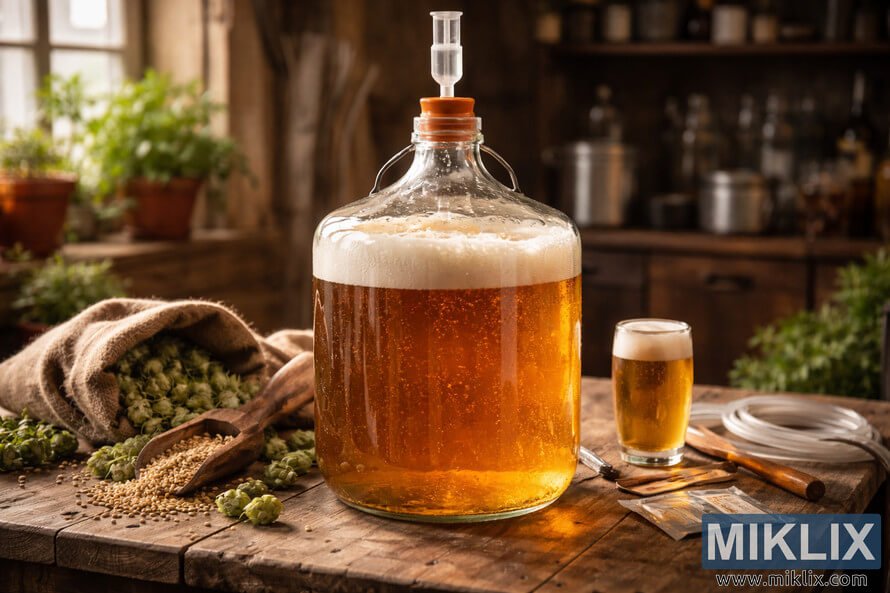
Click or tap the image for more information and higher resolutions.
This review aims to consolidate manufacturer specs, retail notes, and community experiences. It helps brewers decide if it's right for their next batch.
The strain, Saccharomyces pastorianus, exhibits moderate attenuation and low–medium flocculation. Fermenting Wyeast 2124 at recommended temperatures yields restrained esters. This results in a gentle malt balance, ideal for pilsners, helles, and Vienna lagers.
Key Takeaways
- Wyeast 2124 Bohemian Lager Yeast is a Carlsberg-type yeast prized for clean lager character.
- Pitch and temperature control are critical when fermenting Wyeast 2124 to limit esters.
- Expect moderate attenuation (around 73–77%) and low–medium flocculation in most batches.
- Use a starter for 5-gallon batches if wort gravity is high or yeast is older.
- Cold fermentation and extended lagering yield the cleanest results for pilsner-style beers.
Overview of Wyeast 2124 Bohemian Lager Yeast
Wyeast 2124 is a renowned strain in the lager community. It falls under Saccharomyces pastorianus and is commonly referred to as a Carlsberg-type yeast. Brewers value it for its clean, malty base and the subtle esters it produces when fermented at warmer temperatures.
Strain identity and lineage
This strain is deeply rooted in the lager yeast lineage, ideal for classic European lagers. Its Wyeast 2124 profile echoes traditional Bohemian and Carlsberg brewing methods. This heritage allows it to thrive in both cold lagering and warmer fermentations, appealing to craft brewers.
Typical flavor profile and signature traits
It offers a balanced, malty character with a crisp finish and minimal ester presence. The yeast exhibits a mild fruitiness without compromising malt clarity. By following the manufacturer’s diacetyl rest guidance, brewers can avoid buttery off-flavors, achieving a clean Bohemian lager taste.
Suitable beer styles and examples
- German Pils and Munich Helles
- Märzen, Festbier, and Helles Bock
- Vienna Lager, Munich Dunkel, Schwarzbier
- Stronger lagers: Bock, Doppelbock, Eisbock
- Cellar styles: Baltic Porter and Kellerbier
- Warmer-fermentation experiments: California Common and Biere de Garde
The Wyeast 2124 profile positions it as a favorite for brewers aiming for classic lager characteristics with versatility. Its Carlsberg-type yeast origins support traditional recipes, while its Saccharomyces pastorianus makeup ensures reliable attenuation and conditioning, fitting various lager programs.
Click or tap the image for more information and higher resolutions.
Why choose this Carlsberg-type lager yeast for homebrewing
Wyeast 2124 is a favorite among homebrewers for its unique blend of traditional lager traits and modern adaptability. It's often the go-to choice for brewing pilsners, Vienna lagers, and even warmer-fermented hybrids. This yeast excels in delivering a clean malt focus, a gentle ester profile, and a forgiving temperature range. It's perfect for both beginners and experienced brewers.
Beers brewed with Wyeast 2124 benefit from a clear malt backbone without the harshness of sulfur or phenolics. At traditional lager temperatures, it produces crisp finishes and subtle fruit notes. When fermented at warmer temperatures, it adds a touch more esters, enhancing the complexity of beers like California Common.
Versatility across lager styles and common beers
Wyeast 2124 is renowned for its versatility, suitable for a wide array of lager styles. It consistently delivers high attenuation, making it ideal for Bohemian pils, Helles, Märzen, and darker lagers. Homebrewers appreciate its practicality, as it allows for brewing multiple styles with a single strain, eliminating the need for multiple cultures.
Balance of malt character and light ester production
This strain prioritizes malt-forward clarity while allowing for controlled ester production at warmer temperatures. This balance ensures that malt flavors remain prominent, offering a clean palate. Brewers can fine-tune ester levels by adjusting pitching rates, oxygen levels, and temperatures, all without compromising the crisp finish.
Commercial and homebrew popularity and availability
Wyeast 2124 is a highly sought-after lager strain, widely available from major homebrew suppliers. Its global popularity and clear usage guidelines are highlighted in manufacturer notes and retail listings. Prices and packaging options vary, so it's wise to compare different sources for the best deal on reliable shipping and cold-pack care.
- Works well across a 45–68°F (7–20°C) window for different styles.
- Delivers clean malt character with modest esters when desired.
- Available through established homebrew retailers with cold-pack options.
Click or tap the image for more information and higher resolutions.
Fermentation temperature ranges and effects
Wyeast 2124 temp range and lager fermentation temperatures are crucial for yeast behavior. They influence ester profiles, how fast yeast consumes sugars, and the risk of fusel alcohols. Here, we explore practical temperature ranges and their effects on your brew.
The recommended temperature range is 45–68°F (7–20°C). Many brewers aim for 45–55°F (8–12°C) to achieve classic pilsner clarity. This range promotes slow CO2 production and a clean flavor. For shorter schedules or hybrid beers, Wyeast suggests using up to 65–68°F (18–20°C) without significant issues.
Low-temperature lagering slows yeast metabolism and limits ester formation. This is why traditional cellaring produced clean lagers. It also reduces the risk of wild microbes during primary fermentation. However, pitch rate, oxygenation, and wort composition can affect whether esters are below sensory thresholds.
Warm fermentations lead to faster attenuation and more pronounced aromatic esters and fusels. Brewers pushing lager fermentation temperatures must monitor yeast health and pitching rates to avoid off-flavors. Modern lager strains tolerate higher temperatures better than older lines. Yet, ester formation at high temperatures remains a variable.
- Keep fermentation stable in the recommended 45–68°F band to control ester formation at high temps and fusel risk.
- For clean lagers, target 45–55°F and plan longer conditioning to let subtle sulfur and diacetyl clear.
- When using warmer lager fermentation temperatures, increase pitch rate and oxygen to reduce stress-driven esters.
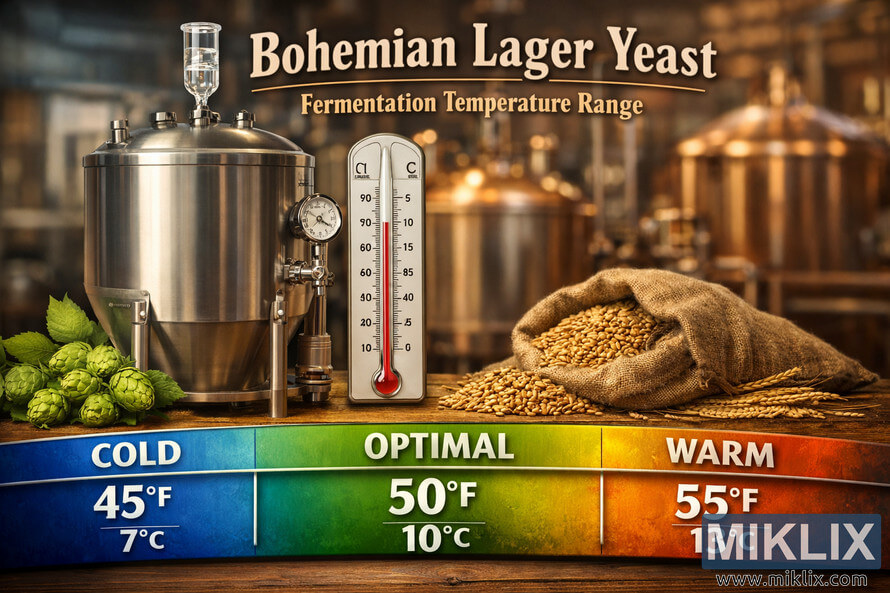
Click or tap the image for more information and higher resolutions.
Pitching rates and starter recommendations
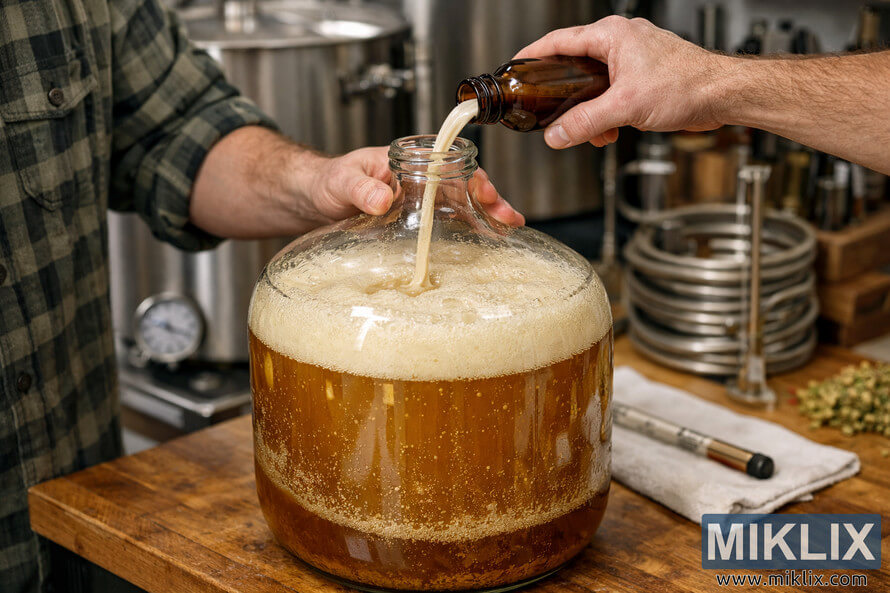
Mastering the pitch for Wyeast 2124 begins with grasping cell counts and fermentation character goals. A precise Wyeast 2124 pitching rate is key to managing ester levels and fermentation pace. Homebrewers often craft a lager yeast starter size that aligns with the batch's gravity and temperature. This approach helps avoid fermentation surprises in primary.
- For a typical 1.050 OG lager, aim for roughly 0.75–1.0 million cells per milliliter per degree Plato. This target ensures consistent attenuation and minimizes culture stress.
- Packaged cultures often need a lager-sized starter to reach that target. Factory packs may suffice for lower-gravity beers, but high-gravity lagers usually require a larger initial cell mass.
Starter size, stepping up, and harvesting practice
- Design a lager yeast starter size to produce a dense, healthy slurry. Many brewers create a single large starter and step-up starters when planning multiple batches.
- Step-up starters are useful when shipping times or cold storage reduced viability. Grow in progressively larger volumes to avoid long lag times and to keep yeast vigorous.
- Decant wort after cold-crashing and harvest clean slurry for re-pitching. Store harvested yeast cold, track lineage and fermentation temperature, and avoid using stressed yeast across many generations.
Impact of overpitching and underpitching on esters and fermentation kinetics
- Overpitching effects include faster fermentation and muted ester expression. That can make temperature-driven flavor differences harder to evaluate, especially if one split a starter between warm and cold fermentations.
- Underpitching esters are more likely when cell counts are low or yeast health is poor. Expect higher ester and fusel production, slower starts, and a greater risk of off-flavors without adequate oxygenation.
- Balance pitch rate with proper oxygenation, nutrient management, and temperature control to keep esters within desired limits and to maintain consistent lager character.
Click or tap the image for more information and higher resolutions.
Fermentation profiles and schedules for best results
Opting for the right lager fermentation schedule for Wyeast 2124 is crucial for flavor, clarity, and conditioning. Below, we outline practical profiles brewers employ. These include timing, temperatures, and key decision points.
The traditional cold profile advocates for primary temperatures between 48–55°F. Primary fermentation should continue until activity slows. Then, raise the temperature for a moderate rest. Finally, an extended cold lagering period at near-freezer temperatures is essential for clarity and mellowing the beer.
- Typical flow: 10–14 days primary at 48–55°F.
- Diacetyl rest: raise to the low 60s F for 24–72 hours once gravity nears terminal.
- Cold lagering timeline: 4–8 weeks at 34–38°F for clarity and stability.
Some brewers opt for a warm-lager method to reduce total time without sacrificing lager character. This involves fermenting at warmer temperatures, around 65–68°F, to accelerate attenuation and shorten primary time. However, be cautious of esters and fusel production. A diacetyl rest is still essential.
- Warm-lager method: 6–10 days active fermentation at 65–68°F.
- Perform diacetyl rest Wyeast 2124 style by holding beer in the low 60s F when gravity is mostly complete.
- Finish with a shorter cold crash or brief lagering for 1–3 weeks to improve clarity.
The timing of the diacetyl rest is more critical than a fixed duration. Begin the diacetyl rest Wyeast 2124 once most sugars are consumed and gravity change slows. This allows yeast to reabsorb diacetyl and clean up compounds.
Adjustments to schedules are necessary based on wort gravity and vessel size. High-gravity beers require longer yeast activity and possibly extended rests. Conversely, warm, fast fermentations cut calendar time but demand careful control of the rest and a conservative cold lagering timeline to complete conditioning.
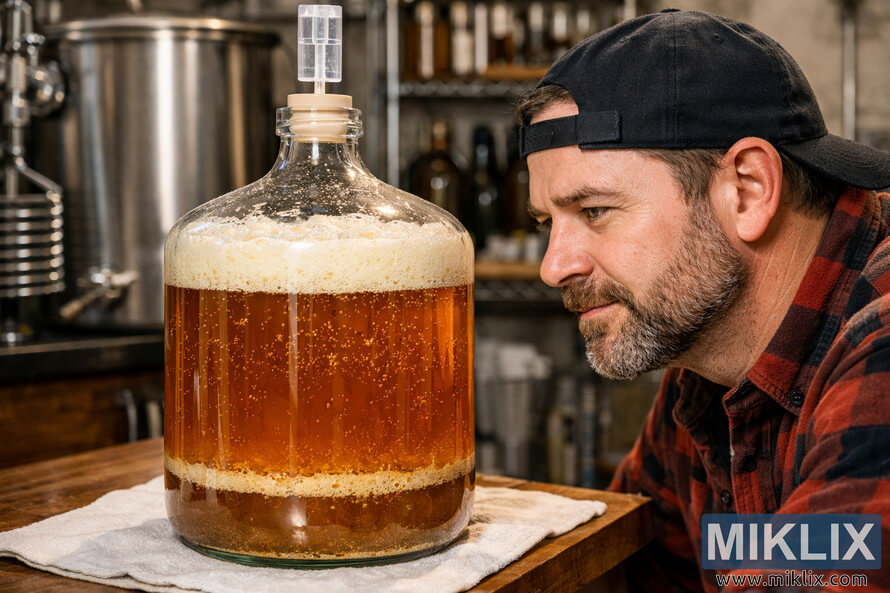
Monitor gravity daily near the end of active fermentation and plan temperature shifts based on attenuation progress. This approach ensures the lager fermentation schedule remains responsive to real kinetics rather than rigid dates.
Click or tap the image for more information and higher resolutions.
Practical tips for temperature control at home
Consistent fermentation temperatures are crucial for lagers. Utilize the tools you have to maintain steady conditions, avoiding extreme lows. Homebrewers can achieve reliable results with small adjustments and simple equipment, even without commercial setups.
Using a keezer, fermentation chamber, or ambient methods
Many brewers convert a kegerator or freezer into a keezer for precise cooling. This setup is ideal for long lagering periods, especially when using Wyeast 2124 with a PID controller.
Dedicated fermentation chambers provide similar control but take up less space. They are better suited for diacetyl rest and colder lagering temperatures.
Ambient lagering is still viable with limited equipment. Place fermenters in cool basements, spare rooms, or insulated boxes. Tools like swamp coolers, ice packs, and small thermostatic heaters can help stabilize temperatures without a large investment.
Managing stable vs. variable temperatures and their effects
Stability is often more important than absolute cold. A consistent 68–72°F with a healthy yeast pitch can yield clean results, mimicking colder profiles. However, fluctuating ambient temperatures can stress yeast, leading to off-flavors.
Temperature variations can slow or uneven fermentation and shift esters. Insulation or a simple controller can help minimize these swings, protecting fermentation quality.
Monitoring fermentation progress and gravity tracking
Regularly tracking SG fermentation with gravity readings is key. It helps determine when to start a diacetyl rest. Frequent checks allow for early detection of slowdowns and the need for warmer steps or oxygen additions.
- Use a digital thermometer or probe to log temperatures throughout fermentation.
- Record gravity at least every 24–48 hours during active fermentation.
- Base diacetyl rest timing on gravity decline and proximity to final gravity.
Simple monitoring and practical temperature control can transform modest equipment into consistent results. Apply these tips and adapt them to your space and available tools.
Impact of yeast health and oxygenation on flavor
Yeast health significantly influences the aroma and taste of beer, surpassing the impact of temperature adjustments. Ensuring proper oxygen levels at pitching is crucial. It aids in the formation of sterols and membranes, leading to clean fermentation. Conversely, a stressed yeast culture tends to produce more esters and fusels, potentially overshadowing the delicate flavors of lager malt.
Oxygen needs at pitching and effects on ester production
Introducing oxygen at pitching boosts early respiration and cell membrane synthesis. For medium to high gravity worts, use pure oxygen or vigorous aeration. Adequate oxygen levels help mitigate metabolic stress, thereby reducing ester production and ensuring timely fermentation.
Nutrient, wort strength, and yeast vitality considerations
- The gravity of the wort determines the required cell count. High-gravity worts may necessitate larger starters or additional nutrient support.
- Supplementing with zinc and assimilable nitrogen is advisable when dealing with demanding gravity or malt bills.
- Decanting spent starter wort and increasing volumes can enhance yeast vitality. This is particularly beneficial for strains like Wyeast 2124, especially when combined with careful wort oxygenation Wyeast 2124 at pitching.
How healthy pitching can keep esters below flavor thresholds
Ensuring a robust inoculation and maintaining stable temperatures is key to controlling ester production. Brewers who employ vigorous starters and controlled oxygenation report cleaner lagers, even when fermenting at the warmer end of the yeast range.
- Construct a starter proportionate to the gravity; decant and pitch the yeast slurry.
- Oxygenate to the recommended levels for the batch; pure oxygen may be necessary for large or high-gravity brews.
- Implement a yeast nutrient regimen specifically designed for lager yeast to sustain vigor through attenuation.
Adopting these practices enables yeast to complete fermentation without stress, thereby reducing off-flavor precursors and supporting predictable profiles. Thoughtful wort oxygenation Wyeast 2124 and strategic nutrient additions empower brewers to minimize esters while preserving the quintessential lager character.
Attenuation, flocculation, and alcohol tolerance
Understanding how this yeast behaves during and after fermentation is key to achieving consistent beer results. Use the expected attenuation and flocculation traits to plan your OG/FG targets, clarity steps, and conditioning schedules. This is crucial when designing a recipe.
Expected apparent attenuation range
Wyeast 2124 attenuation typically ranges between 73–77 percent. This range is essential for calculating final gravity and estimating alcohol by volume in recipe planning lager batches. When running OG/FG math for pilsners or Vienna lagers, use the 73–77% window.
Flocculation and conditioning implications
Flocculation Bohemian lager yeast exhibits low–medium settling. This slower flocculation means beers may remain hazy immediately after fermentation. Allow the beer time in cold storage to clear naturally or plan for fining, filtration, or longer lagering to achieve bright clarity.
Alcohol tolerance and stronger brews
Wyeast 2124 ABV tolerance is approximately 9 percent. This level is suitable for most classic lagers and many stronger styles, provided they are managed carefully. For high-gravity recipes, increase starter size and oxygenation to prevent stalled fermentations and help yeast reach full attenuation.
- Target Wyeast 2124 attenuation in OG/FG calculations for reliable ABV estimates.
- Expect low–medium flocculation; plan extended cold conditioning for brightness.
- Account for Wyeast 2124 ABV tolerance near 9% when recipe planning lager styles above typical strengths.
Style recommendations and recipe suggestions
Wyeast 2124 excels in a broad spectrum of lagers and some warm-fermenting ventures. Below, we outline specific style recommendations and practical recipe tips. These are designed to assist brewers in selecting the right beers to brew with Wyeast 2124, ensuring consistent outcomes.
Classic pils and light lagers thrive under cool fermentation conditions. For a Bohemian Pilsner yeast character, target a temperature range of 45–55°F. Use a moderately soft water profile and Saaz or comparable noble hops.
- Employ pilsner malt with a 5–10% Munich or Vienna addition for added depth.
- Pitch a healthy starter sized for a 5-gallon/19-L batch, ensure thorough oxygenation, and rest diacetyl at 60–65°F for 24–48 hours before lagering.
Classic Bohemian Pilsner, Vienna Lager, and Helles
Vienna Lager yeast benefits from slightly richer malts. For a Vienna-style beer, increase Vienna malt to 15–30% and maintain fermentation in the lower end of the range. This preserves malt clarity and subtle fruitiness.
- Helles: aim for low hop bitterness and soft water with a gentle diacetyl rest.
- Bohemian Pilsner: emulate Czech mash and hop schedules; control temperature for a crisp finish.
Darker lagers: Dunkel, Märzen, Schwarzbier and bock styles
For darker lagers and stronger beers, plan for higher oxygenation and larger starters. The strain can handle richer malts and roast character with extra cell counts.
- Dunkel and Märzen: emphasize Munich and Vienna malts with restrained hopping; ferment cool for malt focus.
- Schwarzbier and bocks: increase starter size for OGs above 1.070 and extend lagering for clarity and roundness.
Experimental applications: California Common and Biere de Garde
Some brewers experiment with Wyeast 2124 in warmer conditions to mimic hybrid styles. California Common lager yeast trials at 65–68°F can yield a balanced, slightly fruity profile. This is achieved by pitching robustly and managing oxygen levels.
- California Common lager yeast approach: use medium hopping and a firm starter to avoid sluggishness.
- Biere de Garde: ferment warm within the strain’s upper range, then age cool to refine malt richness.
Recipe planning should align with yeast limits. For high OG or strong lagers, size starters for adequate pitch rates and oxygenate at transfer. For lighter pils and Helles, keep temps low, perform a clear diacetyl rest, then allow extended cold conditioning for polish and stability.
Packaging, carbonation, and finishing techniques
The choice of packaging and carbonation method significantly impacts a lager's final character, especially when using Wyeast 2124. Brewers must balance speed, control, and flavor when selecting between kegs, bottles, and bright tanks. Even small adjustments during the finishing stages can greatly affect clarity, mouthfeel, and perceived balance.
Force carbonation versus spunding and natural carbonation
Force carbonation in kegs offers quick, precise control over CO2 levels. Many homebrewers use a keezer to set the serving pressure after fermentation for consistent results.
Spunding, on the other hand, captures naturally produced CO2 by sealing fermentation under controlled pressure. This method helps preserve fermentation character and creates subtle carbonation nuances.
Some brewers combine techniques: spunding to lock in natural carbonation, followed by topping up with force carb for exact volumes. This hybrid approach manages headspace pressure while retaining fresh fermentation traits when comparing spunding vs force carb.
Conditioning times after fermentation and cold storage
A proper diacetyl rest followed by cold conditioning stabilizes flavor and improves clarity. Conditioning times vary by style and gravity.
- Bright lagers and pilsners often benefit from several weeks of cold storage to tighten flavors.
- Darker, fuller lagers may need multiple months to round malt character and drop haze.
Retail guidance and many homebrew reports recommend longer conditioning for commercial-style polish when using lager packaging Wyeast 2124.
How residual CO2 and pressure can influence perceived flavors
CO2 level and serving pressure change mouthfeel, acidity perception, and crispness. Higher CO2 can make a beer seem dryer and mask slight sweetness or ester notes.
Conditioning under pressure often yields a cleaner impression and can reduce perceived esters from warm fermentations. Pay attention to CO2 flavor perception when dialing volumes for style fidelity.
- Measure and record pressure during spunding to avoid overcarbonation and off-flavors.
- If topping up with force carb, do so gently to prevent excessive CO2 uptake.
- Allow time after packaging for CO2 and flavors to equilibrate before blind tasting.
Re-pitching, yeast harvesting, and strain stability
Harvesting and reusing yeast can save money and preserve favored fermentation character. Careful handling improves yeast health and helps maintain consistent results when you harvest Wyeast 2124 for later use.
Best practices for harvesting healthy cultures start with finishing fermentation and then chilling the fermenter to compact the yeast. Decant most of the clear beer or starter wort, collect the compact slurry, and store it refrigerated in sanitized containers. For safety and vigor, build a fresh starter before pitching into a full batch instead of relying solely on old slurry.
Retailers and labs stress keeping liquid yeast cold during shipping and handling. Short-term refrigerated storage preserves vitality for several weeks. For longer holds, consider freezing a lab-grade backup or ordering new packs to ensure yeast strain stability.
Brewers who repitch lager yeast should be mindful of temperature history. Reusing slurry from warm fermentations can amplify ester and fusel production over generations. Some brewers avoid reusing yeast from warm lagers to avoid unpredictable flavor shifts.
- Limit successive repitches to reduce risk of mutation or contamination.
- Monitor fermentation speed and attenuation each generation.
- Use fresh cultures for competition or commercial batches.
Watch for signs of strain drift: recurring excess esters, fusels, sulfur, slower kinetics, or reduced attenuation. These markers signal you should refresh your culture. Good sanitation, correct fermentation temperature control, and periodic replacement help avoid strain drift.
Modern strains show improved tolerance, yet cautious practice pays off. Track sensory changes, keep clean harvesting routines, and replace cultures when performance or flavor deviates. That balance lets hobbyists repitch effectively while protecting long-term yeast strain stability.
Troubleshooting common issues with Wyeast 2124
Even seasoned brewers can encounter off-flavors and slow fermentation with Wyeast 2124. This guide aims to identify causes and provide practical solutions for home lager projects. It's crucial to follow each step carefully and monitor gravity to determine when action is needed.
Sulfur notes, diacetyl, and other off-flavors: causes and fixes
Sulfur aromas often appear in young lager ferments or in starters. These issues typically resolve with a proper diacetyl rest and extended lagering. To minimize sulfur in lager, ensure proper aeration at pitch and avoid sudden oxygen drops.
Diacetyl issues arise from yeast stress, underpitching, or cooling before cleanup. A simple fix involves raising the fermenter temperature by a few degrees above primary once gravity nears its final value. Hold this temperature for 24–72 hours to allow yeast to reabsorb diacetyl.
- Ensure full oxygenation and add yeast nutrient at pitch.
- Perform a diacetyl rest at about 60–65°F (15–18°C) for the recommended period.
- Extend lagering to let volatile sulfur clear naturally.
Slow or stuck fermentations and recovery steps
First, check hydrometer or refractometer readings and review recent temperature and oxygen history. This data will guide whether to wait, warm, or re-pitch.
For stuck fermentation recovery, gently raise the temperature to the yeast’s comfortable range to reactivate cells. If gravity remains unchanged after 48–72 hours, consider pitching fresh, active yeast from a vigorous starter. Avoid oxygenating after active fermentation begins; oxygenate only at the initial pitch if needed.
- Confirm gravity and record the trend.
- Warm the fermenter by 3–8°F (2–4°C) and hold steady.
- Pitch a healthy starter or a tolerant lager strain if no progress occurs.
- Add yeast nutrient if original pitching lacked nutrients.
Adjusting process variables: pitch rate, oxygen, temperature
Adequate pitch rate and oxygen at the start speed fermentation and lower the risk of off-flavors. Increasing pitch rate or using a larger starter creates a more vigorous, cleaner fermentation.
Stable temperatures prevent stress-driven esters and sulfur. If temperature shifts are necessary, do so slowly to avoid shocking Wyeast 2124. Good oxygenation at pitching supports yeast health without raising ester levels when managed properly.
If you need to troubleshoot Wyeast 2124, balance higher pitch and proper oxygen with measured temperature control. These steps improve stuck fermentation recovery and help reduce sulfur in lager while offering an effective diacetyl fix lager when cleanup is needed.
Conclusion
Wyeast 2124 Bohemian Lager Yeast is a solid choice for brewers aiming for a Carlsberg-type Saccharomyces pastorianus strain. It offers a malty, crisp base with minimal ester presence, provided it's kept within the recommended temperature range of 45–68°F (7–20°C). This review summary emphasizes its expected attenuation of 73–77%, low–medium flocculation, and a tolerance for about 9% ABV. These figures are crucial for planning recipes and conditioning schedules.
Yeast health and process control are key to successful brewing with Wyeast 2124. To achieve the best results, ensure proper yeast pitching, adequate wort oxygenation, and consistent fermentation temperatures. A thorough diacetyl rest followed by extended cold conditioning is essential for achieving the clean lager character brewers desire.
When crafting recipes, aim for the cooler end of the strain's temperature range for a traditional lager profile. For those looking to experiment, warmer ferments can introduce more character, suitable for California Common or hybrid styles. However, these require a robust starter and vigilant monitoring. Regularly re-pitching demands attention to strain stability, and consistent technique is paramount to fully leveraging Wyeast 2124's potential when fermenting Bohemian lager yeast.
FAQ
What is Wyeast 2124 and what species does it belong to?
Wyeast 2124 Bohemian Lager Yeast is a Carlsberg-type lager strain. It belongs to the species Saccharomyces pastorianus. This yeast is known for its use in traditional lagers and can also be used for warmer fermentations.
What flavor profile can I expect from 2124?
Expect a malty backbone with restrained ester character and a crisp finish. When fermented in the cooler part of the range, it emphasizes clean, malt-forward flavors. Warmer fermentation or weaker pitching can yield slightly more ester complexity.
What beer styles work best with this strain?
Ideal for German Pils, Munich Helles, Festbier, Märzen, Vienna Lager, Dunkel, Schwarzbier, and many bock styles. It’s also used for Baltic Porter and, when fermented warmer, for California Common and Biere de Garde.
What temperature range does the manufacturer recommend?
Wyeast and retailer listings give 45–68°F (7–20°C). The optimal classic lager/Pilsner window is about 45–55°F (8–12°C). Warm applications like California Common are commonly pushed into the mid–upper 60s°F (18–20°C).
How do low fermentation temperatures affect the beer?
Cooler fermentation reduces ester synthesis and helps produce the traditional “clean” lager character. It also slows fermentation, so expect longer primary and extended lagering for clarity. Low temps are one of several controls—pitch rate, oxygenation, and wort composition also influence perceived cleanliness.
What happens if I ferment 2124 at higher temperatures?
Higher temps generally increase ester and fusel production risk. Modern lager selections, like 2124, tolerate warmer fermentations better than historical strains. With healthy pitching and stable temps, you can get acceptable results up to around 68°F (20°C). Still, underpitching or poor oxygenation at warm temps raises off‑flavor risk.
How much yeast should I pitch for a 5-gallon (19-L) batch?
For typical lagers, target a lager-sized pitch. Many homebrewers build a single lager-sized starter and step it up to ensure enough cells for two 5-gallon batches if desired. Use pitching calculators to match OG, but plan on significantly larger cell counts than common ale pitches for clean lager performance.
What starter practices work best with 2124?
Build a decanted, lager-sized starter and step up if necessary. Chill and decant the starter wort before pitching or harvesting. When splitting a starter between warm and cold fermentations, be cautious—splitting can create an overpitch for the warm batch and skew results.
Can I harvest and re-pitch Wyeast 2124?
Yes—harvesting decanted, healthy slurry is common. Keep harvested slurry cold and use within recommended repitch windows. Monitor for signs of strain drift over generations and consider refreshing with a new culture periodically, especially if prior generations fermented warm.
What are the risks of overpitching or underpitching?
Overpitching can suppress ester formation and speed fermentation, potentially masking desired temperature-driven character. Underpitching stresses yeast and tends to increase esters and fusels. Aim for appropriate lager pitching rates with good oxygenation to minimize off-flavors.
What fermentation schedule should I follow for classic lager results?
Ferment in the mid‑low range (45–55°F / 8–12°C) through primary until gravity nears terminal. Raise temperature for a diacetyl rest—typically into the low 60s°F—then cold‑lager for weeks to months for conditioning and clarity. Stable temperatures and adequate conditioning produce the cleanest results.
Can I use a shortened, warm-fermentation schedule?
Yes—many brewers run 2124 at 65–68°F (18–20°C) to shorten schedules or make California Common–style beers. Success depends on robust pitching, strong oxygenation, and temperature stability. A diacetyl rest is still recommended before conditioning.
When and how should I perform a diacetyl rest?
Start the diacetyl rest when gravity is near final or fermentation is essentially complete. Raise the beer a few degrees (often into the low 60s°F) for 24–72 hours to allow yeast to reabsorb diacetyl, then proceed to cold conditioning.
What are practical ways to control fermentation temperature at home?
Use a keezer/kegerator, dedicated fermentation chamber, or controlled ambient spaces like cool basements. Swamp coolers, insulated boxes, small heaters, or a combination of ice packs and temperature controllers can work. The key is stability—avoid frequent swings.
How should I monitor fermentation progress?
Track specific gravity regularly and log temperature with a probe or thermometer. Use gravity decline to decide when to perform the diacetyl rest and to determine whether fermentation is stalled or complete.
How important is oxygenation when pitching 2124?
Very important. Yeast need oxygen at pitching for sterol and membrane synthesis. Adequate oxygenation (pure oxygen or vigorous aeration) supports healthy, timely fermentations and reduces ester and fusel risk associated with stressed yeast.
What role do wort gravity and nutrients play?
High‑gravity worts increase stress on yeast. For stronger beers, use larger starters, stepped oxygenation, and yeast nutrient as needed. Proper nutrition and pitching rates help ensure full attenuation and limit off‑flavors.
What attenuation, flocculation, and alcohol tolerance can I expect?
Typical apparent attenuation is roughly 73–77%. Flocculation is low–medium, meaning slower settling and a need for adequate conditioning to clarify. Alcohol tolerance is around 9%, so plan for larger pitches and oxygenation for higher OG beers.
Is 2124 suitable for darker lagers and strong bock styles?
Yes. It handles Dunkel, Märzen, Schwarzbier, and many bock styles. For Doppelbock or Eisbock, watch the alcohol tolerance and use bigger starters, oxygenation, and extended conditioning to reach target attenuation without stressing the yeast.
Can I ferment experimental styles like California Common or Biere de Garde?
Absolutely. Retailers and community experience support fermenting 2124 warmer (mid–upper 60s°F) for California Common and Biere de Garde. Ensure a robust pitch and stable temps to keep esters and fusels in check.
What carbonation and finishing methods are recommended?
Force carbonation in kegs is fast and controllable. Spunding or natural bottle conditioning preserves fermentation character but requires pressure monitoring. Many brewers combine spunding with a final force‑carb top‑up for consistency.
How long should I condition and cold‑lager after fermentation?
After a diacetyl rest, condition cold for weeks to months depending on style and clarity goals. Lighter lagers often benefit from several weeks; more complex or stronger beers frequently need months for optimal flavor integration and brightness.
What signs indicate strain drift or problems from re-pitching?
Recurring off‑flavors (excess esters, fusels, sulfur), slower or inconsistent fermentation, and failure to reach expected attenuation suggest drift or stress. Limit successive repitches, maintain sanitation, and refresh with new cultures when quality declines.
How do I fix sulfur, diacetyl, or other off‑flavors?
Sulfur often clears with a diacetyl rest and extended lagering. For diacetyl, warm to a rest temperature when gravity is near final to allow reabsorption. Address root causes by improving pitching rate, oxygenation, and nutrients to prevent recurrence.
What should I do if fermentation is slow or stuck?
Check gravity and temperature history first. Gently warm the fermenter to reactivate yeast, consider pitching fresh healthy yeast or a starter, and add nutrient if appropriate. Avoid oxygenating after active fermentation has started; oxygen is for pitch time only.
How many times can I safely re‑pitch Wyeast 2124?
There’s no fixed number—safety depends on handling, storage, and prior fermentation conditions. Limit repitches if previous generations fermented warm or showed stress. Periodically replace with a fresh culture to minimize drift risks.
Will chemical differences between cold and warm‑fermented lagers always be obvious?
Not always. Community xBMT‑style experiments show chemical and sensory differences can be subtle or below taste thresholds if pitch rate, yeast health, and temperature stability are controlled. Good process control often blurs the gap between cold and warm results.
Any quick practical tips to get the best results with 2124?
Prioritize a lager‑sized healthy starter, adequate oxygenation at pitch, and stable fermentation temps. Perform a proper diacetyl rest, then cold‑lager for conditioning. For warm experiments, increase pitch size and watch for off‑flavors; refresh cultures regularly if re‑pitching.
Further Reading
If you enjoyed this post, you may also like these suggestions:
- Fermenting Beer with Lallemand LalBrew Köln Yeast
- Fermenting Beer with CellarScience English Yeast
- Fermenting Beer with Wyeast 3822 Belgian Dark Ale Yeast