
Fermenting Beer with Wyeast 2112 California Lager Yeast
Published: February 20, 2026 at 5:19:31 PM UTC
Wyeast 2112 California Lager Yeast is a versatile strain that bridges the gap between ale and lager characteristics. Homebrewers appreciate its ability to produce a California Common yeast character at warmer, more practical temperatures.
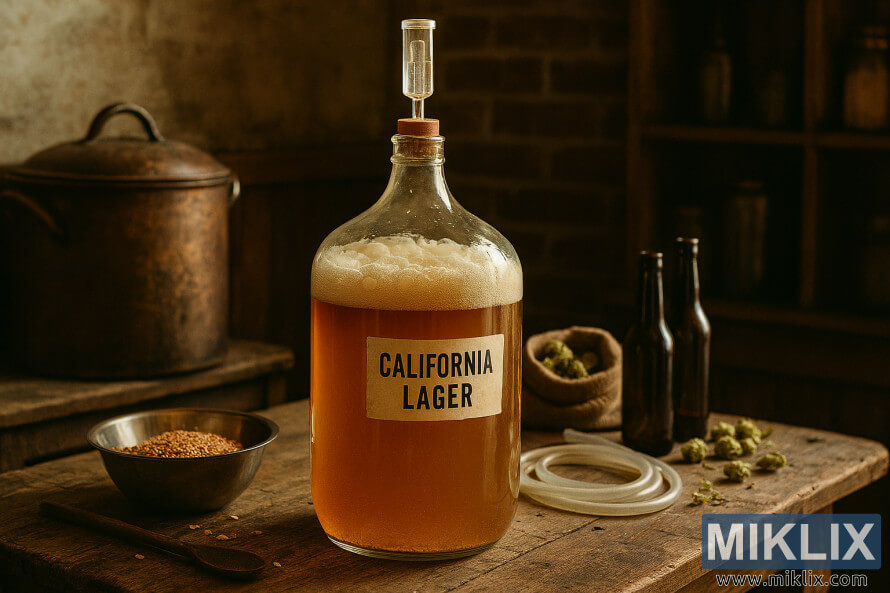
Click or tap the image for more information and higher resolutions.
Bench trials and brewer reports highlight the distinct differences between 2112 and strains like WLP001 or Wyeast 1056. WLP001 often showcases raw hop brightness, whereas Wyeast 2112 preserves the malt backbone and delivers high flocculation and clarity. Fermenting with 2112 results in a balanced steam-beer style, without the need for the strict cold schedule of true lagers. This is particularly beneficial when refrigeration is limited but a clean, lager-like profile is desired.
Practical homebrew notes suggest a working range of 60–68°F, with common primary times ranging from 5–7 days at the warmer end. Lab summaries indicate attenuation around 67–71% and good alcohol tolerance. This means a well-timed starter or adequate pitch is crucial for healthy fermentation. This Wyeast 2112 review combines lab data and real-brew feedback, affirming its suitability for California Common, cream ale, and lighter lagers.
Key Takeaways
- Wyeast 2112 California Lager Yeast offers lager-like clarity without strict cold lagering.
- Recommended homebrew fermentation range is roughly 60–68°F for best balance.
- Compared to WLP001 and 1056, 2112 preserves malt character and flocculates well.
- Typical attenuation near 67–71% suits California Common and premium lagers.
- Practical primary times can be short at warmer temps, but pitch health matters.
Why Wyeast 2112 California Lager Yeast is prized for homebrewers
The Wyeast 2112 California Lager strain is celebrated for its consistent, clean fermentations. These fermentations promote clarity and drinkability. Homebrewers appreciate its predictable attenuation of 67-71% and high flocculation. This makes it a top choice for achieving lager-like qualities without the need for full cold lagering.
2112 is known for its defined temperature window and modest ester production. It can handle alcohol up to about 9% ABV. This strain finishes dry and crisp, perfect for styles where a clean malt profile is desired. Its characteristics make it ideal for California Common and premium American lager yeast recipes.
Lab numbers are crucial for planning starters and mash targets. The reported attenuation of 67-71% helps set fermentability expectations. This guides the choice of mash temperature for the desired beer body. High flocculation also aids in quicker clearing, simplifying post-fermentation conditioning for hoppy or delicate beers.
Comparative tasting and split-batch tests highlight the differences between related strains. In 2112 vs 1056 trials, 2112 shows a more lager-like profile with subdued esters. In contrast, 1056 (a Chico yeast variant) emphasizes hop oils and sharper fruit esters. Homebrewers note that WLP001 is very clean but highlights hop character differently than 2112.
WLP028 comparison posts reveal subtle but meaningful differences. WLP028 can struggle at cooler ale temperatures that 2112 tolerates well. Discussions on Chico yeast comparisons show that nominal equivalents do not always behave the same. This includes differences in pitch rate, attenuation, and temperature sensitivity.
Stylistically, 2112 is best suited for California Common, cream ale yeast applications, and premium American lager yeast recipes. It also works well in Baltic porter, smoked, or spice-forward lagers when a clean yeast is needed. Homebrewers often choose 2112 for Steam Beer-style recipes, as it maintains lager traits at ale-range temperatures.
- Key strain characteristics: clean profile, moderate ester suppression, reliable attenuation 67-71%.
- Lab-oriented points: Wyeast lab specs include high flocculation and a 58–68°F working range.
- Practical comparisons: 2112 vs 1056 and 2112 vs WLP001 show differing hop interactions; WLP028 comparison highlights temperature sensitivity differences.
Temperature range and fermentation profile for Wyeast 2112 California Lager Yeast
Wyeast 2112 operates within a 58–68°F range, ideal for those aiming for a lager-ale hybrid. The official temperature range is 58–68°F. Brewers often prefer the cooler end for a cleaner taste and the warmer end for a hint of fruitiness.
To manage fermentation temperatures effectively, start by chilling the wort to around 62°F before pitching. This method helps maintain a steady fermentation temperature. It ensures consistent attenuation and minimizes wild swings in ester production.
Practical homebrew range
- For a cleaner lager taste, aim for 60–62°F. This preserves the lager's character and keeps esters to a minimum.
- For a balanced hybrid flavor, target 63–65°F. Many brewers find this temperature range produces a pleasing balance when fermenting 2112.
- If you prefer a fruitier taste, allow up to 68°F. However, be cautious of increased esters and possible sulfur at the higher end.
How temperature influences flavor
The fermentation temperature significantly impacts the flavor of 2112. Lower temperatures result in restrained esters and a clearer lager-like taste. Higher temperatures, on the other hand, enhance ester production and introduce a slight ale character without losing the lager's identity.
Pitching and room strategies
- When ambient temperatures are warm, pitch 2112 at the cooler side. This reduces early ester spikes by pitching into chilled wort.
- Use a starter if fermenting at the lower end. Slow starts are common without sufficient cell counts.
- In U.S. climates, place fermenters in basements or use a swamp cooler or fermentation chamber to maintain 60–65°F when possible.
Keep detailed records of each batch. Tracking the pitching temperature for 2112, initial wort temperature, and peak fermentation temperatures will help you understand how your setup influences the final flavor. This information is crucial for refining your brewing techniques in the future.
Creating a proper starter and pitching rates
Ensuring the right yeast population before fermentation is crucial with Wyeast 2112. A well-thought-out plan is essential for deciding between a 2112 smack pack, a larger starter, or propagated yeast. Consider the original gravity and fermentation temperature when determining starter size and pitching rates.
When to make a starter
Starters are necessary when the wort gravity is above typical session levels or near the yeast's alcohol tolerance. Brewers often question when to build a starter for beers with an OG of 1.060 or higher. At these gravities, a single smack pack's cell count is often insufficient, potentially causing slow starts, sulfur, or diacetyl.
Starter size guidance and smack pack vs. propagation
- For OGs between 1.050 and 1.055, a modest 1–2 quart starter is usually enough to achieve the desired pitching rates.
- At OGs of 1.060 and above, many homebrewers opt for a 3-qt starter or combine two 2112 smack packs. This ensures vigorous fermentation.
- Regular repitching of healthy yeast cakes can replace frequent starters. However, it's important to track generations and viability to maintain yeast health.
Oxygenation and yeast health best practices
Proper aeration before pitching is key for clean fermentation. It's most critical with limited cell counts, cooler fermentations, or high gravity worts. Aim for measured oxygen or brief pure oxygen addition when pitching at reduced rates.
Use nutrients for very high gravity beers and avoid excessive repitches that lower vitality. Monitor yeast health visually and by activity during the first 24–48 hours. A strong early krausen and steady gravity drops indicate successful starter and oxygenation for 2112.
Fermentation schedules and timelines with this strain
The fermentation pace with Wyeast 2112 is influenced by temperature, pitch rate, and original gravity. Brewers observe faster activity at 65–68°F and slower at 58–60°F. Monitoring gravity readings and visual cues is crucial to avoid unexpected outcomes.
Primary fermentation typically lasts 5–10 days when fermenting between 60 and 68°F. Warmer temperatures lead to vigorous activity in 2–4 days, reaching near-final gravity by day 5–7. Cooler temperatures extend fermentation, benefiting from a healthy starter.
Signs of complete primary fermentation and how to measure attenuation
Complete fermentation is indicated by a settled krausen, steady airlock, and clear foam reduction. Use a hydrometer or refractometer to confirm. Measuring attenuation 2112 involves comparing OG and FG readings over 48 hours to ensure stability.
- Take a gravity reading, wait 48 hours, then retest to confirm a stable final gravity expectations.
- Expect attenuation in the manufacturer range and calculate percent attenuation from OG to FG to check yeast performance.
- Watch for stalled gravity at cooler temps; rousing or a gentle warm-up can help finish fermentation.
When extended conditioning or lagering is beneficial versus tapping young
Tapping young California Common is common, with many brewers tapping within 1–4 weeks for that classic profile. Short conditioning times preserve a slightly bright, fresh character that suits the style.
Extended conditioning or lagering 2112 is beneficial when clarity and polish are key or the recipe is malt-forward. One to six weeks of conditioning reduces transient esters and improves clarity from the strain’s naturally high flocculation.
- If you need clean malt character, plan a brief cold condition after FG is stable.
- If you want traditional, slightly youthful steam-beer notes, consider tapping earlier following consistent gravity checks.
- For higher gravity beers, extend conditioning to allow yeast to settle and flavors to marry.
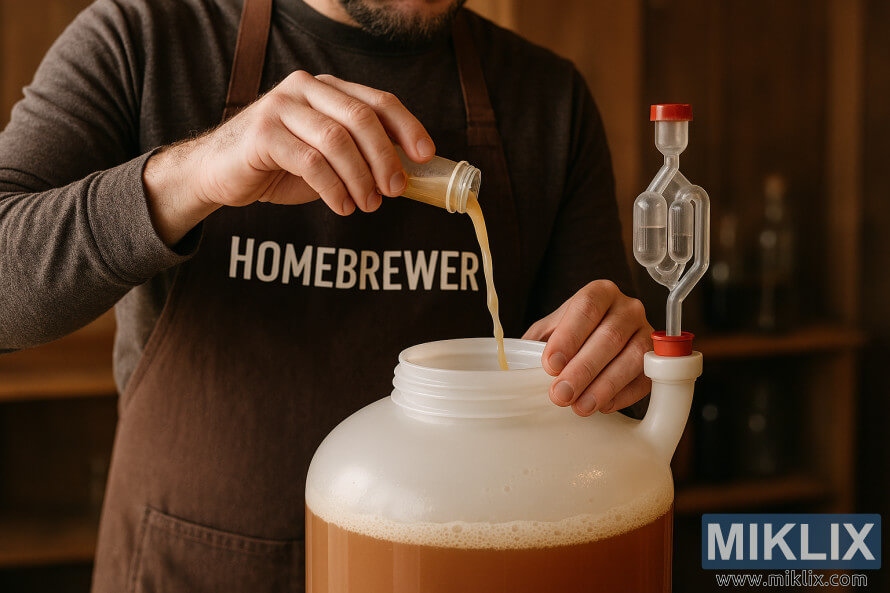
Click or tap the image for more information and higher resolutions.
Diacetyl risk and diacetyl rest guidance
Wyeast 2112 is known for clean fermentation, but the risk of diacetyl is a topic of debate. Many homebrewers find no need for an extended warm rest when fermenting at the upper end of the strain's range. However, low pitch rates, cool fermentations, or high-gravity worts can increase the chance of buttery notes. Therefore, it's crucial to be vigilant to avoid surprises before packaging.
Manufacturer guidelines do not require a rest for this strain. However, community experience indicates that 2112 can finish with minimal diacetyl when fermentation is healthy and temperatures are near 65–68°F. Brewers who ferment cooler or underpitch may detect diacetyl and choose to act accordingly.
How to perform an effective rest if needed
- Raise temperature modestly: when signs of diacetyl appear or when fermentation nears completion, increase to the upper end of the recommended range for 24–72 hours.
- Timing and temp: aim for rest timing and temp around 65–68°F rather than very high warm rests used for traditional lagers.
- Watch yeast activity: warm only after active fermentation has slowed so viable yeast can reabsorb diacetyl.
Tasting and testing for diacetyl prior to packaging
Use a chilled sample to perform a butter flavor test and a diacetyl tasting. If a butterscotch or buttery oil aroma is evident, delay packaging. Gravity stability and a clean butter flavor test are good indicators that diacetyl levels have fallen.
Practical checklist before bottling or kegging
- Confirm terminal gravity and allow time for settling.
- Perform test diacetyl by chilling and tasting a sample.
- If buttery notes remain, consider performing diacetyl rest 2112 or extend conditioning at a slightly higher temperature.
Attenuation, flocculation and expected final gravity
Wyeast 2112 is celebrated for its reliable attenuation and swift clearing. Brewers aiming for a medium-bodied beer can achieve this by considering yeast health, mash profile, and fermentation vigor. These elements are crucial for setting realistic targets for final gravity and mouthfeel.
Typical attenuation range and what it means for beer body
The manufacturer indicates 2112 attenuation at 67-71%, ideal for medium-bodied beers typical in California Common and cream ales. Forum discussions confirm this range, yet highlight real-world variations. A homebrewer's experience with a 150°F mash resulted in 77% attenuation and an FG of 1.012 from a 1.055 OG. This shows how mash enzymes can extend fermentability beyond the expected range.
High flocculation behavior and clarity outcomes
Many brewers achieve clarity with 2112 after conditioning. Wyeast notes 2112's high flocculation, leading to bright beers after cold breaks and brief conditioning. This high flocculation ensures yeast settles quickly, often resulting in clear beer within one to four weeks without extensive lagering.
Adjusting mash temperature to hit target FG and mouthfeel
Selecting the right mash temperature for 2112 impacts residual dextrins and beer body. Lowering the mash temperature increases fermentability, aiming for a drier finish. Conversely, raising the mash temperature can elevate the expected FG and enhance mouthfeel, ideal for fuller-bodied beers.
- To achieve a drier finish, target a lower mash temperature and ensure proper oxygenation for 2112 attenuation of 67-71%.
- To maintain body, slightly increase the mash temperature to retain dextrins and avoid an overly thin beer body Wyeast 2112 can create if fermentability is too high.
- For clear beer with Wyeast 2112, allow sufficient conditioning and a gentle cold break to leverage 2112's high flocculation.
Monitoring gravity readings is more effective than relying solely on numbers. Track OG, expected FG, and temperature to refine your process. Even small adjustments in mash temperature can significantly impact mouthfeel and final gravity with this strain.

Click or tap the image for more information and higher resolutions.
Managing ester and sulfur production at different temperatures
Wyeast 2112 California Lager exhibits traits from both ales and lagers. The fermentation temperature and yeast health play crucial roles in shaping its flavor. Adequate yeast nutrient and oxygenation are key to achieving consistent results and avoiding unexpected flavors.
Flavor outcomes at the low end of the range
Fermenting at around 60°F brings out a clean, lager-like profile. Homebrewers often achieve a tight malt character, crisp finish, and minimal esters at this temperature. This makes it ideal for California Common and premium lagers, which require clarity and subtlety.
What happens at mid- to high-range temps
As temperatures rise to the mid-60s, fruity esters 2112 become more pronounced. Near 68°F, the yeast contributes more fruitiness and ale-like liveliness. Brewers aiming for a 65–70°F range often experience a blend of lager and ale characteristics, with enhanced hop and fruit notes.
Strategies to minimize unwanted sulfur or off-flavors
- Pitch adequate cell counts and build a starter for high OG beers to avoid off-flavors Wyeast 2112 often linked to sluggish starts.
- Use measured yeast nutrient and oxygenation early to reduce stress and to minimize sulfur 2112 and diacetyl risks.
- Keep fermentation within the practical 58–68°F window when possible; cooler limits favor clean lager-like results, warmer temps bring fruitiness.
- If sulfur appears, allow time in conditioning; extended conditioning and the strain’s high flocculation help clear transient sulfur notes.
- Rouse gently if lag occurs and monitor gravity to confirm steady attenuation rather than guessing aroma causes.
Practical recipes and style approaches that highlight 2112
Wyeast 2112 is versatile, suitable for various American lager and hybrid styles. Below, we provide recipe notes and style tips. These aim to showcase clean malt character while simplifying fermentation for homebrewers.
California Common / Steam Beer basics
- Mash at a target near 150°F to achieve a balanced body and attenuation for a California Common recipe 2112. This mash temperature ensures a crisp finish, characteristic of classic Steam Beer yeast profiles.
- For brewing Steam Beer with 2112, aim for fermentation temperatures of 60–65°F. Tapping young beer preserves its lively malt and hop clarity. Short conditioning periods are recommended.
- Keep IBUs moderate (25–35) and use clean American malts to align with the traditional profile. Record recipe notes on SRM, OG, and FG to refine balance batch to batch.
Premium American lager and cream ale approaches
- For premium American lager yeast 2112, use lower fermentation temperatures of 60–62°F. This range minimizes esters, enhancing drinkability.
- When brewing a cream ale with 2112, opt for a light grain bill with flaked maize or light adjuncts. Slightly higher mash temperatures are recommended for a softer mouthfeel. Short, cool conditioning brightens clarity.
- Pitch an adequate cell count or build a starter for larger batches. Good oxygenation and healthy yeast reduce lag and support consistent attenuation in premium lager and cream ale recipes.
Darker and specialty lagers
- 2112 is suitable for Baltic porter when aiming for clean malt expression beneath rich roast and dark sugars. Ferment toward the lower end of the range to avoid fruity esters that clash with roast character.
- For smoked beers yeast use, pair restrained smoke levels with a stable mash schedule. Let the yeast highlight malt and smoke while avoiding phenolic or harsh notes from high mash temps.
- Specialty lagers with 2112 tolerate richer malt bills. Monitor attenuation and consider step-feeding or a larger starter for high-gravity batches to reach target FG without leaving excess sweetness.
Use a simple checklist for each brew: mash temp, pitch rate, primary temp, target FG, and brief sensory notes. This routine helps compare how 2112 performs across various styles, including California Common, premium American lager, cream ale, and specialty lagers.
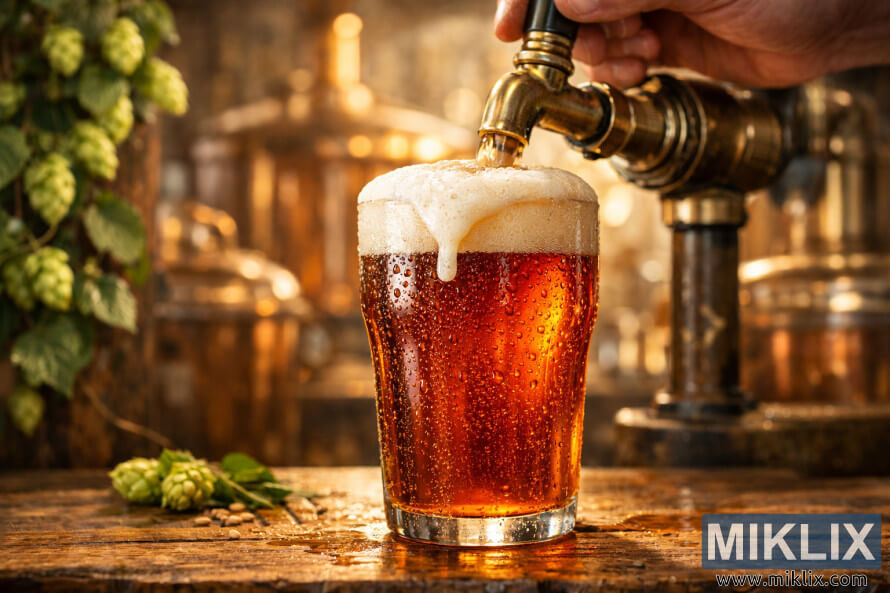
Click or tap the image for more information and higher resolutions.
Split-batch experiments and comparative tasting notes
Conduct a controlled split-batch experiment to isolate yeast effects. Start with one identical wort, split into equal volumes. Ensure mash temp, OG, IBUs, and oxygenation remain the same. Track FG and IBU tracking for each half to support tasting impressions.
Design a split fermentation with clear variables. Pitch equal cell counts and use the same starter protocol. Monitor fermentation temps with a probe. A yeast comparison test is most effective when only the yeast strain and a single temp or hopping change differ.
- How to set up: make one large batch, cool, split, and label each fermenter.
- Record: OG, final FG, mash temp, pitch rate, and conditioning time for documenting brew differences.
- Run a blind tasting when samples reach drinkable condition.
Expect distinct results between split-batch 2112 vs 1056. In hop-forward beers, note hop perception with 2112 compared to Chico strains. At lower temps, 2112 often presents cleaner hop notes. At higher temps, esters may blend with hop character, altering bitterness perception.
For malt-forward beers, watch malt expression with 2112. This strain can bring more malt clarity and rounded body in recipes that lean toward caramel or bready malts. Record mouthfeel, residual sweetness, and perceived attenuation when filling the sensory checklist 2112.
- Yeast comparison test checklist:
- OG and FG readings taken before and after fermentation.
- IBU and hop timing recorded for each run.
- Pitch rate and starter size documented.
- Sensory checklist 2112:
- Appearance, clarity, and head retention.
- Aroma: ester tone, hop top notes, any sulfur.
- Taste: bitterness balance, malt backbone, aftertaste.
- Data log items for documenting brew differences:
- Fermentation duration and temp profile.
- Measured FG and attenuation percent.
- Any deviations from protocol and conditioning time.
Consider running temperature interaction trials. Ferment one split at the low end and the other at the high end of the practical range. This approach highlights how 2112's hop-forward vs malt-forward tendencies shift with heat. It sharpens conclusions from the yeast comparison test.
When publishing notes, include manufacturer data for reference on attenuation and flocculation. Clear records enable other brewers to reproduce your design split fermentation. They help validate sensory claims against FG and IBU tracking.
Equipment and environmental tips for consistent results
Consistent results with Wyeast 2112 require good technique and the right gear. Focus on maintaining a steady fermentation temperature and adhering to simple hygiene practices. Investing in insulation or cooling solutions can yield better results than expensive equipment for a first-time upgrade.
Here are practical steps for managing fermentations in a typical U.S. homebrew space. Pitching cooler wort can help offset the heat rise many fermentations experience. For those without refrigeration, passive temperature control can provide a stable and predictable environment.
Temperature control solutions for garages and basements in the U.S.
- Target 60–65°F for most California Common and cream ale batches brewed in garages. Track temps with an external probe or an inkbird thermostat.
- Basement brewing 2112 benefits from natural stability. Insulate fermenters with jackets, wraps, or a simple thick blanket to reduce swings.
- In winter, add a small seedling heat mat under an insulated box where needed. In summer, move fermenters away from direct sun and heat sources.
Using fermentation chambers, swamp coolers, and ambient strategies
- A fermentation chamber 2112 gives the tightest control. A converted chest freezer with a thermostat holds temps within the 58–68°F window.
- Swamp cooler for fermentation works for many brewers: a tub of water, towels, and frozen bottles rotated every few hours can shave degrees off ambient air.
- Passive temp control tips: pitch cool to use the fermentation exotherm, place fermenters in stable rooms, and use ice packs or insulated coolers for short-term dips.
Sanitation and transfer practices to protect clarity and flavor
- Sanitation 2112 matters at every transfer. Clean and sanitize kettles, fermenters, and tubing before contact with wort.
- Minimize transfers and handle only when necessary to maintain transfers and clarity; cold crashing reduces yeast in suspension and eases racking.
- When kegging, purge with CO2 and avoid splashing. When bottling, use a bottling wand and gentle fill techniques to limit oxygen pickup and prevent infection with 2112.
Follow a checklist: stable temperature, minimal moves, and strict sanitation. These three items carry most of the weight for consistent clarity and flavor when brewing with Wyeast 2112.
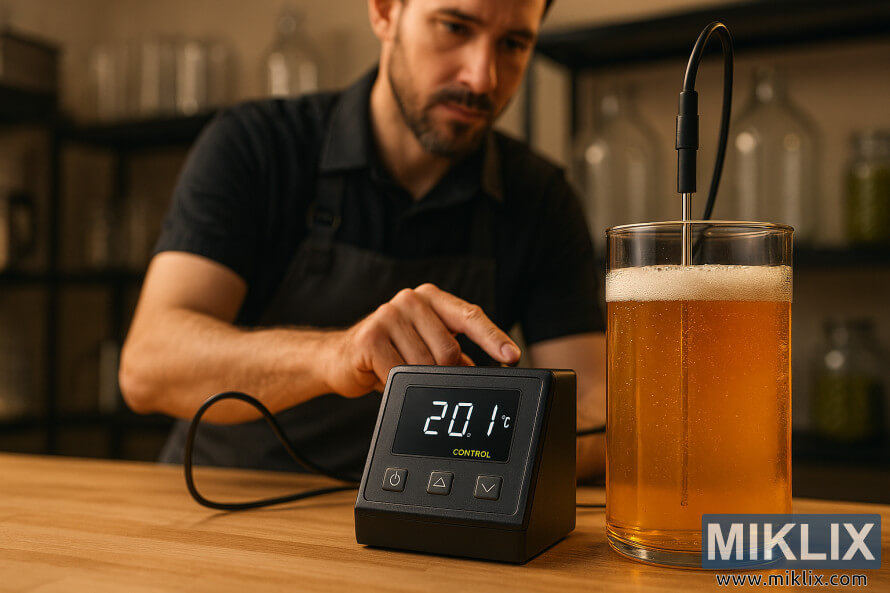
Click or tap the image for more information and higher resolutions.
Troubleshooting common issues with Wyeast 2112 California Lager Yeast
Wyeast 2112 is quite forgiving when handled correctly. However, brewers may encounter issues like slow fermentation, stuck beer, and unusual flavors. These problems often stem from incorrect pitching rates, temperature, or yeast health. By taking specific actions, brewers can usually resolve these issues.
Slow starts, long lag times, and how to rouse or re-pitch
Many brewers experience a slow start with Wyeast 2112, especially when pitching without a starter at cooler temperatures. If fermentation is slow, try raising the temperature by 2–4°F. Swirling the yeast cake can also help suspend cells, encouraging activity. A gentle tilt of the fermenter can stimulate yeast without causing stress.
If fermentation doesn't improve within 24–48 hours, it's time for a fresh, vigorous starter. Proper cell counts before pitching are crucial to avoid long lag times. Consider using a starter for cool ferments or higher gravity worts.
Stalled fermentation recovery: oxygen, nutrient, and repitch options
When fermentation stalls, adding measured oxygen and nutrients can often revive it. Early reoxygenation helps yeast rebuild membranes and metabolize sugars. This is especially important during a stalled phase.
- Add a calculated amount of yeast nutrient and check gravity every 12–24 hours.
- If there's little change after nutrient and oxygenation, a fresh starter of the same or compatible strain can help.
- Ensure sanitation when repitching to prevent contamination.
Addressing off-flavors: diacetyl, esters, phenols and sulfur notes
Off-flavors often result from yeast health and fermentation management. Issues like low pitch rate, cool fermentation without a starter, or nutrient deficiency can cause diacetyl or sulfur production. To reduce diacetyl, warm the beer slightly for a diacetyl rest. Hold the temperature until sensory tests show improvement.
To remove sulfur, allow for extended conditioning. Wyeast 2112's high flocculation and conditioning time can clear sulfur over days to weeks. If esters are high, try lowering the fermentation temperature or shortening warm periods. Some brewers embrace mild fruitiness in warmer, hybrid fermentations as stylistic.
When troubleshooting, monitor gravity to confirm activity and document interventions. Proper pitching, measured oxygenation, and repitching when necessary protect flavor. This gives Wyeast 2112 the best chance to perform well.
Conditioning, secondary practices, and packaging recommendations
Wyeast 2112 produces clear, bright beer with strong flocculation. Conditioning choices depend on recipe needs and brewer preference. Readiness after primary fermentation is determined by gravity stability and taste. Gentle cold-crash and careful packaging protect the beer's clean profile and preserve carbonation and clarity.
Do you need a secondary? Weigh the pros and cons before moving beer off primary. For many California Common brews, skipping secondary shortens handling and reduces oxygen exposure. Use a secondary when adding spices, wood, or for extended aging that benefits from extra polishing.
Consider secondary fermentation for 2112 only when the beer requires a specific adjunct contact period or when clarity demands extra time. High flocculation often clears beer well enough in primary. Moving beer too soon can stir up yeast and create haze instead of removing it.
Conditioning time for 2112 varies by style and target character. Tapping young California Common is common; many brewers serve at one to four weeks. Short conditioning preserves fresh malt and hop clarity for a steam-beer vibe while keeping body lively.
Longer lagering times suit beers aimed at a polished, lager-like finish. Extended cold conditioning reduces transient esters and smooths mouthfeel. Typical lagering times range from several weeks to a few months depending on desired polish and strength.
- Tap young: flavor is bright and fresh, carbonation forms quickly, and turnaround is fast for session beers.
- Extended lagering: lowers esters, increases clarity, and yields a more refined finish for premium lagers.
- Use a short diacetyl check before packaging when choosing a quicker path.
Kegging with 2112 offers speed and control. Purge kegs with CO2, transfer under closed conditions, and carbonate to target volumes to preserve carbonation and clarity. Kegging also reduces oxygen pickup versus bottle transfers and eases serving of tapping young California Common.
Bottling tips 2112 focus on sanitation and stable FG. Calculate priming sugar precisely to hit desired CO2 volumes. Cold-crash before bottling to drop yeast, then rack carefully to minimize trub. Let bottles condition upright for a week before laying down to settle yeast further.
When choosing between kegging and bottling, match the method to serving needs. Kegging with 2112 is ideal for quick service and consistent carbonation. Bottling provides portability and gradual bottle-conditioning benefits when time and patience are part of the plan.
Yeast storage, handling, and purchasing considerations
Proper handling is crucial for a successful fermentation. Always check the pack dates and handle older packs with care. Store packages in the refrigerator until brewing. Then, move quickly from refrigeration to starter.
The shelf life of Wyeast smack packs varies by lot. Look for the best-before Wyeast date on the box. For most ales and lagers, use packs that are fresh. Wyeast 2112, in particular, benefits from packs with several weeks of freshness.
Even refrigeration cannot halt the natural decline of yeast. For high gravity beers or cool fermentations, consider building a starter with Wyeast 2112. Many brewers find that two packs plus a 3-qt starter are sufficient for beers around 1.060 OG.
Rehydrating yeast is not typically necessary for liquid Wyeast strains. Propagation in wort generally provides better cell counts and vitality. However, if you do choose to rehydrate, follow the recommended temperature and timing to avoid shocking the yeast.
Decide to build a starter based on pack age, gravity, and fermentation temperature. A healthy starter can reduce lag and diacetyl risk. It's common for brewers to prepare starters a day in advance and aerate them well before pitching.
In the U.S., brewers often purchase Wyeast 2112 USA from local homebrew shops and online suppliers. Choose vendors that rotate stock and display clear pack dates. If you suspect poor performance, reputable shops will replace suspect packs or offer alternatives.
- Check dates and storage practices when you buy.
- Prefer vendors with good reviews on quality Wyeast 2112.
- Keep shipments cold and refrigerate on arrival.
Quality Wyeast 2112 can vary by batch and vendor handling. If you encounter sluggish starts, consider repitching with a fresh pack from a trusted supplier. Buying from established suppliers reduces the risk of compromised viability and provides access to expert advice.
Advanced techniques: using 2112 for hybrid lager-ale experiments
Wyeast 2112 opens the door to practical experimentation, where control is limited. Brewers can run split batches to test hybrid fermentation 2112 traits. They compare cold vs warm 2112 performance while keeping malt bill and hopping steady. This simple test plan reveals how temperature and strain shape the final beer.
- Designing an experiment: Split identical wort into two or three fermenters. Track ferment 2112 warm run(s) and a cold run. Log gravity, temp, and tasting notes at set intervals for comparisons.
- Cold vs warm 2112 outcomes: At 58–62°F, expect pronounced lager-like cleanness and restrained esters. At 65–70°F, expect mild fruitiness while retaining a lager backbone. These contrasts make clean comparisons between cold vs warm 2112 clear.
- Lager without refrigeration: Brewers without chillers often pitch cool and use ambient temperature drift to finish. This approach yields lager without refrigeration effects, especially for California Common and Helles-style beers. Many homebrewers report solid results using steady 60–66°F ambients.
- Practical tactics: For lager without refrigeration, start wort cooler and keep temps stable. Use moderate pitching rates and healthy starters to reduce off-flavor risk. For more ale-like hybrid results, ferment 2112 warm near its upper range.
- Recipe adjustments to emphasize hybrid character: Tweak recipe 2112 by lowering mash temps for drier finish or raising them for more body. Choose moderate hops and malt-forward grists for a lager-leaning profile. For steam beer brewing at home, a slightly richer pale malt base with restrained hopping highlights the hybrid nature.
- Recipes for hybrid lagers: Start with simple grain bills that support clarity and balance. Keep hopping clean and late to preserve aroma. Use those recipes for hybrid fermentation 2112 trials, then tweak recipe 2112 elements like mash temp, water profile, and hop timing to emphasize lager character or to coax gentle ester notes.
Small, repeatable experiments yield the best learning. Record results and adjust one variable at a time. This method turns forum anecdotes and manufacturer claims into reliable practice for brewers seeking hybrid outcomes with Wyeast 2112.
Case studies and real-brewer reports with Wyeast 2112
Homebrewers' field reports and forum threads offer practical insights into Wyeast 2112. They reveal patterns when comparing cooler to warmer fermentation temperatures. Below, we summarize typical outcomes, trade-offs, and recipe tweaks 2112 brewers have implemented to enhance consistency.
Homebrew reports: fermentation at 60°F producing clean profiles
Many brewers have found that fermenting 2112 at 60°F results in a lager-like character. A California Common fermented around 60°F showcased a firm malt presence, restrained esters, and a crisp finish. The consensus is that fermenting between 60–62°F is key to achieving the strong lager traits 2112 is known for.
Examples of batches at 65–70°F and how they changed
Brews fermented at 65°F often exhibit a hybrid profile with moderate fruitiness and cleanliness. At 70°F, the beers remain drinkable but with more pronounced fruity esters and hop aroma. Observations at 65°F and 70°F highlight faster fermentations, shorter primary fermentation times, and flavor notes that include stone fruit and citrus esters.
Repeated batch lessons: consistency and practical recipe tweaks
Repeating batches has taught brewers the importance of controlling starter size, oxygen, and mash temperature for reliable attenuation. By tracking these variables, consistency with 2112 was achieved. Common tweaks include lowering mash temperatures for drier final gravities and using larger starters for cooler fermentations.
- Use a starter for high OG beers and cool ferments to reduce lag.
- Pitch at the cool end, allow controlled warming if needed for diacetyl cleanup.
- Skip a secondary for quick styles like California Common; verify gravity stability first.
Conclusion
Wyeast 2112 conclusion: practical brewer experience and manufacturer data align. This strain consistently produces clean, lager-like beers in homebrew settings. It requires careful mash control, oxygenation, and healthy pitching rates.
Its 58–68°F range, 67–71% attenuation, and high flocculation make it ideal for California Common, cream ale, and hybrid lagers. This versatility highlights its value in homebrewing.
Fermenting with 2112 summary: homebrewers find it forgiving, even with modest temperature swings up to 68°F. Many report no strict need for a diacetyl rest. However, monitoring gravity and flavor is crucial for decision-making.
For higher gravities or long-ferment projects, building a starter and ensuring good oxygenation is key. This supports better attenuation and clarity.
Best practices for Wyeast 2112 include maintaining consistent temperature and matching mash profile to target final gravity. Using active yeast via starters or fresh smack packs is also essential. With these steps, 2112 delivers crisp, clear results without the need for full cold lagering. This makes it an efficient choice for brewers in various settings.
FAQ
Fermenting Beer with Wyeast 2112 California Lager Yeast — what makes this strain different?
Wyeast 2112 is a unique "California Lager" strain. It ferments in the ale temperature range but retains lager-like cleanliness. Lab specs indicate a 58–68°F (14–20°C) fermentation range, 67–71% attenuation, high flocculation, and an ≈9% ABV tolerance. Homebrewers find it produces brilliant clarity and a malty, clean profile. It's known for predictable attenuation when managed properly.
Compared to Chico-type ale strains like WLP001 and Wyeast 1056, 2112 often yields a more lager-like result. It interacts with hops differently, resulting in distinct flavor profiles.
How does 2112 compare to WLP001, Wyeast 1056, and WLP028 in real-world brewing?
Split-batch comparisons reveal notable differences. WLP001 is described as very clean, showcasing raw hop flavor. Wyeast 1056 and other Chico variants transform hop character differently. WLP028 and WY1728, though similar, behave uniquely in practice.
2112 is closer to a lager profile than these ale strains. It exhibits higher flocculation and a clear, malty finish.
Which styles are best suited to Wyeast 2112?
2112 is ideal for California Common / Steam Beer, premium American lagers, and cream ales. It's also used for Baltic porter, smoked beers, and spice/herb beers. Its clean yeast profile and high clarity make it suitable for specialty lagers.
It works well for beers that benefit from a crisp, malty backbone and quick conditioning.
What fermentation temperature should I target for clean, lager-like results?
Aim for 58–68°F (14–20°C) for clean, lager-like results. For the cleanest character, target the lower end, about 60–62°F. This minimizes ester formation and promotes strong clarity.
Many brewers pitch a chilled wort (~62°F) and allow the fermenter’s exotherm to stabilize in the mid-60s. Fermenting up to 65–68°F produces a slightly more hybrid character, with more fruitiness and altered hop perception.
Will 2112 produce esters or sulfur if I ferment warm?
Yes, temperature influences ester and sulfur production. At the low end (≈60–62°F), 2112 yields clean, lager-like beers with low ester expression. In the mid-to-high range (65–70°F), brews can develop fruity esters and a touch of ale character.
Sulfur may appear transiently but often clears with conditioning. Keep fermentation within the recommended window and control pitch rate and oxygenation to minimize unwanted off-flavors.
Do I need to make a starter for 2112? When is a starter necessary?
Make a starter for high original gravities (OG ≥ ~1.060), cooler fermentations, or older smack packs. Manufacturer tolerance (~9% ABV) and community practice support building a starter for beers near that limit. Many homebrewers use a 3-qt starter from two smack packs for ~1.060 OG beers.
A starter reduces lag, improves attenuation, and lowers the risk of sulfur/diacetyl problems when fermenting cool.
How large should my starter be and what about using smack packs vs. propagated yeast?
Starter size depends on gravity and pitching rate. For typical session beers, a fresh single smack pack may suffice. For 1.060+ OG or cool fermentations, aim for a 2–4 qt starter (examples: two smack packs to a 3-qt starter).
Propagated yeast from a healthy starter or harvested cake often gives more reliable, vigorous starts than a single older pack. Track dates and viability; build a starter when in doubt.
What oxygenation and yeast health practices are recommended before pitching 2112?
Adequate oxygenation is important, especially for cool and high-gravity ferments. Aerate or oxygenate the wort before pitching, and consider yeast nutrient for stressed or high-OG batches. Proper pitching rates, fresh yeast or an appropriate starter, and correct wort oxygen levels help avoid sluggish starts, sulfur, and diacetyl.
How long does primary fermentation typically take with 2112?
Primary fermentation often finishes in 5–7 days at warmer temps (~65–68°F). At cooler temps (~58–62°F), expect longer lag and longer primary durations—plan extra days and consider a starter for cool ferments. Some homebrew reports show vigorous activity in a few days and stable FG within one to two weeks depending on OG and pitch health.
How do I know fermentation is complete and how does attenuation translate to FG?
Use repeated gravity readings (48 hours apart) to confirm stability before packaging. Manufacturer attenuation is 67–71%—use that to estimate FG from your OG. For example, a reported batch with OG 1.055 reached FG 1.012 (~77% apparent attenuation) when mash and yeast health promoted high fermentability.
Measure gravity, check krausen and activity, and taste chilled samples for any off-flavors before packaging.
Should I perform a diacetyl rest with 2112?
Most brewers report 2112 does not require a diacetyl rest under normal conditions, particularly when fermenting at the upper end (65–68°F) and with healthy pitching rates. However, if diacetyl is detected, perform a short rest—raising temp toward the upper end for 24–72 hours near the end of primary to allow yeast to reabsorb diacetyl. Cooler fermentations or underpitched batches have higher diacetyl risk, so monitor and taste before packaging.
How should I perform a diacetyl rest if needed?
Once primary fermentation activity has largely subsided, raise the fermenter temperature toward 65–68°F for 24–72 hours. Ensure there is still viable yeast in suspension to reabsorb diacetyl. After the rest, allow the beer to condition and check gravity stability and taste chilled samples to confirm cleanup before packaging.
What is the expected attenuation and how does that affect body?
Expect 67–71% attenuation as the normal range. This produces medium-bodied beers typical of California Common and premium lagers. Actual FG depends on mash fermentability, yeast health, and pitching rate. Lower mash temps yield fuller body and higher FG; mash around 150°F for drier beers, or raise mash temps to retain dextrins and a fuller mouthfeel.
How does 2112’s high flocculation affect clarity and conditioning?
High flocculation promotes rapid yeast drop-out and brilliant clarity, often reducing the need for long secondary lagering. Many brewers tap California Common-style beers within 1–4 weeks. Cold crashing and careful transfers further improve clarity. Sanitation and gentle handling during packaging help preserve the bright appearance.
If I want less attenuation or a fuller body, what mash adjustments should I make?
Raise mash temperature to produce more unfermentable dextrins. For a fuller mouthfeel, mash in the mid-to-high 150°F range rather than low-150s. Because 2112 can ferment highly fermentable worts efficiently, mash temp is a primary tool to control final body and prevent overly thin beer.
What flavor outcomes can I expect at different temperatures?
Low-end fermentations (≈60–62°F) usually yield pronounced lager-like cleanliness and low esters. Mid-range (≈63–66°F) balances clean character with mild fruitiness. Upper-range (≈66–68°F and above) often produces noticeable esters and a touch of ale character; some brewers still consider results acceptable for hybrid styles. Control pitch rate and oxygenation to manage off-flavor risk.
How do I minimize sulfur, diacetyl, or other off-flavors when using 2112?
Ensure adequate pitching rate or use a starter, provide proper oxygenation, and keep fermentation within 58–68°F. If sulfur appears, extended conditioning often clears it. If diacetyl appears, perform a short rest at the upper end of the range. Use nutrient when needed and avoid underpitched, cold fermentations without a starter.
How should I approach a California Common / “Steam Beer” recipe with 2112?
Use a moderately fermentable grist, target mash temps to deliver your desired body, and keep hopping appropriate for the style. Pitch at ~60–62°F for a more authentic lager-like profile or 65–68°F for a slightly quicker, hybrid finish. Many brewers tap young (1–4 weeks) and report results comparable to Anchor Steam when fermentation and recipe are dialed in.
Can I use 2112 for premium lagers, cream ales, or darker beers like Baltic porter?
Yes. For premium lagers and cream ales, ferment on the cooler end (60–62°F) to emphasize crispness and malt clarity. For Baltic porter, smoked beers, and spice/Christmas ales, 2112 can deliver clean malt expression and clarity—adjust mash and pitching strategies for higher gravities and consider a starter for large OGs.
How do I design a split-batch test to compare 2112 with other strains?
Use identical wort (same OG, IBUs, mash), split into two fermenters, and pitch equal cell counts or appropriate starters. Keep temperature profiles matched or vary them deliberately to test temp interaction. Measure OG and FG, document fermentation duration, and perform blind sensory comparisons for aroma, hop perception, esters, and mouthfeel.
What should I document when comparing strains or repeating batches?
Track OG, FG, mash temp, pitch rate, starter size, fermentation temps/timeline, IBUs, and conditioning time. Note sensory impressions (appearance, aroma, esters, sulfur, hop character, mouthfeel). Detailed logs help reproduce successful results and identify strain-driven differences.
What temperature control methods work well for U.S. homebrewers fermenting 2112?
Fermentation chambers with thermostats give precise control. Passive methods like pitching cool and using swamp coolers, ice bottles, insulated basements/garages, or rotating frozen bottles in a cooler also work. For many U.S. brewers, aiming for 60–65°F with simple ambient control produces reliably good results.
Are secondary fermenters necessary when using 2112?
Not generally. High flocculation and quick clearing mean many brewers skip secondary for California Common-style beers and keg or bottle after gravity stabilizes. Secondary can be useful for additive aging (spices, smoke) or additional polishing, but it is optional for routine batches.
How long should I condition before packaging or serving?
Conditioning varies by style and preference. California Common is often tapped young (1–4 weeks). Many brewers condition 1–6 weeks depending on recipe and desired polish. For higher gravity or complex beers, extended conditioning improves clarity and cleans up transient off-flavors.
What packaging and carbonation practices preserve 2112’s clean profile?
Minimize oxygen pickup during transfers and packaging, cold crash to promote clarity, and use CO2 purging when kegging. Ensure stable FG before priming for bottles. Proper sanitation and gentle filling preserve the bright appearance and clean flavor that 2112 often produces.
How do I recover a slow or stalled fermentation with 2112?
First, check gravity trends. For slow starts, rouse the yeast cake by gently swirling or warming the fermenter a few degrees; add oxygen early if within the active phase. If fermentation stalls, add nutrient and consider reoxygenating or repitching a healthy, active starter. In some cases, adding a fresh culture or repitching solved the issue for brewers.
What causes persistent off-flavors and how can I fix them?
Off-flavors like diacetyl and sulfur often result from low pitch rates, cool fermentations without a starter, or nutritional deficiencies. Fixes include warming for a diacetyl rest, extended conditioning, adequate pitching and oxygenation, and repitching if yeast viability is poor. For excessive esters, lower fermentation temperature on future batches.
How should I store and handle Wyeast smack packs and when should I build a starter?
Refrigerate smack packs until use and check pack dates—build a starter for older packs, high OG beers, or cool fermentations. Liquid Wyeast benefits from starter propagation rather than simple rehydration. If pack age or viability is doubtful, prepare an appropriately sized starter before pitching.
Where do U.S. brewers source Wyeast 2112 and what quality tips should I follow?
Purchase from reputable homebrew shops and trusted online retailers, check best-before dates, and buy fresh when possible. If a pack appears older, build a starter. Some brewers prefer Wyeast over other vendors for perceived consistency, but batch variation can occur—keep records and source from reliable suppliers.
Can I make lager-like beers with 2112 without full refrigeration?
Yes. 2112 is specifically intended for producing lager-like beers at ale-range temperatures. Pitching cool (≈62°F) and letting the wort’s exotherm raise the temp, or maintaining a stable ambient 60–65°F with passive control, often yields clean, lager-like results without traditional cold lagering.
What recipe adjustments emphasize 2112’s hybrid characteristics?
For more lager character, choose a malt-forward grist, moderate hopping, and ferment at 60–62°F. For hybrid/ale traits, ferment at the upper end (65–68°F) and allow some ester integration with hops. Adjust mash temps to control body: lower mash temps for drier beer, higher for fuller mouthfeel.
What real-brewer experiences illustrate 2112’s performance?
Homebrew reports show fermentation at ~60°F producing distinct lager traits, while batches at 65–70°F developed mild fruitiness yet retained overall lager clarity. One brewer mashed at 150°F and reached OG 1.055 → FG 1.012 (~77% attenuation), illustrating how mash fermentability and yeast health affect FG. Community consensus highlights reliable results when proper starters, oxygenation, and temperature control are used.
Any final practical tips for consistent success with Wyeast 2112?
Use appropriate pitching rates and starters for high OG and cool ferments, oxygenate wort adequately, control fermentation temps within 58–68°F, track OG/FG and sensory changes, and use passive or active temperature control as needed. Cold-crash and good sanitation help achieve the brilliant clarity and clean flavor 2112 is known for.
Further Reading
If you enjoyed this post, you may also like these suggestions:
- Fermenting Beer with Wyeast 1010 American Wheat Yeast
- Fermenting Beer with White Labs WLP001 California Ale Yeast
- Fermenting Beer with White Labs WLP545 Belgian Strong Ale Yeast