
Fermenting Beer with Wyeast 3739-PC Flanders Golden Ale Yeast
Published: January 6, 2026 at 4:29:29 PM UTC
Wyeast 3739-PC presents a balanced mix of fruity esters and spicy phenols, culminating in a dry finish with a hint of malt. This yeast strain is particularly sought after for crafting Flanders and golden ales.
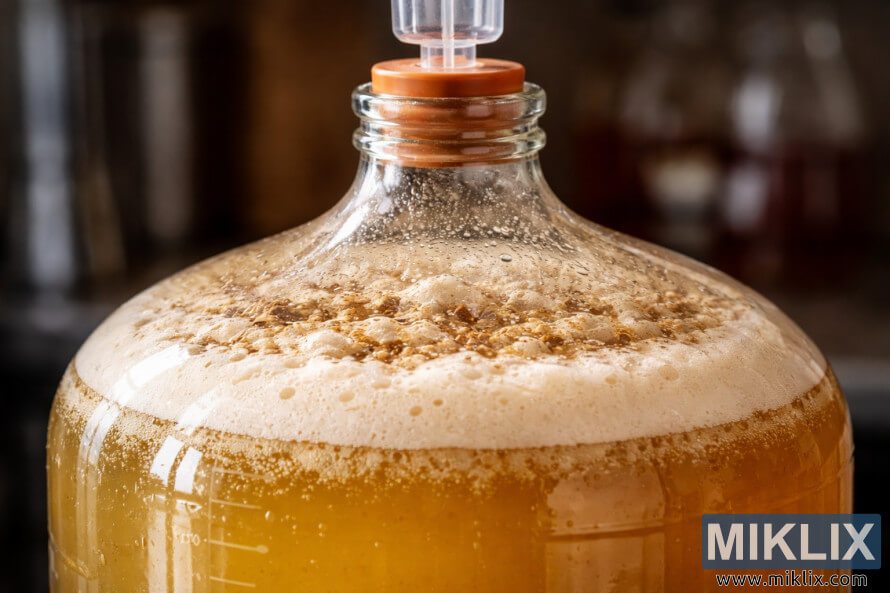
Click or tap the image for more information and higher resolutions.
This article provides a practical review of Wyeast 3739-PC Flanders Golden Ale Yeast. It highlights what homebrewers can expect when fermenting with 3739-PC. The yeast is part of Wyeast's seasonal offerings, celebrated for its balanced fruity esters and spicy phenols. It finishes dry with a subtle malt presence.
I will delve into performance, recipe tips, troubleshooting, and sourcing. You can expect detailed guidance on attenuation, temperature tolerance, and the yeast's behavior in both light saisons and higher-gravity ales. Feedback from the brewing community and Wyeast specifications reveal a versatile culture ideal for summer and farmhouse-style brewing.
Below, I summarize the most critical aspects of flavor profile, technical specifications, seasonality, and the types of beers that showcase this strain best.
Key Takeaways
- Wyeast 3739-PC Flanders Golden Ale Yeast produces moderate fruity esters with earthy, spicy notes and a dry, slightly tart finish.
- The strain shows robust attenuation (around 74–78%) and tolerates up to roughly 12% ABV, making it suitable for higher-gravity beers.
- Optimum fermentation range is broad (about 64–80°F), which supports summer brewing and farmhouse styles.
- Released as a Wyeast seasonal yeast in a Private Collection run, availability often spans spring into late year at select homebrew shops.
- Great for saisons, Flanders-style gold ales, and other Belgian farmhouse beers that benefit from peppery phenols and balanced esters.
Why Choose Wyeast 3739-PC Flanders Golden Ale Yeast for Your Brew
Wyeast 3739-PC presents a balanced mix of fruity esters and spicy phenols, culminating in a dry finish with a hint of malt. This yeast strain is particularly sought after for crafting Flanders and golden ales. Its unique blend of complex esters, earthy undertones, and a touch of tartness imbues beers with a vibrant Belgian essence. This is achieved without the need for Brettanomyces or extensive mixed culture aging.
The yeast strain boasts impressive attenuation and alcohol tolerance, making it ideal for brewing high-gravity beers up to 12% ABV. This robustness is a key reason why many homebrewers have chosen 3739-PC for their summer batches. Wyeast specifically marketed this strain for its performance at warmer fermentation temperatures, ensuring consistent attenuation.
Choosing Flanders Golden Ale yeast, like 3739-PC, offers a peppery finish and a subtle tartness that enhances farmhouse-style saisons and golden ales. For those seeking a farmhouse ale yeast, 3739-PC is an excellent choice. It produces lively esters and restrained phenols, making it suitable for a variety of styles. The liquid format is particularly beneficial for hobbyists and professional-amateur brewers, aligning with common propagation and starter routines.
- Target styles: Flanders/golden ales, farmhouse ales, saisons and Belgian strongs.
- Flavor balance: moderate fruity esters, spicy phenols, slight tartness, dry finish.
- Performance: high attenuation, wide temperature tolerance, good alcohol handling.
Opt for Wyeast 3739-PC when aiming for Belgian character without the need for prolonged mixed-culture aging or intense Brettanomyces presence. Its dependability and adaptability make it a practical choice for brewers looking to explore traditional Belgian and farmhouse ale profiles.
Vital Stats and Technical Specifications of the Strain
Wyeast 3739-PC is available in liquid form, categorized as Belgian/farmhouse. It boasts an attenuation range of 74-78%, ideal for beers that need a balance between malt and dryness. This characteristic makes it perfect for achieving a refined finish in your brews.
The strain's flocculation is medium-low, leading to some yeast suspension and slower clearing. If you aim for a clearer beer, consider longer conditioning or the use of fining agents. This approach can help in achieving the desired clarity more quickly.
Its optimal fermentation temperature spans from 64-80°F, accommodating both cool Belgian ales and warmer farmhouse styles. Within this range, you can expect the development of complex esters and spicy phenolics. These are key elements that define the character of these beer styles.
Wyeast 3739-PC can handle alcohol levels up to 12% ABV, making it suitable for high-gravity brews. For beers exceeding this limit, employing strategies like larger starters and staged nutrient additions can be beneficial. These methods help maintain yeast health and ensure successful fermentation.
- Attenuation: 74-78%
- Flocculation: medium-low
- Optimum ferment temp: 64-80°F
- Alcohol tolerance: 12% ABV
Its availability is seasonal, with production from April to June, and some stock available until December. This aligns with Wyeast's Private Collection release schedule. If you're looking for fresh packs, plan your purchases around the summer months.
Understanding these technical specifications is crucial for planning your fermentation, pitching rates, and conditioning schedules. The attenuation range of 74-78% and medium-low flocculation set realistic goals for achieving clarity and final gravity in your beers.
How Wyeast 3739-PC Performs at Different Fermentation Temperatures
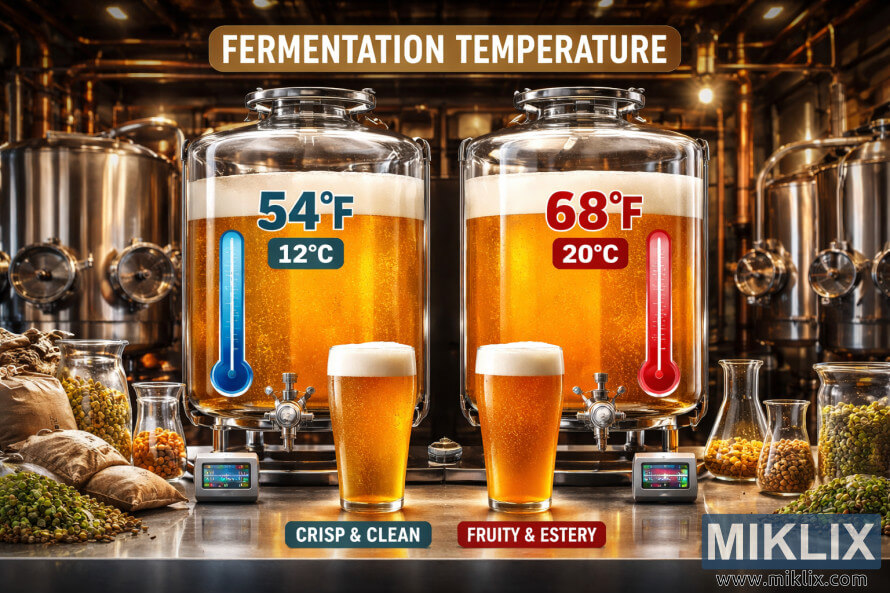
Wyeast 3739-PC excels in a wide ferment temp range of 64-80°F. It handles warmer temperatures typical of Belgian and farmhouse styles with ease. Brewers can expect consistent attenuation by maintaining a stable environment.
At mid-60s°F, yeast activity slows down, leading to a more restrained flavor profile. Esters remain subtle, and phenols are clean, resulting in a drier, refined Belgian character. This approach enhances malt and hop flavors while keeping the yeast's temperature effects in check.
As temperatures rise to the mid- to high-70s°F, the flavor profile changes. Fruit-forward esters become more pronounced, and spicy phenolics emerge. This shift creates a lively, peppery farmhouse note, ideal for saisons.
For high-gravity beers, maintaining a consistent temperature is crucial. A steady ferment temp of 64-80°F reduces yeast stress and limits off-flavors. It allows the strain's complex esters and earthy spice to shine without harsh alcohol notes.
- Low (mid-60s°F): cleaner phenols, subtle esters, drier finish.
- Mid-range (70–75°F): balanced phenols vs esters, fruit and spice emerge.
- High (high-70s°F): bold esters, pronounced peppery phenolics, strong farmhouse character.
Practical brewing tips: monitor tank or fermenter temps rather than ambient room readings. Use a heat wrap or glycol control for warmer schedules. Many homebrewers prefer a saison fermentation temp towards the upper half of the range to showcase 3739-PC’s signature spice and fruit mix.
Click or tap the image for more information and higher resolutions.
Pitching Rates and Starter Recommendations for Best Results
For a typical 5-gallon batch at standard strength (around 1.046), a single Wyeast smack pack or vial usually performs well. To reduce risk and speed fermentation, prepare a 1–2 L yeast starter. This yeast starter for Wyeast 3739 boosts cell counts and promotes a clean, steady attenuation.
When brewing higher-gravity beers above 1.060, increase your cell count. Build a larger starter or pitch multiple packs to meet the needed 3739-PC pitching rate. Strong attenuation and up to 12% alcohol tolerance make the strain suitable for big beers when you avoid underpitching.
Follow simple propagation advice liquid yeast to ensure starter health. Use fresh wort at proper gravity, keep temperatures steady, and oxygenate before pitching. Good aeration is essential for high-gravity runs and helps yeast finish fermentation without stress.
- Standard-strength ale (~1.046): one pack plus a 1–2 L starter.
- Mid to high gravity (1.060+): larger starter (3–4 L) or two packs.
- Very high gravity or long lagering: consider serial starters or pure propagation advice liquid yeast to reach target cell counts.
Monitor starter activity and use a stir plate or frequent shaking to keep yeast in suspension. Keep sanitation strict when making a yeast starter for Wyeast 3739 to avoid contamination. Proper planning of the 3739-PC pitching rate will yield cleaner flavors and reliable attenuation.
Fermentation Timeline and Expected Behavior
Wyeast 3739-PC exhibits a typical ale lag phase when properly pitched. You can expect to see activity within 12–48 hours post adequate oxygenation and a healthy starter or correct pitching rate.
Primary fermentation is usually vigorous. For average gravities, expect the most active bubbling and krausen between days 1 and 4. High-gravity beers may extend this period to 7 days, yet still achieve strong attenuation.
The target attenuation for this strain is around 74–78%, resulting in a noticeably dry finish. It's crucial to monitor specific gravity to confirm the expected FG, rather than solely relying on reduced bubbling or a collapsed krausen.
Fermentation behavior often introduces a slightly tart, peppery character alongside dry malt notes. This profile and dry finish make the strain ideal for farmhouse and saison-inspired recipes.
- Lag phase: 12–48 hours under good conditions.
- Primary activity: typically 3–7 days depending on gravity and temperature.
- Attenuation: about 74–78% leading to a dry finishing FG.
To achieve reliable results, track gravity across two or three days to confirm stability. This practice ensures the 3739-PC fermentation timeline and expected FG align with your recipe goals before moving to conditioning.
Recipe Ideas Optimized for Wyeast 3739-PC
Emphasize the yeast's fruity esters and peppery phenols. For a pale Flanders-style golden ale, use a pilsner malt base. Keep specialty malts light. Aim for an original gravity of 1.050–1.065 for session to moderate beers.
Add 5–8% Munich or Vienna malt to enhance complexity. Include a small portion of dextrin malt. Belgian candy sugar can be used sparingly to increase dryness and alcohol without obscuring yeast character.
- 5-gallon Flanders Golden Ale recipe blueprint: 90% pilsner malt, 6% light Munich, 4% Carahell or light dextrin; mash at 150–152°F for balanced body.
- OG target 1.050–1.065 for 4.5–7% ABV; increase to 1.070–1.090 when aiming for stronger ales up to 12% ABV tolerance.
Keep hopping modest to allow yeast esters to shine. Use noble or English varieties at 60 minutes for bitterness. Add a small late addition to brighten the finish.
For farmhouse ale recipe ideas, favor pilsner or pale ale base malts. Add minimal crystal malt. Let the yeast drive flavor. Use light adjuncts like orange peel or coriander sparingly to enhance aroma without masking phenols.
- Simple saison-style: pale base malt, 3–5% Vienna, mash 148–152°F, single late hop addition of Styrian Golding or East Kent Goldings.
- Spiced amber: same base, 6–8% Munich, touch of caramel malt, pinch of coriander and orange peel at flameout for subtle citrus notes.
- Stronger golden: raise OG to 1.075–1.085, add Belgian candy sugar if desired, ferment slightly warmer to enhance ester production.
Pitch healthy starters sized for the gravity and ferment at the lower end of the strain’s range. This preserves phenolic balance. Moderate temperatures will yield a dryer finish that highlights the strain in any Flanders Golden Ale recipe.
When testing 3739-PC recipes, document malt bill, hop schedule, and fermentation curve. Small tweaks to mash temperature or hop timing yield clear changes in mouthfeel and aroma. These changes keep the yeast's signature character center stage.
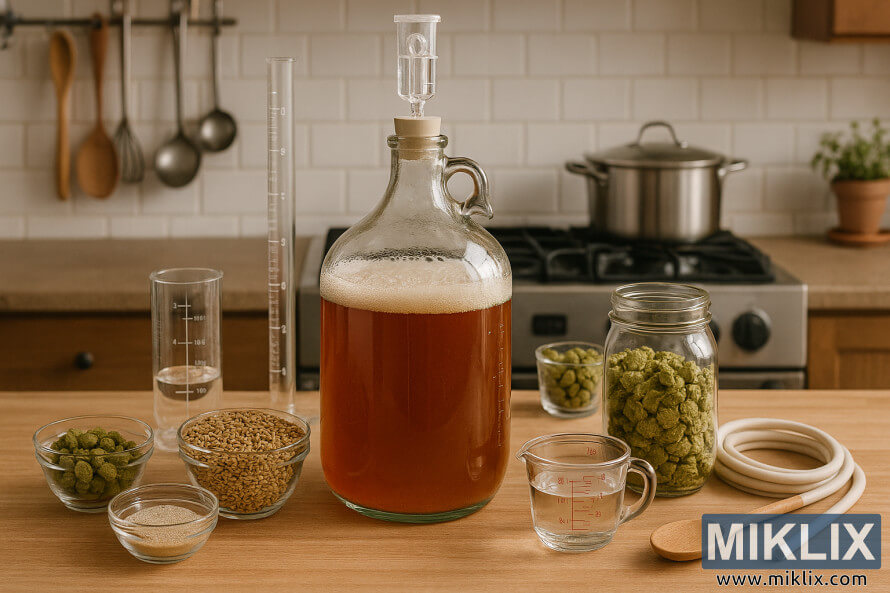
Click or tap the image for more information and higher resolutions.
Mashing and Wort Preparation Tips for Belgian-Style Character
For Wyeast 3739-PC, aim for a single infusion mash at 148–152°F for 60 minutes. This range favors a highly fermentable wort. It supports the yeast’s tendency to finish dry with a hint of malt. Lower mash temps help the culture reach its 74–78% attenuation without leaving excessive residual sweetness.
Keep mash pH near 5.2 to 5.4 to protect enzyme activity and maintain clarity. A fermentable malt profile lets the yeast’s ester and phenol character shine. If you want a touch more body, raise the mash temp a few degrees, but record the change so you can match results in future batches.
Wort prep 3739-PC includes careful oxygenation prior to pitching. Aerate with pure oxygen or vigorous splashing, especially for high-gravity beers. Wyeast’s seasonal release timing suggests extra care with warm ambient temps; faster cooling and clean chill practices reduce risk of unwanted microbes.
- Recommended rest: single infusion at 148–152°F for 60 minutes.
- Consider a short mashout at 168°F if lautering is slow.
- Adjust water salts to support malt balance and yeast health.
Sanitation matters during wort transfers and cooling. Keep hoses and vessels sanitized and limit exposure to open air. Control fermentation temperature so the yeast expresses Belgian-style phenolics without producing fusel alcohols.
For brewers chasing bright, dry finishes, mashing for Belgian ales with the right enzyme profile and solid oxygenation practices will showcase Wyeast 3739-PC’s dry, slightly tart character. Track mash temp for attenuation and wort prep 3739-PC details in your brew log for repeatable results.
Hop Selection and Timing to Complement Yeast Character
Wyeast 3739-PC exhibits moderate esters and spicy phenols, ideal for a Flanders Golden Ale. Opt for hops that enhance, not overpower, this profile. Saaz, Styrian Goldings, and Tettnang are excellent choices. They add subtle floral and peppery notes, perfect for this style.
Set the bittering to a moderate range of 20–35 IBU, based on your recipe. For saisons and farmhouse ales, aim for the lower end. This approach highlights the yeast's fruity and phenolic complexity. It ensures the finish remains clean and the yeast's traits are prominent.
Use late additions and dry hopping sparingly. A late hop or dry hop of about 0.25–0.5 oz per gallon is sufficient for aroma. This strategy prevents the yeast's spice from being masked. Belgian ales often benefit from single late additions or brief whirlpool rests. This method enhances aroma without adding harsh bitterness.
- Use continental or noble varieties for balance and subtle character.
- Keep IBU in a moderate band so yeast esters remain audible.
- Reserve stronger or resinous hops for experimental batches, not core Flanders-style recipes.
When crafting hop schedules, follow three simple rules. Prioritize yeast character, measure IBUs to suit style, and add late hops conservatively. This approach is crucial for brewers in contests or collaborative recipes. It preserves the yeast's signature while enhancing the beer with delicate hop notes.
Managing Fermentation for Attenuation of 74–78%
Begin by preparing a starter or pitching the right number of cells for your beer's gravity. For session and standard-strength ales, a 1.0 L starter of Wyeast 3739-PC or a suitable dry yeast will suffice. For beers with higher gravities, increase the starter volume. This helps maintain yeast health and aids in achieving the desired attenuation of 74-78%.
Ensure the wort is well-oxygenated before pitching the yeast. Oxygen supports early yeast growth and reduces stress, which can slow fermentation. Aim for consistent oxygenation levels that match your batch size and yeast type. This approach helps in hitting the final gravity (FG) with 3739-PC as planned.
Keep the fermentation temperature between 64–80°F. Start in the mid-60s to promote a clean, active fermentation. If you prefer more ester or phenolic flavors, gradually increase the temperature during active fermentation. Stable temperatures are crucial for complete fermentation and preventing off-flavors.
This strain exhibits medium-low flocculation. Yeast may remain suspended longer, continuing to ferment while clearing slowly. This behavior aids in achieving the desired attenuation but can delay visual clearing in the fermenter.
- Pitch a larger starter for big-gravity worts to support full attenuation.
- Oxygenate to recommended levels for ale yeasts before pitching.
- Monitor and hold temperature in the mid-range, then adjust if needed.
To confirm terminal gravity, use a hydrometer or refractometer, adjusting for alcohol. Take two readings 24–48 hours apart to ensure stability before conditioning. These steps help verify you've reached the FG with 3739-PC and avoid premature transfers.
If attenuation seems incomplete, give extra time before conditioning. Extended primary fermentation often results in a lower gravity. If fermentation stopped early, consider gentle re-aeration within the first 12–24 hours or a fresh, healthy pitch to restart fermentation.
To manage attenuation of 74-78%, follow these steps: proper starter sizing, thorough oxygenation, steady temperature control, and clear terminal gravity verification. These measures enhance the likelihood of complete fermentation and achieving the dry, slightly tart finish characteristic of Wyeast 3739-PC.
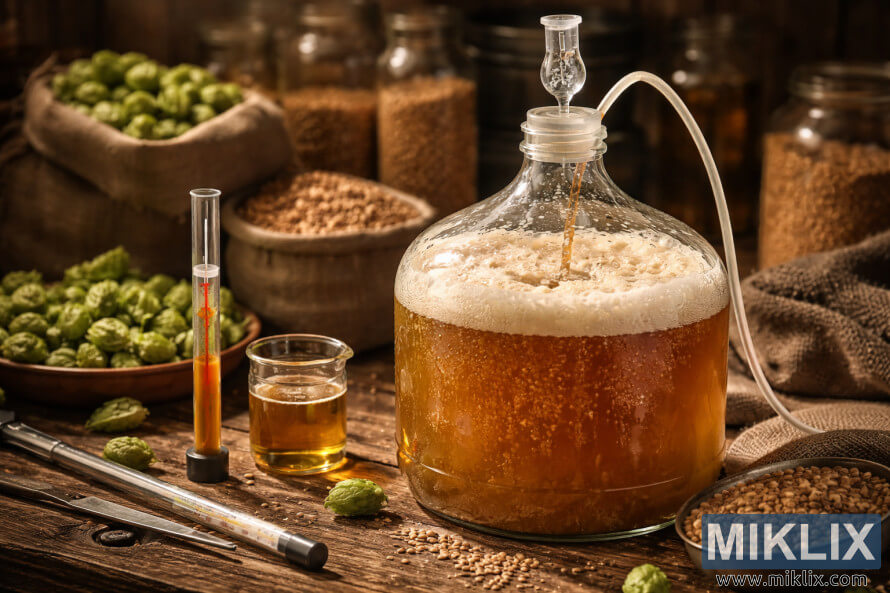
Click or tap the image for more information and higher resolutions.
Conditioning, Aging, and Bottle/Cellar Considerations
Wyeast 3739-PC requires a patient approach to conditioning. For standard-strength batches, allow 2–4 weeks in a secondary or conditioning tank. This time helps phenolics and esters mellow, and the yeast clarifies the beer.
Beers with higher gravities need longer aging Flanders Golden Ale. Stronger ales may require several months to blend flavors and reduce harsh alcohol notes. Cooler, steady cellar temperatures slow down changes, preserving complexity during this period.
Bottle conditioning farmhouse ale is a great method for small batches. Use conservative priming to account for residual yeast activity from medium-low flocculation strains. Monitor a few bottles to gauge final carbonation before bulk storing.
- Short-term: 2–4 weeks conditioning for typical homebrew strengths.
- Long-term: several months aging Flanders Golden Ale for high-gravity or complex profiles.
- Bottle work: follow careful priming rates when doing bottle conditioning farmhouse ale to avoid overcarbonation.
Keep cellar storage cool and steady to control ester and phenolic development. Warmer aging will amplify those notes, creating bolder Belgian character. Track flavor changes over time to determine the optimal drinking window for your recipe.
Community-tested practices for 5-gallon batches apply well here. Taste periodically, record changes, and adjust future conditioning plans based on how the beer evolves with Wyeast 3739-PC and your chosen malt and hopping schedule.
Common Fermentation Problems and Troubleshooting
Wyeast 3739-PC is known for its resilience, yet brewers encounter a few common hurdles. Begin by ensuring the basics are covered: proper oxygenation at pitching, a viable cell count, and adequate mash extract for high gravity brews. Adhering to these practices can prevent many issues before they arise.
Sluggish fermentation can stem from low cell counts or cold wort temperatures. Verify oxygen levels, create a larger starter for liquid yeast, and maintain the fermenter within the recommended temperature range. A consistent, slightly warmer environment can expedite fermentation and reduce lag times.
Even with robust strains, stuck fermentations can occur. First, confirm the temperature and take a gravity reading. If the gravity remains stable above expected attenuation, consider repitching with a fresh, active culture. Alternatively, introducing a tolerant strain like dry wine or champagne yeast may be necessary as a last resort.
Excessive phenols can lead to off-flavors, especially with Belgian yeast under stress. To mitigate phenol buildup, ferment at the cooler end of the recommended range and avoid introducing oxygen once fermentation is underway. Maintaining temperature control and ensuring proper yeast health can help manage phenolic levels.
Haziness and slow clearing often result from medium-low flocculation. Cold crashing or extended conditioning can resolve cloudiness. For quicker clarity, consider using fining agents or careful filtration after primary fermentation is complete.
- Check oxygenation and build starters for healthy pitching.
- Measure gravity before dramatic interventions.
- Adjust fermentation temperature to control phenol expression.
- Consider fresh yeast for stubborn, incomplete fermentations.
- Use cold conditioning or finings to address haze.
Experiences from the brewing community suggest that 5-gallon batches offer manageable control and consistent outcomes when troubleshooting 3739-PC. Keeping detailed records of temperature, pitch rate, and gravity can help identify recurring problems. Accurate notes facilitate quicker diagnosis and enhance each subsequent batch's quality.
Comparisons to Similar Wyeast and Other Belgian Strains
Wyeast 3739-PC occupies a middle ground between clean Saccharomyces strains and complex mixed cultures. It offers moderate fruity esters and clear spicy phenols, culminating in a dry finish. This makes 3739-PC an excellent choice for those seeking Belgian character without the need for extended aging.
When comparing 3739-PC to 3711, the goals diverge. 3711 French Saison is designed to emphasize farmhouse funk and peppery phenols, ideal for highly aromatic saisons. In contrast, 3739-PC maintains a tighter ester/phenol balance, providing more predictable attenuation.
3724 and 3522 present further contrasts. 3724 Belgian Saison boasts bold, bright esters and lively phenolics, aiming for a classic saison profile. On the other hand, 3522 Belgian Ardennes focuses on darker fruity notes and softer phenols, perfect for malty Belgian ales. 3739-PC strikes a middle ground among these options.
- Attenuation and alcohol tolerance favor 3739-PC for higher gravity beers up to about 12% ABV.
- Compared with mixed cultures and blends like Wyeast Private Collection strains, 3739-PC avoids long-term souring and Brett complexity.
- For brewers who want a Saccharomyces-forward profile with farmhouse nuance, 3739-PC is efficient and reliable.
Utilize 3739-PC when planning recipes that require balance rather than extreme funk. Belgian yeast comparisons are essential for aligning strain choice with brewing timelines and flavor objectives.
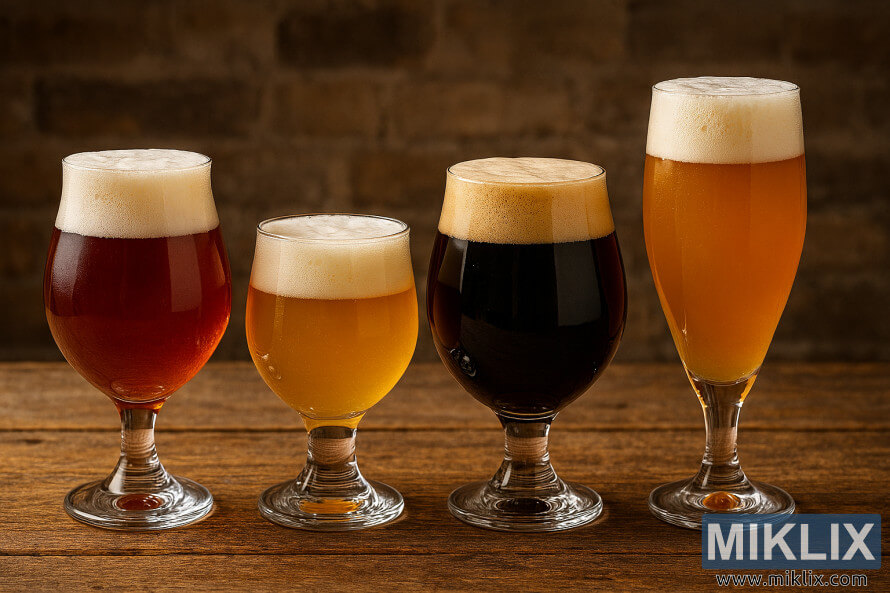
Click or tap the image for more information and higher resolutions.
Availability, Seasonality, and Sourcing Tips in the United States
Wyeast 3739-PC is part of Wyeast’s Private Collection and follows a seasonal release pattern. It is manufactured in spring, typically April through June, and may remain in distribution through December. Brewers who want to buy Wyeast 3739-PC USA should plan purchases around that window.
Retail availability often follows Wyeast’s quarterly cadence. Q3 Private Collection drops usually appear in July, with announcements through homebrew shops and print outlets like Experimental Brewing. For seasonal Wyeast private collection availability look to local shops and specialty online retailers during summer months.
Stocking varies by retailer. Wyeast lists the strain in its catalog among other liquid medium yeast products, but shops only carry it when their shipments arrive. When sourcing Belgian yeast, check multiple homebrew stores and reserve packs early to avoid sellouts.
Liquid yeast has limits on shelf life and shipping. Order early in the release window and arrange fast shipping to protect viability. On receipt, build a starter right away to boost cell count and reduce lag time.
- Monitor local homebrew shops for Private Collection listings.
- Sign up for retailer notifications and reserve packs when available.
- Prefer expedited shipping and prompt refrigeration on delivery.
- Prepare a starter immediately after receiving Wyeast 3739-PC.
For reliable sourcing Belgian yeast, join local brewing forums and club groups. Community posts often reveal which shops received Q3 drops and share leftover packs. This grassroots network helps when seasonal Wyeast private collection availability is tight.
When you decide to buy Wyeast 3739-PC USA, treat the process as time-sensitive. Seasonal releases are limited by design, so early planning, active checking of retailers, and quick handling on arrival yield the best results for a healthy fermentation.
Using Wyeast 3739-PC in Creative and Experimental Brews
Wyeast 3739-PC is a solid foundation for experimental brews due to its clean fermentation and high alcohol tolerance. Begin with a precise grain bill. Allow the yeast to complete primary fermentation before introducing other organisms or aging vessels.
Blending 3739-PC with Brett in a staged process is a common strategy. First, ferment with 3739-PC alone until the final gravity stabilizes. Then, transfer to secondary and introduce Brettanomyces for the slow development of funk and complexity. Alternatively, co-pitching a light Brett strain at bottling can introduce subtle character with less risk of over-fermentation.
Explore creative Belgian recipes that emphasize fruit and barrel notes. Cherries, apricots, and light oak complement 3739-PC's spicy esters well. Consider mixed fermentation with fruit additions during secondary to balance acidity and enhance aromatic depth.
- Plan sanitation and segregation: keep barrels and bright tanks separated when working with Brett or bacteria.
- Label and track batches carefully to avoid cross-contamination of future ales.
- Expect extended aging: mixed cultures can take months to years to reach desired balance.
Contest brewers and hobbyists have successfully used 3739-PC as a sacrificial Saccharomyces starter. It cleanly attenuates wort, allowing Brett or lactic bacteria to condition slowly for layered flavors. This approach maintains drinkability while adding complexity over time.
For breweries looking to innovate, blending 3739-PC with Brett provides a degree of control. Select Brett strains from trusted suppliers and use them sparingly. Small-scale trials are essential before scaling up in creative Belgian recipes that seek nuance over boldness.
Document pitch rates, fermentation temperatures, and aging periods. These records enhance repeatability in experimental brews with 3739-PC. They also guide adjustments in future batches.
Conclusion
Reviews of Wyeast 3739-PC highlight its reliability as a Belgian/farmhouse strain. It offers medium fruity esters, spicy phenols, and a dry finish with a hint of malt. Its 74–78% attenuation and tolerance up to about 12% ABV make it ideal for saisons, Flanders-style golden ales, and experimental Belgian projects.
The verdict on Flanders Golden Ale yeast, 3739-PC, is clear. It's a versatile, easy-to-manage strain with medium-low flocculation and good temperature flexibility. For higher gravity brews, a healthy starter and oxygenation are crucial to reach its full attenuation potential. Homebrewers have reported positive results when using it within its seasonal availability window.
Considering using 3739-PC? It's a top choice for dependable farmhouse character, strong attenuation, and the ability to tweak ester and phenol balance. Plan your purchases around its seasonal release windows. Treat 3739-PC as a flexible base for both traditional Belgian recipes and creative experimental ferments.
Further Reading
If you enjoyed this post, you may also like these suggestions:
- Fermenting Beer with Bulldog B19 Belgian Trapix Yeast
- Fermenting Beer with Wyeast 1098 British Ale Yeast
- Fermenting Beer with Wyeast 2105-PC Rocky Mountain Lager Yeast