
Image: Fermentation Temperature Effects on Golden Ale
Published: January 6, 2026 at 4:29:29 PM UTC
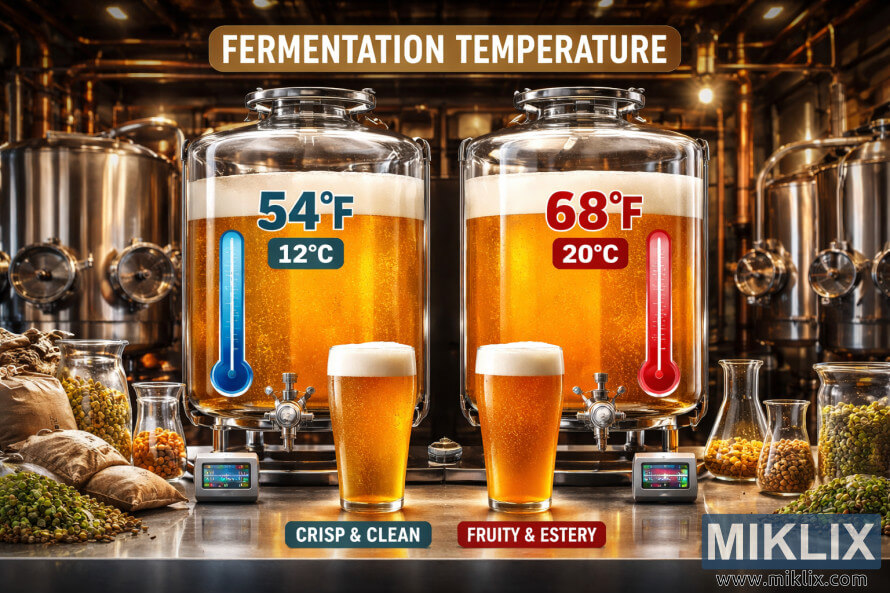
High-resolution brewery illustration comparing golden ale fermentation at cool and warm temperatures, highlighting crisp versus fruity flavor outcomes.
Available versions of this image
The image files available for download below are less compressed and higher resolution - and as a result of that, higher quality - than the images embedded in articles and pages on this website, which are more optimized for file size in order to reduce bandwidth consumption.
Regular size (1,536 x 1,024)
Large size (3,072 x 2,048)
Very large size (4,608 x 3,072)
Extra large size (6,144 x 4,096)
Comically large size (1,048,576 x 699,051)
- Still uploading... ;-)
Image description
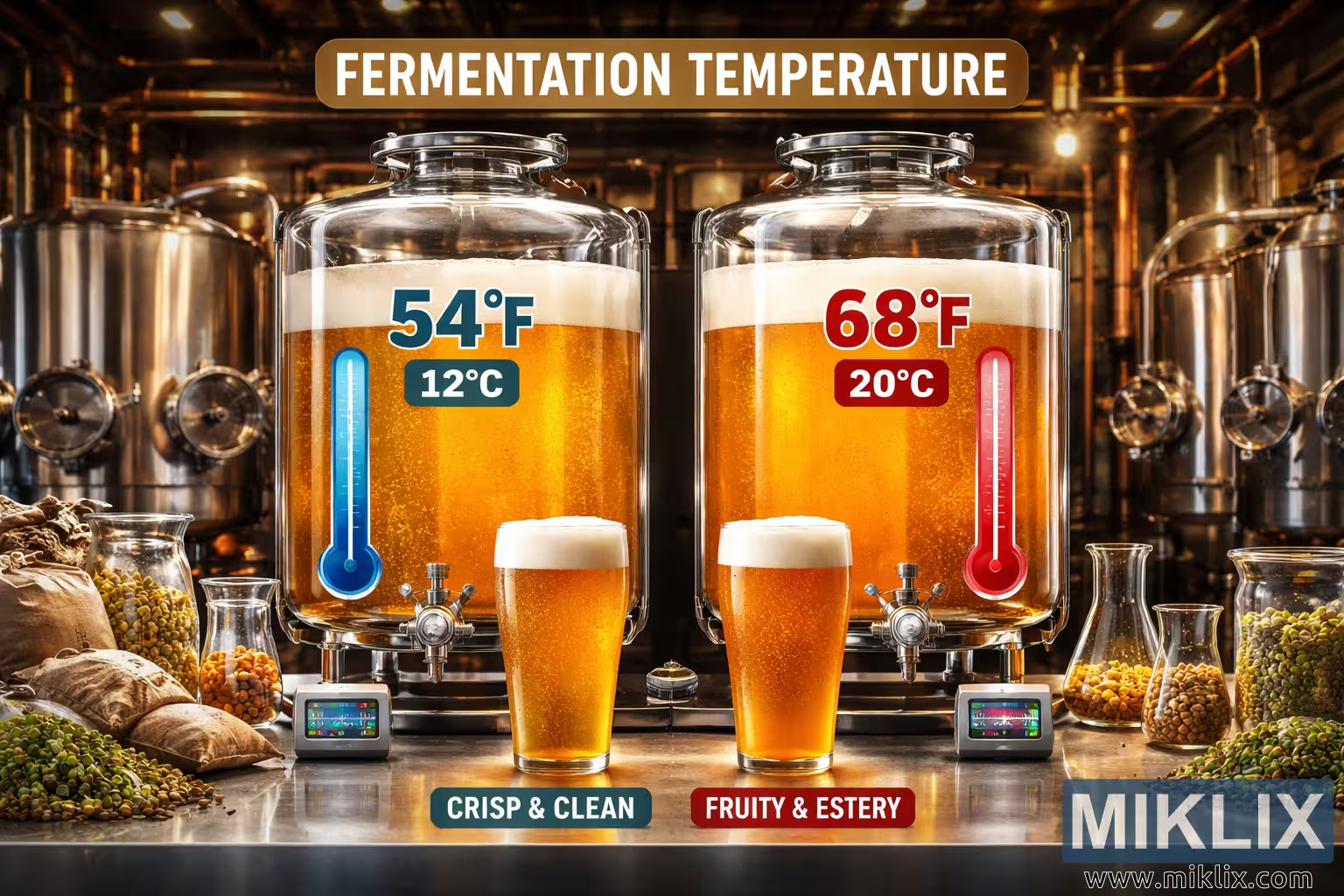
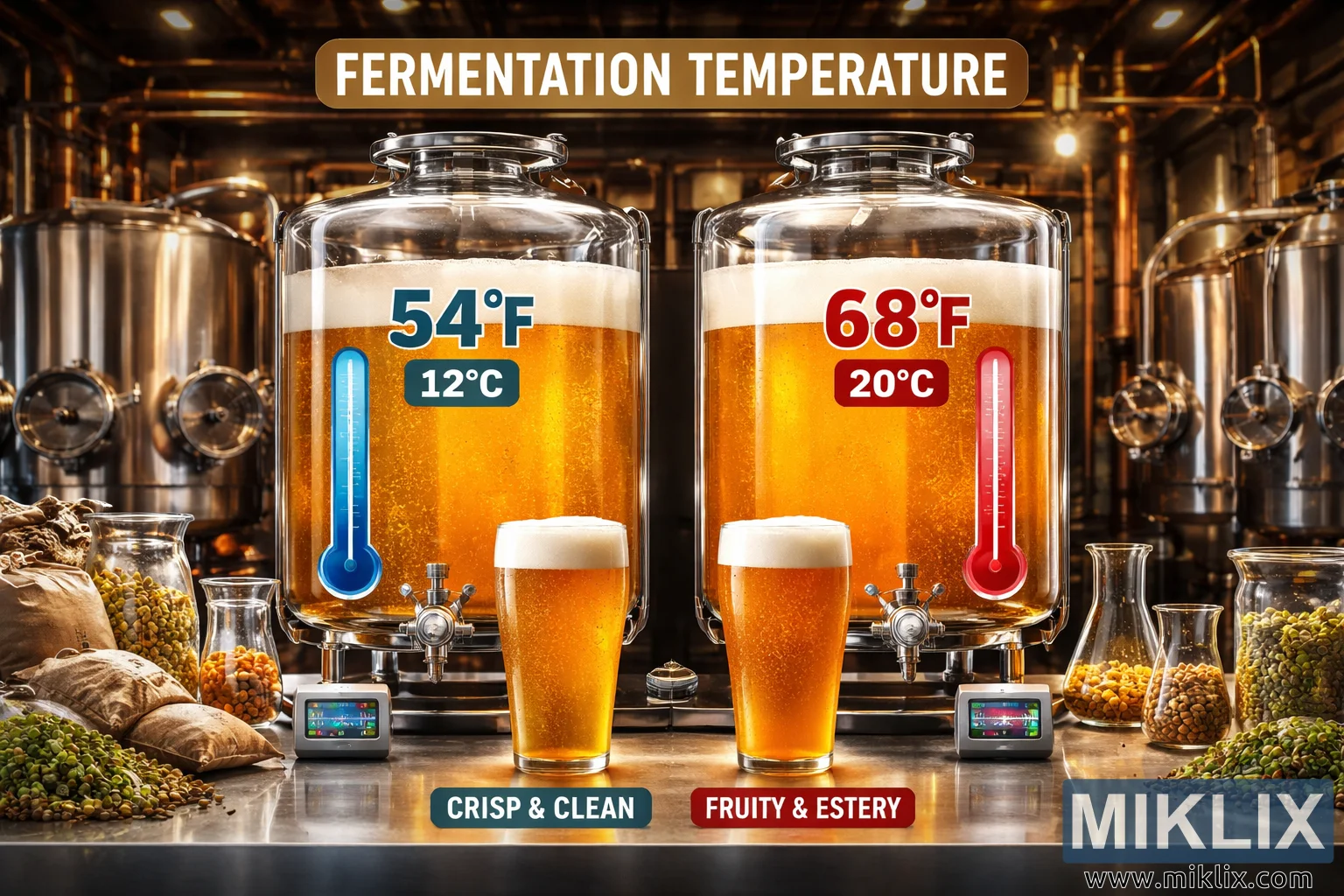
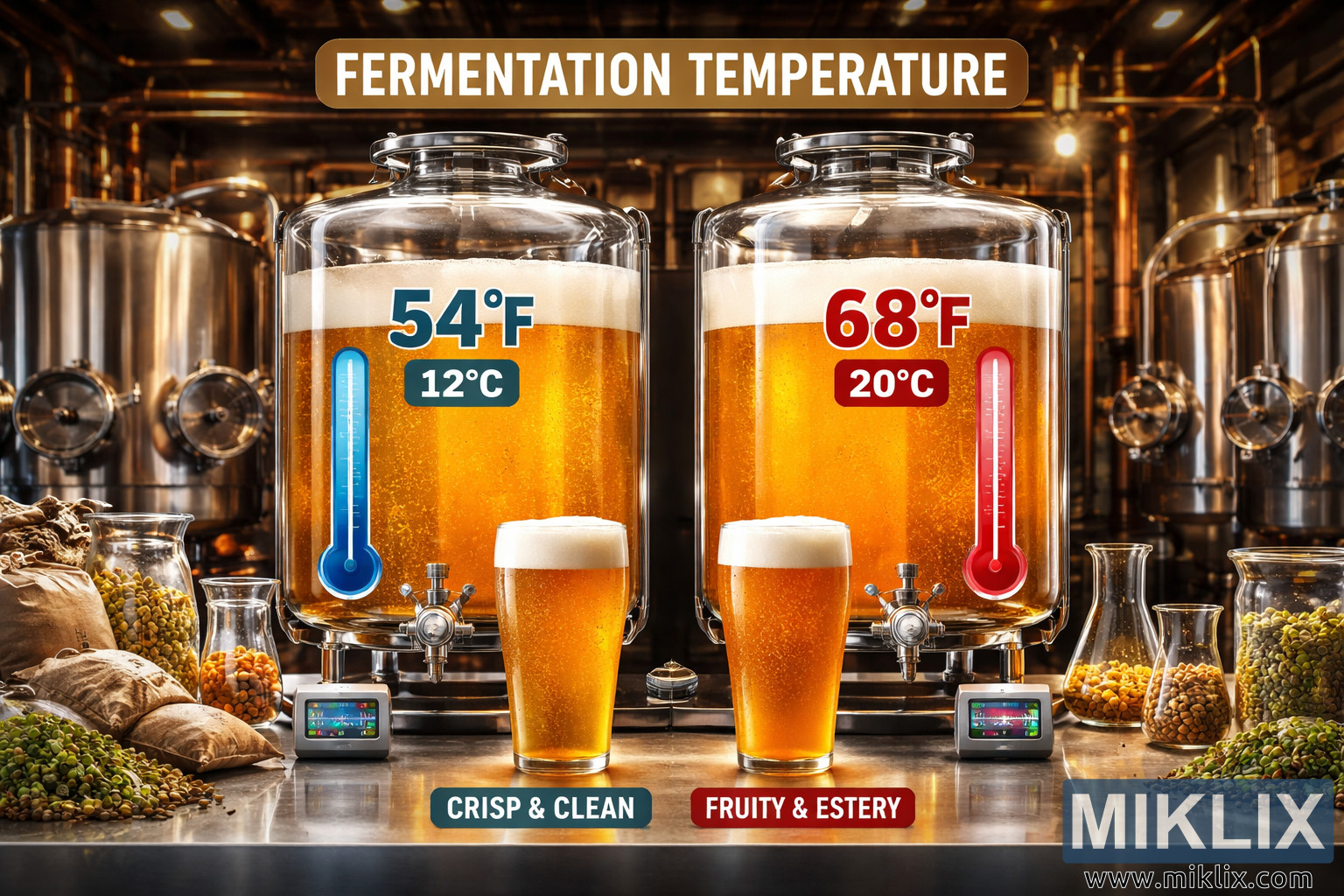
The image presents a visually striking, high-resolution, landscape-oriented scene set inside a modern craft brewery, designed to illustrate the effects of fermentation temperature on golden ale. At the center of the composition are two large, transparent glass fermentation tanks positioned side by side, each filled with glowing golden beer actively fermenting. The brewery environment in the background features polished stainless-steel vessels, copper piping, warm industrial lighting, and a clean, professional atmosphere that conveys precision and craftsmanship.
The left fermentation tank is labeled with a cool blue temperature indicator reading 54°F (12°C). Inside the tank, the beer appears exceptionally clear and bright, with fine, steady streams of carbonation rising gently through the liquid. A blue thermometer graphic reinforces the cooler fermentation condition. In front of this tank stands a tall, slender glass of golden ale topped with a dense white foam head, visually representing a crisp, clean flavor profile. Beneath the glass, a bold label reads “CRISP & CLEAN,” emphasizing the restrained ester production and refined character associated with cooler fermentation temperatures.
The right fermentation tank contrasts sharply, marked by a warm red temperature indicator reading 68°F (20°C). The beer within this tank has a slightly deeper golden hue, with more vigorous bubbling and visible fermentation activity. A red thermometer graphic highlights the warmer conditions. In front of this tank is a similar glass of golden ale, but with a subtly fuller appearance and a lively foam cap, suggesting enhanced aroma and complexity. Below it, a label reads “FRUITY & ESTERY,” communicating the expressive yeast-driven flavors typically produced at higher fermentation temperatures.
Across the foreground, brewing ingredients such as malted barley, hops, and laboratory-style glass vessels are carefully arranged, reinforcing the educational and scientific theme of the image. Digital control panels near the base of each tank suggest precise temperature monitoring and modern brewing technology. The overall lighting is warm and cinematic, with reflections on glass and metal surfaces adding depth and realism. The image functions as both an instructional visual and an artistic portrayal of brewing science, clearly communicating how fermentation temperature influences the sensory characteristics of golden ale.
The image is related to: Fermenting Beer with Wyeast 3739-PC Flanders Golden Ale Yeast