
Hops in Beer Brewing: Sylva
Julkaistu:
Viimeksi päivitetty: 31. toukokuuta 2026 klo 16.44.25 UTC
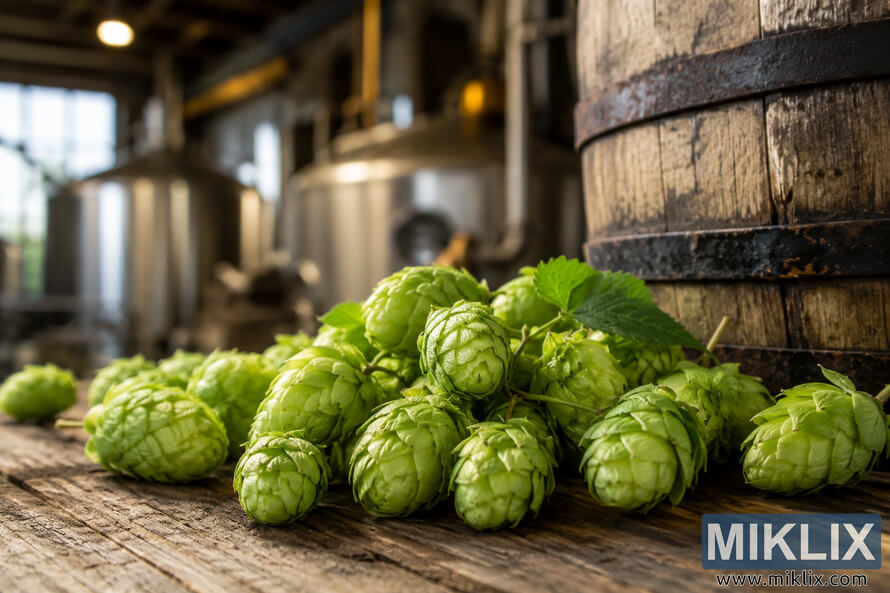
Sylva hops, bred in Australia, combine Saaz heritage with modern techniques, resulting in subtle herbal, forest, and floral notes. These characteristics make them perfect for pilsners, lagers, and lighter ales.
Hops in Beer Brewing: Sylva
Klikkaa tai napauta kuvaa saadaksesi lisätietoja ja korkeampia resoluutioita.
This guide will delve into the world of Sylva hops. We'll explore their origin, aroma, and oil composition. We'll also discuss their brewing uses, substitutions, and how to purchase and handle them. Our goal is to equip brewers with the knowledge to integrate Sylva hops into their recipes effectively.
Key Takeaways
- Sylva hops offer delicate Bohemian-style aroma with forest and floral accents.
- Australian Sylva is bred from Saaz lineage for modern brewing needs.
- Best used as a late addition or dry hop to preserve aroma.
- Alpha and oil metrics guide recipe design for pilsners and light lagers.
- Availability is growing through US homebrew shops and online suppliers.
What Are Sylva Hops and Their Origin
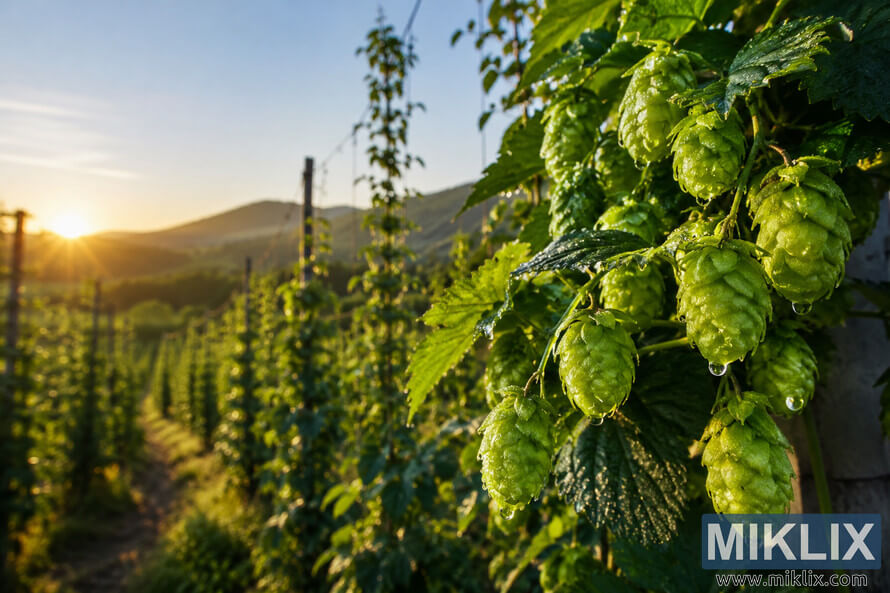
Sylva hops were bred in Tasmania for their aroma, perfect for lighter lagers and pilsners. Their origin is rooted in Australian breeding programs. These programs aimed to capture the Bohemian-style character while adapting to local climates.
In 1997, Hop Products Australia released the Sylva cultivar. This variety was bred for its aroma, moderate alpha acids, and reliable growth in Australian conditions. The Sylva breeding history showcases years of selection for these traits.
The Sylva hop's lineage traces back to classic Czech genetics. As a Saaz descendant, it retains the delicate, spicy, and herbal flavors of Bohemian hops. Breeders combined Saaz-line material with selections for southern hemisphere terroir. This resulted in a hop that maintains its soft character in Tasmania.
Regional naming can vary, but Hop Products Australia Sylva is listed on official cultivar sheets. Brewers and merchants may refer to it as AU Sylva, Australian Sylva, or even Silva.
- Breeding and release history: bred by Hop Products Australia in Tasmania, released 1997.
- Parentage: derived from Saaz genetics and described as a Saaz descendant adapted to Australia.
- Synonyms and regional names: listed as Hop Products Australia Sylva, AU Sylva, Australian Sylva synonyms, and sometimes spelled Silva.
Industry sources like Hop Products Australia, Brew Dudes, BeerMaverick, and HopUnion provide field notes. These confirm the variety's purpose. They show how a Saaz-line hop became part of Australian programs. Modern growers refer to the same cultivar under various regional names.
Klikkaa tai napauta kuvaa saadaksesi lisätietoja ja korkeampia resoluutioita.
Flavor and Aroma Profile of Sylva Hops
Sylva introduces a refined, noble character, ideal for delicate lagers and refined ales. It offers a soft woodland scent that subtly enhances the malt, inviting rather than overpowering. This aroma is an invitation to explore, not a loud declaration.
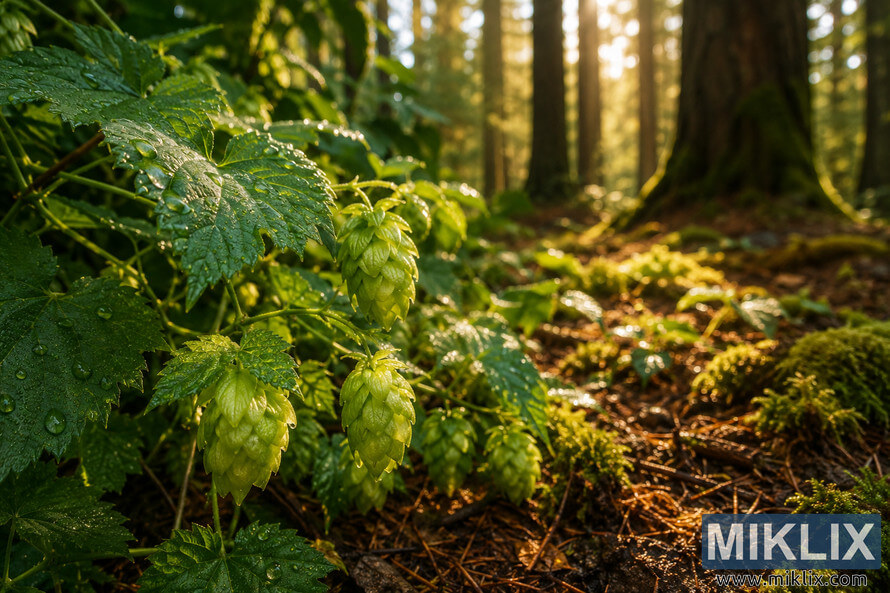
Forest and earth tones dominate the profile. Tasting panels often compare Sylva to forest floor hops, providing a leafy, loamy base. It shares a fresh-cut timber hop aroma with classic Saaz, adding a clean, woody touch without overwhelming the palate.
Floral Sylva notes emerge as light blossoms and gentle herbal scents. Unlike citrus or tropical fruit, it leans towards floral and herbal. This makes it perfect for delicate scenting, where bold, fruity aromas are not desired.
Its Bohemian-style hop character is evident in its overall impression. It offers a restrained spice and noble hop character reminiscent of old-world pilsners. Yet, it retains an Australian softness. This combination makes it an excellent match for Pilsner malt and clean lager yeasts.
Terroir influences subtle variations. Australian conditions sometimes introduce faint fruitiness, but its Saaz lineage remains evident. Brewers in the United States and Europe report consistent Saaz-like structure with minimal terroir-driven warmth.
- Primary: forest floor hops for earthy depth.
- Secondary: fresh-cut timber hop aroma for woody clarity.
- Accent: floral Sylva notes that lift the nose without stealing focus.
When planning late additions or dry hopping, leverage these traits. Sylva's hop aroma excels in scenarios where subtlety and balance are paramount. It enhances complexity with a measured noble touch, without overpowering other ingredients.
Klikkaa tai napauta kuvaa saadaksesi lisätietoja ja korkeampia resoluutioita.
Brewing Purpose and Typical Usage
Sylva is celebrated for its subtle noble-like aroma and foresty, floral notes. It's valued for preserving volatile oils and adding refined aroma without dominating the beer. Its best use is as a finishing and aroma hop, not for primary bittering.
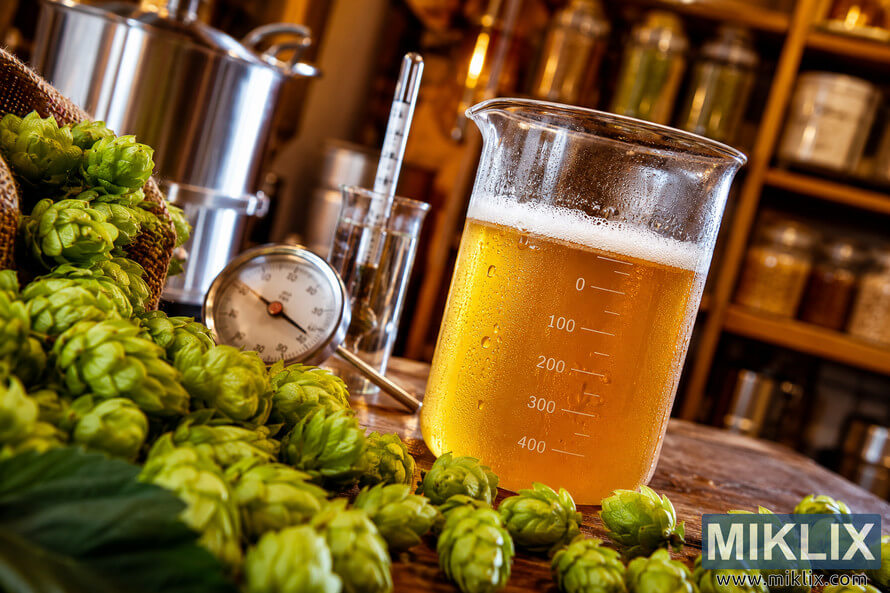
For late kettle additions, Sylva captures delicate top notes. Aim for the last 10–5 minutes of the boil for a herbal lift without heavy bitterness. For a more pronounced aroma, add it past the boil into a short hopstand.
Whirlpool Sylva additions extract aromatic compounds while limiting alpha acid isomerization. A whirlpool at 170–180°F for 15–30 minutes enhances woody and floral character. This method keeps bitterness low, perfect for lighter lagers and pilsners.
Sylva dry hop brings out fleeting esters and forest-floor nuance. Add during active fermentation for biotransformation or after fermentation for a fresher scent. Typical Sylva dry hop rates mirror those used with Saaz-style hops in pilsners and pale ales.
- Late hop additions Sylva: last 10–5 minutes of boil for gentle aroma.
- Whirlpool Sylva: hopstand at 170–180°F for 15–30 minutes to boost flavor.
- Sylva dry hop: 1–3 g/L depending on style and desired intensity.
For flavor versus bitterness, avoid early kettle additions unless extra IBUs are needed. Early use will isomerize alpha acids and increase bitterness. Reserve Sylva for post-boil stages when aroma hop timing is crucial.
Styles that benefit from this approach include pilsners, light lagers, California Common, and pale ales. Brewers following BeerMaverick and Brew Dudes find Sylva adds a refined, woody-floral layer without masking malt or yeast character.
Klikkaa tai napauta kuvaa saadaksesi lisätietoja ja korkeampia resoluutioita.
Alpha, Beta and Oil Composition for Sylva Hops
Sylva's brewing character is defined by its alpha and beta acid profile and unique oil composition. These elements guide brewers in determining bitterness, aroma, and how Sylva will perform in late additions or dry hopping.
Alpha acids in Sylva typically range from 4.0% to 7.3%, averaging around 5.6–5.7%. These values help estimate IBUs for wort additions. Expect slight variations from harvest to harvest and supplier to supplier.
Reported beta acids range from 3.0% to 7.0%, with most lab results around 5.0%. Sylva's beta acids are crucial for oxidation stability and long-term storage effects on bitterness perception.
- Alpha-beta balance: many batches show roughly a 1:1 to 2:1 ratio. This influences perceived bitterness and mouthfeel.
- Cohumulone: generally 20–28% of total alpha, often around 24%. Lower cohumulone tends to give a smoother bitterness sensation.
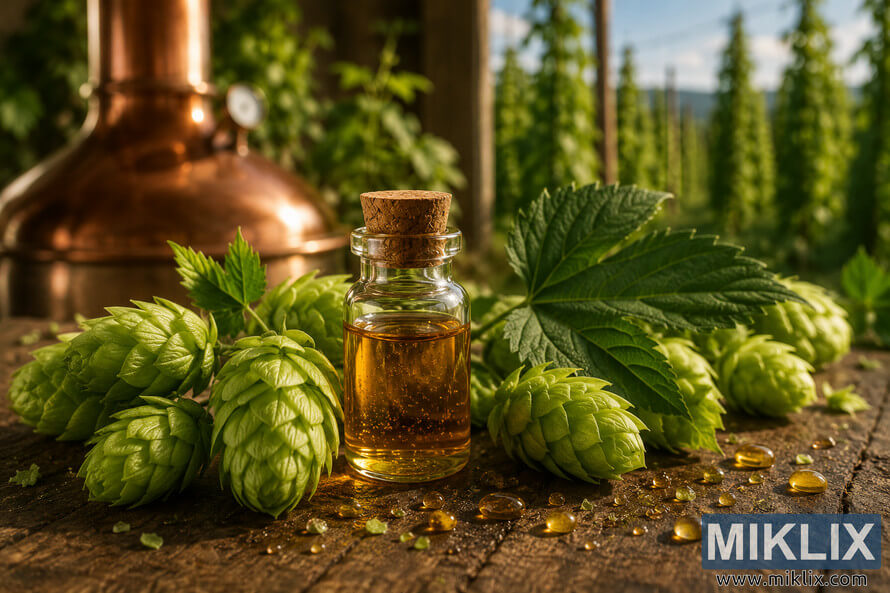
Total essential oil content commonly measures between 0.9 and 1.4 mL per 100 g, averaging near 1.0–1.2 mL/100 g. This oil volume supports Sylva’s delicate aroma without overpowering lighter lagers.
Oil breakdown shows a unique mix. Myrcene often accounts for 26–36%, while humulene is usually 18–27%. Other components include caryophyllene at about 5–8% and farnesene near 22–28%.
- myrcene humulene Sylva appears prominently in aroma-driven additions and informs choices for whirlpool and dry hop timing.
- Small fractions of β-pinene, linalool, geraniol, and selinene shape floral and spicy nuances in finished beer.
When designing recipes, plug the Sylva alpha acids and Sylva beta acids into your calculators and weight aroma expectations to the Sylva oil composition and hop oil breakdown. This approach yields predictable bitterness and preserves the hop’s forested, soft profile.
Klikkaa tai napauta kuvaa saadaksesi lisätietoja ja korkeampia resoluutioita.
How Sylva Hops Influence Bitterness and Mouthfeel
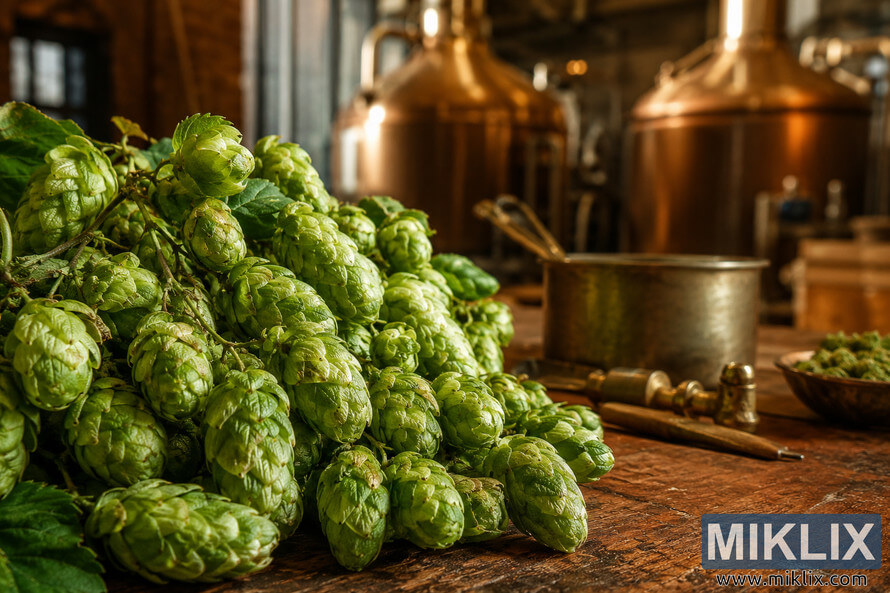
Sylva provides a mild bitter foundation and excels as an aroma hop. Its moderate alpha acids, ranging from mid-4% to 7%, allow brewers to adjust bitterness levels. It's perfect for adding a touch of bitterness or saving it for late additions to emphasize aroma. The mouthfeel Sylva imparts is aromatic and rounded, avoiding sharpness.
Alpha and beta acids play a crucial role in bitterness development in the kettle and during aging. Sylva's alpha-beta ratios typically range from 1:1 to 2:1. Ratios closer to 1:1 contribute to a more even fade of bitterness, characteristic of aroma hops.
The cohumulone content in Sylva is noteworthy for brewers. With cohumulone percentages between 20% and 28%, averaging around 24%, it leans towards smoother bitterness. This is in contrast to harsh, resin-forward bitterness.
The oil composition of Sylva further enhances its mouthfeel. It contains myrcene, humulene, and caryophyllene, offering a woody, herbal, floral character. These oils contribute to a tactile aromatic experience without introducing heavy astringency.
- Use early-boil additions when you want measurable Sylva bitterness with restraint.
- Choose late kettle, whirlpool, or dry hop additions for aroma-first results and minimal sharpness.
- Balance Sylva with malt and yeast choices that support subtle bitterness and floral mouthfeel.
For brewers aiming for smooth bitterness in lagers or delicate ales, Sylva is an excellent choice. Its cohumulone content and balanced alpha-beta ratio ensure gentle bitterness. This allows the aroma and mouthfeel of Sylva to take center stage.
Klikkaa tai napauta kuvaa saadaksesi lisätietoja ja korkeampia resoluutioita.
Beer Styles That Showcase Sylva Hops
Sylva hops offer a subtle, woody profile, perfect for beers needing a refined noble character. They are chosen for their ability to add nuance, avoiding the dominance of tropical or citrus flavors. This section explores the best styles for Sylva and offers pairing suggestions for recipe design.
Pilsner and light lagers benefit from Sylva’s Saaz-derived notes. For these beers, add Sylva hops late in the boil, whirlpool, or as a gentle dry hop. This approach highlights the soft herbal and forest tones, enhancing the crisp Pilsner malt aroma.
California Common and amber hybrids are well-suited for Sylva. In a Steam beer, Sylva adds a woody, slightly resinous edge. This complements the malt and caramel backbone without overpowering it, echoing Northern Brewer.
Pale ales gain subtle floral and timber layers with Sylva additions. For a Sylva pale ale, use pale malt and restrained bitterness. This allows the hop's nuance to shine between malt sweetness and yeast esters.
- Use small late additions for aroma focus.
- Pair with Pilsner malt, light Munich, or Vienna for depth.
- Blend with Hallertau or Saaz for a balanced noble bouquet.
Experimental pairings offer opportunities for modern craft beer with Sylva. Brewers at Sierra Nevada and Russian River have successfully used soft-wood hops in balanced blends. Incorporate Sylva in 10–20% of your hop bill to add complexity without overpowering the beer.
Practical tip: start small and taste through conditioning. Use Sylva in hop-forward beers for a subtle forest and herbal note background, rather than a citrus-dominated flavor.
Sylva Hops vs. Saaz and Other Similar Varieties
Sylva hops share similarities with classic Saaz in terms of aroma and restraint. However, they introduce an Australian twist. Brewers appreciate the same noble characteristics—earthy, herbal, and floral. Yet, they also notice forest and fresh-cut timber notes that distinguish Sylva. This makes Sylva a subtle alternative for those seeking a gentle, old-world profile with a hint of woodiness.
When comparing aroma and flavor, the differences become clear. Saaz is known for its spicy, herbal nobility with clean floral tones. Sylva mirrors this base but emphasizes forest-floor and timber impressions. Australian terroir can introduce minor fruity esters in Sylva, yet it remains a soft, restrained aroma hop.
- Sylva vs Saaz: Opt for Sylva when you desire Saaz-like character with a woody twist or when Saaz is hard to find. It's ideal for pilsners and lagers that require a softer noble touch.
- Sylva vs Hallertau Mittelfrüh: Choose Hallertau Mittelfrüh for a classic German noble aroma. Mittelfrüh is more floral and spice-forward than Sylva.
- Sylva vs Helga: Helga is a solid German-style substitute for a brighter, cleaner floral note. Sylva is earthier and woodier by comparison.
- Sylva vs Northern Brewer: Northern Brewer offers a stronger woody and resinous backbone. It's perfect for beers that demand a pronounced structural hop.
Consider the role you want these hops to play when making your decision. Sylva is excellent for delicate late additions and dry hops that echo Bohemian character. For a purer German noble aroma, Hallertau Mittelfrüh or Helga might be better. Northern Brewer shines in styles like California Common, providing a bold backbone.
Use hop variety comparison as a tool during recipe design. Sensory trials are key to understanding how Sylva's forest and timber notes complement your malt and yeast. Practical substitution lists from Brew Dudes, BeerMaverick, and HopUnion can guide adjustments. However, sensory trials remain the best way to achieve a balanced result.
Substitutions for Sylva Hops
When supply tightness or recipe tweaks necessitate a swap, Sylva hop substitutes come to the rescue. Select a substitute based on the desired aroma. Noble, earthy, or woody notes should be matched, with adjustments for alpha acid differences.
Experienced brewers rely on data-driven recommendations for a few reliable substitutes. Each hop offers a unique profile. Adjust quantities and timing to maintain the beer's character.
- Hallertau Mittelfrüh substitute — Ideal for a delicate noble and floral aroma. It brings soft spice and herbal notes akin to Sylva. Reduce the amount slightly if the alpha acids are higher.
- Saaz substitute — Saaz preserves the Bohemian spice and noble scent, thanks to its genetic parentage. Choose Czech Saaz for authenticity or US-grown Saaz for fresher green notes. It excels in pilsners and lighter lagers.
- Helga — Helga offers a gentle floral-earthy mix, mirroring Sylva's subtle aroma. It's perfect for late additions and dry hopping focused on aroma.
- Northern Brewer — Ideal for a firmer woody or evergreen edge. It suits California Common and beers that benefit from a stronger backbone than Sylva provides.
Practical substitution guidance ensures balance. For a delicate noble aroma, favor Hallertau or Saaz and use similar late-addition timing. For a stronger, more resinous outcome, use Northern Brewer and reduce late-hop weight if bitterness rises.
- Compare alpha acids; recalculate bittering and aroma additions.
- Match aroma intent rather than exact hop by hop weight.
- If aroma is subtle, increase dry-hop rate by 10–20% when using a milder substitute.
Brewers rely on substitution tools and community lists for performance ratings in real recipes. These resources often highlight Hallertau Mittelfrüh, Helga, Saaz, and Northern Brewer as top Sylva substitutes. Test small batches to fine-tune your preferred swap before scaling up.
Availability and Purchasing Sylva Hops
Sylva hops are a staple in the U.S. homebrew market, but their availability can shift rapidly. Homebrewers looking to buy Sylva hops should monitor both local stores and online retailers. This ensures they stay updated on Sylva availability in the USA and current prices.
Specialty homebrew stores, CraftBrewer listings, and large hop distributors are common places to find Sylva hops for sale. Retailers like Bell’s Beer Shop often list Sylva pellets and provide details on the crop year. When searching for Sylva hop suppliers, it's crucial to find vendors that offer lab certificates and specify the harvest year.
Most Sylva hops are sold as pellets. However, cone availability is often limited. Therefore, it's wise to plan your recipes around Sylva pellets or confirm cone availability before making a purchase. If you have a preference for a specific format, inquire about packaging options and minimum order quantities with the supplier.
The harvest year significantly impacts the quality of hops. Different crop years can exhibit notable variations in alpha, beta, and oil values. It's essential to check the lab numbers provided by suppliers to ensure they align with your recipe's requirements. When comparing suppliers, verify the alpha acid percentage, total oils, and crop year to avoid unexpected flavor or bitterness changes.
- Verify Sylva availability USA by checking inventory updates from multiple retailers.
- Request certificates of analysis when selecting Sylva pellets for precise dosing.
- Compare prices across sellers to find the best value for Sylva hops for sale.
Supply and price can fluctuate with the seasons. If you're planning a large brew or a special release, securing stock early from reliable Sylva hop suppliers is crucial. Maintaining a small reserve of pellets, stored correctly, helps manage year-to-year variability and ensures consistent brewing outcomes.
Why Sylva Hops Lack a Lupulin Powder Version
Sylva is not found in the lupulin and cryo lines of major suppliers. Yakima Chief Hops, BarthHaas, and Hopsteiner have introduced cryo or lupulin products for well-known varieties. However, Sylva is missing from these catalogs, making its lupulin availability non-existent from leading producers.
The focus of suppliers and market demand influence new cryo releases. Large brands focus on varieties widely used globally. Sylva's regional niche and limited demand likely delayed its cryo release. Breweries seeking concentrated options should be aware that Sylva lupulin powder is not currently available.
The absence of Sylva lupulin powder impacts brewing practices. Brewers must use whole-cone or pellet Sylva for whirlpool and dry hop additions. Pellets provide aroma and bitterness but contain more vegetal matter than cryo products. They also have a lower lupulin concentration per weight.
- Adjust dry-hop rates upward when using pellets to match aroma intensity expected from cryo-style products.
- Expect more trub and hop particulates during dry hopping compared with lupulin powders or Cryo hops.
- Consider contact time and temperature in whirlpool additions to extract desired volatile oils effectively.
Those aiming to achieve a cryo-style lift should blend Sylva pellets with higher-oil varieties or increase hop mass cautiously. Keep records of hop utilization and aroma outcomes to refine recipes over time. A future Sylva cryo hops or Sylva cryo release would alter these choices, but for now, Sylva lupulin powder is not commercially available.
Storage, Freshness, and Handling Best Practices
Proper care is essential to preserve Sylva hops' forest and floral notes. Store them in cold, dark places with minimal oxygen to keep volatile oils intact. Even small changes in handling can significantly impact the subtle aroma profiles.
To safeguard alpha and oil content, adhere to these storage best practices. Opt for vacuum-sealed packs or oxygen-barrier bags with oxygen scavengers. For short-term use, refrigerate. For longer storage, freeze at 0–4°F.
- Minimize oxygen exposure. Use opaque, airtight packaging to slow oxidation and maintain Sylva freshness.
- Avoid light and heat. Both speed oil loss and chemical breakdown that dulls the forest and timber notes.
- Weigh and dose quickly. Limit time at room temperature when unpacking and measuring pellets.
When storing pellets, handle them with care. Repeated thaw and refreeze cycles can strip away volatile components like myrcene and humulene. Open single-use pouches when possible and keep remaining product sealed with an oxygen absorber.
The impact of freshness on aroma is evident with Sylva. Older or oxidized hops lose delicate farnesene and caryophyllene cues, which dull the subtle bohemian and floral facets. Use the freshest harvest year available when those nuances matter most.
- Store vacuum-sealed or in oxygen-barrier bags with scavengers.
- Freeze for long-term, refrigerate for weeks of use.
- Handle pellets quickly and avoid repeated temperature swings.
Follow these tips for storing Sylva hops and handling pellets to retain that signature aroma. Consistent practice of hop storage best practices ensures brews align with the brewer's intent. It preserves Sylva freshness from supplier to fermenter.
Analytical Numbers Brewers Care About for Sylva
Lab reports are crucial for recipe decisions. Always read the Certificate of Analysis for each lot before scaling additions. Remember, typical values are just a starting point, not a promise.
When reviewing lab reports, focus on alpha acid, beta acid, total oil, and co-humulone percent. Also, examine the oil breakdown: myrcene, humulene, caryophyllene, and farnesene. These numbers are key for both bittering calculations and aromatic choices.
- Alpha acid %: use the reported alpha for bittering calculations when adding early in the boil. For Sylva alpha interpretation, rely on the specific crop value (commonly in the mid-4 to low-7% range).
- Beta acid %: not a direct bittering factor, yet beta levels affect aging and long-term aroma stability. Higher beta often means more resinous character.
- Total oil mL/100g: hop oil metrics Sylva tell you the hop’s aromatic potential. Use this for late additions and dry hopping plans.
- Cohumulone % of alpha: cohumulone Sylva values typically sit in the 20–28% band. Lower cohumulone favors a smoother perceived bitterness; factor that into IBUs when Sylva is a primary bittering hop.
For aroma-driven uses, weigh oil composition over alpha. Sylva’s humulene and farnesene drive woody and floral notes, even though some myrcene supports resinous or subtle citrus hints. Preserve these by adding late or dry hopping.
Practical steps for recipe design:
- Request the COA from your supplier for the harvest you buy. Expect year-to-year shifts.
- Calculate IBUs with the lot-specific alpha. Adjust boil times if you need gentler bitterness given cohumulone Sylva percentages.
- Choose late additions based on hop oil metrics Sylva, aiming to retain humulene and farnesene by minimizing high-heat exposure.
- Account for beta acids when planning aging shelf life and when blending for resinous backbone.
Reference lab sources such as BeerMaverick data, HopUnion reports, and Hop Products Australia when comparing numbers. Treat those figures as context for your COA-driven adjustments.
Practical Recipe Tips and Example Uses
Sylva is best used with caution. It's ideal as the main malt in delicate beers. Use hops sparingly, focusing on late additions and short dry hops. This approach preserves the beer's forest and Bohemian-like qualities, enhancing malt and yeast without overpowering them.
For a clean Sylva pilsner, aim for low bitterness and late additions. Add small amounts at 5–0 minutes, then whirlpool at 170–180°F (77–82°C) for 15–30 minutes. This method protects delicate oils, adding a soft herbal note.
For a 5-gallon (19-L) batch, use modest amounts of Sylva. Aim for 0.25–1 oz for pilsner aroma. For pale ales or California Common, increase to emphasize woody and herbal flavors. These amounts are common in experienced brewers' recipes.
- Late kettle: 5–0 min additions for subtle bitterness and freshness.
- Whirlpool: 170–180°F for 15–30 min to extract aroma without burning volatile oils.
- Dry hop: low rates, 0.25–1 oz per 5 gallons (7–28 g/19 L), with controlled contact time.
Keep Sylva dry hop rates low to avoid overpowering the beer. Start with the lower end and extend time only if desired. Longer contact times can bring out more green notes.
In lagers, pair Sylva with clean yeast like Wyeast 2124 or White Labs WLP830. For ales, choose a neutral strain to let Sylva's character shine. Use a simple malt bill to balance Sylva's flavor.
Blending Sylva with other hops offers versatility. Combine it with Hallertau or Saaz for a classic noble aroma. Add Northern Brewer for a firmer woody backbone. These blends can enhance the flavor spectrum when a single hop is insufficient.
Adjustments for other styles are straightforward. For pale ales, increase Sylva and shorten whirlpool time for brighter top notes. In session lagers, keep hops minimal and focus on mash and fermentation to enhance Sylva's forest aroma.
Follow practical handling: add pellets to the whirlpool after flameout, avoid extended exposure to high heat, and dry hop gently. These steps help preserve Sylva's best qualities without overwhelming the malt or yeast.
Conclusion
Sylva hops summary: Sylva, an Australian-bred variety, is a descendant of Saaz, introduced in 1997. It is celebrated for its subtle, forest-like aroma, reminiscent of fresh-cut timber and classic Bohemian character. Its primary use is in aroma work, not bittering. Therefore, it's best to add it late in the kettle, whirlpool, and during dry-hopping to preserve its delicate profile.
For U.S. brewers, Sylva is ideal for pilsners, light lagers, California Commons, and restrained pale ales. Pair it with clean lager yeasts or versatile ale strains. Always check the supplier's COAs and harvest year. Store pellets cold and oxygen-free to maintain the volatile oils.
Choosing Sylva hops means being aware of availability and substitutes. Pellets are available through U.S. homebrew and online suppliers. Common substitutes include Hallertau Mittelfrüh, Helga, Saaz, and Northern Brewer. Currently, no lupulin or cryo variant is offered by major suppliers. Adjust addition rates to achieve the woody, noble aroma Sylva is known for.
FAQ
What are Sylva hops and where do they come from?
Sylva is an Australian-bred aroma hop developed by Hop Products Australia in Tasmania. It was released in 1997. Bred as a Saaz-derived variety, it combines Bohemian/Czech noble character with adaptation to Australian growing conditions.
What are common synonyms or regional names for Sylva?
Sylva is known as Australian Sylva, AU Sylva, and sometimes spelled Silva. It's informally called “Southern Saaz” by some brewers, though official sources use Sylva or AU Sylva.
How would you describe Sylva’s flavor and aroma profile?
Sylva offers forest-like notes, reminiscent of fresh-cut timber and forest floor. It has a restrained bohemian spice profile. The aroma is herbal, woody, and floral, with less fruity or citrus notes.
Does Australian terroir change Sylva’s character compared to Saaz?
Yes, Australian terroir and breeding give Sylva slight variations. It may have mild fruity hints. Yet, the dominant Saaz-like noble, earthy, and floral traits remain intact. The result is subtle and complex.
What is Sylva primarily used for in the brewhouse?
Sylva is marketed as an aroma hop. It's best used for late-kettle additions, whirlpool/hopstand, and dry hopping. This preserves volatile oils. Its strength lies in aroma and nuance, not primary bittering.
When should I add Sylva for aroma versus bitterness?
For aroma and flavor, add Sylva late in the boil (last 10–5 minutes), in the whirlpool (170–180°F for 15–30 minutes), or as a dry hop. Early additions will increase bitterness by isomerizing alpha acids, but that sacrifices the delicate oils brewers typically want from Sylva.
What are typical alpha and beta acid ranges for Sylva?
Reported alpha acids range roughly 4.0–7.3% with averages near 5.6–5.7%. Beta acids are commonly listed between 3.0–7.0% with averages around 5%. Expect variation by crop year and supplier.
What is the total oil content and primary oil breakdown for Sylva?
Total oil content is typically 0.9–1.4 mL/100g (avg ~1.0–1.2). Oil breakdown tends to show myrcene ~26–36% (avg ~31%), humulene ~18–27% (avg ~22.5%), caryophyllene ~5–8% (avg ~6.5%), and farnesene ~22–28% (avg ~25%), with trace amounts of β-pinene, linalool, geraniol, and selinene.
How do alpha-beta ratio and cohumulone affect Sylva’s bitterness and mouthfeel?
Sylva’s alpha-beta ratio typically sits around 1:1 to 2:1. Cohumulone is reported between about 20–28% (avg ~24%). This suggests a smoother perceived bitterness and an aromatic mouthfeel—woodsy and herbal rather than sharp or resinous.
Which beer styles work best with Sylva hops?
Sylva shines in pilsners and light lagers where a noble-like, restrained aroma is desired. It also fits California Common and certain pale ales when a subtle woody/herbal character is appropriate. Use it where nuance matters more than citrus or tropical intensity.
How does Sylva compare to Saaz and other similar varieties?
Sylva closely mirrors Saaz’s Bohemian noble traits—earthy, floral, and herbal—but often emphasizes forest and fresh-cut timber notes more strongly. It may show minor fruity nuances from Australian terroir. Compared to Hallertau Mittelfrüh or Helga, Sylva remains more Saaz-like; Northern Brewer is woodier and stronger if you need a firmer backbone.
What are recommended substitutes for Sylva?
Hallertau Mittelfrüh, Helga, Saaz (Czech or US-grown), and Northern Brewer are common substitutes. Choose Hallertau or Saaz for delicate noble lift, and Northern Brewer if you want a more pronounced woody backbone. Adjust rates to account for alpha acid and oil differences.
Where can U.S. brewers buy Sylva hops and in what formats?
Sylva is available from U.S. homebrew shops and online suppliers as hop pellets; whole cones may be less common. Retailers and national suppliers list Sylva intermittently—check Bell’s Beer Shop, CraftBrewer listings, and other hop resellers for availability and crop year details.
Why isn’t there a cryo or lupulin powder version of Sylva?
As of available sources, major lupulin/cryo producers such as Yakima Chief (Cryo), BarthHaas (Lupomax), and Hopsteiner have not released a Cryo/lupulin product for Sylva. Limited demand and commercial focus on higher-volume varieties likely explain the absence.
How does the lack of a lupulin product affect brewing with Sylva?
Without a cryo product, brewers must use pellets or cones. That means more vegetal material per weight and lower lupulin concentration versus Cryo hops, so increase dry-hop rates modestly and be prepared for more trub and hop matter during transfer and packaging.
What are best practices for storing Sylva hops to preserve aroma?
Store pellets vacuum-sealed or in oxygen-barrier bags with oxygen scavengers. Keep hops cold and dark—refrigerate short term and freeze (0–4°F) for long-term storage. Minimize oxygen exposure and avoid repeated freeze-thaw cycles to protect volatile oils like myrcene, humulene, and farnesene.
How does freshness impact Sylva’s aroma compounds?
Sylva’s delicate forest, woody, and floral oils are prone to oxidation and volatilization. Stale hops lose the subtle nuances that define Sylva, leaving a flatter or greener profile. Use the freshest harvest year available and check supplier COAs to match recipe expectations.
What lab metrics should brewers request for Sylva purchases?
Ask suppliers for alpha acid %, beta acid %, total oil mL/100g, co-humulone %, and a basic oil breakdown (myrcene, humulene, caryophyllene, farnesene). A crop-year certificate of analysis (COA) helps you scale additions and predict aromatic impact.
How should I design recipes using Sylva for pilsners and lagers?
Use Pilsner malt as the base and keep hopping restrained. Add Sylva late in the boil (5–0 minutes), in the whirlpool at 170–180°F for 15–30 minutes, or as a low-rate dry hop. Typical small-batch 5-gallon examples range from 0.25–1 oz total for subtle aroma; adjust for desired intensity and verify COA numbers.
What dry-hop rates and contact times work best for Sylva?
Because Sylva is subtle, use modest dry-hop rates—roughly 0.25–1 oz per 5 gallons (7–28 g/19 L) depending on desired lift. Longer contact extracts more green and woody compounds; balance time to avoid overly vegetal extraction. Lower rates and shorter times preserve the delicate forest and floral notes.
Any practical tips for blending Sylva with other hops?
Blend Sylva with Hallertau or Saaz to enhance classic noble lift, or add a touch of Northern Brewer for a firmer woody backbone. Use Sylva as a finishing accent rather than the dominant hop to maintain nuance. Adjust amounts to account for alpha acid and oil balance of partners.
How should I adjust recipes if supplier COAs differ from published averages?
Scale additions based on the supplier’s reported alpha acids for IBUs and on total oil and oil breakdown for aroma impact. If alpha is higher than expected, reduce early additions; if oils are lower, slightly increase late additions or dry hop to reach the intended aromatic target.
Where can I find authoritative information and data on Sylva?
Key sources include Hop Products Australia breeding notes, BeerMaverick flavor and lab data, Brew Dudes commentary, HopUnion profiles, and supplier COAs from retailers like Bell’s Beer Shop and CraftBrewer. These sources provide breeding history, oil breakdowns, and usage guidance.
Lisälukemista
Jos pidit tästä postauksesta, saatat pitää myös näistä ehdotuksista:
- Humalat oluen valmistuksessa: Coigneau
- Humalat oluenpanossa: Admiral
- Humalat oluen valmistuksessa: Riwaka