
Hops in Beer Brewing: Golding (BC)
出版された:
最終更新日 2026年5月20日 19:47:11 UTC
Golding (BC) hops, grown in the Pacific Northwest, are a descendant of the famous East Kent Goldings. They originated in British Columbia and are now cultivated in Washington and Oregon. These hops are prized for their gentle floral and spicy notes, essential for traditional English-style ales.
Hops in Beer Brewing: Golding (BC)
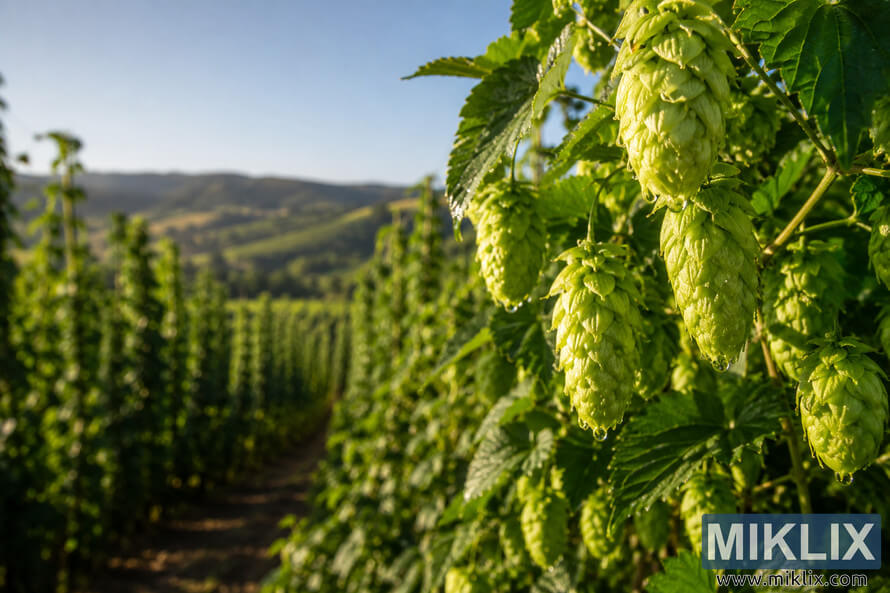
画像をクリックまたはタップすると、詳細と高解像度が表示されます。
In both homebrewing and professional brewing, Goldings hops add unique flavors. They bring cream, caramel, cardamom, and honey notes without dominating modern recipes. With alpha acids around 4–6% and total oil in a low 0.4–1.0% range, they are ideal for aroma-forward late additions and delicate dry hops.
Key Takeaways
- Golding (BC) hops are a Pacific Northwest-grown East Kent Goldings descendant with classic English aroma.
- Alpha acids typically range 4–6%, with low total oil (0.4–1.0%) suited for aroma additions.
- Flavor notes include cream, caramel, floral, spicy, cardamom, and honey.
- Available to homebrewers as small-pack hop pellets and to brewers in larger wholesale formats.
- Commonly used by American craft brewers to impart traditional character without overpowering modern hop blends.
Overview of Golding (BC) hops
Golding (BC) hops bring a clean, English-style aroma that many U.S. brewers desire. This variant started as U.S. Golding propagated from English stock. It then adapted to North American climates. Brewers value it for its balanced floral and gentle spice notes, perfect for traditional ales and modern craft beers.
Origins and lineage
The Golding (BC) origin story begins with plantings in British Columbia. Growers introduced cuttings and selections from English lines to BC nurseries. Over time, the variety flourished and spread to Washington and Oregon. The early 1990s saw a surge in Pacific Northwest hops production.
How Golding (BC) relates to East Kent Goldings
Golding (BC) is a direct descendant of the renowned East Kent Goldings, not the original Canterbury stock. The East Kent Goldings lineage dates back to the late 18th century, with selections like Cobb and Early Choice. The East Kent name is protected in the EU, so American-grown plants are identified as U.S. Goldings. Yet, they maintain that classic English aroma profile.
Why Golding (BC) matters for American craft brewers
The U.S. Golding history is a tale of English hop character crossing the Atlantic and adapting to new soils. When East Kent Goldings are hard to find, Golding (BC) steps in with its reliable floral and honeyed notes. The Pacific Northwest's hops infrastructure ensures a steady supply. This makes Golding (BC) a practical choice for session beers, bitters, and pale ales that need subtle hop aroma without strong bitterness.
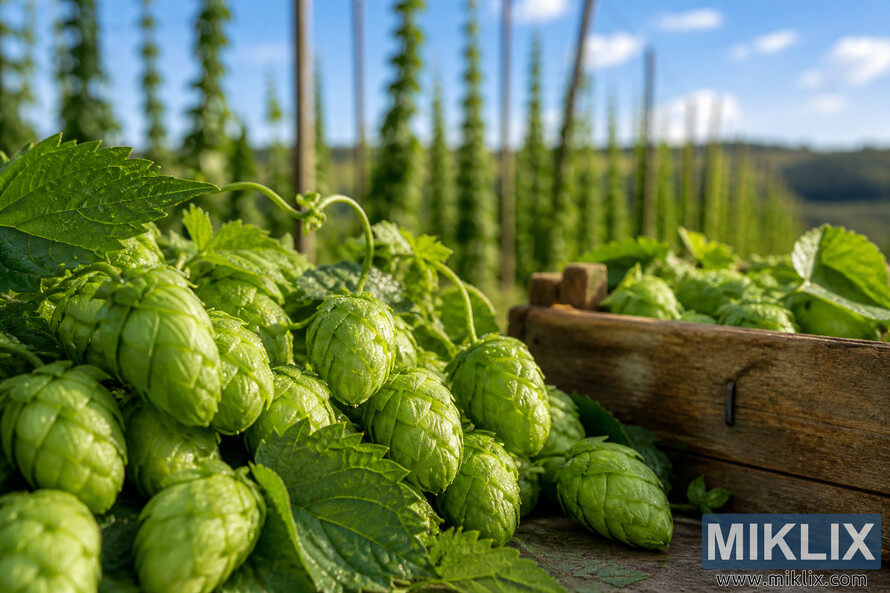
画像をクリックまたはタップすると、詳細と高解像度が表示されます。
Flavor and aroma profile of Golding (BC) hops
The Golding (BC) hop is known for its mild, balanced character, making it perfect for malt-forward ales. Its restraint allows delicate notes to shine above a soft malt base. This makes it ideal for session beers and traditional English-style brews, where subtlety is key.
Cream and caramel notes
Golding (BC) hops offer subtle cream and caramel hints, complementing biscuit and toffee malts. These cream caramel hops add depth without overpowering yeast esters. They are best used in late additions to preserve the soft malt complements.
Floral and spicy characteristics
The hop has a gentle floral tone with a faint peppery edge. It's described as floral spicy hops that enhance a beer's aroma without dominating it. This subtle floral quality is great for blending with noble or continental varieties.
Subtle sweet and herbal accents like cardamom and honey
Delicate sweet and herbal nuances, reminiscent of cardamom and honey, are present beneath the main notes. These cardamom honey hops add a faint sweetness and herbal lift. They are perfect for aroma-focused additions and dry hopping, aiming for nuance.
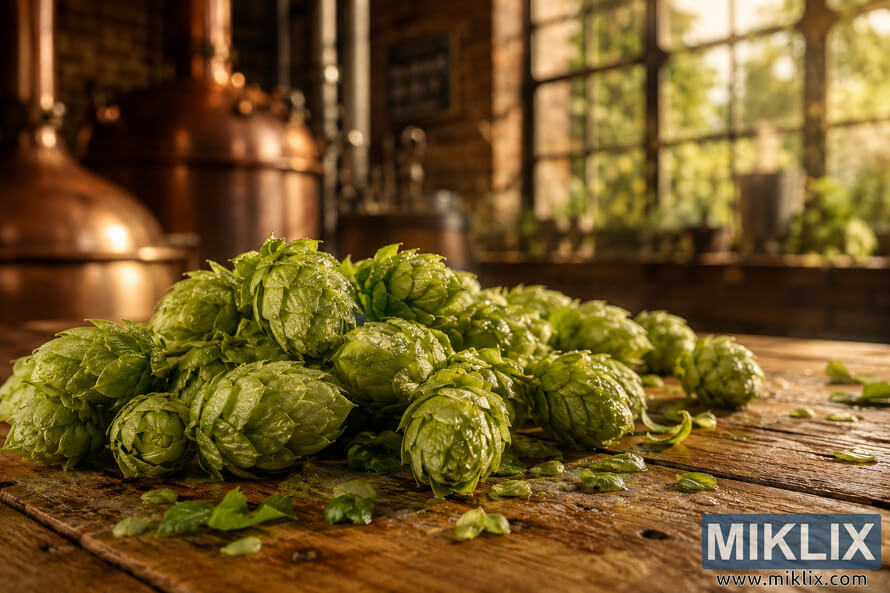
画像をクリックまたはタップすると、詳細と高解像度が表示されます。
Alpha and beta acids in Golding (BC) hops
Understanding the acid profile is crucial for brewers when using Golding (BC) in recipes. The balance between bittering potential and aroma retention is key. This balance makes Golding (BC) a standout in English-style beers and light ales.
Typical alpha acid range and implications for bitterness
Golding (BC) typically has alpha acids ranging from 4% to 6%. This moderate range means Golding alpha acids contribute a gentle, rounded bitterness. It's not a harsh bitterness.
In session ales and traditional bitters, Golding (BC) adds balance without overpowering the malt. For those seeking stronger bitterness, pairing Golding (BC) with a higher-alpha hop is advisable.
Beta acids and role in aroma stability
Golding beta acids usually range from 2% to 3%. These acids don't contribute much bitterness during the boil.
However, they play a significant role in aroma stability over time. With lower beta acid levels, Golding hops support a delicate, long-lasting floral and honey aroma. Proper storage and handling are essential to preserve this.
- Keep cold storage to preserve the volatile oils that work with Golding beta acids.
- Minimize oxygen exposure to slow oxidative changes that affect aroma stability hops.
- Use late additions or dry hopping to highlight the hop's gentle profile while limiting loss of aroma.
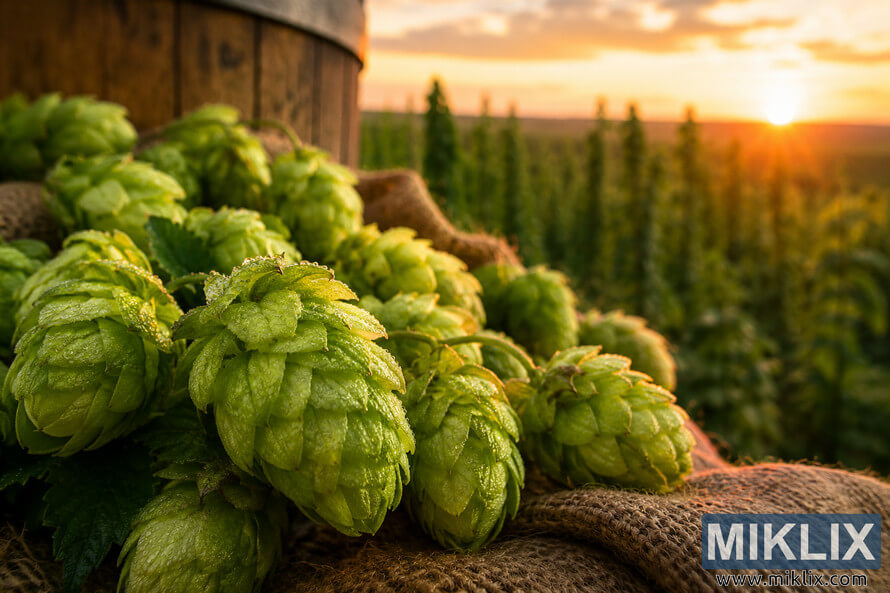
画像をクリックまたはタップすると、詳細と高解像度が表示されます。
Essential oils and hop chemistry
Golding (BC) exhibits a complex yet restrained oil profile, contributing to its soft floral and herbal aroma. Brewers often turn to Golding hop oils for planning late additions and dry hopping. This is to achieve a subtle scent, rather than a bold citrus or tropical flavor.
Myrcene content and its contribution to aroma
Myrcene Goldings typically make up about 25–35% of the variety's oil. This terpene imparts green, resinous notes with a faint fruity edge. It supports the hop's floral backbone, adding restrained brightness rather than overpowering fruitiness.
Humulene and caryophyllene proportions and flavor impact
Humulene often represents 35–45% of the oil fraction, delivering woody, herbal, and lightly spicy tones. These tones define the classic English-style scent. Caryophyllene Golding appears at roughly 13–16%, contributing a peppery bite that rounds out the herbal profile.
Low total oil range and what that means for aroma-forward use
Total oil Golding hops sit low, near 0.4–1.0%, making them less oil-dense than many modern aroma hops. This low total oil calls for brewers to use larger late additions or heavier dry-hop rates for a pronounced aroma. The result is a nuanced, layered scent that preserves the variety's delicate charm.
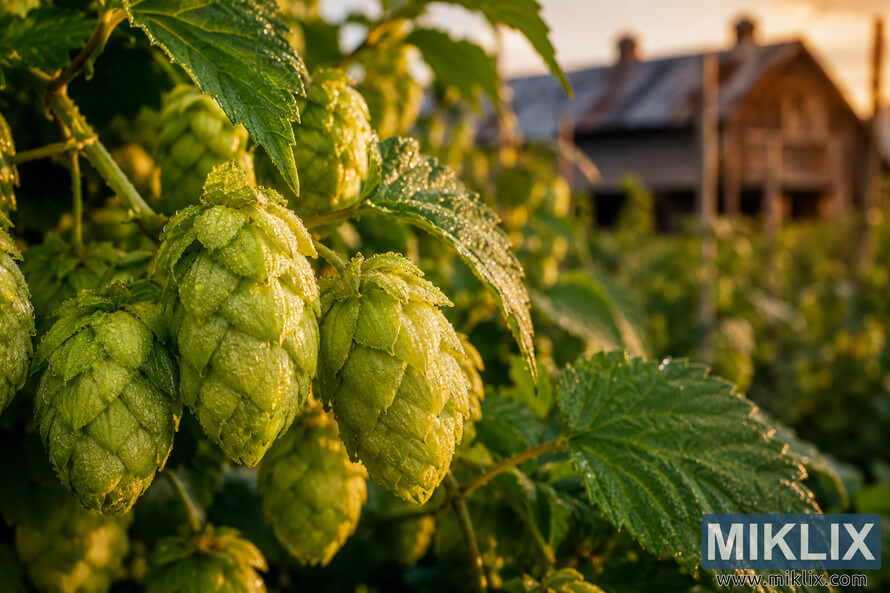
画像をクリックまたはタップすると、詳細と高解像度が表示されます。
Agronomic background and cultivation challenges
Golding hops' journey to North America is a story of quiet agricultural adaptation. Growers in the region adapted an English aroma variety to new soils and climates. This adaptation shaped modern practices in Golding cultivation BC and early U.S. trials. The transition north and across state lines influenced vine training, irrigation, and harvest timing.
History of cultivation in British Columbia
In British Columbia, commercial propagation of the U.S. Golding type started. Growers tested East Kent-derived plants for aroma retention and yield stability. These early BC fields proved the variety could offer classic English floral and honey notes outside England.
Transition to Pacific Northwest production in Washington and Oregon
By the early 1990s, production moved to Washington and Oregon. Larger hop farms in the Pacific Northwest offered scale, irrigation, and established pest monitoring. This shift helped establish Golding Pacific Northwest as a reliable source for American brewers.
Common growing challenges for Golding varieties
Golding varieties require close attention in the field. Sensitivity to local climate can lead to uneven cone development and variable yields. Farmers must fine-tune pruning, trellis height, and harvest windows to preserve delicate aromatics.
- Pest and disease pressure requires routine scouting and timely interventions.
- Soil drainage and fertility affect cone weight and oil composition.
- Variable yields mean growers balance acreage against price and market demand.
Despite challenges, consistent brewer demand keeps producers refining their techniques. Careful site selection and hands-on management are key to producing the aroma profile brewers desire from growing Goldings in the region.
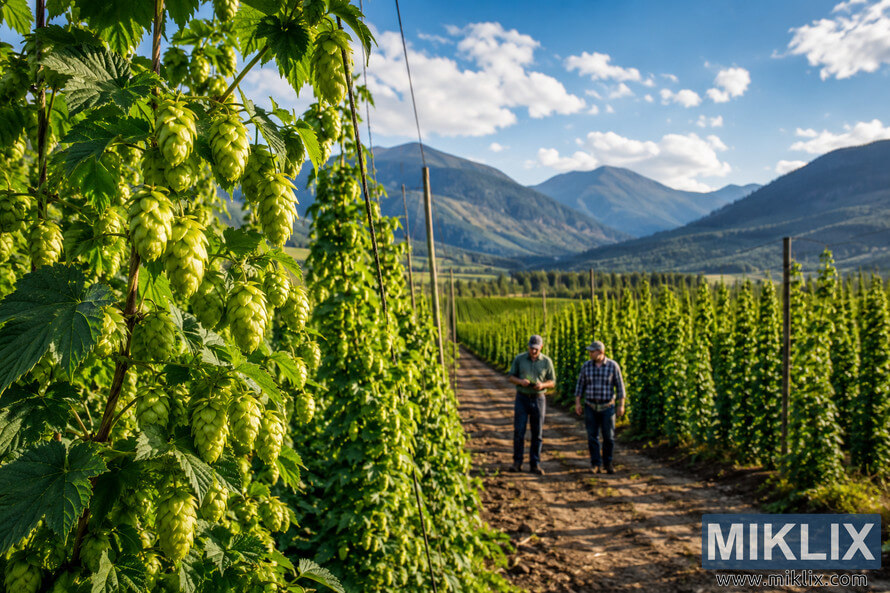
画像をクリックまたはタップすると、詳細と高解像度が表示されます。
Terroir and how Pacific Northwest conditions shape Golding (BC)
Golding (BC) exhibits terroir-driven variations that brewers must consider when sourcing hops from Washington, Oregon, or former British Columbia plantings. The local climate, sunlight patterns, and soil at the field level all influence the balance and expression of essential oils.
Influence of sunlight, UV, and climate consistency
In the Pacific Northwest, the daylength extends well into summer. This prolonged daylight impacts photosynthesis timing, potentially increasing certain terpene precursors. This results in subtle variations compared to East Kent Goldings, which benefit from a more consistent peninsula climate and UV exposure, preserving their classic floral profile.
UV exposure affects hop cones by promoting the formation of aromatic compounds and stressing plants in ways that alter oil ratios. This often leads to Pacific Northwest hops terroir yielding brighter, more resinous top notes when UV levels peak late in the season.
Soil and microclimate effects on aroma expression
Soil composition is crucial. Different soils like sandy loam, volcanic ash, and heavier clay influence nutrient availability and water retention. These factors affect myrcene and humulene proportions, resulting in variations in floral, spicy, or honeyed notes across farms.
Microclimates within a single valley can introduce small but significant aroma shifts. Brewers purchasing Golding (BC) should anticipate variations between farms rather than expecting an exact replica of East Kent character. Understanding the soil microclimate at the parcel level aids in predicting how a lot will behave in late additions or dry hopping.
- Longer Pacific daylight can boost certain terpenes that favor lift in aroma.
- Higher seasonal UV influence hops may enhance resinous, citrus-lifted notes.
- Soil microclimate hops determine moisture and nutrient stress, shaping oil concentration.
Comparison with East Kent Goldings and other Golding clones
Golding (BC) has its roots in the classic English Goldings family. This makes a comparison with traditional East Kent varieties essential for brewers and growers. We explore genetic links, the subtle sensory differences among Golding clones, and the significance of origin. The East Kent name carries legal protection, making origin crucial.
Golding (BC) comes from the East Kent lineage, sharing traits like soft floral top notes and gentle spice. The shared genetics lead to similar aromas. However, plant selection and regional growing conditions introduce variations in oil composition and flavor.
Differences between Cobb, Early Choice, Mathon, and Eastwell clones (context)
- Cobb: Offers a rounded, mellow floral profile with steady yields and reliable agronomic behavior.
- Early Choice: Shows earlier maturity and slightly brighter citrus-lifted florals, prized for late additions.
- Mathon: Displays a delicate sweetness and honey-like accent, ideal for session ales and traditional bitters.
- Eastwell: Carries a firmer herbal backbone and subtle spice, useful in blends.
Growers like Antony Rudgard-Redsell describe these as "all Goldings but slightly different." This helps brewers understand the nuances without a radical change in base character. When considering substitutions or blends, it's important to recognize each clone's floral, sweet, herbal, or spicy tilt.
Protected Designation of Origin for East Kent and how Golding (BC) differs
The European Commission granted PDO East Kent status in 2009. This limits the East Kent Goldings name to hops grown in southeastern Kent. Golding (BC) cannot be marketed under the East Kent name since it grows outside that zone.
Origin influences aroma differences. Pacific Northwest soil, sunlight, and seasonal rhythm alter oil ratios compared to Kent. Brewers will find a familiar English character in Golding (BC) with distinct Pacific Northwest nuances. These nuances set it apart from PDO East Kent hops.
Classic beer styles that benefit from Golding (BC) hops
Golding (BC) hops offer a subtle floral and herbal note, perfect for a variety of brews. They are chosen for their ability to enhance malt and yeast without overpowering them. This variety acts as a gentle foundation in many classic recipes.
English ales and bitters benefit from Golding (BC) with its gentle floral lift and soft caramel notes. In bitters, it adds aroma without overshadowing the English malt character. This balance ensures the beer remains drinkable and enjoyable.
Pale ales and session beers benefit from Golding's low-to-moderate alpha acids and delicate oils. For pale ales, Golding provides a subtle hop presence that enhances the beer's hop tone while preserving malt sweetness. In session beers, hops that don't dominate improve the beer's approachability, encouraging repeat pours.
Belgian-style and hybrid craft beers also find value in Golding (BC). Its floral and light spice complements ester-forward Belgian yeasts. By combining traditional Belgian yeast profiles with Golding, brewers can create beers that showcase yeast complexity alongside subtle hop nuances.
- English bitters: use Golding (BC) for late additions and gentle dry hop touch to lift aroma.
- Pale ales: target late boil and whirlpool hops to keep the profile soft and balanced.
- Session beers: keep bitterness low and showcase Golding’s floral-herbal character for drinkability.
- Belgian hybrids: pair with saison or abbey yeasts for nuanced floral-spice interplay.
Brewing applications and timing of hop additions
Golding (BC) excels when brewers align timing with their goals. Its moderate alpha acids make it suitable for base bitterness. Most brewers reserve Golding for flavor and aroma, highlighting its floral, spicy, and honey-like qualities.
Opt for a hop schedule Golding BC that aligns with your beer's profile. Early kettle additions provide a stable bitterness with a hint of character. Late kettle and whirlpool hops, done at lower temperatures, preserve delicate floral and cardamom-like traits.
Bittering vs. flavor vs. aroma additions
For base bitterness, a small early charge is sufficient. Reserve most for the last 15 minutes, whirlpool, or cold side to preserve nuance. This method keeps bitterness clean while maximizing scent.
Dry hopping with Golding (BC) and expected results
Dry hopping Goldings enhances floral, honey, and herbal notes. Due to low total oil content, use moderate-to-generous rates compared to oil-dense varieties. Dry hop for 3–7 days at cool temperatures to extract aroma without grassy notes.
Using Golding (BC) for late additions to preserve delicate floral notes
Late hop additions Golding work best in the last 5–10 minutes, in the whirlpool at 160–180°F, or as a cold-side addition. This limits volatile loss and preserves fresh floral top notes. Minimize hot-side exposure to protect subtle cardamom and honey nuances.
Recipe examples and formulation tips
Explore the gentle floral, honey, and cream notes of Golding (BC) in your recipes. Below, you'll find ideas for a single-hop beer, pairing Golding with modern aromatics, and guidance on hop percentages and substitutions.
Single-hop Golding is perfect for a session English pale ale or bitter. Aim for 20–30 IBU for a balanced bitterness. Use 60% of the total hop bill at 60 minutes for stable bitterness. Reserve 40% for late additions at 10 minutes and a 2–4 g/L dry hop to enhance floral and honey notes.
- Grain bill: Maris Otter base, 5–8% crystal 40L, small flaked barley for body.
- Yeast: Wyeast 1968 or White Labs WLP002 for English esters and malt clarity.
- Hopping schedule: 60 min bittering, 10–15 min flavor, whirlpool at 170°F for 15 min, dry hop 48–72 hours.
When blending Goldings with modern aromatics, use Golding (BC) as the base. Add small amounts of bright, contemporary hops for fruit lift without overpowering tradition. Consider Pacific Jade or Pacifica for a bright touch, or Citra or El Dorado for tropical top notes.
- Balance tip: Keep Golding at 60–75% of aroma additions when blending Golding (BC) with punchier hops.
- Technique: Add modern aromatics in the whirlpool or as a short dry hop to preserve volatile fruit esters.
Guidance on hop percentages and substitutions is crucial when sourcing varies. Golding's low total oils require more late additions and dry-hop weight for aroma presence. Aim for 0.5–1.0 g/L dry-hop for aroma-forward session beers and 1.0–2.0 g/L for stronger aromatic intent.
- If Golding is scarce, use East Kent Goldings as a close hop substitution Golding BC for classic English character.
- Tettnang or Bramling Cross can replace Golding when a floral-spicy profile is needed; reduce substitution weight by ~10–20% if the replacement has higher alpha acids or oils.
- When performing hop substitution Golding BC, adjust bittering percentages to match target IBUs, then tune late additions for aroma parity.
Before scaling a Golding recipe, record small trial batches. Adjust late-addition rates and dry-hop durations to find the perfect balance of floral and honey notes without masking malt balance.
Processing forms: whole cone, pellets, and extracts
Brewers select Golding (BC) in various forms. Each form impacts handling, dosing, and flavor. Understanding these differences is crucial for recipe success or large-scale production.
Availability of Goldings hop pellets and common package sizes
Golding pellets are widely available at homebrew shops and wholesale suppliers. Retail packs often include Goldings 1 oz pellets for single-batch trials. Larger options range from quarter-pound to one-pound and bale formats for commercial use.
Homebrew retailers provide Golding pellets with customer feedback and satisfaction guarantees. Small packs like Goldings 1 oz pellets allow brewers to test aroma before committing to bulk. Wholesale bales offer cost savings for breweries that frequently use Golding.
Pros and cons of pellets versus whole hops for aroma retention
Pellets compress hop matter into a stable, easy-to-measure form. They facilitate quick dosing, mix well in mash tuns and kettles, and save storage space. Many brewers prefer pellets for their consistency and lower cost per ounce.
Whole cone Golding retains the lupulin and leaf structure. Some brewers believe it preserves volatile oils slightly better during cold storage and dry hopping. The cones are bulkier, harder to dose precisely, and less common in small retail packs.
Hop extracts Golding are concentrated forms used for precise bitterness control and long-term stability. Extracts are rare for this variety because Golding (BC) is prized for its delicate aroma and has relatively low total oil. This makes whole cone or pellet use more common.
- Pros of Golding pellets: consistent dosing, compact storage, broad availability.
- Pros of whole cone Golding: gentle oil preservation, preferred by some traditionalists.
- Pros of hop extracts Golding: stable, space-saving for large-scale bittering or long shelf life.
Choose based on recipe goals. Use Golding pellets for repeatable results and small packs like Goldings 1 oz pellets for testing. Opt for whole cone Golding for a hands-on approach to aroma. Consider hop extracts Golding for long-term stability or tight dosing control.
Storage, handling, and maintaining aroma quality
Proper care is essential to keep Golding (BC) hop pellets at their best. Cold temperatures and controlling air contact are key to preserving their delicate floral and sweet notes. Even small changes in storage can affect aroma more quickly than brewers might anticipate.
Cold storage and oxygen management for hop pellets
For optimal storage, use vacuum-sealed or nitrogen-flushed packaging. Store sealed bags in a refrigerator or freezer to slow oil degradation. Dry ice shipment or frozen freight is recommended for long-distance transport.
Effective oxygen management is crucial to preserve myrcene and other fragile oils. Only open packages when necessary and portion pellets into smaller airtight containers. Use oxygen-scavenger sachets or flush containers with nitrogen to minimize exposure.
Shelf life expectations for Golding (BC) hops
The shelf life of Golding hops depends on packaging and storage conditions. When stored frozen and oxygen-free, pellets can last many months to a few years. However, room-temperature storage reduces their usable life to weeks or a few months for retail-size packs.
- Use 1 oz retail packets quickly to capture subtle aroma.
- Rotate stock by oldest date to avoid stale hops.
- Label vacuum or nitrogen-sealed bags with pack date.
By following these steps, you can protect the aroma and bitterness balance of your hops. Thoughtful hop cold storage and strict oxygen management practices are key to preserving the true Golding character in your brew.
Common substitutions and similar aroma hops
When the original hop is hard to find, a substitute can keep a recipe true to style. Brewers choose based on aroma, availability, and regional character importance. East Kent Goldings are ideal for recipes needing the PDO-backed tone and historical profile. For those less focused on origin, Golding BC offers a similar English-style aroma with creamy and floral notes.
Consider the hop's use in the boil, late additions, or dry hop. Tettnang substitutes are great for delicate floral and herbal tones. Bramling Cross substitutions add a mild fruitiness and gentle spice, perfect for malt-forward ales. New Zealand Pacifica can be blended to enhance fruit character in recipes needing more punch.
Before swapping hops, compare flavor markers. Look for cream and caramel hints, light floral top notes, and subtle spice. These traits help maintain the intended profile when using an East Kent substitution or Tettnang substitute.
- Match the alpha acid range to keep bitterness balanced when you choose a substitute Golding BC.
- For aroma focus, pick hops with low total oil and higher humulene or caryophyllene proportions.
- Blend a Bramling Cross substitution with Golding-style hops to add a soft berry lift without losing classic character.
Do small-batch tests when swapping hops. Tasting side-by-side reveals how an East Kent substitution compares to Golding (BC) in aroma intensity. It also shows how a Tettnang substitute or Bramling Cross substitution changes the final beer.
Conclusion
Golding (BC) summary: This Pacific Northwest descendant of East Kent Goldings brings a restrained, traditional English aroma to American craft brewing. It has alpha acids around 4–6% and a total oil range near 0.4–1.0%. This lends mild bitterness while emphasizing floral, honey, and subtle spice notes. Brewers seeking classic character will find its humulene-forward profile and moderate myrcene content ideal for delicate late additions and dry hopping.
Golding hops conclusion: Use Golding (BC) in session beers, pale ales, and traditional English ales where nuance matters more than punch. Late-boil and whirlpool additions preserve fragile aromatics. Cold-side techniques and careful oxygen control protect those honey and cardamom accents. Pelletized Goldings are widely available in retail 1 oz packs and larger commercial formats, making sourcing straightforward for small and large operations alike.
Goldings brewing takeaways: Treat this variety as an aroma-led, subtle hop—blend it with brighter modern varieties when you want contrast, or let it shine solo in single-hop showcases. Proper storage, fast transfer to cold storage, and low-oxygen handling will keep the aroma intact from farm to fermenter. In short, Golding (BC) offers a reliable path to traditional English character with Pacific Northwest consistency and practical options for U.S. brewers.
FAQ
What is Golding (BC) and how does it relate to East Kent Goldings?
Golding (BC) is a U.S.-grown descendant of the English East Kent Goldings lineage. It was first cultivated in British Columbia and later produced in Washington and Oregon. While it shares genetic and sensory ties to East Kent Goldings, it is not the PDO-protected East Kent product. It reflects Pacific Northwest terroir differences.
What aromas and flavors does Golding (BC) contribute to beer?
Golding (BC) delivers a classic English-style aroma. It offers soft cream and caramel notes, restrained floral character, and gentle spice. It also has cardamom-like accents, honey sweetness, and subtle herbal or sweet-pea nuances. These traits work well with malt-forward ales and traditional bitters.
What are the typical alpha and beta acid levels for Golding (BC)?
Typical analytical values are alpha acids 4–6% and beta acids 2–3%. The alpha range places Golding (BC) in the low-to-moderate bittering category. This is suitable for balanced bitterness in English ales. The lower beta acids help preserve a delicate aromatic profile when stored and handled carefully.
What is the essential oil profile for Golding (BC)?
Total oil is low, about 0.4–1.0%. Oil breakdown commonly shows myrcene 25–35%, humulene 35–45%, and caryophyllene 13–16%. Humulene’s dominance yields woody, herbal, and mildly spicy notes. Myrcene supports restrained floral and resinous aspects.
How should brewers use Golding (BC) in a brew schedule?
Use Golding (BC) for balanced base bitterness with early additions. Then emphasize late-kettle, whirlpool, and cold-side additions to preserve floral and cardamom-like notes. Because total oil is low, increase late-addition or dry-hop quantities compared with oil-dense modern hops if you want a stronger aroma.
What results should I expect from dry hopping with Golding (BC)?
Dry hopping will enhance subtle floral, honey, and herbal accents. But yield a gentle aroma compared with high-oil modern varieties. Expect nuanced lift rather than punchy tropical or citrus notes; use moderate-to-generous rates to make the aroma noticeable.
Is Golding (BC) better as pellets or whole cones?
Pellets are convenient, consistent, and widely available in small retail packages (for example 1 oz packs) and larger wholesale formats. Whole cones may better preserve volatile oils for some brewers but are less common and bulkier. Many brewers choose pellets for dosing accuracy and availability.
How should I store Golding (BC) hops to preserve aroma?
Store pellets in vacuum-sealed or nitrogen-flushed packaging at refrigerated or frozen temperatures. Minimize oxygen exposure through tight sealing and cold storage. Proper handling extends shelf life from months to a few years depending on packaging quality.
Where can U.S. homebrewers and craft brewers buy Golding (BC)?
Brewers source Golding (BC) from Pacific Northwest hop distributors, regional hop farms, national suppliers, and online homebrew retailers. Retailers commonly sell 1 oz pellet packs; larger commercial lots are available through wholesale channels. Yakima Valley hop distributors and related suppliers often list U.S. Goldings.
How does Pacific Northwest terroir affect Golding (BC) compared with East Kent Goldings?
Pacific Northwest conditions—longer summer daylight, maritime or continental influences, and different UV exposure—change aromatic expression versus East Kent. Soil and microclimate at Washington, Oregon, or former British Columbia farms produce subtle oil composition and aroma variations tied to farm-level terroir.
What agronomic challenges do Golding varieties present?
Golding varieties can be sensitive to local climate, yield variability, and require attentive pest and disease management. These factors complicate cultivation but demand remains strong because of the variety’s desirable English aroma profile.
What substitute hops work if East Kent Goldings aren’t available?
Use Golding (BC) when East Kent is unavailable. Other substitutes with floral-spicy character include Tettnang (Tettnanger) and Bramling Cross. For a fruitier lift blend, pair Golding (BC) with a modern aromatic like New Zealand Pacifica while keeping Golding as the traditional backbone.
Can Golding (BC) be used for single-hop beers?
Yes. Golding (BC) makes a fine single-hop showcase for session English pale ales and bitters. Build bitterness with a modest early addition, then use late additions and dry hopping to highlight cream, caramel, floral, honey, and cardamom notes.
How do its chemical values affect brewing decisions?
Alpha acids (4–6%) mean Golding (BC) is a low-to-moderate bittering option; use larger hop masses for bittering parity with high-alpha varieties. Low total oil (0.4–1.0%) requires greater late-addition or dry-hop rates for aroma impact. Humulene-heavy oil provides the classic English herbal/floral character.
Does Golding (BC) have consistent availability for breweries?
Availability varies with harvest, growing challenges, and demand, but pellets are commonly offered to homebrewers in small packages and wholesalers supply commercial lots. Checking Pacific Northwest distributors and online hop retailers will show current stock and package sizes.
さらに読む
この投稿が気に入った場合は、次の提案も気に入るかもしれません: