
Hops in Beer Brewing: Styrian Gold
Kushicilelwe:
Igcine ukubuyekezwa: Ephreli 14, 2026 21:12:26 UTC
Grown in Styria, Austria, and along the Savinja River in Slovenia, Styrian Golding gained fame in the 20th century. It's celebrated for its mildew resistance and consistent yields.
Hops in Beer Brewing: Styrian Gold
Chofoza noma uthephe isithombe ukuze uthole ulwazi olwengeziwe kanye nezixazululo eziphezulu.
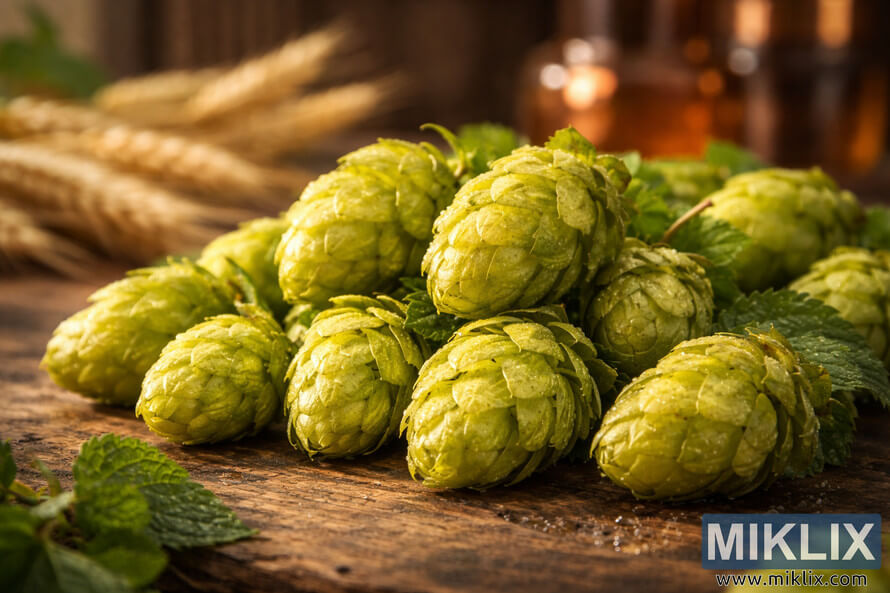
Styrian Golding, a classic aroma hop from Slovenia, is pivotal in beer brewing. Known as Styrian Gold hops and Savinjski Golding, it brings earthy, spicy, and sweet notes. Brewers value it for its balance, not for aggressive bitterness.
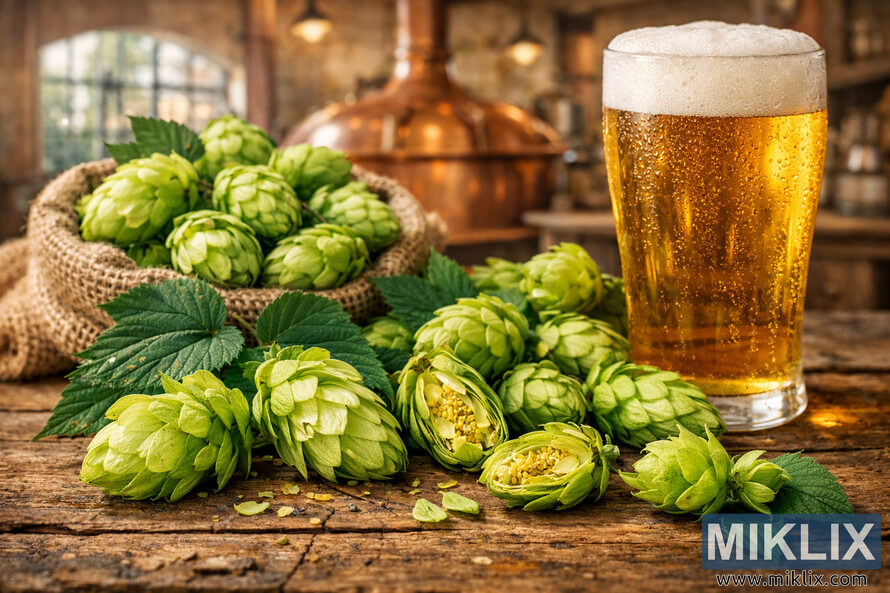
As an aroma hop, Styrian Golding is perfect for traditional European ales, pilsners, and subtle American craft beers. It adds depth without dominating malt or yeast flavors.
Key Takeaways
- Styrian Golding (also called Styrian Gold hops or Savinjski Golding) is an aroma-purpose hop from Slovenia.
- It offers earthy, spicy, resinous, and sweet notes suited to balanced beer profiles.
- Widely cultivated in Styria and along the Savinja River, known for mildew resistance.
- Available commercially as pellets; harvest year and retail source influence cost and freshness.
- Best used for late additions and aroma-focused roles in traditional and craft beers.
Introduction to Styrian Golding and its brewing significance
Styrian Golding is a highly valued aroma hop globally. It's celebrated for its balance of resinous depth and subtle earthiness. This variety's refined character makes it suitable for both traditional and modern beer recipes.
Its origin story adds to its allure. Styrian Golding's identity comes from a clone of UK Fuggle, not directly from the Golding family. This lineage brings a familiar English-style aroma while introducing distinct regional traits from Styria and Savinja.
Overview of the hop's identity and aliases
The hop is known by several names in trade and catalogues. Common aliases include Styrian, Savinja Golding, and Yugoslavia Golding. These names appear on seed lists and supplier pages. Brewers should be aware of these to ensure authenticity.
Why Styrian Golding matters for American craft brewers
American craft brewers often seek hops with aroma and nuance. Styrian Golding meets this need with its subtle spice and light white-pepper note. It complements English ale yeasts and clean lager strains well. Many U.S. brewers use it in pellet form from both domestic and international sources for consistency.
Quick summary of flavors and typical uses
- Core flavor: resinous and earthy with a mild spice edge.
- Typical aroma hop uses: late kettle additions, whirlpool, and dry hopping to preserve volatile oils.
- Best fits: English ales, pilsners, and hybrid craft styles where a refined earthiness enhances malt and yeast.
Chofoza noma uthephe isithombe ukuze uthole ulwazi olwengeziwe kanye nezixazululo eziphezulu.
Origin and genealogy of Styrian Golding
Styrian Golding's roots trace back to a meticulous clonal selection from the classic UK Fuggle. This selection focused on stable agronomic traits and a cleaner aromatic profile. It maintained the mellow, earthy character brewers adore from traditional Fuggle lines.
The Fuggle clone ancestry is evident in many shared traits. These include moderate alpha acids, soft bitterness, and an herbal-earthy aroma. Growers note a slight refinement in hop oil balance, making it a versatile aroma hop.
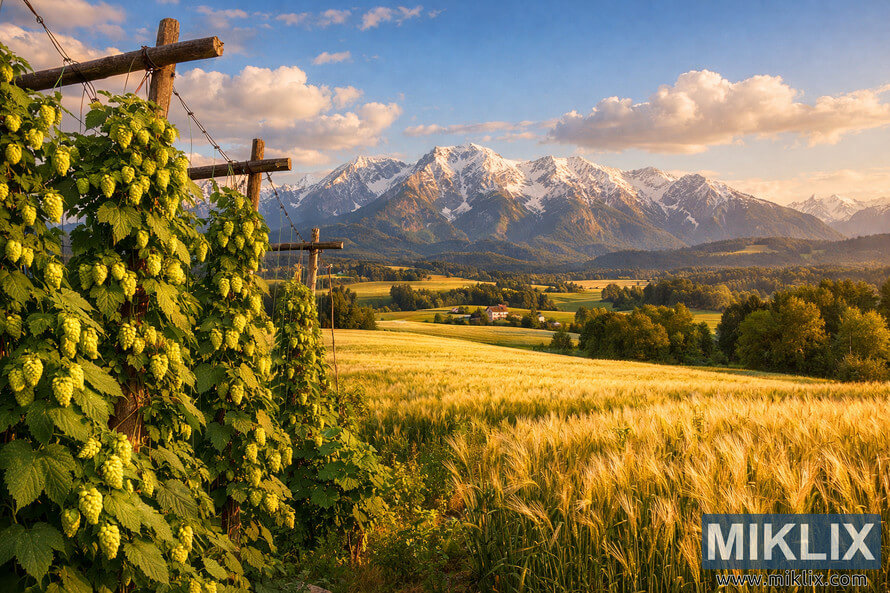
- By the 1930s, this selection became a significant crop in Styria, Austria, and across the Savinja River in Slovenia. The valleys provided the ideal soils and microclimate for high-quality cones.
- The Styria hops history is tied to smallholder farms and cooperatives. They preserved local strains through mid-century challenges. The region's focus on mildew resistance and consistent yields maintained demand for this hop abroad.
- Savinja Valley hops were crucial in the hop's reputation. Growers there kept detailed records of cultivars. This ensured the selected clone remained identifiable and true to type.
The variety spread across Europe due to practical advantages. Brewers appreciated its disease resistance and predictable aroma. Agronomists valued its steady yields. The hop is sometimes known as Celeia, reflecting regional naming traditions and its Styrian Gold origin.
Over decades, the hop's lineage, from the original Fuggle clone to the established Styrian types, influenced local farming and international brewing. This history explains why modern craft brewers and large breweries still seek this gentle, reliable aroma hop.
Chofoza noma uthephe isithombe ukuze uthole ulwazi olwengeziwe kanye nezixazululo eziphezulu.
Aroma and flavor profile of Styrian Golding hops
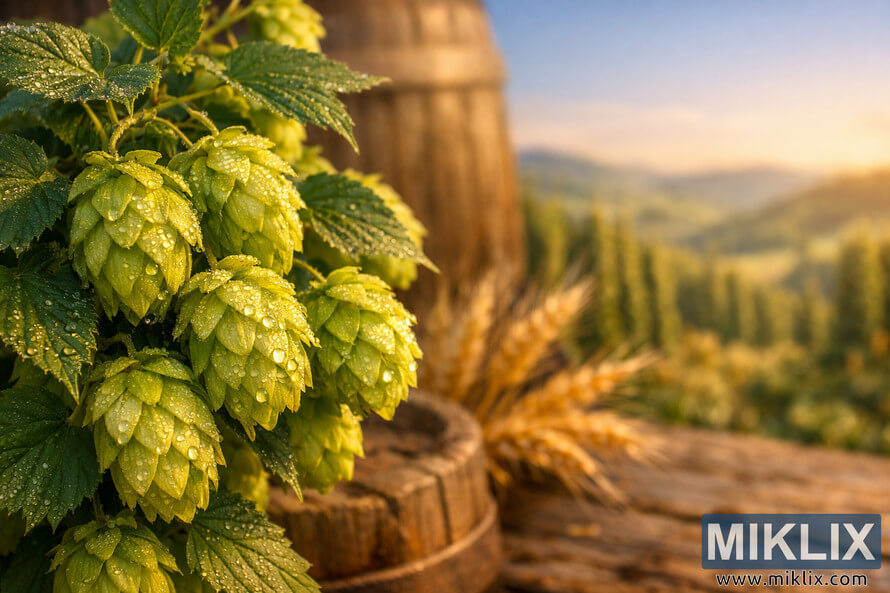
Styrian Golding hops are celebrated for their balanced aroma. They offer a refined scent that brewers find appealing. The aroma is characterized by a resinous quality, earthy notes, and a hint of spiciness. This combination creates a hop flavor profile that is elegant and understated.
Core notes fall into three clear categories.
- Resin and earth: Expect resinous earthy hops that give a warm, woodsy backbone and light pine-like resin.
- Spice and sweetness: A mild spicy edge blends with a subtle sweet/earthy finish that softens bitterness.
- Delicate pepper: Brewers often detect a white pepper hop characteristic that adds a refined, savory lift.
Preserving these facets late in the brew is key. Late additions, whirlpool use, or dry hopping help maintain the Styrian Gold aroma. This ensures the beer's aroma is complex but not overpowering by citrus or tropical flavors.
In finished beers, the hop flavor profile is well-integrated. Pale ales and pilsners exhibit a gentle herbal-resin character. English-style ales gain a spicy nuance that complements malt sweetness. Used sparingly in stronger beers, Styrian Golding adds depth and a polished finish without an aggressive hop bite.
Chofoza noma uthephe isithombe ukuze uthole ulwazi olwengeziwe kanye nezixazululo eziphezulu.
Chemical and brewing values for Styrian Golding
Styrian Golding's chemical values are crucial for brewers planning recipes and bitterness levels. Alpha acids typically range from 3.5% to 6.5%, averaging around 5%. Beta acids vary from 2.5% to 3.5%, leading to an alpha-beta ratio of 1:1 to 3:1.
Co-humulone levels are moderate, usually around 25%–30% of total alpha acids. This affects bitterness quality more than IBUs. Brewers should consider this when planning mash and boil schedules.
Total hop oil composition averages 0.8 mL per 100 g. The oil breakdown explains the hop's aroma and handling. Myrcene, humulene, caryophyllene, and farnesene make up the main components.
- Alpha acids: historical range 3.5%–6.5%, practical average ~5%.
- Beta acids: around 2.5%–3.5%, average ~3%.
- Co-humulone: typically 25%–30% of alpha acids.
- Total oils: about 0.5–1.0 mL/100 g, with myrcene, humulene, caryophyllene, farnesene as main components.
Storability is key for maintaining alpha acids and hop oils. Samples retain 65%–80% of alpha acids after six months under ambient conditions. Aging affects volatile oils, softening myrcene and leaving a heavier humulene profile.
Use measured alpha acid values from the lot for bittering calculations, not catalog averages. Adjust kettle and dry-hop rates based on the desired oil profile. Tracking chemical values by crop year ensures consistent beer character.
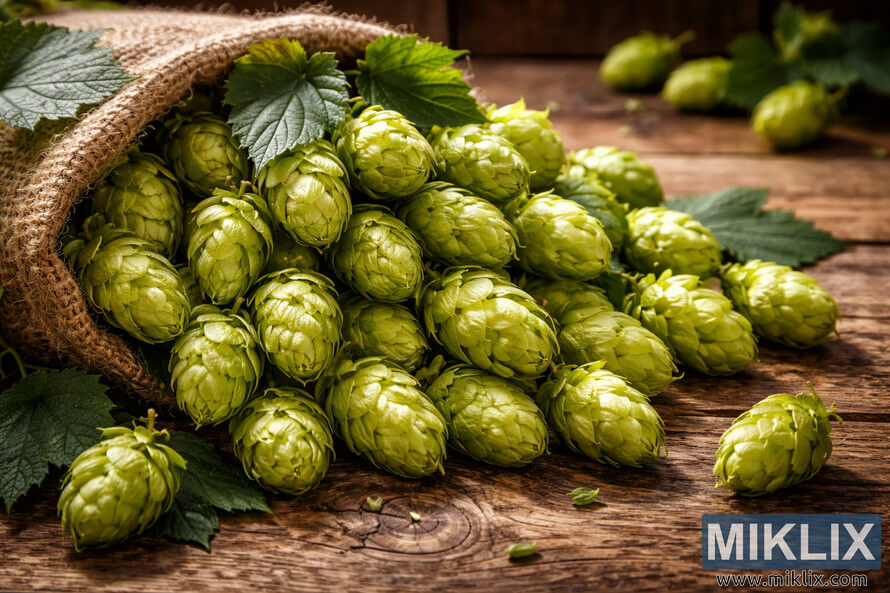
Chofoza noma uthephe isithombe ukuze uthole ulwazi olwengeziwe kanye nezixazululo eziphezulu.
Styrian Gold hops — aroma-focused usage in the brewhouse
Styrian Golding excels in enhancing aroma rather than bitterness. Brewers achieve the best resinous, earthy, and spicy flavors by minimizing boil time. This approach preserves volatile oils, ensuring the hop's character shines in the beer.
Late boil additions yield more aroma than early bittering hops. A short 5–10 minute late addition or direct transfer to the whirlpool is recommended. This method extracts oils without the harshness of high-temperature isomerization.
Dry hopping during active fermentation or after cold crash preserves the beer's light, leafy, and resinous top notes. Styrian Gold dry hopping during fermentation can enhance humulene and myrcene-derived nuances. This process avoids vegetal character.
- Late hop addition rates typically stay modest for aroma balance.
- Whirlpool hops let you control contact time and temperature precisely.
- Styrian Gold dry hopping is ideal for beers where aroma drives the profile.
Typical addition rates vary by recipe and target intensity. For a subtle lift, add 0.25–0.5 oz per gallon in the whirlpool or late boil. For a pronounced aroma, move toward 0.6–1.0 oz per gallon as a dry-hop charge. Adjust based on alpha acids and total oil content from the supplier.
When substituting, match oil composition rather than just alpha numbers. Compare myrcene, humulene, and caryophyllene percentages to achieve similar aromatic impact. Trial small batches and tweak late hop addition rates to fit malt, yeast, and style choices.
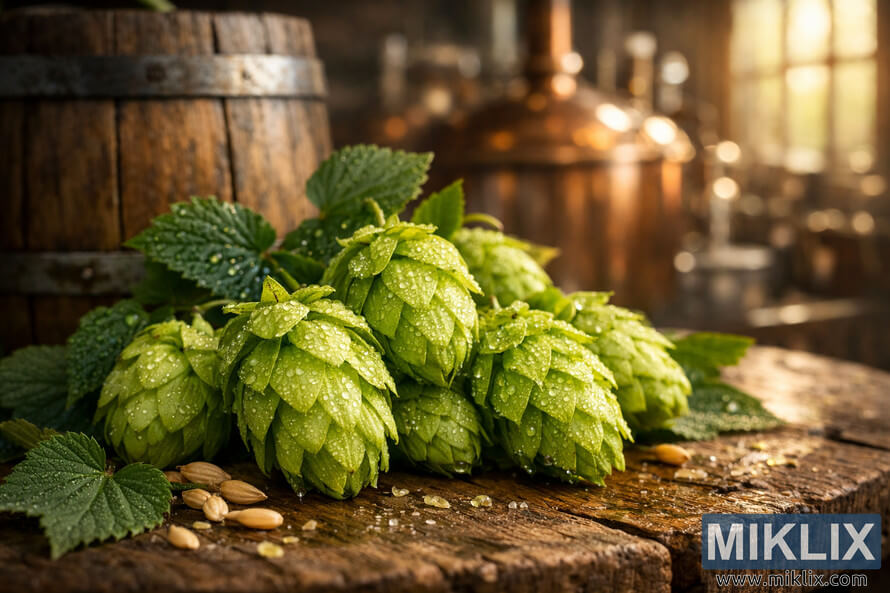
Chofoza noma uthephe isithombe ukuze uthole ulwazi olwengeziwe kanye nezixazululo eziphezulu.
Styrian Golding in popular beer styles
Styrian Golding offers a subtle, resinous flavor profile, ideal for many classic brews. It's chosen for its mild earthiness and a soft spice note, rather than intense bitterness. This hop is often added late or used as a finishing hop. It enhances aroma without dominating malt or yeast flavors.
Both traditional British ales and modern craft interpretations benefit from Styrian Golding. It's perfect for English Ale and ESB, adding a refined herbal backbone. This hop complements malt-forward bases and pairs well with English ale yeasts that highlight fruity esters.
In lighter lagers, Styrian Golding serves as a delicate aroma hop. It's an excellent choice for Pilsner recipes, offering noble-like notes. Used wisely, it adds a soft resinous edge without compromising crispness.
- English Ale: late additions or dry hop to enhance spice and earth.
- ESB: finishes that add depth to caramel malts and balanced bitterness.
- Pilsner: subtle aroma lift while retaining a clear, clean lager profile.
European styles, such as Belgian ales and Oktoberfest lager, also benefit from nuanced hop aroma. Styrian Golding brings light herbal and floral touches to these beers. It pairs well with malt-forward Belgian or Märzen bases, creating a layered sensory experience.
In strong, aged styles like Barleywine, Styrian Golding contributes restrained spice and resin. These flavors evolve during cellaring. Its delicate oils enhance secondary aroma complexity as the beer matures. Use small finishing additions to complement roasted and toffee malts, rather than overpowering them.
- Belgian Ale: small late additions to support complex yeast character.
- Oktoberfest / Lager: gentle finishing hops for a refined hop frame.
- Barleywine: finishing and dry hop for long-term aromatic complexity.
Comparing Styrian Golding to similar hop varieties
Styrian Golding emerged as a clone of UK Fuggle, but it evolved into a spicier, more refined option for brewers. This comparison between Fuggle and Styrian Golding is common when selecting an aroma hop for traditional ales or lighter lagers.
Here are three brief notes to guide substitutions and adjustments.
- Styrian Golding differs from Fuggle with cleaner earthy notes and a hint of white pepper or spice. Fuggle, on the other hand, offers a broader, more rustic earthiness. Brewers must decide between the refined character of Styrian Golding and the vintage English charm of Fuggle.
- Willamette is often used as a substitute for Styrian Golding, providing an earthy, floral backbone. Adjust rates to maintain aroma without significantly altering bitterness, considering the differences in alpha acids and myrcene levels.
- Bobek hops are similar to Styrian Golding in their resinous and savory tones. When comparing Bobek, examine humulene and caryophyllene ratios to predict the beer's spice and herbal notes.
Choose a substitute based on oil composition and aroma, not just the name. Match myrcene for resinous punch, humulene for floral balance, and caryophyllene for spicy lift. Small rate adjustments can bridge alpha acid gaps between varieties.
For practical use, scale additions to taste. If replacing Styrian Golding with Willamette, start with a one-to-one dry hop rate and adjust downward if bitterness increases. Use Bobek at similar weights for aroma-forward beers, monitoring for stronger herbal notes.
Styrian Gold hops availability and forms
Styrian Golding hops are available in the United States and globally, catering to both homebrewers and commercial brewers. Suppliers provide detailed information on crop year and packaging, aiding in the selection of the perfect hops for any recipe.
Marketplaces offer pellets and whole cones. Pellets are convenient for storage and dosing. On the other hand, whole cone Styrian Golding offers a traditional brewing experience with minimal processing.
- Pellet form: retail and bulk offerings make Styrian Gold pellet hops easy to measure and store.
- Whole-cone form: whole cone Styrian Golding is sold by weight and favored for gentle handling and visual inspection.
Lupulin powder availability for Styrian Golding is currently limited. Major processors like Yakima Chief Hops, BarthHaas, and Hopsteiner do not offer Cryo or lupulin powder versions of this cultivar.
Seasonality impacts both supply and chemistry. Notes on supplier pages highlight crop-to-crop variations in alpha acids and oils. These changes can affect aroma, bitterness, and price.
- Check harvest year when buying to match expected alpha and oil characteristics.
- Pick pellet lots for longer shelf life and easier inventory control.
- Choose whole cones when you want minimal processing and tactile quality checks.
Suppliers ship worldwide, but stock levels vary by region. For reliable sourcing, compare listings from U.S. distributors and international growers. Consider how harvest year and format impact your brewing plans.
Storage, hop quality, and hop storage index (HSI)
Proper storage significantly impacts Styrian Golding's performance in brewing. Fresh hops retain alpha acids and essential oils, crucial for bitterness and aroma. Brewers can perform simple checks to gauge freshness and determine if a batch meets their brewing requirements.
Typically, Styrian Gold HSI ranges from 0.20 to 0.35. This indicates a moderate loss of bitterness and oils when stored at room temperature. HSI values reflect the percentage of alpha and beta acids lost after six months at 68°F (20°C). An HSI of 0.28 suggests the hops have retained about 65% to 80% of their alpha acids during this time.
To protect hop character, adhere to best storage practices. Store hops in vacuum-sealed bags, minimize oxygen exposure, and keep them cold. Refrigeration slows degradation, while freezing preserves volatile oils and alpha acids best for long-term storage.
When preserving hop aroma, consider light and handling. UV and fluorescent light accelerate oil breakdown. Handle pellets carefully to avoid rubbing off lupulin. Use opaque containers and avoid frequently opening vacuum packs.
Estimate freshness by examining supplier harvest dates and crop year. Opt for the most recent crop to maximize oil retention. If HSI data is available, use it to assess remaining aroma and alpha content.
- Store vacuum-sealed and cold to reduce oxidation.
- Use recent crop years for peak aroma and alpha acids.
- Freeze for long holds and refrigerate for medium-term storage.
For brewers working with older hops, increase late additions or dry hop rates to compensate for reduced aroma. Monitoring Styrian Gold HSI alongside sensory evaluations provides a comprehensive understanding for recipe planning.
Growing characteristics and agronomy of Styrian Golding
The agronomy of Styrian Golding showcases a variety designed for consistent performance in Central Europe. In Austria and Slovenia, its moderate growth and predictable maturity are highly valued. These qualities make Styrian Gold a dependable option for both mixed farms and specialized hop growers.
- Yield and harvest data: Savinja hop yields typically range from 1,150 to 1,500 kg per hectare, equivalent to 1,025 to 1,330 lbs per acre. These figures align with historical data from Styria and the Savinja Valley, where the hop has been cultivated for years.
- Cone characteristics: Styrian Gold cones are medium in size with a compact density. This combination facilitates efficient handling and consistent drying at the kiln.
- Growth habit and timing: Canes exhibit steady vigor without excessive vigor. Seasonal maturity falls in the early to mid-season range, offering growers flexibility in harvest scheduling and avoiding late-season weather risks.
- Disease profile: The variety demonstrates notable resistance to downy mildew and a sound tolerance to common foliar diseases. This resistance has solidified its position in regional rotations, reducing the need for intensive sprays.
- Harvest logistics: Harvest ease is rated as moderate. The compact cones and medium size facilitate effective mechanical picking in larger yards. However, manual harvest remains viable for smaller farms that prefer hands-on work.
- Regional notes: Its historical significance in 1930s Styria and Savinja regions established a foundation for local expertise. Contemporary Savinja hop yields still reflect long-term adaptation to valley soils and microclimates.
Growers should consider the moderate growth rate, mildew resistance, and mid-range yield expectations when planning. These factors make Styrian Gold agronomy appealing for producers seeking steady quality without excessive inputs.
Recipe ideas and pairing with malts and yeast
Styrian Golding shines when it enhances the aroma over a robust malt base. These brief recipe notes guide you in balancing its resinous, earthy, and spicy notes. This way, the hop's essence can shine without dominating the beer.
Malt bases that complement Styrian Golding's earthy spice
Opt for malt-forward bases to support the hop's sweet-earthy profile. Maris Otter offers bready depth and a subtle caramel note. Munich and Vienna add toasty richness, mirroring the hop's resinous spice. For lighter styles, Pilsner malt ensures the hop's prominence.
Yeast strains that highlight aroma
Select yeast to refine the final aroma. English ale strains like Wyeast 1968 or White Labs WLP002 introduce fruity esters that complement Styrian Golding. Clean lager strains, on the other hand, allow the hop's spice and resin to take center stage. This highlights how yeast can transform the perception of aroma and flavor.
Sample hop schedules for an English Ale and a Pilsner
- English Ale (5.0–5.5% ABV)
- Grain: 100% Maris Otter or 85% Maris Otter + 15% Munich.
- Yeast: Wyeast 1968 or White Labs WLP002.
- Hops: Minimal bittering at 60 minutes, late additions at 10 and 5 minutes, whirlpool for 15–20 minutes at 170°F, dry-hop 3–5 g/L for 3–5 days.
- Pilsner (4.5–5.0% ABV)
- Grain: Pilsner malt with 5–10% Vienna or Munich for balance.
- Yeast: Clean lager yeast such as Wyeast 2124 or White Labs WLP830.
- Hops: Low bittering addition, one late boil addition at 5 minutes, small whirlpool addition, minimal dry-hop to preserve noble-like character.
- English Ale (5.0–5.5% ABV)
These Styrian Gold recipe ideas will guide you in pairing malts with Styrian Golding and choosing yeast for Styrian Gold hops. Adjust hop rates based on alpha acid and desired aroma intensity. Small changes in mash temperature, yeast choice, and dry-hop rate can significantly alter the outcome, even with the same base recipe.
Brewing tips and troubleshooting with Styrian Golding
Styrian Golding requires careful handling to unlock its full potential. Use low-heat, late additions to preserve its spicy, earthy oils. Opt for recent crop years and store hops cold, vacuum-sealed to maintain myrcene and humulene. This approach is key for both home and professional brewers.
Late-boil or whirlpool additions are best for locking in aroma. Dry-hopping for 48 to 72 hours brings out bright floral and herbal notes. However, avoid prolonged high-temperature exposure to prevent loss of oils.
Monitor dry-hopping contact time closely. Too much or too long can introduce grassy or vegetal notes. To avoid this, reduce dose size or shorten contact time. Cold-side additions and short whirlpool rests help preserve aroma freshness and clarity.
- Use late additions at 5–0 minutes for subtle lift.
- Whirlpool at ≤80°C to protect volatile oils.
- Dry-hop 48–72 hours, then remove hops to limit vegetal extraction.
Older or higher-HSI hops require a different strategy. Increase addition rates slightly or favor whirlpool and dry-hop methods to recover lost volatiles. A small dosage increase often enhances aroma without adding bitterness.
Keep detailed records of hop age, HSI, and technique for each batch. This data helps refine brewing techniques over time. Proper storage, measured dosages, and controlled contact time minimize the risk of harsh or vegetal notes. They preserve the hop's native spice and earth character.
Legal, labeling, and naming considerations for Styrian Golding
Clear labeling is crucial for brewers and consumers to know what they're drinking. Use concise, accurate names and include geographic origin when it matters. This clarity reduces confusion and supports traceability in supply chains.
Styrian Golding is known by several names, including Styrian, Savinja Golding, and Savinjski Golding. When listing hops on packages or tap lists, list the most recognized name first. Add alternate names in parentheses. This approach ensures transparency and helps avoid confusion about the variety.
Trade rules vary by market. For EU sales, state the country of origin when required by regulations. In the U.S., follow customs and USDA guidelines for agricultural labeling. Accurate labeling supports import compliance and lets brewers showcase the hop's origin, whether it's Slovenia or Austria.
Genetic background is key for truthful marketing. Styrian Golding is a clonal selection from UK Fuggle, not a true English Golding. Include this lineage on technical sheets. This way, buyers know they're getting a Fuggle-derived cultivar, not a true Golding strain.
- Labeling tip: Use the full cultivar name, then list trade names such as Savinjski Golding trade name where used in commerce.
- Origin note: If hops were grown in Slovenia, state Slovenia; if harvested in Austria, state Austria; do not conflate cultivar origin with country of cultivation.
- Attribution: Include breeder or research station credits when required by contract or local law.
For export documents and point-of-sale materials, keep statements factual and brief. Avoid making claims that can't be verified. Proper Styrian Gold labeling and careful hop origin labeling protect brands. They also inform brewers about the hops' aroma, lineage, or region.
Conclusion
Styrian Golding, a hop from Slovenia and Austria, is rooted in the Fuggle lineage. It boasts a resinous, earthy, and spicy profile with a hint of sweetness. Its low-to-moderate alpha acids and total oils make it perfect for adding gentle bitterness and complex aromas.
The hop's field history and agronomy are significant. It thrives in Styria and the Savinja region, known for its mildew resistance and steady yields. This makes it ideal for both commercial lagers and craft English ales. Fuggle, Willamette, and Bobek can substitute when Styrian Golding is scarce.
In brewing, late additions and dry hopping preserve its delicate oils. Myrcene and humulene are the dominant compounds, with humulene often being higher. Storage and harvest year impact its aroma, so choose recent crops for the best flavor. For U.S. brewers, its availability and competitive pricing make it a favorite.
Styrian Golding is perfect for adding a balanced spice and earthiness to beers. It's great for Pilsners, English ales, Belgian styles, and aged beers. Use it to enhance the backbone and subtle aromas of your brew, protecting its nuanced oils for a superior finish.
FAQ
What is Styrian Golding and what are its common aliases?
Styrian Golding is a hop from Slovenia, grown in Styria (Austria) and along the Savinja River. It's a clone of UK Fuggle, known as Styrian, Savinja Golding, and others. It has Fuggle-like traits with a refined, spicy character.
Why do brewers choose Styrian Golding?
Brewers choose it for its aromatic qualities. It offers resinous, earthy, and spicy notes with a subtle sweetness. Its mild alpha acidity makes it perfect for aroma roles, enhancing malt-forward styles.
What flavor and aroma can I expect from Styrian Golding?
Expect resinous and earthy aromas with a gentle spice and faint white pepper. It adds herbal-resin complexity, not citrus or tropical notes. These oils contribute depth and subtle spice in finished beer.
What are the typical chemical values for Styrian Golding?
Alpha acids are about 3.5–6.5% (average 5%), beta acids 2.5–3.5% (≈3%), and co-humulone 25–30% (≈27.5%). Total oils are 0.5–1.0 mL/100g (≈0.8 mL average). Its signature comes from myrcene, humulene, caryophyllene, and farnesene.
How should I use Styrian Golding in a brew to maximize aroma?
Add it late in the boil (5–10 minutes), in the whirlpool, or as a dry hop. These methods preserve volatile oils. For whirlpool or dry-hop, control contact time to avoid vegetal notes.
Which beer styles best showcase Styrian Golding?
It's great in traditional English ales, English-style bitters, Pilsners, Belgian ales, and malt-forward strong ales. It enhances malt-driven beers with resinous spice and noble-like aroma.
What hops are good substitutes for Styrian Golding?
Fuggle, Willamette, and Bobek are good substitutes. Choose based on matching oil profiles and aromatic character. Adjust quantities for differences in alpha acids and oil concentration.
In what formats is Styrian Golding available and where can I buy it?
It's sold as pellets and whole cones. Retail pellet listings show availability in 2024. U.S. brewers can find it from suppliers like Yakima Valley Hops and Great Fermentations. International suppliers include Brook House Hops (UK) and BeerCo (Australia).
Are Cryo or lupulin powder versions of Styrian Golding available?
Currently, there are no commercial Cryo/lupulin versions of Styrian Golding. Brewers should expect pellet or whole-cone formats instead.
How does harvest year and storage affect Styrian Golding?
Harvest year and storage greatly influence aroma and alpha potency. Hops stored under ideal conditions retain oils and acids longer. Typical Hop Storage Index (HSI) for Styrian Golding ranges about 0.20–0.35.
What are best storage practices for preserving hop quality?
Store hops vacuum-sealed, cold (refrigerated or frozen), and away from light and oxygen. Minimize exposure time when opening packages. For long-term storage, keep hops frozen and use oxygen-scavenging packaging.
How should I adjust hopping when using older or higher-HSI Styrian Golding?
For older or higher-HSI hops, increase late-addition or dry-hop rates. Favor whirlpool and dry-hop techniques to extract remaining aromatic oils. Monitor contact time during dry hopping to avoid vegetal character.
What agronomic traits and yields are typical for Styrian Golding?
Styrian Golding has medium cone size, compact density, moderate growth rate, and early seasonal maturity. It yielded about 1,150–1,500 kg/ha (≈1,025–1,330 lbs/acre). It's notable for its resistance to mildew.
What malts and yeasts pair well with Styrian Golding?
Pair it with Maris Otter, Munich, Vienna, and Pilsner malts. Use English ale strains (e.g., Wyeast 1968, White Labs WLP002) for estery background and clean lager yeasts for a hop-forward, refined spice profile. Use late additions, whirlpool, and moderate dry-hop rates to balance aroma and malt.
Are there labeling or naming rules I should follow when listing Styrian Golding?
Use clear aliases—Styrian, Savinja Golding, Savinjski Golding, Styrian Savinjski Golding, or Celeia—so consumers recognize the variety. State geographic origin (Slovenia or Austria) when required and note the cultivar origin as a clone of UK Fuggle.
Where can I find current pricing and availability for Styrian Golding?
Retail and wholesale suppliers list harvest years, formats, and pricing. Recent 2024 pellet listings show commercial consumer pricing examples. Cost depends on weight, format, and crop year. Check recommended U.S. and international suppliers and compare harvest-year data and HSI to make informed purchases.
Ukufunda Okuqhubekayo
Uma ukujabulele lokhu okuthunyelwe, ungaphinda uthande lezi ziphakamiso:
- Ama-Hops in Beer Brewing: Elsaesser
- AmaHops Ekuphiseni Ubhiya: Tahoma
- AmaHops Ekuphiseni Ubhiya: I-Boadicea