
Hops in Beer Brewing: Cluster (United States)
Published: December 24, 2025 at 11:58:42 AM UTC
Cluster hops stand as one of the oldest and most dependable varieties in the United States. They are cherished by brewers for their versatility and balanced bittering. The American Cluster hop also boasts a clean, slightly floral aroma, enhancing many recipes. This hop variety has been crucial for both large commercial brewers and craft brewers seeking to replicate traditional styles.
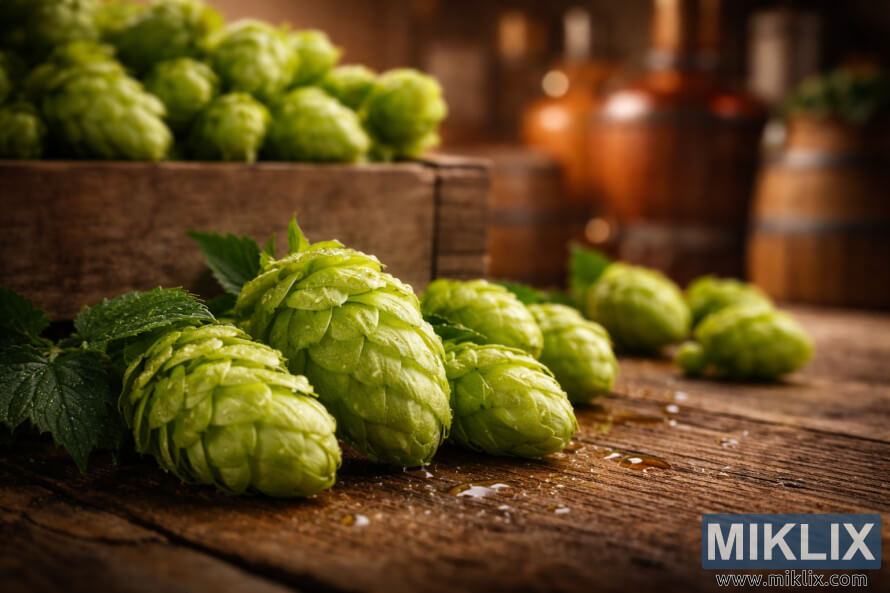
Click or tap the image for more information and higher resolutions.
Cluster (United States) hops are renowned for their robust field performance and excellent storage stability. They provide consistent alpha and aroma qualities, making them ideal for both bittering and aroma purposes. The hop variety Cluster adds subtle fruity, hay, and herbal notes, complementing malt without overpowering it. This makes them a popular choice for single-hop trials and blended hop recipes.
In the past, Cluster hops dominated U.S. hop acreage for much of the 20th century. Today, they continue to be a vital component for brewers aiming for dependable results, clear bittering, and a hint of traditional American hop character in both ales and lagers.
Key Takeaways
- Cluster (United States) hops are a longstanding U.S. variety valued for versatility and reliability.
- American Cluster hop offers balanced bittering with a clean, slightly floral aroma.
- Hop variety Cluster stores well and gives consistent performance across styles.
- Cluster hops contribute subtle fruity, hay, and herbal notes without dominating the brew.
- Cluster remains important for recreating historical American beer profiles.
Overview of Cluster (United States) hops
Cluster hops have been a cornerstone in American brewing since the 19th century. They are known for their steady bittering and modest aroma. This makes them a versatile choice for many brewing styles.
Cluster hops have medium cone size, compact density, and mature mid-season. They grow vigorously and yield heavily, often between 1600–2140 kg per hectare. These characteristics made them a dominant choice in U.S. hop acreage for decades.
In the glass, Cluster hops show clean, neutral bitterness with gentle floral notes for bittering. When used late in the boil, they reveal blackberry, spice, hay, herbal, and subtle woody tones. This creates a complex yet approachable flavor profile.
Cluster hops are unique among American varieties for their dual-purpose use. They excel in both bittering and aroma, allowing brewers to craft both historical and modern beers. Their balanced nature suits lagers, porters, and traditional ales.
- Balanced bittering and aroma
- Medium cone size and compact density
- High yields and mid-season maturity
- Fruity, herbal, and hay-like aromatic notes
Cluster hops remain a practical choice for brewers seeking predictable performance. Their straightforward profile and consistent characteristics are ideal for recreating vintage American styles. They also fit well into contemporary brewing programs.
Origin and unknown pedigree of Cluster
Cluster has been a cornerstone in American brewing for over a century. Its reliability has made it a go-to choice for growers and brewers alike. The roots of Cluster hops are deeply embedded in the early days of U.S. hop farming and commercial brewing.
The botanical records on Cluster are sparse, leaving its pedigree a mystery. Experts speculate it could be a cross between European varieties and local male plants. This uncertainty makes pinpointing its exact lineage a subject of ongoing research.
In the early 20th century, Cluster dominated U.S. hop fields. It covered nearly 96% of hop acreage, maintaining its dominance well into the 1970s. This widespread use significantly influenced the history of Cluster hops in American beer.
Cluster's origins remain a topic of historical brewing research and recipe restorations. Its practical characteristics and widespread availability made it a staple long before the advent of modern breeding programs. These programs have since clarified the hop lineage of many varieties.
Alpha and beta acid profile of Cluster
Cluster hops are known for their balanced bittering and aroma capabilities. They fall within a moderate range of hop bittering values. Typically, Cluster's alpha acid content ranges from 5.5% to 9%. This makes them a versatile choice for brewers aiming for a balanced bitterness in various beer styles.
The beta acids in Cluster contribute to its oxidative stability and background bitterness. Cluster beta acids usually measure between 4% and 6%. This supports long-term storage and ensures a smooth palate presence when added during the kettle phase.
Cluster's oil composition is another factor that contributes to its dual-purpose reputation. The total oil content is modest, ranging from 0.4–0.8 mL per 100 g. Myrcene dominates the profile, making up 38%–55% of the oils. Humulene and caryophyllene follow, with percentages of 15%–20% and 6%–10%, respectively.
The co-humulone percentage in Cluster is notably higher, ranging from 36%–42%. This characteristic can influence the bitterness perception, even with moderate alpha levels. It allows Cluster to deliver rounded bitterness alongside fruitier or darker flavors when used in larger quantities.
- Alpha acid range Cluster: 5.5%–9%.
- Cluster beta acids: approximately 4%–6%.
- Typical total oil: 0.4–0.8 mL/100 g; myrcene dominant.
When selecting Cluster for kettle hopping, consider its hop bittering values and oil composition. This balance ensures it can serve as a reliable dual-purpose hop. It harmonizes well with yeast, malt, and hopping schedules, making it a versatile choice for brewers.
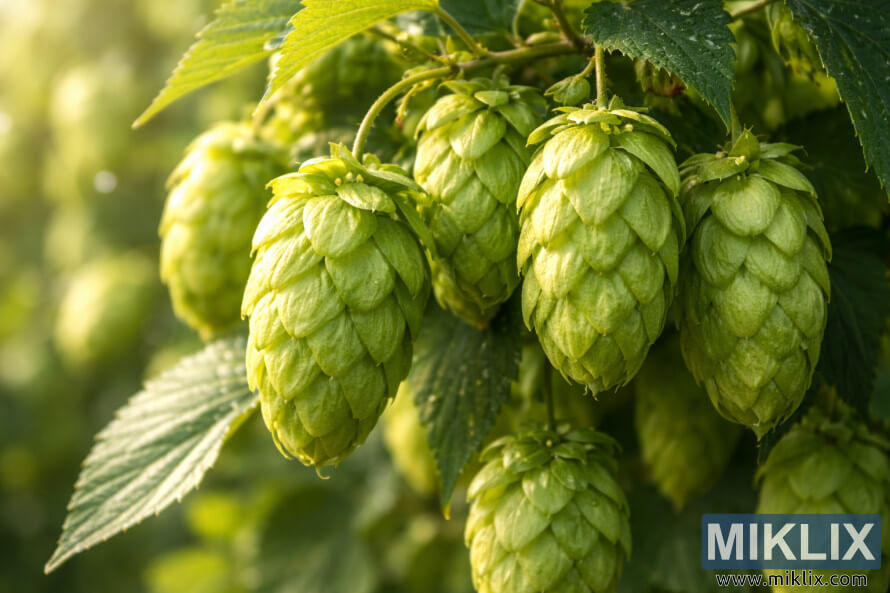
Click or tap the image for more information and higher resolutions.
Aroma and flavor characteristics of Cluster hops
Cluster hops present a straightforward aroma, ranging from clean to gently floral. When the cones are rubbed or crushed, a bright blackberry hop aroma emerges. This is accompanied by subtle spice and mild floral hints.
In finished beer, Cluster's flavor profile evolves, introducing woody spice hop notes. Brewers note herbal and hay-like tones beneath the fruit and floral elements. This creates a nuanced, earthy backbone in the beer.
Used lightly, Cluster adds a soft floral lift and a gentle bitterness. However, when used more heavily, dark fruit characteristics become more pronounced. The blackberry hop aroma becomes more apparent, enhancing amber ales and porters with depth.
- Primary impressions: fruity and slightly floral.
- Secondary impressions: hay, herbal, and woody.
- When concentrated: pronounced blackberry hop aroma and woody spice hop notes.
Cluster's versatility makes it a favorite among brewers. It complements malt-forward beers, adding layered aroma without overpowering the grain. Its subtle complexity and restrained spice character support many traditional American styles.
Cluster as a dual-purpose hop
Cluster is a trusted dual-purpose hop among U.S. brewers. It offers mid-range alpha acids for kettle bittering. It also brings herbal and mild fruity notes when added late.
Brewers employ Cluster for both bittering and aroma in balanced recipes. It excels as an early addition for bitterness and as a late or whirlpool addition for subtle flavor enhancement.
Cluster's bittering and aroma are suitable for a variety of styles. Consider Barley Wine, Porter, English Pale Ale, Amber Ale, Honey Ale, Cream Ale, and classic American Lager. These styles benefit from both bittering and aroma.
- Single-hop beers: Cluster can stand alone to showcase hop character without overwhelming malt.
- Blended approaches: Pair Cluster with floral or citrus varieties to round bitterness and add complexity.
- Historical reproductions: Its balanced profile suits traditional recipes that call for authentic American hop character.
In both commercial and homebrewing, Cluster's versatility is unmatched. It can be the backbone for bitterness, then enhanced with later additions for aroma. This allows brewers to fully exploit its dual-purpose hop potential.
Storability and processing advantages
Cluster hops have become a staple in commercial brewing for their reliable hop storage stability. Large breweries value this variety for its consistent bittering contribution. This is crucial through long supply chains and varied storage conditions.
Studies indicate that alpha acid retention Cluster maintains about 80%–85% of its alpha acids after six months at 20°C (68°F). This high retention rate minimizes batch-to-batch variation. It also simplifies adjustments when brewers order in bulk.
Processing advantages extend beyond chemical stability. Cluster cones compress well for pelletizing and vacuum packing. This reduces oxygen pickup during transit. It helps preserve aroma precursors and bittering capacity for both domestic and export shipments.
- Consistent alpha acid retention Cluster eases bitterness dosing across seasons.
- Proven hop storage stability cuts the need for frequent reanalysis of inventory.
- Good handling characteristics reduce material loss during milling and pellet production.
For regional craft brewers, these traits ensure predictable performance when switching between fresh and older stocks. For large-scale operations, Cluster storability supports centralized purchasing. It also enables longer on-shelf cycles and streamlined logistics.
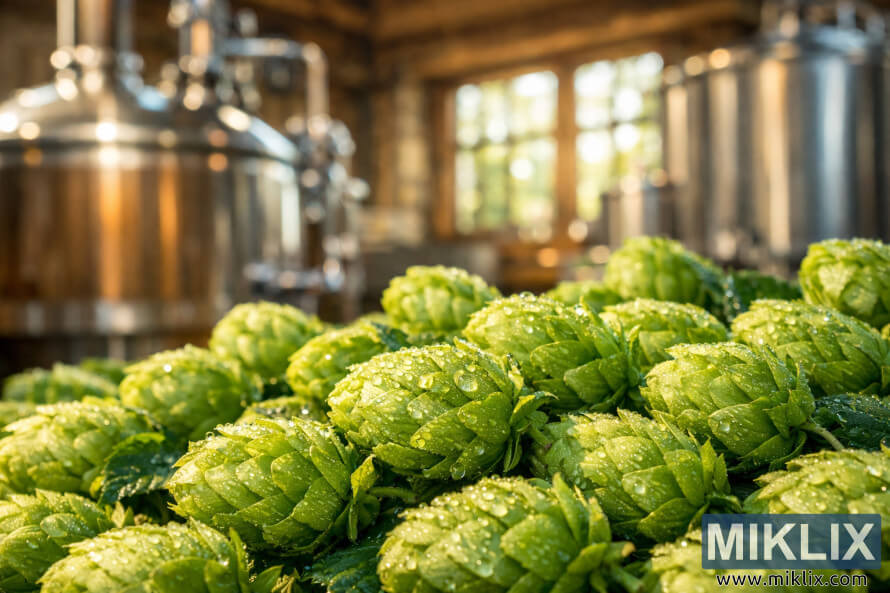
Click or tap the image for more information and higher resolutions.
Typical brewing styles that suit Cluster
Cluster hops are versatile, fitting well into a variety of traditional American and English recipes. They are particularly suited for ales that benefit from a woody, spicy, and floral hop presence. This is without overwhelming the beer with bitterness.
Classic styles for Cluster include English Pale Ale, Amber Ale, and Porter. These styles allow the malt character to take center stage. Meanwhile, the hop adds a subtle herbal lift.
Stronger malt-forward beers such as Barley Wine and Brown Porter also pair well with Cluster. In these beers, the hop complements caramel and toffee notes. It adds complexity to the big malts.
Light, approachable beers like Cream Ale and Honey Ale are also suitable for Cluster. The floral backbone enhances honey and light malt flavors. It does so without masking them.
Cluster in lagers finds a natural home in American Lager. Used cautiously, Cluster in lagers provides a gentle floral-spice edge. This keeps clean lager profiles interesting.
For brewers aiming to recreate historical recipes, Cluster is a top choice. Its traditional profile helps reproduce older American and colonial-era beers. It adds authentic hop character to these brews.
- Beers for Cluster hops: English Pale Ale, Amber Ale, Porter
- Beers for Cluster hops: Barley Wine, Brown Porter
- Beers for Cluster hops: Cream Ale, Honey Ale, American Lager
When formulating recipes, balance is crucial. Use Cluster to complement malt richness, not to dominate. Small additions in whirlpool or late kettle hops often yield the best results for these styles.
How to use Cluster hops in the kettle and dry hopping
Cluster hops are versatile in the boil. Early additions ensure a smooth bitterness that complements malt. This approach prevents bitterness from becoming harsh.
Late kettle hopping introduces dark-fruit and herbal flavors. A 10–15 minute addition enhances the aroma. Larger additions emphasize woody and hay notes, preserving the malt's clarity.
Cluster's dual-purpose nature makes it suitable for both bittering and aroma. A split schedule is recommended: bittering hops at 60 minutes, more at 10 minutes, and a short hop stand. This captures volatile oils like myrcene and humulene.
Dry hopping with Cluster enhances fruity and herbal notes. Use moderate amounts to maintain balance. For historical styles, a restrained dry hop approach preserves authenticity while boosting aroma.
- For balanced ales: 50% early bittering, 30% late kettle hopping with Cluster, 20% dry hop Cluster technique.
- For more aroma-forward beers: reduce early additions, increase late and dry hop Cluster technique batches.
- For bitter-forward beers: emphasize early Cluster hop additions and cut back on dry hopping.
Hop stands after flameout can extract floral and fruity esters from Cluster. Short contact times prevent grassy notes. Cold-side dry hopping reveals sweeter fruit and subtle herbal notes.
Cluster can handle high dosages without overpowering malt. Adjust quantities based on style and desired aroma. Taste regularly when experimenting with kettle hopping and dry hopping with Cluster for optimal results.
Complementary hop and malt pairings
Cluster hops introduce woody, spicy, and floral notes, perfect for malt-forward beers. Pair them with Maris Otter, Munich, and medium crystal malts for toffee and caramel. These malts enhance dark fruit and bread crust flavors, allowing Cluster's unique profile to shine.
For hop pairings, choose complementary hops that add citrus or resinous lift in small doses. Galena can bolster bitterness and body. Eroica offers fruity precision, enhancing stone-fruit tones while maintaining balance.
When crafting recipes, use bright, citrusy hops with restraint. Add them late in the boil or for short dry hops. This approach ensures Cluster's herbal and hay aromas remain prominent, with complementary hops adding high-note contrast.
- Porter and Stout: roast and chocolate malts with small additions of Galena for backbone.
- Amber Ale and English Pale: Maris Otter plus medium crystal; pair with Eroica or a touch of Centennial for brightness.
- Barleywine: rich Munich and darker crystal malts; balance with resinous hops sparingly to keep depth.
Malt pairings with Cluster hops should echo its darker fruit and woody edges. Add a small percentage of roasted barley or chocolate malt in stronger styles for structure. Let complementary hops fill gaps, enhancing aroma or bitterness selectively.
In practice, test single additions in pilot batches. Adjust hop timing and malt percentages until Cluster blends into the beer as a cohesive element. This method produces beers with layered, balanced results.
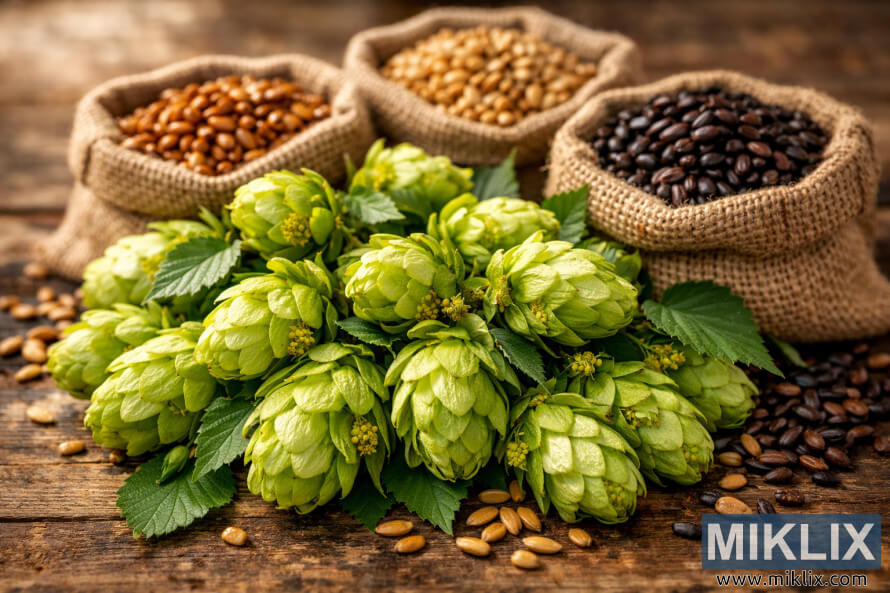
Click or tap the image for more information and higher resolutions.
Growing characteristics and field performance
Cluster hops exhibit vigorous vigor and a high growth rate, fitting well in many U.S. hop yards. Growers appreciate Cluster's robust bine growth and reliable cone set across different climates.
Fields with Cluster typically yield strong hop numbers, ranging from 1600–2140 kg per hectare (1420–1900 lbs per acre). The cones are medium in size, with a compact density and mid-season maturity. This aids in planning harvest times.
Cluster shows notable resistance to Prunus necrotic ring-spot virus, a significant advantage in long-term plantings. However, it remains susceptible to downy mildew and powdery mildew. Thus, regular scouting and timely sprays are crucial.
Harvesting can be challenging due to dense cones and compact beds. Mechanical picking is less efficient compared to some modern cultivars. Despite this, many commercial growers have accepted this trade-off for Cluster's dependable field performance over decades.
- Vigor: very high growth rate, fast bine development.
- Yield: hop yield Cluster commonly reaches 1600–2140 kg/ha.
- Maturity: mid-season, medium cone size with compact density.
- Disease profile: disease resistance Cluster to certain viruses; vulnerable to mildews.
- Harvest: more difficult than newer cultivars, often requiring careful handling.
Cluster's long history in U.S. production makes it a familiar choice for growers seeking stable returns. Field managers value its consistent performance and predictable timelines, making it a time-tested variety.
Essential brewing metrics and analysis
Brewers depend on detailed hop analysis to craft the perfect beer. Cluster hops are known for their alpha acids, ranging from 5.5% to 9%, and beta acids from 4% to 6%. These values ensure Cluster's consistency in both kettle additions and late hops.
The aroma of Cluster hops is shaped by their oil content, which falls between 0.4 and 0.8 mL/100 g. The hop oil composition is dominated by myrcene, making up 38% to 55% of the total. Humulene, caryophyllene, and farnesene also play roles, contributing to fruity, hay, and herbal notes in late additions.
Cluster co-humulone is typically between 36% and 42% of the alpha fraction. This percentage affects the bitterness sharpness, aiding brewers in estimating IBUs. Mid-level alpha acids provide a smooth bitterness, while higher doses introduce darker fruit notes.
Storage and inventory decisions are also informed by hop analysis data. Cluster hops retain about 80% to 85% of their alpha acids after six months at 20°C. This retention rate supports the strategy of maintaining moderate stocks for aging or immediate use, based on a brewery's turnover.
Practical application of these metrics involves using early additions for clean bittering and late additions for aroma. Cluster hops can be used as dual-purpose, balancing boil timing and dose.
When creating recipes, include key metrics and target IBU. Compare measured alpha, beta, and co-humulone against expected ranges before scaling a batch. This practice helps avoid surprises and ensures consistent flavor outcomes across brews.
Commercial use and historical dominance in U.S. hop acreage
Cluster was the cornerstone of American brewing in the 20th century. By the early 2000s, Cluster historical acreage comprised about 96% of U.S. hop plantings. This dominance significantly influenced commercial supply chains and brewing methods for many years.
Big names like Anheuser-Busch and Pabst favored Cluster for its ability to store well and provide a clean bitterness. Its reliability was crucial for lagers and other high-volume beers that needed consistent flavor profiles.
Cluster held the majority of U.S. hop plantings until the late 1970s. As plant breeders and growers introduced more varieties, Cluster's importance remained for traditional American beer styles.
Even today, Cluster is used in contract brewing, extract production, and heritage recipes. Small craft brewers still rely on it for a dependable base hop that complements malt and yeast flavors without overpowering them.
- Why it mattered: consistent alpha acids and storability made Cluster attractive for large-scale operations.
- Impact on growers: long-term planting decisions centered on the variety’s proven marketability.
- Legacy: Cluster’s dominance shaped the trajectory of modern U.S. hop history and influenced later breeding priorities.
Cluster continues to play a significant role in both historical and commercial brewing today. Brewers now balance its use with newer varieties that offer more aroma and bitterness. This approach honors Cluster's pivotal role in American brewing heritage.
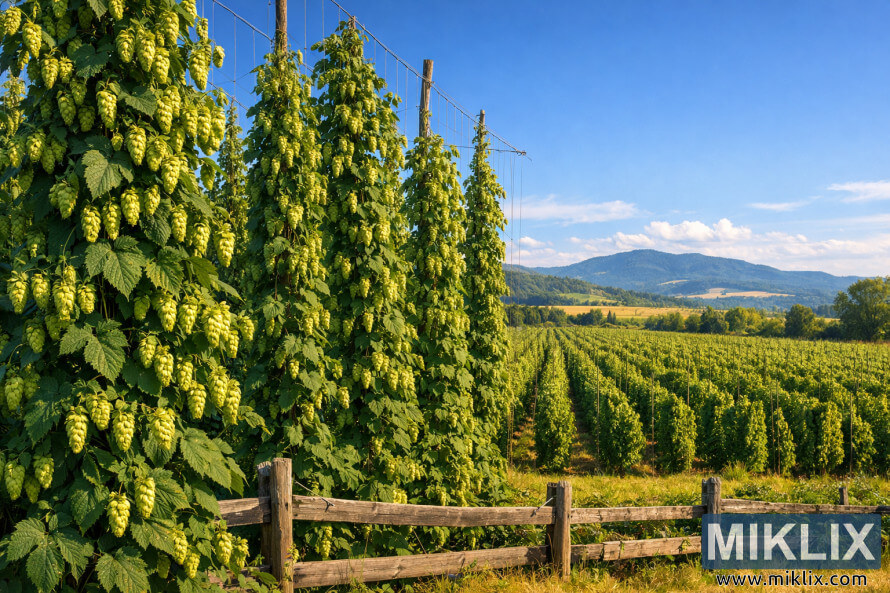
Click or tap the image for more information and higher resolutions.
Storage, purchasing, and recommended suppliers
Brewers who purchase Cluster hops appreciate its consistent alpha acids and aroma. This hop retains about 80%–85% of its alpha acids after six months at 20°C (68°F). Thus, Cluster hop storage is quite forgiving for larger quantities.
Store cones or pellets in vacuum-sealed bags, keeping them cold and dark. A refrigerator or a dedicated cold room at 0–4°C (32–39°F) is ideal for preserving freshness and slowing oxidation. It's wise to rotate stock by harvest date to prevent older lots from degrading.
When shopping, opt for reputable merchants known for consistent quality. Brewers often prefer established hop houses to ensure recipe continuity and reliable supply.
- Great Fermentations (USA) — national shipping within the United States.
- Hop Alliance (USA) — carries multiple crop years for choice and consistency.
- Hops Direct (USA) — bulk and smaller pack options for craft brewers.
- Amazon (USA) — convenient retail access for hobbyists and small batches.
- Northwest Hop Farms (Canada) — ships nationally in Canada and lists Cluster varieties.
- BeerCo (Australia) — regional supplier with national delivery in Australia.
- Brook House Hops (UK) — available for brewers in the United Kingdom.
When buying Cluster hops, compare catalog specs and harvest dates. Look for COAs or lab numbers to confirm alpha and beta acids. This ensures you can predict IBUs and flavor impact across batches.
Smaller breweries that order in bulk should discuss cut-off dates and packing methods with suppliers. Inquire about pellet pressing dates and nitrogen flushing to minimize oxidation risk during shipping.
For short-term use, sealed packets kept refrigerated are suitable. For long-term storage, freeze vacuum-sealed pellets and track storage time. Proper Cluster hop storage maintains bitterness and ensures consistent recipe results.
Substitutes and recipe adaptation strategies
When Cluster is scarce, brewers must plan hop substitution Cluster with a clear goal. They aim to match alpha acids and preserve aroma. Eroica and Galena are common substitutes. Eroica adds a clean, slightly fruity note, while Galena offers firm bitterness and herbal edges.
To adapt recipes for Cluster, start by calculating bittering equivalence. If Cluster alpha is 7% and Galena is 12%, reduce weight proportionally to hit the same IBUs. Use a hop calculator or simple ratio math to keep bitterness consistent.
Late additions control aroma. If Cluster was used late for dark-fruit and floral lift, increase late or whirlpool additions of the substitute. Eroica at flameout can bring back fruity top notes that Cluster would have supplied.
Blend substitutes when one hop cannot recreate Cluster’s layered profile. Combine a neutral bittering hop with a fruitier variety to mimic hay, woody, and herbal tones. Small pilot batches help dial the balance before scaling up.
- Match alpha acids first, then tweak amounts for balance.
- Shift late additions upward to enhance aromatics.
- Use blends to replicate hay, herbal, woody, and fruity character.
For historical-style reproductions, prioritize hops that preserve old-school qualities. Select substitutes with neutral-to-fruity profiles and adjust contact time during dry hopping to protect delicate notes. Small changes in timing or weight can keep the beer true to style while using available hops.
Record every change and taste at each stage. That data makes future hop substitution Cluster easier and speeds the process to adapt recipes for Cluster without losing the beer’s original intent.
Beers and breweries known for using Cluster hops
Cluster hops have a rich history in brewing, from the past to the present. Top Hat's Clusters Last Stand Pale Ale is a prime example. It showcases Cluster's ability to support malt, with a pale honey color and direct bitterness. This beer exemplifies why Cluster is a favorite for recreating the classic American pale ale.
For decades, large commercial breweries have relied on Cluster. Its stability and balanced profile made it ideal for mass-market lagers and amber ales. This widespread use explains Cluster's significant role in U.S. brewing history.
Craft and heritage-focused breweries still choose Cluster for their period-accurate recipes. Brewers at Anchor Brewing and Yuengling have successfully replicated original flavors using Cluster. Small regional breweries also prefer Cluster for its authenticity and dependable bitterness.
When trying beers with Cluster, expect a subtle hop character. This subtlety is perfect for session ales, classic lagers, and brown ales. Tasting notes often highlight Cluster when brewers aim for a traditional, restrained hop presence.
- Top Hat — Clusters Last Stand Pale Ale: single-hop showcase.
- Anchor-style historical brews: period recipes and balanced bitterness.
- Regional craft breweries: heritage batches and session beers.
Brewers select Cluster to connect modern recipes to American brewing heritage. For those exploring Cluster hops, look for labels mentioning single-hop trials, historical series, or vintage-style ales. These will often highlight Cluster examples and point to breweries committed to faithful flavor replication.
Conclusion
Cluster hops offer brewers a reliable choice for balanced bittering and a unique aroma. They blend blackberry, spice, floral, woody, and herbal notes. With moderate alpha and beta acids, they are easy to use in recipes. Their oil profile adds character, suitable for kettle additions and dry-hopping.
Cluster hops have a long history in U.S. hop acreage. They retain about 80%–85% of their alpha acids after six months at 20°C. This makes them consistent for both commercial and craft brewing. They are perfect for recreating historical American styles or crafting malt-forward ales, thanks to their fruity and hay-like nuances.
Cluster hops are practical, flavorful, and versatile. They work well with simple malt bills and straightforward hop blends. Alternatives like Eroica and Galena allow brewers to adapt recipes while maintaining balance. For those seeking authenticity, reliability, and subtle aromatic complexity, Cluster is a trusted choice.
Further Reading
If you enjoyed this post, you may also like these suggestions: