
Hops in Beer Brewing: Jester
Published: October 4, 2026 at 2:24:05 PM UTC
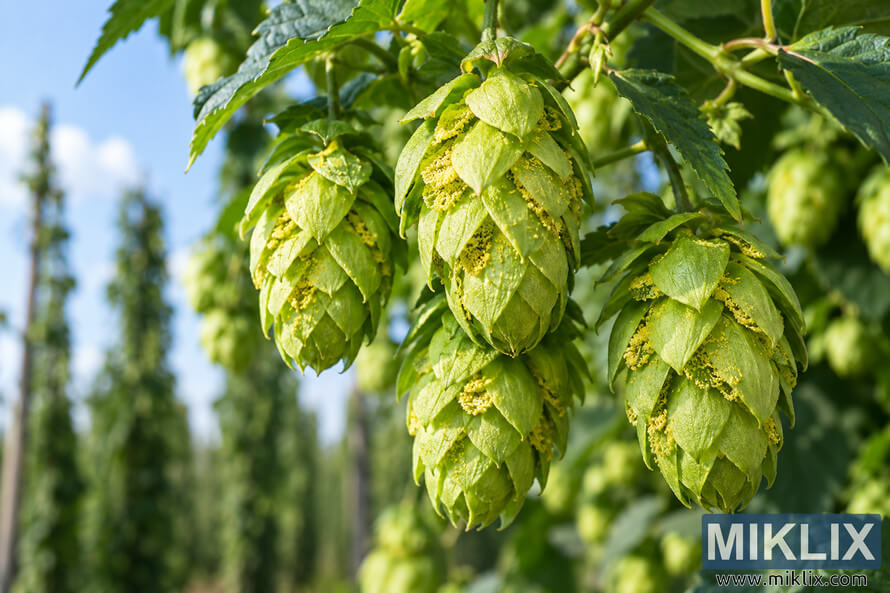
Jester is a modern British aroma hop known for bringing bold notes of grapefruit, tropical fruit, and blackcurrant, with a subtle resinous edge—perfect for giving pale ales, IPAs, and other hop-forward homebrews a distinctly British twist.
Click or tap the image for more information and higher resolutions.
Jester hops represent one of the most exciting developments in English hops breeding over recent years. This New World-style variety brings bold citrus and resin characteristics to your homebrew while maintaining the terroir of traditional English hops. Whether you're crafting a modern IPA or adding complexity to classic ales, understanding Jester hop characteristics unlocks new brewing possibilities.
This comprehensive guide walks you through everything homebrewers need to know about working with Jester hops. From alpha acids content to dry hop techniques, you'll discover practical tips that help you brew better beer at home.
Origin and Breeding History of Jester Hops
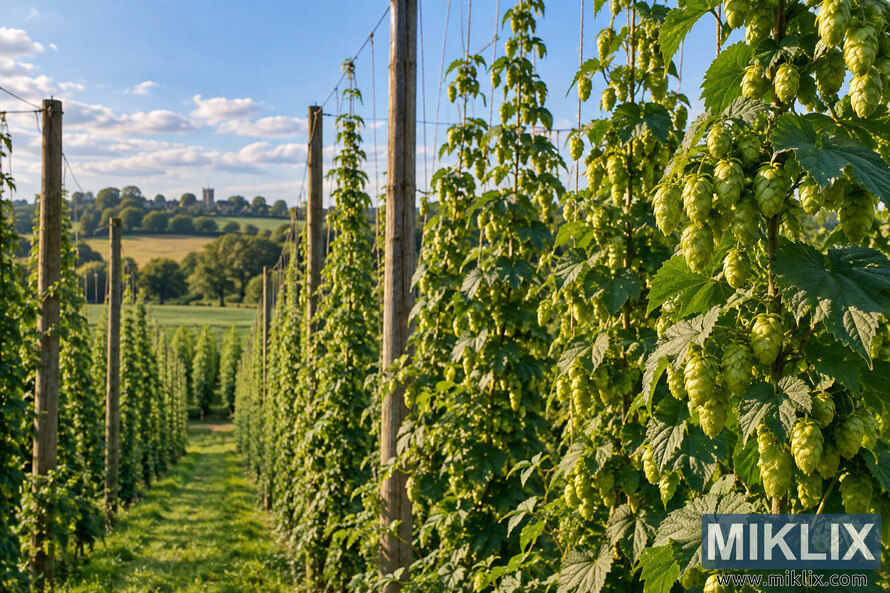
Jester hops emerged from the Charles Faram hop development program in the United Kingdom. Charles Faram, a leading hop merchant and breeder, developed this variety to meet the growing demand for English hops with New World characteristics. The breeding work focused on creating a hop that could compete with American varieties while maintaining unique English terroir.
The development process took several years of careful seedling selection and field trials. Brewers at Charles Faram hop development facilities worked to identify seedling candidates that showed exceptional aroma profiles. The final Jester variety represents the best traits from multiple breeding cycles.
This hop variety officially launched to commercial brewers and homebrewers in recent years. Since introduction, Jester hopsjester have gained recognition among craft brewers looking for distinctive English hops alternatives. The variety fills a unique space between traditional English varieties and bold American hops.
Click or tap the image for more information and higher resolutions.
Key Breeding Objectives
- High alpha acids content for efficient bittering
- Bold citrus and resin aroma characteristics
- Strong agronomic performance in English climate
- Distinctive flavor profile for modern beer styles
Charles Faram Hop Development Legacy
Charles Faram has contributed significantly to English hops breeding programs over the years. Their development work focuses on creating varieties that satisfy modern brewing needs while respecting traditional English hop cultivation methods. Jester represents their commitment to innovation in the UK hop industry.
The company's breeding program continues to release new varieties that expand options for brewers worldwide. Each release undergoes extensive field testing and brewing trials before commercial launch.
Aroma and Flavor Profile: What Makes Jester Hops Unique
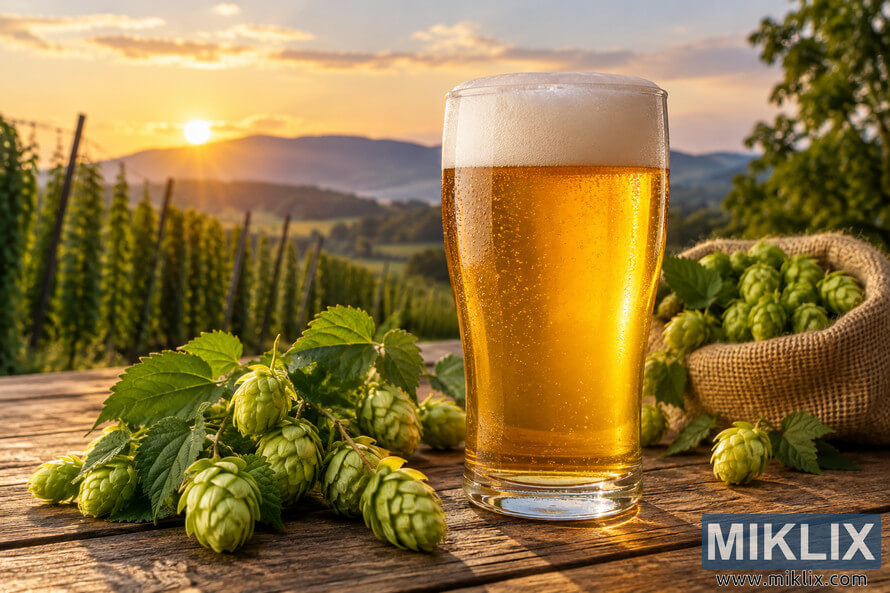
Jester hop aroma delivers an impressive combination of citrus brightness and resinous depth. The flavor profile stands out among English hops varieties for its bold, New World characteristics. Brewers describe the aroma as grapefruit-forward with layers of lychee, resin, and subtle tropical notes.
The citrus character comes through strongly in both hot-side and cold-side additions. When used in whirlpool or dry hop applications, Jester hops contribute intense grapefruit and citrus peel notes. The resin component adds depth and complexity that prevents the hop from being one-dimensional.
Flavor Note: Many brewers compare Jester hop flavor to a combination of Citra and English Cascade varieties. The citrus intensity rivals American hops while the underlying character remains distinctly English.
Click or tap the image for more information and higher resolutions.
Essential Oil Composition
The lupulin glands in Jester hops contain a unique oils profile that drives the variety's distinctive aroma. Total oil content typically measures higher than traditional English hops, contributing to the variety's aromatic intensity. The oils composition includes significant myrcene content along with notable levels of other aromatic compounds.
| Aroma Component | Character Description | Intensity Level |
| Citrus (Grapefruit) | Bright, zesty grapefruit peel and juice | High |
| Resin | Pine-like, sticky resinous quality | Medium-High |
| Tropical Fruit | Lychee, passionfruit undertones | Medium |
| Herbal | Subtle grassy, herbal notes | Low |
Comparison with Other English Hops
Traditional English hops like Fuggle and East Kent Goldings deliver earthy, floral, and spicy characteristics. Jester hop takes English breeding in a completely different direction. The variety shows how modern breeding programs can expand the range of English hops beyond classic profiles.
When compared to well traditional English varieties, Jester offers significantly higher impact aroma. The citrus and resin notes provide options for brewers who want English provenance without traditional English flavor. This makes Jester particularly valuable for modern pale ales and IPAs.
Alpha Acid Content and Technical Brewing Data
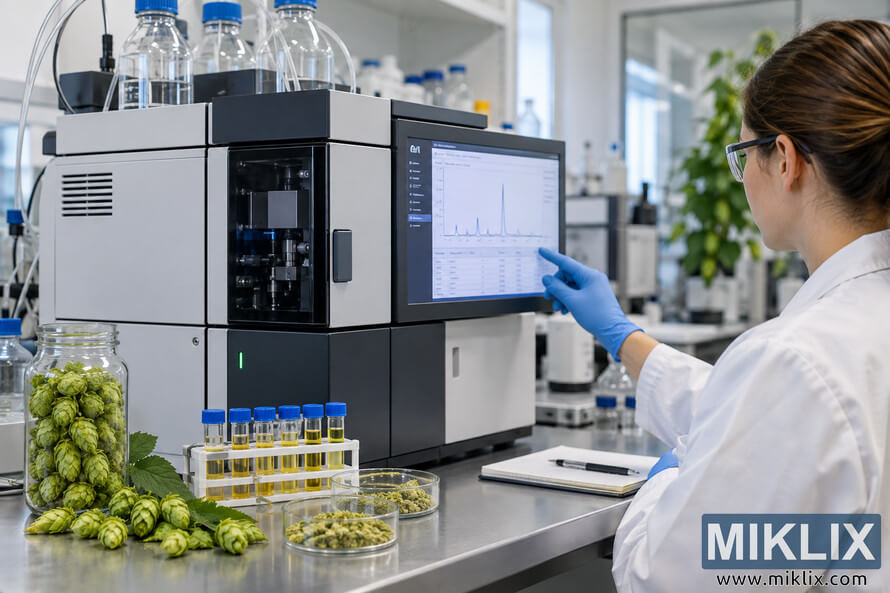
Understanding the alpha acids and beta acids composition of Jester hops helps brewers calculate accurate bitterness contributions. The variety typically contains alpha acids ranging from 4 to 6 percent, positioning it as a moderate alpha hop. This alpha acids content makes Jester versatile for both bittering and aroma applications.
Beta acids levels complement the alpha content, contributing to the overall resinous quality. The cohumulone percentage falls within moderate ranges, supporting a smooth bitterness quality rather than harsh bite. These technical specifications inform how brewers should approach recipe formulation.
Click or tap the image for more information and higher resolutions.
Technical Specifications Overview
Acid Content Ranges
- Alpha Acids: 4.0-6.0%
- Beta Acids: 3.0-4.5%
- Cohumulone: 28-32% of alpha acids
- Total Oils: 1.0-1.8 mL/100g
Growing and Processing Data
- Origin: United Kingdom (England)
- Harvest Period: Late August to September
- Yield: Moderate to good
- Storage Stability: Good when properly stored
Typical Usage Rates for Homebrewing
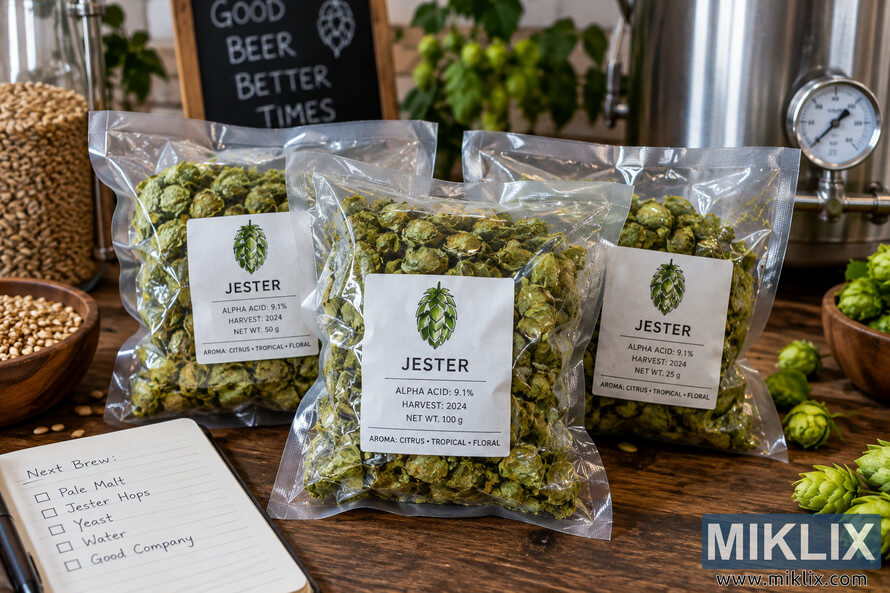
Homebrewers should adjust Jester hops quantities based on desired bitterness and aroma intensity. For bittering additions at 60 minutes, use standard International Bitterness Units (IBU) calculations with the variety's alpha acids percentage. Late additions and dry hop applications require different considerations.
A typical 5-gallon homebrew batch might use 0.5 to 1.0 ounces of Jester hops for bittering. Aroma additions at flameout or in the whirlpool work well with 1.0 to 2.0 ounces. Dry hop rates vary from 2.0 to 4.0 ounces depending on target intensity and beer style.
Brewing Tip: Because Jester's alpha acids content sits in the moderate range, you may need slightly more hop material compared to high-alpha varieties when targeting the same bitterness level. Calculate your additions carefully using brewing software or IBU formulas.
Click or tap the image for more information and higher resolutions.
Ideal Beer Styles for Jester Hops
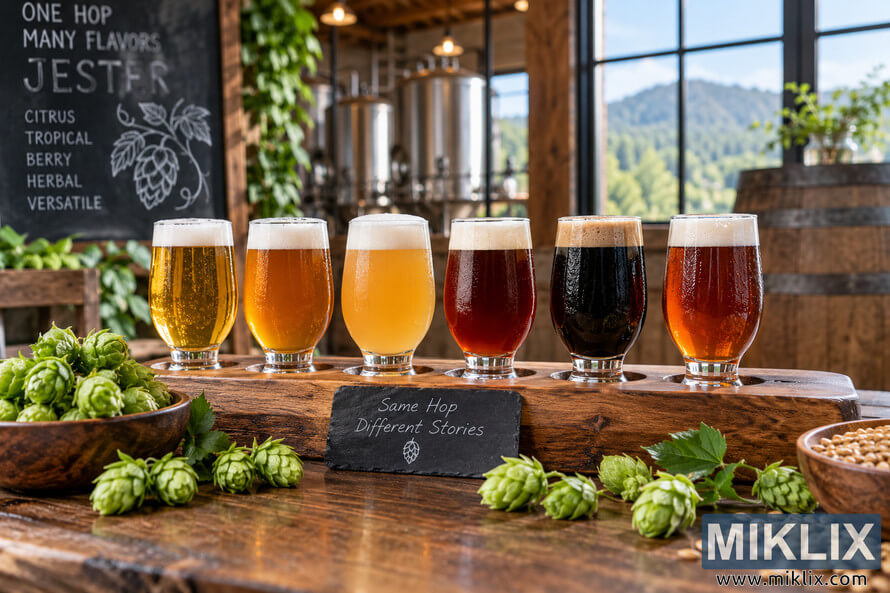
Jester hops excel in modern beer styles that showcase bold hop character. The variety's citrus and resin profile makes it particularly well-suited for American-style pale ales and IPAs. However, brewers have successfully used Jester in a wider range of styles than you might expect.
Primary Style Recommendations
American IPA
The flagship style for Jester hop usage. The variety's grapefruit and resin character aligns perfectly with American IPA expectations. Use Jester as a primary hop throughout the boil, whirlpool, and dry hop phases for maximum impact. Target 40-70 IBUs with substantial late-addition and dry hop contributions.
Jester works exceptionally well in single-hop IPAs, allowing the variety's unique character to shine. Alternatively, pair with complementary American hop varieties for added complexity. The English terroir provides a subtle point of difference from purely American-hopped beers.
Pale Ale
Whether brewing American pale ale or modern English pale ale styles, Jester delivers appropriate bitterness and outstanding aroma. The moderate alpha acids content suits pale ale IBU targets of 30-45. Late kettle additions and moderate dry hopping rates produce balanced, drinkable beers.
Consider using Jester hops alongside traditional English malt character for a unique twist on English pale ales. The citrus notes complement biscuit and caramel malt flavors while adding contemporary appeal. This approach creates bridges between traditional and modern brewing styles.
Click or tap the image for more information and higher resolutions.
Additional Suitable Styles
Highly Recommended
- Session IPA - lower alcohol with full hop flavor
- New England IPA - emphasizing juicy citrus character
- Blonde Ale - adding interest to lighter styles
- Wheat Beer - citrus complements wheat character
Worth Experimenting
- Extra Special Bitter - modern take on classic style
- Saison - citrus hops with spicy yeast
- American Amber - balancing malt and hop
- Specialty Lagers - hop-forward lager styles
Use With Caution
- Stout - citrus may clash with roast
- Traditional English Bitter - too bold for style
- Belgian Strong Ale - competes with yeast character
- Pilsner - overpowers delicate malt
Style Pairing Considerations
When selecting beer styles for Jester hop, consider the overall flavor balance you want to achieve. The variety's bold character works best in styles where hop aroma plays a featured role. Lighter-bodied beers allow the citrus and resin notes to shine without interference from heavy malt presence.
Yeast selection also matters when showcasing Jester hops. Clean American ale yeasts like US-05 or British strains with subtle character let the hop flavor dominate. More expressive yeast strains may compete with or complement the hop profile depending on your creative vision.
Practical Homebrewing Tips and Techniques
Success with Jester hops depends on applying appropriate brewing techniques at each stage. The variety responds particularly well to late-addition hopping methods that preserve volatile aroma compounds. Understanding when and how to add these hops maximizes their contribution to your beer.
Boil Addition Strategy
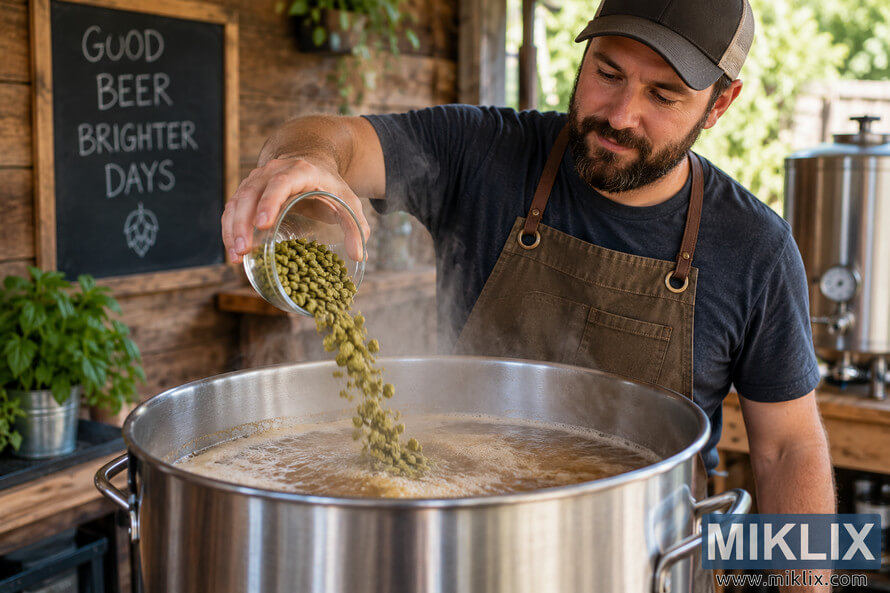
For bitterness contributions, add Jester hops early in the boil following standard practices. A 60-minute addition provides clean bitterness without excessive aroma carryover. Calculate your quantities based on the specific alpha acids percentage of your hop lot and desired IBU target.
Late boil additions between 15 and 5 minutes before flameout contribute both flavor and some aroma. These additions build the foundation for the hop profile before whirlpool and dry hop layers. Consider using 25-40 percent of your total hop bill in late boil additions for American-style ales.
Recommended Boil Schedule
- 60-minute addition: 30% of total hops (bittering)
- 15-minute addition: 20% of total hops (flavor)
- 5-minute addition: 20% of total hops (flavor/aroma)
- Whirlpool: 30% of total hops (aroma)
This schedule balances bitterness with the aromatic punch that Jester hop delivers best. Adjust percentages based on your specific style goals and personal preferences. Some brewers prefer moving more hops to whirlpool and dry hop for increased aroma emphasis.
Always record your exact additions and resulting beer characteristics. This information helps refine your process over multiple brew days with the variety. Small adjustments to timing and quantities can significantly impact the final product.
Click or tap the image for more information and higher resolutions.
Whirlpool and Hop Stand Techniques
Whirlpool additions extract maximum aroma from Jester hops while minimizing harsh bitterness. After completing the boil, cool the wort to 180-190°F before adding whirlpool hops. Hold this temperature for 20-30 minutes while circulating the wort to create a whirlpool effect that settles trub.
The combination of heat and time during whirlpool dry hop extracts aromatic oils without excessive isomerization of alpha acids. This technique produces intense citrus and resin aromatics that define modern hoppy beers. Many brewers consider whirlpool additions essential when working with aromatic hop varieties like Jester.
Dry Hopping Methods
Dry hop additions showcase Jester's most impressive aromatic qualities. Add hops to the fermenter after primary fermentation completes but while some yeast remains active. This timing allows any oxygen introduced with the hops to be scrubbed by residual yeast activity.
For a 5-gallon batch, use 2-4 ounces of Jester hops for dry hopping depending on desired intensity. Contact time of 3-5 days at fermentation temperature produces optimal results. Longer dry hop periods may extract excessive vegetative or grassy notes that detract from the citrus character.
Dry Hopping Benefits
- Maximum aroma extraction with zero bitterness
- Showcases Jester's grapefruit and citrus character
- Adds complexity through biotransformation
- Creates perceived smoothness and drinkability
Common Pitfalls to Avoid
- Excessive dry hop duration creating grassy notes
- Too much hop material reducing beer yield
- Adding hops too early before fermentation completes
- Inadequate cold crash causing hop haze
Water Chemistry Considerations
Water chemistry impacts how hop bitterness and flavor present in finished beer. For beers emphasizing Jester hop character, consider water profiles that enhance hop perception. Moderate sulfate levels between 150-250 ppm accentuate hop bitterness and dryness.
Keep chloride levels lower than sulfate to maintain hop-forward balance. A sulfate-to-chloride ratio of 2:1 or higher works well for IPA and pale ales featuring Jester. Avoid excessive mineral additions that create harsh or astringent qualities that compete with hop character.
Storage and Handling for Optimal Freshness
Proper storage preserves the aromatic qualities that make Jester hops special. Like all hop varieties, Jester degrades when exposed to oxygen, heat, and light. Implementing correct storage practices ensures your hops maintain their citrus and resin character from purchase through brew day.
Immediate Storage After Purchase
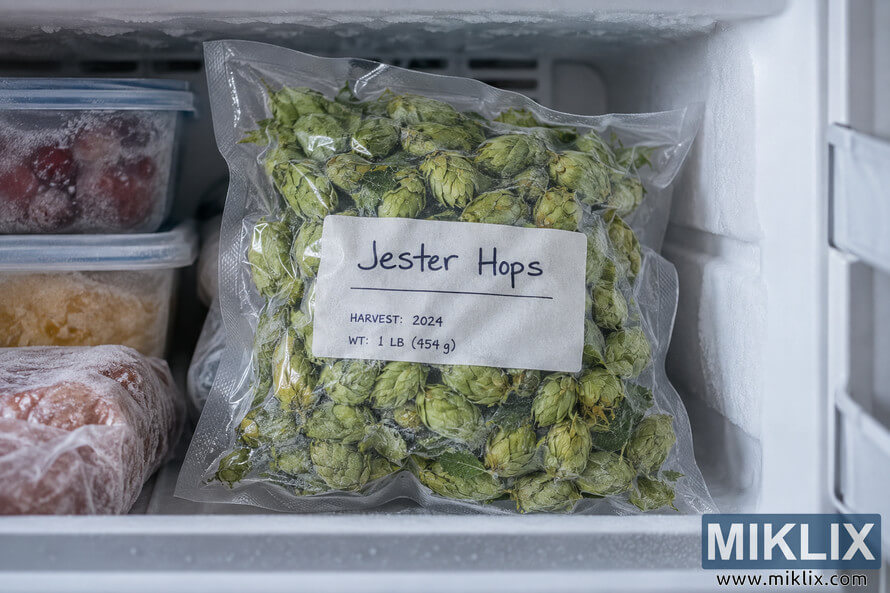
Store Jester hops in your freezer immediately after receiving them. If hops arrive in oxygen-barrier bags, leave them sealed until you're ready to brew. Opening hop packages exposes the product to oxygen and begins the degradation process. Plan your brewing schedule to minimize the time between opening packages and using the hops.
For homebrewers who buy hops in larger quantities, consider vacuum sealing smaller portions for individual brew days. This approach limits oxygen exposure to only the portion you're using. Vacuum sealing equipment represents a worthwhile investment for serious homebrewers who purchase hops in bulk.
Click or tap the image for more information and higher resolutions.
Long-Term Storage Best Practices
Temperature Control
Maintain consistent freezer temperature below 0°F (-18°C) for optimal preservation. Temperature fluctuations accelerate degradation even in sealed packages.
- Use a dedicated freezer if possible
- Avoid frequent door opening
- Monitor temperature with a thermometer
- Keep hops away from the door
Oxygen Exclusion
Oxygen causes oxidation of hop acids and oils, destroying aroma and creating unpleasant characteristics. Minimize exposure through proper packaging and handling.
- Use vacuum-sealed bags or oxygen-barrier packaging
- Purge containers with CO2 if available
- Seal opened packages tightly
- Use smaller package sizes when possible
Light Protection
Light exposure degrades hop compounds and creates off-flavors. Store hops in opaque containers or dark environments away from direct light.
- Keep hops in original foil packaging
- Use opaque storage containers
- Store in dark areas of freezer
- Avoid clear plastic bags or containers
Organization and Dating
Proper labeling and organization helps you use older hops first and track inventory effectively. Good records prevent waste and ensure quality.
- Label packages with purchase date
- Note harvest year and alpha acids
- Rotate stock using oldest first
- Keep inventory list updated
Recognizing Degraded Hops
Learn to identify when Jester hops have degraded beyond acceptable quality. Fresh hops display vibrant green color, sticky lupulin glands, and intense aromatic qualities. Degraded hops show brown discoloration, dry or crumbly texture, and diminished or off aromas.
The aroma test provides the most reliable quality check. Fresh Jester should smell intensely of grapefruit and resin when you rub the cones. If hops smell cheesy, moldy, or lack distinct character, they've degraded too far for optimal brewing results. While degraded hops may still contribute bitterness, they won't deliver the aromatic experience that makes Jester special.
Recipe Ideas and Usage Recommendations
Putting Jester hops into practice requires well-designed recipes that showcase the variety's strengths. These recipe frameworks provide starting points for your own brewing experiments. Adjust quantities and techniques based on your equipment and personal taste preferences.
Recipe 1: Single-Hop Jester IPA
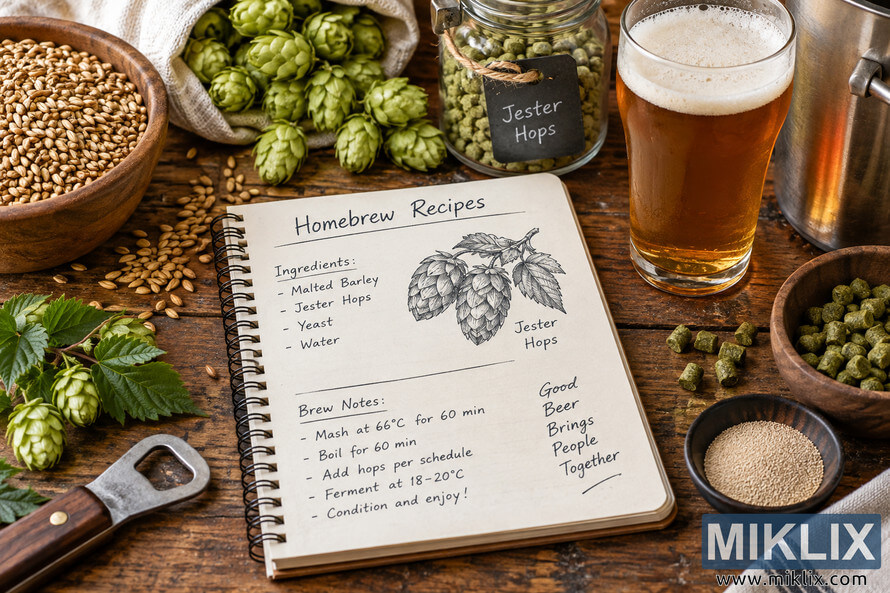
This recipe highlights Jester hop character without interference from other varieties. The simple malt bill allows the citrus and resin profile to dominate. Target original gravity of 1.062 and approximately 65 IBUs for a balanced, drinkable IPA.
| Ingredient | Amount (5 gal) | Percentage | Notes |
| American 2-Row Pale Malt | 11.0 lbs | 91% | Base malt foundation |
| Crystal 40L | 0.75 lbs | 6% | Body and malt sweetness |
| Wheat Malt | 0.5 lbs | 3% | Head retention |
Hop Schedule for Single-Hop IPA
- 60 minutes: 0.75 oz Jester hops (bittering to ~35 IBUs)
- 15 minutes: 0.5 oz Jester hops (flavor)
- 5 minutes: 0.5 oz Jester hops (flavor/aroma)
- Whirlpool (180°F): 2.0 oz Jester hops (20 min steep)
- Dry hop: 3.0 oz Jester hops (4 days in fermenter)
Fermentation
- Yeast: US-05 or similar clean American ale yeast.
- Fermentation: 68°F for 10-14 days.
- Expected Results: OG 1.062, FG 1.012, ABV 6.5%, IBU 65. Expect intense grapefruit aroma with resinous depth and smooth bitterness.
Click or tap the image for more information and higher resolutions.
Recipe 2: Jester Session Pale Ale
Lower alcohol content makes this pale ale perfect for extended drinking sessions. The restrained grain bill lets Jester shine while keeping the beer light and refreshing. Target original gravity of 1.044 and 35-40 IBUs for balanced drinkability.
Grain Bill
- 7.0 lbs Maris Otter pale malt (88%)
- 0.5 lbs Munich malt (6%) - adds malt complexity
- 0.5 lbs Wheat malt (6%) - improves body and head
Hop Schedule for Session Pale Ale
- 60 minutes: 0.5 oz Jester hops (bittering)
- 10 minutes: 0.5 oz Jester hops (flavor)
- Flameout: 1.0 oz Jester hops (steep 15 min)
- Dry hop: 1.5 oz Jester hops (3 days)
Fermentation
- Yeast: British ale yeast like S-04 or London ESB.
- Fermentation: 66°F for 7-10 days.
- Expected Results: OG 1.044, FG 1.010, ABV 4.5%, IBU 38. This beer showcases Jester in a lighter format perfect for British-style sessionability with New World hop character.
Recipe 3: Jester New England IPA
The hazy IPA style emphasizes juicy hop character that complements Jester's citrus profile. Higher protein grains create the characteristic haze while the hop schedule maximizes aroma. Target original gravity of 1.068 with restrained bitterness around 45 IBUs.
Grain Bill
- 9.0 lbs American 2-Row (69%)
- 2.0 lbs Flaked Oats (15%)
- 1.5 lbs Wheat malt (12%)
- 0.5 lbs Carapils (4%)
The high proportion of oats and wheat creates the smooth, pillowy mouthfeel characteristic of New England IPAs. Carapils adds body without increasing sweetness. This grain bill produces substantial haze that holds hop particles in suspension.
Hop Schedule for NEIPA
- 60 minutes: 0.5 oz Jester hops (minimal bittering)
- Whirlpool (170°F): 3.0 oz Jester hops (30 min steep)
- Dry hop #1: 2.0 oz Jester hops (high krausen, day 3)
- Dry hop #2: 2.0 oz Jester hops (post-fermentation, day 7)
Fermentation
- Yeast: London Ale III or similar ester-producing strain.
- Fermentation: 68°F ramping to 72°F.
- Water: 2:1 chloride to sulfate for smoothness.
- Expected Results: OG 1.068, FG 1.014, ABV 7.1%, IBU 45. The double dry hop produces intense citrus and tropical aromatics with soft, pillowy texture.
Common Questions and Troubleshooting
Can I substitute Jester hops for other varieties in existing recipes?
Jester can substitute for other citrus-forward hop varieties in most recipes. Consider it as an alternative to Cascade, Centennial, or even Citra in some applications. The citrus and resin profile works particularly well replacing American C-hops in pale ales and IPAs.
When substituting, adjust quantities based on alpha acids differences. If your original recipe calls for a higher-alpha hop like Simcoe, you'll need more Jester to achieve the same bitterness. Focus substitutions on late additions and dry hop where Jester's aromatic qualities shine brightest.
Why does my beer taste grassy or vegetal when using Jester hops?
Grassy or vegetal notes typically indicate excessive dry hop contact time or too much hop material. Jester hops are aromatic enough that shorter dry hop periods of 3-4 days produce optimal results. Extended contact beyond one week can extract undesirable characteristics.
Another cause may be using hops that were improperly stored or degraded. Always check that your Jester hops smell fresh and vibrant before brewing. If hops lack distinct citrus aroma or smell off, they may have oxidized during storage.
How do I get maximum grapefruit character from Jester?
Emphasize late-addition and dry hop applications to maximize the grapefruit citrus notes. Use minimal bittering additions at 60 minutes, then load up the whirlpool with 2-3 ounces per 5 gallons. Follow with a substantial dry hop of 3-4 ounces.
Water chemistry also impacts citrus perception. A sulfate-forward water profile with 200-250 ppm sulfate enhances hop character perception. Keep your mash pH in the lower end of acceptable range (5.2-5.3) for brighter hop expression.
What temperature should I use for whirlpool additions?
For Jester hops, target whirlpool temperatures between 170-185°F. This range extracts aromatic oils while minimizing additional bitterness from alpha acids isomerization. Lower temperatures around 170°F produce more aroma with less bitterness, while higher temperatures toward 185°F add more flavor intensity.
Hold the temperature steady during the whirlpool stand for 20-30 minutes. Some brewers prefer two-stage whirlpool additions: one at 185°F for 10 minutes, then cool to 170°F and add more hops for another 20 minutes. Experiment to find your preferred balance.
How long can I store Jester hops in the freezer?
Properly stored Jester hops in vacuum-sealed packaging maintain good quality for 12-18 months in a freezer at 0°F or below. After opening packages, quality begins declining more rapidly even with careful resealing. Plan to use opened packages within 3-6 months for optimal aroma preservation.
Always label packages with purchase date and harvest year. Use older stock before newer purchases to rotate inventory effectively. If you notice diminished aroma when checking hops before brew day, consider using them for bittering rather than aroma applications.
Can I grow Jester hops in my home garden?
Jester hops are available to home growers in some regions, though availability varies. The variety was bred for UK growing conditions, performing best in temperate climates with adequate day length. Contact specialty hop rhizome suppliers to check current availability.
Home-grown hops require several years to reach full production. First-year harvests typically yield minimal cones, with production increasing in years two and three. Growing your own hops provides unmatched freshness but requires patience, space, and suitable climate conditions.

Click or tap the image for more information and higher resolutions.
Comparing Jester to Similar Hop Varieties
Understanding how Jester relates to other hop varieties helps brewers make informed decisions. While each hop brings unique characteristics, some varieties share similar profiles or applications. Knowing these relationships expands your creative options when formulating recipes.
Primary Comparison: American Cascade
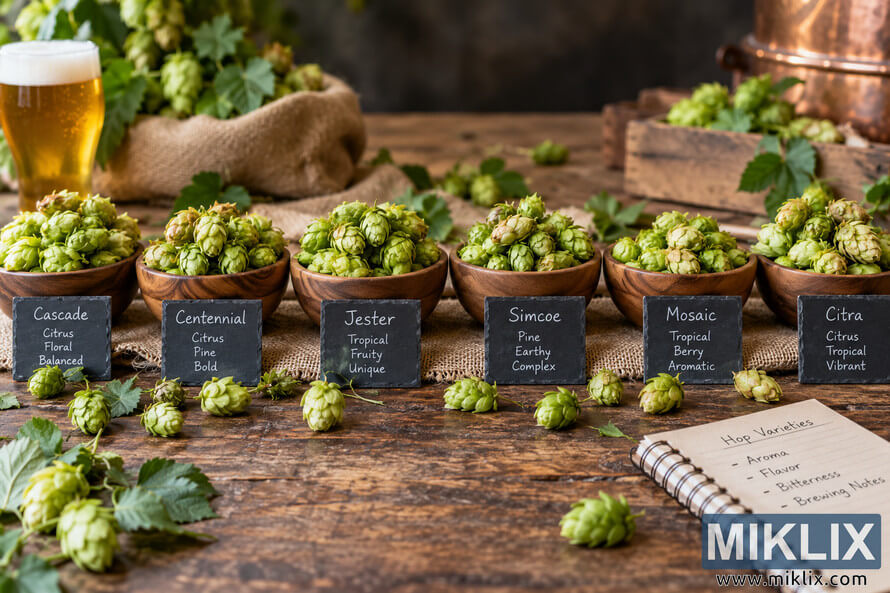
Both Jester and Cascade deliver citrus-forward profiles with grapefruit notes. However, Jester tends toward more intense resin character while Cascade leans floral. Jester's alpha acids content runs slightly higher on average, providing more bittering potential. The English terroir in Jester provides subtle differences that distinguish it from purely American Cascade.
In recipes calling for Cascade, Jester makes an excellent alternative that adds intensity. The reverse substitution also works, though expect softer overall impact. Consider blending the two varieties for added complexity that combines American and English hop character.
Click or tap the image for more information and higher resolutions.
Secondary Comparisons
| Variety | Alpha Acids | Primary Character | Comparison to Jester |
| Cascade | 4.5-7.0% | Citrus, floral, grapefruit | Similar citrus but less resin, more floral |
| Centennial | 9.5-11.5% | Citrus, pine, floral | Higher alpha, similar citrus profile |
| Chinook | 12-14% | Pine, resin, grapefruit | Shares resin quality, much higher alpha |
| Mosaic | 11.5-13.5% | Berry, tropical, citrus | More complex fruit, higher alpha |
Blending Suggestions
Jester pairs well with complementary hop varieties to create complex flavor profiles. Consider these proven combinations for your next brew:
- Jester + Citra: Amplifies citrus character while adding tropical notes
- Jester + Mosaic: Creates berry-citrus complexity with resinous depth
- Jester + Columbus: Increases resin and dank qualities
- Jester + Galaxy: Combines grapefruit with passionfruit for unique profile
- Jester + Traditional English hops: Bridges old and new world character
When blending, use Jester as either the primary or supporting hop depending on your goal. As a primary hop at 60-70 percent of the total, Jester defines the beer's character. As a supporting hop at 25-40 percent, it adds citrus and resin notes that complement the main variety.
Conclusion
Jester hops offer homebrewers a distinctive variety that bridges traditional English hop character with modern New World intensity. The combination of citrus and resin makes this hop variety particularly valuable for contemporary beer styles. From American IPA to session pale ales, Jester delivers the bold flavor profile that craft beer enthusiasts seek.
Success with Jester requires understanding its characteristics and applying appropriate brewing techniques. Focus on late-addition hopping methods that preserve aromatic compounds. Pay attention to storage conditions that maintain freshness. Most importantly, don't be afraid to experiment with different usage rates and techniques to find what works best for your brewing system and taste preferences.
As English hops continue evolving through breeding programs like those at Charles Faram, varieties like Jester demonstrate the potential for UK hops in modern craft brewing. This variety proves that innovation in hop breeding creates exciting possibilities for brewers who want distinctive flavors. Whether you're brewing your first batch with Jester or refining recipes you've made many times, this hop variety rewards careful attention and creative application.
Click or tap the image for more information and higher resolutions.
Further Reading
If you enjoyed this post, you may also like these suggestions: