
Hops in Beer Brewing: Sun
Published: November 12, 2026 at 9:33:54 PM UTC
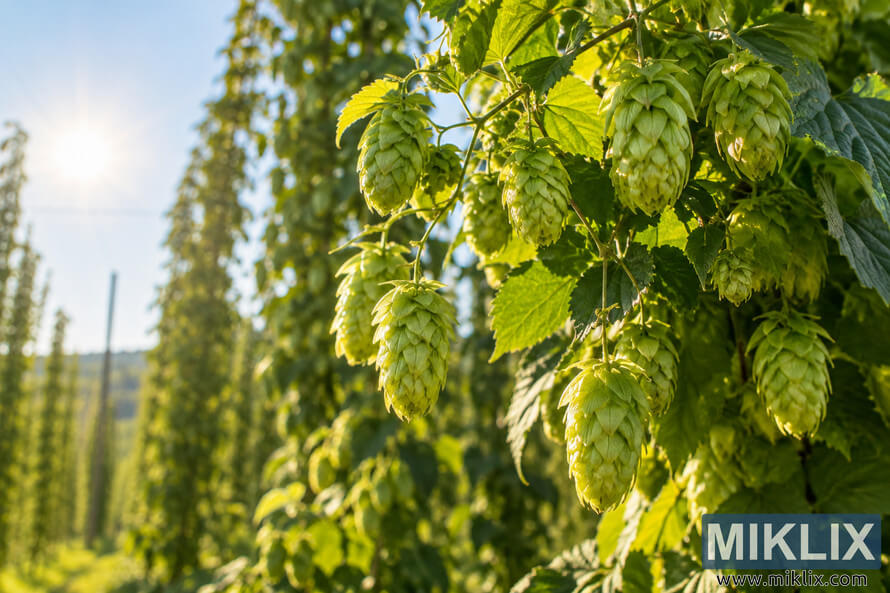
Sun is an American hop variety known for its mild, clean character with subtle floral, citrus, and herbal notes—an understated choice for lagers, pale ales, and other balanced homebrews where a gentle hop presence is desired.
Click or tap the image for more information and higher resolutions.
Sun hops represent a unique cultivar that has captured the attention of craft brewers and homebrewers seeking distinctive flavor profiles. This hop variety delivers a remarkable combination of citrus and stone fruit characteristics that can transform your beer brewing projects. Whether you are crafting your first batch or refining advanced recipes, understanding the nuances of Sun hops will elevate your homebrewing results.
The growing interest in specialty hop varieties has made information about proper usage essential for brewing success. Sun hops offer homebrewers an opportunity to create beers with complex aroma profiles and balanced bitterness. This guide provides comprehensive coverage of everything you need to know about incorporating this variety into your brewing process.
Understanding Sun Hops: Origin, Genetics, and Key Characteristics
The Sun hops variety emerged from breeding programs focused on developing hop plants with enhanced aroma characteristics and reliable growing season performance. This cultivar demonstrates strong production capabilities and consistent cone development throughout the growing season. The hop plant exhibits vigorous growth patterns that make it suitable for both commercial operations and home garden cultivation.
Click or tap the image for more information and higher resolutions.
Genetic Background and Development
Sun hops originated from careful selection processes that prioritized specific flavor compounds and growing characteristics. The variety shows excellent resistance to common hop diseases and demonstrates strong performance across different growing conditions. Plant breeders focused on creating a cultivar that would thrive in various climate zones while maintaining consistent lupulin content and essential oil production.
The development process emphasized creating female plants that produce cones with optimal resin content. These hop cones contain the acids and aromatic compounds that contribute to beer brewing quality. The breeding program considered factors like disease control, production yield, and the overall growing season requirements.
Physical Characteristics of Sun Hops
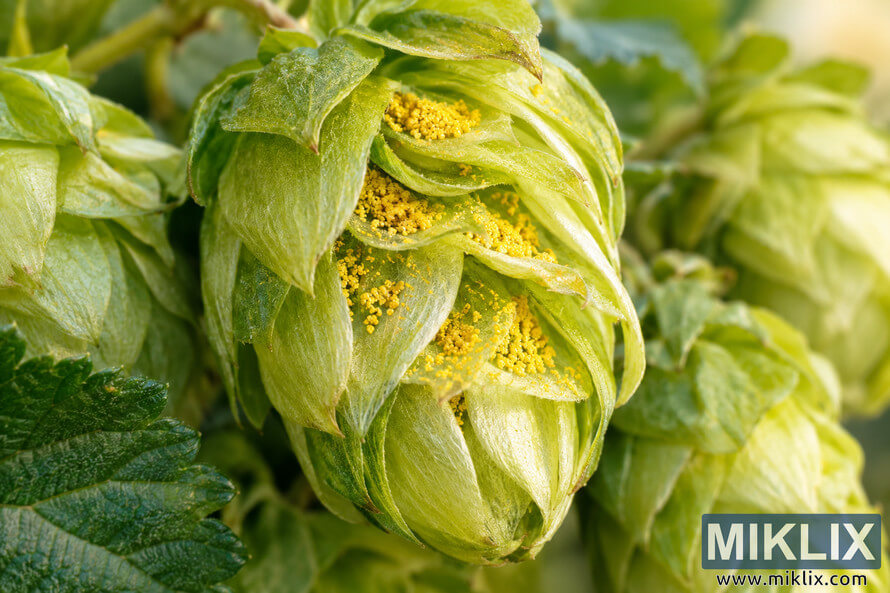
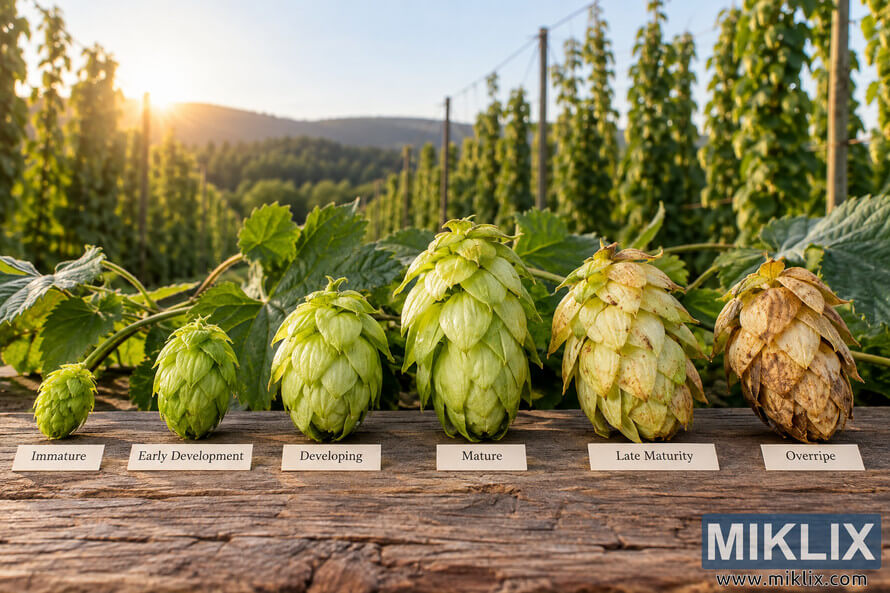
Sun hop cones display a distinctive appearance that helps identify this variety in the garden. The cones develop a compact structure with tightly overlapping bracts. Color ranges from pale green to golden yellow as the cones mature through the growing season. Size typically measures medium to large, with individual cones reaching optimal harvest dimensions.
Click or tap the image for more information and higher resolutions.
Key Physical Identifiers
- Cone structure exhibits compact, dense formation
- Mature cones show golden-yellow coloration
- Lupulin glands appear abundant and resinous
- Bracts overlap tightly creating firm cone body
- Size ranges from medium to large dimensions
- Stem attachment shows strong connection to bine
Alpha and Beta Acids Profile
The chemical composition of Sun hops includes alpha acids ranging from moderate to moderately high levels. These acids contribute to bitterness when isomerized during the boiling phase of beer brewing. Beta acids provide additional complexity and contribute to the stability of the finished beer. The balanced ratio between these acids makes Sun hops versatile for multiple brewing applications.
Sun Hops Flavor and Aroma Profile: What to Expect in Your Beer
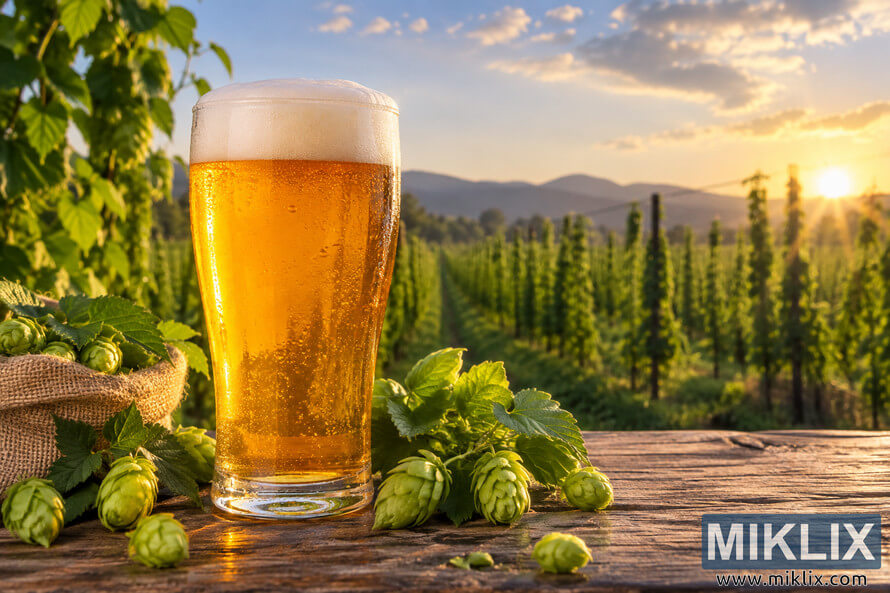
The sensory characteristics of Sun hops create distinctive impressions in finished beer. Understanding these flavor and aroma attributes helps homebrewers make informed decisions about recipe formulation and hop usage timing. The variety offers multiple layers of complexity that develop differently depending on when hops are added during brewing.
Click or tap the image for more information and higher resolutions.
Primary Aroma Characteristics
Sun hops deliver pronounced citrus notes that form the foundation of their aroma profile. Grapefruit and orange characteristics emerge prominently when used in late additions or dry hopping applications. Stone fruit elements including apricot and peach create additional complexity. These primary aroma compounds remain stable through proper storage and handling.
The intensity of aroma depends significantly on how and when brewers introduce Sun hops into the brewing process. Late kettle additions preserve volatile aromatic compounds that would dissipate during extended boiling. Dry hopping maximizes aroma expression by avoiding heat degradation of essential oils.
Aroma Descriptors for Sun Hops
Citrus forward with grapefruit and orange zest dominating. Stone fruit undertones of apricot and peach. Subtle tropical notes appear in some batches. Light floral hints provide background complexity. Minimal earthy or piney characteristics compared to other varieties.
Flavor Contributions
The flavor profile of Sun hops complements their aroma characteristics while adding unique dimensions. Citrus flavors translate directly to the palate with bright, clean expressions. The variety contributes moderate bitterness that balances malt sweetness without overwhelming other beer components. Flavor persistence remains notable without becoming harsh or astringent.
When used for bittering early in the boil, Sun hops provide clean bitterness without excessive flavor carryover. This makes the variety suitable for beers where hop flavor should remain subtle. Conversely, late additions and dry hopping showcase the full flavor potential of this cultivar.
Flavor Strengths
- Bright citrus character enhances drinkability
- Clean bitterness without harsh edges
- Balanced flavor that works across beer styles
- Stone fruit complexity adds interest
- Pleasant finish without lingering astringency
Flavor Considerations
- Citrus dominance may not suit all styles
- Requires proper storage to maintain freshness
- Can become muted in high-gravity beers
- May clash with certain malt profiles
- Timing affects flavor expression significantly
Essential Oil Composition
The essential oils in Sun hop cones determine much of the variety's sensory impact. These volatile compounds include myrcene, humulene, caryophyllene, and farnesene in varying proportions. Each oil contributes specific aromatic and flavor characteristics. The oil content per cone affects how much aroma potential exists in a given batch.
Myrcene levels influence the citrus and tropical fruit notes. Humulene provides subtle earthy and spicy undertones. Caryophyllene adds peppery complexity. The balance of these oils creates the complete sensory experience. Proper handling preserves these delicate compounds from oxidation and degradation.
Growing Sun Hops: Cultivation Requirements for Home Gardeners
Many homebrewers choose to grow their own hop plants to ensure fresh supply and reduce costs. Sun hops can thrive in home garden settings when provided with proper growing conditions. Understanding cultivation requirements helps gardeners achieve successful hop production from rhizomes through harvest.
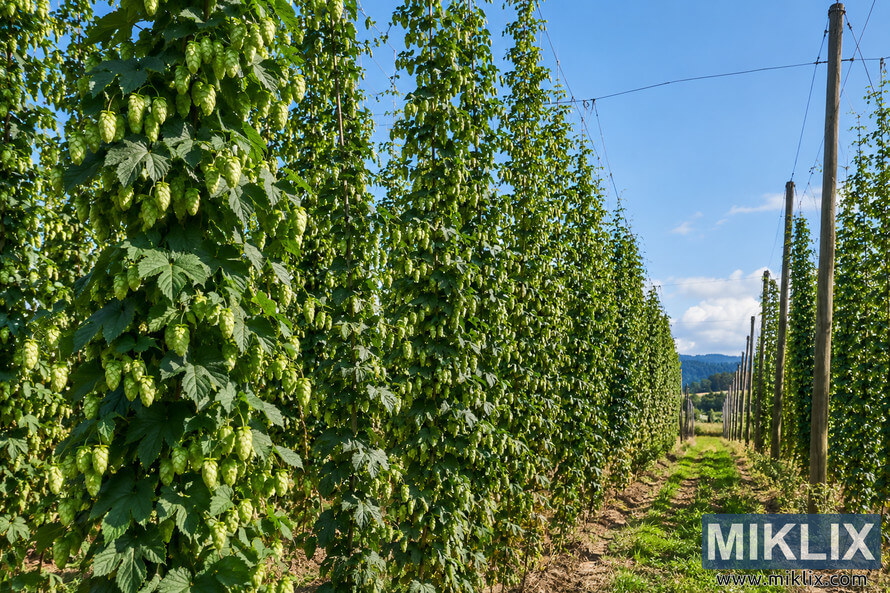
Click or tap the image for more information and higher resolutions.
Site Selection and Soil Preparation
Sun hops require full sun exposure for optimal cone production and lupulin development. Select planting locations that receive at least eight hours of direct sunlight daily. The hop plant develops extensive root systems that need well-draining soil to prevent root rot and disease issues. Soil pH should range between six and eight for best nutrient uptake.
Prepare the soil surface by incorporating organic matter several weeks before planting. Remove competing vegetation and ensure adequate drainage. The area should provide protection from strong winds while allowing good air circulation around developing vines. Space plants appropriately to prevent overcrowding as the hop plant matures.
Soil Amendment Recommendations
| Amendment Type | Application Rate | Purpose | Timing |
| Compost | 2-3 inches layer | Improves soil structure and nutrients | Before planting |
| Bone Meal | 1 cup per plant | Provides phosphorus for root development | At planting |
| Balanced Fertilizer | Follow package directions | Supplies essential nutrients | Monthly during growth |
| Mulch | 3-4 inches around base | Retains moisture and suppresses weeds | After spring shoots emerge |
Planting and Early Season Management
Plant Sun hops rhizomes in spring after the last frost date for your area. Position rhizomes horizontally about four inches below the soil surface with growing buds facing upward. Water thoroughly after planting to ensure good soil contact. Multiple shoots will emerge as soil temperatures warm and the growing season progresses.
Select three to five of the strongest shoots to train up support structures. Remove weaker shoots to concentrate plant energy into primary vines. Guide selected shoots clockwise around supports as they grow. The hop plant will develop quickly during late spring, potentially growing several inches per day under ideal conditions.
First Year Growth Expectations
Newly planted hop rhizomes focus energy on establishing root systems during their first growing season. Cone production will be minimal or absent in year one. Female plants begin significant cone production in the second season. Full production capability develops by the third year. Patience during establishment pays dividends with vigorous mature plants.
Support Structures and Training
Sun hops require substantial vertical support as vines can reach twenty feet or more at maturity. Install posts, poles, or trellis systems that can handle the weight of mature vines loaded with cones. Support structures should extend at least fifteen feet above ground, preferably eighteen to twenty feet for maximum production potential.
String or wire provides surfaces for hop bines to climb. The stem naturally twists clockwise and grips support material through small hook-like structures. Avoid smooth surfaces that prevent proper grip. Train shoots to supports when they reach twelve to eighteen inches in length. Continue guiding vines as needed during early growth.
Water and Fertilizer Management
Water requirements increase significantly as the hop plant grows through the season. Established plants may need one to two inches of water weekly during active growth and cone development. Drip irrigation or soaker hoses deliver moisture efficiently while keeping foliage dry to reduce disease risk. Monitor soil moisture levels regularly, especially during hot weather.
Apply fertilizer according to soil test recommendations for optimal nutrient balance. Sun hops respond well to fertilizer applications split across the growing season rather than single large doses. Nitrogen supports vigorous vine growth but excessive amounts can reduce cone quality. Phosphorus and potassium become particularly important during cone formation phases.
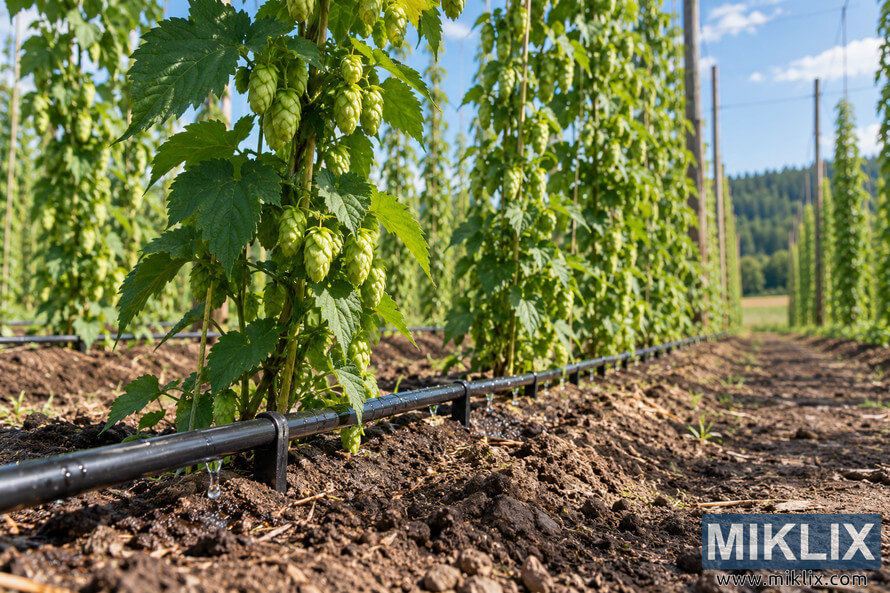
Click or tap the image for more information and higher resolutions.
Pest and Disease Control
Several insects and diseases can affect hop production if left unmanaged. Common hop pests include aphids, spider mites, and Japanese beetles. Regular scouting helps identify problems before they become severe. Control measures range from physical removal to organic and conventional pesticide applications depending on severity and grower preferences.
Disease issues often relate to moisture management and air circulation. Powdery mildew appears as white patches on leaves and cones, thriving in humid conditions with poor air movement. Downy mildew causes yellowing and distorted growth. Both conditions require prompt attention to prevent spread. Proper spacing, pruning of lower foliage, and good drainage reduce disease pressure significantly.
Integrated Pest Management Strategies
- Scout plants weekly during the growing season for early problem detection
- Remove and destroy infected plant material promptly to limit disease spread
- Maintain proper spacing and air circulation through selective pruning
- Water at soil level rather than overhead to keep foliage dry
- Encourage beneficial insects that prey on common hop pests
- Apply appropriate treatments only when monitoring indicates need
- Rotate treatment products to prevent pest resistance development
- Clean up plant debris thoroughly after harvest to eliminate overwintering sites
Harvesting and Cone Quality Assessment
Sun hop cones reach peak maturity in late summer or early fall depending on location. Proper harvest timing significantly impacts flavor and aroma potential. Mature cones feel papery and springy rather than green and moist. The lupulin glands inside should appear golden yellow and sticky. Squeezing a mature cone releases distinctive aromatic compounds.
Harvest cones by cutting entire sections of the vine rather than picking individual cones. This method speeds harvest and reduces damage to plants. Process cones quickly after harvest to prevent deterioration. Drying must occur promptly to preserve quality. Home growers can use food dehydrators, well-ventilated rooms, or screens in shaded areas for drying.
Harvest Timing Critical Window
The optimal harvest period for Sun hops typically spans seven to ten days. Cones harvested too early lack full flavor development and contain lower acid levels. Late harvest leads to oxidation, browning, and off-flavors. Monitor cone development closely as harvest approaches. Check plants daily once cones begin showing maturity signs.
Brewing Applications: Best Beer Styles for Sun Hops
Sun hops work exceptionally well in multiple beer styles due to their balanced characteristics. Understanding which styles showcase this variety's strengths helps homebrewers create successful recipes. The flavor profile and aroma characteristics make Sun hops particularly suitable for certain beer categories while less ideal for others.
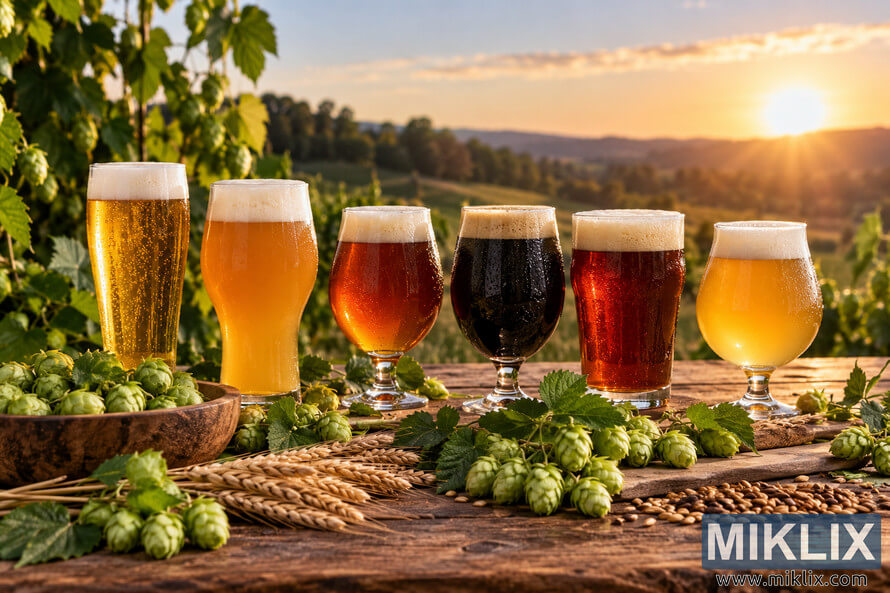
Click or tap the image for more information and higher resolutions.
Pale Ales and India Pale Ales
The citrus and stone fruit characteristics of Sun hops shine in American pale ales and IPAs. These styles traditionally highlight hop aroma and flavor, making them ideal vehicles for expressing Sun hops' distinctive profile. The variety contributes both bitterness and flavor depending on addition timing. West Coast IPAs benefit from the clean bitterness, while hazy IPAs showcase the fruit-forward aroma.
Use Sun hops as a single-variety showcase or blend with complementary varieties for complexity. The moderate to moderately high alpha acid content provides sufficient bittering power for most pale ale and IPA formulations. Late kettle additions and dry hopping maximize the desirable citrus characteristics. Consider hopping rates of one to two ounces per gallon for intensely hopped versions.
Wheat Beers and Witbiers
Sun hops complement wheat beer styles beautifully. The citrus notes harmonize with traditional wheat beer yeast character. American wheat ales gain brightness and drinkability from modest Sun hops additions. Belgian-style witbiers can incorporate Sun hops to enhance citrus elements already present from coriander and orange peel additions.
Restrain hopping rates in wheat beers to maintain balance with malt and yeast character. Target subtle hop presence rather than hop-forward profiles. Use Sun hops for light bittering and gentle flavor contributions. Aroma additions work particularly well in these refreshing beer styles.
Session and Light Beers
The clean flavor profile of Sun hops makes them excellent for session beers and lighter styles. These lower-alcohol beers benefit from distinctive hop character without excessive bitterness. Sun hops provide enough interest to keep these easy-drinking styles engaging. The variety works well in blonde ales, cream ales, and session IPAs.
Moderate hopping rates prevent overwhelming lighter malt bills common in session beers. Focus on aroma and flavor additions rather than heavy bittering. The goal is refreshment and drinkability. Sun hops deliver complexity without heaviness, perfect for beers designed for extended drinking sessions.
American IPA
Showcase Sun hops with robust bittering and multiple aroma additions. Target 50-70 IBUs with late kettle and dry hop charges delivering intense citrus and stone fruit character. Perfect canvas for single-variety expression.
- Bittering: 1.0 oz at 60 minutes
- Flavor: 1.0 oz at 15 minutes
- Aroma: 2.0 oz at flameout
- Dry hop: 2.0 oz for 5 days
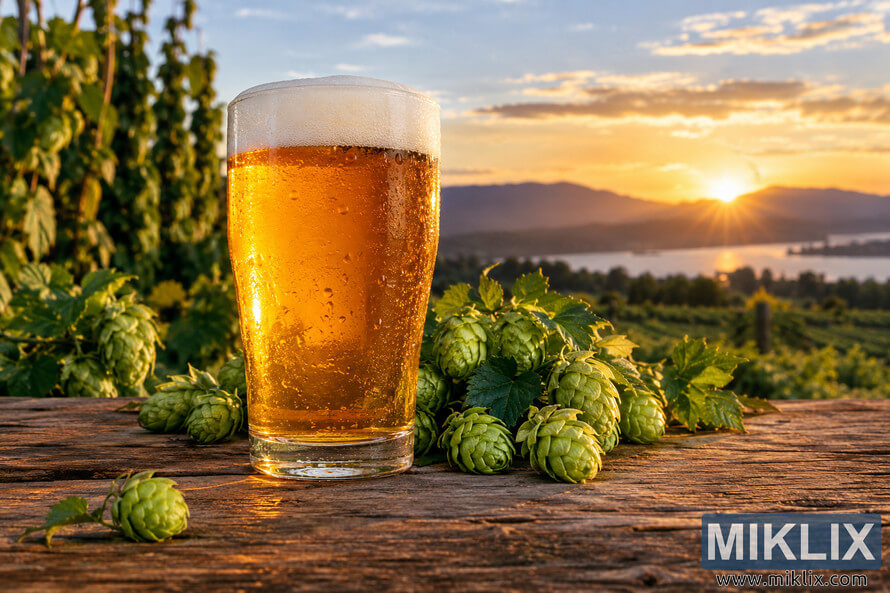
Click or tap the image for more information and higher resolutions.
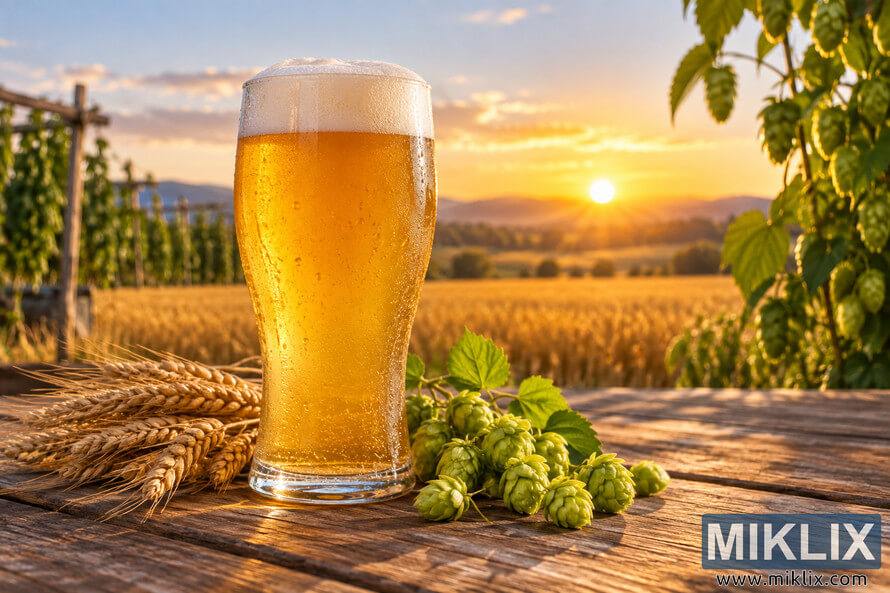
American Wheat Ale
Gentle Sun hops additions complement wheat malt sweetness and yeast character. Light bittering around 20 IBUs with emphasis on late hop aromatics. Refreshing summer beer with citrus brightness.
- Bittering: 0.5 oz at 60 minutes
- Flavor: 0.5 oz at 10 minutes
- Aroma: 1.0 oz at flameout
- Dry hop: optional 0.5 oz
Click or tap the image for more information and higher resolutions.
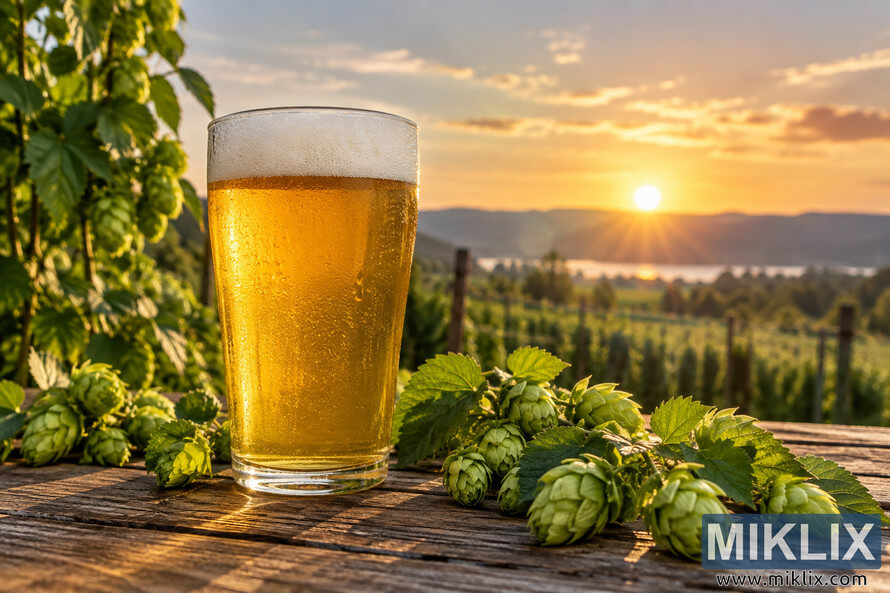
Session Pale Ale
Lower alcohol session beer with maximum hop flavor and aroma from Sun hops. Moderate 35-40 IBUs balanced against light malt backbone. Designed for drinkability while maintaining hop interest.
- Bittering: 0.75 oz at 60 minutes
- Flavor: 0.75 oz at 15 minutes
- Aroma: 1.5 oz at flameout
- Dry hop: 1.5 oz for 4 days
Click or tap the image for more information and higher resolutions.
Styles to Approach Carefully
While versatile, Sun hops may not suit every beer style equally well. Traditional European lagers typically call for noble hop varieties with more subtle, earthy characteristics. The bright citrus profile of Sun hops would seem out of place in Czech pilsners or German helles. Similarly, English bitter styles traditionally feature earthy English hop varieties rather than American citrus-forward types.
Dark beers like stouts and porters can use Sun hops but require careful consideration. The citrus notes may clash with roasted malt flavors in some formulations. If using Sun hops in dark beers, keep additions modest and focus on bittering rather than late hop character. Alternatively, the stone fruit notes can complement chocolate malt in creative combinations.
Dosage Guidelines and Addition Timing for Maximum Impact
Precise hop dosing and timing dramatically affect beer outcomes. Understanding when and how much Sun hops to use helps homebrewers achieve target bitterness, flavor, and aroma levels. Different addition points during brewing serve distinct purposes and extract different compounds from hop cones.
Click or tap the image for more information and higher resolutions.
Bittering Additions
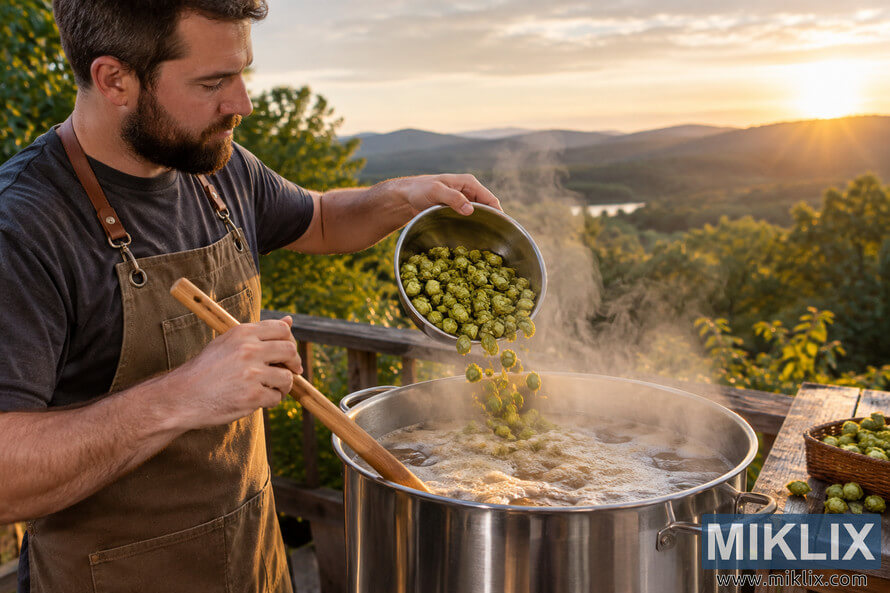
Add Sun hops early in the boil for bittering purposes. The standard bittering addition occurs at sixty minutes before the end of the boil. This extended boiling time isomerizes alpha acids, converting them into soluble bitter compounds. Bittering additions contribute little flavor or aroma since volatile compounds dissipate during prolonged boiling.
Calculate bittering additions based on alpha acid content and desired International Bitterness Units. Most brewing software or online calculators handle these computations. As a general guideline, one ounce of Sun hops with moderate alpha acid levels added at sixty minutes to five gallons will produce approximately thirty to forty IBUs depending on specific alpha acid percentage.
Bittering Calculation Factors
- Alpha acid percentage varies by crop year and storage
- Boil time affects isomerization efficiency
- Wort gravity influences alpha acid utilization rates
- Kettle geometry and boil vigor impact results
- Target IBU level determines required hop quantity
- Hop form influences utilization (whole cone vs pellet)
Flavor Additions
Flavor additions typically occur between fifteen and thirty minutes before the end of the boil. This timing window allows some alpha acid isomerization while preserving more volatile flavor compounds than bittering additions. Sun hops added during this phase contribute both bitterness and noticeable flavor character to finished beer.
The citrus and stone fruit notes of Sun hops become more apparent with flavor additions compared to bittering-only usage. Experiment with addition timing within the fifteen to thirty minute range to find your preferred flavor intensity. Earlier additions in this window contribute more bitterness, while later additions preserve more delicate flavors.
Aroma Additions and Whirlpool Hopping
Aroma additions maximize Sun hops' sensory impact while minimizing bitterness contribution. Traditional aroma additions occur at flameout or during the final five minutes of the boil. These late additions preserve volatile aromatic oils that would otherwise dissipate. The result emphasizes hop aroma and flavor with minimal additional bitterness.
Whirlpool or hop stand techniques extend contact time between hot wort and hops after the boil ends. After turning off heat, cool wort to around one hundred seventy to one hundred eighty degrees Fahrenheit, then add hops. Steep for fifteen to thirty minutes before proceeding with cooling. This method extracts maximum aroma while avoiding harsh bitterness from high-temperature isomerization.
| Addition Timing | Purpose | Temperature | Typical Quantity | Effect on Beer |
| 60 minutes | Bittering | Boiling (212°F) | 0.5-1.5 oz/5 gal | Clean bitterness, minimal flavor/aroma |
| 15-30 minutes | Flavor | Boiling (212°F) | 0.5-1.0 oz/5 gal | Moderate bitterness plus hop flavor |
| 0-5 minutes | Aroma | Boiling (212°F) | 1.0-2.0 oz/5 gal | Strong aroma, light flavor, minimal bitterness |
| Whirlpool | Aroma/Flavor | 170-180°F | 1.0-3.0 oz/5 gal | Intense aroma, moderate flavor, gentle bitterness |
| Dry hop | Aroma | Fermentation temp | 1.0-4.0 oz/5 gal | Maximum aroma, no bitterness contribution |
Dry Hopping Techniques
Dry hopping adds hops directly to fermenting or finished beer at fermentation temperatures. This cold-side addition extracts aromatic compounds without heat degradation. Dry hopping produces intense hop aroma with minimal flavor and no bitterness increase. Sun hops excel in dry hopping applications where their citrus and stone fruit character can shine prominently.
Timing for dry hopping varies based on desired outcomes. Adding hops during active fermentation allows carbon dioxide scrubbing to carry hop aromatics. Post-fermentation dry hopping in the keg or bottling bucket provides gentler extraction. Duration typically ranges from three to seven days, though some brewers experiment with shorter or longer contact times.
Dry Hopping Best Practices
Effective Methods
- Use hop bags for easy removal and reduced sediment
- Sanitize all equipment contacting beer
- Add during high krausen for biotransformation effects
- Target three to seven day contact time
- Purge headspace with carbon dioxide after additions
- Cold crash before packaging to settle hop material
Methods to Avoid
- Adding dry hops too early in fermentation
- Leaving hops in beer for extended periods
- Using damaged or oxidized hop material
- Neglecting sanitation during additions
- Introducing oxygen during dry hop additions
- Skipping cold crash before packaging
Hop Form Considerations
Sun hops are available in multiple forms including whole cone, pellet, and extract. Each form has advantages for homebrewing applications. Whole cone hops provide traditional character and act as filtering aids. Pellets offer convenience, consistent quality, and better storage characteristics. Extracts allow precise bitterness control without plant material in the kettle.
Pellet hops have become the standard for most homebrewers due to practical advantages. Pellets store compactly, dissolve readily in wort, and provide reliable alpha acid content. Whole cone hops appeal to traditionalists and those seeking specific character attributes. Choose the form that best matches your brewing setup and preferences.
Homebrewing Tips and Techniques for Sun Hops Success
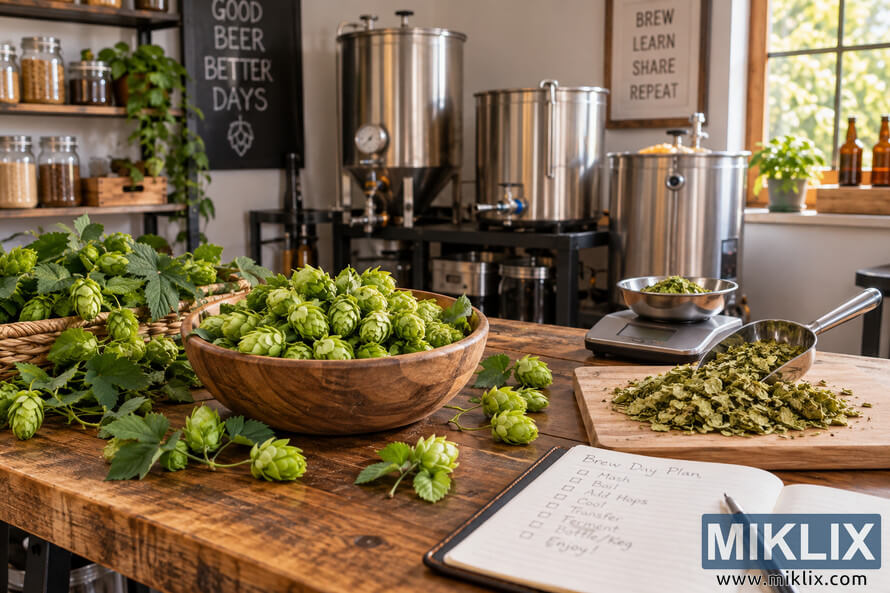
Successful hop usage requires attention to handling, storage, and brewing technique details. These practical tips help homebrewers maximize Sun hops performance and avoid common pitfalls. Small adjustments in process can significantly impact final beer quality and hop expression.
Click or tap the image for more information and higher resolutions.
Storage and Handling
Proper storage preserves hop quality and prevents degradation of essential oils and alpha acids. Store Sun hops in oxygen-barrier bags in the freezer for long-term preservation. Oxidation occurs rapidly at room temperature, causing loss of desirable aroma characteristics and development of cheesy off-flavors. Vacuum sealing provides additional protection against oxidation.
Minimize exposure to air, light, and heat whenever handling hops. Remove only the quantity needed for immediate use, then return remaining hops to frozen storage quickly. Check stored hops periodically for quality. Fresh hops should smell bright and vibrant. Oxidized hops develop musty, cheesy aromas indicating degradation.
Water Chemistry Considerations
Water mineral content affects how hop bitterness and flavor express in finished beer. Sulfate emphasizes hop bitterness and creates a drier, more assertive hop character. Chloride softens hop expression and enhances malt perception. The sulfate to chloride ratio allows brewers to fine-tune beer balance. For hop-forward beers featuring Sun hops, target higher sulfate levels.
Consider water adjustments when formulating recipes that showcase Sun hops. Typical hop-forward water profiles range from two-to-one to three-to-one sulfate to chloride ratios. Avoid excessive mineral additions that create harsh or medicinal flavors. Most homebrewing software includes water chemistry calculators to simplify adjustments.
Malt Bill Pairing
The malt foundation significantly influences how Sun hops express in finished beer. Pale base malts allow hop character to shine without interference. Pilsner malt creates clean, crisp backgrounds ideal for hop-forward beers. Pale ale malt adds slight bready character that complements citrus hop notes. Avoid heavily roasted or caramel malts in beers designed to showcase Sun hops' delicate aromatics.
Balance malt sweetness with hop bitterness to achieve harmonious results. Sun hops provide sufficient bitterness for most beer styles without requiring additional bittering varieties. The citrus character pairs particularly well with light crystal malts in the ten to twenty Lovibond range. Wheat malt additions enhance body and head retention while remaining neutral enough not to interfere with hop expression.
Recommended Malt Pairings
Pale Ale Base
Two-row pale ale malt forms an excellent foundation for Sun hops IPAs and pale ales. Provides sufficient body and slight malt character without overwhelming hops.
- Use as 85-95% of grain bill
- Contributes light bready notes
- Supports hop-forward recipes
Wheat Additions
Wheat malt at ten to twenty percent improves mouthfeel and foam stability. Works exceptionally well in wheat ales and hazy IPAs featuring Sun hops.
- Enhances head retention
- Adds smooth body
- Remains flavor neutral
Yeast Selection
Yeast choice impacts how Sun hops aromatics and flavors present in finished beer. Clean American ale strains allow hop character to dominate without yeast-derived competition. English strains contribute fruity esters that can complement or clash with hop fruit notes depending on fermentation conditions. Neutral strains work best when the goal is pure hop expression.
Popular choices for hop-forward beers include California ale yeast and various American ale strains known for clean fermentation profiles. These varieties ferment efficiently across moderate temperature ranges while producing minimal competing flavors. Control fermentation temperature to prevent excessive ester production that might muddle hop character.
Preventing Oxidation
Oxidation represents the primary threat to hop-forward beers after fermentation. Exposure to oxygen causes rapid degradation of desirable hop aromatics and development of cardboard or stale flavors. Implement careful transfer procedures that minimize oxygen pickup. Purge containers with carbon dioxide before racking beer. Consider closed transfer systems for dry hopping and packaging.
Package beer promptly after fermentation completes to preserve hop character. Hop aromatics fade noticeably within weeks even with careful handling. Consume hop-forward beers featuring Sun hops within two to three months of packaging for optimal flavor and aroma. Cold storage slows but does not prevent degradation of hop compounds.
Oxygen Management Checklist
Purge all receiving vessels with carbon dioxide before transfers. Minimize splashing during racking and bottling. Use closed transfer systems when possible. Fill bottles or kegs from bottom up to avoid aeration. Store packaged beer cold immediately. Limit headspace in bottles and kegs. Consume hop-forward beers fresh for best results.
Recipe Iteration and Record Keeping
Systematic record keeping enables continuous improvement in brewing with Sun hops. Document all recipe details including hop quantities, addition timings, and alpha acid percentages. Note fermentation temperatures, yeast strains, and water chemistry adjustments. Record tasting impressions with attention to hop expression, balance, and any adjustments needed.
Iterate recipes based on results from previous batches. Small adjustments to hopping rates or timing can significantly alter outcomes. Experiment with different dry hopping durations or whirlpool temperatures. Compare results across multiple brew sessions to identify preferred techniques. Build a personal database of successful approaches specific to your brewing system.
Comparing Sun Hops to Similar Varieties
Understanding how Sun hops relate to other popular varieties helps brewers make informed substitution decisions and creates context for their unique characteristics. While each hop variety offers distinct attributes, certain varieties share enough similarities to function as alternatives in recipes. These comparisons highlight both commonalities and differences.
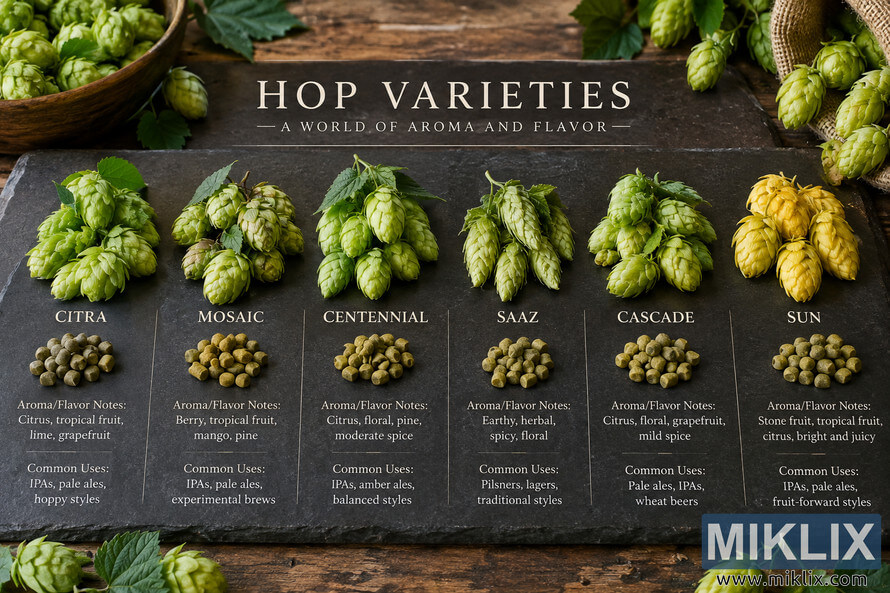
Click or tap the image for more information and higher resolutions.
Citra Comparison
Citra hops share Sun hops' citrus-forward profile but with more intense tropical fruit characteristics. Both varieties work excellently in IPAs and pale ales. Citra tends toward more pronounced grapefruit and tropical notes including mango and passionfruit. Sun hops present a slightly more restrained citrus character with greater stone fruit presence. Citra's higher alpha acid content makes it more suitable for single-hop bittering.
Consider blending Sun hops with Citra for complex citrus layering. Use Sun hops for bittering and early flavor, then add Citra for late aroma to capitalize on its intense tropical character. Alternatively, substitute Sun hops for Citra when seeking a gentler citrus expression or when Citra's intensity might overwhelm a beer style.
Amarillo Comparison
Amarillo offers orange and tangerine notes similar to Sun hops' citrus profile. Both varieties include stone fruit undertones including apricot. Amarillo tends slightly more toward floral character compared to Sun hops. The varieties share similar alpha acid ranges making them relatively interchangeable for bittering purposes. Aroma differences become more apparent in late additions and dry hopping.
Amarillo works particularly well in American pale ales and amber ales where its rounded citrus character complements malt presence. Sun hops function similarly but may provide slightly brighter, more focused citrus notes. Experiment with both varieties to determine personal preferences in specific beer styles.
Mosaic Comparison
Mosaic hops deliver complex fruit character including berry notes alongside citrus. This variety offers more diversity in aroma descriptors compared to Sun hops' focused citrus and stone fruit profile. Mosaic's higher alpha acid content makes it powerful for both bittering and aroma. Sun hops provide a more singular citrus expression that some brewers prefer for cleaner hop character.
Blending Sun hops with Mosaic creates interesting complexity. Use Sun hops as the base for clean citrus character, then add Mosaic for berry and tropical complexity. This combination works exceptionally well in New England IPAs and other hazy styles where layered fruit character is desired.
Cascade Comparison
Cascade represents a classic American hop variety with grapefruit and floral characteristics. While sharing citrus elements with Sun hops, Cascade leans more heavily toward floral notes. Cascade has been the standard for American pale ales for decades. Sun hops offer a more modern citrus expression with less floral character and more stone fruit presence.
Brewers seeking traditional American ale character might prefer Cascade, while those wanting contemporary citrus profiles may favor Sun hops. The varieties can substitute for each other in many recipes, though expect subtle differences in the finished beer. Cascade's widespread availability makes it a practical alternative when Sun hops are unavailable.
Creating Hop Blends
Blending Sun hops with complementary varieties creates unique flavor combinations impossible with single varieties. Consider the characteristics you want to emphasize and select supporting varieties accordingly. Noble hops can add subtle herbal notes. New Zealand varieties contribute distinctive southern hemisphere character. English hops provide earthy balance.
Start with Sun hops as the foundation providing citrus backbone. Add supporting varieties at smaller percentages to introduce complexity. Common ratios range from 60-40 to 80-20 Sun hops to supporting variety. Document blend proportions and results to refine future batches. Successful blends often become signature recipes.
| Variety | Primary Aroma | Alpha Acid Range | Best Use | Similarity to Sun |
| Sun | Citrus, stone fruit | Moderate | Aroma, flavor | Reference point |
| Citra | Citrus, tropical fruit | Moderately high | Aroma, dual purpose | High - more intense |
| Amarillo | Orange, apricot, floral | Moderate | Dual purpose | High - close match |
| Mosaic | Berry, citrus, tropical | Moderately high | Dual purpose | Moderate - more complex |
| Cascade | Floral, citrus, grapefruit | Moderate | Aroma, dual purpose | Moderate - more floral |
| Centennial | Citrus, floral | High | Dual purpose | Moderate - higher alpha |
Troubleshooting Common Issues When Brewing with Sun Hops
Even experienced homebrewers encounter challenges when working with new hop varieties. Recognizing common problems and implementing solutions helps achieve consistent results with Sun hops. Understanding root causes prevents recurring issues in future batches.
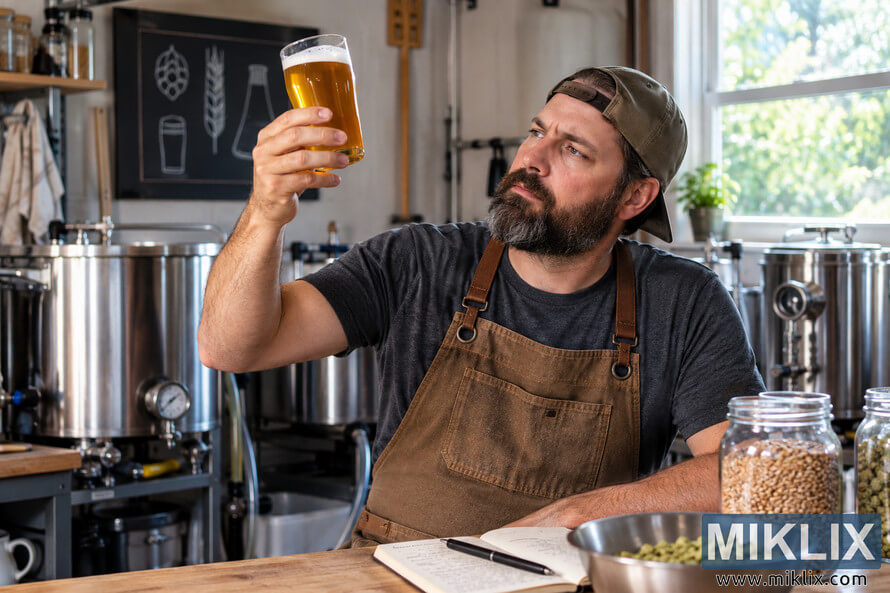
Click or tap the image for more information and higher resolutions.
Insufficient Hop Aroma
Weak hop aroma often results from inadequate late hop additions or oxidation issues. Sun hops require sufficient quantities in aroma additions and dry hopping to express their full character. Underdosing leads to disappointing results. Oxidation from poor transfer techniques or delayed packaging rapidly destroys hop aromatics even when adequate hops were used.
Increase late hop and dry hop quantities if aroma seems weak. Target at least one to two ounces per five gallons for late kettle additions. Dry hop with two to four ounces per five gallons for pronounced aroma. Review oxygen management procedures to eliminate oxidation issues. Package beer promptly and store cold.
Excessive Grassy or Vegetal Character
Grassy flavors indicate either poor quality hops or excessive dry hop contact time. Old or improperly stored Sun hops lose desirable characteristics and develop vegetal notes. Extended dry hopping beyond seven days can extract undesirable compounds from plant material. Very high dry hop rates sometimes contribute vegetal character regardless of contact time.
Use only fresh, properly stored hops from reputable suppliers. Limit dry hop contact to three to seven days. Remove dry hops promptly after the designated contact period. Consider reducing dry hop quantities if vegetal flavors persist despite fresh hops and appropriate timing. Cold crash before packaging to separate hop material thoroughly.
Harsh or Astringent Bitterness
Harsh bitterness differs from clean hop bitterness and indicates extraction problems. Excessive hop material, overly long boil times, or high temperature whirlpool additions can create harsh bitterness. Sun hops should provide clean, pleasant bitterness when used appropriately. Harsh character suggests technique issues rather than hop quality problems.
Review bittering addition quantities to ensure they match recipe calculations. Verify boil duration accuracy. When using whirlpool additions, ensure wort temperature drops to 180 degrees Fahrenheit or below before adding hops. Higher temperatures isomerize more alpha acids creating excessive bitterness. Consider splitting bittering additions across multiple times rather than single large charges.
Muted or Muddy Hop Character
When Sun hops' distinctive citrus character fails to come through clearly, multiple factors might be responsible. Competing yeast esters can muddle hop expression. Excessive caramel or roasted malts mask delicate hop aromatics. Poor water chemistry with insufficient sulfate levels reduces hop perception. Oxidation rapidly degrades hop character into muddled, indistinct flavors.
Select clean-fermenting yeast strains for hop-forward beers. Keep specialty malt additions restrained in recipes designed to showcase Sun hops. Adjust water chemistry to emphasize sulfate over chloride. Implement strict oxygen management throughout the brewing process. Ensure hops are fresh and properly stored. Consider increasing hop quantities if character remains muted despite addressing other factors.
Why does my Sun hops beer taste different from commercial examples?
Variations in alpha acid content between crop years, differences in water chemistry, yeast strain selection, and fermentation temperature all influence how Sun hops express in finished beer. Commercial brewers often use proprietary techniques and equipment that affect outcomes. Focus on creating beer you enjoy rather than exact replication. Small-scale homebrewing differences are expected and normal.
Can I use Sun hops that have been stored at room temperature?
Room temperature storage rapidly degrades hop quality through oxidation. Hops stored warm for weeks or months lose aromatic compounds and develop off-flavors. While technically usable, room-temperature stored hops will not deliver the intended Sun hops character. Consider them suitable only for bittering if alpha acid content remains acceptable. Purchase fresh hops and store properly in the freezer for best results.
How do I prevent hop burn in dry hopped beers?
Hop burn refers to harsh, unpleasant flavors from excessive dry hopping. Limit dry hop rates to reasonable levels, typically not exceeding four ounces per five gallons. Reduce contact time if using very large quantities. Cold crash before packaging to separate hop material. Some commercial techniques like biotransformation hopping during active fermentation may reduce harshness compared to post-fermentation additions.
Advanced Homebrewing Techniques with Sun Hops
Experienced homebrewers can explore advanced techniques that maximize Sun hops' potential. These methods require additional equipment or process modifications but deliver exceptional results. Experimenting with advanced approaches helps develop unique beers that stand out from standard recipes.
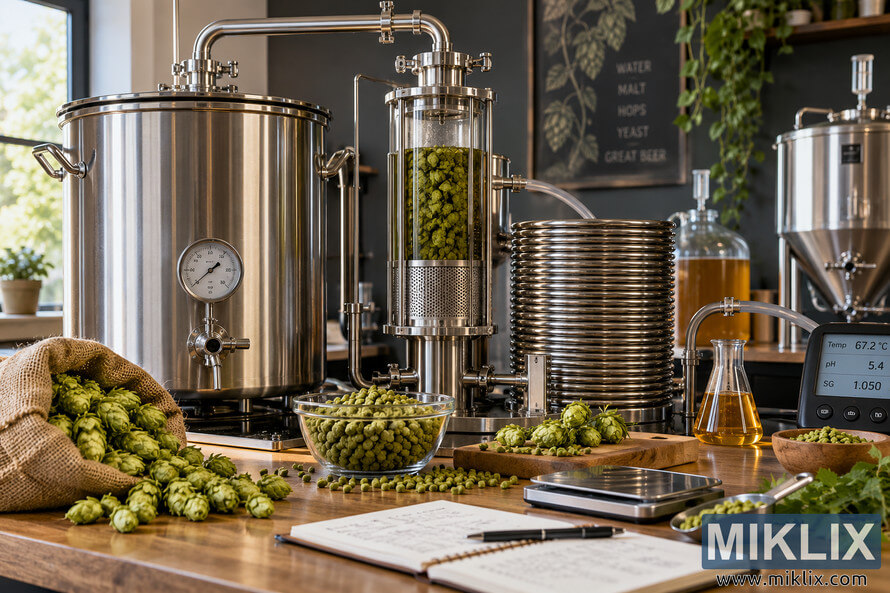
Click or tap the image for more information and higher resolutions.
Hop Bursting
Hop bursting concentrates all or most hop additions into the final fifteen minutes of the boil and whirlpool phase. This technique minimizes early bittering additions while maximizing hop flavor and aroma. Sun hops work excellently in hop burst applications due to their balanced alpha acid content and strong aromatic profile. The method creates intensely hoppy beers with smooth bitterness.
Typical hop bursting approaches use only a small bittering charge at sixty minutes, then add the majority of hops in multiple additions from fifteen minutes through flameout. Whirlpool additions after flame out contribute significant hop character. The technique requires more total hop material than traditional recipes but delivers unique sensory results that showcase Sun hops beautifully.
Biotransformation Dry Hopping
Adding dry hops during active fermentation allows yeast to biotransform hop compounds into new aromatic molecules. This technique can enhance certain fruit characteristics and create unique flavors impossible through traditional dry hopping. Sun hops respond well to biotransformation, with stone fruit notes often becoming more prominent. The method requires careful timing to catch fermentation at the right phase.
Add dry hops when fermentation reaches high krausen, typically two to three days after pitching yeast. The vigorous fermentation scrubs some aromatics but creates new compounds through yeast metabolism. Follow with a traditional dry hop addition after fermentation completes for layered aroma complexity. This two-stage dry hopping approach maximizes both biotransformation effects and traditional hop aromatics.
Hop Stands and Extended Whirlpools
Extended whirlpool periods at controlled temperatures extract hop compounds without excessive isomerization. After completing the boil, cool wort to 170-180 degrees Fahrenheit, then add hops for a stand lasting twenty to thirty minutes or longer. This temperature range extracts aromatic oils efficiently while minimizing bitter alpha acid isomerization. Sun hops shine in hop stand applications where their citrus character fully expresses.
Longer hop stands increase extraction but also add some bitterness. Experiment with temperatures and durations to find preferred balances. Some brewers use even cooler hop stands around 160 degrees for pure aroma extraction. The technique works particularly well for New England IPAs and other styles where intense hop aroma matters more than traditional bittering.
Keg Hopping
Adding hops directly to serving kegs allows continuous dry hopping during storage. Place hop pellets or whole cones in sanitized mesh bags and suspend them in the keg. As beer dispenses, it flows past the hops extracting fresh aromatics. Sun hops work well for keg hopping, maintaining fresh citrus character throughout the keg's life. The method requires careful management to avoid over-extraction.
Use modest quantities for keg hopping since extended contact occurs. Start with half to one ounce per five gallons. Monitor flavor development and remove hops if character becomes excessive. Keg hopping works best for quick-consuming kegs rather than long-term storage. The technique provides consistently fresh hop aroma that many drinkers find appealing.
Hop Water and Hop Tea Additions
Creating hop extractions separately from beer allows precise aroma dosing. Steep Sun hops in cold or hot water to create aromatic hop tea, then add measured amounts to finished beer. This technique provides control over hop intensity without committing entire batches. Hop water can also serve as a standalone beverage or cocktail ingredient showcasing Sun hops' flavor profile.
Make hop tea by steeping one to two ounces of hops in eight to sixteen ounces of water at room temperature or slightly warm. Strain after fifteen to thirty minutes. Add the hop tea to finished beer in measured increments until desired aroma intensity is achieved. This method works particularly well for adjusting hop character in beers that seem under-hopped after fermentation.
Complete Sun Hops Recipe Examples for Homebrewers
These detailed recipes provide starting points for brewing with Sun hops. Each recipe includes complete ingredient lists, process steps, and expected outcomes. Adapt these formulations to match your equipment and preferences while maintaining the core concepts that showcase Sun hops effectively.
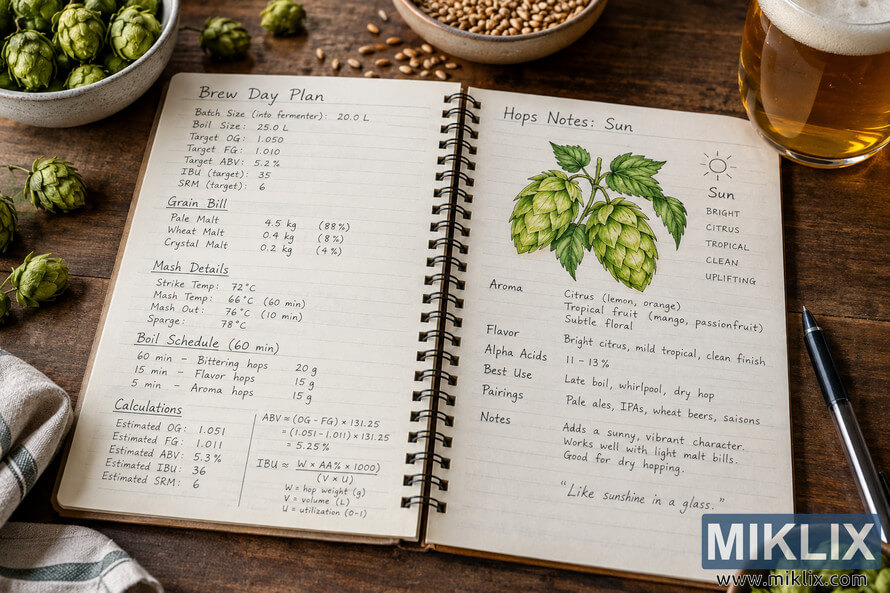
Click or tap the image for more information and higher resolutions.
Sun Hop Showcase IPA
This single-hop IPA highlights Sun hops' citrus and stone fruit characteristics without interference from other varieties. The straightforward malt bill keeps focus on hop expression. The recipe produces five gallons of beer with approximately 6.5 percent alcohol by volume and 60 IBUs.
Grain Bill
- Ten pounds American two-row pale malt
- One pound Munich malt ten Lovibond
- Eight ounces Crystal malt twenty Lovibond
- Eight ounces wheat malt
Hop Schedule
- One ounce Sun hops at sixty minutes for bittering
- One ounce Sun hops at fifteen minutes for flavor
- One ounce Sun hops at five minutes for aroma
- Two ounces Sun hops at flameout for aroma
- Two ounces Sun hops dry hop for five days
Other Ingredients
- American ale yeast with clean fermentation profile
- Water adjusted to 200 ppm sulfate, 50 ppm chloride
- Irish moss or whirlfloc for clarity
Process Notes
Mash at 152 degrees Fahrenheit for sixty minutes. Boil for sixty minutes following the hop schedule above. Cool to 170 degrees after flame out, add flameout hops, steep twenty minutes. Cool to fermentation temperature and pitch yeast. Ferment at 67 degrees Fahrenheit until complete. Dry hop in fermenter for five days. Cold crash and package.
Sun Hop American Wheat Ale
This refreshing wheat ale uses Sun hops to complement wheat malt character. Light body and subtle hop presence make this an excellent warm-weather beer. The recipe yields five gallons at approximately five percent alcohol by volume with 25 IBUs.
Grain Bill
- Five pounds American two-row pale malt
- Four pounds wheat malt
- Eight ounces Crystal malt ten Lovibond
Hop Schedule
- Half ounce Sun hops at sixty minutes for bittering
- Half ounce Sun hops at ten minutes for flavor
- One ounce Sun hops at flameout for aroma
- Optional: half ounce Sun hops dry hop for three days
Other Ingredients
- American wheat ale yeast or clean ale yeast
- Balanced water profile
- Clarifying agent optional for this style
Process Notes
Mash at 150 degrees Fahrenheit for sixty minutes. Boil sixty minutes with hop additions as scheduled. Cool to pitching temperature and ferment at 65 degrees Fahrenheit. Consider optional dry hop addition for enhanced aroma. Package when fermentation completes. This style benefits from cold serving temperature around 40 degrees Fahrenheit.
Conclusion
Sun hops offer homebrewers a versatile variety capable of enhancing multiple beer styles. The citrus and stone fruit characteristics create appealing sensory experiences when used appropriately. Understanding the growing conditions, hop plant requirements, and proper cultivation techniques helps those growing their own supply. Knowledge of alpha acids, essential oils, and lupulin content informs effective beer brewing applications.
The techniques covered in this guide provide comprehensive information for incorporating Sun hops into homebrewing practice. Proper storage and handling preserve hop quality from purchase through brew day. Careful attention to dosage guidelines and addition timing allows precise control over bitterness, flavor, and aroma contributions. Advanced methods expand possibilities for experienced brewers seeking unique expressions.
Success with Sun hops requires understanding both the hop cones themselves and how they interact with other brewing ingredients and processes. The variety demonstrates excellent characteristics across the growing season, from rhizome establishment through harvest of mature cones. Female plants produce the resinous hop cones containing essential brewing compounds. Proper management of soil conditions, water, fertilizer, and pest control ensures healthy hop production.
Beer styles ranging from pale ales through wheat beers benefit from Sun hops' balanced profile. The variety functions effectively as both a primary hop and as part of blends with complementary varieties. Homebrewers can experiment with different application strategies to discover personal preferences. Recipe formulation should consider malt bills, yeast selection, and water chemistry alongside hop selection for optimal results.
The information provided equips homebrewers to use Sun hops confidently in their brewing projects. Whether growing hop plants in home gardens or purchasing from suppliers, understanding variety characteristics leads to better outcomes. Proper technique execution throughout the brewing process ensures Sun hops express their full potential in finished beer. Continued experimentation and careful record keeping enable ongoing improvement and recipe refinement.
Click or tap the image for more information and higher resolutions.
Further Reading
If you enjoyed this post, you may also like these suggestions: