
Hops in Beer Brewing: Vojvodina
Published: December 13, 2025 at 10:00:42 PM UTC
Vojvodina, a distinct aroma hop variety, emerged in the late 1960s at the Hop Research Station in Bački Petrovac. It was created to replace Backa and introduce a clear aromatic character to regional beers. Known for its aroma, Vojvodina also offers mild bittering, making it versatile in beer recipes.

Click or tap the image for more information and higher resolutions.
Genetically, Vojvodina is a cross between Northern Brewer and a Golding-derived or unknown male. It shares a lineage with Dunav and Neoplanta, explaining its similar flavor traits. Despite its utility, Vojvodina hops are scarce due to limited commercial acreage.
This article delves into Vojvodina's origins, aroma, and flavor profile. It also explores its chemical composition, brewing metrics, and agricultural traits. We'll discuss its practical uses, recipe examples, substitutes, storage, and availability. It aims to guide brewers interested in regional or historical aroma hops, highlighting Vojvodina's role in modern craft brewing.
Key Takeaways
- Vojvodina is an aroma-focused hop bred in Bački Petrovac in the late 1960s.
- It is part of the Yugoslavian hops breeding program and a sibling to Dunav and Neoplanta.
- Primary use is for aroma, with slight bittering.
- Commercial acreage is limited, making it less common in large-scale production.
- The article will detail chemistry, brewing uses, recipes, and availability for brewers.
Overview of Vojvodina hops
Vojvodina hops have their origins in Yugoslavian hop varieties developed in the late 1960s. These were created at research stations near Bački Petrovac. The breeding involved crossing Northern Brewer with a Golding-derived or unknown male. This male carried Styrian Golding or Yugoslav wild hop ancestry.
The goal was to replace the traditional Backa hop. Despite trials, a broad commercial shift did not occur. This left Vojvodina with limited acreage and niche availability.
Vojvodina hops are classified as an aroma hop. They share some noble hop characteristics but offer mild bittering capacity. Brewers use them mainly for late additions and dry hopping. This enhances floral and herbal notes in beers.
Physically, Vojvodina sits among sibling cultivars such as Dunav and Neoplanta. These plants often display a reddish tint on the main stem. They also share similar cone structures.
- Development: Yugoslavian research stations, late 1960s
- Parentage: Northern Brewer × Golding-derived/unknown male with Styrian ancestry
- Role: Aroma hop with mild bittering use
- Availability: Limited, sold by select suppliers
Use in recipes remains modest. Hobbyists and regional craft brewers list it in a small number of beers. The Vojvodina overview helps explain its rarity outside its native region.
Geographically tied to former Yugoslavia and now the Vojvodina province of Serbia, these hops represent a piece of regional brewing heritage. Small-scale cultivation keeps them available to brewers seeking unique, local aroma profiles.
Aroma and flavor profile of Vojvodina
Vojvodina boasts a unique woody hop aroma, reminiscent of forest floors and cabinet oak. The taste notes reveal cedar and tobacco hops, creating a dry, herbal top note. This is distinct from the bright citrus or tropical fruit often found in other hops.
The hop's noble characteristics evoke Northern Brewer but with greater intensity. Its aroma is rounded and balanced, providing an old-world depth. This is in contrast to the sharp, modern pine or grapefruit tones found in some hops.
Brewers typically add Vojvodina aroma late in the boil or as a finishing addition. This method preserves the subtle cedar and tobacco hops. It enhances woody textures and supports restrained herbal layers in lagers, amber ales, and traditional English-style beers.
When combined with malty or subtly fruity bases, Vojvodina's noble hop characteristics serve as a seasoning. They add complexity without dominating the malt bill. This makes the variety ideal for achieving an elegant, vintage aroma in place of a bold, contemporary profile.
- Primary scent: woody hop aroma with cedar and tobacco hops.
- Comparative note: more rounded and intense than Northern Brewer.
- Best use: aroma hop for beers needing noble hop characteristics and old-world depth.
Chemical composition and brewing-relevant metrics
Vojvodina's alpha acid profile is modest, ideal for aroma-focused brewing. Alpha acid ranges for Vojvodina are reported to be around 6.0%–10.5%. Many sources indicate a typical value of 8.0%. This balance provides light bittering while maintaining its aromatic essence.
Vojvodina's beta acid levels are lower, typically between 2.3% and 4.9%. This range helps predict how the hop's character will evolve over time, including any dulling.
- Co-humulone is about 30%, a moderate share that helps explain a clean bitterness profile without harshness.
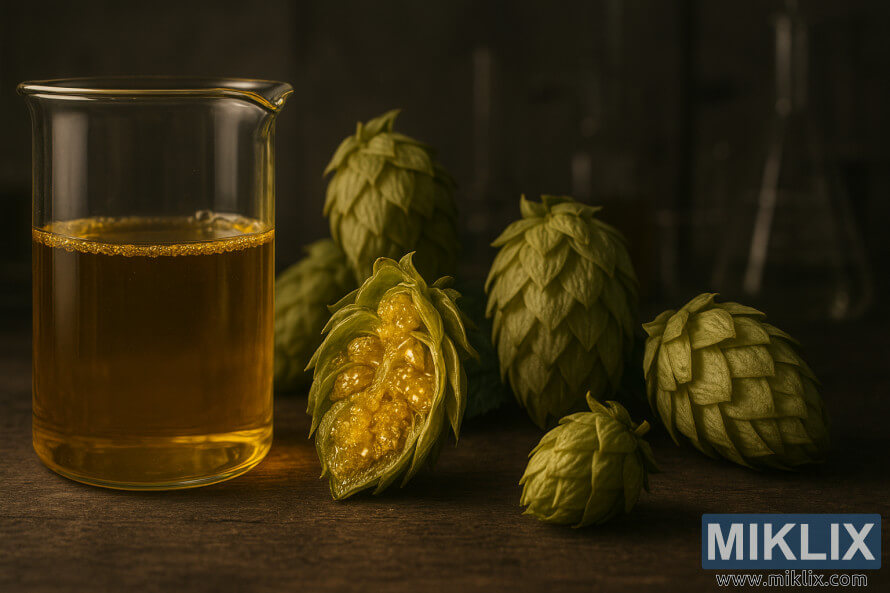
- Total oil content ranges from 0.6 to 1.4 mL per 100 g, which supports pronounced aroma when used late in the boil or in dry hop additions.
The oil makeup of Vojvodina is key to its sensory appeal. Myrcene dominates the hop oil composition at roughly 67%. Humulene contributes about 13%, caryophyllene about 5%, and farnesene near 0.6% to under 1%.
These proportions favor bright, green, and floral notes from myrcene. Humulene and caryophyllene add subtle spice and depth.
- Storability: Vojvodina retains about 76% of its alpha acids after six months at 20°C (68°F), indicating moderate storage stability.
- Brewing role: Classified mainly as an aroma hop with mild bittering due to its alpha acid range.
Understanding Vojvodina's alpha and beta acid levels, along with its hop oil composition and co-humulone, aids brewers. It helps them plan hop schedules and storage to preserve the variety's best traits.
Click or tap the image for more information and higher resolutions.
Typical uses in brewing and recommended dosage
Vojvodina hops are prized for their aroma, with brewers adding them late to enhance woody and tobacco flavors. They are often used as a primary aroma hop or blended with others to achieve a noble profile.
For a light bitterness, Vojvodina can be added early in the boil. Its alpha acids, ranging from 6–10%, provide a gentle bitterness without overpowering the aroma.
- Late kettle/whirlpool aroma: 0.5–2.0 oz per 5 gal, depending on intensity desired.
- Dry-hop additions: similar or slightly higher than whirlpool rates for stronger woody and tobacco character.
- Early kettle for mild bittering: use lower amounts and adjust for alpha acids in the lot.
Recipes often feature Vojvodina for about 48% of the hop content, ranging from 14% to 100%. This highlights its role as a key aroma hop, not just a bittering agent.
When planning hop percentages, treat Vojvodina like other aroma hops. Use it late to preserve its volatile compounds. Pair it with Hallertauer or Saaz to balance out the flavors and enhance noble tones.
Adjust the dosage of Vojvodina based on batch size and desired flavor profile. Start with a smaller amount for a subtle background and increase to 2.0 oz per 5 gal or more for a stronger woody or tobacco flavor.
Best beer styles for Vojvodina
Vojvodina shines in malt-forward styles, where it brings out woody, cedar, and tobacco notes. It's perfect for ales like English Bitter and Brown Ale. This adds an old-world charm without overpowering the malt.
Traditional European beer hops are a great match for Märzen and Bock. In these lagers, Vojvodina introduces a subtle noble hop aroma. This supports the toasted malts and caramel sweetness.
Porter and certain darker ales benefit from a small amount of Vojvodina. Its honeyed, archaic tones add complexity to roasty flavors. At the same time, it keeps bitterness in check.
- English and Continental ales — bring out earth and cedar.
- Märzen, Dunkel, and Bock — reinforce noble hop beers tradition.
- Brown Ale and Porter — subtle spice and tobacco notes work well.
Craft brewers can use Vojvodina in small doses for saisons and farmhouse ales. A light addition provides an herbaceous backdrop. This complements yeast-driven phenolics.
Avoid heavy use in modern hop-forward IPAs. These favor citrus, pine, or tropical profiles. Blending Vojvodina with these hops can add depth. Yet, using it alone in IPAs rarely showcases its strengths.
Recipe examples and real-world applications
Brewers often seek out Vojvodina recipes for their unique woody, cedar, and light tobacco aromas. It's best to use Vojvodina as a late-kettle aroma hop or for dry-hopping to keep its delicate oils intact. Recipe databases frequently highlight its use as an aroma hop, not for bittering.
Here are some starting points for incorporating Vojvodina into your beer recipes:
- Brown ale: Add 40–50% of your total hop weight as Vojvodina at ten minutes and again as a two- to three-day dry-hop to emphasize cedar notes.
- Porter: Use Vojvodina late in the boil and blend with East Kent Goldings or Northern Brewer for balance and a rounded spice profile.
- English-style bitter: Reserve a small late addition and a short dry-hop to layer subtle herbal tones without overpowering malt character.
Recipe roles often assign Vojvodina as the primary aroma hop or blend it with Northern Brewer or Goldings substitutes. In many formulas, Vojvodina makes up nearly half of the hop bill. Scale quantities according to your target IBUs and desired aroma intensity.
When preparing test brews, the source of Vojvodina matters. North American brewers can find it through specialty suppliers like Yakima Chief or Northwest Hop Farms in Canada. Importers also stock Eastern European varieties. Always check alpha values and storage dates to ensure consistency in your sample beer recipes.
For pilot batches, keep your hop additions simple and document each variable. Start with single-hop trials, then blend Vojvodina with Northern Brewer or Goldings to explore complementary layers. This approach allows you to see how Vojvodina performs across different styles and refine quantities for larger batches.
Click or tap the image for more information and higher resolutions.
Substitutes and complementary hop pairings
For brewers looking for Vojvodina substitutes, Northern Brewer and Goldings-type hops are excellent choices. Northern Brewer provides a firmer, resinous backbone. On the other hand, East Kent Golding or other Goldings substitutes offer a softer, more floral contrast.
Use Vojvodina as the aroma anchor and pair it with a low-to-moderate alpha bittering hop for kettle bitterness. A Northern Brewer substitute can offer clean bitterness while controlling woody notes. Pairing with East Kent Golding smooths sharp edges and enhances classic English character.
- Blend idea 1: Vojvodina plus Northern Brewer substitute for a noble, resinous profile.
- Blend idea 2: Vojvodina with East Kent Golding to highlight floral and herbal balance.
- Blend idea 3: Vojvodina used with restrained hop varieties when brewing with darker malts to bring out tobacco and cedar tones.
Keep aroma hops secondary in weight to avoid masking Vojvodina's woody character. When using hop pairings Vojvodina, aim for subtle additions late in the boil or in whirlpool to preserve nuance. Dry hopping can be light, focused on enriching scent without overpowering the base notes.
For recipe swaps, match alpha acids when selecting a Northern Brewer substitute or a Goldings substitute. Increase or reduce hopping rates gently to retain balance. Use small pilot batches to test final blends before scaling up production.
Growing, yield, and agricultural traits
Vojvodina exhibits vigorous growth, reaching late seasonal maturity. Its main stems often display a reddish hue, similar to Dunav. Side arms are long, typically between 20 and 36 inches, necessitating robust trellis systems for hop cultivation in Vojvodina.
Yield figures for Vojvodina vary across different studies. One report indicates about 1,720 kg per hectare, which is close to the USDA's estimate of roughly 1,540 lbs per acre. These numbers are essential for growers to plan their harvests and assess crop economics.
Vojvodina's resistance traits make it appealing in certain areas. It is known to resist downy mildew and shows suspected tolerance to verticillium wilt, though its official classification for verticillium remains unclear. Its dark green leaves and dense foliage contribute to its vigor under diverse conditions.
- Canopy management: train long side arms to reduce shading and improve air flow.
- Pest and disease: monitor regularly despite mildew resistance; integrate scouting and cultural controls.
- Soil and water: maintain well-drained soils and steady moisture for consistent Vojvodina yield.
Commercial acreage of this variety remains limited. Following early breeding in the former Yugoslavia, large-scale hop farming with Yugoslavia-era cultivars has been scarce in modern times. Growers interested in niche aroma hops may find small-scale propagation and trial plots useful before committing to larger acreage.
For those considering hop cultivation in Vojvodina, anticipate the need for late-season labor and equipment. Matching trellis design, disease scouting, and yield targets are key to maximizing returns from this historically regional variety.
Harvesting, processing, and storage considerations
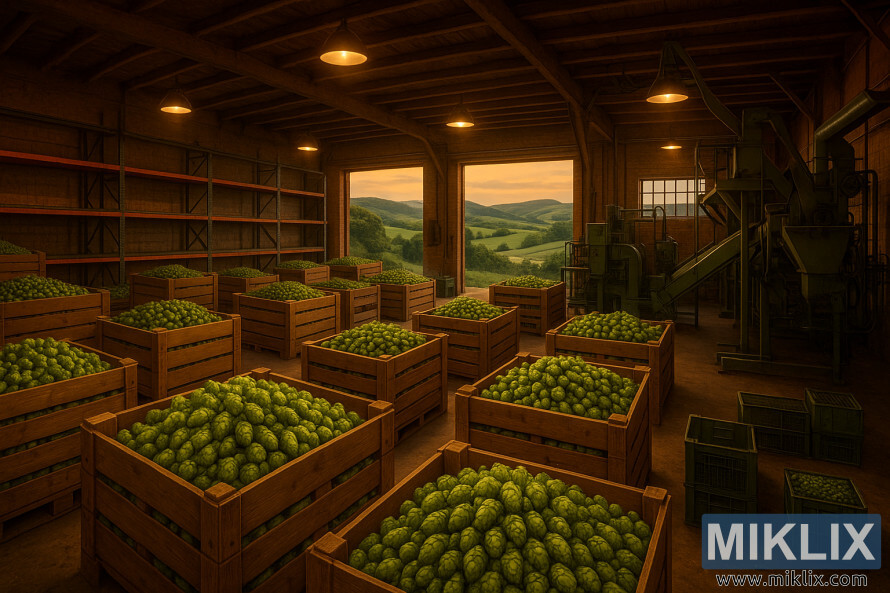
Vojvodina hops mature late in the season, so timing harvests for cone readiness is essential. Check lupulin color and feel; firm, lightly sticky lupulin indicates peak aroma. Harvesting too early can reduce oil expression and lower bitterness.
Drying is critical in hop processing Vojvodina. Aim for gentle, even drying to preserve the variety's low-to-moderate oil profile. Avoid rapid high heat to prevent loss of delicate aromas.
Post-drying, limit oxygen exposure. Use vacuum-sealed or nitrogen-flushed packaging and store quickly in cold conditions. These steps protect Vojvodina alpha retention and aroma for months.
- Cool storage at or below refrigeration temperatures slows alpha acid loss.
- Vacuum or inert-gas packaging reduces oxidation of oils and acids.
- Minimize mechanical damage during baling and transport to prevent flavor degradation.
Storing Vojvodina hops at typical room temperature shows moderate stability. Research shows about 76% alpha retention after six months at 20°C (68°F). This is competitive with many aroma hops but not as robust as modern varieties.
Commercial processors focus on quality, using tight humidity control, rapid cooling, and traceable batch records. These practices ensure consistent processing and predictable brewing performance.
Field resistance to downy mildew simplifies harvest logistics. Yet, remain vigilant for pests and soil-borne issues like verticillium wilt. Regular inspections and sanitary handling reduce post-harvest losses and protect alpha acids and essential oils.
For brewers, buying chilled hops in sealed packets maximizes Vojvodina alpha retention. When stored correctly, these hops add noble and woody notes to beer.
Click or tap the image for more information and higher resolutions.
Availability and where to buy Vojvodina hops
Vojvodina hops are scarce globally due to limited plantings in Serbia and nearby areas. Small harvests force brewers to plan ahead, often months in advance, to secure these hops for their batches.
Most commercial lots are handled by specialty growers and importers. Northwest Hop Farms in Canada is noted by industry buyers as a supplier for limited runs. Craft hop merchants specializing in Eastern European varieties may list small parcels when they become available.
Directly contacting regional producers is often the quickest way to find Vojvodina hops. Reach out to hop farms, local cooperatives, or hop brokers who import heritage cultivars to inquire about upcoming availability. Expect seasonal windows and small minimum order quantities.
U.S. brewers should collaborate with established distributors or hop brokers to secure small amounts. Many distributors can source single bales or vacuum-packed samples through their importer networks upon request.
- Search specialty hop merchants and boutique hop stockists Vojvodina for limited lots.
- Ask distributors to flag arrivals from Eastern Europe and to notify when new harvests land.
- Consider split orders with other brewers to meet minimums and reduce cost per ounce.
If you cannot locate stock, consider substitutions such as Northern Brewer or East Kent Goldings while you await a Vojvodina shipment. These alternatives offer comparable earthy and noble-like notes for test batches.
Keep records of lead times from Vojvodina suppliers and document aroma and alpha variability between lots. This practice helps manage inventory and ensures consistent recipes when limited hops arrive.
Brewing techniques to highlight Vojvodina's qualities
To bring out Vojvodina's noble, woody, cedar, and tobacco notes, focus on late additions in the kettle. Late-kettle and whirlpool hops are key for aroma without harsh bitterness. The timing of hop additions is critical to preserve the delicate volatile oils that define Vojvodina's character.
For a stronger woody and tobacco presence, employ dry hopping with Vojvodina. A single dry-hop at moderate cellar temperatures can enhance the aroma. Splitting dry-hop additions can build up the aroma while minimizing vegetal or grassy flavors.
Ensure the grain bill is malt-forward to complement the hop profile. Rich Munich, Vienna, or Maris Otter malts are ideal for this. Avoid using citrus- or pine-forward hops, as they can clash with Vojvodina's subtle cedar notes.
Utilize low-temperature hopping techniques on the cold side. Extended contact at cooler temperatures preserves the noble oils. Cold-side hops and gentle contact times result in cleaner, more refined aromas during transfer and conditioning.
- Late-kettle/whirlpool: prioritize aroma over bittering for 10–30 minute whirlpool rests.
- Dry-hop: single 3–7 day addition or split 2+2 day schedule for depth.
- Cold-side contact: 45–55°F cellar conditioning to retain volatile compounds.
When blending, pair Vojvodina with Northern Brewer or East Kent Goldings to round out the intensity and add classic noble notes. This balance prevents the woody edge from overpowering the beer.
Adjust your hop addition timing based on your recipe's goals. For aromatic lagers and English-style ales, focus on late and post-fermentation additions. For balanced bitters where bitterness is desired, use a restrained early kettle charge and finish late.
Troubleshooting and common brewing pitfalls
Brewers working with Vojvodina must be aware of common brewing problems. These can disrupt a beer's balance. Overuse in late kettle additions or heavy dry-hopping often brings out cedar and tobacco notes.
It's important to keep hop dosages in check relative to the total hop bill. Large late additions can amplify harsh phenolic or woody character. Split charging dry-hop additions can add layers of aroma without overpowering the malt base.
Storage issues also pose challenges. Aged or poorly stored hops lose volatile oils, resulting in muted aromatics. Even alpha acids remain stable. Always verify harvest and packaging dates and purchase from reputable sources like Yakima Fresh or BSG when feasible.
Hop off-flavors in Vojvodina can include flat, cardboard, or stale notes from oxidation. Excessive vegetal or cedar-like tones can come from high dry-hop contact. Cold crash and minimize oxygen exposure during transfers to mitigate these issues.
Compatibility is another frequent problem. Pairing Vojvodina with assertive modern varieties like Citra or Mosaic may mask its subtle spice and floral traits. Use complementary hops such as Saaz or Hallertau to preserve nuance and prevent flavor clashes.
- To reduce woody impact, cut dry-hop time or lower dose by 20–40%.
- To boost fresh aroma, increase late kettle additions or use a split-charge dry-hop plan.
- Control oxygen by purging vessels and using closed transfers.
Managing woody hop notes requires small adjustments, not drastic recipe changes. Taste during conditioning and be prepared to tweak time or quantity. Shorter contact often tames cedar while preserving the varietal's character.
When off-flavors appear, isolate variables: storage, hop age, hopping schedule, and hop pairings. Document each brew to identify patterns in hop off-flavors Vojvodina. Systematic changes lead to more reliable results than guessing at single fixes.
Click or tap the image for more information and higher resolutions.
Comparisons with similar noble and aroma hops
Brewers often compare Vojvodina with well-known varieties to achieve the perfect aroma and bitterness balance. When seeking a rounded, woody profile with sturdy bitterness, Vojvodina vs Northern Brewer is a common choice. Northern Brewer offers clean menthol and resin notes. In contrast, Vojvodina presents a fuller taste with deeper cedar and tobacco nuances.
East Kent Golding is often suggested as a substitute for Vojvodina when it's not available. A comparison between Vojvodina and Goldings reveals shared traits like soft floral tones and subtle spice. Goldings are lighter and earthier, while Vojvodina offers more intensity and a broader midpalate.
Sibling varieties like Dunav and Neoplanta share lineage markers that influence growth and aroma. Dunav is known for high yield and straightforward spice. Neoplanta presents slightly brighter floral top notes. Despite these family ties, Vojvodina remains distinct for its woody, tobacco-rich signature.
- Substitution notes: Northern Brewer works well as a substitute when a firmer bitter backbone is needed.
- Use cases: East Kent Golding fits lighter ales and bitters where delicate floral lift is preferred.
- Breeding context: Dunav and Neoplanta offer farm-level advantages that may not match Vojvodina's aroma intensity.
Compared to modern American aroma hops, Vojvodina stands out as a classic noble-style option. Modern varieties emphasize citrus and tropical esters. Vojvodina, on the other hand, focuses on woody, cedar, and tobacco notes, aligning with noble hop comparison traditions.
When planning a recipe, consider the trade-offs in aroma, bitterness, and yield. The choice between Vojvodina vs Northern Brewer or Vojvodina vs Goldings depends on whether you need a rounded, intense aroma or a lighter, earthier lift.
Regulatory, historical, and cultural context
The journey of Vojvodina hops started in the late 1960s at the Institute for Agricultural Research in Bački Petrovac. Breeders at the Hop Research Station in former Yugoslavia aimed to replace the Backa variety. Their work was part of a larger effort to merge noble aromas with robust disease resistance in Yugoslavian hop breeding.
Vojvodina embodies the mid-20th-century focus in Eastern Europe. Programs emphasized stable yields and classic aromas for lagers and traditional ales. These goals influenced the hop cultivar history of Vojvodina and its peers in the region.
Commercial adoption of Vojvodina remained restricted. Its presence was maintained through small-scale trials and local use, not widespread cultivation. This limited use has resulted in fewer specific production guidelines compared to well-known global varieties.
Import and export of Vojvodina hops follow standard agricultural and phytosanitary regulations. Growers and traders must adhere to the United States Department of Agriculture and international standards. These rules aim to prevent the spread of pests and diseases without targeting this specific cultivar.
Vojvodina's impact is seen in its genetic diversity and appeal to craft brewers. Brewers seeking unique old-world aromas find Vojvodina valuable. Its role in hop cultivar history showcases how regional breeding can enhance the variety of modern brewing.
- Origins: Bački Petrovac breeding program in the 1960s.
- Context: Part of broader Yugoslavian hop breeding and Eastern European programs.
- Regulation: Standard phytosanitary rules govern trade and propagation.
- Legacy: Adds diversity to hop cultivar history and craft brewing options.
Conclusion
Vojvodina summary: This hop is known for its aroma, with moderate alpha acids (about 6–10.5%) and unique woody, cedar, and tobacco scents. It has a restrained noble character and retains alpha acids well, keeping its aroma fresh for small-batch brewers.
When selecting Vojvodina hops, focus on late-kettle, whirlpool, and dry-hop additions. This approach highlights its delicate noble complexity without overpowering the malt. It shines in malt-forward English and Continental styles, brown ales, porters, and lagers. Here, its subtle cedar or tobacco notes add depth without dominating the beer.
To use Vojvodina hops effectively, find limited-quantity suppliers and store them cold to preserve their volatile aromatics. If Vojvodina is hard to find, Northern Brewer and East Kent Golding are good substitutes with similar woody-noble traits. Start with small batches and blend carefully to keep the malt balance and avoid overwhelming the beer.
Further Reading
If you enjoyed this post, you may also like these suggestions: