
Image: Fermentation Temperature Control for Ale Yeast
Published: January 1, 2026 at 8:08:49 PM UTC
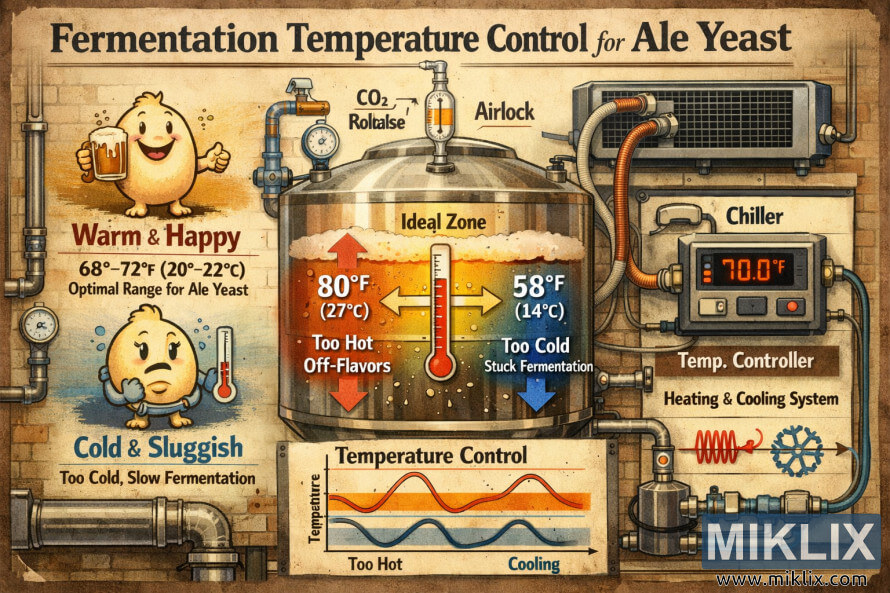
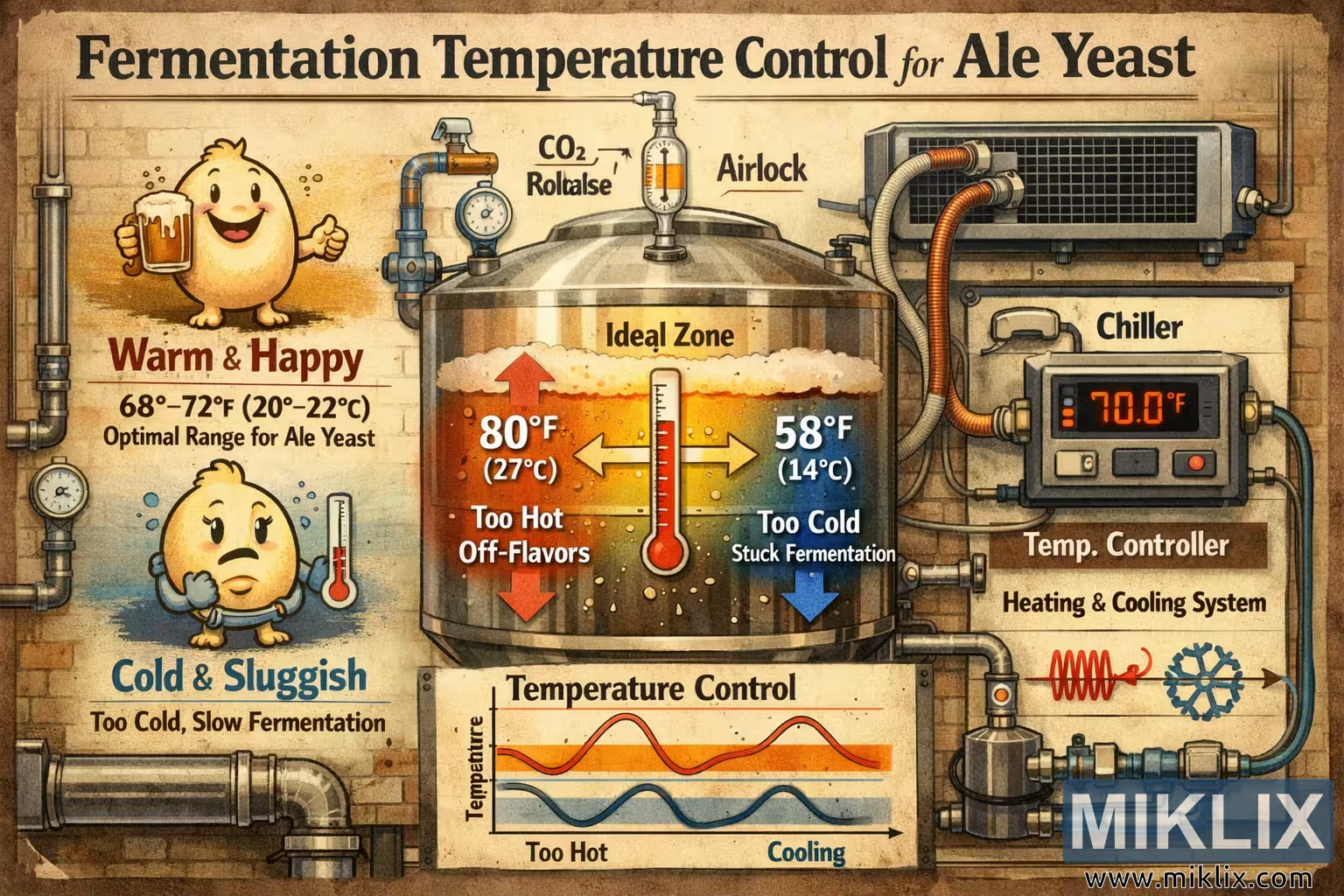
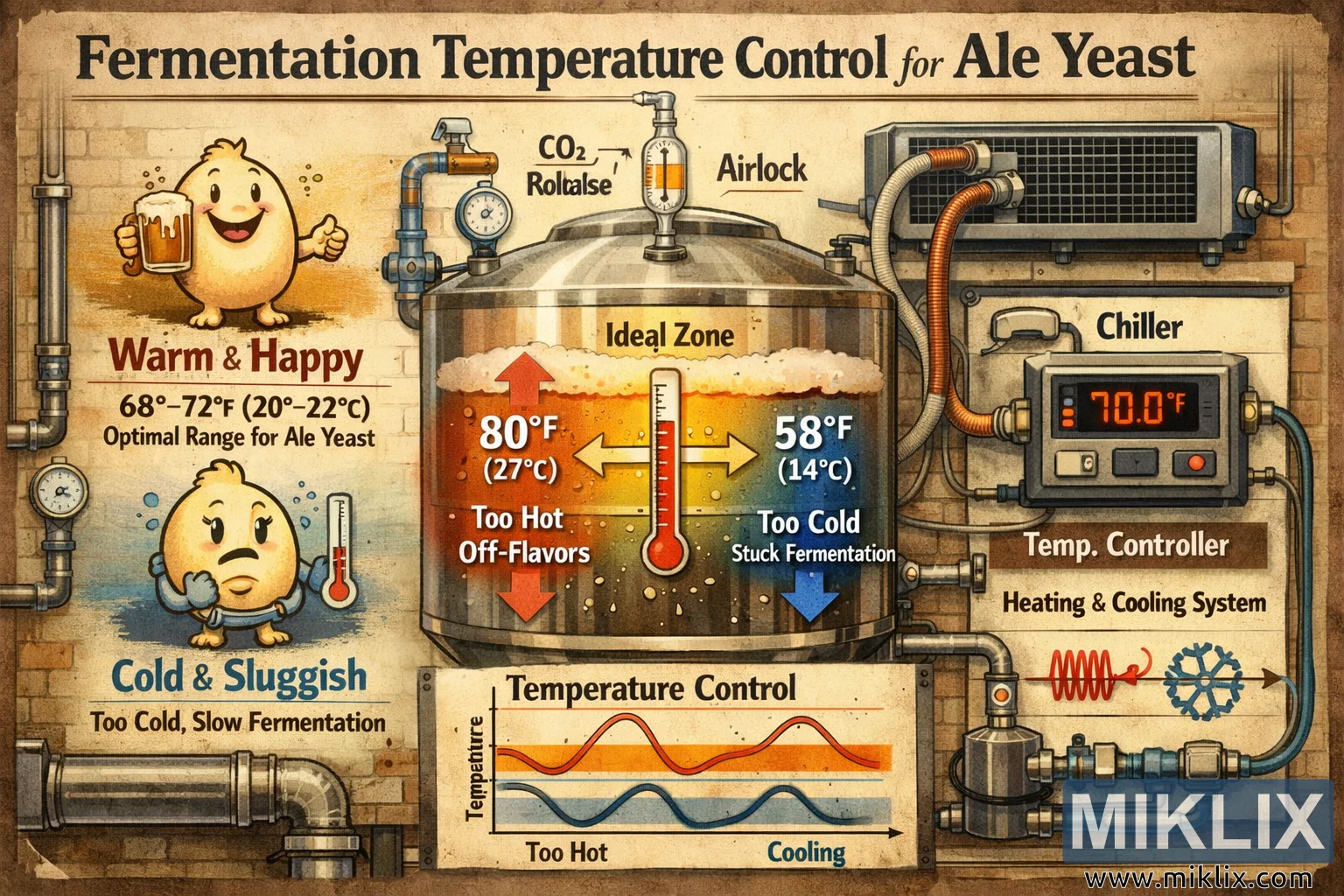
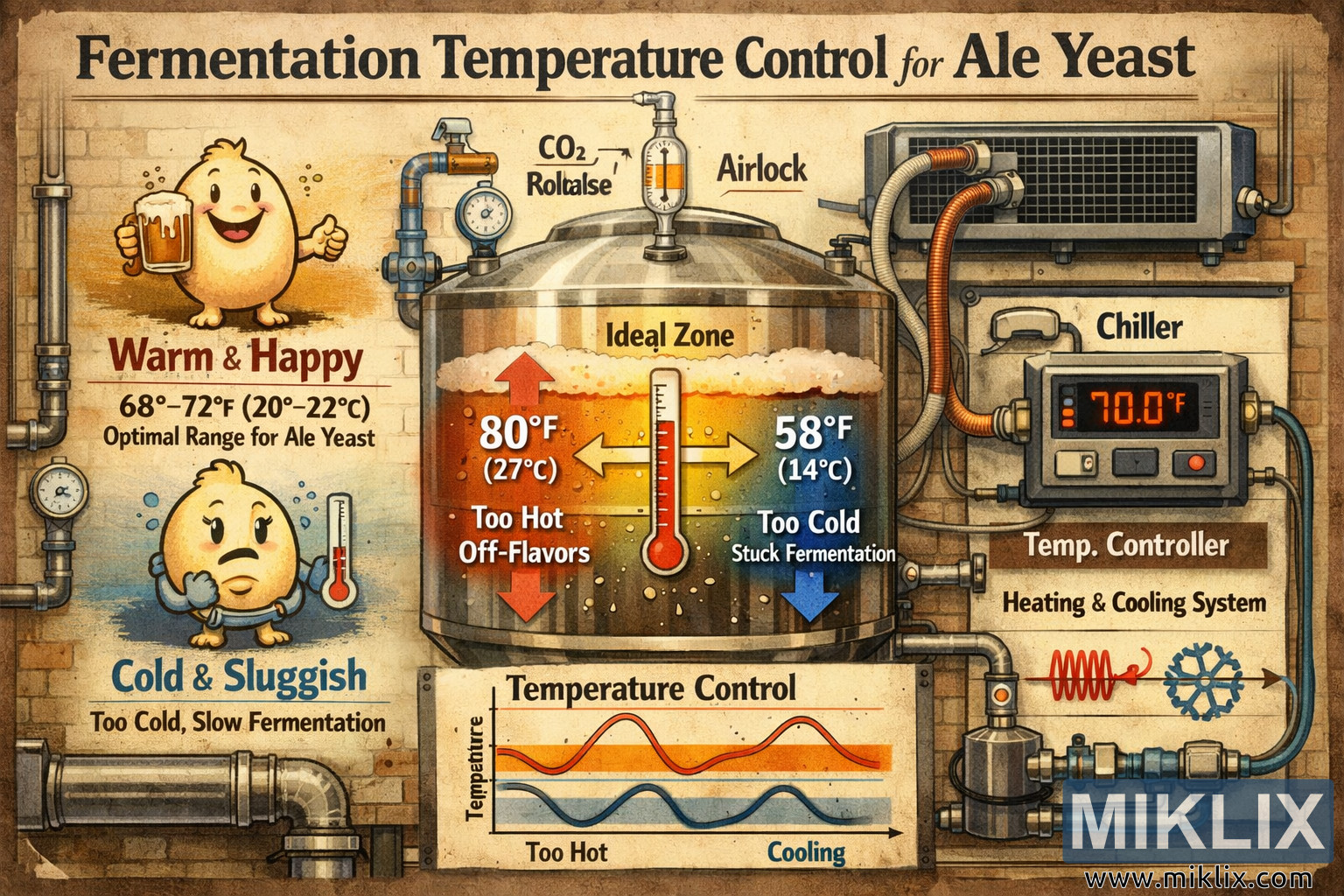
Educational illustration explaining ale yeast fermentation temperature control, showing optimal temperature ranges, effects of too hot or too cold conditions, and brewery heating and cooling systems.
Available versions of this image
The image files available for download below are less compressed and higher resolution - and as a result of that, higher quality - than the images embedded in articles and pages on this website, which are more optimized for file size in order to reduce bandwidth consumption.
Regular size (1,536 x 1,024)
Large size (3,072 x 2,048)
Very large size (4,608 x 3,072)
Extra large size (6,144 x 4,096)
Comically large size (1,048,576 x 699,051)
- Still uploading... ;-)
Image description
The image is a detailed, educational illustration explaining fermentation temperature control for ale yeast in a brewing context. The scene is presented in a wide, landscape format with a warm, vintage, poster-like aesthetic, resembling a brewery wall covered with pipes, gauges, and instructional diagrams. At the center is a large, transparent fermentation vessel filled with actively fermenting beer, topped with a foamy krausen layer. Inside the vessel, a vertical thermometer clearly shows temperature ranges, with arrows pointing left and right to illustrate temperature movement. The central area is labeled as the ideal zone for ale yeast, visually emphasizing balanced fermentation conditions.
To the left side of the illustration, anthropomorphic yeast characters help convey the concept emotionally and intuitively. One cheerful yeast character, holding a mug of beer, represents yeast at optimal temperatures, labeled as "Warm & Happy" with a range of approximately 68–72°F (20–22°C), identified as the optimal range for ale yeast. Below it, a second yeast character appears sluggish and unhappy, colored in cooler tones and accompanied by a thermometer icon, illustrating conditions that are too cold. This section explains that low temperatures slow fermentation and can cause yeast to become inactive.
On the right side of the fermenter, temperature control equipment is depicted in detail. A digital temperature controller displays a numerical temperature reading, connected by pipes and cables to both a chiller unit and a heating element. These components visually demonstrate how brewers can actively manage fermentation temperature through controlled heating and cooling. Labels such as "Chiller," "Temp. Controller," and "Heating & Cooling System" reinforce the technical explanation. Arrows and icons show heat being added or removed from the system.
The illustration also highlights the risks of improper temperature control. Above the ideal zone, higher temperatures are marked as too hot, with notes indicating the production of off-flavors when fermentation exceeds recommended levels. Conversely, colder temperatures are shown as causing stuck or sluggish fermentation. At the bottom of the image, a small line graph illustrates temperature fluctuations over time, contrasting unstable conditions with smooth, controlled temperature curves.
Overall, the image combines technical accuracy with friendly visual storytelling. Through clear labels, expressive characters, and well-organized diagrams, it communicates why precise temperature control is critical for healthy ale yeast fermentation and high-quality beer production.
The image is related to: Fermenting Beer with Wyeast 1187 Ringwood Ale Yeast