
Hops in Beer Brewing: Precoce de Bourgogne
منتشر شده:
آخرین به روز رسانی: ۲۷ مهٔ ۲۰۲۶ ساعت ۱۵:۴۳:۱۵ (UTC)
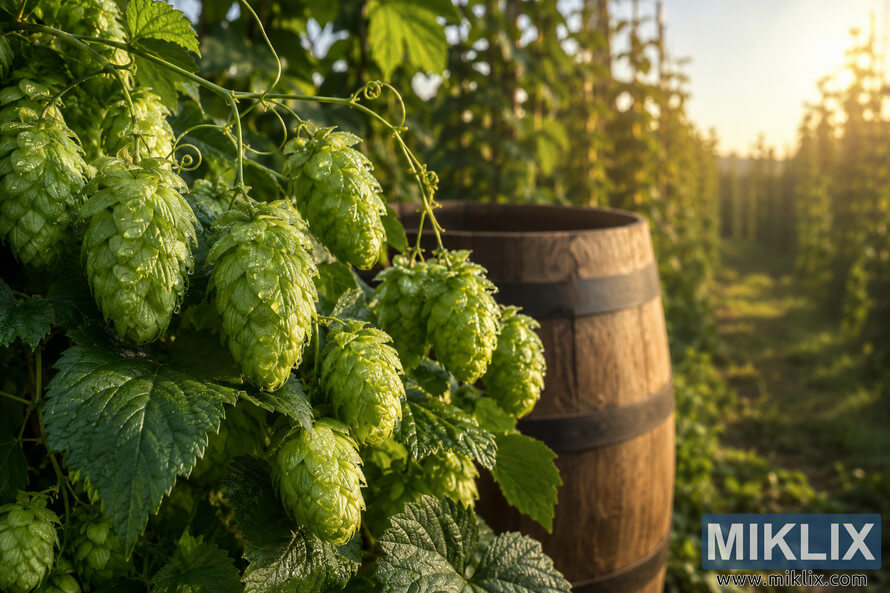
Precoce de Bourgogne hops, also known as Precoce d’Bourgogne in some catalogs, hail from a long, quiet history in Alsace. They are cherished for their mild alpha acid level, near 3%, and a soft, floral-herbal-spice profile. This profile is distinctly continental.
Hops in Beer Brewing: Precoce de Bourgogne
برای اطلاعات بیشتر و وضوح بالاتر، روی تصویر کلیک یا لمس کنید.
Grown in small commercial plots since their introduction from the Hop Research Institute in Poland in 1977, Precoce de Bourgogne offers low bitterness. It also boasts a strong aromatic presence. Its primary role in many recipes is to focus on aroma rather than bittering.
For craft brewers seeking French aroma hops, Precoce de Bourgogne is a valuable asset. It is particularly useful when a gentle, old-world floral or herbal character is desired. Availability can be unpredictable, so it's crucial to consult supplier technical sheets for the latest specs and harvest notes.
Key Takeaways
- Precoce de Bourgogne hops (aka Precoce d’Bourgogne) are a low-alpha French aroma hop prized for floral and herbal notes.
- Typical alpha acids hover around 3%, making it an aroma-first hop rather than a bittering workhorse.
- This continental aroma hop is grown in limited quantities in Alsace and often appears in recipes at roughly one-third of the hop bill.
- Commercial data can be sparse; check primary hop catalogs and supplier tech sheets for current availability and specs.
- Use Precoce de Bourgogne to add subtle spice and floral lift in continental ales, saisons, and herb-forward beers.
Introduction to Precoce de Bourgogne hops
Precoce de Bourgogne is a French hop known for its floral, herbal, and spice aromas. It's favored by American brewers for its delicate, continental scent. This hop stands out for its subtle character, unlike more pungent varieties.
The history of Precoce de Bourgogne begins in Alsace, where it was first cultivated. It gained popularity in the 1970s through exchanges with research programs. Its early days are marked by French breeding efforts and limited commercial use.
In the realm of French hops, Precoce de Bourgogne is part of a long tradition. It's used for its aroma, not bitterness, thanks to its low alpha acids and essential oils. This makes it perfect for adding scent late in the brewing process.
The US craft brewing scene has grown, but some heritage hops remain rare. Precoce de Bourgogne offers a unique aroma for small breweries. Finding it might require specialty suppliers or creative substitutions.
This article will delve into the details of Precoce de Bourgogne. We'll cover its botanical background, chemical makeup, and how to use it in brewing. You'll learn about dosing, recipe ideas, storage, and where to find it. Our goal is to make this hop accessible for brewers looking to enhance their beers.
- Brief origin and history
- Why this hop matters to craft brewers in the United States
- How the article is organized and what brewers will learn
برای اطلاعات بیشتر و وضوح بالاتر، روی تصویر کلیک یا لمس کنید.
Botanical and cultivation background
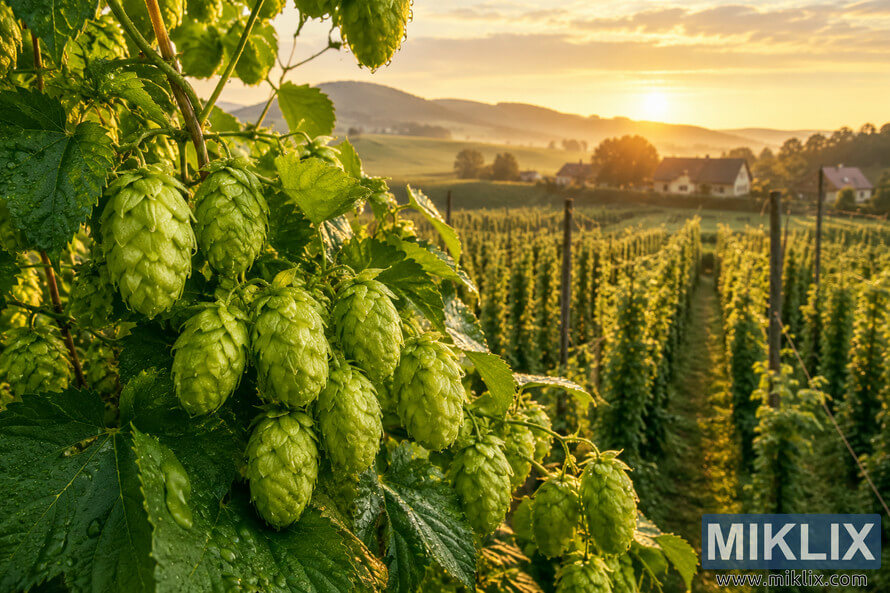
The Precoce de Bourgogne hop boasts a compact commercial footprint and a botanical narrative rooted in northeastern France. For those interested in cultivating this hop, it's essential to note the scarcity of large-scale trials. Instead, there are references to small-scale plantings.
Origin and early development (France, Alsace region)
Precoce de Bourgogne's origins are traced back to France, with a historical stronghold in the Alsace region. Early cultivation records from Alsace reveal modest scale growth of this aroma hop. It remains one of the less common Alsace hops found outside Europe.
Pedigree notes and suspected clone status
Details on the hop pedigree are scarce. It was introduced in 1977 by the Hop Research Institute in Poland. However, many catalogs lack comprehensive botanical entries. This scarcity has led experts to speculate that it might be a clone rather than a formally bred cultivar.
Growth characteristics: yield, maturity, and plant traits
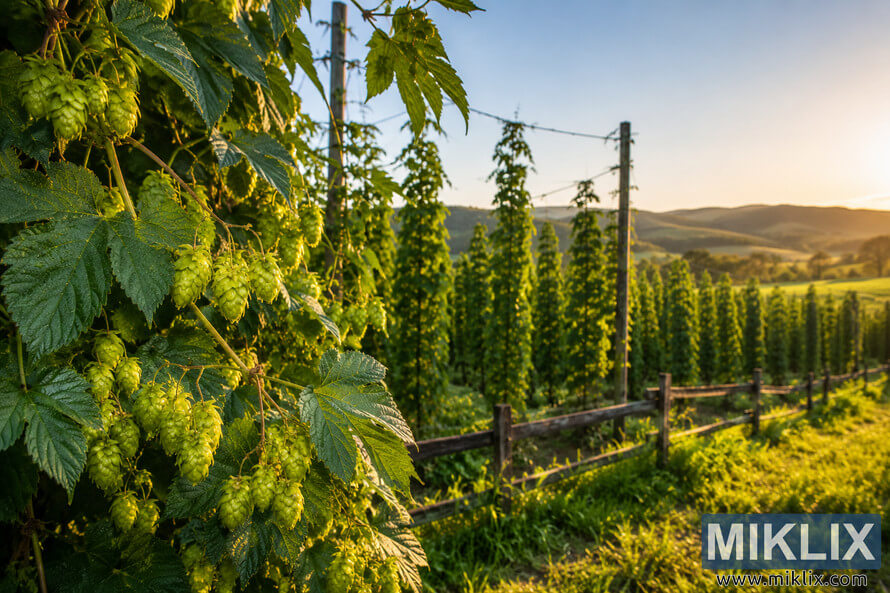
Field reports indicate a hop yield of 1,200–1,500 lbs/acre under typical conditions. This hop exhibits early maturity compared to many modern varieties. It also tends to form side arms roughly 12"–20" long.
- Growth habit: low-to-medium vigor with dark green leaves.
- Resistance: moderate tolerance to downy mildew and verticillium wilt.
- Sex: female plants used for cone production.
Given the variability in public listings, growers are advised to consult USDA ARS data or established hop catalogs for planning. Accurate records are crucial for aligning expectations regarding hop yield and maturity during Precoce de Bourgogne cultivation.
برای اطلاعات بیشتر و وضوح بالاتر، روی تصویر کلیک یا لمس کنید.
Alpha and beta acid profile
Precoce de Bourgogne is known for its low alpha acid content, making it ideal for enhancing aroma rather than bittering. The alpha acid levels typically range from 3.1–3.7%, aligning with recipe guidelines that often suggest around 3.4%. This hop's low alpha acids are not suitable for high IBU beers but excel in late kettle and finishing additions.
The beta acid levels of Precoce de Bourgogne are modest, usually between 2.6% and 3.5%. This range is typical for aroma-focused hops, where long-term bitterness stability is less critical. Brewers use beta acid levels to gauge how an aroma hop will evolve over time or when used for subtle background depth.
Cohumulone levels in Precoce de Bourgogne are often reported near 23%. This indicates a standard bitterness character, rather than an aggressive one. The cohumulone percentage suggests that any bitterness it contributes will be typical, not harsh. However, the overall impact remains small due to the hop's low alpha acid content.
- Alpha range: about 3.1–3.7% — useful for late additions, not primary bittering.
- Beta range: roughly 2.6–3.5% — supports aroma roles and background stability.
- Cohumulone: near 23% — indicates a conventional bitterness profile when used for IBUs.
Precoce de Bourgogne's figures can vary by supplier and harvest. Brewers aiming for precise IBU calculations or blend decisions should obtain current lab specifications from their hop vendor. This is crucial before scaling a recipe or making large purchases.
برای اطلاعات بیشتر و وضوح بالاتر، روی تصویر کلیک یا لمس کنید.
Essential oils and aroma compounds
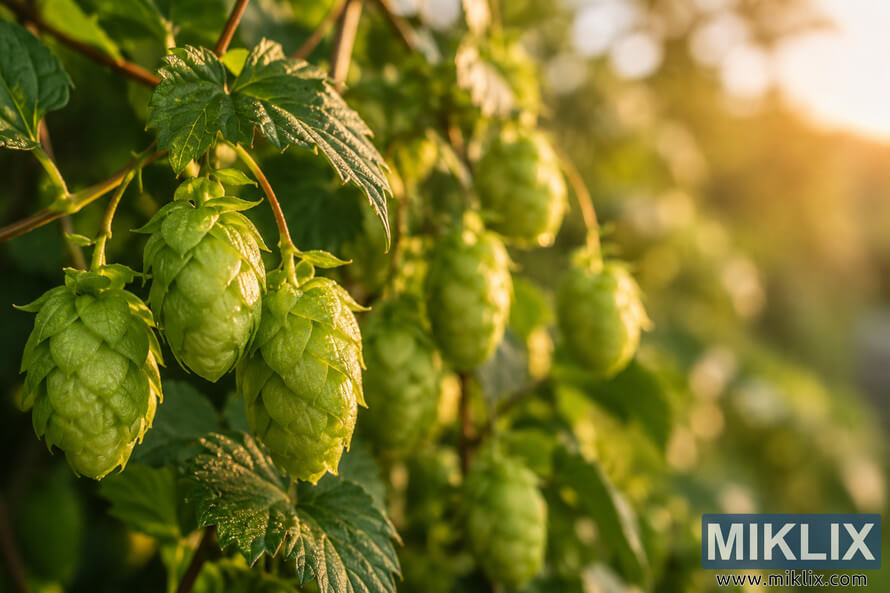
Precoce de Bourgogne offers a unique set of volatile compounds, making it an aroma hop rather than a bittering agent. Its total oil levels are modest, yet the balance of these components imparts a subtle, classic continental character to beers.
The hop essential oil content averages about 0.3 ml per 100 g. This low content requires careful handling to preserve the floral essence. Even slight changes in freshness or exposure to oxygen can significantly impact the aroma.
- Dominant impressions: floral top-notes that read as gentle and honey-like.
- Secondary character: herbal mid-notes that can suggest hay, green tea, or light sage.
- Subtle spice: a faint peppery edge that lifts complexity without overwhelming malt.
Precoce de Bourgogne oils define its floral herbal spice hop identity. It suits saisons, continental ales, and beers aiming for classic European profiles. When fresh, these tones emerge in whirlpool and dry-hop additions, offering a nuanced aroma rather than bold citrus or resin.
Storage and handling are crucial for these low-concentration oils. Aromatic terpenes and esters degrade faster than alpha acids. Thus, a hop with good alpha retention can still lose much of its scent. To preserve the delicate floral herbal spice hop notes, use cold, oxygen-minimized packaging like vacuum-sealed or nitrogen-flushed bags, and maintain a continuous cold chain.
Practical tips for brewers:
- Source the freshest inventory available and check packing dates.
- Prefer pelletized forms with proper flushing, then keep hops frozen until use.
- Schedule late kettle, whirlpool, or short dry-hop contact times to highlight remaining oils.
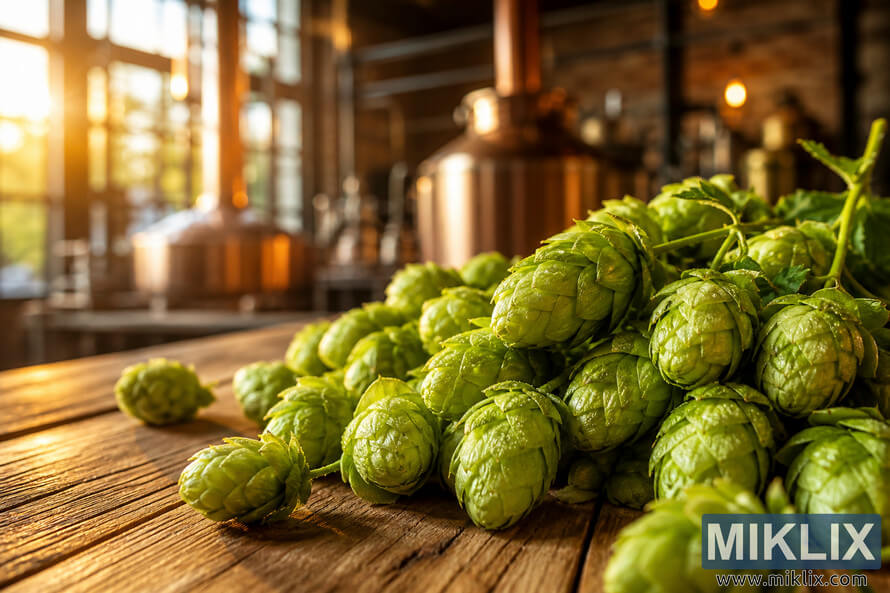
برای اطلاعات بیشتر و وضوح بالاتر، روی تصویر کلیک یا لمس کنید.
Flavor profile and sensory description
The Precoce de Bourgogne flavor profile is all about aroma, not bitterness. Its low alpha acids make it perfect for late boil or whirlpool additions. This approach enhances scent without introducing harsh bitterness. Trial batches show its best when combined with neutral malts and restrained yeast strains.
Detailed tasting notes
The tasting experience begins with soft floral notes, reminiscent of fresh petals and light honeyed florals. A gentle agrestic lift follows, adding depth. Herbal qualities like chamomile, green leaf, and faint thyme-like tones emerge mid-palate. A subtle spice arrives last, bringing a warm, dry finish without sharpness.
Contribution to aroma versus bitterness
Precoce de Bourgogne is all about aroma, with minimal bitterness. Its low alpha acids mean its impact comes from essential oils in late additions. Add it at 170–185°F or as a dry-hop to preserve its delicate floral and herbal notes.
Examples of expectations in finished beer
- Continental ales: clear floral lift on the nose, herbal mid-notes that complement noble yeast esters.
- Saisons and farmhouse ales: delicate spice echoing peppery yeast character, while floral herbal spice hops keep the profile fresh.
- Herb-forward beers: supports botanical additions without dominating malt or yeast flavors.
Some databases may lack detailed entries, but in-brew trials can uncover more. Brewers who experiment with timing and yeast selection find the Precoce de Bourgogne's full flavor most rewarding. It's best when kept subtle and balanced.
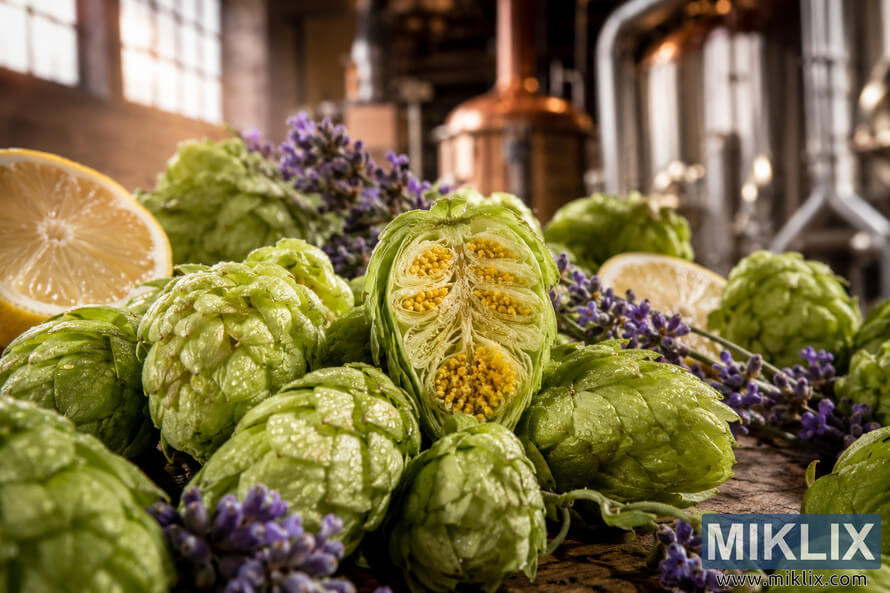
برای اطلاعات بیشتر و وضوح بالاتر، روی تصویر کلیک یا لمس کنید.
Brewing uses and practical dosing
Precoce de Bourgogne is celebrated for its delicate floral and herbal scents. It's primarily used for aroma hop additions, not bittering. Its low alpha acids make it ideal for late hop usage and post-boil contact, where oils can impart character despite heat.
In typical hop blends, Precoce de Bourgogne accounts for about one third of the total. This balance ensures its subtle profile complements more robust varieties. Brewers often aim for a 30–35% Precoce de Bourgogne dosing to achieve a pronounced floral-herbal top note without overpowering the base beer.
For late kettle additions, add hops with 10 minutes or less to preserve volatile terpenes. Using whirlpool or hop-back at sub-boil temperatures extracts aroma while minimizing harsh vegetal compounds. Dry-hop rates should align with common aroma levels, adjusted based on malt weight, yeast character, and beer style.
- Late kettle usage: 0.5–1.5 oz per 5 gallons for lighter beers; scale by gravity and bitterness goal.
- Whirlpool additions: similar to late kettle, often placed at 160–180°F for 20–30 minutes to lift oils.
- Dry-hop rates: start with typical aroma hop levels and test small batches to dial in exact dry-hop rates for the desired intensity.
Given the variability in public data, it's wise to run pilot brews to refine Precoce de Bourgogne dosing. Taste different late hop usage, whirlpool, and dry-hop permutations to pinpoint the perfect balance for your malt bill and fermentation profile.
Recommended beer styles and pairing with malt profiles
Precoce de Bourgogne shines when its floral and herbal notes take center stage. It's best used as a late addition or for dry hopping. This enhances the delicate spice and bright top-notes. Below, you'll find style directions and malt choices that highlight this hop's unique qualities.
Opt for light to moderately rich malt backbones to complement, not overpower, the hop aroma. Pilsner and pale malts enhance floral notes, while Vienna or light Munich adds a soft bready warmth. This pairs well with herbal spice. Use specialty malts sparingly to preserve the hop's essential aromatics.
- Continental and farmhouse ales: These styles are perfect for continental ale pairings, where subtle herbal complexity is appreciated. Aim for clean fermentation with minimal ester profiles.
- Saisons: Employ saison hops technique—late kettle and dry hop—to capture lively top-notes. Let saison yeast contribute peppery, fruity esters.
- Herb-forward beers: Pair Precoce with mild herbal additions like chamomile or lemon balm. This builds layered aromatics without clashing.
Here are three concise recipe ideas that highlight malt pairings and style focus:
- Dry farmhouse ale: 85% Pilsner malt, 10% wheat malt, 5% Vienna. Add Precoce de Bourgogne at whirlpool and dry-hop to emphasize floral lift.
- Saison with balance: 75% Pilsner, 20% Vienna, 5% light caramel 10L. Use saison hops additions and a clean saison yeast to complement herbal spice.
- Light continental ale: 90% pale malt, 8% Munich light, 2% oat. Late additions and a modest dry-hop of Precoce boost continental ale pairings aimed at sessionable drinking.
When crafting recipes, aim for low to moderate bitterness. Prioritize late hop work. This approach makes saison hops and continental ale pairings shine while malt pairings provide a balanced base.
Hop pairings and combinations
Precoce de Bourgogne shines when paired thoughtfully. Its delicate floral and herbal notes benefit from blends that enhance clarity and brightness. A touch of resin can also add depth without overpowering its subtlety. Below, find practical pairing ideas and suggested hop blend ratios to guide your recipe development.
- Complementary aroma hops
- Classic continental varieties like Saaz, Hallertau Mittelfrüh, and Styrian Golding complement Precoce de Bourgogne well. These hops introduce noble spice and subtle earth, supporting the floral top-notes without overshadowing them.
- Brightening additions
- For a modern twist, consider adding small percentages of citrus-forward hops like Citra or Amarillo. Use them sparingly to add brightness while preserving the floral character.
- Resinous balance
- For beers needing body or a hint of resin, use small amounts of Simcoe or Centennial. These resinous varieties can anchor the aroma profile, contrasting the delicate herbal notes.
Practical hop blend ratios are key to controlling the final impression. Treat Precoce de Bourgogne as a lead aroma hop, making up about one-third of the aroma bill. Then, split the remaining hops between citrus or resinous accents and other continental aromatics.
- Floral-forward blend
- Precoce de Bourgogne 40%, Saaz or Hallertau 40%, small brightener 20%. This blend emphasizes floral hop blends and keeps spice rounded.
- Herbal-forward blend
- Precoce de Bourgogne 30–35%, Styrian Golding or Fuggle 40–45%, resinous accent 20–25%. Increase noble-like hops to highlight herbal notes.
- Modern hybrid blend
- Precoce de Bourgogne 30–40%, Citra/Amarillo 20–30%, continental aroma hops split across the remainder. This blend balances tradition with modern brightness.
Adjust these hop blend ratios based on beer strength, malt bill, and desired aroma intensity. Small changes in late-kettle, whirlpool, and dry-hop timing can significantly alter the floral or herbal qualities in the glass. Brewers aiming for subtlety should let Precoce de Bourgogne lead, using citrus or resinous varieties as accents.
Yeast interactions and fermentation considerations
Understanding yeast and hop interaction is key to enhancing Precoce de Bourgogne's aroma. This hop boasts floral top notes, herbal mid-tones, and a subtle spice finish. The right yeast can either highlight or obscure these aromas.
Most brewers opt for continental ale strains to complement Precoce de Bourgogne. These strains offer a clean, delicate background. They produce restrained esters, allowing the hop's floral and herbal qualities to shine. Cooler fermentation temperatures are crucial for preserving volatile oils and maintaining a crisp hop profile.
Trending choices include saison yeast hops and farmhouse strains. These yeasts add peppery, fruity, and rustic phenolics. When paired with Precoce de Bourgogne, they enhance spice and ester notes, creating a lively interplay. Warmer fermentations suit these strains, bringing out complexity.
Opt for predictable, well-documented strains from suppliers like Wyeast, White Labs, or Fermentis to manage outcomes. Plan fermentation schedules to limit warm conditioning time. This reduces loss of delicate hop volatiles. Cold crashing and gentle carbonation help lock in aroma before packaging.
- Choose a continental ale strain and ferment cool to highlight floral hop notes.
- Use a saison strain and ferment warmer to blend esters with herbal spice.
- Minimize extended warm aging; cold condition and package promptly for best aroma retention.
Storage stability and handling
Proper handling is crucial for delicate hops like Precoce de Bourgogne. This hop has low total oil and a fragile aromatic profile. Brewers should focus on storage and packaging to preserve hop freshness and aroma.
Shelf-life data and alpha retention
Lab tests indicate about 61% alpha retention after six months at 68°F. This decline in bittering compounds occurs under warm conditions. Aromatic oils, being more volatile, lose strength faster than alpha acids.
Best practices to protect oils and aromatics
- Keep hops cold. Refrigeration or freezer storage slows oil loss and preserves hop freshness.
- Limit oxygen exposure. Vacuum-sealed bags or nitrogen-flushed packages reduce oxidation.
- Maintain a strict cold chain during transport. Rapid temperature swings speed aroma degradation.
- Open packages only when ready to use. Repeated air exposure harms both aroma and alpha retention.
Packaging forms and their influence on freshness
Pellets pack densely and often show slightly better stability than whole cones. Crushing during pelletizing can expose oils, so careful sealing matters. Whole cones keep a more intact structure but need the same cold, low-oxygen handling to preserve hop freshness.
Practical checks and supplier guidance
- Request technical sheets from suppliers like Yakima Chief or BarthHaas when sourcing Precoce de Bourgogne storage options.
- Inspect lot COAs for alpha values and packing date before buying.
- Plan inventory turnover to use low-oil varieties sooner for peak aroma impact.
Substitutes and similar hops
When Precoce de Bourgogne is hard to find, brewers can find similar flavors by using other European aroma hops. They can also blend different varieties. This approach keeps the recipe's essence while focusing on aroma during late additions and dry hopping.
- Common substitutes include East Kent Goldings, Styrian Goldings, and Fuggle. These hops have a floral base with herbal and earthy undertones, mirroring Precoce's character.
- Blending is another option. Mix a floral European hop with a light spicy or herbal variety, like Saaz or Hallertau Mittelfrüh. This combination aims to replicate the complex floral/herbal/spice profile.
- For guidance, consult suppliers like Yakima Chief or BarthHaas. They can suggest alternatives and provide technical details on oil and alpha acid content.
To match Precoce de Bourgogne's balance, consider the alpha acid and oil content differences. If a substitute has less oil, increase the amount used in late additions or dry hopping. Conversely, if it's more potent, reduce the quantity or split the additions between whirlpool and dry-hop to balance the intensity.
Here are practical tips for substituting hops in recipes:
- Adjust the quantity based on alpha acid ratio, aiming to match the original intensity of aromatic oils, not just weight.
- Conduct small-scale trials, brewing 1–3 gallon batches, to refine blend ratios before scaling up.
- Split aroma additions between whirlpool and dry-hop to layer floral notes and temper spice.
- Keep a record of sensory differences and adjust percentages until the substitute feels right for the recipe.
Opt for a substitute when Precoce de Bourgogne is unavailable due to supply, cost, or regional availability. Follow these substitution tips to maintain aroma focus and minimize recipe adjustments. Small-scale trials and communication with suppliers ensure a smooth transition.
Agronomic challenges and disease resistance
Precoce de Bourgogne agronomy is well-suited for small-acreage and specialty hop plots. Its early maturity and relatively compact growth make it ideal for tighter harvest windows in cooler climates. This variety can fit into smaller spaces, making it a valuable asset for growers.
Field reports indicate moderate hop disease resistance against downy mildew and verticillium wilt. While this resistance reduces some risk, it does not eliminate the need for active scouting, sanitation, and fungicide programs. Outbreaks can still occur, necessitating these measures.
Yield and growth rate
Hop yield typically ranges from 1,200–1,500 lbs/acre under standard management. Growers should anticipate a low-to-medium growth rate and shorter side arms. This can limit bulk production but favors quality-focused harvests.
Harvest timing and plant form
Precoce de Bourgogne matures earlier than many modern varieties. Side arm length is usually 12"–20", which can make mechanical harvests less efficient. Plan harvest schedules around early maturity and monitor cones for peak aroma and moisture.
Given the limited data, consult USDA ARS listings and local trials for site-specific plans. This will help refine hop yield and integrated pest management strategies.
Brewing recipes and real-world examples
Below are practical recipe notes and step sequences that show how to use Precoce de Bourgogne in a mid-strength continental ale or saison. The sample setup treats Precoce de Bourgogne as roughly one-third of the aroma additions. This balance keeps floral top-notes and herbal mid-notes in check, with subtle spice.
Sample grain and batch parameters for a 5 gallon (19 L) batch:
- Base malt: 9 lb Pilsner or Pale Ale
- Specialty: 1 lb Vienna or Wheat for body
- OG target: 1.048–1.055
- Yeast: a clean continental ale strain or saison strain for aromatic lift
Hop bill examples (total aroma additions = 3 oz / 85 g):
- Precoce de Bourgogne (33% of aroma) — 1.0 oz (28 g), alpha ≈ 3.4%
- Saaz or East Kent Goldings — 1.0 oz (28 g) for classic floral/herbal balance
- Modern aromatic (e.g., Cascade or Centennial) — 1.0 oz (28 g) to add bright top-note contrast
Step-by-step additions for an aroma-focused beer recipe:
- Late kettle (10–5 min): add 0.5 oz total from the aroma additions to lightly build aroma without harshness.
- Whirlpool at 170–180°F (77–82°C), steep 15–30 minutes: add Precoce de Bourgogne portion (0.5–0.75 oz) to extract volatile oils gently.
- Dry-hop during conditioning (3–5 days at cellar temperature): add remaining hops, including Precoce, at conventional dry-hop rates to preserve fragile aromatics.
Brewers should pilot small batches and adjust quantities. Starting with Precoce de Bourgogne at about 33% of aroma additions will highlight its floral-herbal-spice profile without overpowering the beer.
Expected tasting notes and outcomes:
- Initial aroma: soft floral lift from Precoce with a clear herbal backbone.
- Mid-palate: light herbal and spice character that supports malt and yeast esters.
- Finish: clean, slightly spicy fade that leaves a pleasant floral memory.
For reproducible results document hop ages and storage, record whirlpool temperature, and taste multiple conditioning points. These practices make it easier to refine a Precoce de Bourgogne recipe in future trials.
Conclusion
Precoce de Bourgogne summary: This French aroma hop is a low-alpha, specialty variety. It excels in late additions. With alpha acids near 3.1–3.7% and a total oil around 0.3 ml/100g, it adds delicate floral, herbal, and spice notes. It does not contribute significant bitterness. In the United States, it is useful at roughly 33% of a hop bill for aroma and nuance.
French aroma hop conclusion: Agronomic and storage details are crucial for real results. Precoce matures early, yielding around 1,200–1,500 lbs/acre under favorable conditions. It has moderate disease resilience. Expect roughly 61% alpha retention after six months at room temperature. Cold, oxygen-free storage is key to preserving the aromatics that make this variety valuable in saisons, continental ales, and herb-forward beers.
Hop selection guidance: Because public databases can be incomplete, contact established suppliers, hop brokers, or USDA ARS resources for current specs and availability. When direct sourcing is limited, plan blends or substitutes that emphasize floral and herbal character. Favor late-kettle, whirlpool, and dry-hop additions to showcase Precoce’s strengths. Use this guidance to match malt, yeast, and hopping strategy for the clean, continental aroma profile you want.
FAQ
What is Precoce de Bourgogne and where did it originate?
Precoce de Bourgogne is a French aroma hop from the Alsace region. It was introduced in 1977 from Poland's Hop Research Institute. Its exact lineage is unclear, but it's known for its aroma rather than bitterness.
What are the typical alpha and beta acid ranges for Precoce de Bourgogne?
Alpha acids range from 3.1% to 3.7%, and beta acids from 2.6% to 3.5%. These values confirm its role as an aroma hop. It's best used in late additions, whirlpool, or dry-hopping due to its minimal bitterness.
What does the essential oil profile look like?
It has a low total oil content of about 0.3 ml per 100 g. The oils impart floral, herbal, and subtle spice impressions. Due to its limited and volatile nature, the aroma intensity decreases quickly. Fresh, well-stored hops are essential for optimal results.
How does Precoce de Bourgogne smell and taste in beer?
It offers floral top-notes, pronounced herbal mid-notes, and a light spicy edge. In beer, it adds delicate continental aromatics. These complement restrained malt and compatible yeast strains without overpowering the beer.
How should I use Precoce de Bourgogne in a recipe?
Use it mainly as an aroma hop. Allocate about one-third (30–40%) of the aroma hop bill to Precoce. Add it late in the boil (10–5 minutes or less), in the whirlpool, and/or as a dry-hop to showcase its floral and herbal character.
What dosing numbers should brewers try for late additions and dry-hop?
Aim for aroma rates similar to other European aroma hops. Start with Precoce making up ~33% of the late-additions by weight. Adjust the total grams per hectoliter or ounces per gallon based on your desired aroma intensity. Run small pilot batches to fine-tune.
Which beer styles best suit Precoce de Bourgogne?
It excels in continental ales, saisons, farmhouse styles, and herb-forward beers. These styles allow the floral/herbal/spice profile to enhance the beer without clashing with heavy malt complexity.
What malt bill complements this hop?
Light pilsner or pale malts provide a clean canvas. Vienna or light Munich can add a touch of biscuity backbone without masking aromatics. Keep specialty malts restrained to allow the delicate hop notes to come forward.
Which hops blend well with Precoce de Bourgogne?
East Kent Goldings or Styrian Goldings complement it well for layered floral/herbal character. To modernize, blend small amounts of citrus-forward hops like Citra or Amarillo. Use resinous varieties sparingly to avoid overpowering Precoce's subtlety. A common blend ratio is Precoce 30–40% of the aroma bill, 20–30% citrus/resinous, and the remainder split among complementary continentals.
What yeast strains pair best with Precoce de Bourgogne?
Continental ale strains and saison/farmhouse yeasts pair well. Cooler-fermenting continental strains preserve delicate hop aromatics. Saison yeasts at warmer temperatures can accentuate spicy and fruity esters that harmonize with Precoce's profile. Plan fermentation and conditioning to preserve volatile oils: avoid extended warm aging and consider cold-crash and gentle carbonation.
How stable are Precoce de Bourgogne hops in storage?
Measured alpha retention is about 61% after six months at 68°F, but volatile oils degrade faster. Best practice is cold, low-oxygen storage—vacuum- or nitrogen-sealed packaging stored in refrigeration or frozen conditions to preserve aroma.
Do pellets or whole cones retain aroma better?
Pellets offer slightly better packing density and marginally improved shelf stability versus whole cones. Both need cold, oxygen-minimized storage. For low-oil varieties like Precoce, packaging and cold chain matter more than form.
What are reasonable substitutes if Precoce de Bourgogne is unavailable?
Substitute with European floral/herbal aroma hops like East Kent Goldings or Styrian Goldings. To approximate the spice element, blend a floral European hop with a light spicy or herbal hop. Adjust late-addition weights for differing oil contents and alphas.
Is Precoce de Bourgogne widely available commercially?
Historically grown in small commercial quantities in Alsace, its current availability is uncertain. Many public hop databases have incomplete entries. Brewers in the U.S. should contact specialty hop brokers, heritage suppliers, or importers and request up-to-date technical sheets from suppliers.
What agronomic traits and disease resistances does this variety show?
It has early maturity, a low-to-medium growth rate, side-arm lengths around 12–20 inches, and yields roughly 1,200–1,500 lbs per acre. Resistance to downy mildew and verticillium wilt is described as moderate.
Where can U.S. brewers source Precoce or reliable technical data?
Contact specialty hop brokers, heritage hop suppliers, or importers and request current supplier technical data sheets that list alpha/beta acids, cohumulone, total oil, and harvest year. USDA ARS records or dedicated hop catalogs can also help verify propagation and cultivar details.
Any practical recipe example using Precoce de Bourgogne?
Use a light continental ale or saison recipe with a clean pilsner malt base. Allocate Precoce ~33% of the aroma hops, add the remainder with complementary continental or bright citrus hops, and perform late-kettle additions, a cool whirlpool, and a dry-hop to emphasize floral and herbal notes. Pilot and adjust quantities to match your yeast and malt context.
مطالعه بیشتر
اگر از این پست لذت بردید، ممکن است این پیشنهادات را نیز بپسندید: