
A Complete Guide to Growing Pistachio Nuts in Your Own Garden
Published: January 3, 2026 at 6:00:39 PM UTC
Growing pistachio nuts at home is a rewarding long-term project that requires patience, the right climate, and proper care. While commercial production dominates in California, Arizona, and New Mexico, home gardeners in suitable climates can successfully grow these delicious nuts.
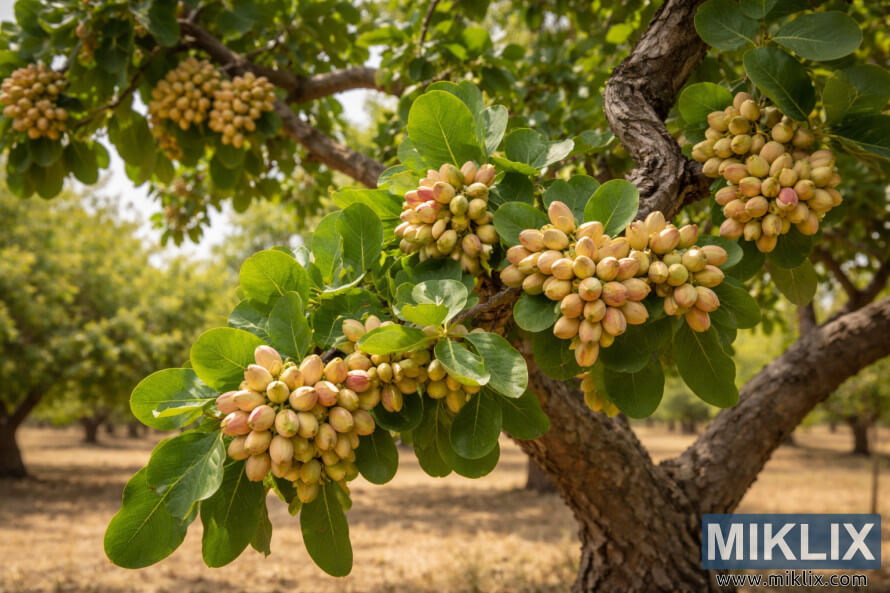
Click or tap the image for more information and higher resolutions.
This comprehensive guide will walk you through everything you need to know about cultivating pistachios, from selecting the right variety to harvesting your first crop.
Understanding Pistachio Trees
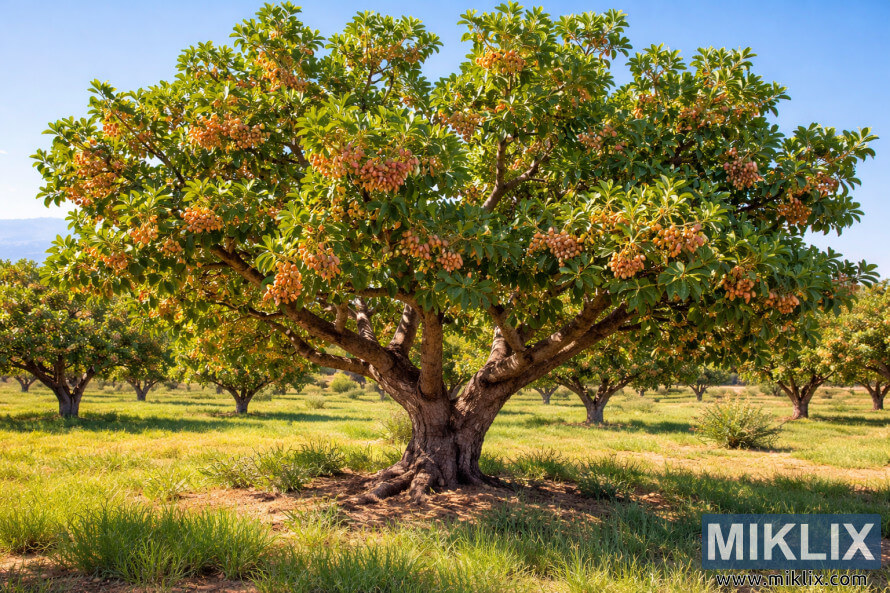
A mature pistachio tree can reach 20-30 feet in height and produce nuts for decades
Pistachio trees (Pistacia vera) are deciduous trees that belong to the Anacardiaceae family, which also includes cashews and mangoes. Despite being called nuts, pistachios are technically seeds enclosed in a drupe (a fleshy fruit with a hard inner shell). These desert-native trees can live for centuries and produce nuts for decades once established.
Key Characteristics
- Height: Mature trees typically reach 20-30 feet tall
- Spread: Similar to height, requiring adequate spacing
- Lifespan: Can live for over 100 years with proper care
- Production: Trees begin producing after 5-7 years
- Yield: A mature tree can produce up to 50 pounds of nuts annually
Climate and Soil Requirements
Pistachios have specific climate needs that must be met for successful cultivation. Understanding these requirements is crucial before investing time and resources into growing these trees.
Ideal Climate Conditions
Pistachio trees thrive in regions with:
- Hot, dry summers with temperatures reaching 100°F (38°C)
- Cold winters with 900-1,000 chill hours between 32-45°F (0-7°C)
- Low humidity to prevent fungal diseases
- Minimal rainfall during harvest season
Click or tap the image for more information and higher resolutions.
USDA Hardiness Zones
Pistachios grow best in USDA hardiness zones 7-10. In the United States, commercial production is concentrated in:
- California's Central Valley (99% of US production)
- Parts of Arizona and New Mexico
- Some areas of Texas and Nevada with suitable microclimates
Soil Requirements
The ideal soil for growing pistachio nuts includes:
- Well-draining, sandy or loamy soil
- Slightly alkaline pH (7.1-7.8)
- Low salinity (though pistachios are more salt-tolerant than many fruit trees)
- Deep soil profile to accommodate the extensive taproot system
Pro Tip: Before planting, conduct a soil test to determine pH and nutrient levels. Pistachios prefer slightly alkaline soil, so you may need to amend acidic soil with agricultural lime.
Selecting the Right Pistachio Variety
Click or tap the image for more information and higher resolutions.
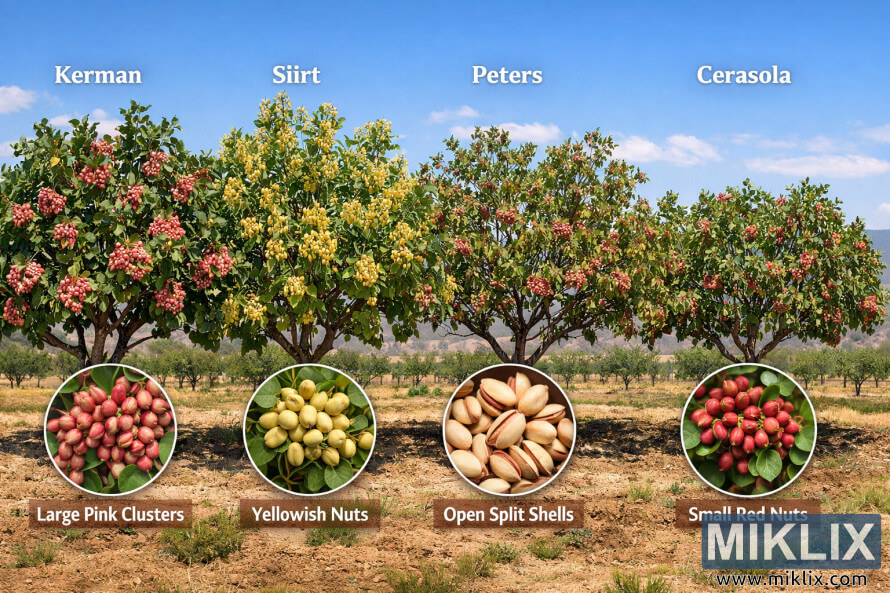
Choosing the right pistachio variety is crucial for success in home cultivation. Different varieties have varying climate adaptability, disease resistance, and nut quality.
Popular Varieties for Home Growers
| Variety | Climate Adaptation | Nut Quality | Disease Resistance | Special Features |
| Kerman | Zones 7-10 | Excellent, large nuts | Moderate | Most common commercial variety |
| Peters (male) | Zones 7-10 | N/A (pollinator) | Good | Primary pollinator for Kerman |
| Golden Hills | Zones 8-10 | Very good, uniform | Good | Earlier harvest than Kerman |
| Lost Hills | Zones 8-10 | Excellent, large | Moderate | Higher yield potential |
| Randy (male) | Zones 8-10 | N/A (pollinator) | Good | Pollinator for Golden Hills |
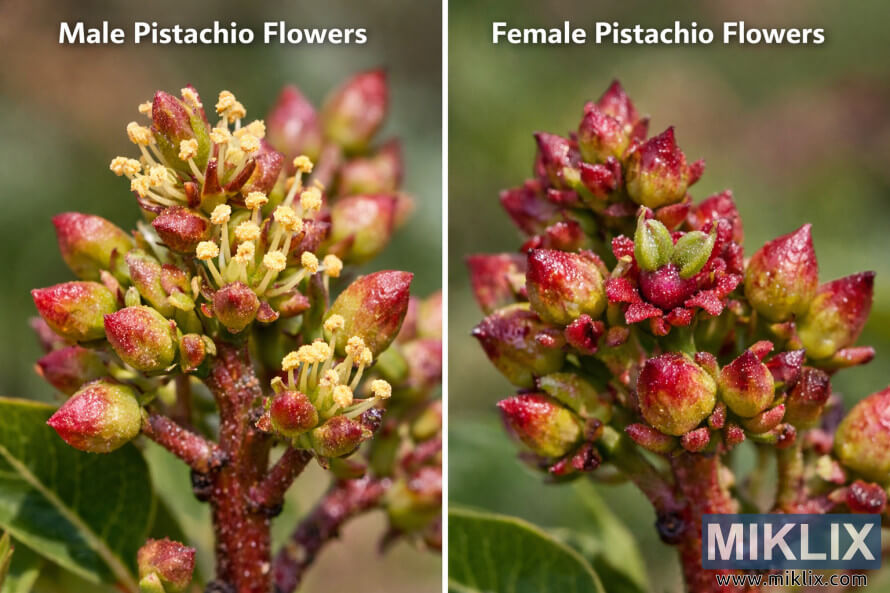
Remember: Pistachio trees are dioecious, meaning they have separate male and female trees. You'll need at least one male tree for every 8-10 female trees to ensure proper pollination and nut production.
Planting Your Pistachio Trees
When to Plant
The best time to plant pistachio trees is in early spring when the trees are still dormant. This gives them the maximum growing season to establish before winter arrives.
Choosing Between Seeds and Saplings
Growing from Saplings
- Faster time to production (5-7 years)
- Guaranteed male/female identification
- Known variety characteristics
- Better disease resistance (if grafted)
- Higher success rate
Growing from Seeds
- Longer time to production (7-10 years)
- Uncertain male/female outcome
- Unknown variety characteristics
- Less disease resistance
- Lower success rate
For home growers, purchasing grafted saplings from a reputable nursery is strongly recommended over growing from seeds. This ensures you get properly identified male and female trees with known characteristics.
Click or tap the image for more information and higher resolutions.
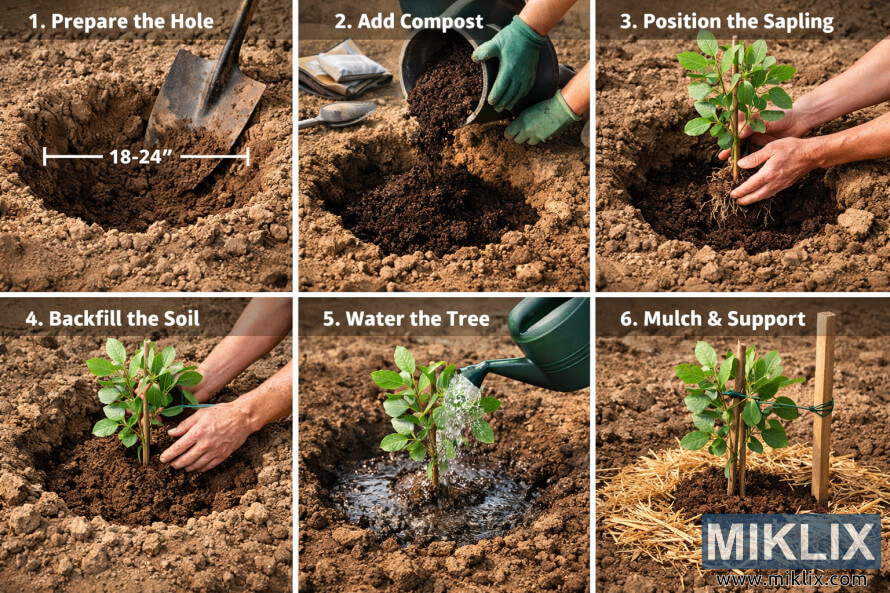
Step-by-Step Planting Guide
- Site selection: Choose a location with full sun (at least 8 hours daily) and good air circulation.
- Spacing: Allow 20-30 feet between trees to accommodate their mature size.
- Hole preparation: Dig a hole twice as wide as the root ball and the same depth.
- Soil amendment: Mix native soil with compost if needed to improve drainage.
- Tree placement: Position the tree so the graft union (if present) is 2-3 inches above soil level.
- Backfilling: Fill the hole with soil, tamping gently to remove air pockets.
- Watering: Water deeply immediately after planting.
- Mulching: Apply 2-3 inches of mulch around the base, keeping it away from the trunk.
- Staking: Provide support for young trees in windy areas.
Pollination Requirements
Understanding pollination is crucial for growing pistachio nuts successfully. Pistachios are wind-pollinated, and proper planning ensures optimal nut production.
Male and Female Trees
- Dioecious nature: Pistachio trees are either male or female, not both
- Identification: Trees are typically labeled by nurseries; female trees produce nuts, males produce pollen
- Ratio: One male tree can pollinate 8-10 female trees
- Placement: Plant male trees upwind of females to facilitate wind pollination
Pollination Strategy
For optimal pollination in a home orchard:
- Plant male and female trees within 50 feet of each other
- Consider prevailing wind direction when placing trees
- For single-tree gardens, graft a male branch onto a female tree
- Ensure compatible varieties (Peters male with Kerman female, Randy male with Golden Hills female)
Expert Tip: If space is limited, you can plant one female tree and graft a male branch onto it. This allows for self-pollination while maximizing your nut production space.
Click or tap the image for more information and higher resolutions.
Watering, Fertilizing, and Maintenance
Watering Schedule
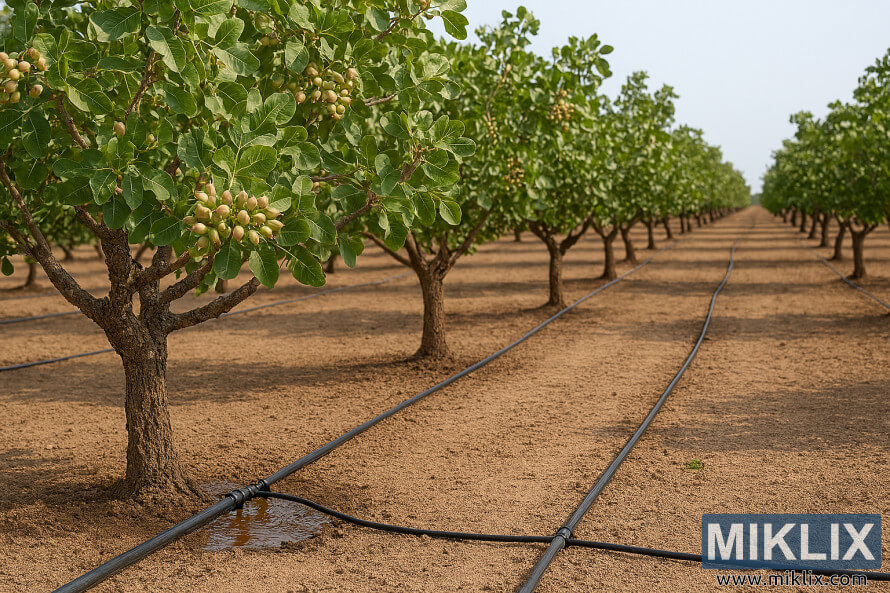
Pistachio trees are drought-tolerant once established but require consistent moisture during key growth periods:
- Young trees (1-3 years): Water deeply every 1-2 weeks during growing season
- Established trees: Deep watering once monthly during dry periods
- Flowering and nut development: Increase watering frequency
- Pre-harvest: Reduce watering to prevent hull splitting issues
- Winter dormancy: Minimal watering, only during extended dry periods
Fertilization Guide
Pistachios have moderate fertilizer needs that change as the tree matures:
- First year: No fertilization needed
- Years 2-4: Apply balanced fertilizer (10-10-10) in early spring
- Mature trees: Apply nitrogen-based fertilizer before bud break
- Micronutrients: Address zinc, boron, or copper deficiencies if leaf symptoms appear
Click or tap the image for more information and higher resolutions.
Seasonal Maintenance Calendar
| Season | Tasks | Notes |
| Winter (Dormant) | Pruning, disease inspection, minimal watering | Best time for major structural pruning |
| Spring | Fertilization, increase watering, pest monitoring | Critical for flower development and pollination |
| Summer | Consistent watering, light pruning, pest management | Focus on nut development and preventing sunburn |
| Fall | Harvest, post-harvest pruning, reduce watering | Prepare trees for dormancy after harvest |
Pruning and Training Techniques
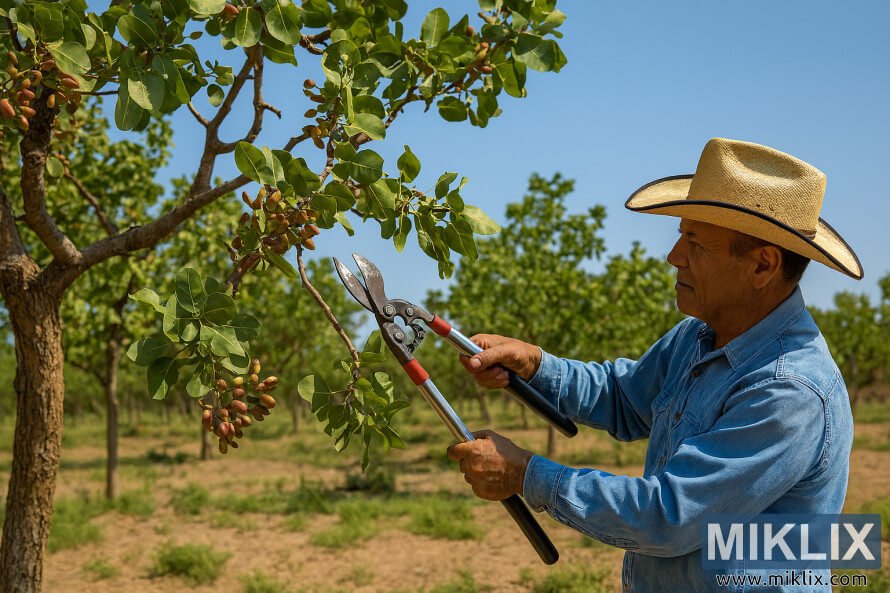
Proper pruning is essential for developing strong tree structure, encouraging airflow, and maximizing nut production. Pistachio trees benefit from an open-center (vase) training system.
Training Young Trees (Years 1-3)
- First dormant season: Select 3-4 main scaffold branches spaced evenly around the trunk at different heights (24-32 inches above ground)
- Remove competing branches: Eliminate branches that cross or grow inward
- Establish central leader: Maintain a strong central trunk until scaffold branches are established
- Head back scaffolds: Cut selected scaffold branches back by 1/3 to encourage outward growth
Pruning Mature Trees
- Timing: Prune during dormancy (winter) for major cuts
- Maintenance pruning: Remove dead, diseased, or crossing branches
- Thinning: Improve light penetration and air circulation
- Height control: Keep trees at manageable height (15-20 feet) for easier harvesting
- Rejuvenation: Older trees may need more aggressive pruning to stimulate new growth
Click or tap the image for more information and higher resolutions.
Pest and Disease Management
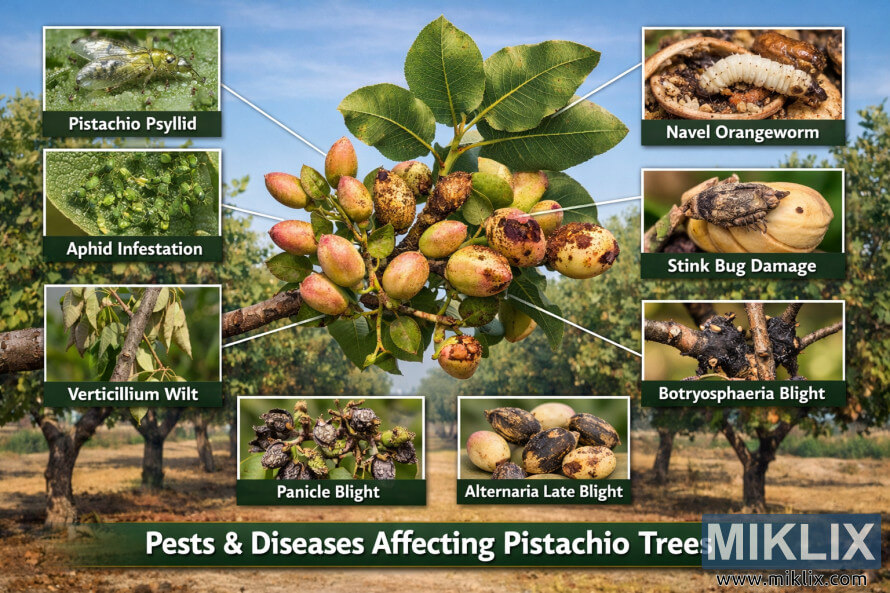
Pistachio trees can face several pest and disease challenges. Early identification and integrated pest management practices are key to maintaining healthy trees and maximizing nut production.
Common Pests
| Pest | Symptoms | Management |
| Aphids | Curled leaves, sticky honeydew, sooty mold | Insecticidal soap, beneficial insects, strong water spray |
| Stink Bugs | Damaged nuts, black spots on kernels | Trap crops, row covers, targeted insecticides |
| Leaf-footed Bugs | Nut drop, kernel necrosis | Remove nearby host plants, physical barriers |
| Mites | Stippled leaves, webbing, bronzing | Predatory mites, horticultural oil, adequate irrigation |
Common Diseases
| Disease | Symptoms | Management |
| Alternaria Late Blight | Black lesions on leaves, hull staining | Improve air circulation, fungicides, avoid overhead irrigation |
| Verticillium Wilt | Wilting branches, leaf scorch, dieback | Plant resistant rootstocks, avoid infected soil, remove affected branches |
| Botryosphaeria Blight | Branch dieback, cankers, gumming | Prune during dry weather, remove infected wood, fungicides |
| Root Rot | Yellowing leaves, stunted growth, decline | Improve drainage, avoid overwatering, fungicides |
Prevention Tips: Many pistachio diseases are related to excess moisture. Ensure proper spacing between trees, avoid overhead irrigation, and maintain good air circulation through proper pruning.
Click or tap the image for more information and higher resolutions.
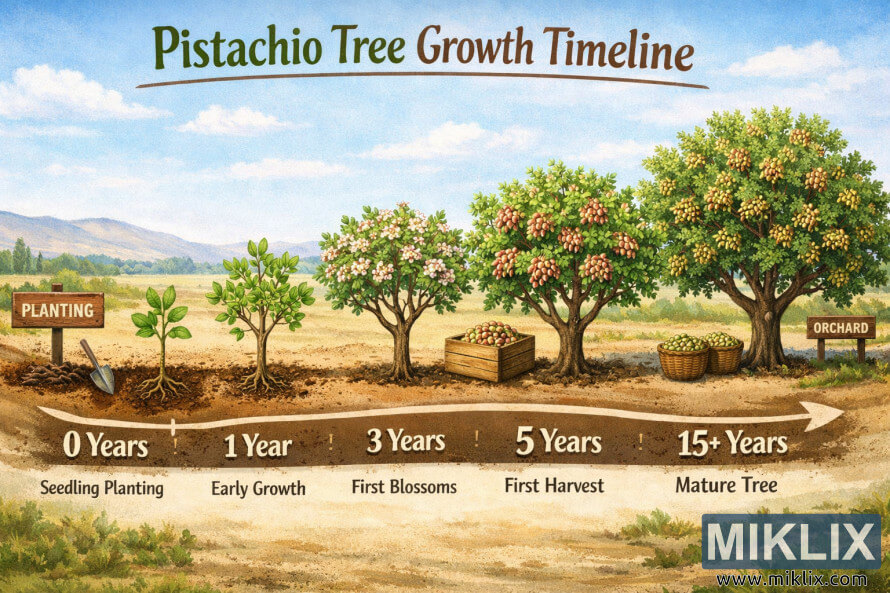
Timeline from Planting to Harvest
Growing pistachio nuts requires patience. Here's what to expect from planting to your first significant harvest:
| Timeline | Development Stage | Care Focus |
| Year 1 | Establishment | Regular watering, weed control, protection from elements |
| Years 2-4 | Structural growth | Formative pruning, fertilization begins, continued irrigation |
| Years 5-7 | First flowering and small harvests | Pollination management, pest monitoring, harvest preparation |
| Years 8-15 | Increasing production | Maintenance pruning, consistent fertilization, harvest efficiency |
| Years 15+ | Full maturity and peak production | Maintaining tree health, managing alternate bearing, efficient harvesting |
Alternate Bearing: Pistachio trees typically exhibit alternate bearing, producing a heavy crop one year followed by a lighter crop the next. This is normal and can be partially managed through proper pruning and fertilization.
Click or tap the image for more information and higher resolutions.
Harvesting and Processing Methods
Knowing when and how to harvest your pistachio nuts is crucial for quality and flavor. The harvesting process is relatively straightforward but requires proper timing and handling.
When to Harvest
- Timing: Late summer to early fall (August-October)
- Visual cues: Hulls turn from green to pinkish-yellow
- Shell splitting: Natural splitting indicates maturity
- Sampling: Test a few nuts to check kernel development
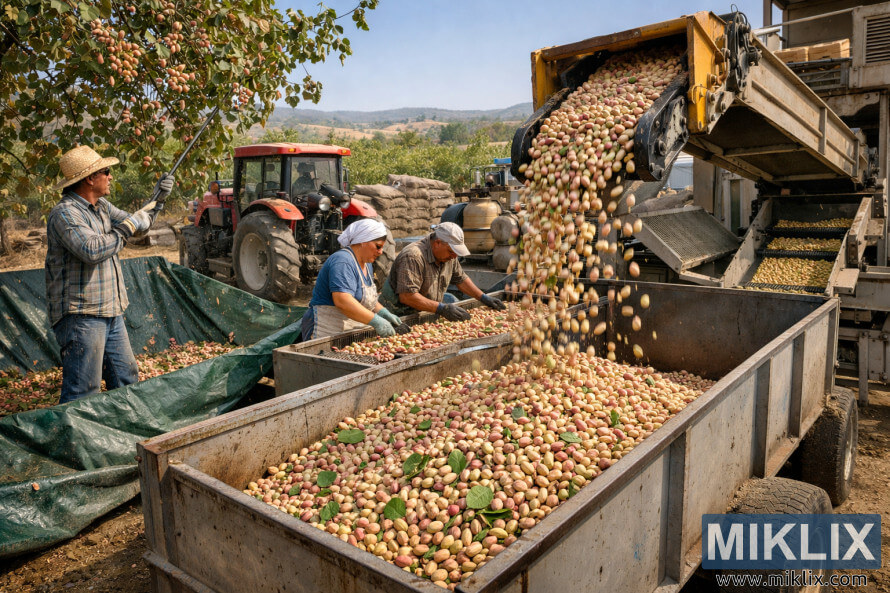
Harvesting Process
- Preparation: Spread tarps or sheets under the tree
- Collection method: Shake branches or gently knock nuts with a pole
- Gathering: Collect fallen nuts promptly to prevent pest infestation
- Sorting: Remove debris, leaves, and damaged nuts
Processing Steps
- Hulling: Remove the outer hull within 24 hours of harvest
- Inspection: Check for signs of mold or insect damage
- Washing: Rinse hulled nuts to remove residue
- Drying: Air-dry in a single layer for 3-4 days in a warm, ventilated area
- Curing: Allow to cure for 1-2 weeks for flavor development
- Storage: Store in airtight containers in a cool, dry place
Home Processing Tip: Unlike commercial pistachios, home-grown nuts can be enjoyed fresh without roasting or salting. However, if you prefer roasted pistachios, spread them on a baking sheet and roast at 350°F (175°C) for 10-15 minutes.
Click or tap the image for more information and higher resolutions.
Common Challenges and Troubleshooting
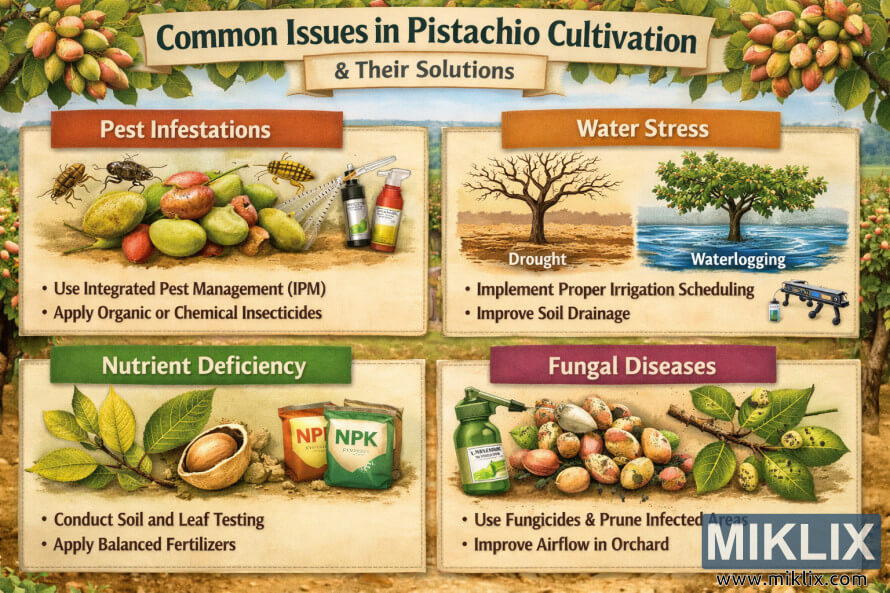
Even with proper care, pistachio growers may encounter several challenges. Here are common issues and how to address them:
No Nut Production After Several Years
Possible causes: Insufficient chill hours, improper pollination, young tree age
Solutions: Verify male/female tree presence, ensure trees are mature enough (5+ years), check climate suitability, consider grafting a male branch if only female trees are present
Yellowing Leaves
Possible causes: Overwatering, nutrient deficiencies, root problems
Solutions: Reduce watering frequency, improve drainage, conduct soil test for nutrient deficiencies, apply appropriate fertilizers based on test results
Poor Shell Splitting
Possible causes: Insufficient heat units, irregular watering, nutrient imbalances
Solutions: Ensure consistent watering during kernel development, avoid excess nitrogen, provide adequate boron
Alternate Bearing (Heavy/Light Years)
Possible causes: Natural growth pattern, stress factors
Solutions: Consistent pruning practices, balanced fertilization, thinning in heavy years, proper irrigation management
Blank Nuts (Empty Shells)
Possible causes: Poor pollination, insect damage, environmental stress
Solutions: Ensure proper male/female ratio, monitor for insect pests during flowering, provide optimal growing conditions
Climate Limitations: If your area experiences high humidity, frequent rainfall during harvest season, or insufficient winter chill hours, growing pistachios may be challenging. Consider alternative nut trees better suited to your climate.
Click or tap the image for more information and higher resolutions.
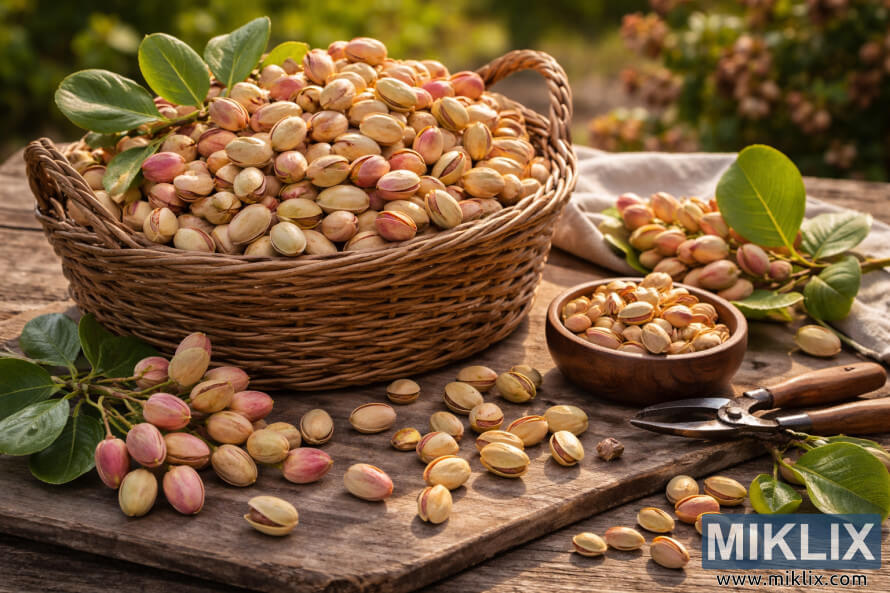
Benefits of Growing Your Own Pistachios
While growing pistachio nuts requires patience and specific conditions, the rewards are numerous for those willing to make the investment:
Culinary Benefits
- Superior freshness and flavor compared to store-bought
- Ability to harvest at peak ripeness
- Option to enjoy fresh, unprocessed nuts
- No added salt or preservatives
- Versatility in culinary applications
Landscape and Environmental Benefits
- Beautiful ornamental trees with seasonal interest
- Drought-tolerant once established
- Long-lived trees (potentially 100+ years)
- Support for local pollinators
- Carbon sequestration and shade
Economic Benefits
- Significant savings over purchasing premium pistachios
- Potential for small-scale local sales
- Increased property value from mature nut trees
- Sustainable food production for decades
Health Benefits
- Rich source of protein, fiber, and healthy fats
- Contains antioxidants and beneficial plant compounds
- May support heart health and weight management
- Complete control over growing methods and harvest handling
Click or tap the image for more information and higher resolutions.
Conclusion: Is Growing Pistachios Right for You?
Growing pistachio nuts at home is a rewarding long-term project for those with the right climate and patience. While the 5-7 year wait for first harvest requires commitment, the decades of production that follow make it worthwhile for dedicated gardeners.
Before starting your pistachio growing journey, honestly assess your climate conditions, available space, and willingness to provide ongoing care. If your region has hot, dry summers and cold (but not freezing) winters, you may be well-positioned for success.
Remember that proper planning—including male/female tree selection, spacing, and pollination considerations—is essential for productive trees. With proper care and maintenance, your pistachio trees can become both beautiful landscape features and productive food sources for generations.
Further Reading
If you enjoyed this post, you may also like these suggestions:
- Growing Almonds: A Complete Guide for Home Gardeners
- A Complete Guide to Growing Walnuts in Your Own Garden
- A Complete Guide to Growing Hazelnuts at Home