
Growing Almonds: A Complete Guide for Home Gardeners
Published: December 2, 2025 at 10:03:24 PM UTC
Growing almonds at home can be a rewarding experience that provides not only nutritious nuts but also beautiful spring blossoms and attractive landscaping.
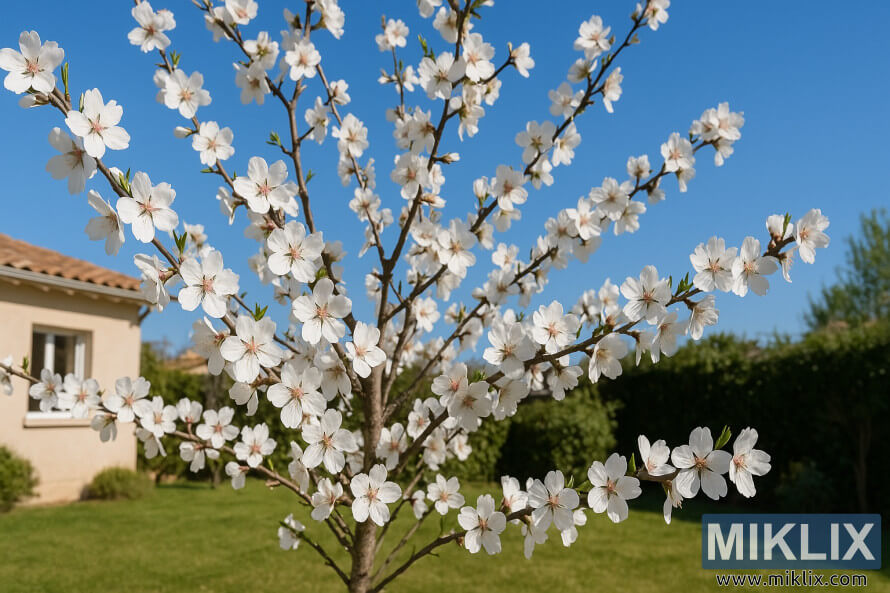
Click or tap the image for more information and higher resolutions.
Imagine stepping into your backyard and harvesting fresh, delicious almonds from your very own trees. Growing almonds at home can be a rewarding experience that provides not only nutritious nuts but also beautiful spring blossoms and attractive landscaping. While commercial almond production might seem intimidating, cultivating these versatile nut trees in a home garden setting is entirely achievable with the right knowledge and care. This comprehensive guide will walk you through everything you need to know about growing almonds successfully in your garden.
Climate and Soil Requirements for Growing Almonds
Before planting your almond tree, it's essential to understand whether your local climate and soil conditions will support healthy growth. Almonds have specific requirements that must be met for successful cultivation.
Climate Considerations
Almond trees thrive in Mediterranean-like climates with specific characteristics:
- USDA Hardiness Zones: Most almond varieties grow best in zones 7-9, though some newer cultivars can tolerate zone 5-6 conditions.
- Chill Hours: Almonds require 500-600 chill hours (temperatures between 32-45°F) during winter dormancy to produce properly in spring.
- Sunlight: Trees need at least 8 hours of direct sunlight daily for optimal growth and nut production.
- Temperature: Almonds prefer long, hot, dry summers and mild winters. They bloom early (February-March), making them vulnerable to late spring frosts.
- Rainfall: While drought-tolerant once established, consistent moisture during the growing season improves yield quality.
- Climate Check: If your area experiences frequent late spring frosts, consider planting your almond trees on a slight slope or near a south-facing wall to provide some protection.
Soil Requirements
Almond trees are adaptable to various soil types but perform best under specific conditions:
- Soil Type: Light, well-draining soils from sandy loam to sandy clay. Heavy clay soils can lead to root diseases.
- Drainage: Excellent drainage is crucial – almonds cannot tolerate wet feet or standing water.
- Depth: Deep soils (at least 3-4 feet) allow proper root development.
- pH Level: Slightly acidic to neutral soil (pH 6.0-7.0) is ideal. Almonds can tolerate pH up to 8.5 but may struggle with nutrient uptake.
- Fertility: Moderately fertile soil with good organic matter content supports healthy growth.
- Soil Warning: Almonds are extremely sensitive to salt. Avoid planting in areas with high soil salinity or where road salt might wash into your garden.

Click or tap the image for more information and higher resolutions.
Choosing the Right Almond Varieties for Home Gardens
Selecting appropriate almond varieties is crucial for success in a home garden setting. Commercial varieties often require extensive space and specific conditions, but several cultivars are well-suited to home cultivation.
| Variety | Size | Pollination Needs | Hardiness Zone | Special Features |
| All-In-One | 12-15 ft tall and wide | Self-fertile | 7-9 | Compact size, perfect for home gardens, soft-shelled nuts |
| Garden Prince | 8-10 ft tall and wide | Self-fertile | 7-9 | Dwarf variety, ornamental, can be grown in containers |
| Hall's Hardy | 15-20 ft tall and wide | Needs pollinator | 5-9 | Cold-hardy, late blooming to avoid frost damage |
Recommended Varieties for Home Gardeners
All-In-One
The most popular choice for home gardeners, this self-fertile variety eliminates the need for a second tree. It produces soft-shelled nuts with sweet kernels and grows to a manageable size of 12-15 feet. The tree offers beautiful pink blossoms in spring and begins bearing nuts within 3-4 years after planting.
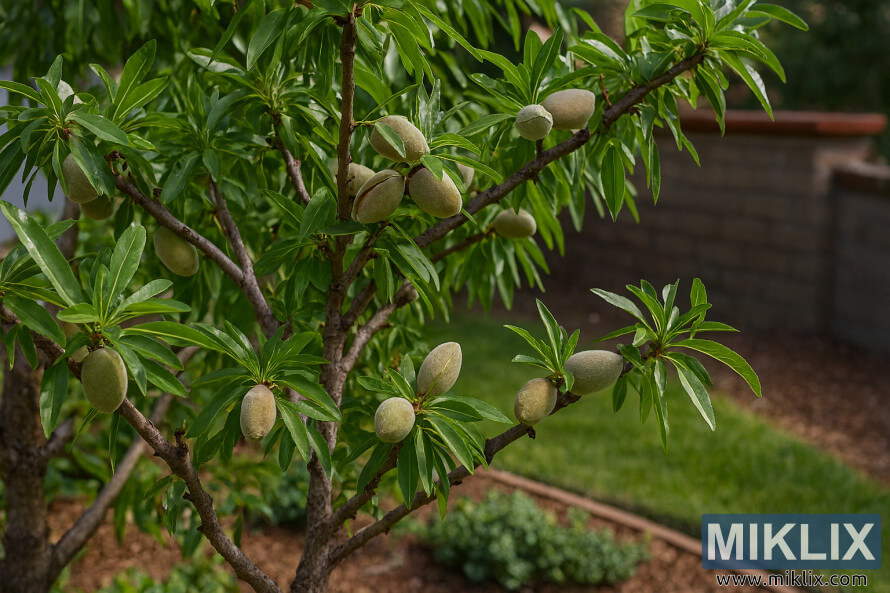
Click or tap the image for more information and higher resolutions.
Garden Prince
This dwarf variety is perfect for small spaces or container growing. Reaching only 8-10 feet in height, Garden Prince produces beautiful pink-white blossoms and sweet, soft-shelled nuts. Self-fertile and ornamental, it's ideal for gardeners with limited space who still want to enjoy homegrown almonds.
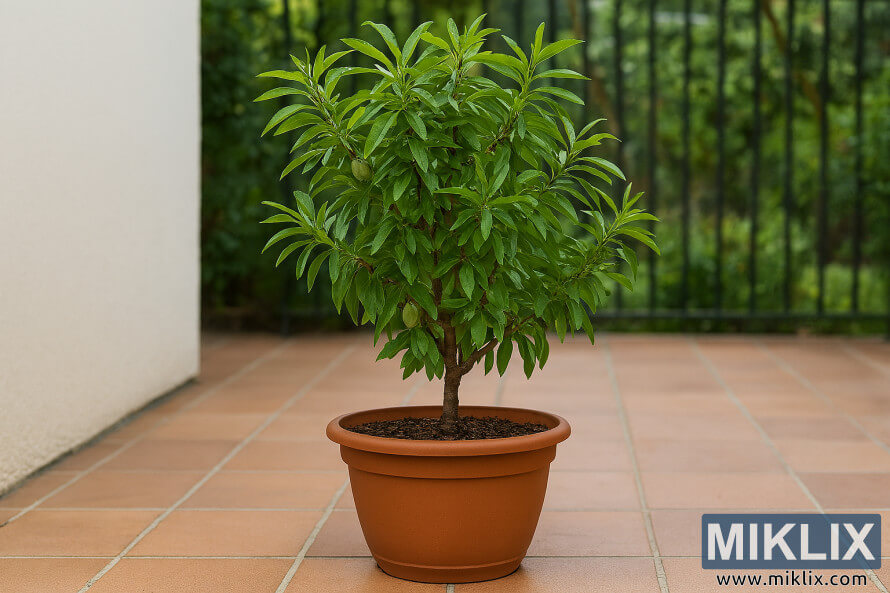
Click or tap the image for more information and higher resolutions.
Hall's Hardy
For gardeners in colder regions, Hall's Hardy offers exceptional cold tolerance down to zone 5. It blooms later than other varieties, helping avoid late spring frost damage. While it requires a pollinator (another almond variety or compatible peach), it rewards with reliable harvests of medium-sized, sweet almonds.
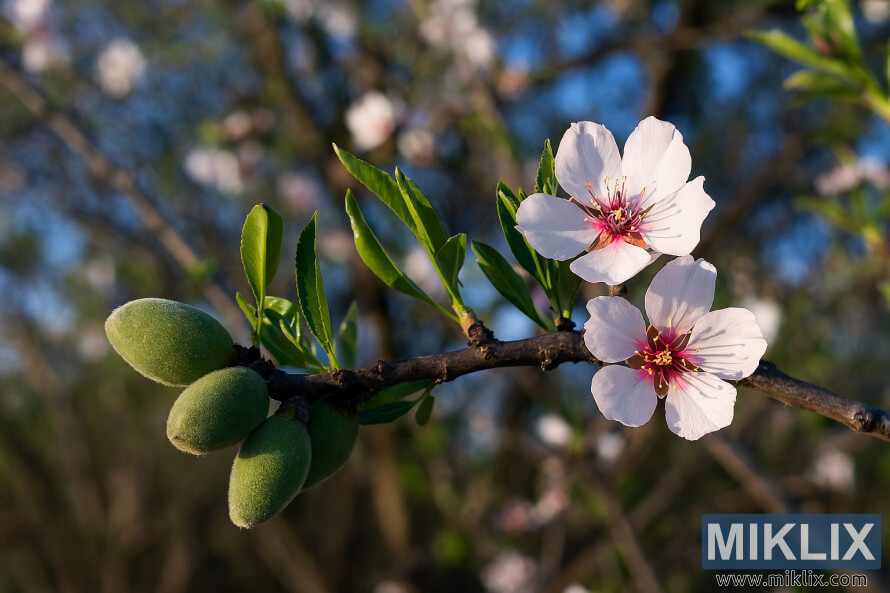
Click or tap the image for more information and higher resolutions.
The Almond Tree Planting Process
Proper planting is crucial for the long-term success of your almond trees. Follow these steps to give your trees the best possible start.
When to Plant
The ideal time to plant almond trees depends on your local climate and the type of tree you purchase:
- Bare-root trees: Plant during late winter dormancy (December-February in most regions)
- Container-grown trees: Can be planted year-round, but early spring or fall is optimal
- Avoid planting: During extreme heat, drought, or when ground is frozen
Click or tap the image for more information and higher resolutions.
Preparing the Planting Site
- Select the location: Choose a spot with full sun (8+ hours daily) and protection from strong winds. Ensure adequate spacing – 15-20 feet between standard trees or 8-12 feet for dwarf varieties.
- Test and amend soil: Conduct a soil test to determine pH and nutrient levels. Add organic matter like compost to improve soil structure and fertility if needed.
- Clear the area: Remove all weeds, grass, and debris from a 3-4 foot diameter circle where the tree will be planted.
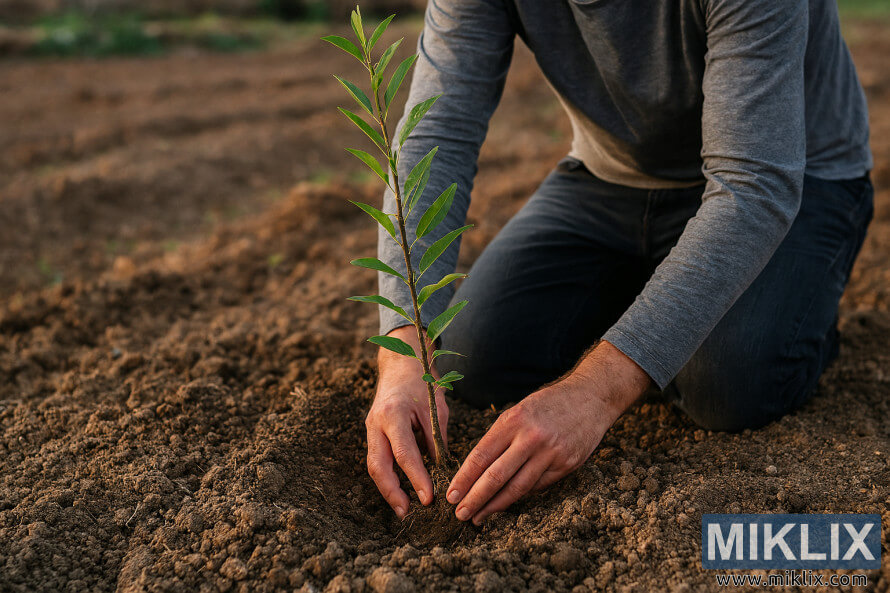
- Dig the hole: Create a hole twice as wide as the root system but only as deep as the root ball. The hole should have sloping sides and a flat bottom.
Planting Steps
- Prepare the roots: For bare-root trees, soak roots in water for 2-3 hours before planting. For container trees, gently loosen the root ball if it appears compacted.
- Position the tree: Place the tree in the center of the hole, ensuring the graft union (the swollen area on the trunk) remains 2-3 inches above soil level.
- Backfill carefully: Fill the hole with native soil, gently firming it around the roots. Avoid adding fertilizer directly to the planting hole as it may burn young roots.
- Water thoroughly: Create a basin around the tree and water deeply, allowing the soil to settle around the roots.
- Add mulch: Apply a 2-4 inch layer of organic mulch (wood chips, straw, or leaves) in a circle around the tree, keeping it 3-4 inches away from the trunk.
- Stake if necessary: In windy areas, provide support with a stake and soft ties, but allow some movement to develop trunk strength.
- Planting Tip: When planting multiple almond trees for cross-pollination, ensure they're within 50-100 feet of each other to facilitate bee movement between trees.
Care and Maintenance of Almond Trees
Proper ongoing care is essential for healthy almond trees and abundant harvests. Follow these guidelines to ensure your trees thrive year after year.
Watering Schedule
Almond trees have specific water needs that change throughout the growing season:
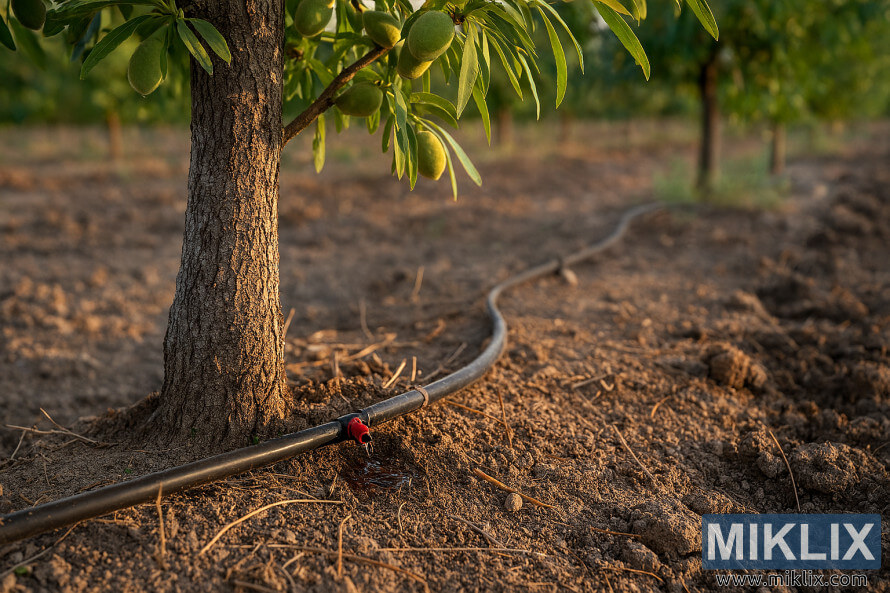
- Young trees (1-2 years): Water deeply once a week, providing about 5-10 gallons per tree. Increase frequency during hot, dry periods.
- Established trees: Apply approximately 1 inch of water per week over the root zone (roughly 10-15 gallons for mature trees).
- Critical periods: Consistent moisture is especially important during flowering, nut development (spring), and just after harvest.
- Winter watering: Reduce watering during dormancy, but don't allow soil to completely dry out, especially in drought conditions.
- Watering Warning: Avoid overhead watering, which can promote fungal diseases. Drip irrigation or soaker hoses are ideal for almond trees.
Click or tap the image for more information and higher resolutions.
Fertilization Guide
Proper nutrition supports healthy growth and abundant harvests:
- First year: Apply a balanced organic fertilizer (such as 10-10-10) in early spring, using about half the recommended rate for established trees.
- Established trees: Feed with a balanced fertilizer in early spring before new growth appears. Consider a second light application after harvest.
- Nitrogen needs: Almonds particularly benefit from nitrogen. Apply approximately 1/10 pound of actual nitrogen per year of tree age, up to 1 pound maximum for mature trees.
- Organic options: Compost, well-rotted manure, and alfalfa meal provide slow-release nutrients that benefit almond trees.
Pruning Techniques
Regular pruning maintains tree health, shape, and productivity:
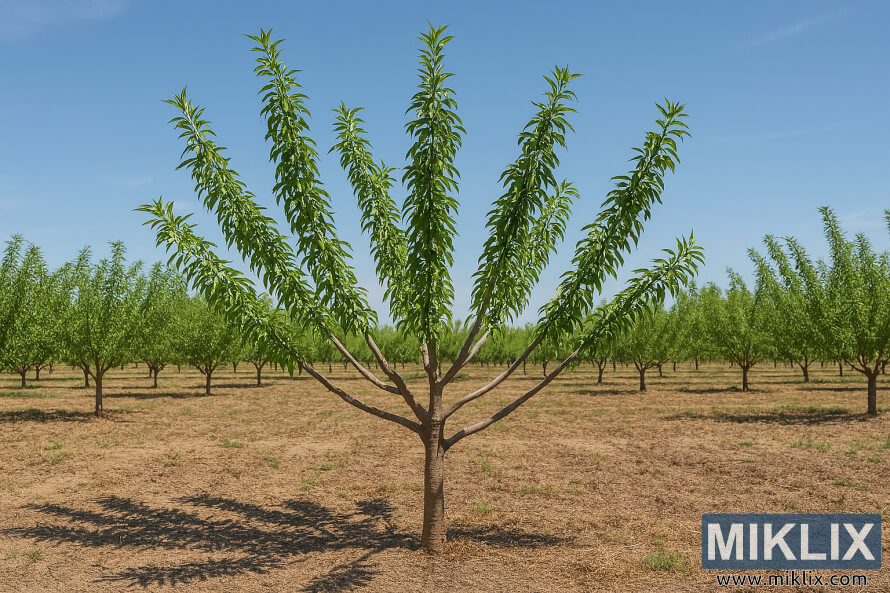
- Young tree training: In the first 2-3 years, focus on developing a strong scaffold structure with 3-4 main branches spaced evenly around the trunk at different heights.
- Maintenance pruning: Once established, prune annually during dormancy (late winter) to remove dead, diseased, or crossing branches.
- Thinning cuts: Open the canopy to allow light and air circulation by removing inward-growing branches and some fruiting spurs if overcrowded.
- Height control: Keep trees at a manageable height (12-15 feet) by cutting back the leader to an outward-facing branch.
Click or tap the image for more information and higher resolutions.
Pest and Disease Management
Common issues affecting home garden almond trees include:
Common Pests
- Navel orangeworm: Remove all nuts after harvest to break their lifecycle.
- Peach tree borer: Apply beneficial nematodes or use pheromone traps.
- Aphids: Spray with insecticidal soap or introduce beneficial insects like ladybugs.
- Ants: Create barriers with sticky bands around the trunk.
Common Diseases
- Brown rot: Remove infected fruits and apply copper fungicide at bloom time.
- Shot hole disease: Apply copper spray in fall and early spring.
- Bacterial canker: Prune in summer (not winter) and apply copper spray in fall.
- Crown rot: Ensure proper drainage and avoid overwatering.
Pollination Tips for Growing Almonds
Successful pollination is crucial for almond production. While commercial growers rent honeybee hives, home gardeners can take several approaches to ensure good pollination.
Understanding Almond Pollination
Most almond varieties require cross-pollination to produce nuts, though some newer cultivars are self-fertile:
- Self-fertile varieties: 'All-In-One' and 'Garden Prince' can produce nuts without a second tree, though yields may increase with cross-pollination.
- Cross-pollination varieties: Most traditional varieties need pollen from a different compatible almond variety to set fruit.
- Bloom timing: For successful cross-pollination, varieties must flower at the same time.
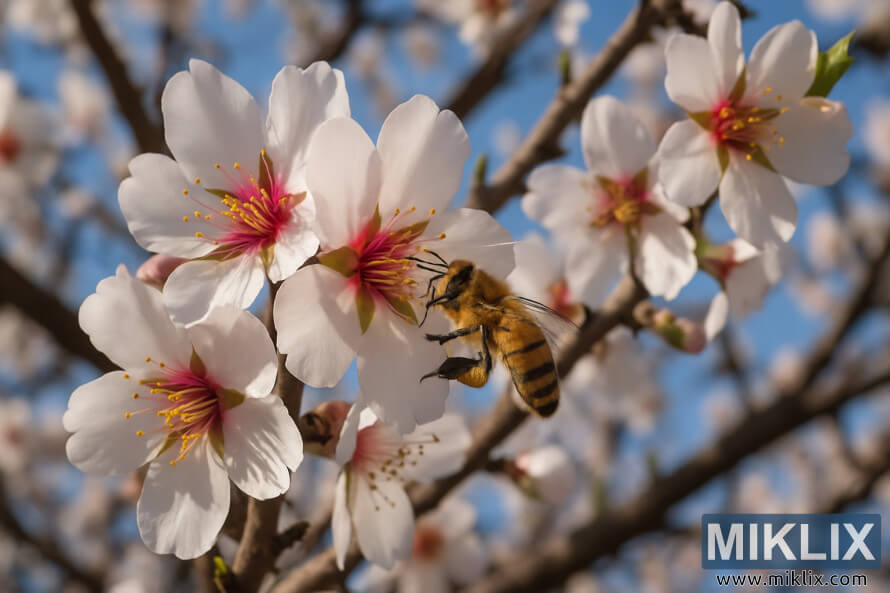
- Pollinators: Honeybees are the primary pollinators, though other wild bees and insects can contribute.
Click or tap the image for more information and higher resolutions.
Enhancing Pollination in Home Gardens
- Plant compatible varieties: If using varieties that require cross-pollination, plant at least two different compatible varieties within 50-100 feet of each other.
- Attract pollinators: Plant pollinator-friendly flowers that bloom at the same time as almonds to attract bees to your garden.
- Avoid pesticides during bloom: Never spray insecticides during flowering as this can harm or kill beneficial pollinators.
- Consider hand pollination: In areas with few natural pollinators, use a small paintbrush to transfer pollen between flowers on different trees.
- Provide water sources: Shallow dishes with stones for bees to land on will help keep pollinators in your garden.
- Pollination Tip: If space is limited, consider planting a self-fertile variety like 'All-In-One' or grafting a compatible pollinator variety onto your existing almond tree.
Harvesting and Storing Homegrown Almonds
The culmination of your almond growing efforts comes at harvest time. Knowing when and how to harvest ensures you'll enjoy the best quality nuts from your trees.
When to Harvest
Timing is crucial for almond harvesting:
- Harvest season: Typically late August through September in most regions, though this varies by climate and variety.
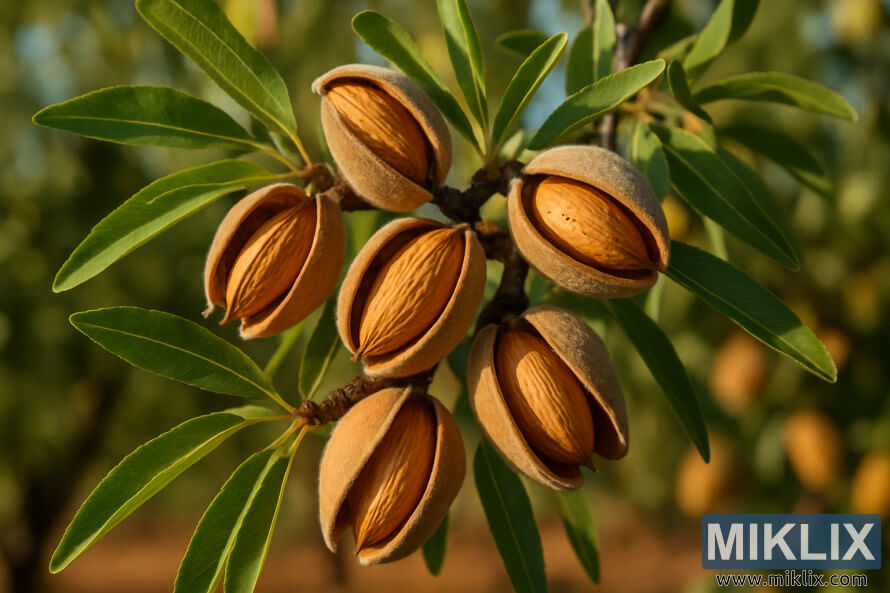
- Signs of readiness: The outer hull splits open, revealing the shell inside. About 95% of hulls should be split before beginning harvest.
- Additional indicators: Hulls turn from green to brownish, and some nuts may begin falling naturally from the tree.
- Weather considerations: Try to harvest during dry weather to prevent mold development.
Click or tap the image for more information and higher resolutions.
Harvesting Methods
- Prepare the area: Place tarps or sheets under the tree to catch falling nuts.
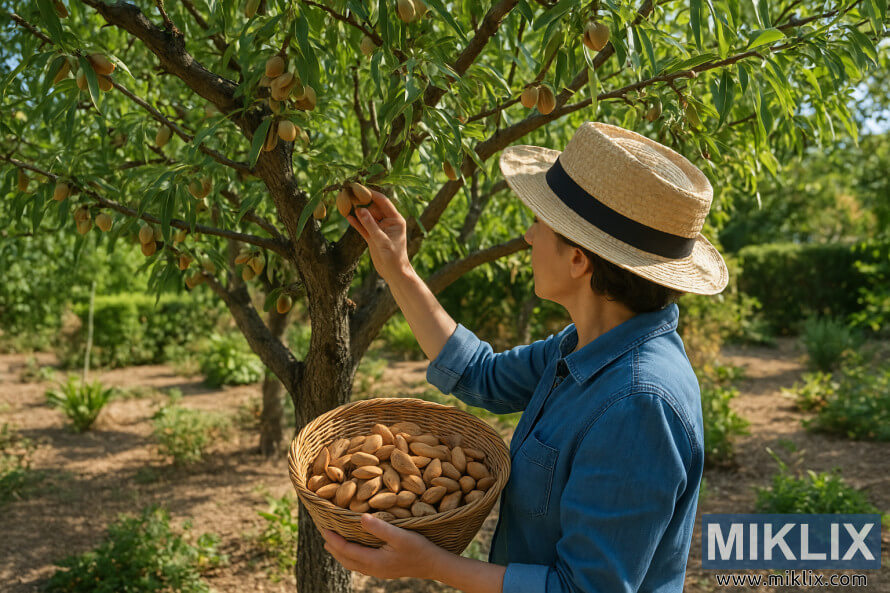
- Shake branches: Gently shake branches with a long pole or by hand to dislodge ripe nuts. Avoid damaging branches.
- Hand picking: For small trees or light crops, pick individual nuts by hand.
- Collect fallen nuts: Gather nuts that have naturally fallen to the ground daily to prevent pest infestation.
- Sort immediately: Remove any damaged, discolored, or moldy nuts from your harvest.
Processing and Drying
- Hull removal: Remove the outer hull if it hasn't completely separated. For stubborn hulls, let nuts dry for a few days first.
- Washing: Briefly rinse nuts to remove dirt and debris.
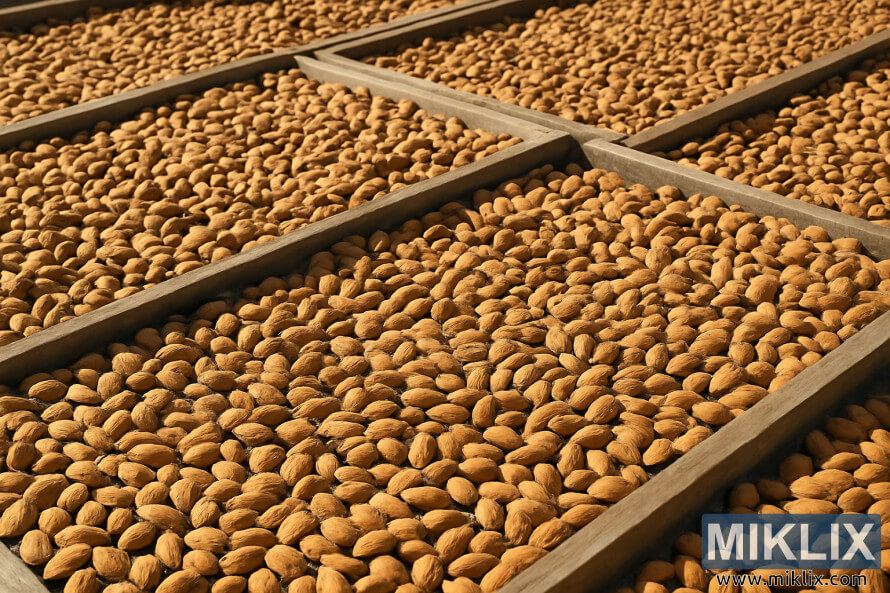
- Drying: Spread nuts in a single layer in a warm, dry, well-ventilated area out of direct sunlight. Drying takes 3-7 days.
- Test for dryness: Properly dried almonds should snap cleanly when broken, not bend.
Storage Methods
Proper storage extends the shelf life of your harvest:
- In-shell storage: Almonds store longer in their shells. Keep in mesh bags in a cool, dry place for up to 8 months.
- Shelled storage: Store shelled nuts in airtight containers in a cool, dark place for 3-4 months.
- Refrigeration: Refrigerated shelled almonds stay fresh for up to 1 year.
- Freezing: For long-term storage, freeze shelled almonds in airtight containers for up to 2 years.
- Storage Tip: Label stored nuts with the harvest date to help track freshness. Almonds that develop a rancid smell or taste should be discarded.
Click or tap the image for more information and higher resolutions.
Common Challenges and Solutions When Growing Almonds
Even experienced gardeners face challenges when growing almonds. Here are solutions to the most common problems you might encounter.
Common Challenges
- Late spring frosts damaging blossoms
- Poor nut set despite healthy flowering
- Squirrels and birds stealing nuts
- Fungal diseases affecting leaves and fruit
- Alternate bearing (heavy crop one year, light the next)
- Drought stress affecting production
Practical Solutions
- Plant late-blooming varieties or provide frost protection with covers
- Enhance pollinator habitat and consider hand pollination
- Install trunk guards and netting during ripening
- Improve air circulation and apply organic fungicides preventatively
- Maintain consistent fertilization and moderate pruning
- Mulch heavily and install efficient irrigation systems
Frost Protection Strategies
Since almonds bloom early, frost protection is often necessary:
- Site selection: Plant on slopes or elevated areas where cold air drains away.
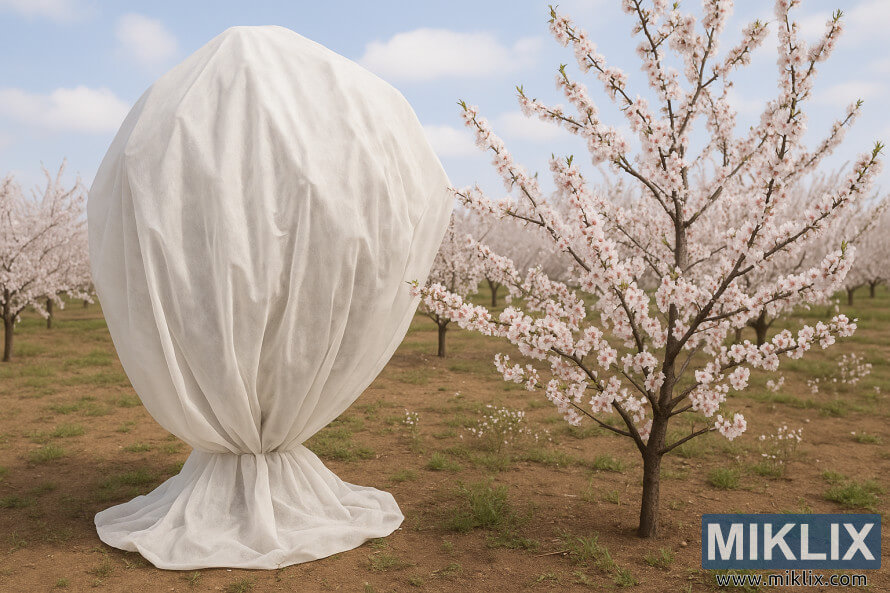
- Protective covers: Use frost cloth or old bedsheets to cover small trees when frost threatens.
- String lights: Decorative incandescent lights (not LEDs) strung through branches provide gentle warming.
- Water spraying: In extreme cases, spraying water on buds before sunrise can provide protection through heat of fusion.
Click or tap the image for more information and higher resolutions.
Wildlife Management
Protecting your harvest from wildlife requires multiple approaches:
- Squirrel barriers: Install metal trunk guards to prevent climbing. Wrap 2-foot wide metal flashing around trunks.
- Bird deterrents: Hang reflective tape, old CDs, or predator decoys in trees.
- Netting: For small trees, bird netting can be effective but must be secured properly.
- Early harvest: Harvest nuts as soon as they're ready to minimize exposure time.
Disease Prevention
Proactive measures help prevent common almond diseases:
- Sanitation: Remove fallen leaves, hulls, and nuts to reduce disease spores.
- Dormant sprays: Apply copper or sulfur sprays during winter dormancy.
- Proper spacing: Ensure adequate spacing between trees for good air circulation.
- Resistant varieties: When possible, select disease-resistant cultivars.
Why aren't my almond trees producing nuts?
Several factors can cause lack of production: insufficient chill hours, frost damage to blossoms, lack of proper pollination, young tree age (trees typically begin producing in their 3rd-4th year), or nutrient deficiencies. Ensure your tree receives adequate water during flowering and nut development, and consider adding a compatible pollinator variety nearby.
How can I prevent alternate bearing in my almond trees?
Alternate bearing (heavy crop one year, light the next) can be minimized through consistent annual pruning, regular fertilization, adequate irrigation, and thinning excess nuts in heavy-bearing years. Maintaining tree health through proper cultural practices helps balance production over time.
Can I grow almonds in containers?
Yes, dwarf varieties like 'Garden Prince' can be grown in large containers (at least 24-30 inches in diameter and depth). Use well-draining potting mix, ensure adequate drainage holes, and be prepared to water more frequently than ground-planted trees. Container-grown trees may need winter protection in colder regions and should be repotted every 2-3 years.
Conclusion: The Rewards of Growing Almonds
Growing almonds in your home garden offers multiple rewards beyond the harvest itself. These beautiful trees provide ornamental value with their stunning spring blossoms, create habitat for beneficial insects, and ultimately yield one of nature's most nutritious foods. While almond cultivation requires patience—trees typically take 3-4 years to begin producing and 5-7 years to reach full production—the long-term benefits make it well worth the effort.
By selecting appropriate varieties for your climate, providing proper care throughout the seasons, and addressing challenges proactively, you can enjoy success with these versatile nut trees. Whether you have space for a small dwarf variety or room for several standard trees, the satisfaction of harvesting your own almonds connects you to ancient agricultural traditions while providing sustainable, local food for your family.
Remember that each growing season brings new learning opportunities. Keep notes on your trees' performance, adjust your care routine as needed, and connect with other gardeners to share experiences. With proper attention and care, your almond trees can provide decades of beauty and bounty.
Click or tap the image for more information and higher resolutions.
Further Reading
If you enjoyed this post, you may also like these suggestions:
- A Complete Guide to Growing Hazelnuts at Home
- A Complete Guide to Growing Walnuts in Your Own Garden
- A Complete Guide to Growing Pistachio Nuts in Your Own Garden