
Fermenting Beer with White Labs WLP833 German Bock Lager Yeast
Published: December 3, 2025 at 9:28:06 PM UTC
This article is a detailed WLP833 review for homebrewers and small craft breweries. It delves into how White Labs WLP833 German Bock Lager Yeast performs in bocks, doppelbocks, Oktoberfest, and other malt-forward lagers.
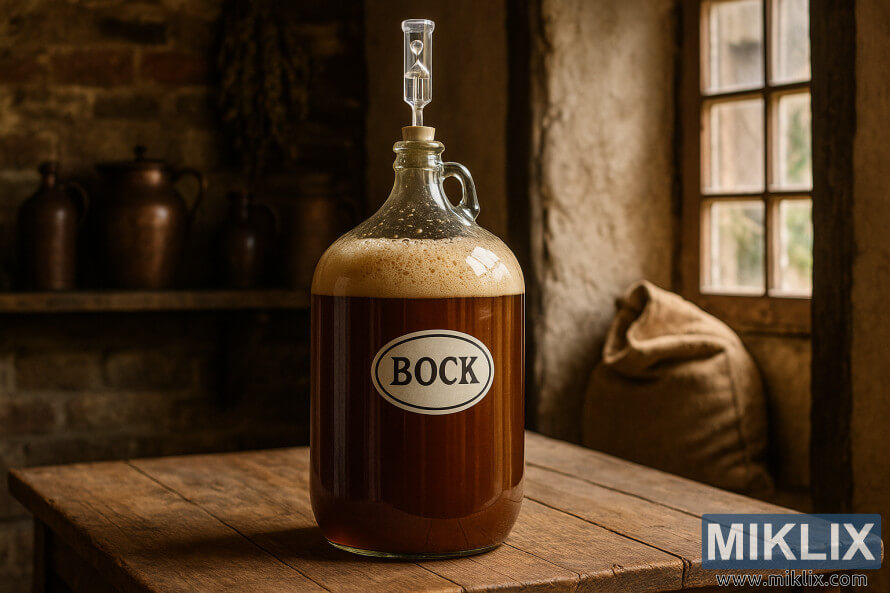
Click or tap the image for more information and higher resolutions.
Key Takeaways
- White Labs WLP833 German Bock Lager Yeast is well suited for bocks, Oktoberfest, and malt-forward lagers.
- Attenuation 70–76% and medium flocculation yield balanced, full-bodied beers.
- Ferment between 48–55°F (9–13°C) for best flavor and attenuation when fermenting WLP833.
- Proper pitching, oxygenation, and starter planning reduce diacetyl and sulfur risks.
- The WLP833 review will include recipe ideas, troubleshooting, and repitching guidance for homebrewers and small breweries.
Overview of White Labs WLP833 German Bock Lager Yeast
White Labs WLP833 German Bock Lager Yeast originates from southern Bavaria. It offers a clean, malt-forward profile, perfect for bock, doppelbock, and Oktoberfest beers. The WLP833 overview reveals predictable attenuation between 70–76%, medium flocculation, and a typical alcohol tolerance in the 5–10% range.
White Labs yeast specs indicate a recommended fermentation range of 48–55°F (9–13°C). It also notes STA1 negative status. These specs assist brewers in planning starters, pitching rates, and temperature control for classic lager finishes.
WLP833 characteristics include restrained ester production and an emphasis on malt character. This strain yields a balanced, traditional Bavarian bock impression when fermented within the recommended parameters. It offers clean fermentation esters and solid attenuation performance.
Packaging is straightforward: White Labs sells WLP833 as a core strain, with organic variants available. Availability and clear labeling make it simple to source for homebrewers and professional brewers aiming for authentic lager profiles.
- Manufacturer specs: 70–76% attenuation, medium flocculation, medium alcohol tolerance.
- Flavor and origin: southern Bavarian Alps, malt-forward balance ideal for bock styles.
- Practical use: consistent, clean lager character when kept in the 48–55°F range.
Expect WLP833 characteristics to align with traditional Bavarian bock profiles. It provides malt complexity without masking brewhouse grain or mash decisions. This makes it a reliable choice for brewers seeking classic lager results.
Why Choose White Labs WLP833 German Bock Lager Yeast for Bocks and Oktoberfest
White Labs WLP833 is celebrated for its malt-forward profile. It's the go-to for brewers aiming to create bocks, doppelbock, and Oktoberfest lagers with round, rich flavors.
Homebrewers highly recommend WLP833 for bocks. It amplifies caramel, toasted, and toffee notes without introducing sharp esters. This yeast maintains body and mouthfeel, crucial for malt-forward styles.
Many in the brewing community consider WLP833 Oktoberfest a dependable pick for traditional Bavarian character. They note its smooth finishes and balanced hop presence, setting it apart from more neutral lager strains.
Compared to WLP830 or WLP820, WLP833 favors malt emphasis over sterility. This makes it the top choice for doppelbock, aiming for depth and sweetness with moderate attenuation.
It's ideal for amber lagers, helles, and darker bocks where malt complexity is paramount. Choose WLP833 for fuller body, restrained attenuation, and a classic southern German lager profile.
- Strengths: excellent malt profile, smooth finish, balanced hop integration.
- Styles: bocks, doppelbock, Oktoberfest, amber and dark lagers.
- Brewing tip: prioritize moderate pitching rates and steady cool fermentation to preserve malt character.

Click or tap the image for more information and higher resolutions.
Pitching and Starter Recommendations
Begin by calculating the cells needed for your batch. Utilize a yeast calculator to estimate the target counts based on original gravity and batch volume. For German bock beers, aim for a lager pitch rate that aligns with gravity and pitching temperature.
Industry guidance suggests repitching at about 1.5–2.0 million cells per mL per °Plato. For beers up to 15°Plato, 1.5 million cells/mL/°Plato is typical. For stronger bocks or cool pitching, aim for 2.0 million cells/mL/°Plato to avoid prolonged lag phases.
If you plan to pitch WLP833 cold, prepare extra cells beforehand. A larger WLP833 starter reduces the risk of sluggish starts when adding yeast to chilled wort. Many brewers employ a 500 mL vitality starter on a stir plate to activate liquid yeast and shorten lag.
Warm-pitch methods allow for slightly lower initial counts. Pitch at a warmer temperature, let yeast grow through its first phase, then cool to lagering temperatures. This approach reduces the size of the WLP833 starter needed for some recipes.
- Make starters from chilled, boiled wort for sanitation.
- Measure viability if you harvest and repitch; healthy cells extend reuse potential.
- Follow White Labs handling instructions when using their liquid packs for best results.
When repitching WLP833, test viability and maintain clean storage. PurePitch lab-grown options may have different pitching norms and may require lower lager pitch rate targets. Use a yeast calculator each time you brew to refine count and method for consistent outcomes.
Fermentation Temperature Strategies
The temperature during fermentation with WLP833 is crucial for achieving a clean, malt-forward bock. White Labs suggests starting primary fermentation between 48–55°F (9–13°C). This temperature range helps slow down ester production, enhancing the classic lager profile that brewers aim for.
Adopting a structured lager fermentation schedule is essential to manage fermentation activity and prevent off-flavors. The traditional method involves pitching at 48–55°F, accepting a longer lag phase, and slower attenuation. Then, allow the beer to free-rise to about 65°F (18°C) for a diacetyl rest once attenuation reaches roughly 50–60%.
The diacetyl rest, held in the 65°F range for 2–6 days, enables yeast to reabsorb diacetyl and clean up the wort. Following this, gradually lower the temperature at about 4–5°F (2–3°C) per day until you reach a lagering temperature near 35°F (2°C) for conditioning and clarification.
Some brewers employ a warm-pitch method to reduce lag time. By pitching at 60–65°F (15–18°C), cell growth is accelerated. After visible signs of fermentation, typically around 12 hours, lower the fermenter to 48–55°F to control ester formation. The same diacetyl rest and gradual cool-down follow.
Practices within the brewing community vary. Some lagerists ferment certain strains in the mid-60s°F and still achieve clean results. Users of WLP833 often report the best malt character when temperatures are near the recommended range. However, warmer starts can shorten primary fermentation time.
Keep an eye out for early acetaldehyde and ester notes while adhering to your lager fermentation schedule. Adjust the diacetyl rest temperatures and duration based on gravity readings and sensory evaluations, rather than a fixed calendar.
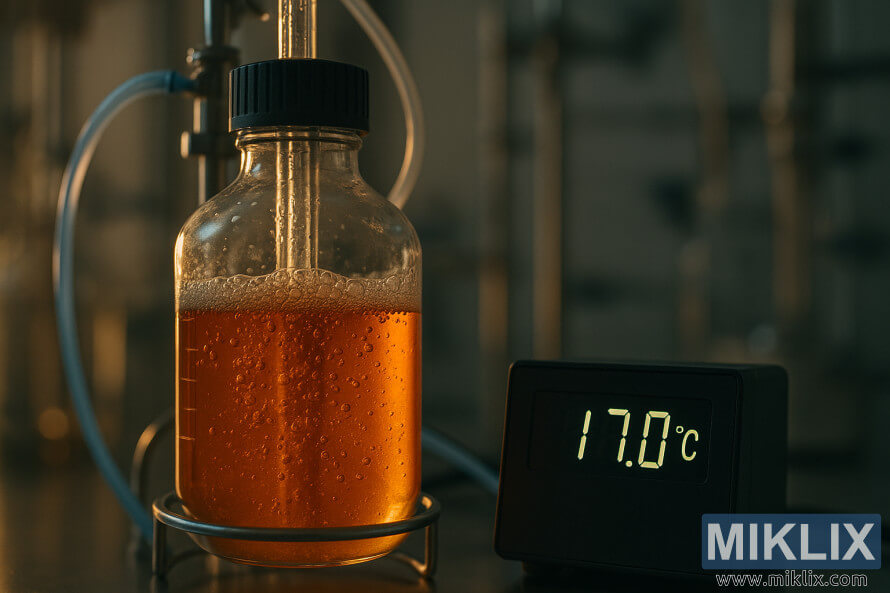
Click or tap the image for more information and higher resolutions.
Oxygenation and Yeast Health
Oxygenation is vital for yeast, supporting the synthesis of sterols and unsaturated fatty acids. These are crucial for strong cell walls and reliable fermentation. For liquid strains like White Labs WLP833, proper oxygenation ensures a quick start and steady fermentation.
When brewing lagers, it's important to note their higher oxygen needs compared to ales, especially for high-gravity bocks. The goal is to match oxygen levels to the size of the pitch and the beer's gravity. For strong lagers, aiming for 8–10 ppm O2 is recommended when using pure oxygen with a stone.
Many brewers prefer short, controlled bursts of oxygenation over long shaking. Practical methods include using a regulator and stone or a few minutes of aeration with sterile air. Homebrewers have found success with trickle O2 runs lasting 3–9 minutes to achieve the desired dissolved oxygen without overdoing it.
Dry strains, such as Fermentis products, may claim lower aeration needs due to their high initial cell counts. However, this does not negate the importance of considering lager oxygen needs when using liquid WLP833 or when repitching harvested yeast.
- For new pitches with WLP833, oxygenate the wort to promote yeast health lager and reduce lag time.
- If using a vitality starter, it both multiplies cells and restores oxygen reserves in yeast.
- When repitching harvested WLP833, check viability and oxygenate fresh wort to support recovery.
Monitoring fermentation vigor is more important than following a single rule. Healthy yeast health lager exhibits steady krausen and predictable gravity drops. If fermentation stalls, reassess oxygenation practices and cell counts before making kettle or conditioning adjustments.
Attenuation, Flocculation, and Final Gravity Expectations
White Labs indicates WLP833 attenuation at 70–76%. This means you can expect moderate-to-high attenuation, which retains some malt body. For classic bock and doppelbock recipes, this range is ideal. It preserves malt sweetness while converting a significant portion of fermentable sugars.
WLP833 flocculation is expected to be medium under typical lager conditions. This results in decent settling over time without an immediate drop. Many brewers achieve clearer beer after cold-conditioning, gelatin finings, or extended lagering.
The final gravity depends on the original gravity and mash profile. With WLP833 attenuation in the 70–76% range, the expected FG WLP833 in a bock will often be higher. This leaves a fuller body and residual sweetness, perfect for malt-forward styles.
To reliably hit the manufacturer range, follow practical steps. Pitch an adequate cell count, oxygenate properly, and maintain steady fermentation temperatures. These practices promote predictable WLP833 attenuation and consistent clarity linked to WLP833 flocculation.
- For clarity, cold-crash before packaging and use finings if needed to improve WLP833 flocculation.
- For body control, adjust mash thickness and fermentability to influence the expected FG WLP833.
- For consistency, track OG and gravity progression so you can compare actual attenuation to the WLP833 attenuation range.
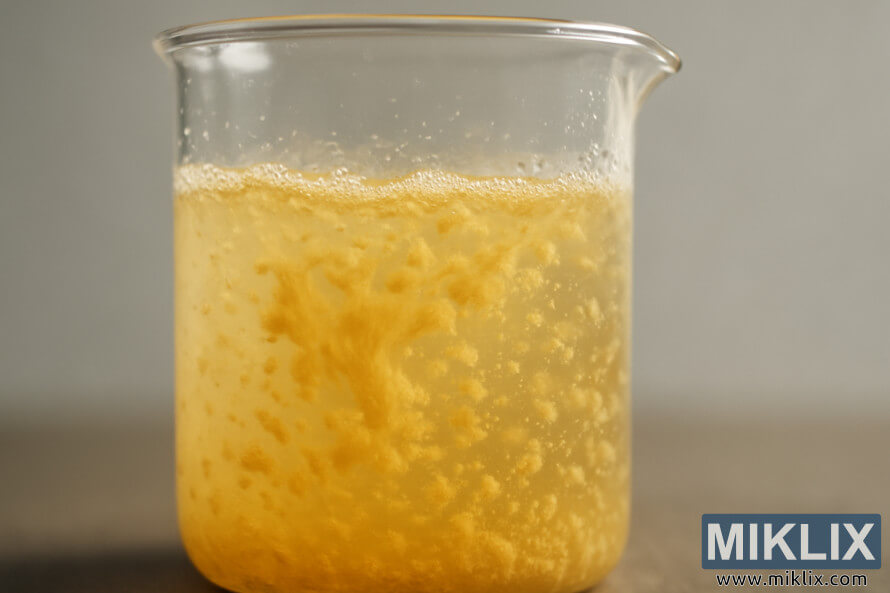
Click or tap the image for more information and higher resolutions.
Managing Diacetyl and Sulfur in WLP833 Fermentations
Timing is key in managing WLP833 diacetyl. Raise the temperature to 65–68°F (18–20°C) when fermentation hits 50–60% attenuation. This step, known as a diacetyl rest, allows yeast to reabsorb diacetyl. It's a crucial phase for completing metabolism.
Gravity readings and smell checks are essential for starting the rest. Ensure yeast health with proper pitching rates and oxygenation. Healthy yeast minimizes off-flavors and shortens the rest duration.
Sulfur in lager fermentation can be transient, especially with WLP833. Although mostly clean, some batches may briefly show sulfur notes. A warm diacetyl rest aids in removing these volatiles, speeding up the cleanup process.
- Monitor gravity twice daily near peak activity to catch the ideal rest window.
- Keep the diacetyl rest long enough for sensory improvement, not just a fixed number of days.
- After the rest, cool gradually and allow extended lagering to further reduce both diacetyl and sulfur.
Effective brewing practices can significantly improve results. Use proper yeast starters or multiple vials from White Labs for larger batches. Oxygen at pitching supports sterol synthesis, aiding yeast in tackling diacetyl. If sulfur persists after lagering, patience and cold conditioning usually resolve it.
By following these steps, WLP833 diacetyl issues will be rare. A well-timed diacetyl rest and cold storage address most sulfur concerns. This approach keeps aromas clean and malt character prominent.
Pressure, Spunding, and Advanced Fermentation Techniques
Spunding alters yeast behavior during fermentation. It involves using a spund for lagers to control pressure as sugars convert. This method suppresses the formation of esters and fusels. Brewers often target a pressure near 1 bar (15 psi) for high pressure lagers. This approach speeds up production while maintaining a clean character.
WLP833 reacts differently to pressure compared to strains designed for high pressure. High pressure fermentation with WLP833 can reduce ester production and shorten active fermentation. However, it may affect attenuation and slow down clearing. White Labs offers specific strains for aggressive pressure regimes. It's crucial to test small batches before scaling up.
Practical tips can help minimize risks. Ensure the spunding valve is secure and the vessels are rated for pressure. Regularly monitor gravity and CO2 release. When spunding for lagers, expect reduced yeast growth. Plan for extra conditioning time or choose a more flocculent strain if clarity is a priority.
- Start with small trials: try 5–10 gallon test batches before full production.
- Set conservative pressure: begin below 15 psi to observe yeast response.
- Track attenuation: keep records of gravity curves during pressurized runs.
Fast pseudo-lager methods offer alternatives. Warm-pitch ale strains and Kveik can mimic lager-like dryness without pressure. However, for authentic bock nuance, spunding remains a valuable tool. Use traditional schedules with WLP833 before moving to high pressure fermentation WLP833. This allows you to understand baseline behavior.
Safety and sanitation are paramount. Pressure can mask issues like stalled fermentation or contamination. Maintain strict cleaning, use rated fittings, and never exceed equipment limits. Advanced brewers often combine spunding with controlled temperature ramps. This fine-tunes the ester profile and finish.
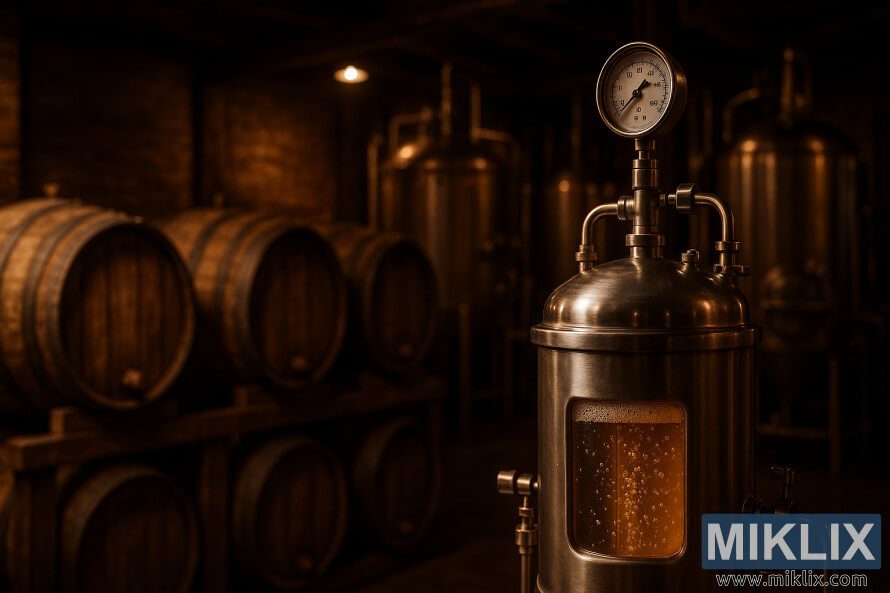
Click or tap the image for more information and higher resolutions.
Water Profile and Mash Considerations for Bock Styles
Bock and doppelbock recipes rely on rich malt character and a soft, rounded mouthfeel. To enhance malt sweetness and fullness, aim for a bock water profile with more chloride than sulfate. Target moderate chloride levels (around 40–80 ppm) and balanced sulfate (40–80 ppm) for a balanced taste. For a drier finish, adjust these levels accordingly.
For mash enzyme activity, adjust calcium levels to 50–100 ppm. Use calcium chloride to emphasize roundness. If you prefer a crisper, dryer bock, add gypsum carefully. This will increase sulfate while monitoring mash pH.
Mash for bock at 152°F (67°C) to preserve dextrins and body. This single-step mash enhances mouthfeel. For a slightly drier result, lower the temperature and extend conversion time. This method reduces final gravity without compromising clarity.
For more control, consider a step mash. Start with a beta-amylase rest at 140–146°F to encourage fermentable sugars. Then, raise the temperature to 152°F for dextrin preservation. This approach allows brewers to fine-tune sweetness and attenuation.
- Use Munich and Vienna malts as the backbone to build malt complexity.
- Keep base pilsner or pale malt in the bill for fermentable structure.
- Limit crystal malts to small percentages to avoid cloying sweetness.
- Add minimal dark malts like Carafa or Blackprinz only for subtle color adjustment (under 1%).
WLP833 mash tips focus on preserving malt character while supporting clean lager fermentation. Oxygenation, pitching rate, and proper lagering are key. When using WLP833, maintain mash pH near 5.2 to 5.4 to optimize enzyme activity and extract yield.
Test local water with a simple profile and adjust salts incrementally. Community recipes using Bru’n Water Amber Balanced provide useful reference points. For example, sulfate near 75 ppm and chloride near 60 ppm are good starting points. However, tailor these numbers to your source water.
Document each change to replicate successful batches. Paying close attention to the bock water profile and mash for bock will enhance the strengths of WLP833 mash tips. This will result in a true, malt-forward bock.
Comparison with Other Lager Strains and Dry vs. Liquid Options
WLP833 is celebrated for its malty, rounded Bavarian character, reminiscent of Ayinger and similar house strains. In contrast, WLP830 offers a more aromatic, floral profile, ideal for Bohemian lagers. WLP833 is known for its sweetness and smooth midrange, whereas WLP830 tends to be more expressive in ester and spice.
Dry strains, like Fermentis Saflager W-34/70, bring unique strengths to the table. The debate between WLP833 and W34/70 revolves around flavor nuance versus practicality. W-34/70 is known for its fast start, high cell count, and clean, brisk finish. On the other hand, WLP833 provides a distinct malt-forward profile that dry lager yeast often struggles to replicate.
Some brewers opt for WLP820 or WLP838 for specific styles. WLP820 adds extra flavor and aroma to Bavarian mixes. WLP838, meanwhile, offers a very clean fermentation, perfect when you want the malt to take center stage without yeast-derived complexity.
The choice between liquid and dry yeast depends on your goals. Liquid WLP833 is ideal for achieving that Ayinger-like malt character and subtle rounding. Dry yeast, however, offers reliability, shorter lag times, and easier storage. This trade-off is encapsulated in the phrase liquid vs dry lager yeast.
Practical testing is key. Running split batches or side-by-side fermentations allows you to hear the differences in the glass. Taste WLP833 alongside W-34/70 and WLP830 to observe how ester profiles, attenuation, and perceived maltiness vary with each strain.
Community history adds context to your choices. Homebrewers widely share WLP833 due to its connection to Bavarian house strains. Some brewers still source local brewery yeast for large pitches, especially for recreating regional lagers.
- When you want malt focus: choose WLP833.
- For speed and robustness: choose W-34/70 or other dry options.
- To explore aromatics: compare WLP833 vs WLP830 in split batches.
Common Fermentation Issues and Troubleshooting
Slow starts are common with lager yeast. Long lag times often occur when pitching cold or with low cell counts. To fix this, use proper pitch rates, make a starter or vitality starter, or employ a warm-pitch method. Always rehydrate liquid yeast according to White Labs' guidance. Give the culture time to reach fermentation temperature before expecting activity.
Diacetyl, which tastes like butter, appears when reabsorption fails. A planned diacetyl rest at 65–68°F (18–20°C) for 2–6 days helps the yeast clean up these compounds. Monitor gravity and aroma during the rest to track diacetyl levels.
Sulfur, with its eggy or rotten-egg aromas, often shows up early in lager fermentations. Warming slightly for the diacetyl rest and extended cold lagering usually reduces sulfur. Good oxygenation and healthy yeast reduce the chance of persistent sulfur problems.
Underattenuation and sluggish finishes stem from low pitch rates, poor oxygenation, or low fermentation temperatures. Check original gravity, pitch rate, and oxygen levels. If fermentation stalls, gently rouse the yeast or raise the temperature a few degrees to reinvigorate activity.
Clarity issues occur with medium flocculation strains like WLP833. Use cold conditioning, longer lagering, or finings such as gelatin to clear beer. Filtration and time yield clearer results without stress to the yeast.
- Monitor gravity progression and sensory cues to detect problems early.
- If stalled, check temperature, gravity, and krausen history before intervening.
- Evaluate viability when repitching harvested yeast; low viability can create repeat issues.
For persistent flavors outside expected ranges, keep a log of pitch dates, starter sizes, oxygenation method, and temperature profile. This record helps isolate patterns of lager fermentation problems and pinpoints when WLP833 off-flavors appear.
When troubleshooting, act methodically: confirm fermentation temperature, confirm gravity, then choose a mild corrective measure. Small changes often restore fermentation without harming beer character or yeast health.
Recipe Examples and Yeast Pairings for WLP833
Below are compact, style-focused recipe outlines to showcase WLP833 recipes for classic German lagers. Use Munich and Vienna base malts, keep crystal malt minimal, and add dark specialty malts like Blackprinz in tiny amounts for color without roast harshness.
- Classic Bock (target OG 1.068): Munich 85%, Pilsner 15%, 2–4 SRM. Mash at 152°F for moderate body. Hop with Hallertau at 18–22 IBU for support. This bock recipe WLP833 emphasizes malt depth and clean lager ester control.
- Maibock (target OG 1.060): Pilsner 60%, Munich 35%, Vienna 5%. Low crystal, mash at 150–151°F for a drier finish. Use Mittelfrüh or Hallertau at 18 IBU to add mild spice note complementary to WLP833 recipes.
- Doppelbock (target OG 1.090+): Munich and Vienna heavy grist with small Pilsner base, mash at 154°F to retain body. Keep specialty dark malts under 2% and add minimal noble hopping. Expect a bock recipe WLP833 with rich malt character and higher final gravity.
- Oktoberfest/Märzen (target OG 1.056–1.062): Vienna forward with Munich and Pilsner support, mash at 152°F. Use Hallertau or Mittelfrüh for 16–20 IBU to reinforce traditional German hop balance while letting WLP833 shine.
OG and FG planning matters. Aim OG ranges appropriate to the style and expect 70–76% attenuation from WLP833. Adjust mash temperature and water profile to dial final body. Monitor gravity and plan lagering time to smooth esters and reduce sulfur.
Yeast pairing choices shape hop aroma and palate. For traditional character select Hallertau or Mittelfrüh noble hop varieties. Modest IBUs support malt sweetness without overpowering. Community brewers report Hallertau and Mittelfrüh worked nicely with 833, producing a subtle spicy hop note that complements Munich malt.
For experimental comparison, run split-batch trials. Try WLP833 against WLP820, WLP830, or dry W-34/70 in small test batches. Keep grist, hopping, and fermentation conditions identical. Taste side-by-side to evaluate yeast pairings WLP833 and how they alter attenuation, esters, and mouthfeel.
- Small-batch test: 3–5 gallon splits. Pitch equal cell counts and match fermentation temps.
- Variable mash: test 150°F vs 154°F to compare body with the same WLP833 recipes.
- Hop trial: swap Hallertau and Mittelfrüh at the same IBU to hear subtle spice differences in yeast pairings WLP833.
Use these recipe examples and pairing tips to craft a faithful German bock series. Keep recipes straightforward, respect yeast health, and let WLP833 deliver a clean but malt-rich profile that honors traditional styles.
Packaging, Repitching, and Yeast Harvesting with WLP833
After cold conditioning, prepare to package your lager beer. This step helps reduce diacetyl and sulfur. Lagering at near-freezing temperatures refines flavors and clarifies the beer. Beer fermented under pressure might need more time to achieve clarity.
Harvest WLP833 yeast during the chill-down phase. This is when the yeast settles. Collect it from the cone or a sanitized port, minimizing oxygen exposure. Verify viability with a starter or microscope before reusing.
When repitching WLP833, monitor generations and sanitation closely. Limit repitch cycles to avoid autolysis and off-flavors. Store the yeast cold and use it within a few batches or create a fresh starter to maintain vitality.
Here are some practical tips for packaging lager beer:
- Ensure stable final gravity and no diacetyl before bottling or kegging.
- Use cold crash or finings to enhance clarity and reduce haze.
- Keep strict sanitation during transfers; pasteurization is often unnecessary for homebrew.
Implement a reuse strategy for WLP833 repitching. Gradually reduce pitch rates and provide oxygen or a small starter to enhance yeast health when volumes are low. Document batch history, viability checks, and flavor changes to inform future repitch decisions.
Conclusion
White Labs WLP833 German Bock Lager Yeast is highly rated for its ability to replicate Bavarian malt character. It boasts a 70–76% attenuation rate, medium flocculation, and ferments best between 48–55°F. Its alcohol tolerance is around 5–10%, making it ideal for bock, doppelbock, and Oktoberfest beers. This yeast is known for its malt-forward, smooth profile, and consistent performance when lagering techniques are applied correctly.
For homebrewers in the United States, the choice is clear. Opt for WLP833 for authentic southern German flavors. However, managing pitch rates, oxygenation, diacetyl rest, and extended lagering is crucial. If speed is more important, consider dry lager strains like Wyeast/W34/70 alternatives. They ferment faster but offer a different taste profile, requiring careful consideration.
To achieve the best results with WLP833, adhere to White Labs’ guidelines on pitching and temperature. Using a starter or warmer-pitch method can reduce lag time. A diacetyl rest and long cold-conditioning are essential for clarity and smoothness. Experimenting with split batches can help compare WLP833 to other lager strains, allowing you to refine your recipes to your liking.
Further Reading
If you enjoyed this post, you may also like these suggestions:
- Fermenting Beer with Wyeast 3056 Bavarian Wheat Blend
- Fermenting Beer with Bulldog B16 Belgian Saison Yeast
- Fermenting Beer with Wyeast 1203-PC Burton IPA Blend Yeast