
A Complete Guide to Growing Oranges at Home
Published: January 1, 2026 at 8:17:13 PM UTC
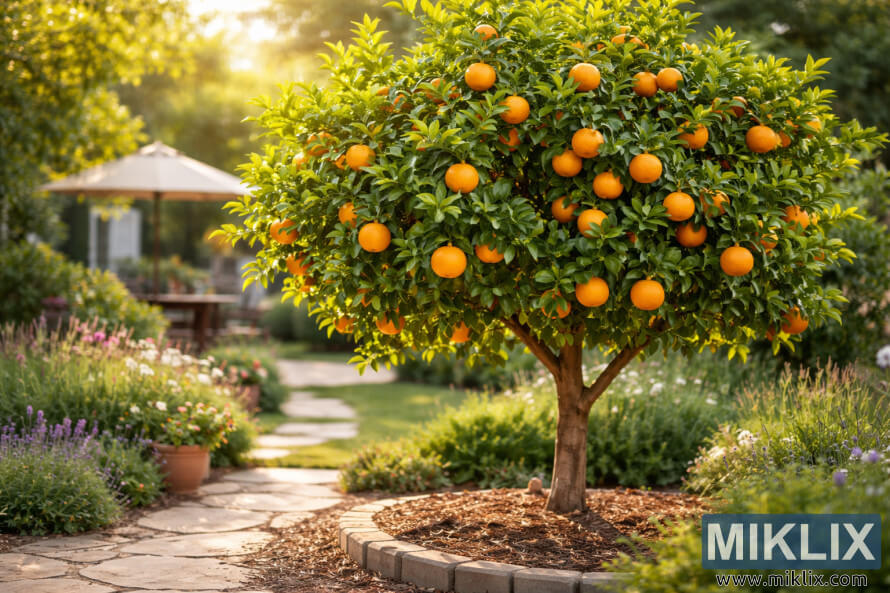
Growing oranges at home brings the joy of harvesting your own sweet, juicy fruit while adding beauty to your garden or patio. Whether you have a spacious yard or just a sunny balcony, orange trees can thrive in various settings with proper care.
Click or tap the image for more information and higher resolutions.
This comprehensive guide will walk you through everything you need to know about growing oranges, from selecting the right varieties to harvesting your first homegrown fruit.
Benefits of Growing Your Own Oranges
Before diving into the how-to, let's explore why growing your own oranges is worth the effort. Home-grown oranges typically taste sweeter and more flavorful than store-bought varieties, which are often picked before reaching peak ripeness. Beyond taste, growing oranges at home offers several advantages:
Health Benefits
Oranges are packed with vitamin C, fiber, and antioxidants. Having fresh oranges at your fingertips encourages healthy snacking and ensures you're getting the maximum nutritional benefit from fruit picked at peak ripeness.
Environmental Impact
Growing your own fruit reduces packaging waste and transportation emissions associated with store-bought produce. It's a small but meaningful step toward sustainable living and reducing your carbon footprint.
Aesthetic Appeal
Orange trees are beautiful ornamental plants with glossy green leaves, fragrant white blossoms, and bright fruits. They add visual interest to gardens, patios, and indoor spaces year-round.
Educational Value
Growing oranges provides excellent learning opportunities for children and adults alike about plant life cycles, pollination, and food production. It's a living science lesson right in your backyard.
Best Orange Varieties for Home Growing
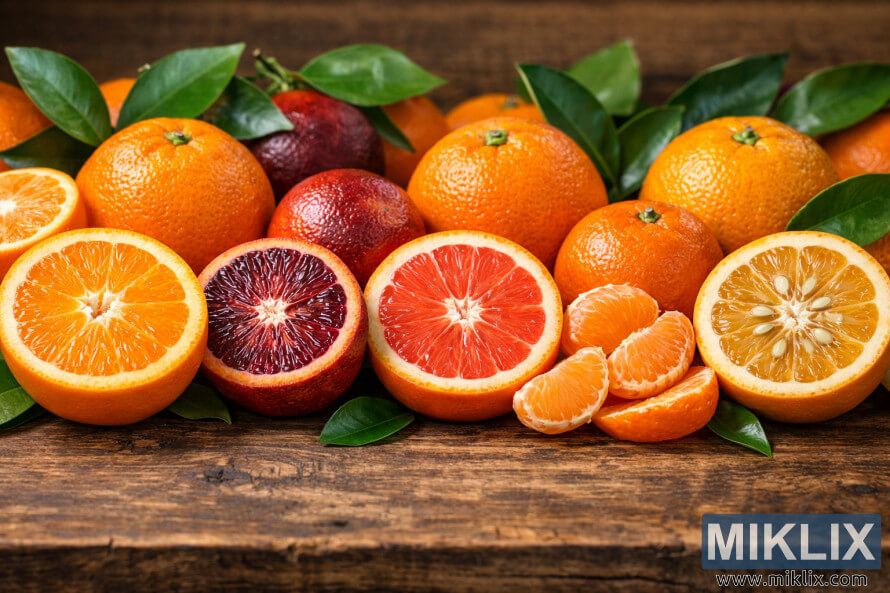
Choosing the right orange variety is crucial for success, especially if you're growing in a less-than-ideal climate. Some varieties are more cold-hardy, while others are better suited for container growing. Here are some excellent options for home gardeners:
Click or tap the image for more information and higher resolutions.
Navel Oranges
Characteristics: Sweet, seedless fruits with a distinctive "navel" on the bottom. Easy to peel and segment.
Growing conditions: USDA zones 9-10, needs full sun and protection from strong winds.
Size: Standard trees reach 15-20 feet, dwarf varieties 8-12 feet.
Harvest time: Winter to early spring (November to June).
Valencia Oranges
Characteristics: Juicy fruits with few seeds, excellent for juicing. The most widely grown orange variety worldwide.
Growing conditions: USDA zones 9-11, tolerates heat better than some varieties.
Size: Standard trees reach 12-18 feet, dwarf varieties 6-10 feet.
Harvest time: Late spring to fall (March to October).
Blood Oranges
Characteristics: Distinctive red flesh and unique berry-like flavor. Smaller than other oranges.
Growing conditions: USDA zones 9-10, needs cool nights to develop red coloration.
Size: Standard trees reach 12-15 feet, dwarf varieties 6-8 feet.
Harvest time: Winter to early spring (December to April).
Dwarf Varieties for Container Growing
If you have limited space or live in a colder climate, dwarf orange varieties are your best option. These can be grown in containers and moved indoors during cold weather:
Calamondin Orange
A small, ornamental citrus that produces tart, mandarin-like fruits. Extremely well-suited for container growing and can thrive indoors with proper light. Reaches 3-6 feet in containers.
Trovita Orange
A sweet, nearly seedless orange that's more cold-hardy than many varieties. Compact growth habit makes it ideal for containers. Reaches 6-8 feet in containers.
Climate and Soil Requirements
Understanding the optimal growing conditions for orange trees will significantly increase your chances of success. While oranges are traditionally grown in subtropical regions, many varieties can adapt to different environments with proper care.
Climate Considerations
Orange trees thrive in warm climates with these optimal conditions:
| Condition | Optimal Range | Notes |
| Temperature | 60-90°F (15-32°C) | Trees can be damaged below 28°F (-2°C) |
| Sunlight | 8-10 hours daily | Full sun is essential for fruit production |
| Humidity | 40-60% | Too dry can stress trees; too humid can promote disease |
| USDA Zones | 9-11 | Container growing extends range to zones 4-8 |
Soil Requirements
Orange trees are particular about their soil conditions. The right soil composition will promote healthy root development and nutrient uptake:
- Soil type: Well-draining sandy loam or loamy soil is ideal. Heavy clay soils can lead to root rot.
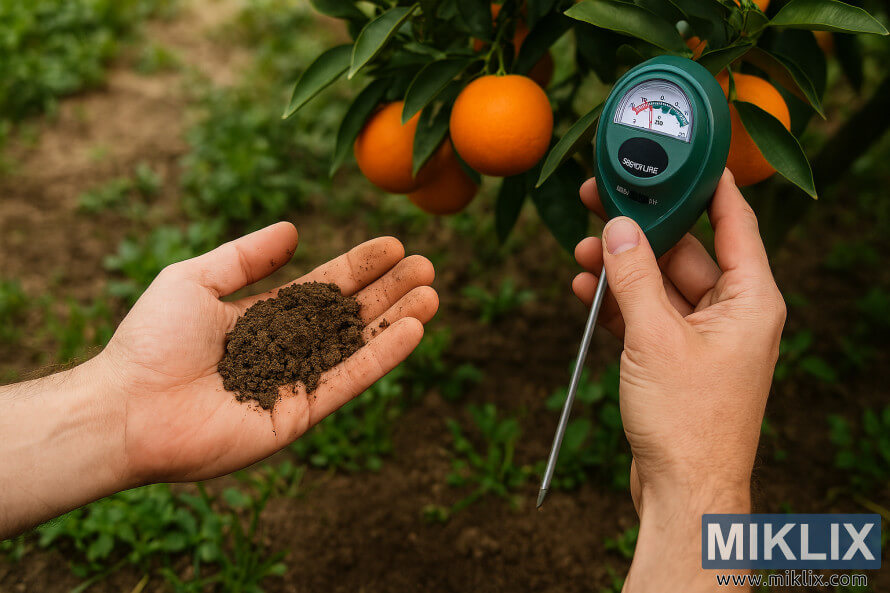
- pH level: Slightly acidic to neutral (6.0-7.5). Test your soil and amend if necessary.
- Drainage: Excellent drainage is crucial. Orange trees cannot tolerate waterlogged conditions.
- Organic matter: Rich in organic matter to retain moisture while allowing excess water to drain.
- Depth: At least 3-4 feet of good soil for proper root development.
Climate Adaptation Tip: If your local climate isn't ideal for growing oranges in the ground, container growing with proper winter protection can allow you to grow oranges in zones 4-8. Just be prepared to move containers indoors or to a protected area during cold weather.
Click or tap the image for more information and higher resolutions.
Planting Your Orange Tree
Whether you're starting from a sapling or growing from seed, proper planting techniques are essential for establishing healthy orange trees that will produce abundant fruit for years to come.
Planting from Saplings (Recommended)
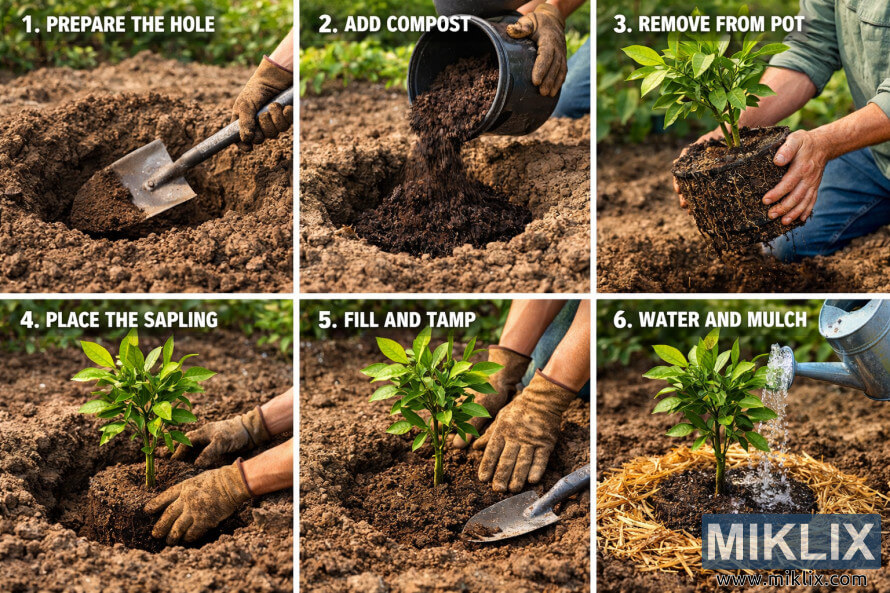
Most home gardeners start with young grafted trees from nurseries, which typically begin producing fruit within 3-5 years. Here's how to plant them properly:
- Timing: Plant in spring after all danger of frost has passed, or in fall in warmer climates (zones 9-11).
- Location selection: Choose a spot with 8-10 hours of direct sunlight and protection from strong winds.
- Spacing: Allow 12-25 feet between standard trees or 6-10 feet for dwarf varieties.
- Hole preparation: Dig a hole twice as wide as the root ball but no deeper than the root ball's height.
- Planting depth: Position the tree so the graft union (visible swelling on the trunk) remains 4-6 inches above soil level.
- Backfilling: Fill around the roots with native soil mixed with compost (70:30 ratio). Avoid adding fertilizer directly to the planting hole.
- Watering: Create a basin around the tree and water thoroughly, allowing it to settle.
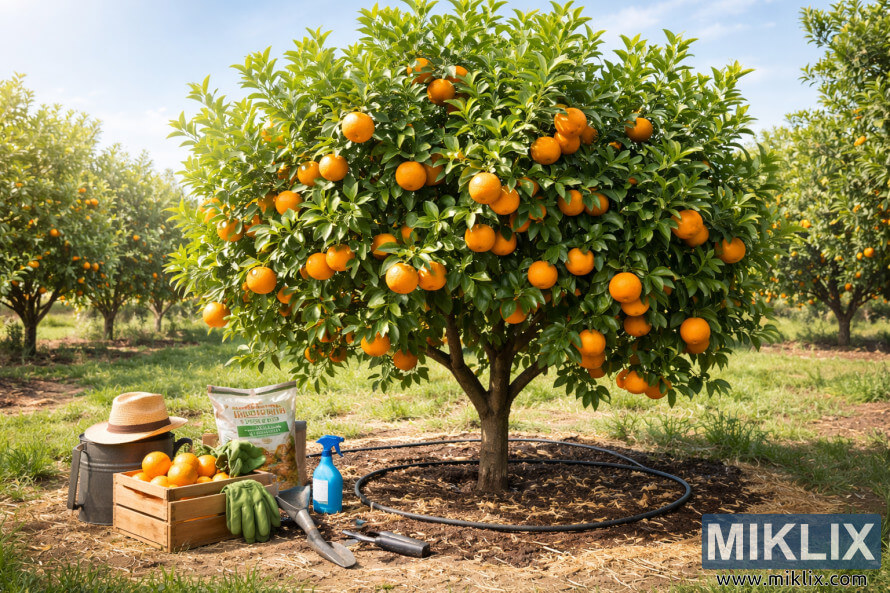
- Mulching: Apply 2-3 inches of organic mulch in a 3-foot circle around the tree, keeping it 6 inches away from the trunk.
Click or tap the image for more information and higher resolutions.
Growing from Seeds (For Enthusiasts)
Growing oranges from seed is possible but comes with limitations. Seed-grown trees:
- Take 7-10 years to produce fruit
- May not produce fruit identical to the parent
- Often grow larger than grafted varieties
- Can make interesting ornamental plants
If you'd like to try growing from seed as an experiment or educational project:
- Extract seeds from a fresh, organic orange.
- Rinse thoroughly and soak in water for 24 hours (discard floating seeds).
- Plant 1/2 inch deep in well-draining potting mix.
- Keep soil consistently moist and warm (70-80°F).
- Seedlings should emerge within 2-3 weeks.
- Transplant to larger containers as they grow.
- Move outdoors permanently only after trees are well-established (1-2 years).
Container Planting
For limited spaces or colder climates, container growing is ideal:
- Container size: Start with a 5-gallon pot for young trees, eventually moving to a 15-20 gallon container.
- Drainage: Ensure the container has multiple drainage holes.
- Potting medium: Use high-quality citrus potting mix or make your own with equal parts potting soil, perlite, and compost.
- Planting depth: Position with the top of the root ball 1-2 inches below the container rim.
- Mobility: Consider placing large containers on plant caddies with wheels for easier movement.
Essential Care for Orange Trees
Proper care is crucial for healthy growth and abundant fruit production. Follow these guidelines to keep your orange trees thriving year-round.
Watering
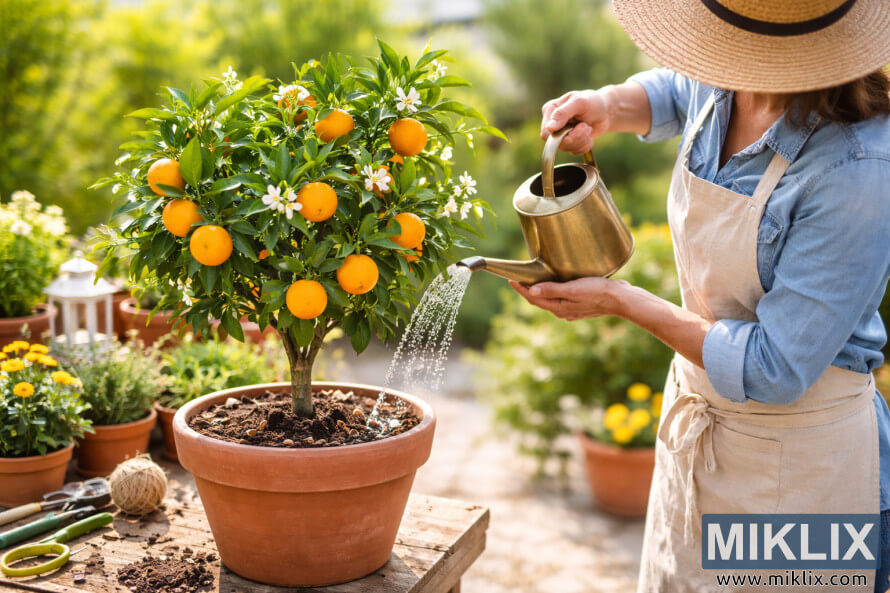
Proper watering is perhaps the most critical aspect of orange tree care. Finding the right balance is essential:
- New trees: Water 2-3 times weekly for the first few weeks, then reduce to once weekly.
- Established trees: Deep water every 7-14 days depending on weather and soil conditions.
- Container trees: Water when the top 2 inches of soil feels dry to the touch.
- Technique: Water slowly and deeply at the drip line (outer edge of branches), not at the trunk.
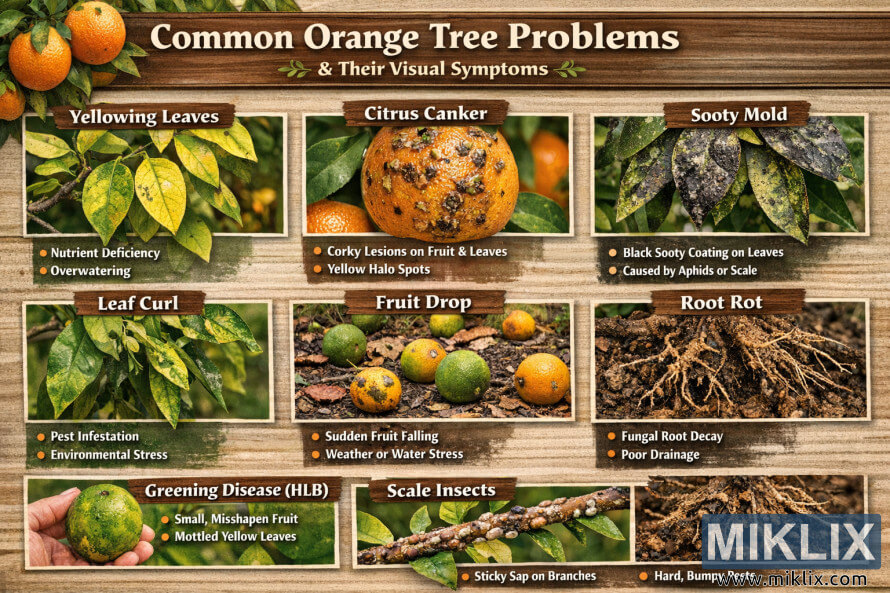
- Signs of overwatering: Yellowing leaves, leaf drop, and soggy soil.
- Signs of underwatering: Wilting, curling leaves, and premature fruit drop.
Never let orange trees sit in standing water. This can quickly lead to root rot, a common cause of tree death.
Click or tap the image for more information and higher resolutions.
Fertilizing
Orange trees are heavy feeders that require regular fertilization for optimal growth and fruit production:
- Fertilizer type: Use a balanced, slow-release fertilizer specifically formulated for citrus trees (e.g., 8-8-8 or 10-10-10).
- Young trees: Apply light fertilizer every 6-8 weeks during the growing season.
- Mature trees: Fertilize three times yearly—early spring, early summer, and early fall.
- Application: Spread fertilizer evenly from the trunk to slightly beyond the drip line, then water thoroughly.
- Micronutrients: Watch for signs of deficiencies, particularly magnesium, zinc, and iron, which are common in citrus.
Pruning
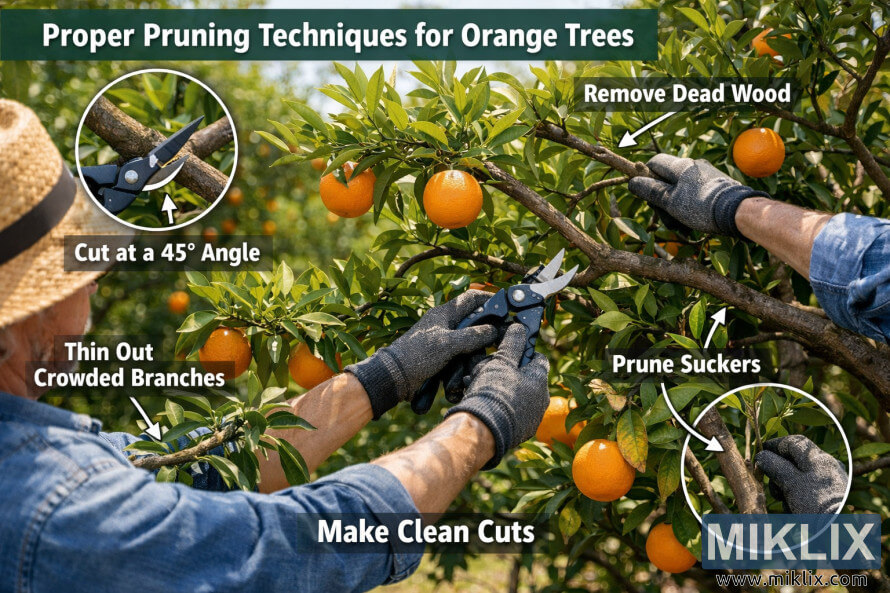
While orange trees don't require extensive pruning, some strategic trimming helps maintain tree health and fruit production:
- Timing: Prune after harvest and before the spring growth flush.
- What to remove:Dead or diseased branches
- Crossing or rubbing branches
- Suckers from below the graft union
- Watersprouts (vigorous vertical shoots)
- Shaping: Maintain an open center to allow light penetration and air circulation.
- Height control: For easier harvesting, keep tree height manageable by trimming the top branches.
Click or tap the image for more information and higher resolutions.
Managing Pests and Diseases
Orange trees can face various challenges from pests and diseases. Early identification and intervention are key to maintaining tree health and fruit quality.
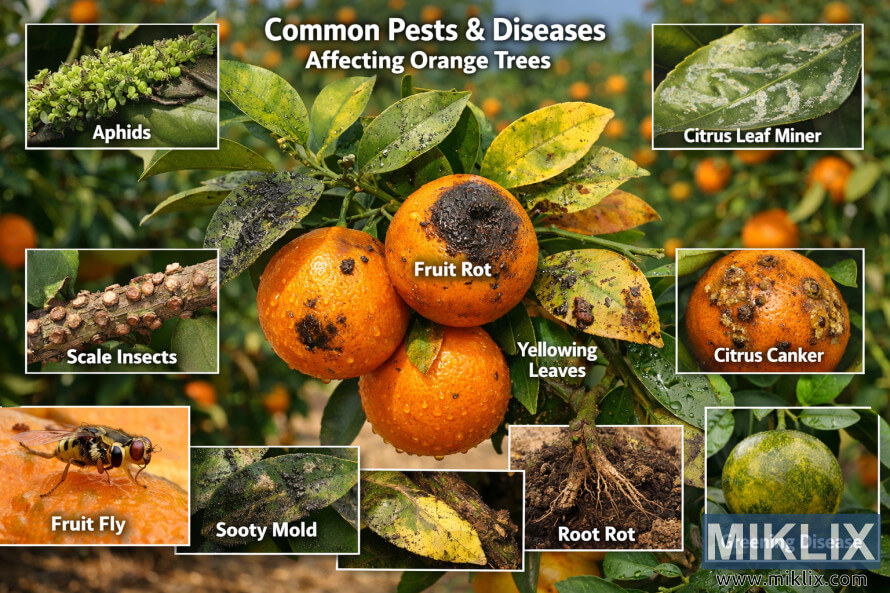
Common Pests
| Pest | Signs | Treatment |
| Aphids | Curled leaves, sticky residue, small green/black insects on new growth | Insecticidal soap, neem oil, or introduce beneficial insects like ladybugs |
| Citrus Leaf Miners | Silvery trails and tunnels in leaves | Spinosad-based products, avoid excessive pruning of new growth |
| Scale Insects | Small bumps on stems and leaves, yellowing foliage | Horticultural oil, neem oil, or systemic insecticides |
| Spider Mites | Fine webbing, stippled leaves, bronzing of foliage | Regular water sprays, insecticidal soap, or miticides |
Common Diseases
| Disease | Symptoms | Management |
| Citrus Canker | Raised corky lesions on leaves, stems, and fruit | Remove infected parts, copper-based fungicides, avoid overhead watering |
| Root Rot | Yellowing leaves, wilting, branch dieback | Improve drainage, reduce watering, fungicides containing fosetyl-al |
| Citrus Greening | Mottled leaves, lopsided bitter fruit, yellow shoots | Remove infected trees, control psyllid vectors, nutritional support |
| Melanose | Small dark spots on fruit and leaves, sandpaper texture | Prune dead wood, copper fungicides, improve air circulation |
Click or tap the image for more information and higher resolutions.
Preventive Measures
The best approach to pest and disease management is prevention:
- Maintain proper spacing between trees for good air circulation
- Avoid overhead watering to keep foliage dry
- Remove fallen leaves and fruit promptly
- Regularly inspect trees for early signs of problems
- Maintain tree vigor through proper nutrition and watering
- Consider introducing beneficial insects like ladybugs and lacewings
Organic Pest Control Spray Recipe: Mix 1 tablespoon of mild liquid soap and 1 tablespoon of neem oil in 1 quart of water. Spray on affected areas weekly until pests are controlled. Apply in the evening to prevent leaf burn.
Timeline: From Planting to Harvest
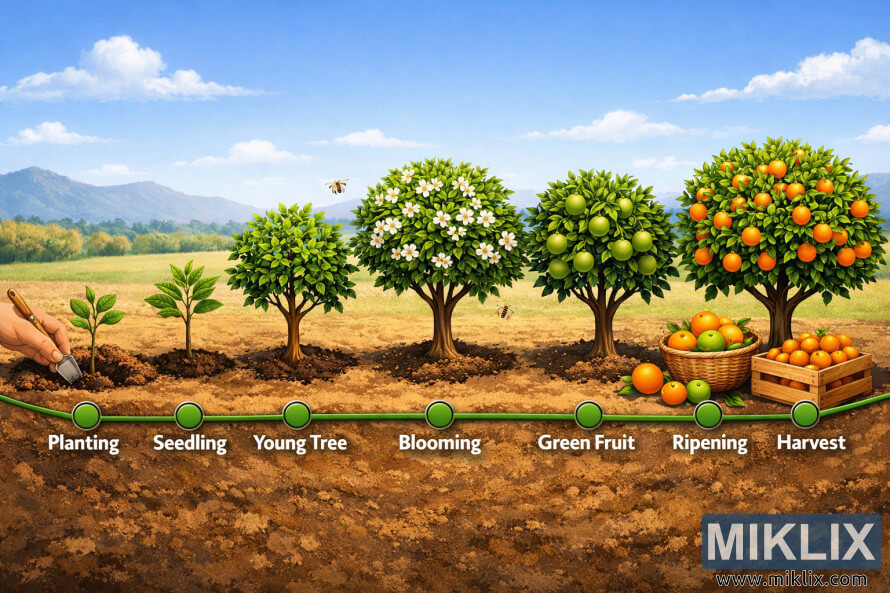
Understanding the growth timeline helps set realistic expectations and provides a roadmap for proper care at each stage of development.
| Growth Stage | Timeline | Care Focus |
| Establishment | 0-6 months | Regular watering, wind protection, minimal fertilizer |
| Early Growth | 6 months - 2 years | Structural pruning, increasing fertilizer, pest monitoring |
| Juvenile Phase | 2-3 years | Balanced fertilization, possible first blooms (remove for tree strength) |
| First Fruit | 3-5 years (grafted trees) | Fruit thinning, support branches if needed, consistent watering |
| Maturity | 5+ years | Regular harvesting, maintenance pruning, full fertilization |
Note that seed-grown trees take significantly longer to fruit (7-10 years) compared to grafted trees (3-5 years). Container-grown trees may produce fruit slightly earlier due to root restriction, which can encourage flowering.
Click or tap the image for more information and higher resolutions.
Seasonal Care Calendar
Orange trees require different care throughout the year. Follow this seasonal guide for optimal results:
Spring
- Apply first round of fertilizer
- Increase watering as temperatures rise
- Monitor for spring pests (aphids, leaf miners)
- Plant new trees
Summer
- Apply second round of fertilizer
- Water deeply during dry periods
- Protect from extreme heat
- Monitor for spider mites
Fall
- Apply final fertilizer (early fall)
- Reduce watering as temperatures cool
- Prepare for winter protection
- Begin harvesting early varieties
Winter
- Protect from frost if needed
- Minimal watering
- Harvest main crop
- Prune after harvest
Harvesting Your Oranges
After months of care and anticipation, harvesting your homegrown oranges is a rewarding experience. Unlike many fruits, oranges don't continue to ripen after being picked, so timing is crucial.
How to Tell When Oranges Are Ripe
Determining ripeness involves several factors:
- Color: Most oranges develop their characteristic orange color when ripe, though some varieties may retain green patches even when fully ripe.
- Size: Fruit should reach the typical size for its variety.
- Firmness: Ripe oranges feel firm but yield slightly to gentle pressure.
- Aroma: A sweet, citrusy scent at the stem end indicates ripeness.
- Taste test: The most reliable method—pick one fruit and taste it to assess ripeness.
Harvesting Techniques
Proper harvesting techniques preserve fruit quality and prevent damage to the tree:
- Timing: Harvest in the morning when fruits are cool and turgid.
- Method: Either:
- Twist and pull gently to separate the fruit from the stem, or
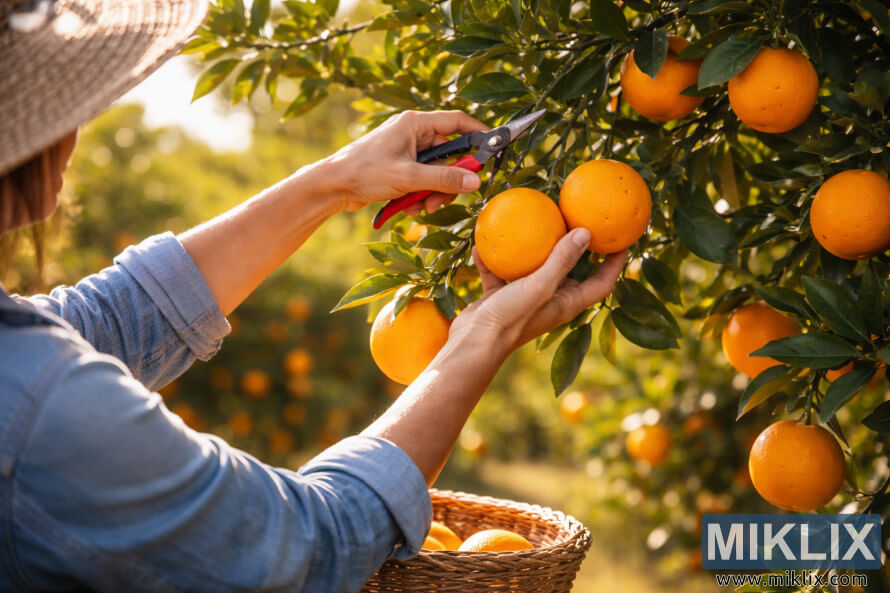
- Use pruning shears to cut the stem about 1/4 inch above the fruit
- Handling: Handle fruits carefully to avoid bruising.
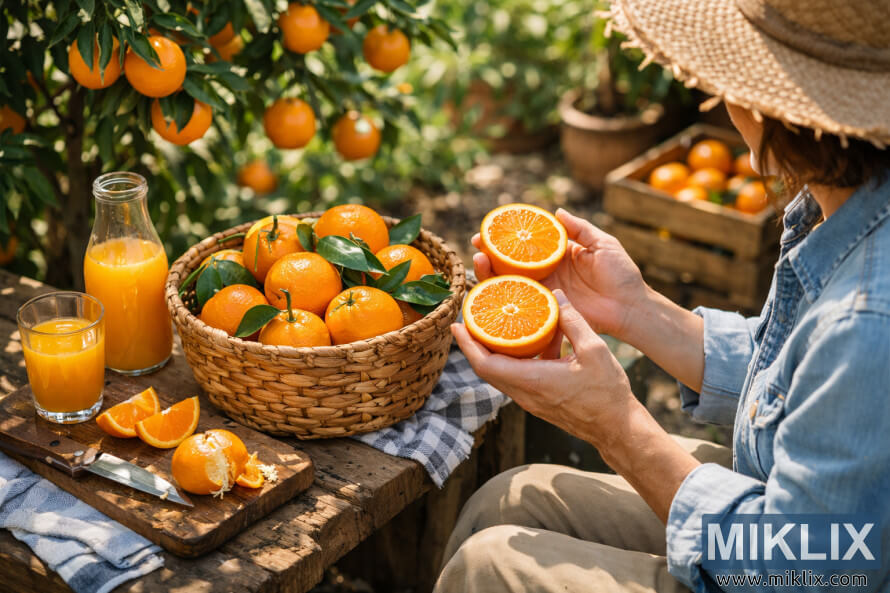
- Storage: Store at room temperature for immediate use (1-2 weeks) or in the refrigerator for longer storage (up to 3-4 weeks).
Harvesting Tip: Oranges don't all ripen at once. They can often remain on the tree for weeks or even months after reaching ripeness without significant quality loss, allowing for extended harvesting.
Click or tap the image for more information and higher resolutions.
Tips for Maximizing Flavor and Yield
Follow these expert tips to get the most delicious fruit and abundant harvests from your orange trees:
For Better Flavor
- Avoid overwatering before harvest—slightly reduced irrigation increases sugar concentration.
- Ensure adequate potassium in your fertilization program, which enhances fruit flavor.
- Allow fruit to fully ripen on the tree—oranges don't continue ripening after picking.
- Protect fruit from extreme temperature fluctuations, which can affect flavor development.
- Maintain proper tree nutrition throughout the growing season for best-tasting fruit.
For Higher Yields
- Ensure adequate pollination by planting flowering plants nearby to attract bees.
- Thin fruit clusters when trees are young to prevent branch breakage and improve remaining fruit size.
- Maintain consistent soil moisture during flowering and fruit development stages.
- Apply balanced fertilizer at recommended times to support fruit production.
- Protect trees from stress factors like extreme temperatures, drought, or pest infestations.
Fruit Thinning for Quality
Young trees often set more fruit than they can successfully support. Thinning excess fruit improves the size and quality of remaining oranges while preventing branch damage:
- Remove small, damaged, or misshapen fruits first
- Thin clusters to leave 4-6 inches between fruits
- For young trees (3-4 years old), limit to 10-15 fruits total
- For mature container trees, limit to 20-30 fruits depending on tree size
Click or tap the image for more information and higher resolutions.
Troubleshooting Common Problems
Even with the best care, orange trees can sometimes develop issues. Here's how to identify and address common problems:
Why are my orange tree's leaves turning yellow?
Yellowing leaves can indicate several issues:
- Overwatering: Reduce watering frequency and ensure good drainage.
- Nutrient deficiency: Apply balanced citrus fertilizer, possibly with micronutrients.
- Pest infestation: Check undersides of leaves for insects and treat accordingly.
- Root problems: Examine roots for damage or disease; may require repotting or improved drainage.
My tree flowers but doesn't produce fruit. Why?
Several factors can cause lack of fruit production:
- Young tree: Trees under 3-5 years may flower but drop fruit as they're not mature enough.
- Poor pollination: Lack of pollinators or extreme weather during flowering.
- Improper fertilization: Too much nitrogen promotes leafy growth at the expense of fruit.
- Environmental stress: Temperature extremes, drought, or inconsistent watering.
Solution: Ensure proper age, adequate pollination, balanced fertilization, and consistent care.
Why is my fruit splitting before harvest?
Fruit splitting typically occurs due to irregular watering. When trees experience drought followed by sudden heavy watering or rainfall, the fruit expands too quickly, causing the rind to split.
Solution: Maintain consistent soil moisture, especially during fruit development. Mulching helps regulate soil moisture levels. For container trees, ensure regular, even watering schedules.
Why are my oranges dry or lacking juice?
Dry, pithy fruit can result from:
- Overripeness: Fruit left too long on the tree can dry out.
- Drought stress: Insufficient water during fruit development.
- Temperature extremes: Particularly hot, dry conditions.
- Tree health issues: Root problems or disease affecting nutrient uptake.
Solution: Harvest at proper ripeness, maintain consistent watering, protect from extreme heat, and ensure overall tree health.
How do I protect my orange tree from frost?
Frost protection is essential for trees in marginal growing zones:
- Container trees: Move indoors or to a protected area when temperatures approach freezing.
- In-ground trees:Cover with frost cloth (not plastic) that extends to the ground
- Install outdoor lights under the cover to provide warmth
- Water thoroughly before expected frost (moist soil retains heat better)
- Apply mulch to insulate roots
Click or tap the image for more information and higher resolutions.
Conclusion: Enjoying the Fruits of Your Labor
Growing oranges at home requires patience and attention to detail, but the reward of harvesting your own sweet, juicy fruit makes the effort worthwhile. From selecting the right variety to providing proper care throughout the seasons, each step contributes to your success as a citrus grower.
Remember that orange trees are long-lived plants that can produce fruit for decades with proper care. Even if you encounter challenges along the way, don't be discouraged—learning from experience is part of the journey. Whether you're growing oranges in a spacious backyard or in containers on a sunny patio, the satisfaction of picking your first homegrown orange is an unmatched gardening experience.
Start your orange-growing adventure today, and in a few years, you'll be enjoying the sweet taste of success—literally! With each season, your knowledge will grow alongside your trees, making you a more confident and successful citrus gardener.
Click or tap the image for more information and higher resolutions.
Further Reading
If you enjoyed this post, you may also like these suggestions:
- Growing Corn: Your Complete Guide to Sweet Success in the Garden
- From Seed to Harvest: The Complete Guide to Growing Zucchini
- A Guide to Growing the Best Mangoes in Your Home Garden